
 by
by
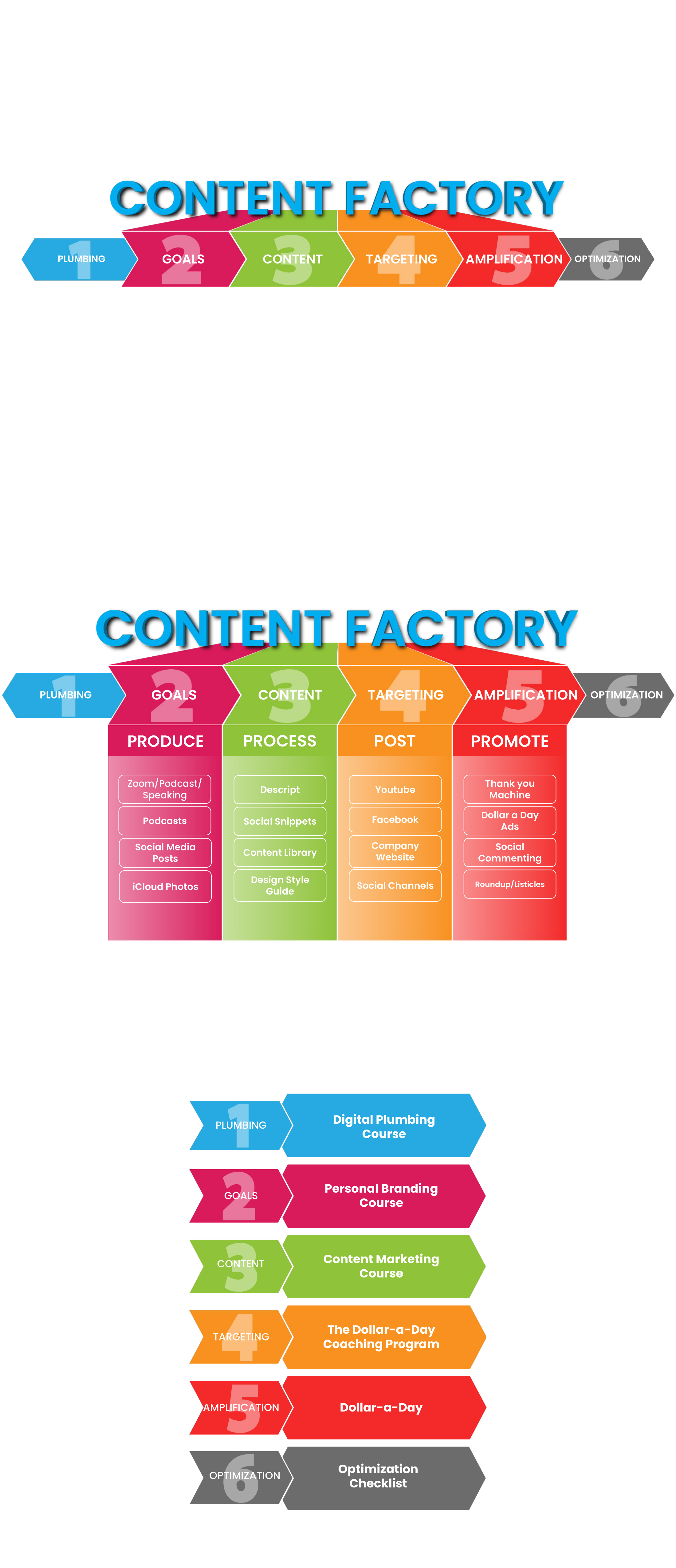
Check your business before you pay to reach more people. This guide helps your team review the goal, proof, content, and work it can deliver. Start with the facts; a pass does not give you the right to post or spend.
This guide is part of The System: AI-Driven Marketing That Documents and Improves Itself. Next, explore #GCT: Business Strategy (the goal, source material, and audience), or The Content Factory: How to Turn One Video Into Dozens of Assets That Build Trust and Drive Revenue (our four-stage process for using real content).
Where this task fits in the Content Factory
This task supports work across the Content Factory. Its inputs and next handoff determine which stage uses it.
1. ProduceCapture real work
2. ProcessTurn sources into useful assets
3. PostPublish and connect approved assets
4. PromoteShare proven work and measure results
Start, finish, and next step
- Start when
- A business needs an initial SAE readiness inventory before any decision to qualify, launch or spend.
- Have ready
- Public business URL and stated goal
- Available evidence for offer, technique, proof and audience
- Known constraints and missing inputs
- Follow the steps
- Inventory the existing proof and access
- Separate supported facts from assumptions
- Map gaps across the six SAE phases
- Name one owned next action with date and acceptance test
Use the detailed instructions in this article for each step.
- Finish with
- A draft readiness inventory and a specific next action; no readiness certificate or launch.
- Measure the result
- Missing proof and access stay visible
- The output does not imply qualification or approval
- The next action has an owner, date and test
- The roster and agreement gates remain intact
- Hand off next
- Submit the inventory for the independent review and accepted-brief path before any stage execution.
Before closing the run, name the actual next task, receiving owner, and trigger in the execution record. The assignment and findings determine that handoff.
Reference material for the inputs
- #GCT: Business Strategy
- Digital Plumbing: The Technical Foundation Every Business Needs Before Marketing Can Work
- The Content Factory: How to Turn One Video Into Dozens of Assets That Build Trust and Drive Revenue
Open this article’s tasks in the Task Library (our directory of tasks and recipes; see current Task Library). The library connects the current recipe, its smaller tasks, and the records of work performed.
Close the learning loop. Write a meta article: the record of this execution with the starting state, recipe version, result, checks, failures, and next owner. Link it back to this recipe and register the run under the same Task Library task. Reuse one execution ID for revisions and retries. A partial or failed run stays labeled that way. Public release follows the recorded publication authority; writing the run record is part of doing the task. Writing and revising that record belong to the original execution; they do not start another meta-article task. Use the findings to propose and verify a recipe improvement. See how recipes and execution records work together.
CANONICAL · OPERATING HUB · START HERE
Social Amplification Engine
Amplify reputation, proof, and trust that already exist. Inventory Goals, Content, Targeting, proof, capacity, and measurement first. A strong screen makes a business a candidate for review; it does not create a client, authorize an agent, publish content, or spend money.
This is the one public operating hub. The SAE course teaches the same six phases to humans. The six-stage diagram is its visual sibling, not another master.
6SAE PHASES
8EVIDENCE GATES
4FACTORY STATIONS
1 · INVENTORYEvidence-gated readiness2 · ENGINESix phases, existing skills3 · FACTORYProduce Process Post Promote4 · CONTROLOne roster and receipt plane
Start: take the evidence inventory
GCT means Goals, Content, Targeting—in that order. Read GCT: Business Strategy, then write: I help X achieve Y through Z. X is the bounded ideal client, Y is the measurable result, and Z is the distinct technique. If a competitor can reuse the sentence unchanged, develop the positioning before amplification.
UNKNOWN is not zero, false, or failure. Record the claimed outcome and claimed support separately. This anonymous intake cannot mint canonical VERIFIED evidence: every exported evidence state remains UNKNOWN until a fresh reviewer opens the sources. Nothing is submitted, stored, scheduled, or added to a roster.
Four-minute readiness inventory
No names, email addresses, URLs, customer records, or free text. Your browser creates a non-PII self-report receipt for you to keep.
0 of 8 claimed outcome/support pairs checkedCoverage only—never a readiness score
DISCOVERY_REQUIRED
Eight evidence questions remain open. Verify them; do not score, decline, onboard, or amplify.
What the result means
| State | Meaning | Next route |
|---|---|---|
| QUALIFIED_PENDING_REVIEW | All eight reported outcomes are MET and every evidence state is VERIFIED. This is still a candidate, not an authenticated review, client, or execution grant. | Fresh independent review, accepted scope, then an Ops roster decision. |
| DISCOVERY_REQUIRED | An outcome is UNKNOWN, evidence is UNKNOWN, OBSERVED, EXPIRED, or CONTRADICTED, or evaluators disagree. Discovery takes precedence over development. | Resolve the named evidence question; no score or assumption. |
| DEVELOP | At least one gate is VERIFIED with outcome NOT_MET, and no discovery condition remains. | Run the one named development action and re-screen. |
| DECLINED | A human records an out-of-scope, safety, consent, ethics, or commercial decision. | Stop and preserve the signed reason. The public tool never issues this automatically. |
Common development routes include delivering the first real work, harvesting corroborated proof, selecting one ICP, naming the distinct technique, choosing one repeatable offer, fixing capacity, or closing the measurement gap. Missing research remains DISCOVERY_REQUIRED.
Agent prompt
Read https://blitzmetrics.com/social-amplification/ and use the gct-screen skill.
Inventory all eight gates with separate outcome (UNKNOWN, MET, NOT_MET) and evidence state (UNKNOWN, OBSERVED, VERIFIED, CONTRADICTED, EXPIRED).
Preserve UNKNOWN; do not turn missing evidence into zero or invent a readiness score.
Only VERIFIED+MET across all eight can pass the canonical review; contradiction routes to discovery, while VERIFIED+NOT_MET routes to development.
Qualification is not an engagement or permission to onboard, publish, message, request access, or spend.
Name one owned next action with a date and acceptance test. Drafts only.
The six phases
SAE is six phases. Plumbing comes first. GCT is phases 2–4 and the fit/strategy gate. The Content Factory sits in the middle. Dollar a Day is phase 5. Weekly MAA is phase 6. Each run amplifies verified proof, learns from business outcomes, and asks for the next source material—not manufactured authority.
| Phase | What happens | Canonical master |
|---|---|---|
| 1 Plumbing | Access, tagging, conversion definitions, and trustworthy data | Digital Plumbing |
| 2 Goals | Measurable result, economics, capacity, offer, and technique | GCT |
| 3 Content | Real proof moves through Produce → Process → Post drafts | Content Factory |
| 4 Targeting | One ICP and bounded hypotheses; targeting stays last | GCT |
| 5 Amplification | Rank proven organic winners and stage $1/day tests | Dollar a Day |
| 6 Optimization | Weekly Metrics → Analysis → Action across the full funnel | MAA |
Search Console, CMS, GA4, and Tag Manager must be verified green before anything ships or is amplified. A named blocker is useful routing, but the phase stays BLOCKED. See the Campaign Launch Checklist, audit method, and Task Library.
The Content Factory line
Inside SAE, content moves through Produce → Process → Post → Promote. One real recording or customer story becomes a verified canonical article and channel-ready derivatives. Agents stage the package; exact approval controls publishing. Promote ranks organic winners; exact approval controls spend. A second page on the same topic is content vandalism.
One control plane, small human gates
The reusable skills are the method. The Task Library is the task/SOP layer. BlitzBase or the client workspace holds accepted client knowledge. The roster-driven Money Tree holds operational state, locks, evidence pointers, authority, and immutable receipts. Output folders and extra schedules are derived artifacts—not a second CRM, scorecard, or heartbeat.
The required path is: public screen → independent review → accepted agreement → Ops roster decision → onboarding → stage-only execution. A current Active Client row is required for the recurring fleet. Special Projects require their own scope. Not Active and HOLD stop.
Collaborators plug into functions, not silos. Daniel Goodrich’s Google Ads MAA package is a version-pinned, dry-run-first adapter for Plumbing and Optimization. Dylan Haugen/BlitzBase contributes versioned client-knowledge pointers to the accepted brief; private knowledge is never copied into Git. Daniel’s repurposing contribution is already represented in the Content Factory/video pipeline. Every contribution needs a source, disposition, canonical target, and validation receipt before anyone calls it integrated.
Questions
Is this the SAE course?
No. The course is blitzmetrics.com/sae. This page is the operating hub and readiness front door.
Can this public intake qualify or launch the agents?
No. Its canonical verdict stays DISCOVERY_REQUIRED because anonymous claims cannot mint VERIFIED evidence. A fresh reviewer must open the sources. Accepted scope and the authoritative roster gate come before onboarding; default execution is stage-only. Publishing, messaging, permissions, and spend each require exact scoped authority.
Can agents skip plumbing if we only want content?
They can prepare drafts, but nothing ships or is amplified until the four plumbing rows are verified green.
How do I start?
Complete the inventory, keep the local receipt, and apply for an independent assessment or pilot through Local Service Spotlight. The reviewer—not this browser form—may route verified evidence to DEVELOP or QUALIFIED_PENDING_REVIEW.
Take the inventoryInstall the skill packRead The System
Canonical operating hub for the Social Amplification Engine. Course: /sae/. Diagram: 6 stages. Build record: evidence-gated SAE meta article (a record of one task run; see meta-article writing guide). Coordination recipe: who sits in which chair. Directory: /canonical/. Edition CANON-2026.2. Updated 22 Aug 2026.
Originally published .
Dennis Yu
Dennis Yu is the CEO of Local Service Spotlight, a platform that amplifies the reputations of contractors and local service businesses using the Content Factory process. He is a former search engine engineer who has spent a billion dollars on Google and Facebook ads for Nike, Quiznos, Ashley Furniture, Red Bull, State Farm, and other brands.
Dennis has achieved 25% of his goal of creating a million digital marketing jobs by partnering with universities, professional organizations, and agencies. Through Local Service Spotlight, he teaches the Dollar a Day strategy and Content Factory training to help local service businesses enhance their existing local reputation and make the phone ring.
Dennis coaches young adult agency owners serving plumbers, AC technicians, landscapers, roofers, electricians, and believes there should be a standard in measuring local marketing efforts, much like doctors and plumbers must be certified. He has appeared on 353 podcasts with 619 credited episodes — see the full list of his podcast appearances.