
 by
by
META ARTICLE · LEARN → DO → TEACH
How we turned the Social Amplification Engine into an evidence-gated agent system
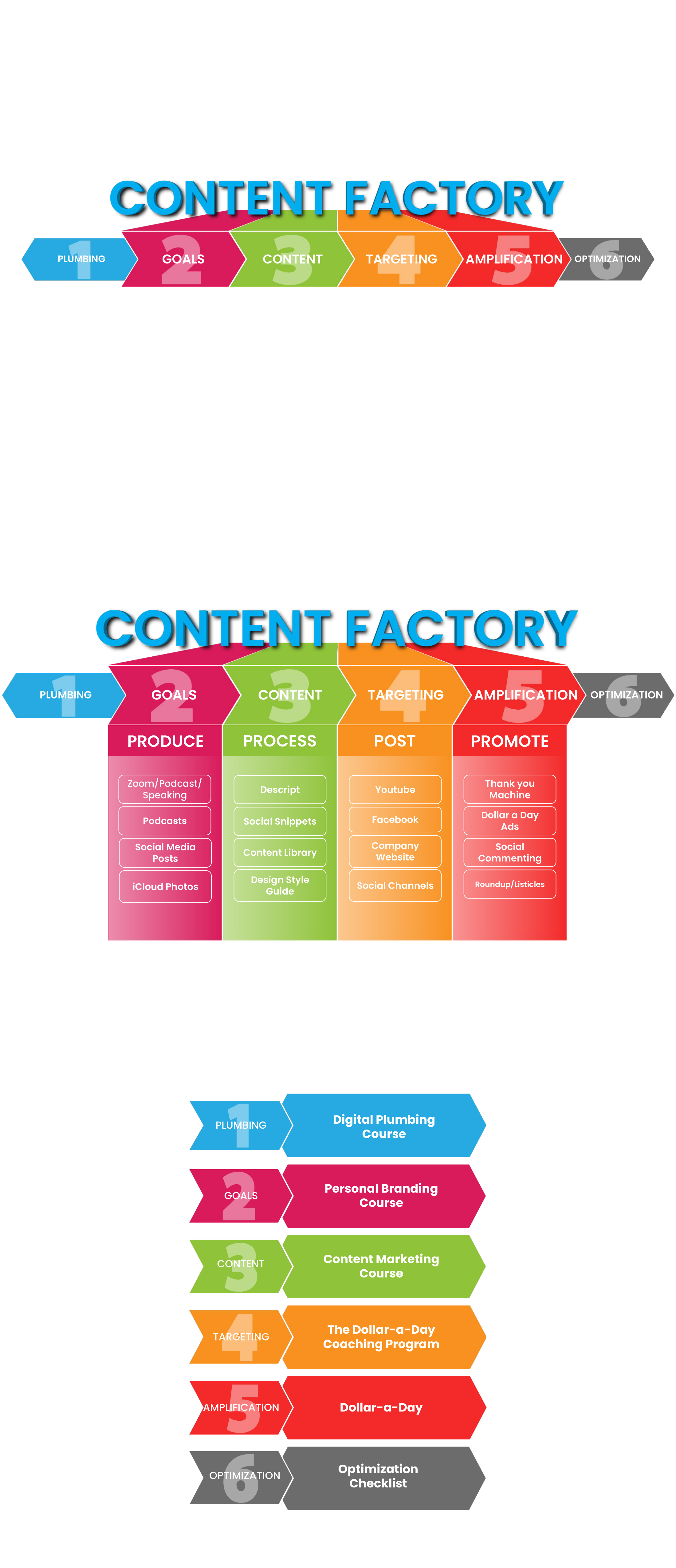
Dennis asked for the six-phase system he has used throughout his career—Plumbing, Goals, Content, Targeting, Amplification, and Optimization—to become a reliable agentic service for businesses that already have real customers and proof. The job was not to invent another marketing framework. It was to make the existing one executable without letting a confident agent manufacture readiness or authority.
The public front door is blitzmetrics.com/social-amplification. The course, six-stage diagram, Task Library, and specialist skills remain the teachers and operators around that one hub.
The first version taught us what not to collapse
Our initial assembly looked efficient: a 100-point GCT score, a pass threshold, an automatic path from qualification to onboarding, a separate SAE heartbeat, and an orchestrator that said “draft only” while child skills still contained live publish and spend verbs. Each shortcut was locally plausible. Together, they created four dangerous equivalences:
| Bad equivalence | Why it fails | Replacement |
|---|---|---|
| Outcome = evidence quality | Missing access becomes a false negative or a self-certified pass. | Outcome UNKNOWN / MET / NOT_MET plus separate evidence state UNKNOWN / OBSERVED / VERIFIED / CONTRADICTED / EXPIRED |
| Qualified = authorized | A prospect screen silently becomes permission to onboard or act. | Signed review → accepted agreement → Ops roster → stage-only execution |
| Orchestrator rule = child safety | A delegated skill can still publish, send, or spend. | Propagated action authority and exact scoped approval receipts |
| New folder or clock = control plane | Clients can disappear or disagree across two status systems. | One roster-derived Money Tree transaction and immutable checkpoints |
Non-obvious lesson: agent safety is mostly a state-model problem. Evidence quality, commercial fit, client status, action authority, artifact lifecycle, and schedule observation are different axes. A green state on one axis must never grant a green state on another.
The readiness front door is useful without collecting a lead
The operating hub now contains a real eight-gate inventory. A visitor records claimed outcome and claimed support, sees phase-level intake blockers, and copies or downloads a schema-v2 non-PII receipt. Canonical evidence state remains UNKNOWN for all eight gates because an anonymous browser form cannot authenticate a source. The page has no submission endpoint, account, free-text field, browser storage, tracker added by the tool, roster mutation, or automatic follow-up.
The public receipt therefore stays DISCOVERY_REQUIRED, even when every self-reported answer looks ready. A fresh independent reviewer applies the canonical fail-closed order: any unknown, observed-only, contradicted, or expired evidence remains discovery; only a VERIFIED + NOT_MET gate with no discovery condition becomes DEVELOP; and only eight VERIFIED + MET pairs become QUALIFIED_PENDING_REVIEW. A verifier-signed human policy, safety, consent, scope, or commercial decision may produce DECLINED; the anonymous tool never does that automatically.
We extended the Money Tree instead of minting another agency OS
The internal router lives as a thin extension of the existing roster-driven Money Tree. It validates eight two-axis evidence gates, independently sourced proof, verifier-signed agreement, review, decline, and action receipts, roster/config hashes, Plumbing gates, stage-only authority, finite authority windows, monotonic trusted timestamps, artifact hashes, spend ceilings, destinations, holds, idempotency keys, and optimistic locks. It contains no network executor, so an approved plan is still not proof that a post, message, or campaign change happened.
The existing Monday/Thursday Money Tree automation now owns the SAE checkpoint too. It must derive every and only current Active Client from the roster and leave one terminal checkpoint per row. A missing folder becomes NOT_STARTED instead of disappearing from the report. The schedule is registered; it will not be called observed until its first complete scheduled cohort receipt exists.
Specialists connect through receipts
Daniel Goodrich’s Google Ads MAA package connects as a version-pinned, dry-run-first analytics adapter for Plumbing and Optimization. His repurposing work is already represented in the Content Factory/video pipeline. Dylan Haugen and BlitzBase connect as a versioned pointer to accepted client facts, recordings, proof, and history—not as another method repository or public database.
We assign work to Analytics, Content, Client Success, Evidence, and Case Orchestration functions. Names preserve provenance. Every “integrated” claim needs an exact source/version, extracted contract, overlap decision, canonical target, and passing validation receipt.
What shipped, and what has not happened yet
The GCT screen and SAE orchestrator use the same v2 taxonomy across the skills marketplace, cloud task, public intake, and Money Tree extension. Adversarial contracts cover mixed unresolved/NOT_MET precedence, unknown evidence, independent proof, signed review and agreement gates, delegated action authority, Basecamp delivery, and the one-control-plane rule. The public intake is tested at mobile and desktop widths, keeps receipt data local, and proves that self-reported MET/support claims still export evidence state UNKNOWN and verdict DISCOVERY_REQUIRED. The Money Tree router uses synthetic, non-client fixtures for its fail-closed state and authority checks.
No live client was onboarded, messaged, published for, or charged ad spend by this build. The recurring automation remains registered, observation pending until a real scheduled firing accounts for the exact Active Client cohort. Available skills are not automatically Installed or Activated. Those status words stay separate because receipts—not optimism—make the engine trustworthy.
Related: Content Factory · Digital Plumbing · Dollar a Day · MAA · The System · Canonical Directory
The roster and routing rule — which model sits in which chair, and which of four surfaces carries the work — is How my agents divide the work — and where they talk.
Originally published .
Dennis Yu
Dennis Yu is the CEO of Local Service Spotlight, a platform that amplifies the reputations of contractors and local service businesses using the Content Factory process. He is a former search engine engineer who has spent a billion dollars on Google and Facebook ads for Nike, Quiznos, Ashley Furniture, Red Bull, State Farm, and other brands.
Dennis has achieved 25% of his goal of creating a million digital marketing jobs by partnering with universities, professional organizations, and agencies. Through Local Service Spotlight, he teaches the Dollar a Day strategy and Content Factory training to help local service businesses enhance their existing local reputation and make the phone ring.
Dennis coaches young adult agency owners serving plumbers, AC technicians, landscapers, roofers, electricians, and believes there should be a standard in measuring local marketing efforts, much like doctors and plumbers must be certified. He has appeared on 353 podcasts with 619 credited episodes — see the full list of his podcast appearances.