
 by / Last updated
How to put your unused Claude, ChatGPT, Cursor and Grok capacity to work on tasks that matter.
You pay for AI, but good work still sits in your queue. This guide helps firms and new workers use paid plans to finish jobs and check the work. Use it with our guide to building AI agents, which helps you give each worker a clear job.

An actual work handoff from my Claude and ChatGPT experience article: the editor is open and the task history is being passed along. This is a historical work screenshot, not an October usage dashboard.
Keep a real job moving when a session ends
Look at the screenshot. I was working on Nic Padilla’s personal-brand site. The sidebar shows my request to continue the work after I ran out of tokens, with the earlier history supplied so the next session could pick it up.
That is a more useful question than “Which AI is smartest?” I already had a website to finish. I needed the next worker to know what had been done, what remained, and how to check it.
The screenshot documents a handoff in progress. The final result and the allowance used still need separate proof.
In that article, updated August 26, 2026, I described running eight to ten agents at once. I reported a $200 Claude plan plus about $250 in extra usage, and giving agents work before meetings or bedtime.
Those historical, self-reported figures explain why I care about included usage and extra charges.
The lesson from that experience was to give the agents our instructions, inspect the result, and feed corrections back into the process. A busy agent still needs a useful assignment and a finish line.
Start with what my account showed
On October 19, 2026, my usage check showed three very different numbers:
2.4%Cursor Models used
0%Other Models used
27%Bot weekly used
October 19, 2026 account readings, transcribed as text. These cards are not dashboard screenshots. Each percentage has its own allowance and reset window.
My $300-a-month Heavy plan included Cursor Ultra at no extra charge. That was the arrangement verified on my account; current offers and other accounts can differ.
I had access to capacity that I was barely using. At the same time, there was useful work waiting to be checked and finished.
That is the problem this article tackles: how to match unfinished work to the allowance you already pay for, then prove the work is good enough to use.
The three bars have different limits and reset windows. You cannot add the percentages together or turn them into a promised number of finished articles. The full routing test still needed to run when this account check was made.
Turn work you already have into something people can use
A website handoff is one job. Another is the phone-video archive I had already recorded but had not turned into useful public material.
My phone-video publishing record, updated October 17, 2026, reports 21,919 videos sorted into four groups: 1,713 strong candidates, 7,750 lighter candidates, 12,350 to skip, and 106 on hold. Sorting the archive did not mean publishing every video.
Here are three public outputs from that work, published October 7:
- A cold-email lesson from July 2021
- Why to press the record button, using recordings from 2021 and 2025
- A lesson from two days in Vegas, from a November 2018 clip
You can open the finished articles. That gives the work a result beyond a token count.
In that workflow, the local Qwen worker, an AI model running on my Macs, drafted the articles. The controlling agent handled publication, with human judgment still part of the process. Those outputs demonstrate backlog-to-article work. They do not establish a measured saving from automatically routing Claude, ChatGPT, Cursor, and Grok subscriptions.
For a founder, the equivalent backlog might be customer interviews, approved product demos, or answers your sales team gives every week. For a young adult, it might be one recorded interview that can become a useful, source-backed portfolio article.
Choose a piece with a real reader and a useful lesson. Give the worker the source and the current article checklist. Then review the actual piece before adding more items to the queue.
Choose useful work→Check allowance→Run one job→Inspect result
Set up the next small routing test
A useful next test is to inspect five trade-service landing pages whose ad groups are paused, plus the general quick-audit page as a control, and return one page-by-page quality-check sheet. That is a proposed test, not completed work.
Supply the six exact URLs, each page's intended service and audience, and the approved checks. Keep the general quick-audit control separate from the five paused groups. Ask for the page's loading status, offer match, contact-button destination, evidence of each problem, existing owner, and pass/fail/unknown results.
Keep the first pass read-only. A visible form does not prove lead delivery; a test submission needs permission. The existing page owner handles authorized repairs. Restarting ads requires its own authority.
The finish line is six checked records plus the before-and-after usage reading for the allowance that ran the job.
Trace the job to the right lunch ticket
Our original “Four Lunch Tickets” explanation still helps: selecting a model name is only part of the decision. You also need to know which product is running it and which allowance pays for the job.
Claude in the Claude app, Claude Code, a named Claude model inside Cursor, and a separate API call can use different billing arrangements. An API is a way for software to call a service directly.
For my next test, I would first check the billing identity, remaining capacity, and reset date. If any of those is unclear, I would pause dispatch and resolve it. Once included capacity is verified, a small task can show what the route actually consumes.
Here is what to check, using provider documentation reviewed on October 20, 2026:
- Claude: Pro and Max usage limits can cover both the Claude app and Claude Code. A separate monthly API-credit benefit exists for eligible Max and Team plans and needs the required claim and account-link steps. Check it separately.
- ChatGPT: Codex plan access can provide included work through supported features. API billing is separate. Eligible partner-app plan sharing has its own opt-in, caps, and credit permissions.
- Cursor and Grok: current unified plans and legacy Cursor plans have different arrangements. Read the usage screen for the account doing the work. Do not assume an old monthly allowance behaves like a new weekly pool.
For the legacy Cursor arrangement, directly selecting Grok 4.7 with included subscription billing uses Cursor Models; directly selecting a named Claude model uses Other Models. This example assumes you have not supplied your own API key. Subagent routing can follow different rules, so inspect the actual usage entry. Both legacy pools reset on the billing cycle, and unused capacity does not roll over. Check the actual reset date in Cursor’s usage-limit guide and your dashboard. New unified plans have different pools and reset rules; third-party models are billed separately from their first request. Switching from legacy is permanent, so a comparison is a reason to investigate before changing anything.
Leave any paid overage, automatic credit purchase, or plan change outside the task unless you have explicitly approved it. If the billing account or remaining allowance is unknown, pause before dispatching work. If you have verified included capacity but cannot predict the exact size of a job, run a bounded test within that capacity and record the measured change.
Check the result before filling the queue
For this five-page-plus-control test, the reviewer should open all six URLs and inspect the evidence. A vague “looks good” is not enough to justify restarting ads or telling a client the pages are ready.
Check whether every requested page is present, every reported problem has evidence, and every unresolved question is still marked unknown. Return unsupported claims to the worker. Send verified repair items to the existing page owner, then recheck the affected pages after the owner confirms the changes.
Our guide to coordinating AI workers keeps one person or coordinator responsible for the result even when several workers help. Save the request, source material, output, and checks so the next worker can continue without rebuilding the whole conversation.
A second pass by the same assistant is a self-check. A separate reviewer should inspect the sources and deliverable independently. Use more reasoning where a mistake would be expensive; use simple checks for repeated mechanical work.
If the task is an article, use the current article review guidelines. If it is a website check, use the acceptance criteria approved for that site. The test should fit the work.
Show the meter and the finished work separately
I already publish a more detailed example in my local Qwen work log.
The October 18, 2026, 03:20 UTC snapshot reported 11,401 logged calls: 11,399 usable and two failed, totaling 23,870,104 tokens. Its categories include video labeling, drafts, and client podcast work. The log also discloses duplicate rows removed and gaps in podcast logging.
Those are measured call counts, not 11,399 accepted articles. Its dollar comparisons estimate equivalent API use; they are not invoice savings, and the meter excludes electricity cost.
That is the standard I want for the subscription-routing test: a dated meter, the actual work, the failures, and a clear account of what was checked. A low usage bar shows an opportunity. A checked artifact shows what we accomplished.
Use the allowance before it resets, when the work earns it
After the six records pass review, choose the next useful task that fits the remaining capacity. A founder might need a customer-call summary with each promised follow-up accounted for. A young adult might need a tested portfolio demo or a client article grounded in real source material.
The queue should come from those goals. Generating hundreds of drafts can leave you with hundreds of things to review and maintain.
Record accepted outputs, corrections, the observed usage change, and any actual extra charge. Keep the subscription fee separate from the additional cost of the test. “Six pages checked, two issues returned to the owner, no observed extra charge” would be a useful result if the run actually produced it.
When capacity runs low, wait for the reset, narrow the job, or use another already-authorized route with available capacity. Buying credits, changing plans, sending private material to another provider, and starting paid work require their own authority.
The next milestone is the completed, reviewed run.
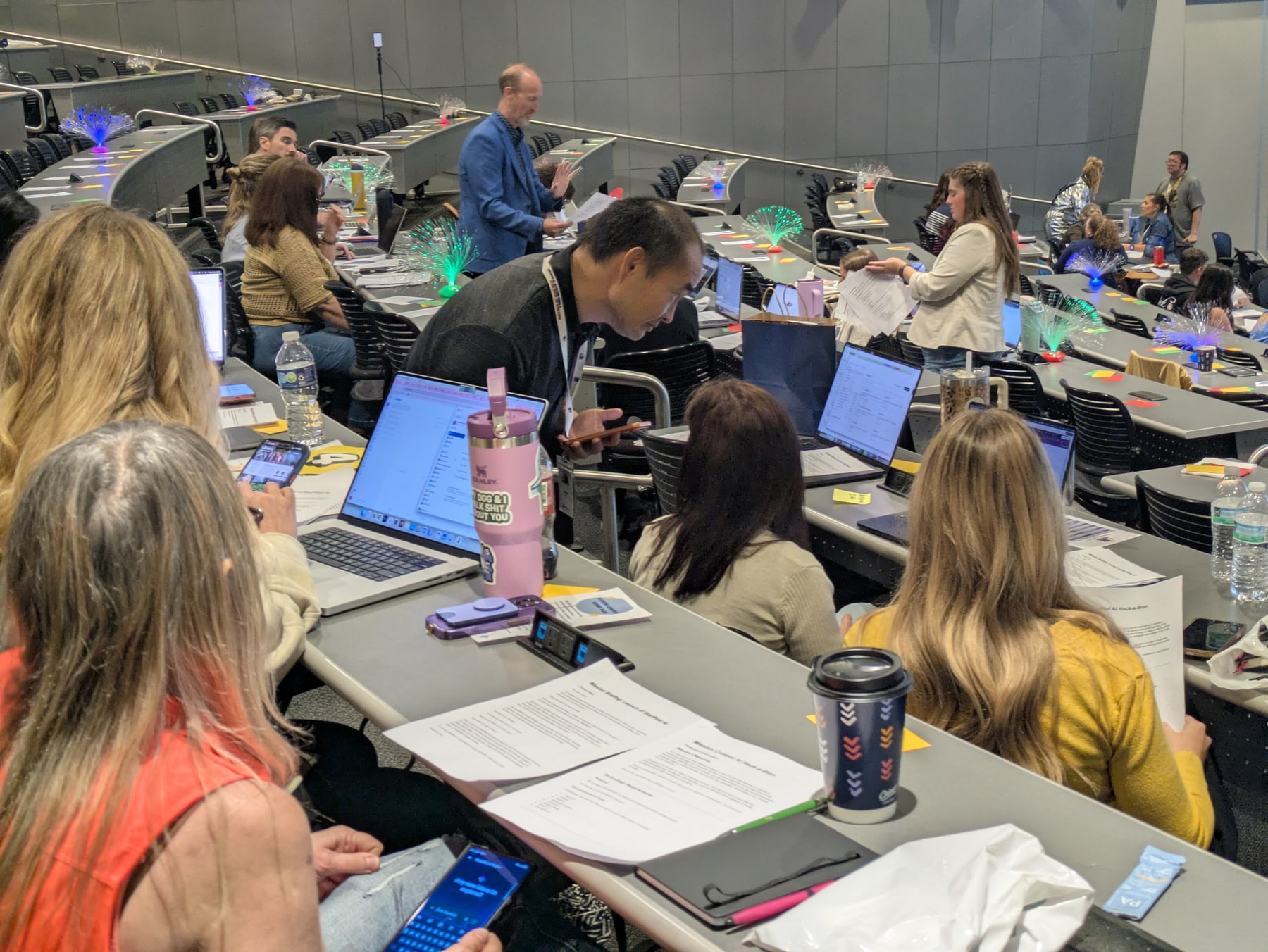
Dennis Yu coaching at the Digital Wichita summit, WSU Tech’s NCAT campus, June 18, 2026.
Choose your next step
For help putting the system in place, see our Cloud AI Setup, a done-with-you service that installs the system on your accounts and trains your team. For a coached learning route, explore the AI Builder apprenticeship program. For a do-it-yourself route, install our supported skill packs and follow the setup checks for the tool you use.
This page covers the allowance and cost part of the broader agent-building guide linked above. Our SEO Tree linking method explains why a supporting guide connects to its main topic and related examples: readers can move from a specific question to the next useful task.
Give your agent this brief
This appendix is a starting template. Fill in the blanks before the agent runs it. It does not grant access, spending, sending, or publishing permission.
Goal and reader: Finish [specific deliverable] for [person or audience] so they can [useful next action].
Start when: The owner has supplied the source files, chosen the deliverable, and confirmed the allowed actions.
Bring: [Source links/files], [current task instructions and revision], [quality checklist], [allowed product route], [usage reset], [approved budget], and [deadline if one exists]. Use the linked worker-coordination guide above for the handoff structure.
Do the work:
- Restate the result and list missing inputs. Pause the affected step when a required input is missing.
- Check the selected product’s billing identity, remaining allowance, and extra-charge settings. Pause dispatch if the billing identity or remaining allowance is unknown. Record other unknowns. Do not enable paid usage or change plans to continue.
- Run one bounded task using only approved material and tools.
- Save the artifact and evidence. Run the relevant checks against the original request.
- Correct supported failures within the same scope and budget. Escalate any new permission or consequential decision.
- Return the result, pass/fail checklist, measured usage, actual additional charges, and unresolved issues.
Deliver: One accessible artifact plus its check record. Passing means the agreed acceptance test has evidence. Unknown checks stay unknown; they do not count as passes.
Hand off to: [Named reviewer or responsible person], who accepts the work or specifies corrections. Sending, publishing, or deploying is a separate step requiring the appropriate authority.
Stop when: The acceptance test passes, an authorized limit is reached, required access is missing, or a decision needs the owner. Record the reason and the next action.
Related guides
- How we mapped the usage buckets: our August 2026 record of how we separated the Cursor, grok.com and Grok Bot usage meters. Plan prices there predate this update.
- A skill is how, a routine is when: the difference between a saved method and the schedule that runs it, in Claude, Grok Bot and Cursor.
- Persistent agents: why a repeated job needs a trigger, working files and a check on every run.
- Grok Bot is a roster, not four experts: what Grok Bot adds to an AI setup, and how its named workers, chat tools and repeat jobs differ.
- Cursor and local Qwen are not the same Qwen: how the Cursor app, a cloud Qwen model and a Qwen model on your own Mac differ.
- Install local Qwen: set up and test a local Qwen drafting worker on an Apple Silicon Mac.
- Let the model pick the model: how we tell Claude to hand small tasks to cheaper models and keep hard calls on stronger ones.
- How our AI agents share memory: keep one set of current notes so the next assistant can pick up a task where the last one stopped.
- Why I switched from ChatGPT to Claude: my head-to-head test and where Claude fits in daily work.
This guide sits under How We Build and Maintain AI Agents in our SEO Tree.
Originally published .
Dennis Yu
Dennis Yu is the CEO of Local Service Spotlight, a platform that amplifies the reputations of contractors and local service businesses using the Content Factory process. He is a former search engine engineer who has spent a billion dollars on Google and Facebook ads for Nike, Quiznos, Ashley Furniture, Red Bull, State Farm, and other brands.
Dennis has achieved 25% of his goal of creating a million digital marketing jobs by partnering with universities, professional organizations, and agencies. Through Local Service Spotlight, he teaches the Dollar a Day strategy and Content Factory training to help local service businesses enhance their existing local reputation and make the phone ring.
Dennis coaches young adult agency owners serving plumbers, AC technicians, landscapers, roofers, electricians, and believes there should be a standard in measuring local marketing efforts, much like doctors and plumbers must be certified. He has appeared on 353 podcasts with 619 credited episodes — see the full list of his podcast appearances.