
 by /
by /
Most people think of a Google Knowledge Panel as a vanity thing. You search your name, and there’s that nice box on the right side with your photo and bio. But it’s much more than that.
A Knowledge Panel is basically a real-time rendering of what Google understands about you. And with two-thirds of search results now coming through AI overviews, having a strong, clean Knowledge Panel is more important than ever. It’s the difference between being the Macy’s in the mall versus the little kiosk selling cellphone cases.
The problem: too many Andrew Picketts
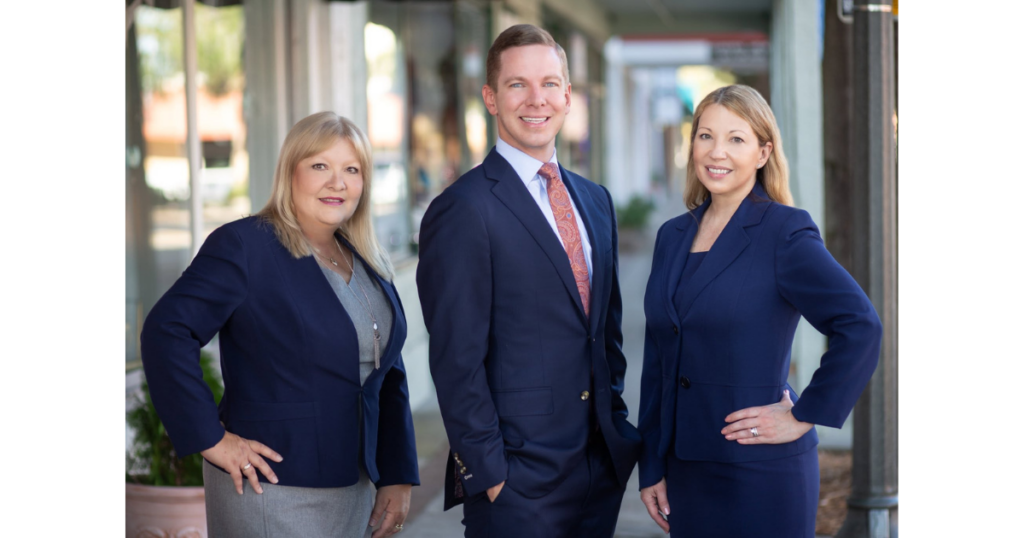
When I ran a Knowledge Graph lookup for my friend Andrew Pickett, a personal injury attorney in Melbourne, Florida, I found a confidence score of just 24. That’s low.
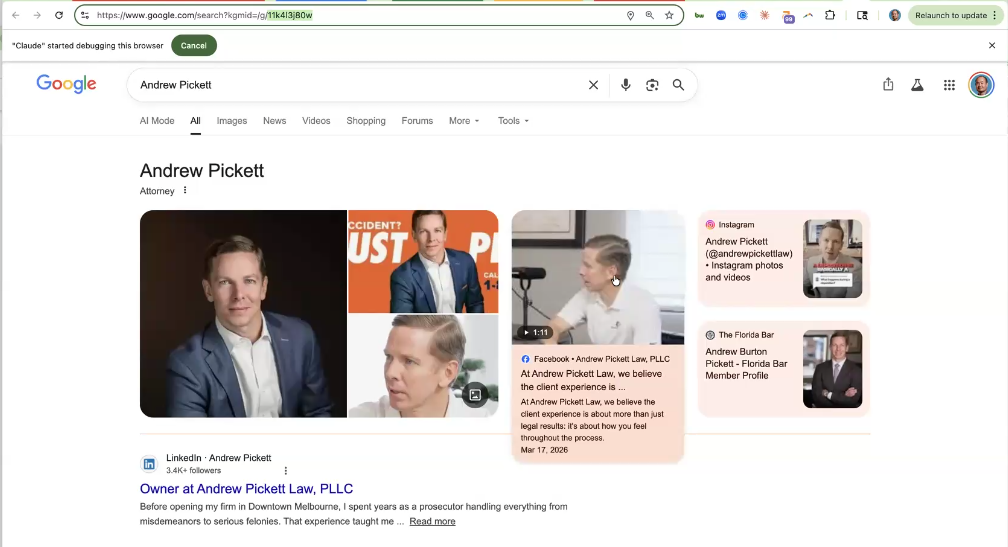
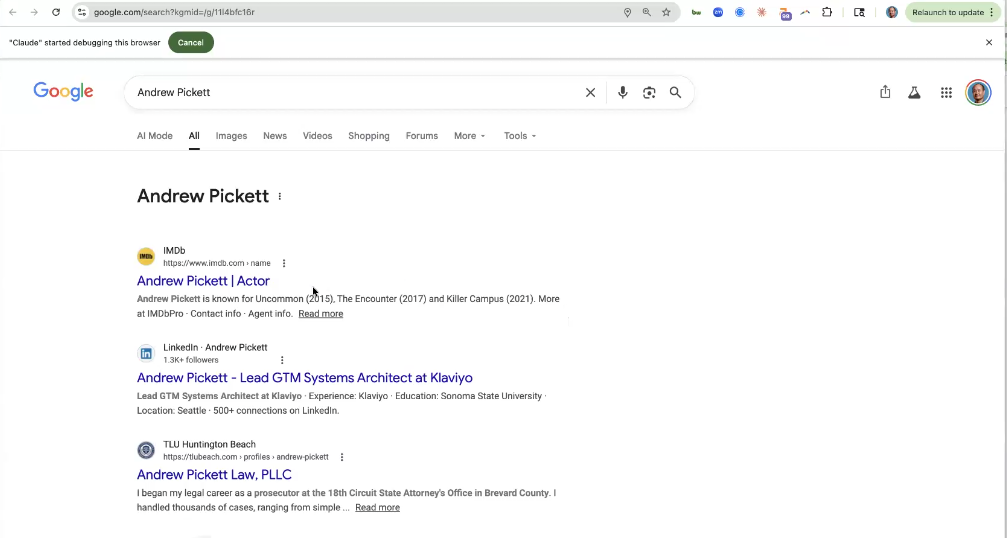
There were at least 24 other Andrew Picketts in Google’s database, including a Canadian football player, a cheerleader at BYU, and an actor at Klaviyo.

Andrew’s information was scattered across multiple entries, meaning Google was genuinely confused about who he was.

This is a common problem. If you have a semi-common name, your data gets mixed in with other people. Google doesn’t know which Andrew Pickett is the personal injury attorney, which one is the football player, and which one is the cheerleader.

Your citations, your mentions, your content, it’s all tangled up.
The diagnosis: disambiguation
Andrew nailed the diagnosis himself during our call. There are too many different signals, and they’re not all pointing in the same direction. That’s exactly right. We need to un-confuse Google.

The fix starts with building a proper knowledge base. All of Andrew’s videos, podcasts, mentions, reviews, and content need to be inventoried, organized, and structured in a way that Google and the LLMs understand.
If you want to understand the underlying structure of how entities and the Knowledge Graph work, watch episode one of the Marketing Mechanic where I break down the whole system from first principles:
Schema needs to be implemented correctly on the website. Content needs to be linked together. Rich snippets need to connect everything so it’s clear that this Andrew Pickett is the personal injury attorney in Melbourne, Florida, not the football player or the cheerleader.
The case study: how I did it for Sigrun
I recently went through this exact process for Sigrun, a female entrepreneur who helps women get to seven figures. She had 120 courses, tons of podcast appearances, and years of content. But none of it was linked together. It wasn’t tied to her website, wasn’t repurposed properly, and had no schema attached.

My team came in, inventoried everything, structured the data, and connected it all. Now if you search her name, she has a full Knowledge Panel.

More importantly, when you ask AI about who she is, AI gives a better answer. That’s the real win.
Using AI agents to do the heavy lifting
During my call with Andrew, I launched a Claude agent in real time to run a full competitive and SEO analysis of his website and online presence.
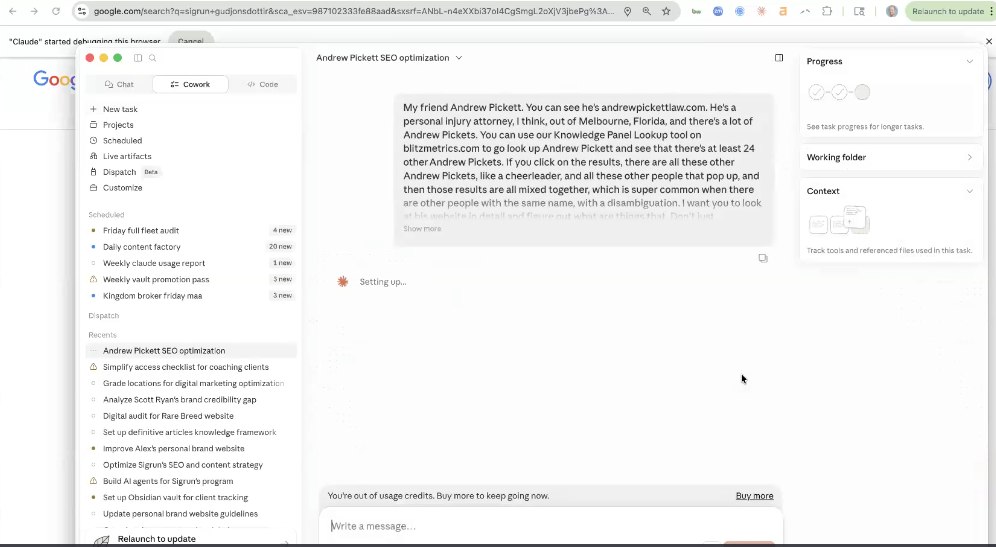
The agent went to work analyzing his site, reviewing his competitors, checking schema implementation, and putting together an actionable plan.

This is the power of AI agents. I’m not chatting with the AI. I’m asking it to do work. It spawns a series of tasks, keeps track of everything it does, and documents the process so I can audit it later. The analysis that would have taken a human team days to compile was running in minutes.

What’s next: AI Builders on the ground
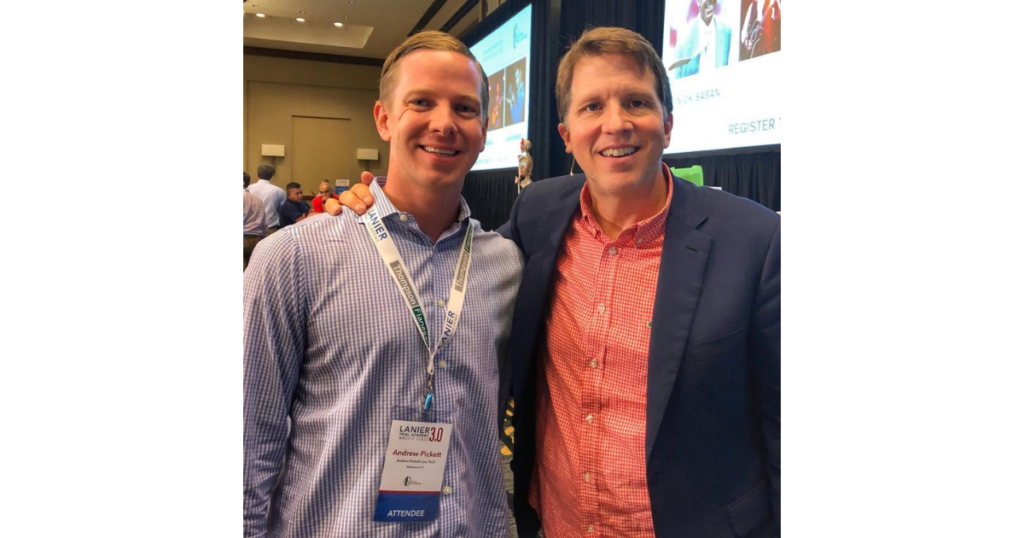
Andrew has enrolled two members of his team, Allison and Emma, in our AI Builder program. They’ll be the ones implementing this work on the ground, using AI tools to execute the knowledge panel strategy, manage content repurposing, run local SEO, and handle digital marketing for the firm.
This is exactly the model I’ve seen work across dozens of local service businesses. A motivated team member learns how to deploy AI agents, starts getting results for one client, and builds from there. The AI does 90% of the work while the human supervises, gives direction, and makes sure the quality is there.
If you’re interested in learning more about how the AI Builder program works, check it out here:
The litmus test
My success criteria for Andrew’s project are straightforward. First, I want to see a true, clean Knowledge Panel show up for Andrew that is properly disambiguated from all the other Andrew Picketts. Second, I want ChatGPT and Google to recommend Andrew when someone asks about personal injury attorneys in Melbourne, Florida. And third, I want to pass our own internal QA audit based on the standards we’ve published for how we do digital marketing and SEO for local service firms.
This is exactly the kind of issue an attorney Knowledge Panel audit should catch before prospects see the wrong person.
I’ll keep working until all three are met.
GO DEEPER: HOW THIS FITS THE BLITZMETRICS SYSTEM
• The Quick Audit: how we audit any business
• MAA (Metrics, Analysis, Action): the framework behind every audit
• The SEO Tree: how all our content connects
• Entity Linking: the decision tree for every link
• Knowledge Panels: getting Google to recognize you
• Every digital audit Dennis Yu has done
THE DELIVERABLE
Want this for your own name?
The Knowledge Panel work this article documents is a productized package.
Dennis Yu
Dennis Yu is the CEO of Local Service Spotlight, a platform that amplifies the reputations of contractors and local service businesses using the Content Factory process. He is a former search engine engineer who has spent a billion dollars on Google and Facebook ads for Nike, Quiznos, Ashley Furniture, Red Bull, State Farm, and other brands.
Dennis has achieved 25% of his goal of creating a million digital marketing jobs by partnering with universities, professional organizations, and agencies. Through Local Service Spotlight, he teaches the Dollar a Day strategy and Content Factory training to help local service businesses enhance their existing local reputation and make the phone ring.
Dennis coaches young adult agency owners serving plumbers, AC technicians, landscapers, roofers, electricians, and believes there should be a standard in measuring local marketing efforts, much like doctors and plumbers must be certified. He has appeared on 353 podcasts with 619 credited episodes — see the full list of his podcast appearances.