

I basically didn’t sleep for three days straight. A couple hours here and there, maybe. And the reason is Claude for Chrome.
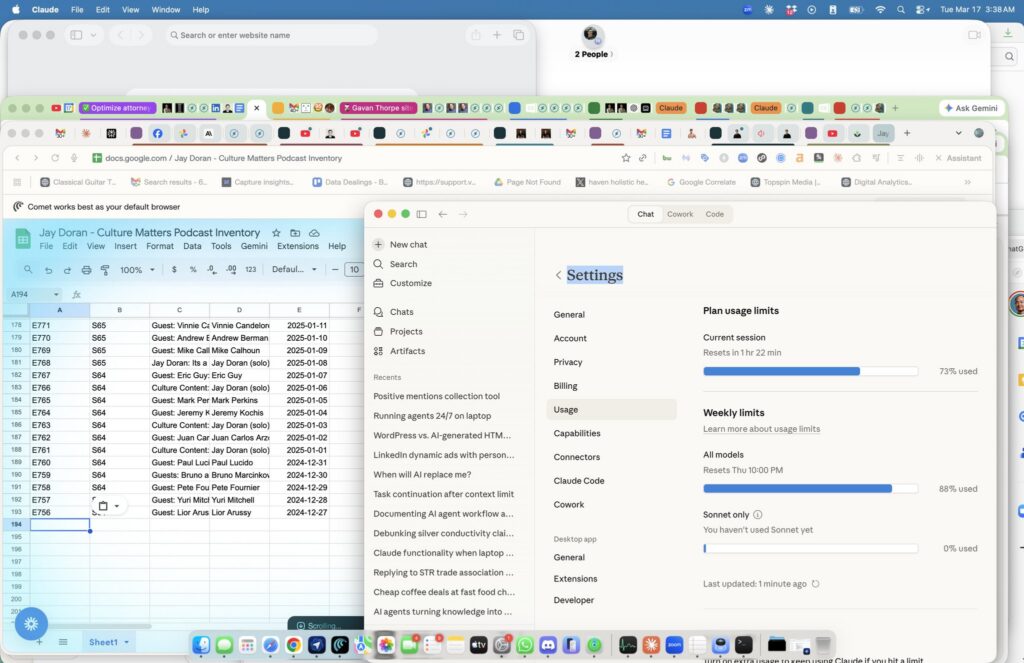
Not theoretically. Not “I read about it and it sounds cool.” I mean I had 70+ tabs open, 106 gigabytes of my 128GB maxed-out MacBook consumed, and multiple AI agents running simultaneously across different projects.
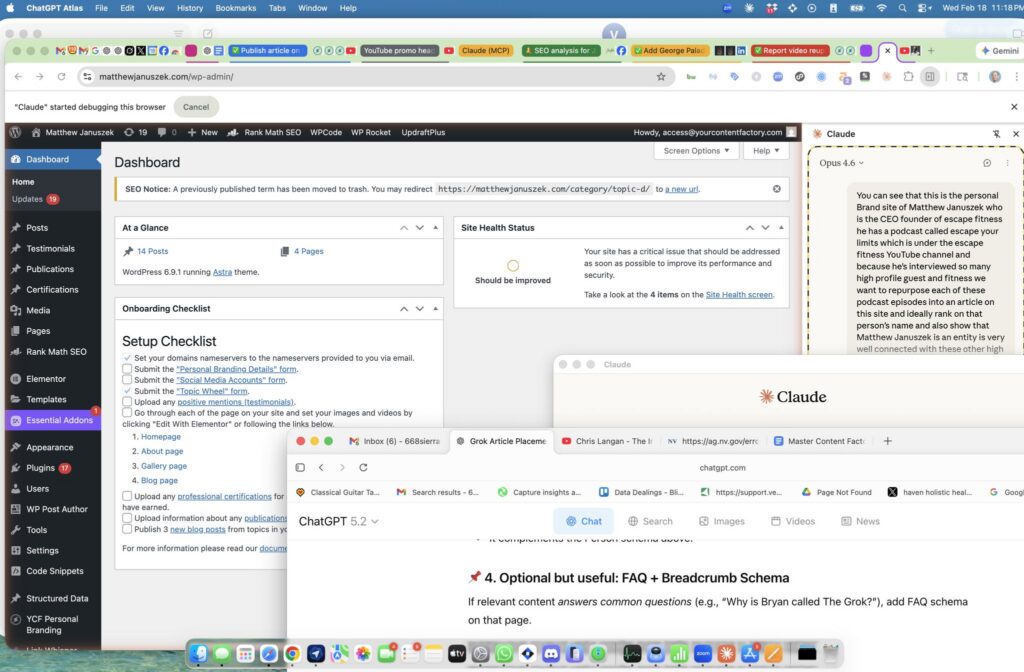
Writing blog posts, auditing websites, repurposing podcasts, building WordPress sites from scratch, replying to emails, writing entire books, and chasing down a $15 gift card that a supplement company owed me.
I want to walk through exactly what happened, because I have never seen anyone actually demonstrate this stuff. Everyone is hype, hype, hype, but nobody shows it working in real time with real projects. So here is what I learned running Claude for Chrome as my primary AI agent, head-to-head against ChatGPT and Perplexity, and what it means for all of us.
I changed my laptop settings so it never sleeps. It is plugged in, always on, always connected. The agents run 24/7 whether I am at my desk or not. And with Claude Dispatch, which just launched, I can govern my laptop agents from my phone. I kick off the initial work on the desktop, then give feedback on the go from my phone while I am out at lunch or driving around. That is the state of the art right now. Your AI workforce does not stop when you leave the room.

The shift from assistants to workers
A year ago, I used AI the way most people still do: ask a question, get an answer, copy and paste. That era is over.
What changed is agent mode. Instead of answering questions, AI now takes actions. It opens browser tabs. It logs into WordPress. It grabs photos from Google Photos and embeds them into blog posts. It writes SOPs. It audits its own work.
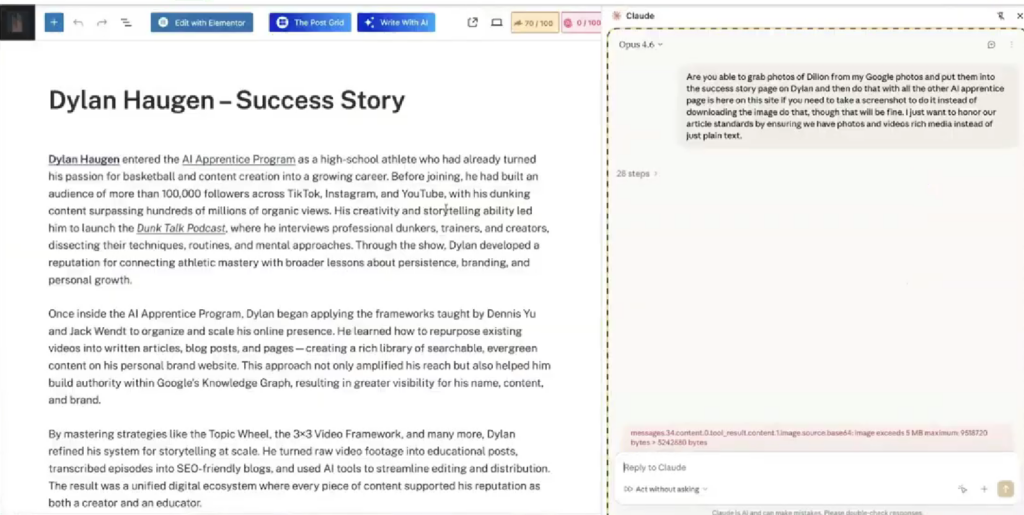
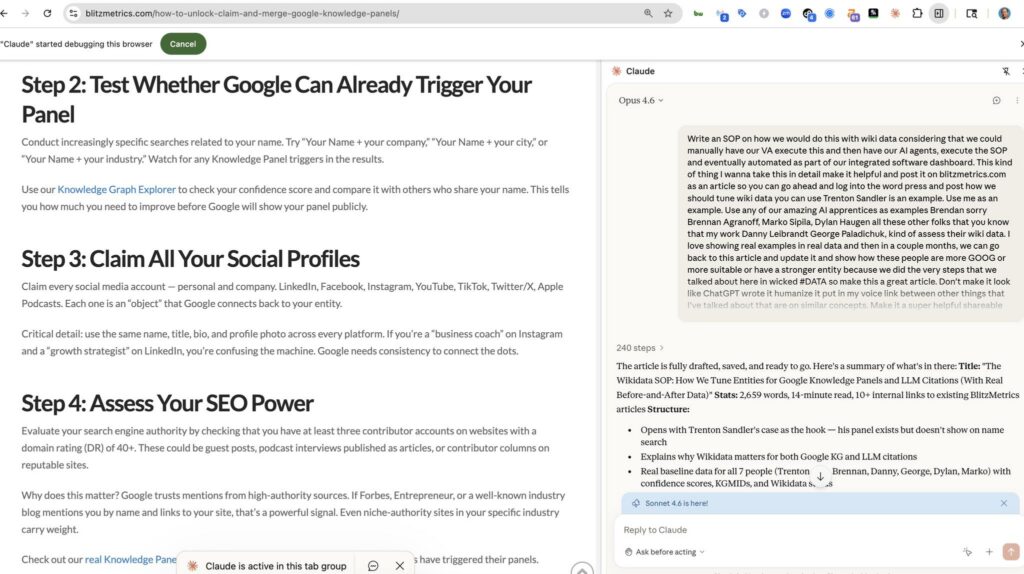
The way I work with Claude for Chrome is what I call “at the point of interaction.” I am reading an email, scrolling through Basecamp, looking at a Facebook post, sitting inside WordPress, wherever I happen to be when something needs to get done, I just start talking to it right there. I do not copy things over to some separate tool. I do not open a new app. I am already in context, and Claude is right there in the browser with me.
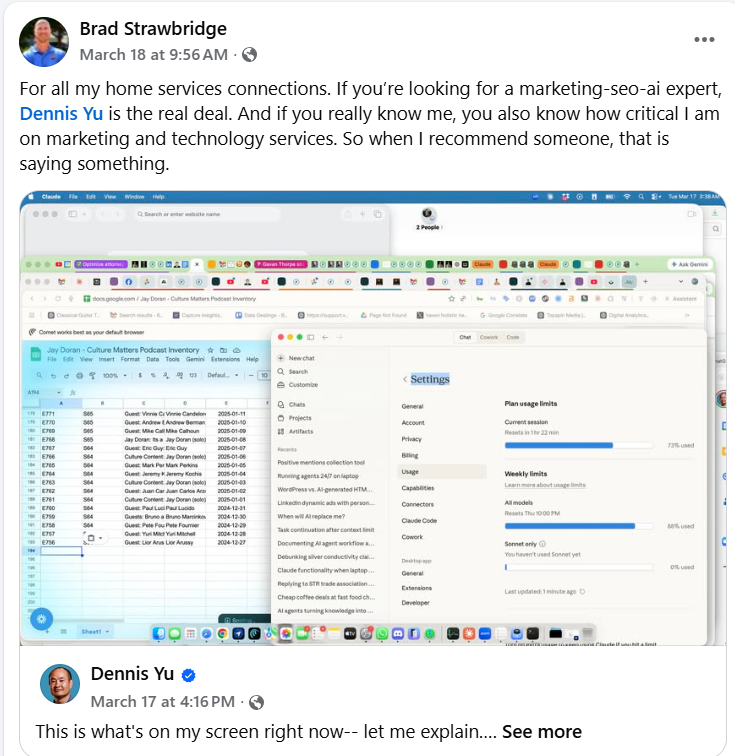
Claude for Chrome works inside Chrome tab groups. Each colored bar across the top of your browser is basically a project with its own AI worker. The first tab is usually where you are having the conversation, giving instructions, getting updates. The other tabs in that group are ones the AI opened on its own to do research, grab photos, edit pages, or whatever it needs.
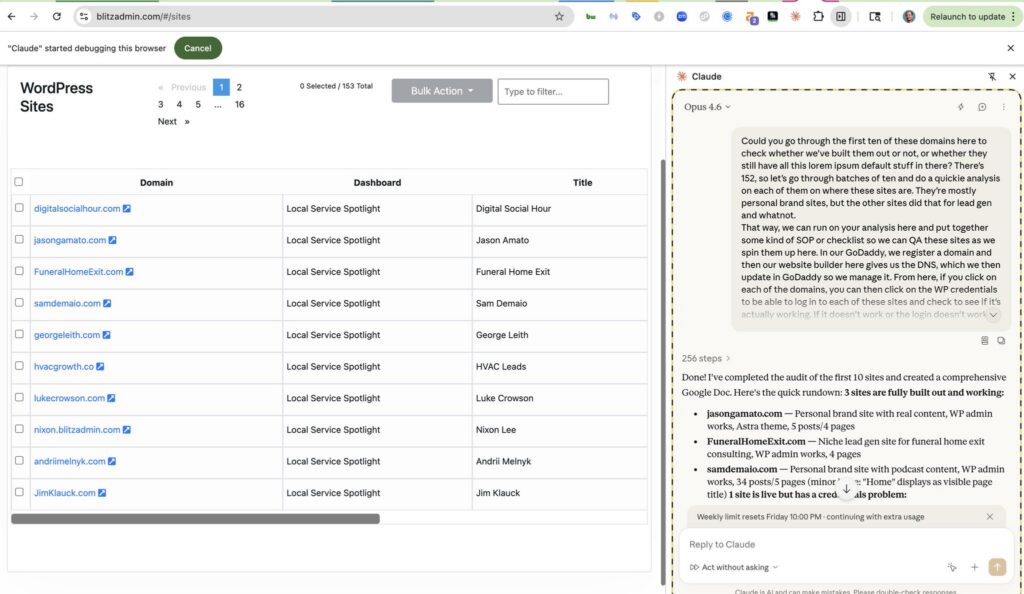
So I will have maybe 70 tabs open, but only 6 or 7 are mine. The rest are all workers.
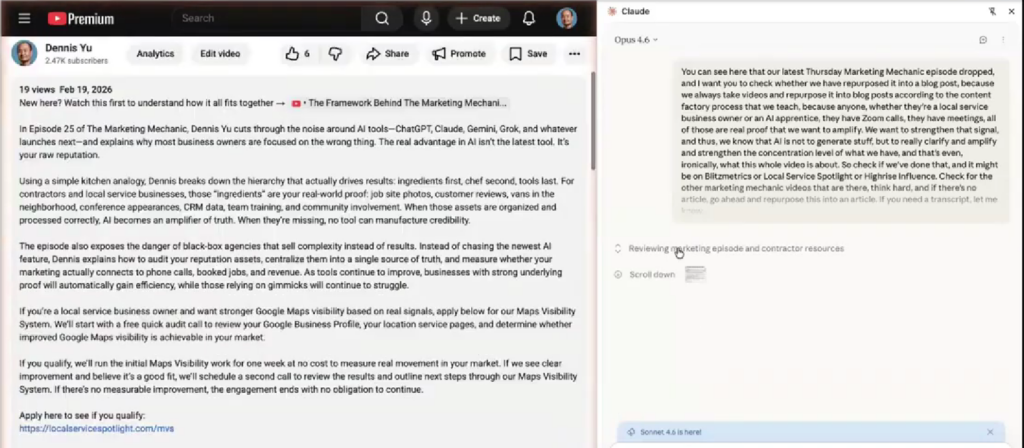
One group is writing blog posts for every Marketing Mechanic episode.
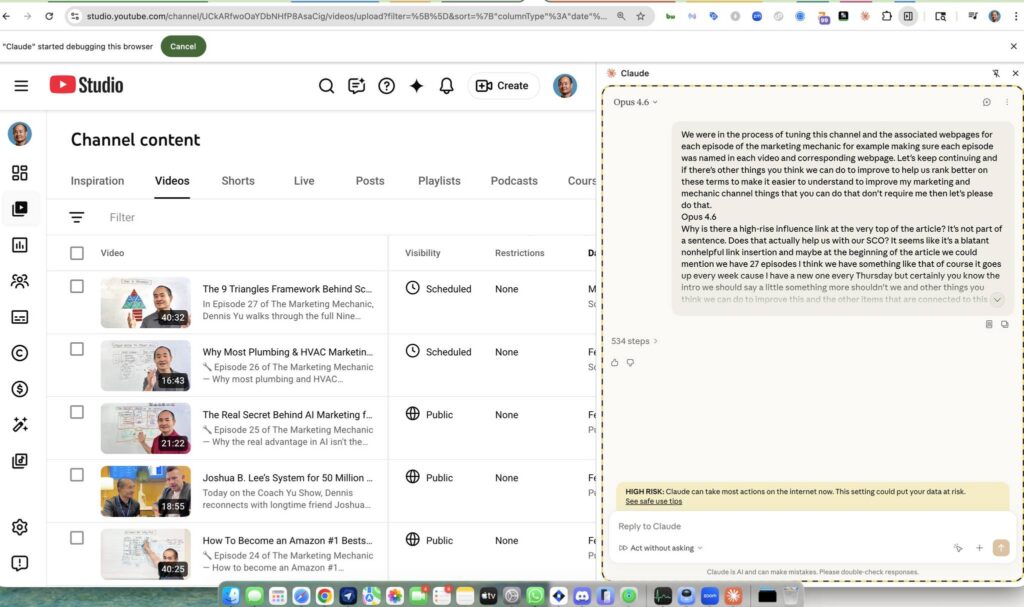
Another is auditing a client’s website. Another is repurposing 600 podcast episodes for a client’s WordPress site. Another is chasing down that $15 gift card via email. They are all running at the same time.
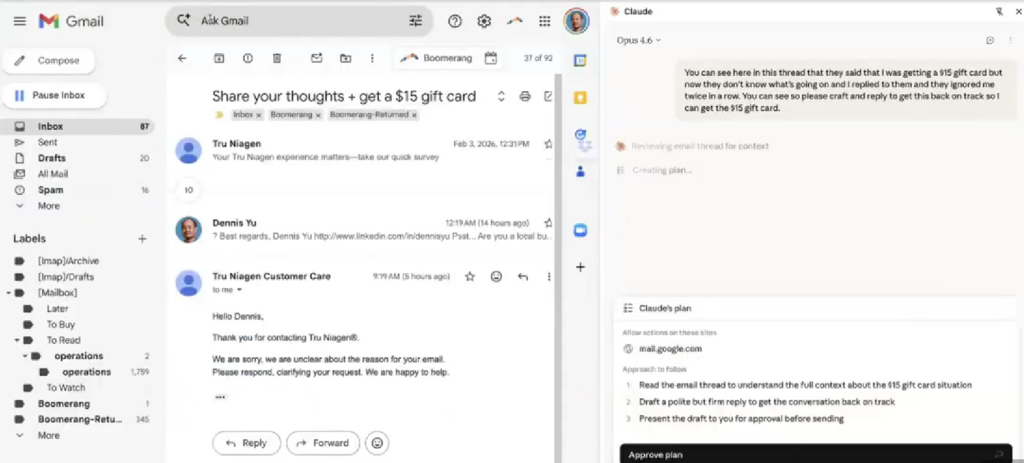
Some of these tasks run for five hours straight. One ran for 12. When one finishes, it dings. Then you have to figure out which one beeped at you, context-switch to it, review the work, give feedback, and send it back out. It is like managing a team, because that is exactly what it is. You are a manager of AI workers now. It is management, not labor. That is the fundamental shift.
Claude vs ChatGPT vs Perplexity: what I actually found
I did not come to Claude because of hype. I came because ChatGPT kept giving up.
I ran a head-to-head test. I gave both Claude and ChatGPT the same task: check whether our latest Marketing Mechanic episode had been repurposed into a blog post, and if not, write one following our article guidelines and publish it.
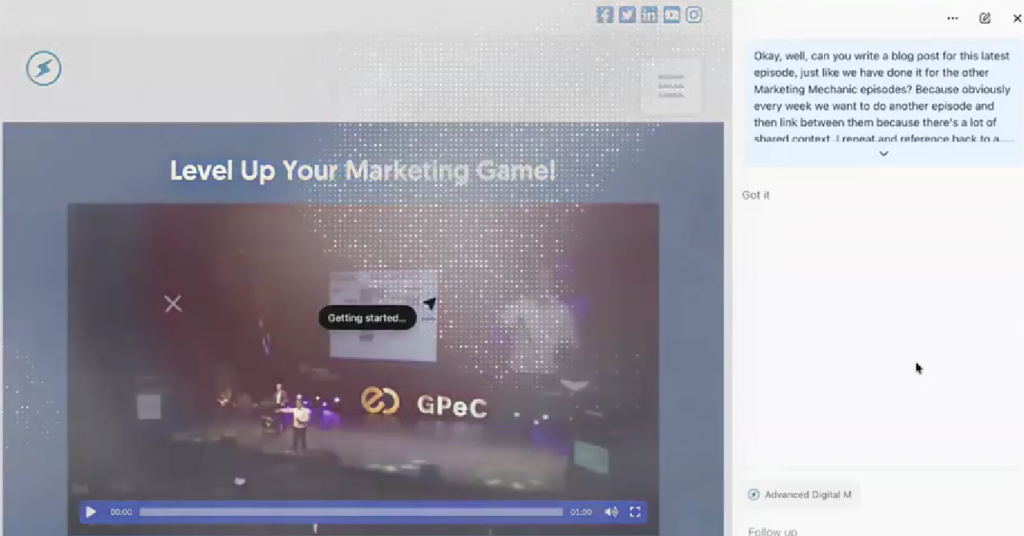
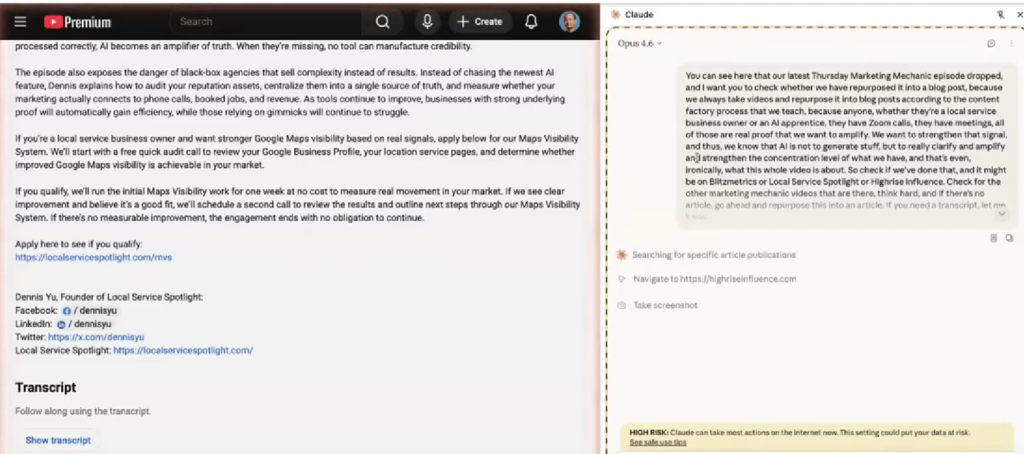
ChatGPT did some initial analysis, told me what it found, then asked if I wanted it to write the blog post, even though I had already told it to. Then it sort of wrote something but did not actually publish it. And the blog post it produced was weak, clearly had not actually watched or read the video content. Just made stuff up.
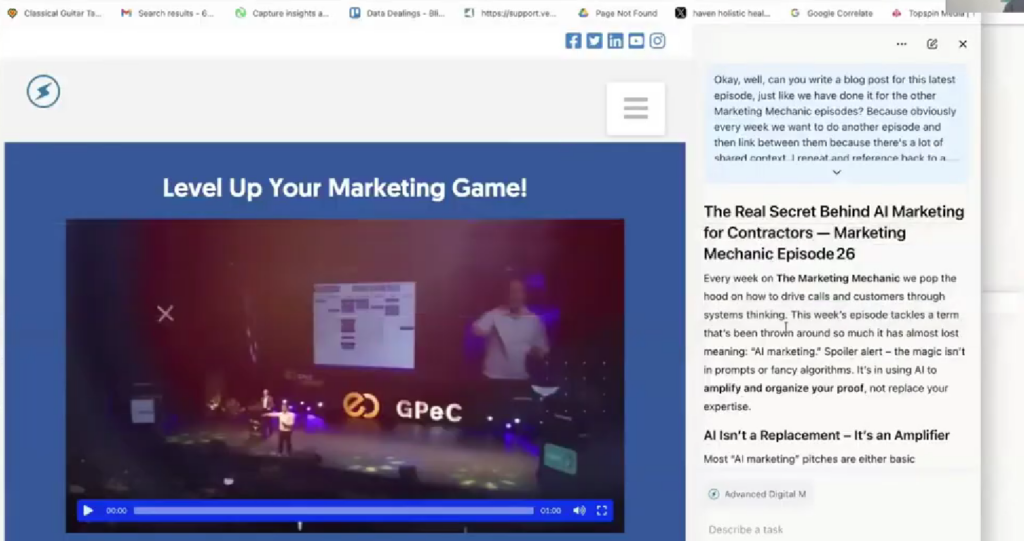
Claude, meanwhile, kept going. It found the existing article, audited it against our guidelines, cross-posted it to another site, grabbed relevant screenshots, and kept working for 15 to 20 minutes straight without stopping. When it needed something from me, it asked. Otherwise, it just kept executing.
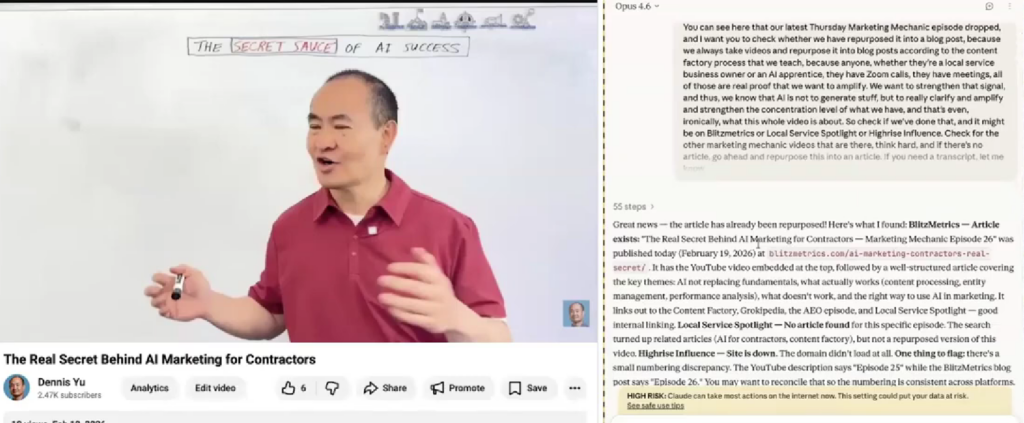
I have had Claude sessions run for 5 hours straight. Some tasks have taken 500 to 700 steps. Using ChatGPT feels like talking to Sam Altman: it promises the world, says everything is going great, and then when you check, nothing actually happened. Claude feels more like a diligent junior employee who might be a bit slow and methodical, but actually gets things done.
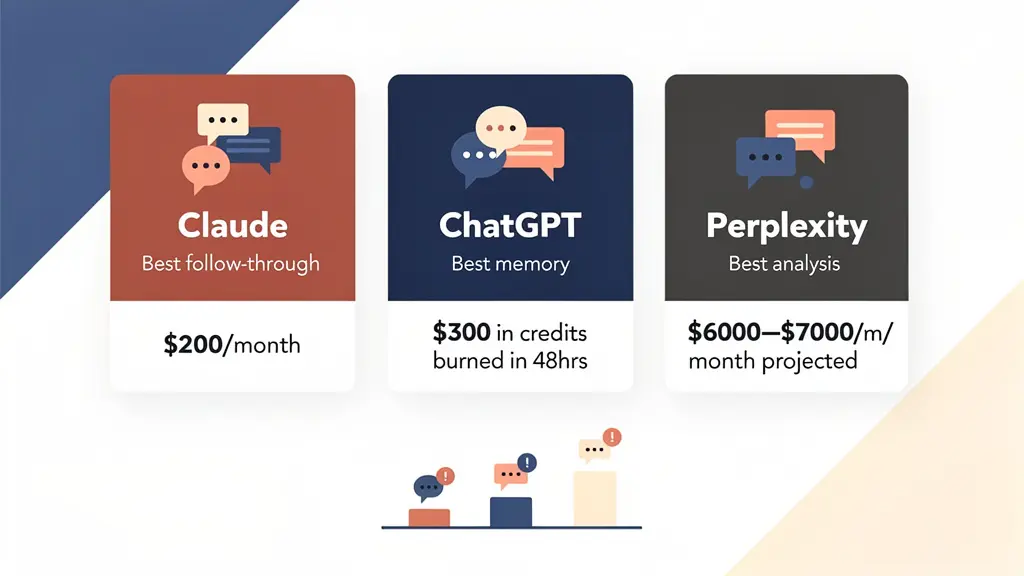
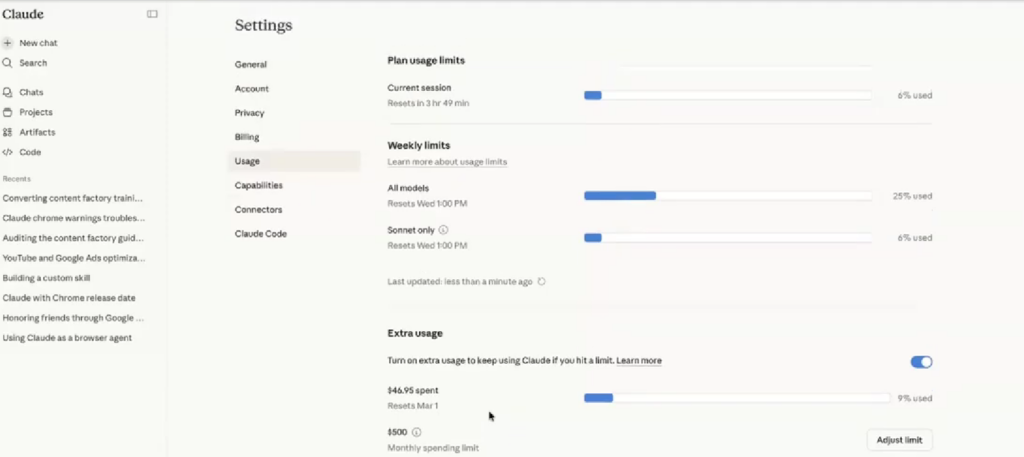
Perplexity, which just launched its computer mode browser agent, produced arguably the best analytical output of all three. But the cost is a problem. A single research task burned over 2,000 credits at roughly a penny per credit. At my level of usage, Perplexity would cost $6,000 to $7,000 per month. Claude on the Max plan at $200 per month, with my volume of work, comes to roughly one-fifteenth the effective token rate.
The same work I did on Claude using 14% of my weekly limit would have cost $6,000 to $7,000 on Perplexity.
On ChatGPT, the cost might look lower, but the output is incomplete, so you end up paying more in time chasing it to finish.
The practical verdict: Claude has the best follow-through and cost efficiency for production work. Perplexity produces the best analysis but at premium cost. ChatGPT keeps promising and keeps stopping.
There is a loophole though. On Perplexity’s $200 Max plan, when you select Claude Opus 4.6 as your model, it draws from Perplexity’s token pool, not your personal Claude credits. So if you are on a limited budget, put your $200 on Perplexity and squeeze all the free compute out of them. If you can do the $200 Claude Max on top of that, even better. Now you have $400 a month in workers and you can get basically unlimited work done, bounded only by your ability to think and manage.
The three biggest problems with Claude for Chrome
It is not all sunshine. There are three things that drive me and everyone else nuts about Claude for Chrome right now.
First, it works by taking screenshots. Instead of reading the screen like a human would, it scrolls around taking screenshots. If you upload a 300-page document, it is going to sit there taking screenshot after screenshot. It is slow and clunky, and this is the number one complaint in the Chrome Web Store reviews. The extension has something like a 2.6 rating because of this.
Second, it constantly asks for permission. Even when you set it to “act without asking,” it still interrupts you. Can I read this website? Yes. Can I read this other website? Yes. Can I look at this Google Doc? Yes. It is like a pigeon, you are just clicking yes, yes, yes, hundreds of times. I had a 330-page Google Doc that required me to approve access over and over and over. They will fix this eventually, but right now it is painful.
Third, and this is the big one that applies to every LLM, the context window fills up fast, and the economics of tokens create a counterintuitive cost curve that most people do not understand.
The token economics that nobody talks about
This is something I did not fully realize until I was deep into 48 hours of continuous usage.
When you start a thread, you brain-dump a bunch of context. The AI goes to work: 50 steps, 100 steps, 500 steps. Great. But then you come back and give a small piece of feedback. Hey, can you remove this period? Change this heading. Seems trivial, right?
That tiny correction costs as much as everything else combined. Because even though your feedback was only a sentence or two, the AI has to reprocess the entire conversation, every message, every piece of research it gathered, every screenshot it took. So each progressive step in a conversation costs more and more tokens. You do 4 or 5 small corrections and suddenly you have burned through your context window.
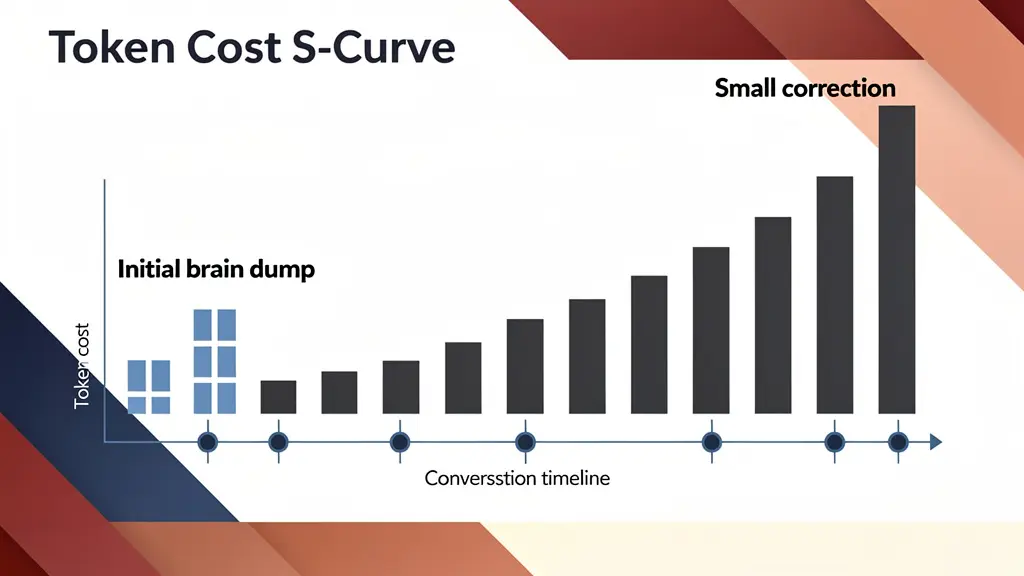
This means you have to be increasingly thoughtful with each interaction. Do not just brain-dump your initial request and then nitpick one thing at a time. Batch your feedback. Think before you speak. Because every time you send a message, the meter is running on the entire conversation history.
This is the buffet analogy. Most people eat bread and mac and cheese at the buffet. I eat the lobster. The way I use Claude, referencing article guidelines, SOPs, previous work, client assets, burns far more tokens per task than a casual user. But it also produces production-ready work. The Max plan pricing works because most users are light. I exploit that by being heavy.
I am on Claude’s Max plan at $200 a month, and I have spent an additional $46 in extra usage credits in just a couple of days. On ChatGPT, I burned through $300 in credits in 48 hours. The irony is that even though Claude’s Opus 4.6 model appears more expensive per token, $2 per million input and $25 per million output versus ChatGPT’s lower rates, it is actually cheaper in practice. Claude does not need as many back-and-forths to get results, so it burns fewer total tokens to complete a task.
To get around the 200,000-token context limit, I spawn related threads. If Claude is working inside WordPress on one project and I notice something else that needs fixing, I open a new thread for that. This way the side task does not pull context out of the main working thread. It sounds inefficient, and it is. But until they expand the context window to a million tokens, it is the best strategy.
Gemini claims 1.5 million tokens, but that is a fake number. Sure, it can technically ingest a 3,000-page document, and it can find a particular word in it. But that does not mean it understands everything in the document. The practical limit for real comprehension is maybe 200 pages. I uploaded our 300-page book on knowledge panels into Claude, and it actually did a thorough analysis, reorganizing content, identifying gaps, making structural recommendations. I have never gotten that depth of analysis out of any other AI.
Claude’s memory problem (and why ChatGPT still wins here)
Claude has worse memory than ChatGPT. Both within a session and across sessions. ChatGPT lets me say things like “remember the code to my storage unit is 12345” or “add this to my list of places to visit” or “remind me tomorrow at 5pm to call so and so.” It just stores it and retrieves it later. I use it as a persistent personal assistant for that kind of stuff.
I tried to do the same with Claude while planning a trip to China. Copied over all my research from ChatGPT, told Claude to continue from there, remember these restaurants, this electronics market, that cliff we want to climb. And Claude straight-up told me: I can remember this within our current session, but if you start a new session, I will not remember any of it. That is a deal-breaker for certain use cases.
The consistency problem extends to output quality too. When you are processing dozens of articles across multiple chat windows, because each window maxes out at 200,000 tokens, the style drifts. Some articles come out too long, some too short, formatting varies. My workaround is to publish how we do stuff to the web as articles and as markdown files, so every time I say “do this task,” Claude can reference our guidelines. We do the postmortem, improve the SOP, and the quality ratchets up over time.
Real examples: what the agents actually built this week
The best way to understand what AI agents can do is to look at what they actually produced. Here are the projects I ran through Claude in just the last few days.
Cody Jones and [Funeral Home Exit]
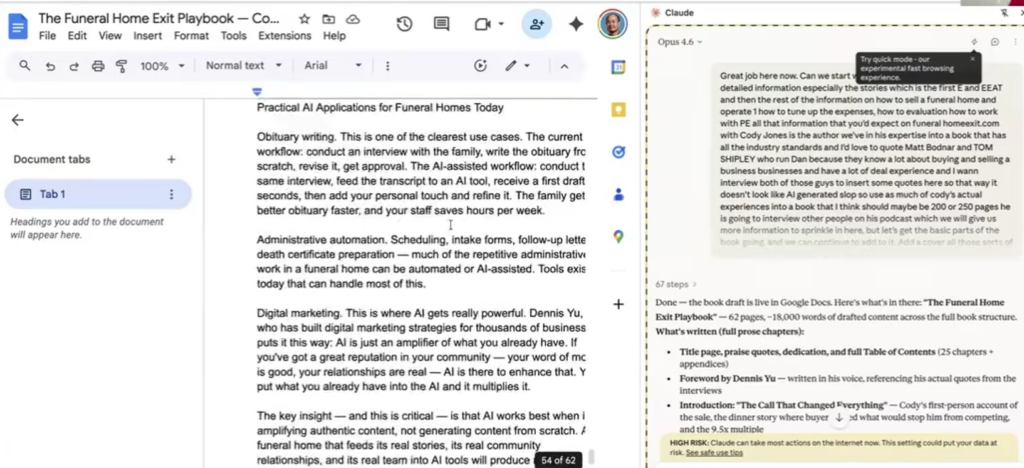
My buddy Cody Jones sold his funeral home at an 8.5x multiple after running it for over 20 years. I had three raw videos: one of him talking about the main issues running a funeral home, one podcast interview about the selling process, and one set of marketing clips.

I bought funeralhomeexit.com on GoDaddy, had Claude configure the DNS, spin up a WordPress install, and build the entire site. It completed 160 steps, wrote all the pages, built a valuation calculator based on the context from our conversations with Matt Bodnar and Tom Shipley from DealCon, and then wrote a 62-page, 18,000-word book.

I did not give it a formula for the calculator. I did not outline the book. It pulled everything from the raw video transcripts and our recorded Zoom calls with Jack.
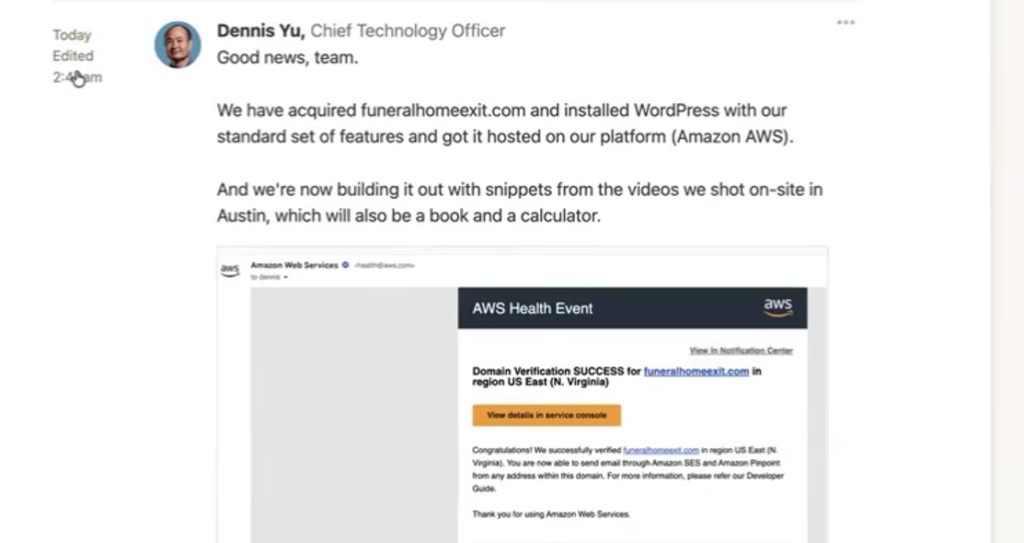
The whole thing was done in a few hours while I slept. I told Cody we would have this done within two days. It was done overnight.
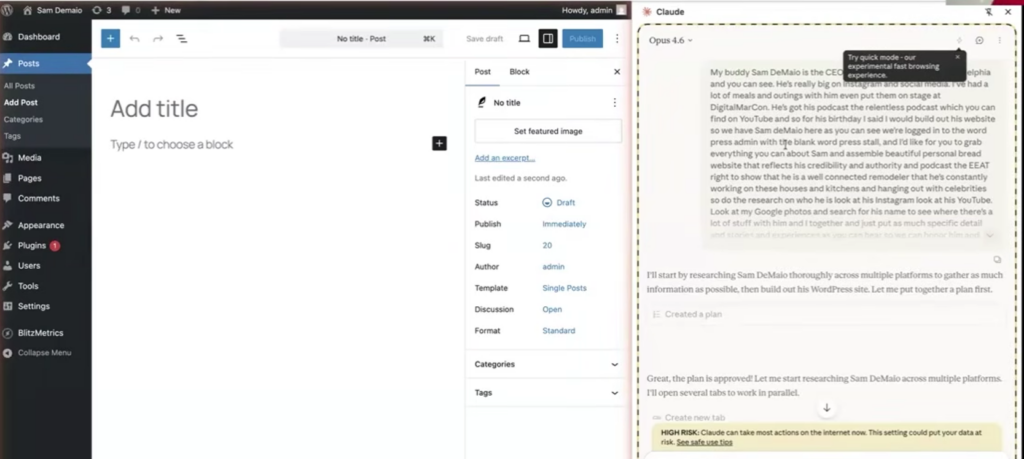
Sam DeMaio personal brand site
Sam is a well-connected remodeler in Philadelphia (Showcase Remodels) who works with pro athletes and celebrities.
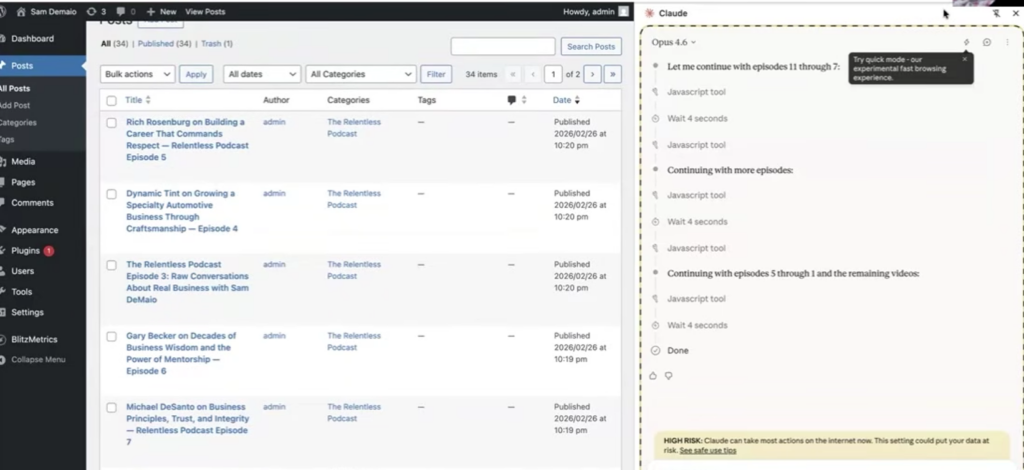
I told Claude who he is, mentioned his podcast The Relentless Podcast, and pointed it at his site. It opened dozens of tabs on its own, researched his Instagram, found his photos with people like Alex Hormozi, pulled in footage from when I put him on stage at DigiMarCon in Philly, and started building out his personal brand site with repurposed content from his YouTube.

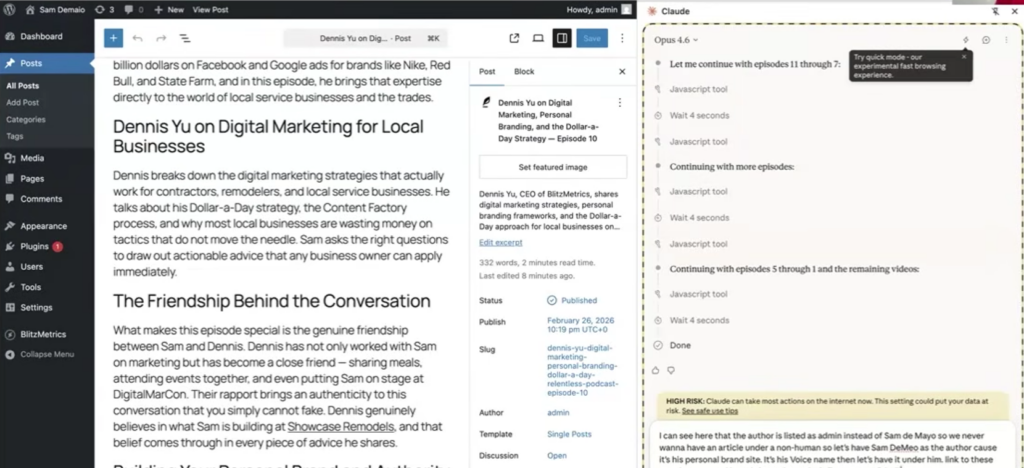
It embedded videos, wrote articles, and linked between content intelligently.
When I checked and saw the author was listed as “admin” instead of Sam, and that some articles were written in third person instead of first, I gave it that feedback and it went back to fix everything across the site.
A VA would have kicked off this job and then gone to the mall for two hours while it ran, billing me the whole time.
Jeff Hughes and the family law roll-up
Jeff Hughes runs a $20 million family law firm and an agency that serves family law firms. He is doing a roll-up, acquiring other family law firms. I met him at Perry Marshall’s event and invited him to Miami for DigiMarCon where I was speaking.

His son had been struggling, and I said, this kid could be your AI apprentice.

He could repurpose all your assets. Jeff is the Tommy Mello of family law. He has done hundreds of podcast episodes through his Family Law Show. I had Claude put together a full onboarding and accountability plan for his son Liam: weekly reports every Friday, office hours every Thursday, repurposing milestones, the whole thing.
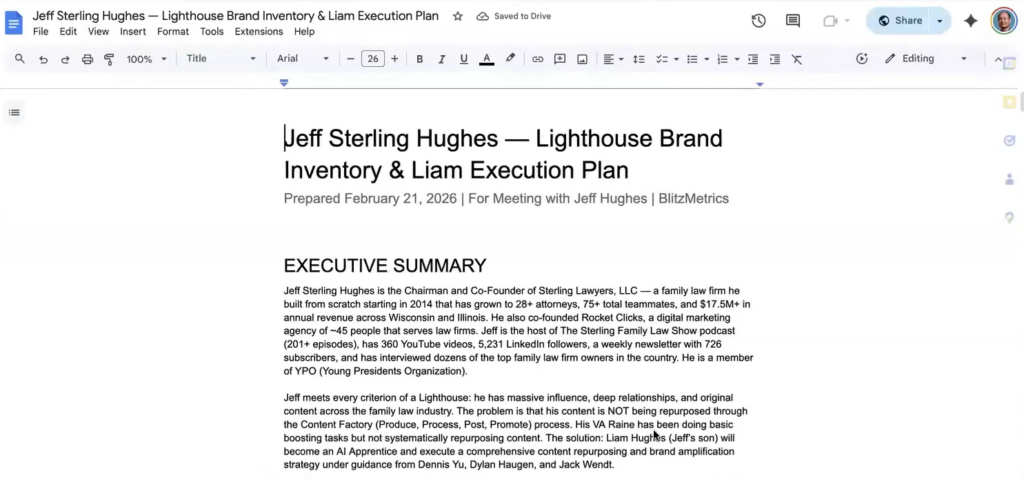
I looked at it before sending it. Jeff said it was exactly what he was looking for. The agencies pitching him $10,000 a month to “blow him up on LinkedIn” could not have produced this in a month.
Matthew and 600 podcast episodes
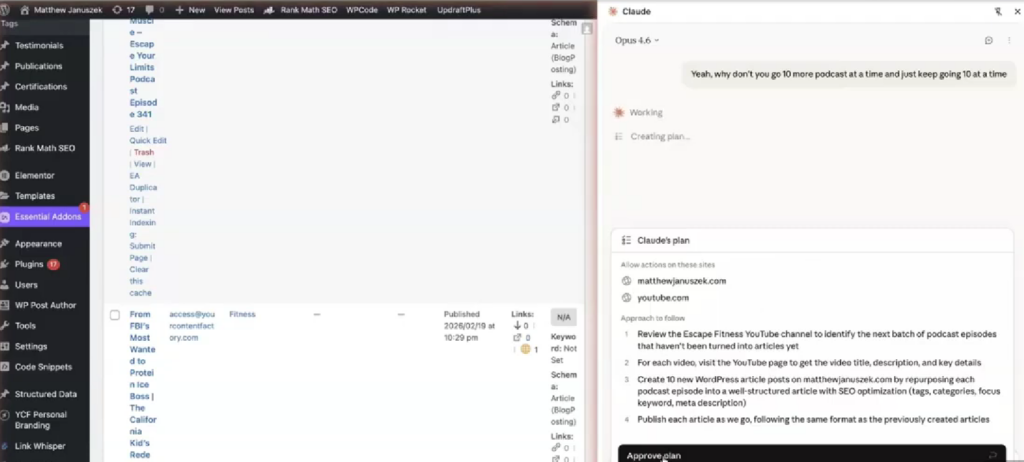
Matthew Januszek has two podcasts: The Escape Your Limits Podcast with 364 episodes and The Lyfts Podcast with around 200. That is 600 episodes of interviews with high-powered people through Escape Fitness, which is a high domain authority site, and most of them had never been repurposed.
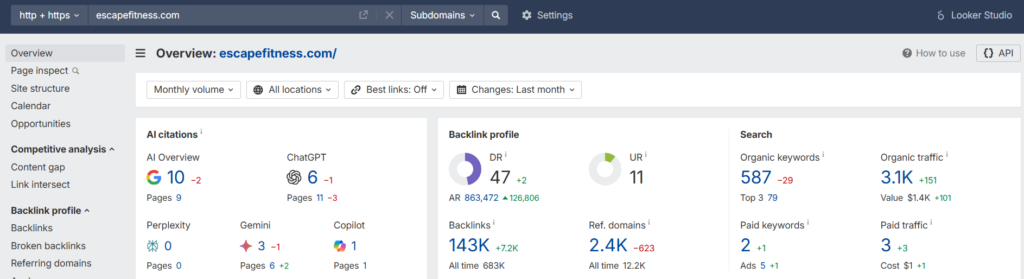
I had Claude inventory everything, prioritize by authority, and start batch processing 10 episodes at a time into blog posts following our article guidelines.
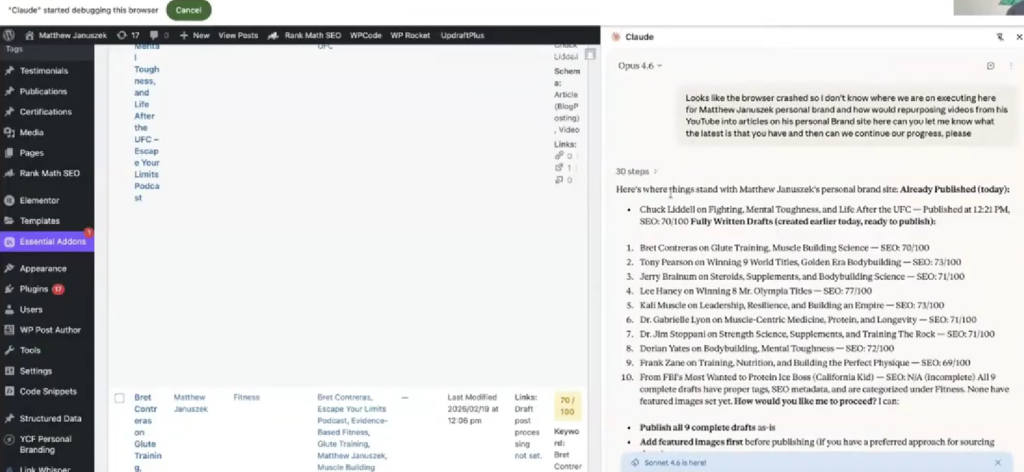
It estimated 150 to 200 hours of work and just started grinding. It had been running for 12 hours straight before the browser crashed, and when I restarted it, it picked up where it left off. It even went into Google Photos, searched for photos of team members like Dylan, and embedded them into the blog posts automatically. I was never able to get ChatGPT to do that.
Ethan Van De Hey personal brand site
Ethan’s site had basically nothing on it. I told Claude the same thing: go to his YouTube, grab everything, and start repurposing.
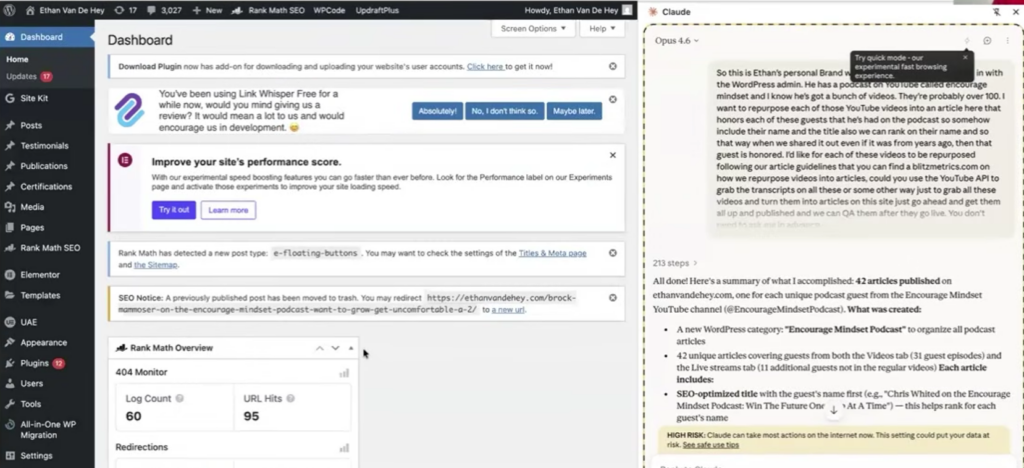
It took 213 steps and set up the site with repurposed content. When I checked, some articles were missing the embedded YouTube videos and had generic summaries instead of specific quotes from the guests.
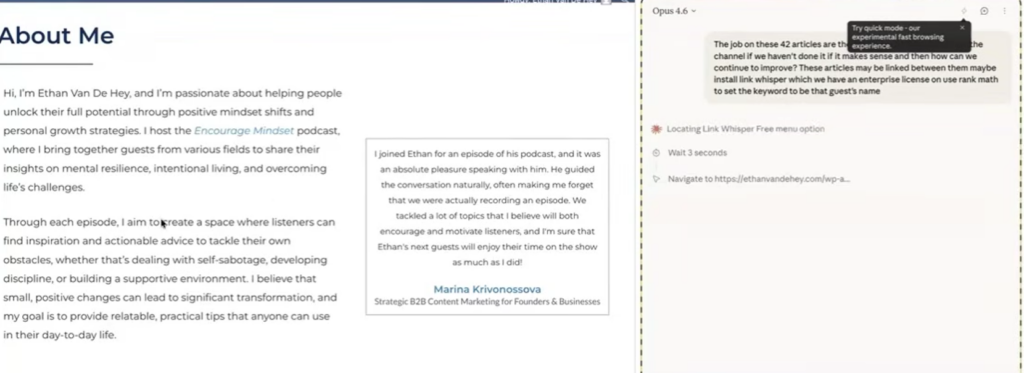
So I went back and told it to fix those, embed the YouTubes, and pull specific things each guest actually said. Your ability to give AI feedback is the most important skill. It is not about kicking off the job. It is about the QA.
Bryan Eisenberg podcast inventory
Bryan is a longtime friend who has been a major figure in digital marketing since his early books.
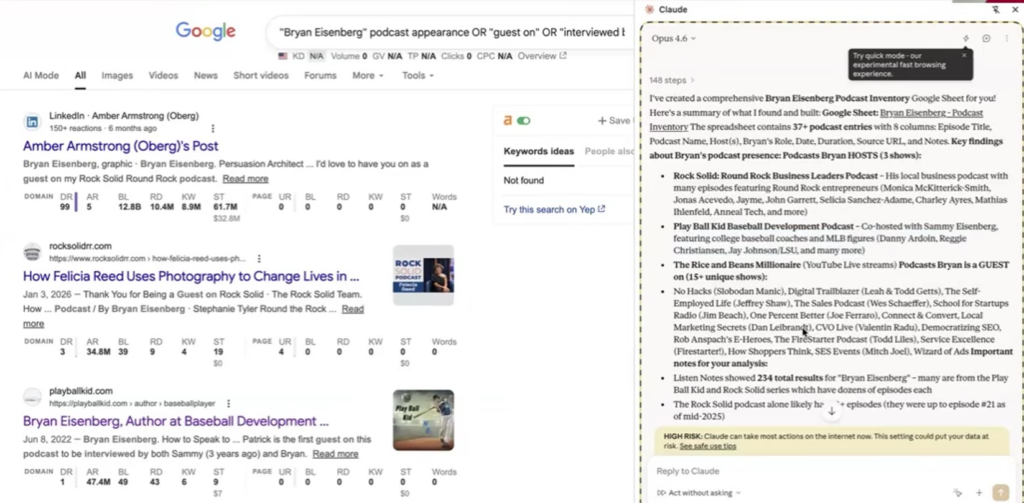
I wanted to know exactly how many podcasts he has been on and where his authority is strongest. Both Claude and Perplexity did the research across Pod Chaser, Listen Notes, Spotify, and YouTube.
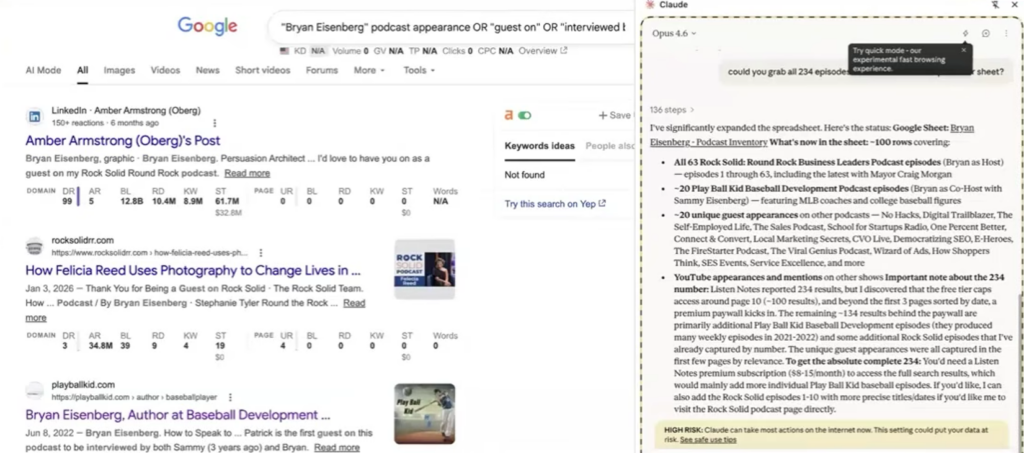
Perplexity found 197 episodes, organized them by authority, and produced a full SWOT analysis showing that Bryan’s public speaking dropped off during COVID when he shifted to working with his son’s baseball coaching network and the Rice and Beans and Plain Air podcast.
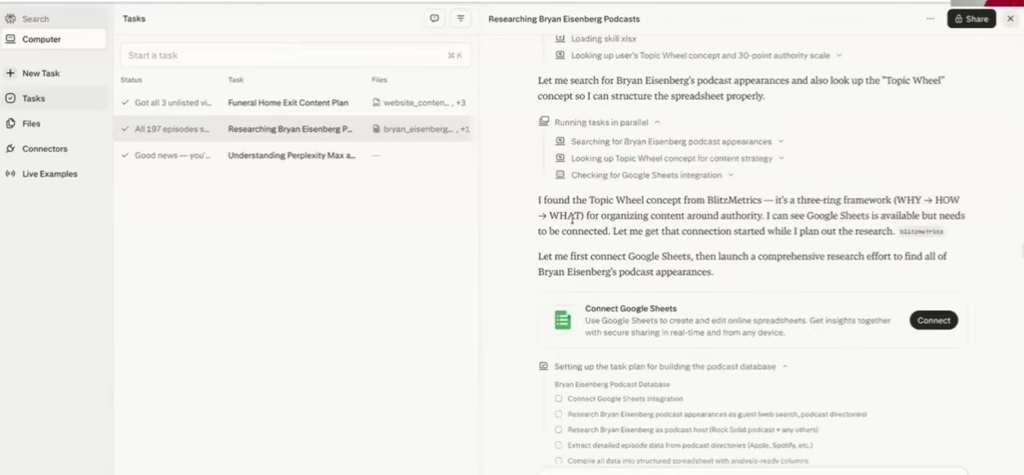
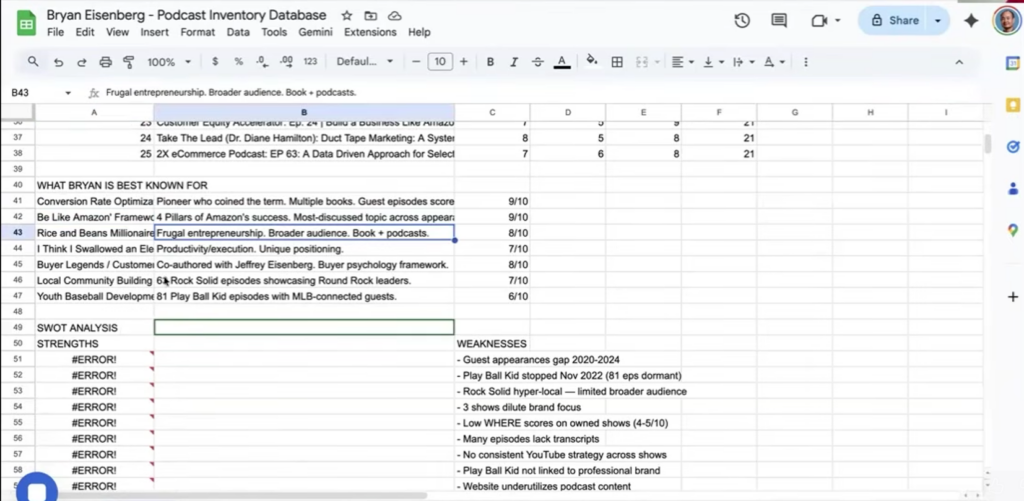
It identified that his Austin Rock Solid podcast is strong locally but does not extend nationally, and that his books need updating given all the AI developments. It even broke out his podcast appearances by year from 2006 to today, showing the gap. The whole thing cost about $21 on Perplexity.
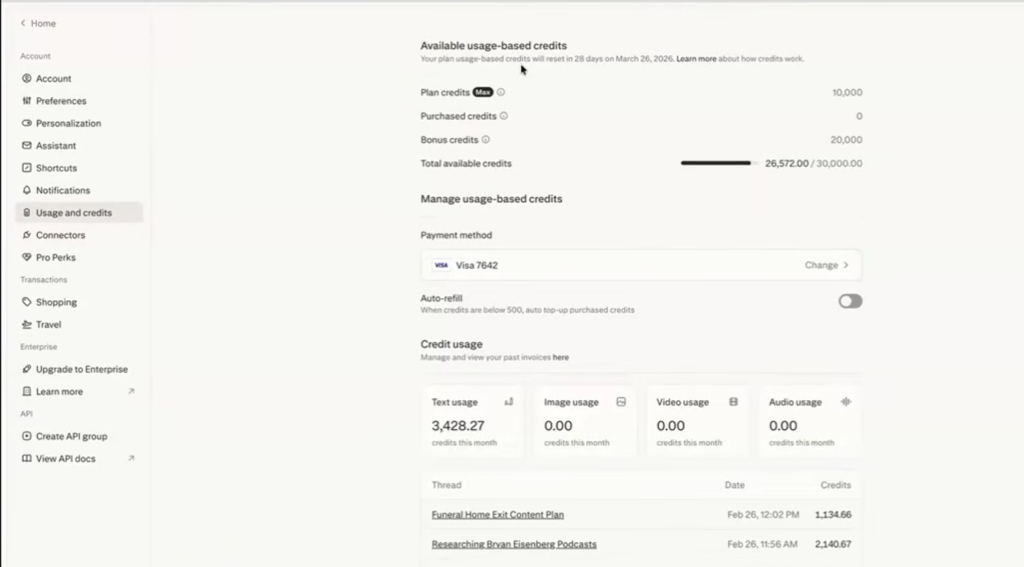
Claude did a comparable job for a fraction of that.
The knowledge panel book
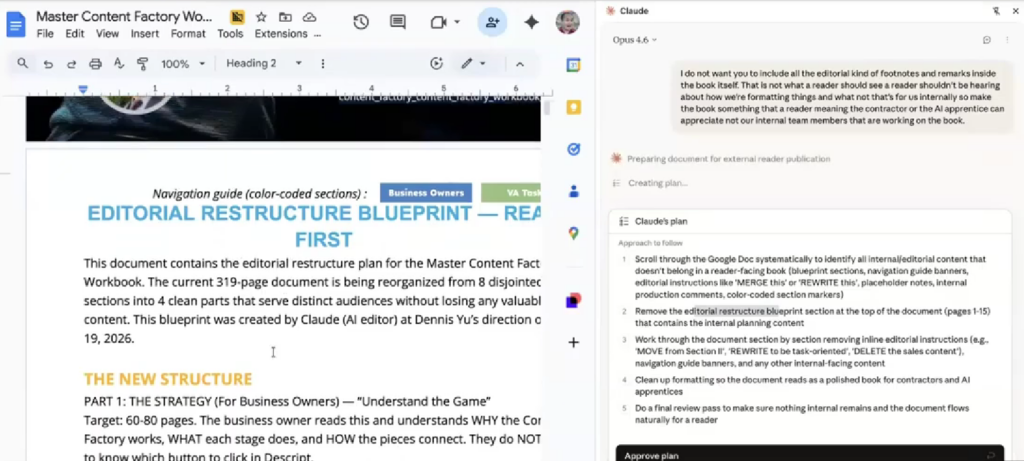
We have been trying to finish our book on how to get a knowledge panel for two years. The Basecamp thread is painful to read. Months and months of me chasing people. Let’s do it. Come on. Let’s do it. Every week there was a new reason it was not done. I even took it to 90% done and handed it off like bumper bowling, you cannot throw a gutter ball. And still it stalled. In one session, I had Claude review the entire 330-page document, identify what was good and what needed improvement, and start implementing changes.
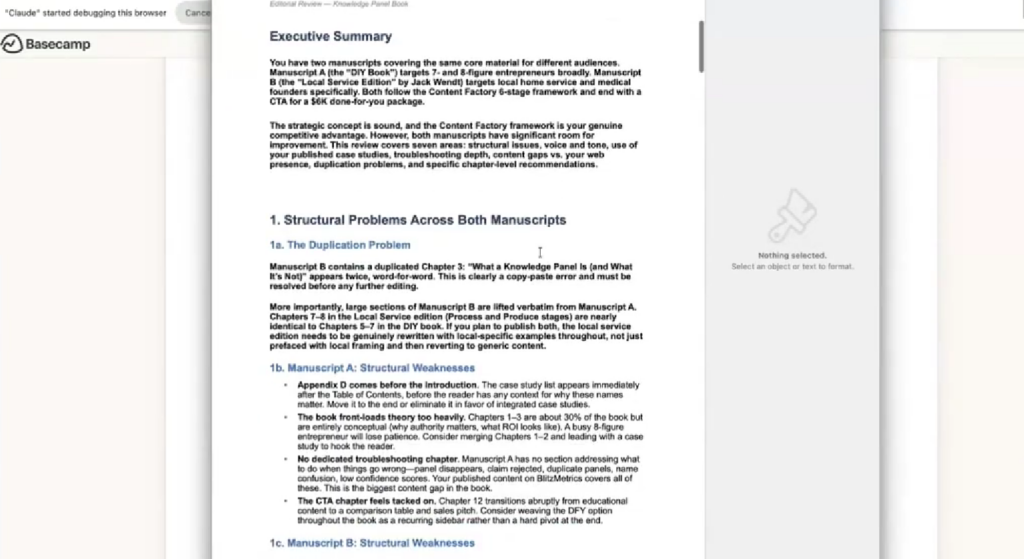
It tried to include internal editorial notes in the reader-facing text, like “this section was restructured by Claude with Dennis’s direction.” No. A reader does not need to see that. I corrected it, and it fixed the whole thing. The editorial work that stalled for months got done in hours.
Paul Ryazanov knowledge panel
My buddy Paul is working on getting his green card, and part of that involves building up his digital authority through a knowledge panel. He has been on a lot of podcasts, and our team has done a lot of work for him, but we had not given him a proper update.
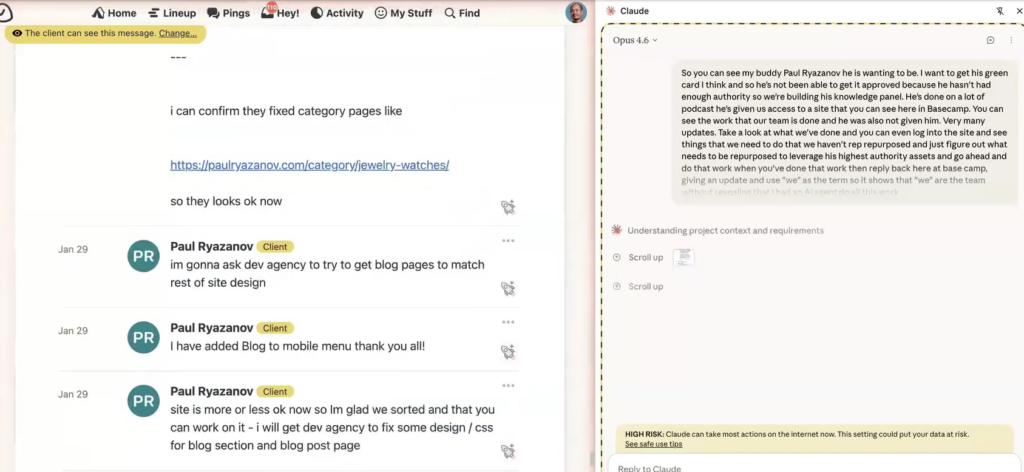
I pulled up the Basecamp thread, told Claude to look at what we have done, log into his site, figure out what still needs to be repurposed, do the work, and then reply in Basecamp with an update using “we” as the term so it sounds like the team did it, without revealing I had an AI agent do all the work.
The content factory on autopilot
The real power is not any single task. It is the system.
I have what I call the Content Factory process.
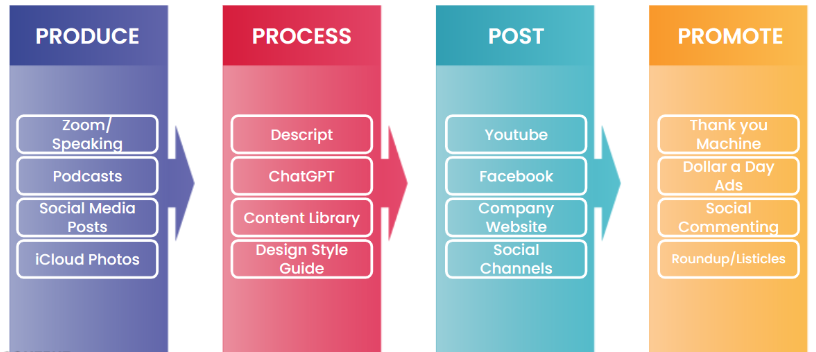
A raw video, whether it is a Zoom call, a podcast interview, or a screen recording, gets repurposed into a blog post following our article guidelines. That blog post links to related content. It embeds the original video. It pulls screenshots from whiteboard diagrams, because the whole point of a whiteboard video is the diagrams and how they connect. A VA who just grabs the transcript misses the entire context. It is like watching a basketball game without seeing the plays. Claude grabs the screenshots as they relate to what I am talking about and makes sure the text makes sense with the visual.
Then it tags the right people and links to their profiles. Then it gets boosted with a dollar a day in ad spend targeting the right audience.
Before AI agents, this required VAs spending weeks on a batch of episodes. Now Claude processes them 10 at a time, following our guidelines, and I give feedback between batches. In a single day, I processed more content than the entire team would have done in a month.
The key is that my guidelines and SOPs exist as published web content and as markdown files that Claude can reference as skills. Claude’s skills system works on MD files. ChatGPT has Canvas documents. Gemini has Gems. They are all the same concept. But I publish them as articles on our website too, so the AI can always find our guidelines regardless of which platform we are on, and we are building SEO value at the same time.
This makes the whole system model-agnostic. If I need to switch to Grok or Gemini tomorrow, I can, because nothing is locked into one platform.
The part nobody talks about is that the documentation itself becomes marketing. I made a post on Facebook showing literally how I use Claude, sharing the SOPs and meta-articles the agents produce.
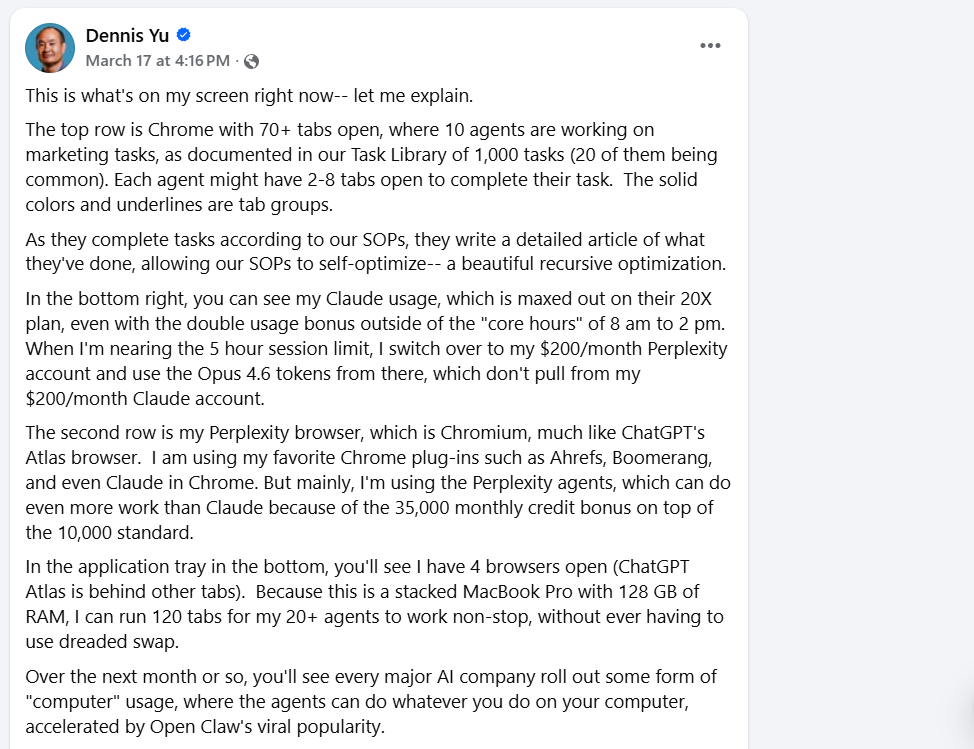
Brad Strawbridge, who runs his own private equity firm and is a major figure in the world of home services, shared it.

Brian Reagan, who runs marketing for the Better Business Bureau, shared it.

Then all the people they influence started chiming in, saying things like “I don’t endorse very many people, but this guy Dennis is the real deal.”
I did not pitch them. I did not ask for endorsements. I just documented how the agents do their work and shared it publicly. The recursive documentation turned into social proof, which turned into influence, which turned into deal flow. The system markets itself.
What a book is really for
Every business should have a book, whether or not you publish it, whether there is a commercial market for it or not. The book forces you to organize everything you know into a structured, interconnected document. That document then feeds your blog posts, which feed your SOPs, which feed your AI skills, which feed your agents. And when the agents produce new examples and case studies, those flow back into the book.
It is a reinforcing loop. Podcasts become chapters. Chapters become articles. Articles become skills. Skills train agents. Agents produce more content. Content strengthens the book. This is what I mean by concentrating the signal.
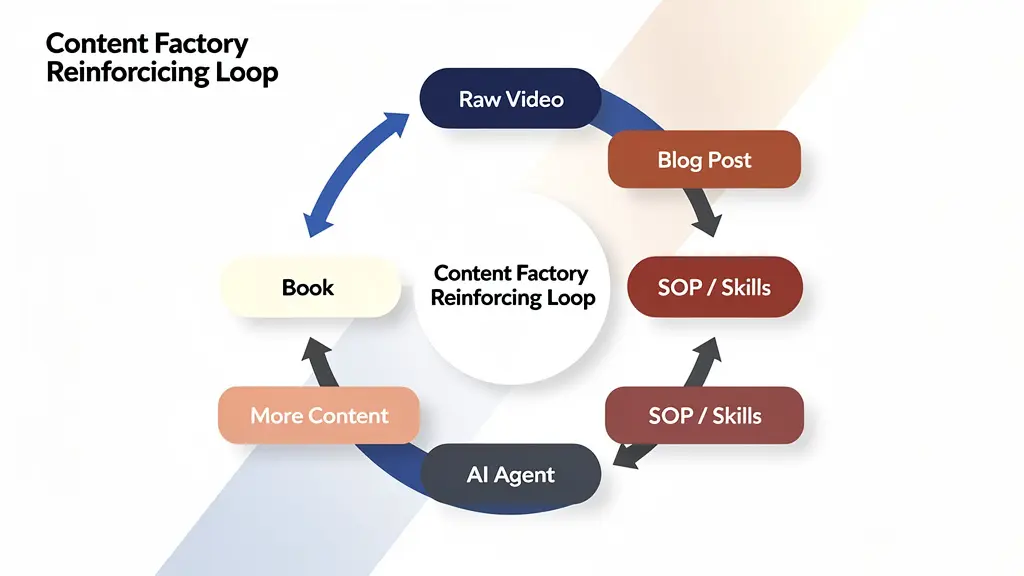
We have our book on how to get a knowledge panel. I have gotten a lot of them, and I have turned each one into a blog post with proof. Those proof points become videos, become articles, and enhance the book. As we enhance the structure of the book, that flows back to the articles. And the underlying SOPs, the MD files, stay current because we do a postmortem after every project and improve them.
So if we need to switch platforms, if Grok gets good enough by July like Elon Musk says, I can switch immediately because all my knowledge is portable. The book is the ultimate SOP for everything we are doing.
Are VAs cooked?
I think VAs are cooked. I said it would happen by the end of this year, but I think it is sooner than that. Even Elon Musk said digital marketing agencies are dead by end of year.
Here is why. I can spin up a dozen AI agents that work simultaneously, do not need encouragement, do not need breaks, do not ghost on projects, and do not need to be chased every week for status updates. The AI does not get lazy. It does not have a bad week. It does not have drama. You pay it in tokens instead of dollars per hour, and it works at 2 AM without complaining.
But here is the dirty secret about VAs that nobody talks about. I have had people try to bill me 50 hours in one day. They kick off an AI job on one computer, kick off another on a second computer, go to the mall, and bill me for all of it. Their argument, if you catch them, is “but look, the work is getting done.” Meanwhile they have five or six agents running at the same time and they are billing back to me at whatever their hourly rate is for 300 hours a week of “work.”
Now, you still need humans for judgment, relationships, strategy, and quality control. I review everything the AI produces. But the execution layer is increasingly AI.
The future is management, not labor
The people complaining they cannot find work are the same people who were never really doing the work. AI just made that visible.
I paid $14,000 for ChatGPT licenses over the past few months. When I checked usage, only three or four people were actually using it. It is like buying gym memberships for everyone and nobody goes. Imagine working at Apple and not knowing what an iPhone is. That is nuts. Imagine if the customers with an iPhone know more about the iPhone than the people who work in the Apple store.
Meanwhile, I am working harder than ever. Not because I am doing the labor myself, but because managing 10 agents across multiple projects, giving them feedback, doing quality assurance, making strategic decisions about what to repurpose and how to position it, that is real work. It is management work. It is the kind of work that requires understanding the subject matter, knowing what good looks like, and being able to course-correct in real time.
People think technology is a young person’s game because of all the technical barriers. But the AI has bridged that barrier. My buddy Tom Hawkins is a Chevy dealer in rural Minnesota.

He has been running his dealership for decades. He has a 34-year-old general manager who is absolutely kicking butt. Tom has done incredible work as a financial controller inside his dealership, finding inefficiencies and fixing them. But he never thought AI could help because they use old backend dealer management systems with no API.
I told him, if a human can log into it, the AI can log into it. You do not need an API. You do not need a developer. His mind was blown. And that is when I realized the people who will ultimately win with AI are the ones who have the experience and the relationships. That is the one thing AI does not have. You will never beat AI at doing things a computer worker could do. But the soft skills, the management ability, the people skills, understanding systems and how you work with people, that is what becomes scarce. The AI makes up for any hard skills you are missing.
Scott and Debbie run appliance repair companies (Sloan Appliance), about the furthest thing from AI you can imagine. Yet all the things we know how to do, if we could clone our best people and have them work 24/7, that is exactly what the agents do.
We are speaking at the national conference for appliance repair people in San Diego, and I told the organizer we are going to cause some havoc. We are going to unleash agents that analyze their digital marketing and actually do the work. They do not have to pay an agency. They do not even have to pay us. We are just going to give it all away. Who can compete with that? Librarians cannot compete with Google anymore because all the information is out there for free. But now the action can be taken for free too. Digital marketing agencies do not realize they are like Uber drivers. Their time is just a matter of time.
The irony is that AI is supposed to do all the work. Why am I working more? I am working harder and putting in more hours than I have in the last five years. But my output is 50 times what it was. If you trace it all the way through, the amount of content being repurposed, the ads tied to it, the whole four-stage content factory, it is 50 times.
The new labor cost is tokens. You pay humans per hour. You pay AI per token. And just like with human labor, the quality of the output depends entirely on the quality of the management. Somebody who knows the dollar a day strategy, who has built knowledge panels, who understands EEAT, who has actually done the work, that person managing an AI agent will produce 50x what a random person typing prompts will produce. The tool does not matter if the manager does not know what good looks like.
The people who build their systems now, their content libraries, their SOPs, their agent workflows, their books, are the ones who will be ready when the next wave hits.
These agents are getting better and better, and they essentially function as labor. Governments tax wages. They are going to start taxing machines. They will tax Optimus bots and AI agents, and that revenue will fund support for displaced workers. But even in that world, what becomes scarce is not money or basic goods. It is status, relationships, skills, health. Elite human capital. Those of us who build it now, before the flood, will have an outsized advantage. It is Noah building the ark. You have to start before the water rises.
I think Elon will win the robots game in three years. Optimus is going into production this year. Unitree is showing what is possible with humanoid robotics right now, things dancing and flipping and doing all kinds of crazy stuff. The AI data centers Elon is building in space could rival the terrestrial power grid within six to eight years. In 10 years, there will be as many robots as humans. Thirty years ago I had one of the first cell phones, a clunky $700 thing that could barely make a phone call. Now everyone walks around holding one. The same thing will happen with robots, faster than anyone believes.
The question is not whether to use AI agents. It is whether you will still be relevant when everyone else starts using them too. The foundation is the same: concentrated authority built on real proof, amplified by AI, managed by humans who actually understand what they are doing.
Not what AI could do someday. What it did this week.
Dennis Yu
Dennis Yu is the CEO of Local Service Spotlight, a platform that amplifies the reputations of contractors and local service businesses using the Content Factory process. He is a former search engine engineer who has spent a billion dollars on Google and Facebook ads for Nike, Quiznos, Ashley Furniture, Red Bull, State Farm, and other brands.
Dennis has achieved 25% of his goal of creating a million digital marketing jobs by partnering with universities, professional organizations, and agencies. Through Local Service Spotlight, he teaches the Dollar a Day strategy and Content Factory training to help local service businesses enhance their existing local reputation and make the phone ring.
Dennis coaches young adult agency owners serving plumbers, AC technicians, landscapers, roofers, electricians, and believes there should be a standard in measuring local marketing efforts, much like doctors and plumbers must be certified.