
 by
by

This is Episode 41 of the Marketing Mechanic whiteboard series I record every week.
AI agents for entrepreneurs have nothing to do with which model you picked — Claude, Gemini, or ChatGPT. This is the framework that actually works: the one that will still work 6 and 12 months from now, building a compounding advantage instead of getting washed away as AI gets smarter.
I’m Dennis Yu, your marketing mechanic. Every week I sketch out, on the whiteboard, what we’re actually doing that’s actually working — no courses, no magic secret prompts. May the best entrepreneur win.
AI agents for entrepreneurs start with the goal, not the prompt
Most people start by talking to the AI and issuing a “prompt” — a command. I don’t even like the word; it implies you’re talking to a computer program instead of to a smart colleague, and it traps you in reasoning loops. The bigger mistake is naming the AI: “You are so-and-so, a copywriter…” When you do that, you’re telling it to be a chatbot. You don’t want cosplay — you want the goal.
Spend the majority of your time describing your goal — your MTP, your massive transformative purpose — in movie-level, 4K detail. If you can see it, your agents can see it.
GCT: Goals, Content, Targeting
Strategy comes down to three things — Goals, Content, and Targeting:
- Goal — measurable and numeric (SMART). “I want to be successful” is not a goal; “100 phone calls a month at under $70 each” is.
- Content — your proof that you’ve done the thing: your track record, the recipe you want to repeat. This is the input into the agent.
- Targeting — your niche. Not “any random person,” but plumbers in Chicago, or whatever specific industry you serve.
If your goal is vague, your content is random, and your niche is fuzzy, the AI has nothing to multiply.
Reward loops and counterbalancing metrics
A measurable goal creates a reward loop: the system keeps optimizing until it hits a number. Break the big goal into milestones. And remember — every metric has a counterbalancing metric. “Leads under $50” alone gets you garbage leads; “cost per call under $100” alone tunes down to two calls a month. Define the counterbalance (say, 100 calls a month at under $70 each) or the system will technically win while actually losing. We call the discipline MAA: Metrics, Analysis, Action.
Skills, SOPs, and the QA checklist you skip
Underneath the strategy sit your skills — functional departments, each with a repeatable SOP. The piece almost everyone skips is the QA checklist at the end of each skill. How does the agent know the task is done? When it can verify specific things are true — the pixel fired, cost per conversion is under $23. If not, it loops until it fixes it.
I was in a conference room all day with Tom Shipley in Austin, putting exactly this in place for his deal platform — which is why it’s fresh in my head.
Learn from a lighthouse, not a stranger
Why do people fail here? They start at ground zero with a “prompt” and never give the agent training materials — so it grabs whatever’s average on the internet. And be careful whose training you trust. Would you let any random teacher raise your kids? Then don’t blindly run a stranger’s custom GPT.
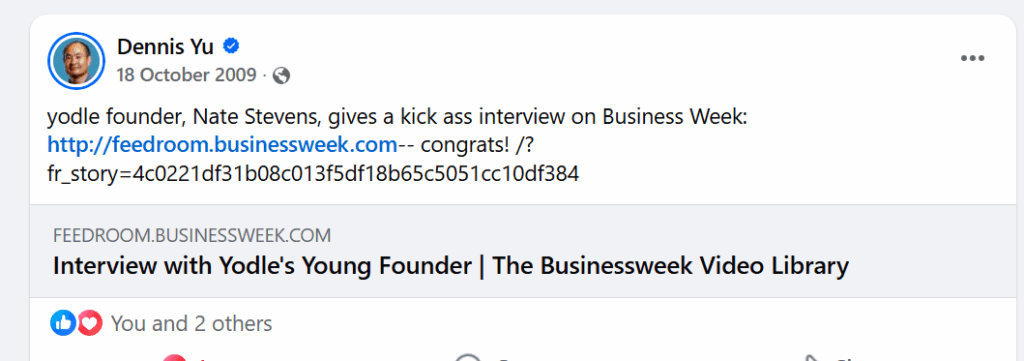
Learn from a lighthouse — someone in your industry who has actually done the thing and shares the path. Like Tommy Mello, showing how he grew a $300-million-a-year garage-door company. Or Nathaniel Stevens, who built and sold his company for $342 million — with proof all along the way (and yes, us eating hamburgers in New York after the interview).

Your knowledge base — and why we work in Cowork, not chat
Everything — your experience, network, assets, and how you do things — collects into your knowledge base. The first thing any agent should do is assemble an inventory of who you are: your reviews, the podcasts you’ve been on, your LinkedIn posts, your Zoom calls. That distilled view becomes your personal brand, which powers your company. People buy from people.
Why Cowork and not chat? Every time a chat dies, the agent dies. Work inside Cowork and everything is stored to files, so every conversation references those items and responds in context — it knows your big goal, what’s worked, and what hasn’t.
Recursive self-improvement
Every time an agent does something, it writes a meta article — metadata on what it did. Feed those back into the relevant skill and the skill gets better. Do it thousands of times and you’ve built a reinforcement loop: recursive self-improvement. If our agents get smarter every time they act, why shouldn’t we — in how we organize and reallocate effort across skills? One caveat for teams: watch out for agent collision when many people run many agents on the same things.
Token-to-value arbitrage
Here’s the punchline. An agent might cost you three cents in tokens and produce something worth $20. You’re accreting about $19.97 in incremental value every run — trading tokens for economic value, which is exactly what a factory does. Wire your measurement into the tools that already have APIs — Google Analytics, your CRM, QuickBooks, ServiceTitan, HubSpot, Stripe — so you track not just whether the work got done, but the actual economic value it created.
The real bottleneck is you
Whether you’re an agency or a plumber, the number-one bottleneck is the founder. Every deal goes through you. I’m not telling you to run ads for the sake of it — I’m telling you to process all the positive things people have already said about you. If you serve 20 clients and want 200, you need to create ten of yourself. Break down what you do into the items that make it work, and that’s all an agent is: a multiplier — provided you have the proof.
The people who care most about their community and reputation get amplified by AI. The ones chasing the next hack get destroyed by it. Don’t try to beat the AI at its own game — bring the trust only you have, and let it compound.
Related whiteboard episodes: Mentorship at Scale: How the Local Service Spotlight Model Works and Personal Branding Is NOT What You Say About Yourself.
Which piece are you missing? If you want help, we build these agent systems for entrepreneurs who already have proof of happy customers. Start with the DealCon audit framework.
Originally published .
Dennis Yu
Dennis Yu is the CEO of Local Service Spotlight, a platform that amplifies the reputations of contractors and local service businesses using the Content Factory process. He is a former search engine engineer who has spent a billion dollars on Google and Facebook ads for Nike, Quiznos, Ashley Furniture, Red Bull, State Farm, and other brands.
Dennis has achieved 25% of his goal of creating a million digital marketing jobs by partnering with universities, professional organizations, and agencies. Through Local Service Spotlight, he teaches the Dollar a Day strategy and Content Factory training to help local service businesses enhance their existing local reputation and make the phone ring.
Dennis coaches young adult agency owners serving plumbers, AC technicians, landscapers, roofers, electricians, and believes there should be a standard in measuring local marketing efforts, much like doctors and plumbers must be certified. He has appeared on 353 podcasts with 619 credited episodes — see the full list of his podcast appearances.