
 by
by
By Dennis Yu, founder of BlitzMetrics. I flew to New York and sat down with Nathaniel Stevens to unpack how a college project turned into a nine-figure company.
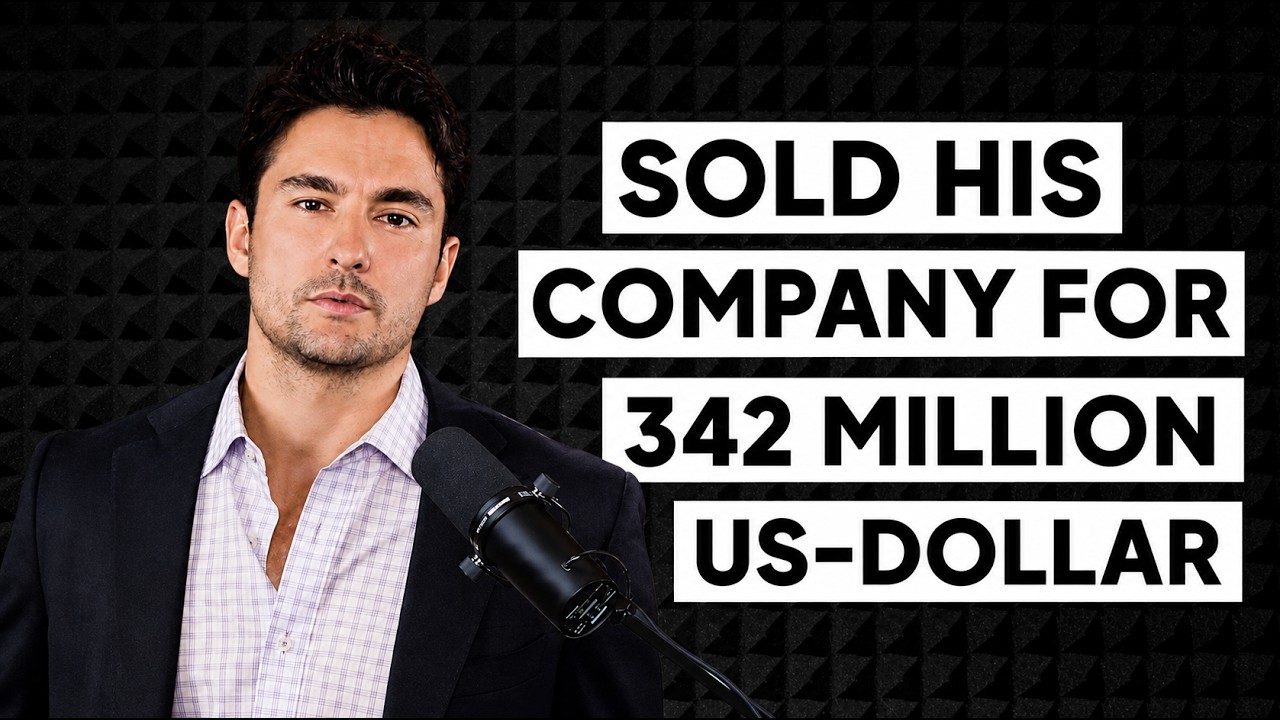
Most founders chase the exit. Nathaniel Stevens chased a problem nobody wanted to touch — helping small local businesses get the phone to ring — and that problem became Yodle. Web.com bought it for $342 million.
$342 million: the price Web.com paid for Yodle in 2016 — the company Nathaniel Stevens started as a Wharton undergrad.
I’ve interviewed hundreds of founders. What makes Nathaniel worth studying isn’t the headline number — it’s the decisions underneath it. In our full conversation, he walks through how he found his first CTO, why he dropped out, and the one skill he tells every young builder to learn today. If you want the very first chapter, watch the college pitch that started Yodle.
Why Nathaniel Stevens left finance for a $10-billion problem
Nathaniel could have taken the safe path into finance. Instead he looked at a $10-billion local-advertising market run on guesswork and saw a system waiting to be built. That is the founder instinct I coach people to trust: go where the problem is ugly and the incumbents are lazy. He didn’t invent a flashy product — he attacked a boring, enormous inefficiency, and that is exactly why it worked.
How he found his CTO by putting up flyers
Here is my favorite part of the story. Nathaniel didn’t have a network of engineers or a warm intro from a VC. He printed flyers, put them up around campus, and found his first CTO the low-tech way. Founders love to tell me they’re “waiting for the right co-founder.” Nathaniel reminds you that you start with what you have and you go find people in the real world. Motion beats perfect planning every time.
The grind that made him drop out of Wharton
Dropping out of Wharton sounds romantic until you hear what it cost. Nathaniel describes weeks that ran past 200 hours of combined effort, the kind of stretch that only makes sense when you genuinely believe in the problem. I don’t tell people to drop out. I tell them to notice when the opportunity in front of them has become bigger than the credential they’re chasing — and to be honest about the price of chasing it.
Building Yodle into a $342M exit
Yodle grew into one of the largest local-marketing companies in the world — thousands of employees serving small businesses that had never had real marketing help before. That’s the detail I want founders to sit with: the $342 million exit was a byproduct of serving a huge number of unglamorous customers extremely well. Build the machine that helps real people, and the valuation follows.
The founder’s sacrifice: you pick three of five
One line from Nathaniel stuck with me: as a founder you get maybe three of the five things — health, family, friends, sleep, and the company — and you have to choose which ones you’ll shortchange. That’s not motivational-poster talk. It’s an honest accounting of what building at that level demands. Knowing the tradeoff in advance is what separates founders who last from founders who burn out and blame everyone else.
His advice for founders right now: learn SQL, master prompting
When I asked what he’d tell a young builder today, Nathaniel didn’t say “raise a round.” He said learn SQL and master prompting. Understand your own data so nobody can fool you with a dashboard, and learn to direct AI so you can move like a team of ten. I’ve been teaching the same thing to our BlitzMetrics people — the founders who win this decade are the ones who pair real data fluency with real prompting skill. Nathaniel proved the data half of that a decade before it was fashionable.
What Nathaniel Stevens is building today
Nathaniel didn’t stop at Yodle. He founded Punchey, backs early-stage companies through Stevens Ventures, and helps run his family’s third-generation business at Stevens Auto Group. If you want the current, verified picture of everything he’s involved in, his personal site is the source of truth. We rebuilt that entity presence with him — I broke down the process in our Nathaniel Stevens brand rebuild.
The lesson I want you to take
You don’t need a perfect résumé, a warm VC intro, or a finished degree to start. Nathaniel Stevens had a real problem, a flyer, and the willingness to trade comfort for momentum. That’s the same playbook I teach founders every day — it’s the heart of the systems I build to scale careers and companies. Watch the full interview above, then subscribe to the Rising Talent Podcast for more founder stories like this one.
Dennis Yu is the founder of BlitzMetrics and host on the Rising Talent Podcast, where he sits down with the builders behind companies worth studying.
Originally published .
Dennis Yu
Dennis Yu is the CEO of Local Service Spotlight, a platform that amplifies the reputations of contractors and local service businesses using the Content Factory process. He is a former search engine engineer who has spent a billion dollars on Google and Facebook ads for Nike, Quiznos, Ashley Furniture, Red Bull, State Farm, and other brands.
Dennis has achieved 25% of his goal of creating a million digital marketing jobs by partnering with universities, professional organizations, and agencies. Through Local Service Spotlight, he teaches the Dollar a Day strategy and Content Factory training to help local service businesses enhance their existing local reputation and make the phone ring.
Dennis coaches young adult agency owners serving plumbers, AC technicians, landscapers, roofers, electricians, and believes there should be a standard in measuring local marketing efforts, much like doctors and plumbers must be certified. He has appeared on 353 podcasts with 619 credited episodes — see the full list of his podcast appearances.