
 by
by
Most people think building a website is the hard part. It’s not. The hard part is creating content consistently and getting it in front of people. Here’s how I do it and how you can too.
Why WordPress is still the best framework
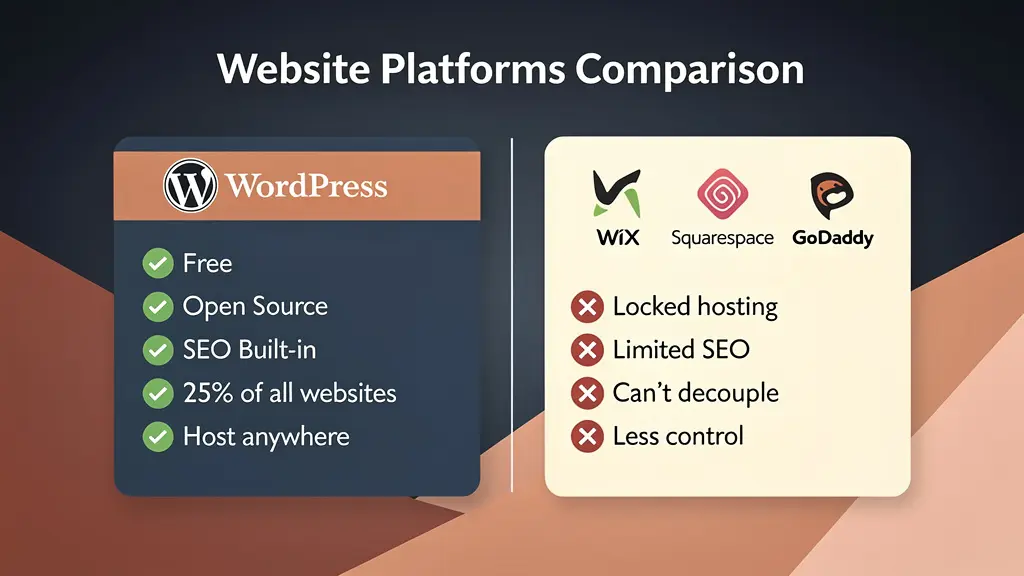
WordPress is the most popular content management system on the internet. It powers 25% of all websites. The reason it’s so powerful is that out of the box, it’s built for SEO. The way posts, tags, and links work together makes it a great framework for ranking on search engines.

A lot of people who don’t understand hosting will use an all-in-one platform like GoDaddy Website Builder, Wix, or Squarespace. Those platforms bundle their software with hosting so you can’t separate the two. WordPress is different. It’s open source, meaning you can install it and run it wherever you want.
I run mine on AWS (Amazon Web Services) across multiple extra-large instances. I monitor security, performance, and version updates across all my sites. You could host WordPress on a cheap $5 or $10 a month host, but if you’re not an engineer, you’ll run into problems fast.
WordPress is free software, but someone has to install it and someone has to pay for the hosting. That’s why I built software that spins up WordPress sites automatically. You click a button, enter the information, and the system creates a new WordPress install on a subdomain I control.
Think of your website as a bookshelf
Most people worry about how their website looks, the decoration of the bookshelf.
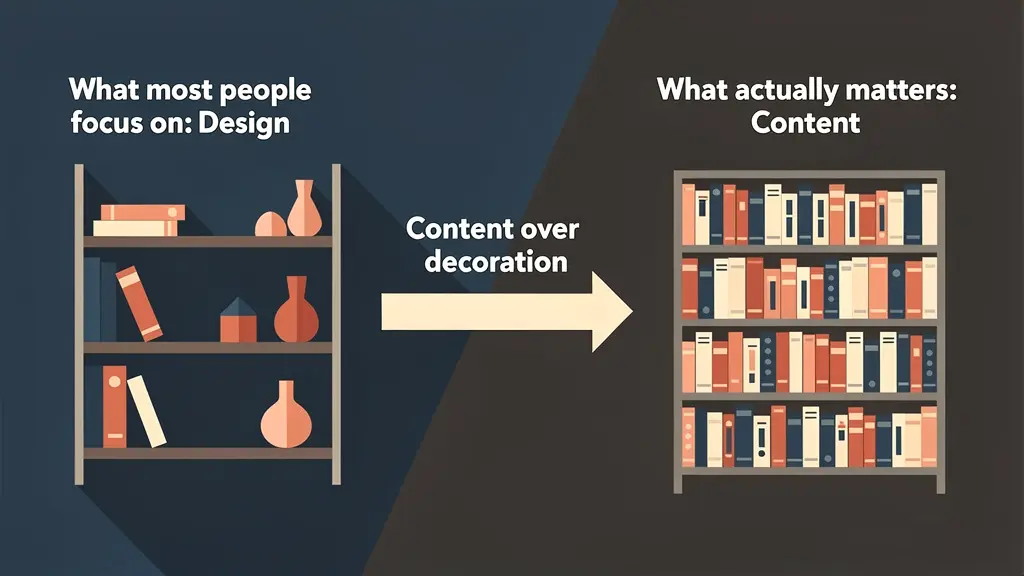
But what matters most is the content, the actual books on the shelf. The framework should always be WordPress. Who cares how it looks?
You can always change the design, but the foundation needs to be right.
The Content Factory: produce, process, post, promote
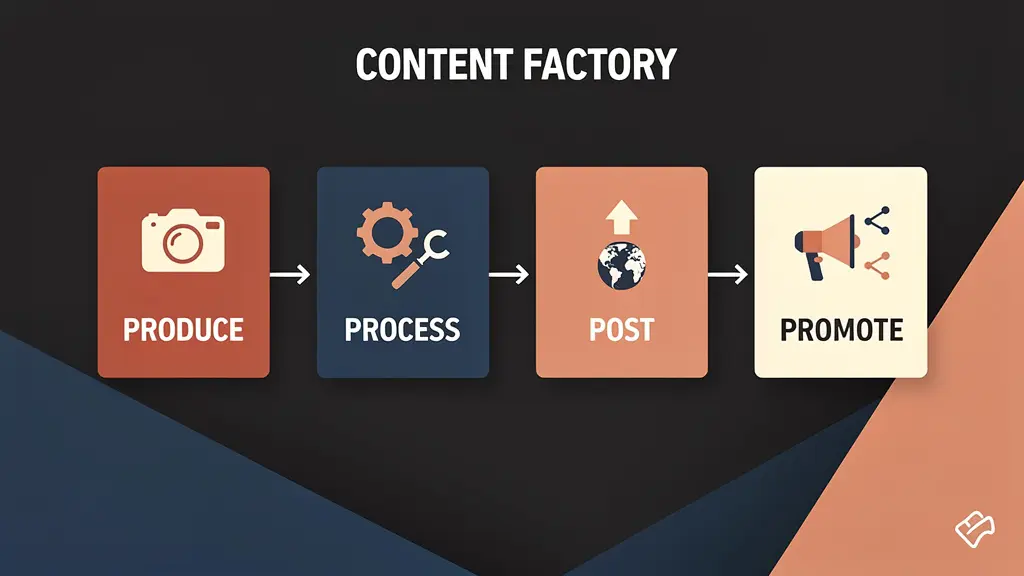
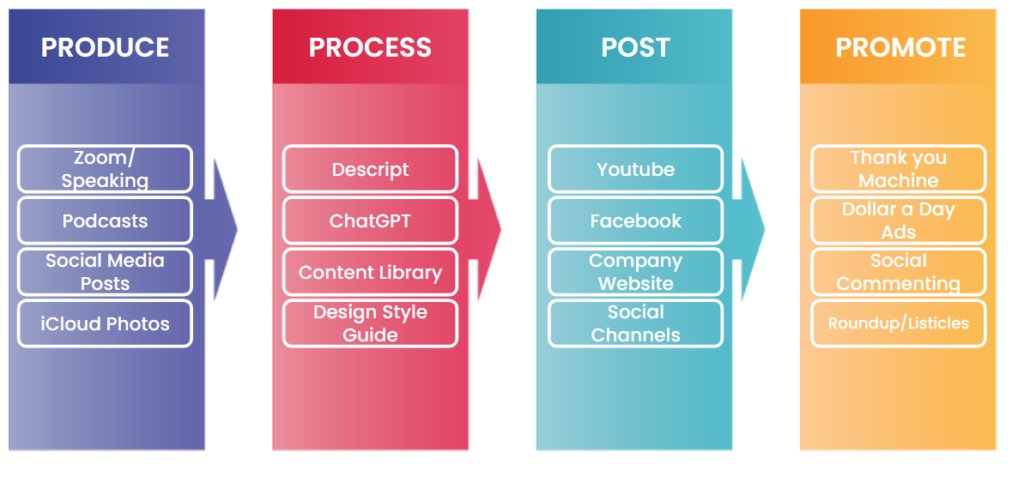
Here’s where it all comes together. I call it the Content Factory, and it has four stages: produce, process, post, and promote.
Start by recording a video.
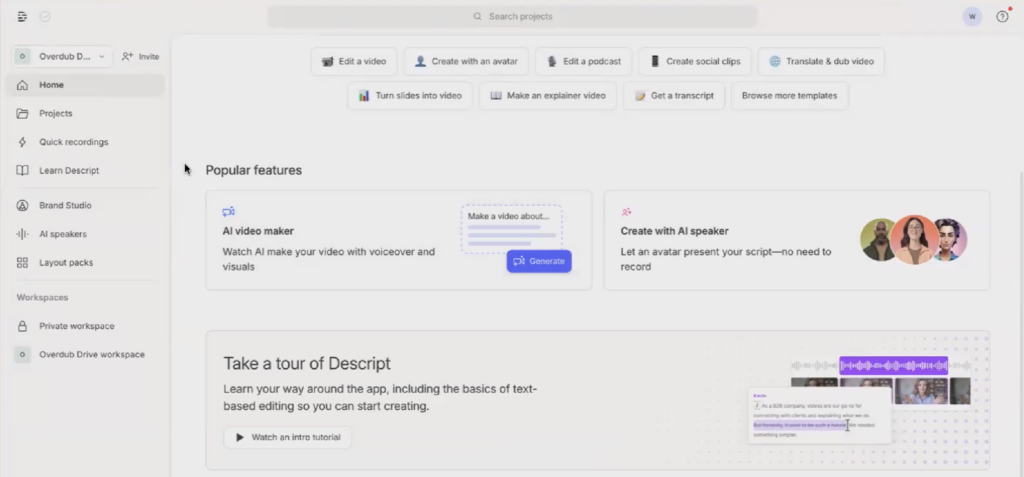
It doesn’t have to be perfect. In this session I was walking a team member through the whole workflow.
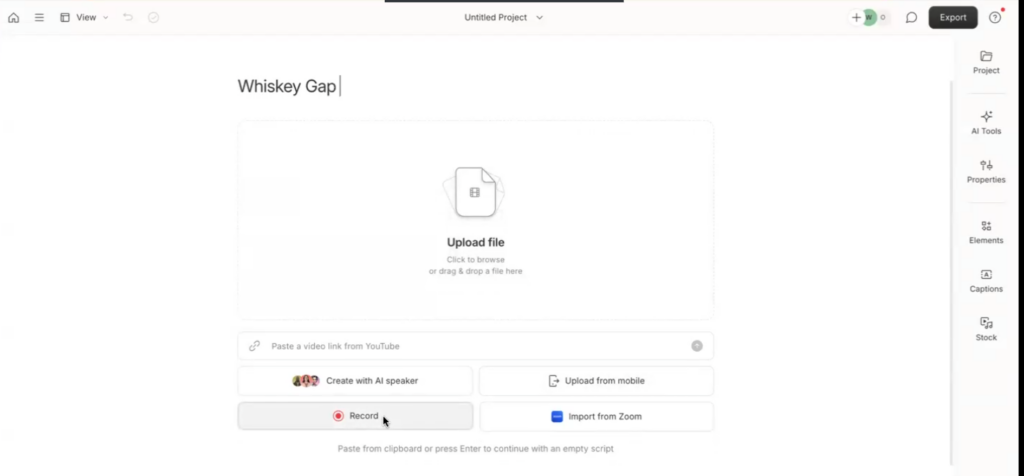
We recorded a one-minute video about Whiskey Gap, a leather bag company with a great origin story.
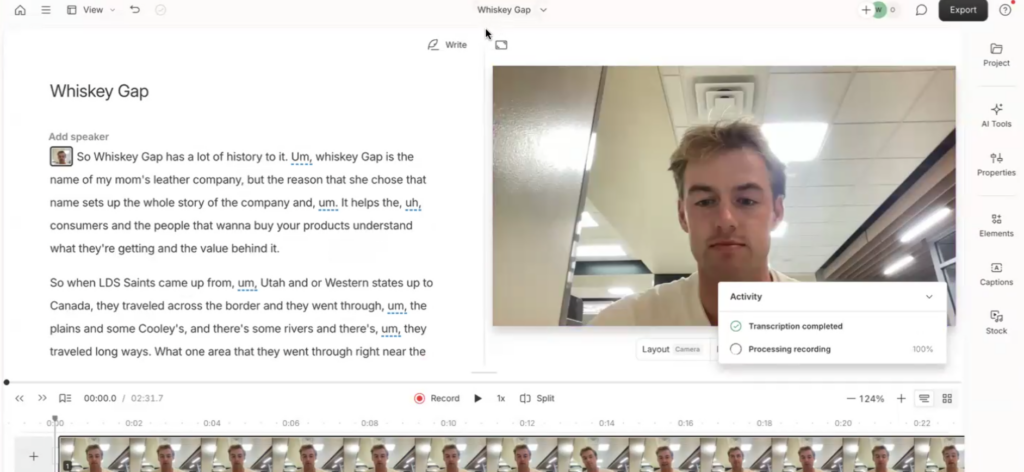
The spoken speech wasn’t perfect, there were filler words and awkward pauses, but that’s fine.
Next, process it. I used Descript to remove 28 filler words in seconds.
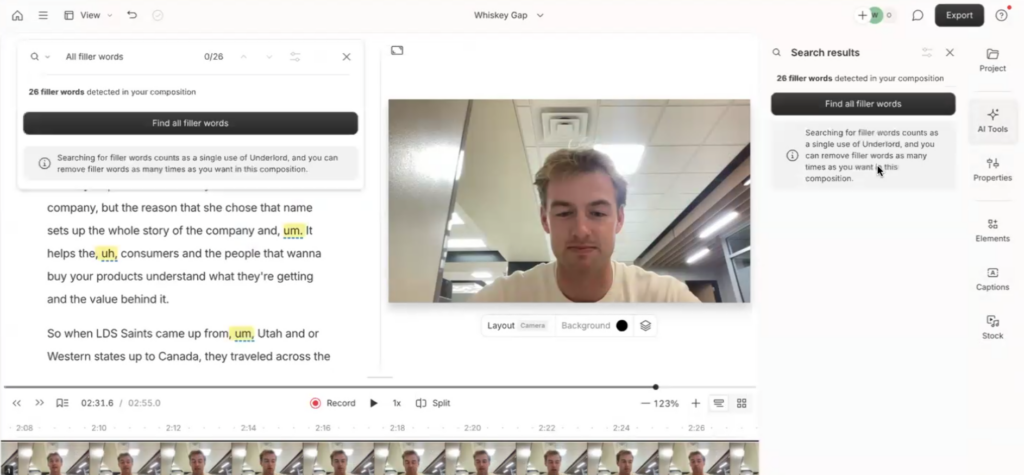
Then I applied Studio Sound, which makes it sound like you recorded in a professional studio even if you were just talking into your laptop.
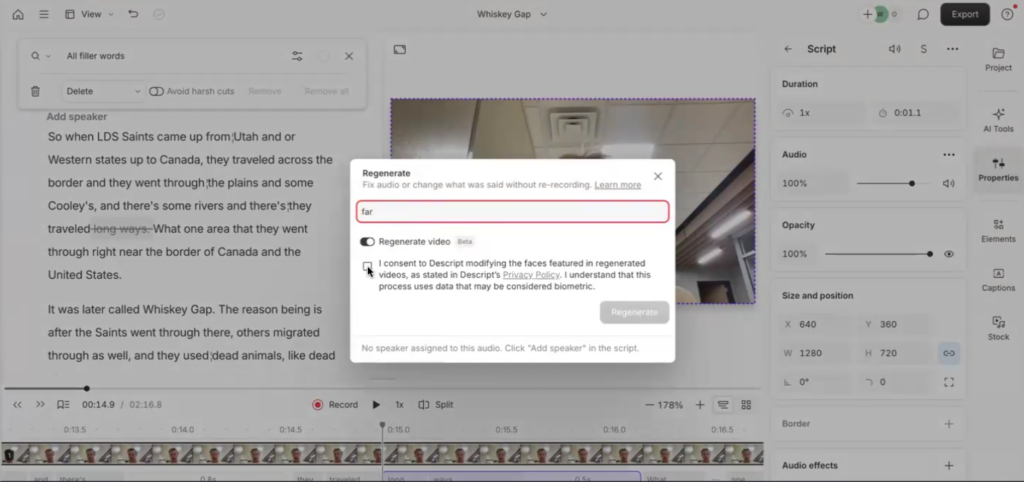
You can edit your video like you’re editing a Word document. Move words around, delete sections, even change what you said using AI voice cloning.

Then post it.
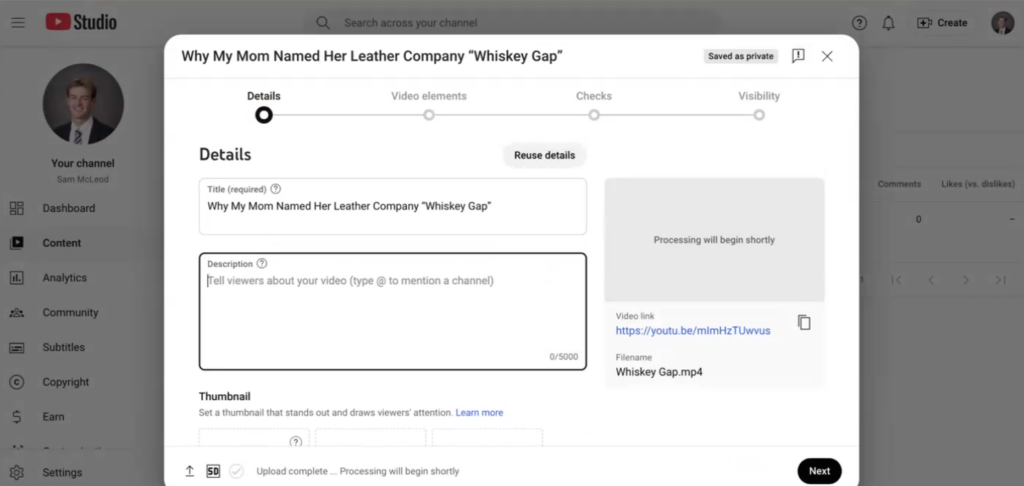
Export the video to YouTube, grab the transcript, paste it into ChatGPT, and ask it to turn the transcript into a blog post.
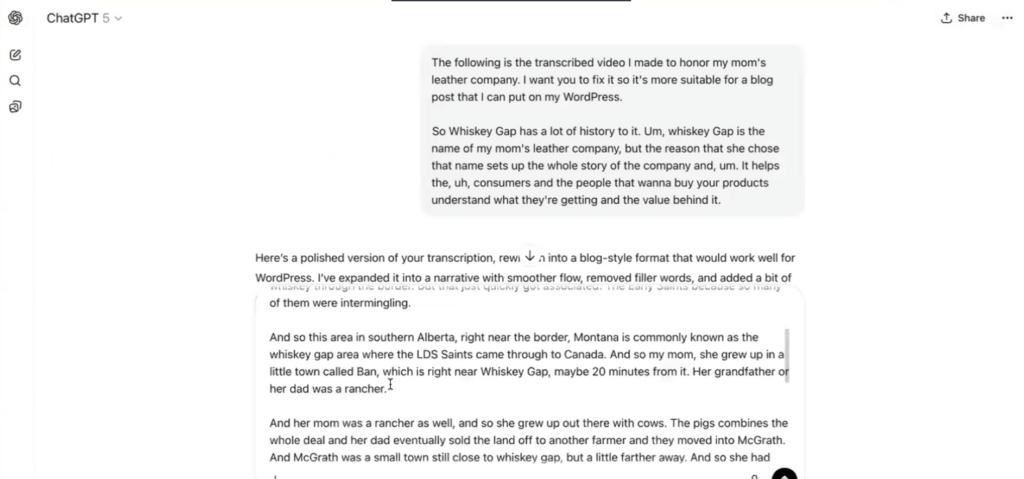
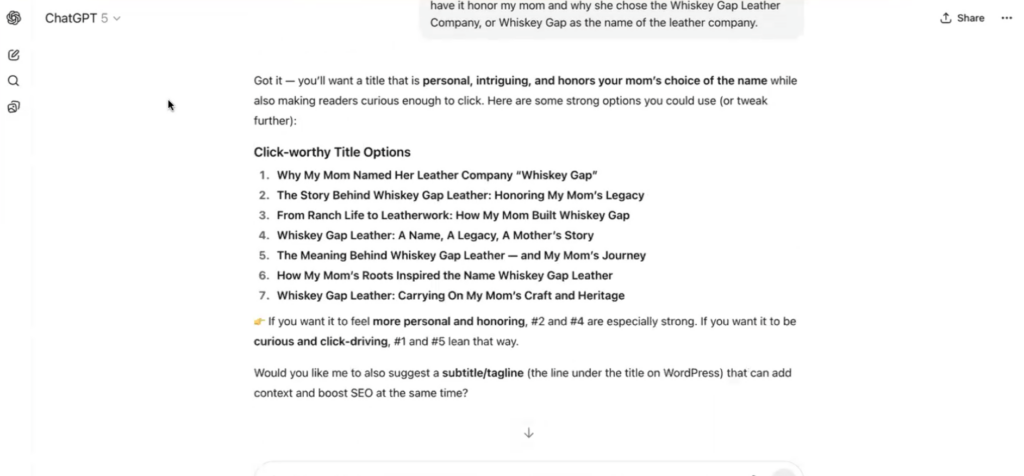
Paste that blog post into WordPress.
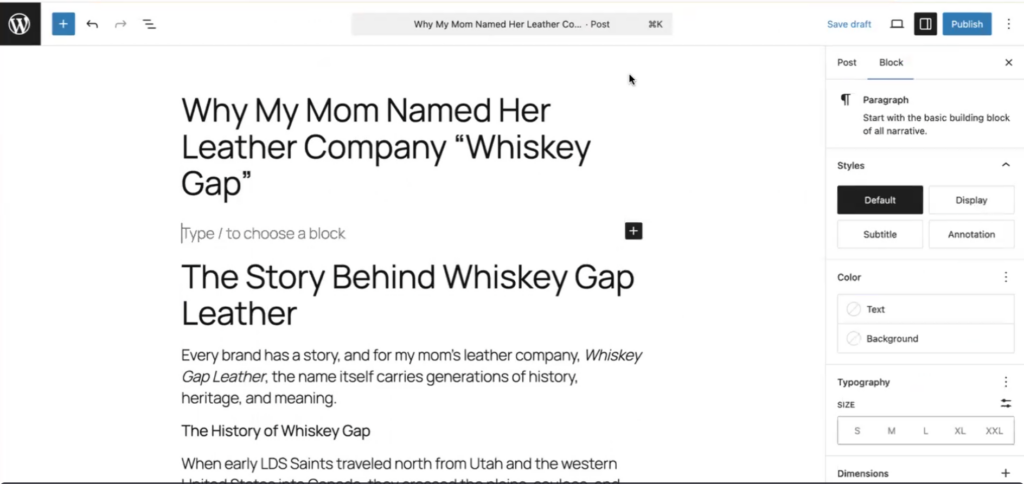
Add your YouTube video embed right after the title.
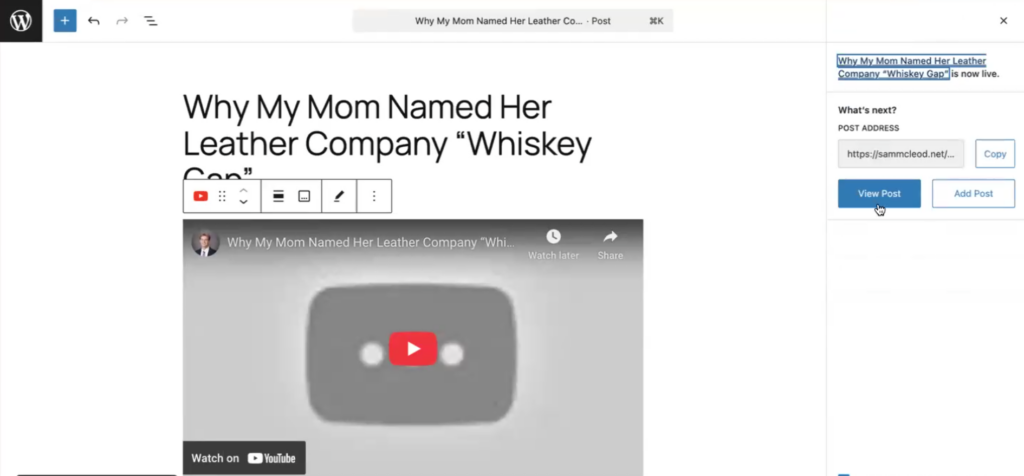
Choose a category and add tags so it ranks for the right keywords.
Finally, promote it. Share the blog post on LinkedIn, Facebook, and Twitter.

Don’t put the link in the post itself, that kills your reach. Put the link in the first comment instead.
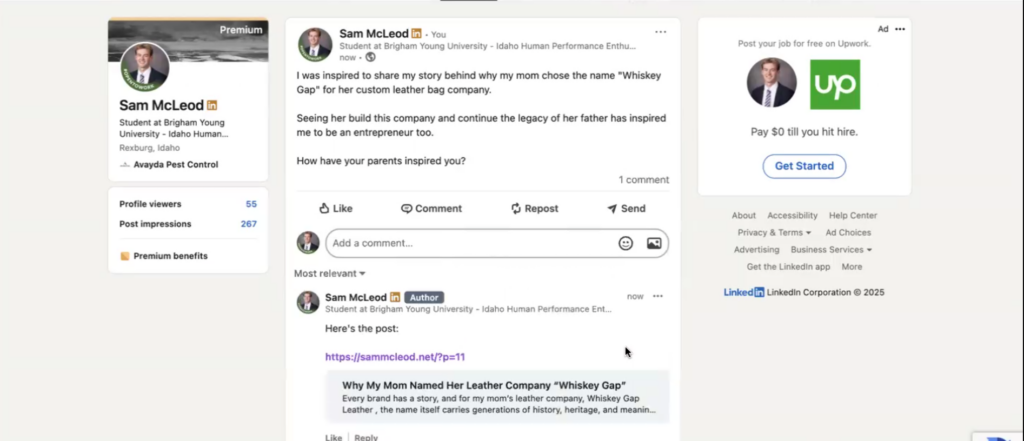
Write a short caption that makes people curious, not one that tells them to read a long article.
The same four stages work for written content, not just video. For Paul Ryazanov’s personal brand, the produce stage was already done — ten years of LinkedIn posts and 37 MageCloud YouTube videos sitting in his archive. An agent handled the process stage by inventorying every piece into one tracker and scoring it Keep or Remove, then moved into post by repurposing the qualifying LinkedIn posts into full articles on his site. Same Content Factory, different raw material.
Start with the hook
One thing most people get wrong is how they start their video. You want to lead with the hook, the most interesting part.
Instead of starting with background context, start with the thing that makes people want to keep watching. “Whiskey Gap is the name of my mom’s leather bag company. Let me tell you how it got started.” That should probably be the first sentence.
It gets easier
If this feels like a lot, that’s normal. When you’re starting out in digital marketing, you get bombarded with tools and platforms you’ve never heard of. But once you get the workflow down, the whole thing takes five minutes. Record once, publish everywhere.
Originally published .
Dennis Yu
Dennis Yu is the CEO of Local Service Spotlight, a platform that amplifies the reputations of contractors and local service businesses using the Content Factory process. He is a former search engine engineer who has spent a billion dollars on Google and Facebook ads for Nike, Quiznos, Ashley Furniture, Red Bull, State Farm, and other brands.
Dennis has achieved 25% of his goal of creating a million digital marketing jobs by partnering with universities, professional organizations, and agencies. Through Local Service Spotlight, he teaches the Dollar a Day strategy and Content Factory training to help local service businesses enhance their existing local reputation and make the phone ring.
Dennis coaches young adult agency owners serving plumbers, AC technicians, landscapers, roofers, electricians, and believes there should be a standard in measuring local marketing efforts, much like doctors and plumbers must be certified. He has appeared on 353 podcasts with 619 credited episodes — see the full list of his podcast appearances.