

I’ve been collecting SOPs for 25 years. Over a thousand of them. Every task in digital marketing, from setting up a Google Tag Manager container to auditing Facebook ads to building a personal brand website, I’ve documented how to do it step by step.
But here’s what changed everything. I figured out how to make AI agents not just execute those tasks, but document what they did and improve the process every single time they run it.
The problem with custom GPTs
For a while, we were building custom GPTs inside our business OpenAI account.
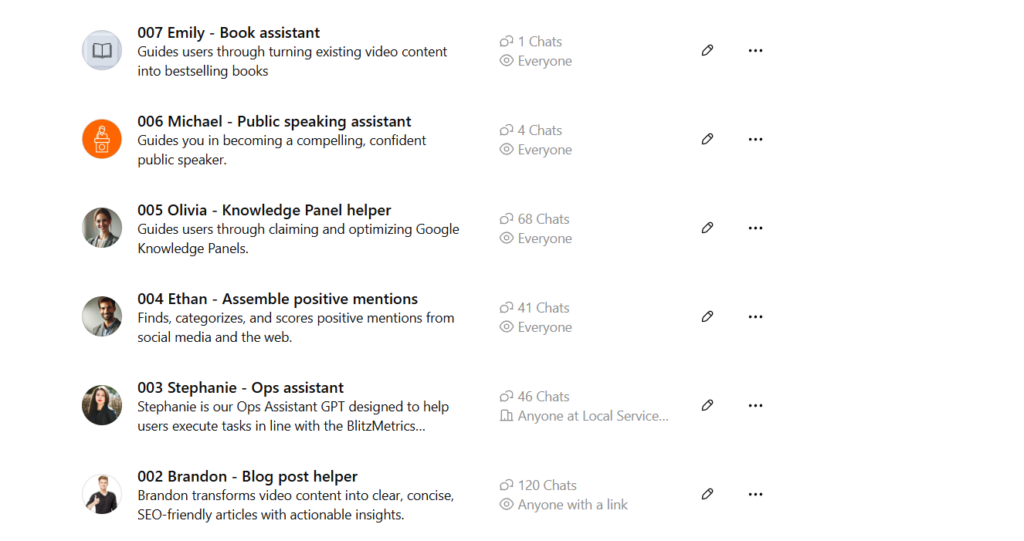
We’d train up an agent to do SEO, or analytics, or ad auditing, and then share that agent with everyone in our AI Apprentice program. It worked, but it had limits. You had to share the agent. You had to give people access. And if the agent lived in one person’s account, everyone else was dependent on that.
I think custom GPTs are already an outdated way of doing things. What I’ve come up with is more elegant, and I believe it will last us for years.
Meta articles and definitive articles
Here’s the framework.
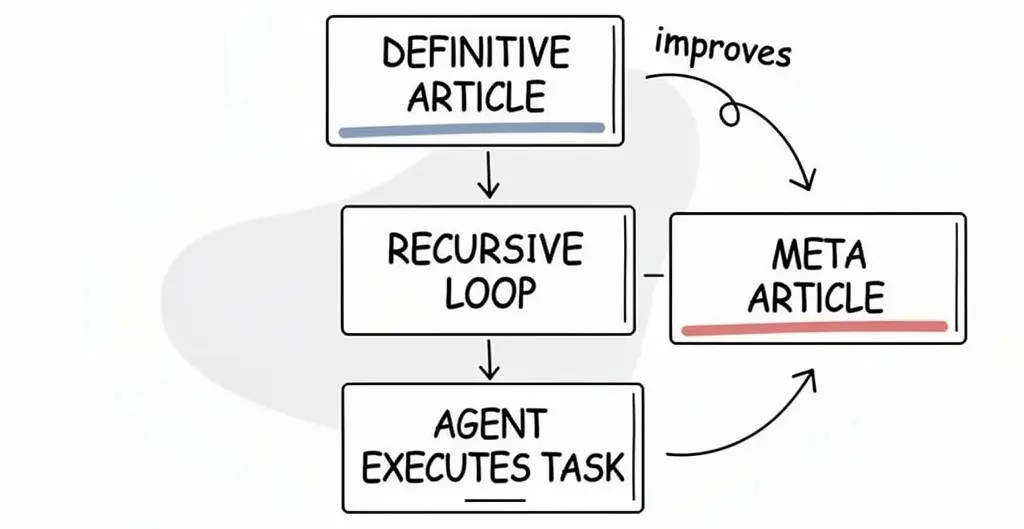
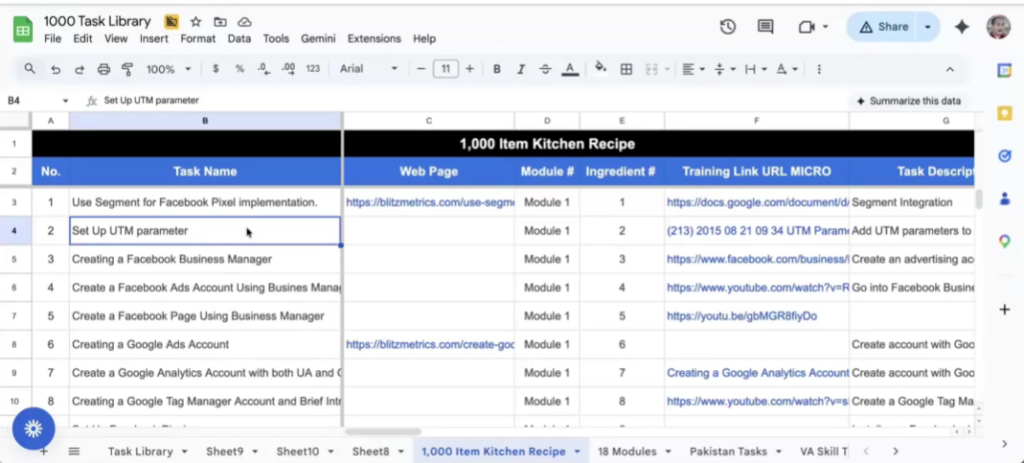
A definitive article is the master SOP for any given task. It lives in our Task Library, which has over a thousand tasks defined in a step-by-step way, each with a skill markdown file associated with it.
When an AI agent executes a task according to that definitive article, it also writes what we call a meta article. That meta article documents exactly what the agent did, step by step, for that specific instance. It shows the decisions it made along the way, the systems it connected to, how long it took, and what the outcome was.
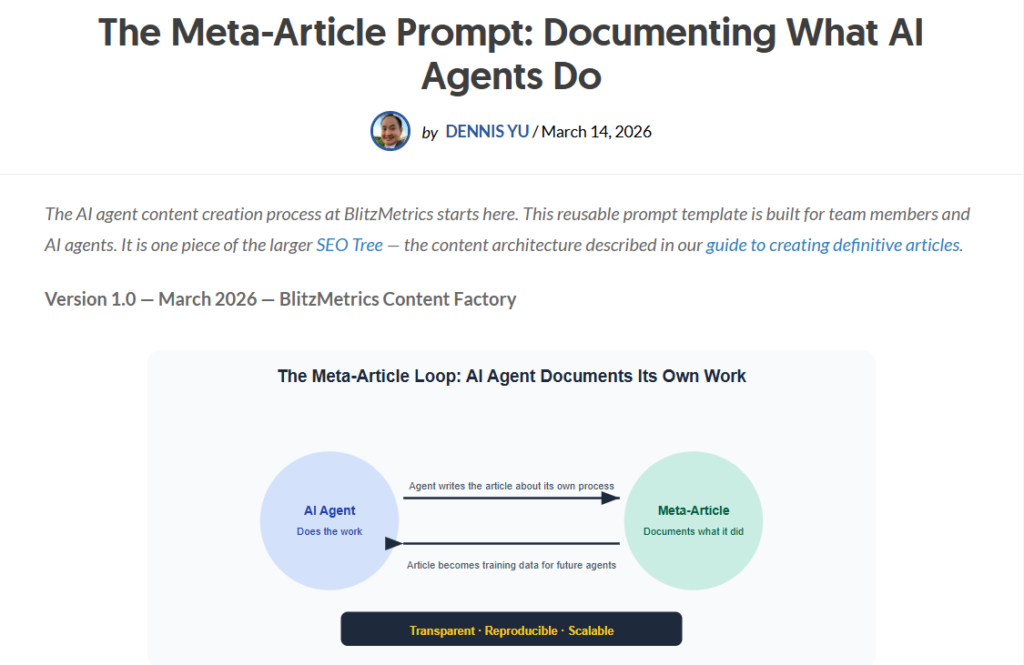
This creates something powerful. The meta article isn’t just internal documentation. It gets published. And when it’s published, it creates real SEO value.
Why this works for SEO
Most local businesses have no link juice. They can create a ton of content, but if there’s no signal flowing, no links, no citations, it’s almost like the content isn’t even being seen.
Our agency site, BlitzMetrics, has a domain rating of 62.

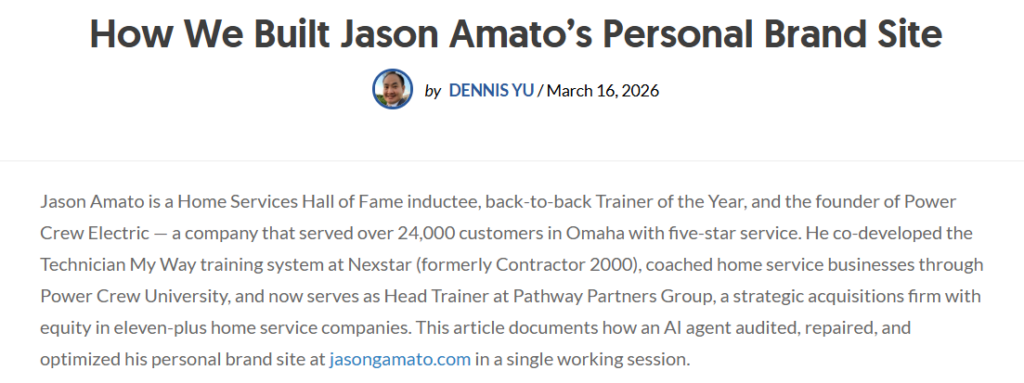
We have multiple sites with authority. When we publish a meta article about how we built a personal brand website for Jason Amato, who’s deeply connected with Ken Goodrich and Tommy Melo in the home services world, that article passes legitimate link juice to his site and theirs.
When we inventoried George Leith‘s 800 podcast episodes and turned each one into an article on his website, we wrote a meta article documenting how we did it.
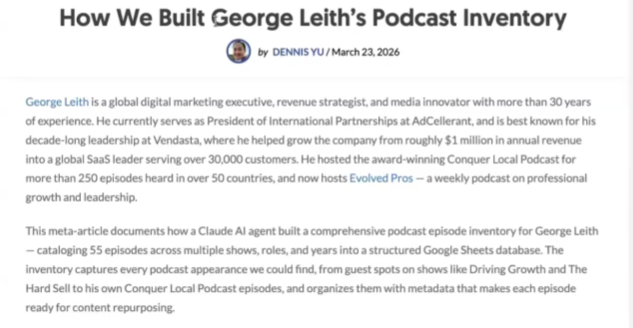
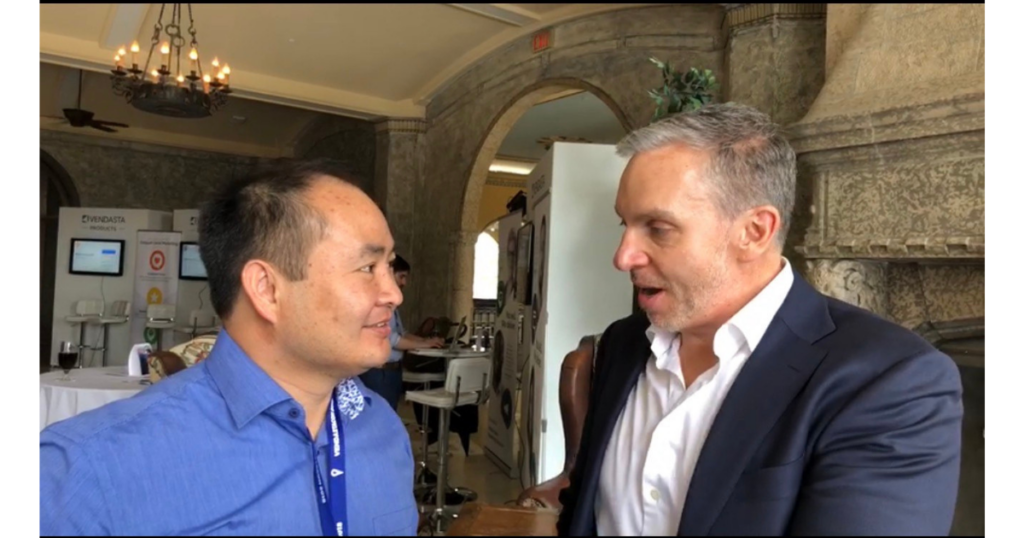
George ran sales and revenue operations for Vendasta and scaled it to a billion-dollar company. He’s been a friend of mine for 20 years. That kind of real relationship creates real EEAT that Google can see.
We did the same thing for Paul Ryazanov, founder of MageCloud and organiser of Ecommerce Camp UK. An agent inventoried ten years of his LinkedIn posts, 37 MageCloud YouTube videos, and his podcast appearances into a single Google Sheet, scored every LinkedIn post Keep or Remove, and is now feeding the repurposing pipeline that publishes new articles on his site. The meta article documenting how the agent built that inventory is the kind of cross-site link that carries Paul’s authority into BlitzMetrics and ours back into his.
We did the same for Nathaniel Stevens of roofinglaunch.co, who sold Yoda for $300 million, what was at the time the world’s largest digital agency.
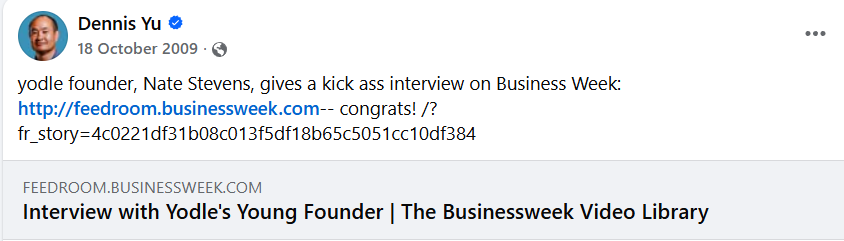
I advised him when he was still a student at UPenn. And for Brady Sticker, who runs Church Candy, an almost eight-figure digital marketing agency serving churches. We met Brad Strawbridge of Capital City Roofing in Atlanta and there’s more content to repurpose from that relationship too.
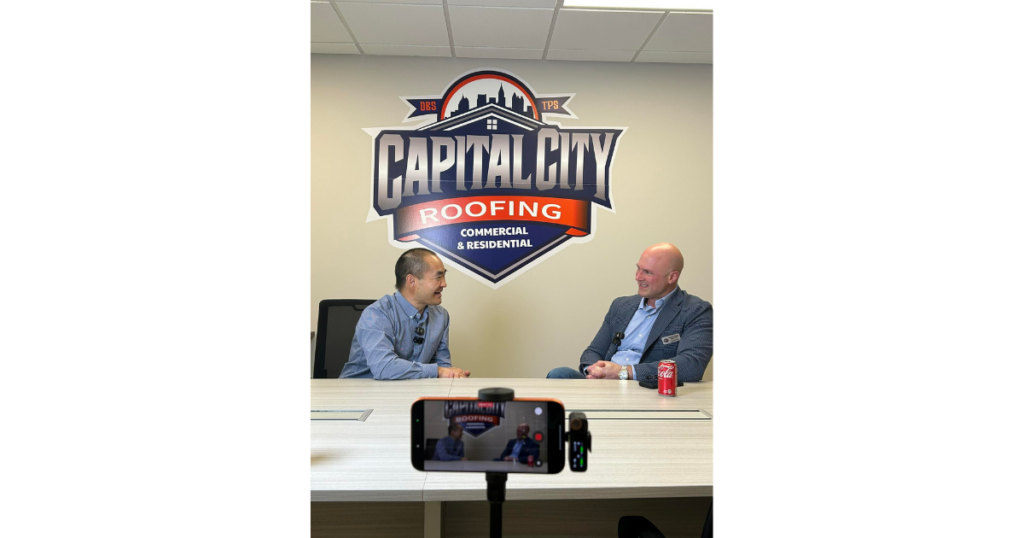
We also work with Ethan Van De Hey and his 27 roofing and siding locations under the mothership of Infinity Exteriors. There’s an intelligent way to cross-link between all of these that drives great SEO, because the mothership has a lot of power that we can drive to individual locations.
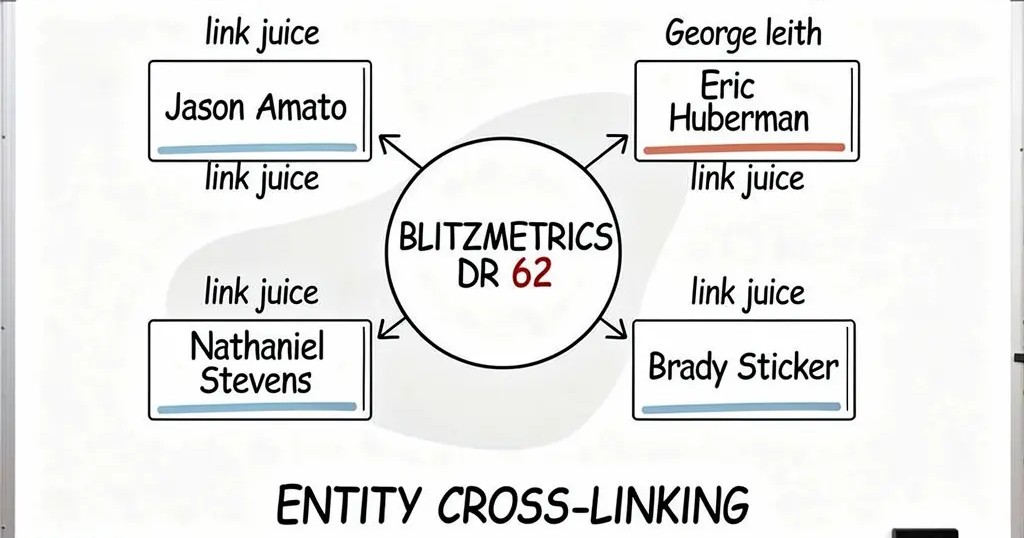
It’s not a black hat private blog network. It’s legitimate EEAT. We’re real people doing real work and documenting it publicly. The entities are tied together. Jason is a person entity. His company is an entity. The people he knows, the conferences he speaks at, the geographies he operates in, those are all entities. When you clarify those entities and connect them through published content, you strengthen the entire knowledge graph.
We also have a definitive article on how to internally cross-link between different sites. So when agents follow that process, they’re building connections that drive SEO in a way that Google’s search quality rater guidelines actually reward.
The recursive loop
Here’s where it gets really interesting. As agents execute tasks and write meta articles, they’re also learning. If an agent trips on a step in the SOP, we can see that. If multiple agents make the same mistake, we go fix it at the root by updating the definitive article.
The agents are learning from each other, finding better ways to do things, and then the improved SOPs feed back into the next round of execution. It’s a recursive, self-improving loop. The more tasks get run, the better the system gets.
And because the definitive articles are published on our sites, you don’t even need to pass around skill markdown files anymore. You can just tell your agent to follow the BlitzMetrics process for building a personal brand site, and it goes and references that public article. Our friend Stasiu, who runs a $5 million a year home services agency, is deploying agents this way right now. Instead of outsourcing to other SEO agencies, he’s insourcing to his own Claude agents. And as we improve the definitive articles, his agents automatically get better too.
Live example: repurposing a Zoom call into an article
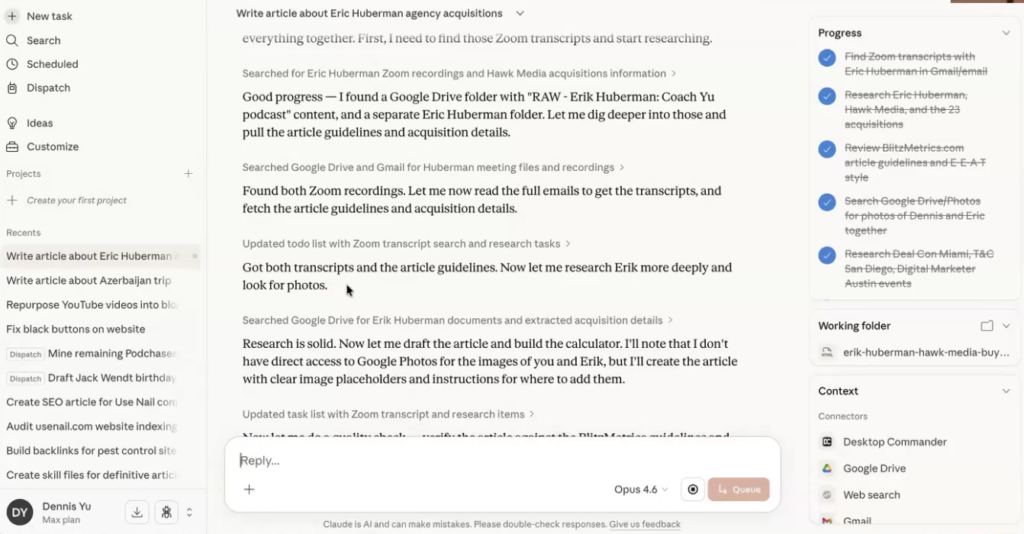
To show how this works in practice, I dictated a task to Claude using Whisper Flow.
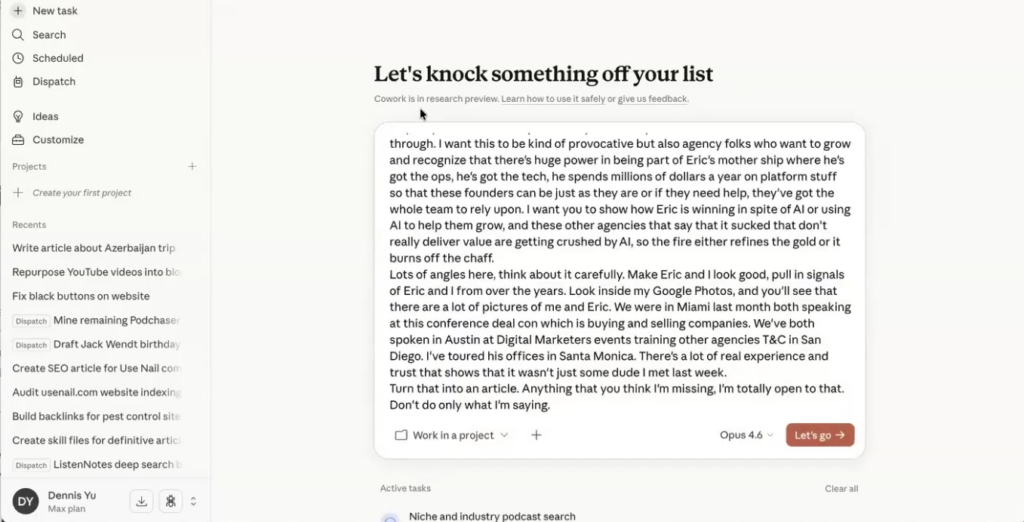
I told it to go into my Zoom recordings, grab the conversation I had with Eric Huberman of Hawke Media, and turn it into an article on blitzmetrics.com following our article guidelines.
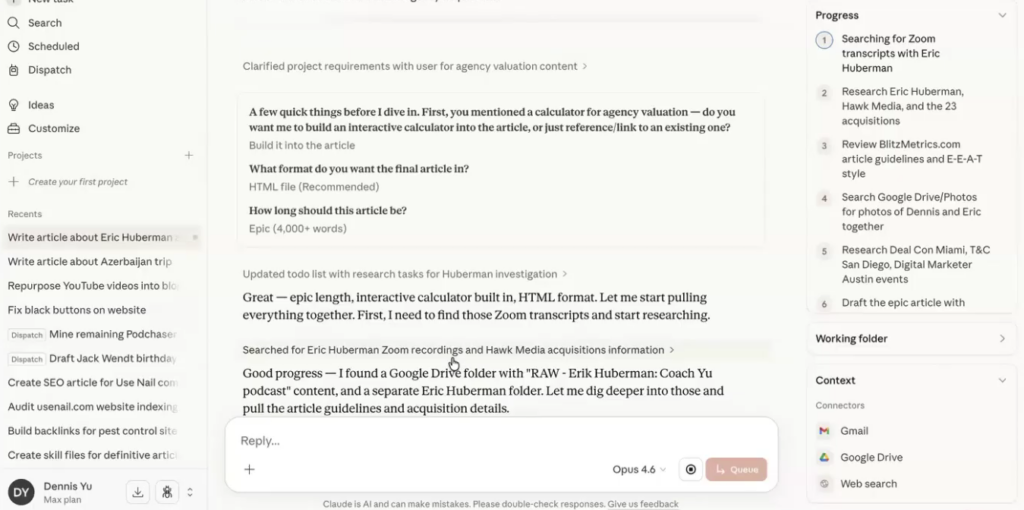
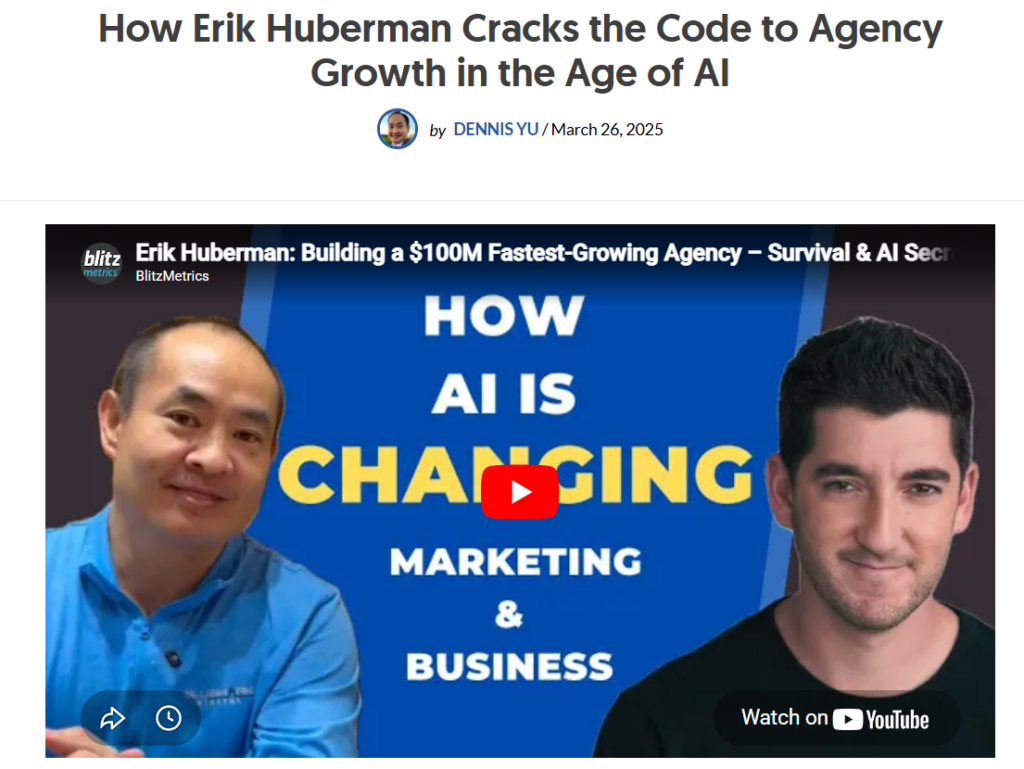
Eric runs the world’s largest and fastest-growing digital agency. He’s bought 23 agencies in the last couple years. He reached out to me because we’re deeply connected in the agency world. We were both in Miami last month speaking at DealCon, which focuses on buying and selling companies. We’ve both spoken in Austin at digital marketer events, at TNC in San Diego, and I’ve toured his offices in Santa Monica. There’s a lot of real experience and trust built over years.
I told the agent to pull screenshots from the Zoom call, grab photos from my Google Photos showing Eric and me at these conferences, and write something that shows the real signal of our relationship. Not AI-generated slop. Not some calculator asking you to plug in your revenue and add-backs. Real people, real conversations, real content.
The whole thing took me a few minutes to dictate. The agent then goes and executes across Zoom, email, Google Photos, and WordPress. It grabs the transcript, takes screenshots, logs into the CMS, and writes the article. I estimated it would take the agent an hour or two. A human would need far longer.
But the key is what I included in my instructions. I referenced our article guidelines. I gave entity context about how Eric and I are connected. I told it to follow our SOPs. If you don’t give the agent your guidelines, whose SOPs is it going to use? The internet’s. And that’s how you get generic output.
The MAA framework: reporting that retains clients
The same documented-task approach applies to client reporting. We created a framework called MAA: Metrics, Analysis, Action.
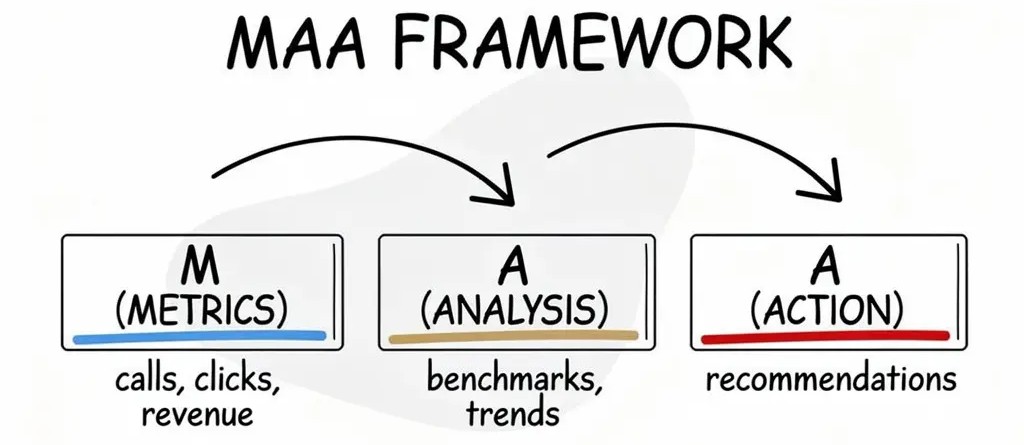
I’ve seen too many agencies and SaaS companies generate hundred-page reports full of screenshots from Google Ads, High Level, and whatever else. Twenty pages of charts with no analysis. A client sees their CTR is 1.7% and has no idea if that’s good or bad. They see they rank on 498 keywords and don’t know what that means.
You have to talk to clients like business owners. Show them what’s working and what’s not in plain English. Use red, yellow, and green. Provide the context of how they stack up against benchmarks. And give them specific recommendations on what to do next.
When we had Quiznos as a client with 5,700 locations, I couldn’t personally talk to every franchisee. That’s when we systematized reporting using MAA. Every Friday, an agent generates a simple report for each client. Not a giant email. Two or three sentences. What happened this week, what’s good, what needs attention.
That simple report does 90% of what an account manager would do. Clients feel like you’re on top of their business. The conversations you do have are positive, celebrating wins instead of handling complaints. And that becomes your hidden retention tool.
The takeaway
The real insight isn’t just that AI agents can do work. It’s that when they document what they do, you get three things at once: the work gets done, published content creates SEO value, and the system improves itself.
If you have SOPs, even rough ones, you can start building this loop today. Have your agents execute the task, document it as a meta article, and publish it. Then watch as the recursive improvement kicks in and the whole system gets better with every iteration.
This is what we run every day at BlitzMetrics. A concrete example: our AI agents now handle internal link building across our sites, replacing plugins that only did mechanical keyword matching with context-aware linking that understands entity relationships and business goals.
Dennis Yu
Dennis Yu is the CEO of Local Service Spotlight, a platform that amplifies the reputations of contractors and local service businesses using the Content Factory process. He is a former search engine engineer who has spent a billion dollars on Google and Facebook ads for Nike, Quiznos, Ashley Furniture, Red Bull, State Farm, and other brands.
Dennis has achieved 25% of his goal of creating a million digital marketing jobs by partnering with universities, professional organizations, and agencies. Through Local Service Spotlight, he teaches the Dollar a Day strategy and Content Factory training to help local service businesses enhance their existing local reputation and make the phone ring.
Dennis coaches young adult agency owners serving plumbers, AC technicians, landscapers, roofers, electricians, and believes there should be a standard in measuring local marketing efforts, much like doctors and plumbers must be certified.