
What DDD Means
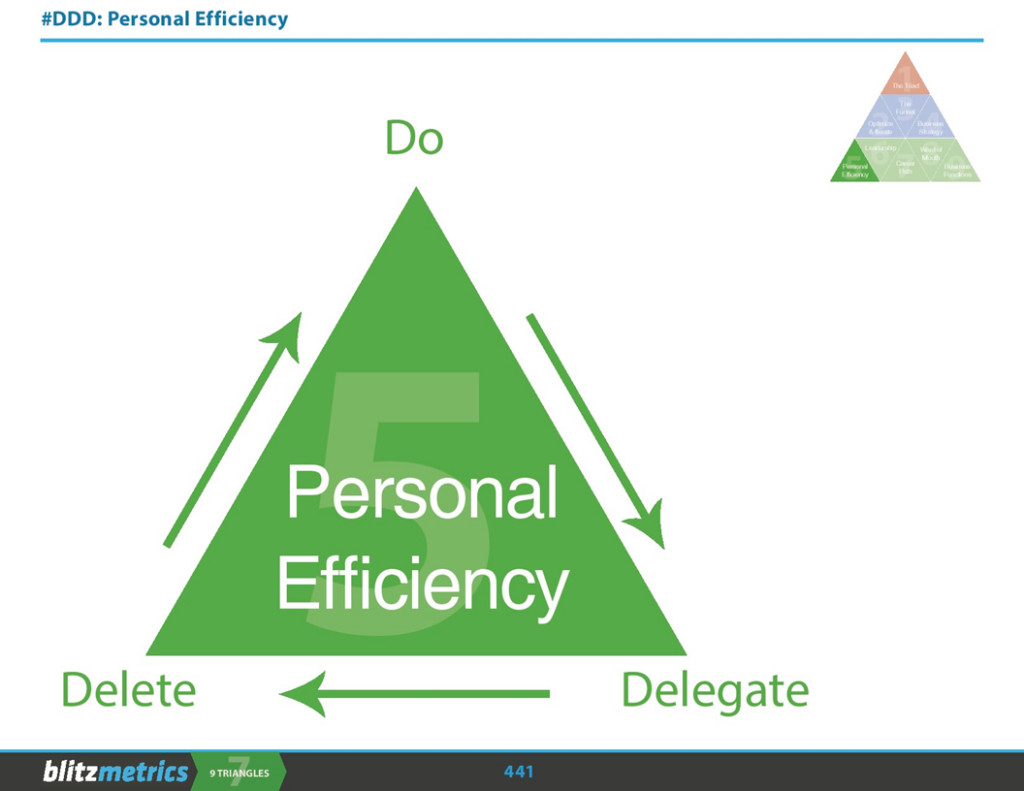
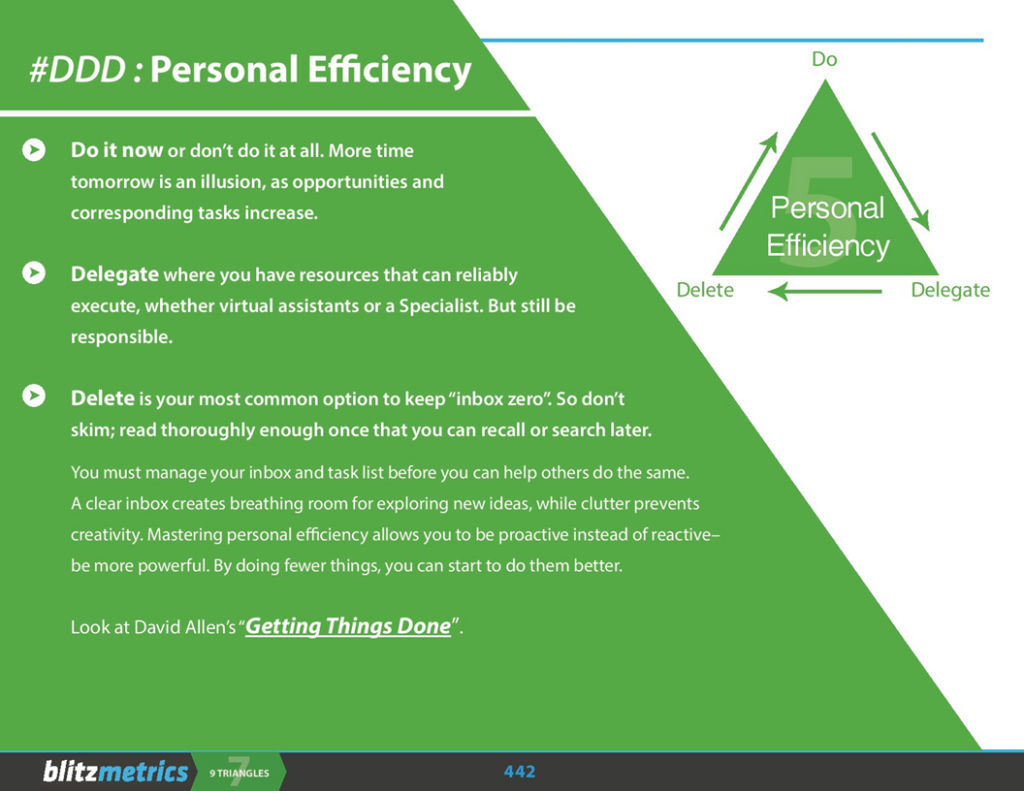
DDD stands for Do, Delegate, Delete. It is the personal efficiency triangle in the 9 Triangles framework, sitting in the WHAT tier — the five business triangles that form the foundation of how your organization operates. DDD governs how you manage your time by forcing every task into one of three buckets.
The Three Buckets
Do it yourself because only you can. These are the tasks that require your unique expertise, judgment, or relationships — the things that cannot be replicated by someone else or automated by an AI agent. Your goal is to keep this bucket as small as possible so you can focus on the highest-value work.
Delegate it to someone else who can execute it. This could be a team member, a virtual assistant, a Specialist, or an AI agent. With AI agents now handling documentation, content processing, and many repetitive tasks, the Delegate bucket has grown significantly. The key is that before you can delegate, the task needs to be documented — which is where LDT (Learn, Do, Teach) and CCS (Content, Checklist, Software) come in.
Delete it entirely because it does not contribute to your goals. Many tasks feel urgent but are not important. The hardest part of DDD is having the discipline to say no to things that seem productive but do not move the needle. If a task does not serve the mission of SBP (Specialist, Business, Partner), it should be deleted.
How DDD Works in Practice
Most people try to do everything themselves, which creates bottlenecks and burnout. DDD forces you to be honest about what actually requires your personal attention versus what can be systematized and handed off. The progression is: first you Do a task repeatedly to build expertise, then you document it through the documentation process so it can be Delegated, and you Delete everything that does not matter. Over time, your Do bucket shrinks as more tasks become documented and delegated.
Where DDD Fits in the 9 Triangles
DDD is one of the five business triangles in the WHAT tier. It is about your personal operating system — how you as an individual prioritize and execute. It connects directly to CID (Communicate, Iterate, Delegate) — DDD decides what to delegate, and CID defines how you lead the people doing the delegated work. It also connects to LDT (Learn, Do, Teach) because the tasks you choose to Teach are the ones you eventually Delegate, and CCS (Content, Checklist, Software) provides the documentation system that makes delegation possible.
Related Resources
- Documenting Expertise — how to share your knowledge through task documentation
- How to Document a Task — the meta-guide for the documentation process
- Task Library — where documented tasks live for delegation
- 9 Triangles Checklist — overview of the full framework