
 by
by
AI tools change every week. Claude Mythos, Gemini 3.0, Grok, ChatGPT. There’s always something new. But chasing the latest tool is a trap. What you need is a framework that stays the same no matter which AI you use. Everything you build should be portable.
Here’s the system I use, broken down into four stages.
Start with your why
Before you touch any AI tool, get clear on who you are and what you do. Some people call this a Soul.md file. It answers three questions. Who do you serve? How do you do it? What result do you achieve?
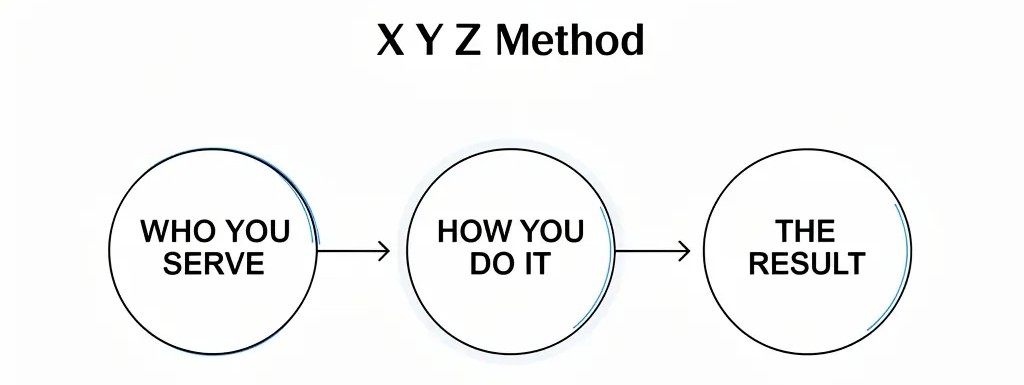
This is the X, Y, Z method. I help X achieve Y via Z. If you can’t say this clearly, it’s going to be hard to market yourself. The best players are known for one thing. One service, one customer, one package. Not a high and a low. Just one thing.
If you’re not sure what your one thing is, ask the AI. What am I really good at? What’s the one product or service I offer to my audience?
Build your knowledge base
Once your mission is clear, start collecting proof. Ask the AI to go inventory everything it knows about you. Gather all your positive mentions, podcasts, reviews, LinkedIn recommendations. Anything where someone said something good about you that shows credibility.
This is just another way of saying EEAT, which is what Google cares about. Experience, expertise, authority, and trust.
Organize all of this into what I call the Topic Wheel. At the center is what you sell, often that’s you as a personal brand. Around that are your six core topics. And around those are your stories, experience, and proof.
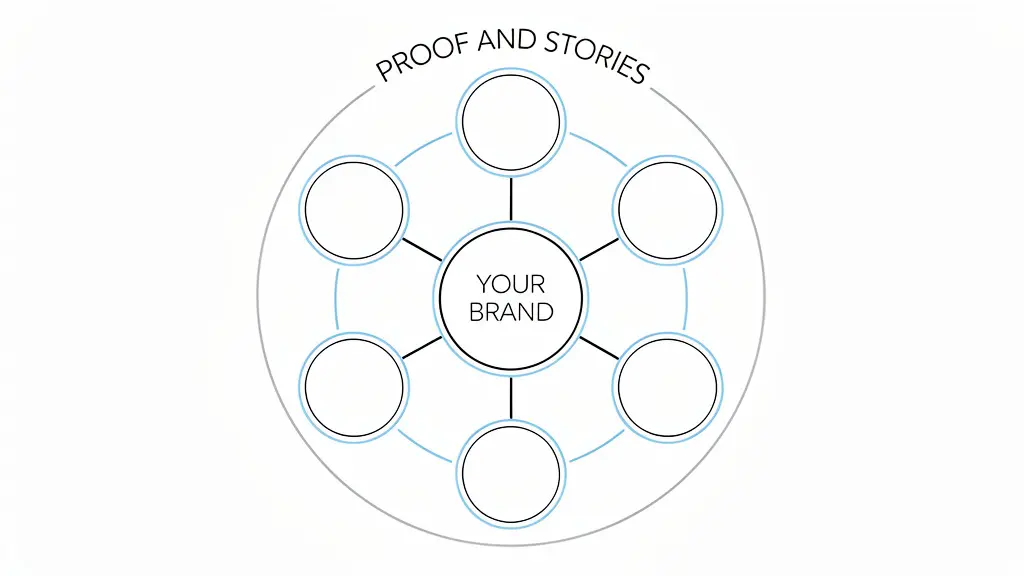
The Topic Wheel is not a content calendar. It’s evergreen. The more proof you collect around each topic, the stronger your signal becomes. Whether you’re a plumber in Eastern Pennsylvania, a Denver roofer like Peter Roth (of Scalify), or Anthony Hilb doing landscaping in Bloomington and Nashville, all of these things intersect and build trust. Everyone knows each other, especially in a local market. The real estate agent, the appraiser, the people you see at conferences. All of these connections reinforce your reputation.
Repurpose across channels
This is where the Mexican food analogy comes in. Beans, cheese, rice, lettuce, and ground beef can become a taco, a burrito, a chalupa, an enchilada. Same ingredients, different formats.
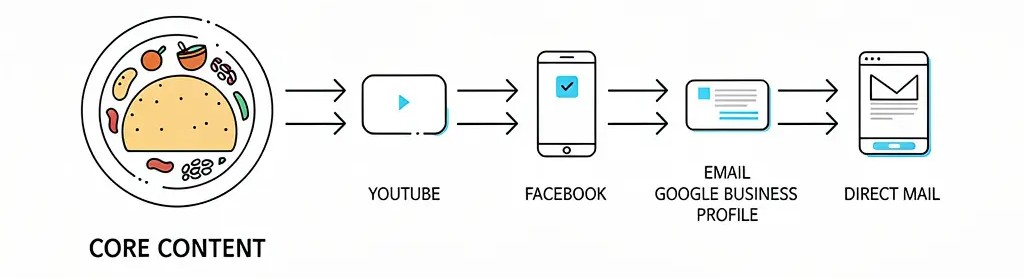
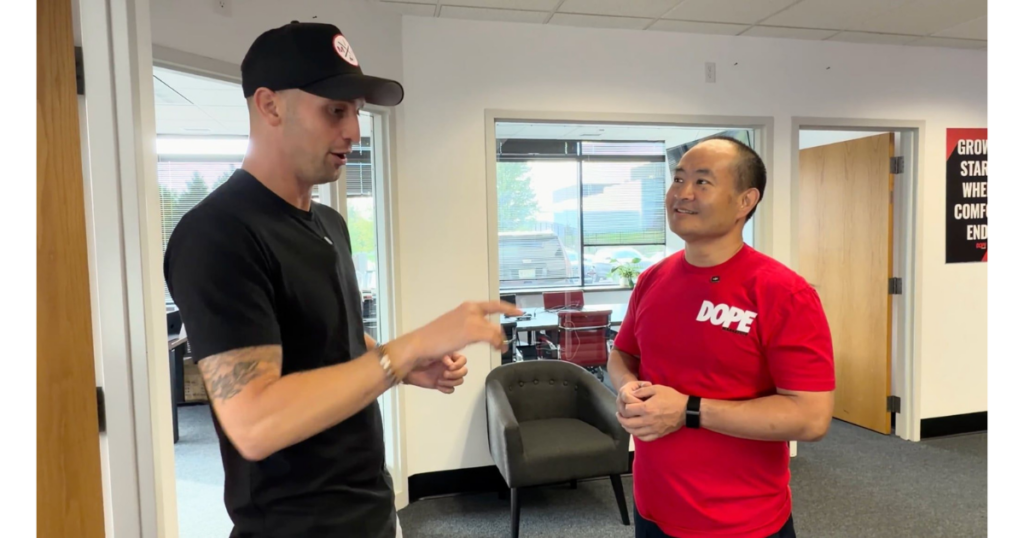
Your content works the same way. You have YouTube, Facebook, Google Business Profile, email, direct mail. For direct mail, David Carroll at Dope Marketing is the guy to talk to.
All these channels get stronger the more you push quality content through them.
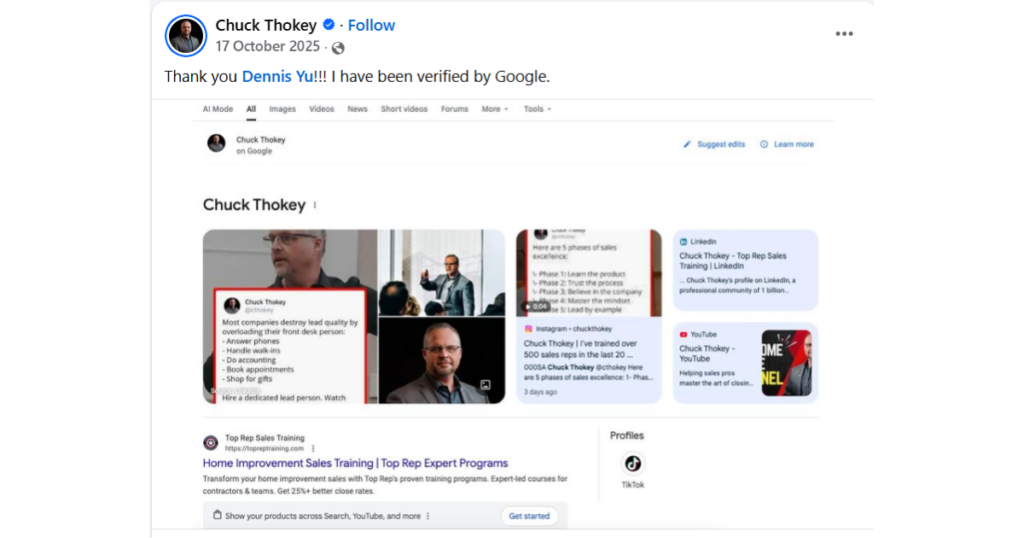
A podcast becomes a blog post. You have Tommy Mello on your podcast, or Peter Roth talking roofing, or Chuck Thokey, George Paladichuk, and Brad Strawbridge sharing their roofing expertise. That podcast turns into a blog, a Facebook story, a YouTube compilation. There are endless ways to cross-link and concentrate your signal across channels.
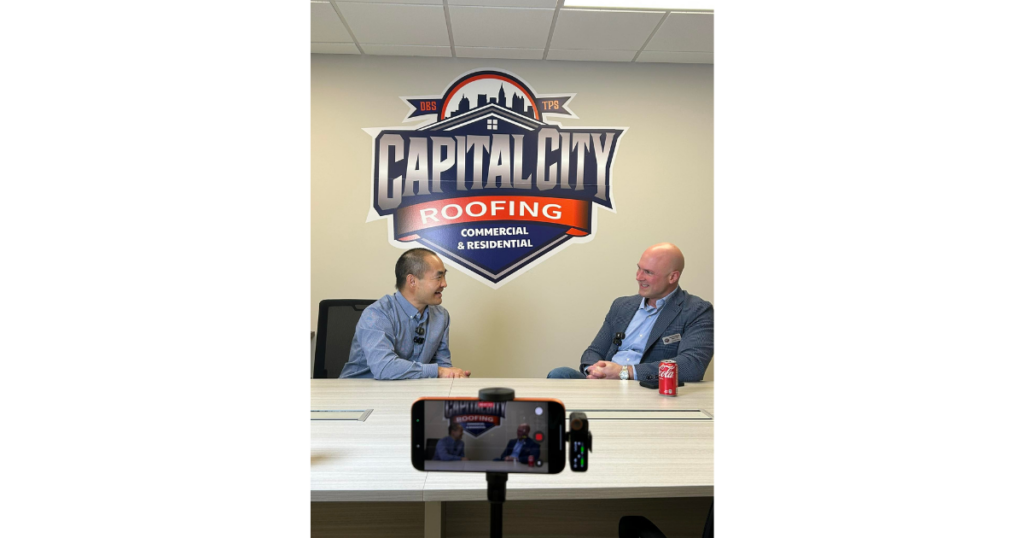
Then you promote. That’s the last stage of the four-stage Content Factory.
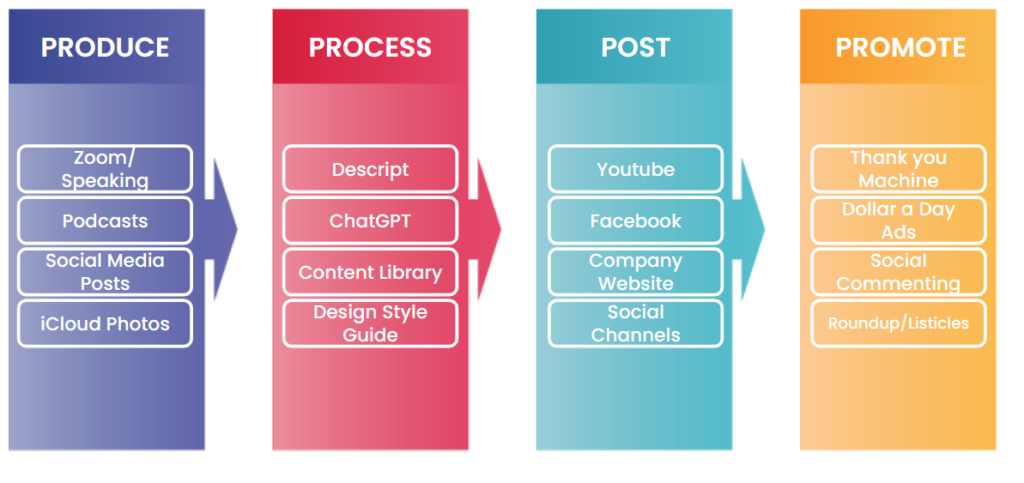
Local service ads, organic SEO, Google Business Profile optimization, TV, billboards, door to door. These are all extensions of the reputation you’ve already built.
Let AI agents do the work
Here’s where it gets powerful. Each of these steps can be handled by an AI agent. One agent maintains your mission and identity. Another manages your knowledge base. Another handles EEAT and content organization. Another manages your website. Another runs your social media and video editing. Another is your call center. Another runs your ads.

Think of these not as software programs but as people. Our agent that gathers positive mentions is named Ethan. Our support agent is named Stephanie. You can name yours whatever you want.
Every agent follows an SOP. These are just step-by-step instructions stored in text files. Some people call them Skill.md files. There’s nothing fancy about them. They’re just recipes. Do it 1, 2, 3, 4, 5.
When an agent does the work, they document what they did. That’s what I call a meta article. They write up the process they followed, the SOP they used, and the result they got. Like when George Paladichuk and Chuck turned a podcast into a blog post, they documented the steps, followed the SOP, and tracked the results.
The result has to be real. Not “I got three tweets out today.” That’s vanity. The result is ranked better, more traffic, phone calls, revenue. QuickBooks-level business results.
QA and amplify what works
When something works, you repeat it. Put more money on it. Make related content. Ask customers for feedback. Repurpose to other channels. All of these things amplify the signal of what’s already working.
Like Marko Sipilä in HVAC Quote and CoatingLaunch. Facebook ads are absolutely dominating for him, so he just keeps doing that.

Or Billy Door Man Cline in Dallas where the TV ads are working, so he repurposes those into other channels.

Or Anthony of Anthony’s Lawn Care who sent out a direct mail piece with a picture of a tree falling on a house. It worked so well he turned it into Facebook ads and just kept reusing the creative.
And because everything is stored in files and SOPs, you’re not locked into any one AI platform. If Anthropic raises prices, fine. Move agents two, three, and four over to Gemini. Everything is portable because your knowledge, your SOPs, and your proof all live in files you control.
The system is not about technology. It’s about process. It’s about your ability to coach and organize your team, whether those team members are human or AI. How clear are your instructions? How well organized are you? How do you provide feedback when something goes wrong?
The foundation stays the same
Stop chasing shiny objects. When someone says “upload this new file and it’ll do magic,” ask yourself how it fits into this framework. If your goal is to drive leads and sell a high-ticket service, this system works because it’s built on reputation and many touches before someone ever talks to you.
We’re in April 2026 right now. I guarantee in a couple years the same framework will still be true. Maybe the agents will be more sophisticated. Maybe there’s a new social channel or a new AI from China. Doesn’t matter. Your foundation holds.
I’m Dennis Yu, former search engine engineer and your Marketing Mechanic. I make these videos every week. If you found this helpful, let me know.
Originally published .
Dennis Yu
Dennis Yu is the CEO of Local Service Spotlight, a platform that amplifies the reputations of contractors and local service businesses using the Content Factory process. He is a former search engine engineer who has spent a billion dollars on Google and Facebook ads for Nike, Quiznos, Ashley Furniture, Red Bull, State Farm, and other brands.
Dennis has achieved 25% of his goal of creating a million digital marketing jobs by partnering with universities, professional organizations, and agencies. Through Local Service Spotlight, he teaches the Dollar a Day strategy and Content Factory training to help local service businesses enhance their existing local reputation and make the phone ring.
Dennis coaches young adult agency owners serving plumbers, AC technicians, landscapers, roofers, electricians, and believes there should be a standard in measuring local marketing efforts, much like doctors and plumbers must be certified. He has appeared on 353 podcasts with 619 credited episodes — see the full list of his podcast appearances.