
 by
Alex Berman’s Cold Email Method: The Definitive Guide to Getting Replies
What decides whether a cold email works
Alex Berman’s 30/30/50 heuristic: weights, not measured shares.
| Priority | Weight |
|---|---|
| Targeting Who you email |
30
|
| Offer What you propose |
30
|
| Deliverability Does it reach the inbox? |
50
|
A cold email is a note to someone who does not know you yet. A useful campaign starts with relevant recipients, a clear offer and sound sending practices. This guide covers list building, technical setup and a concise pitch, using what my friend Alex Berman taught me.
Who is Alex Berman, and why learn cold email from him?
Alex Berman is the person people call the cold email king. His site lists five B2B software exits, including the $10M sale of Taplio to lempire, and credits his methods with helping 14,000+ clients book more than 500,000 sales meetings. He wrote The Cold Email Manifesto and teaches outbound sales to more than 100,000 subscribers on his YouTube channel.
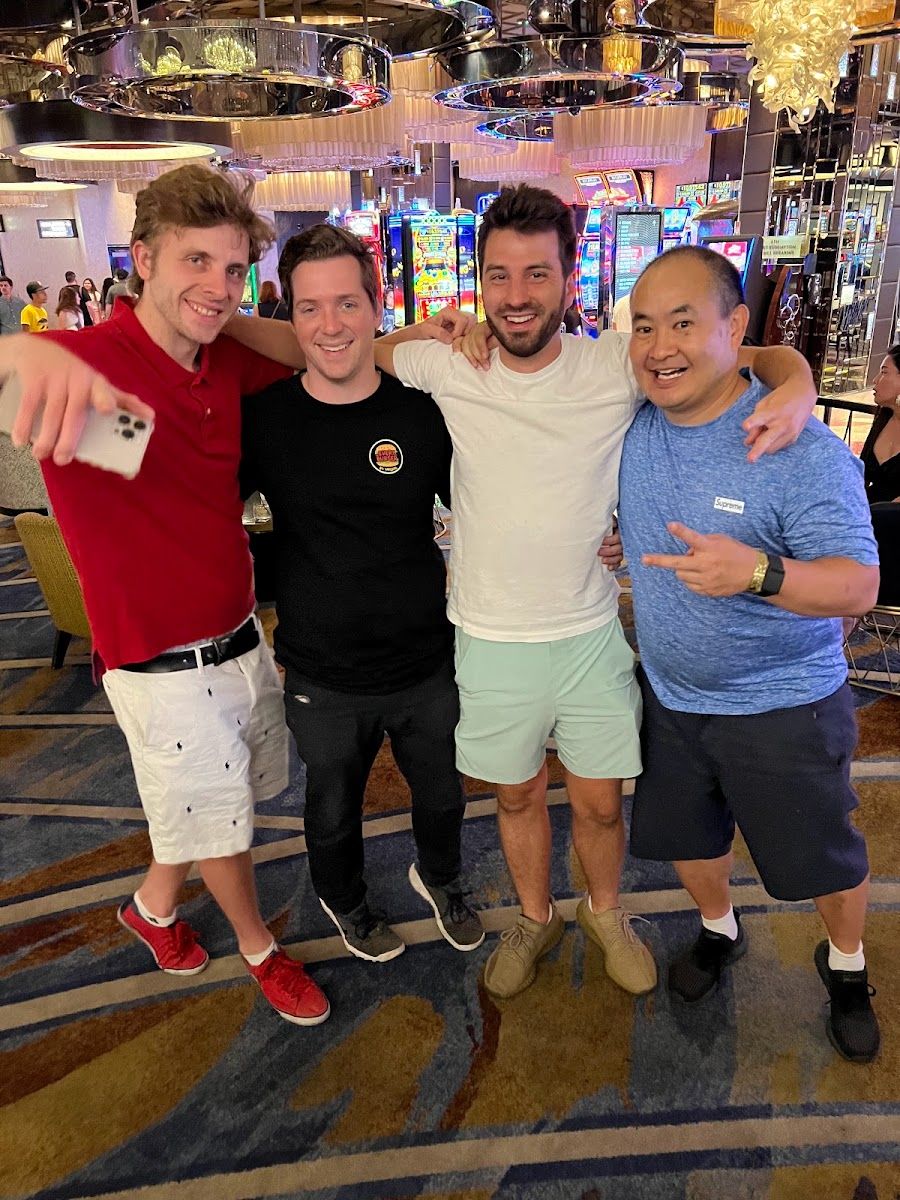
I have learned from Alex on camera and off: he interviewed me in 2018, we recorded together in Las Vegas in 2021, and he joined me on stage at DealCon in Nashville in 2024. The professional side of his story is on DigiMarCon in why Alex Berman is called the cold email king. The personal side, from the Taj Mahal to a Thai dinner that ended at Universal Studios, is on my page about Alex.
Does cold email still work in 2026?
Cold email can start business conversations, but relevance and technical setup both matter. Alex’s own answer to “is cold emailing unprofessional?” is that it is only unprofessional when done poorly: mass-blasting a generic template to an untargeted list is spam, while a specific offer to a specific person is how deals get made. What has changed is that inbox providers are stricter. Since 2024, Google’s email sender guidelines require bulk senders to authenticate their mail, offer easy unsubscribes and keep spam complaints low. These are delivery requirements, not a promise that a particular campaign will reach the inbox or earn replies.
What is the 30/30/50 rule?
It is Alex’s heuristic for what to prioritize, as shown in the chart above:
- Targeting, about 30%: who you email.
- Offer, about 30%: what you are proposing.
- Deliverability, about 50%: whether the email reaches the inbox at all.
The numbers add up to 110, so read them as weights rather than measured shares of a whole. The lesson is to prioritize the list, offer and setup. In Alex’s words: “Who you send an email campaign to is more important than the content of the email.” Most people polish the copy first. Fix the list and the setup first, then the words.
Who should you send cold emails to?
When Alex and I recorded in Las Vegas, he called the right prospects golden geese. Three rules from that conversation:
- Pick companies big enough to pay. Alex targets companies doing roughly $5M to $150M a year. They have budget, and the owner can still say yes.
- Clone your best client. Look at the one client you would love ten more of. Same industry, same size, same problem. That is your list.
- Pitch one specific project. “We help with marketing” gets ignored. “We rebuild the booking page for HVAC companies” gives the reader a specific project to consider.
Send to a small batch first, about 100 companies, and learn from the replies before you scale.
How do you build a cold email list?
You need names, roles and working email addresses for the companies you picked. Alex’s tool list on his site points to ScraperCity for pulling leads from Google Maps and Apollo. Google Maps is where local businesses live, so it is the right source if you sell to contractors, clinics or home service companies. Apollo is better for B2B companies by role and size.
The ScraperCity Apollo scraper takes an Apollo search URL and exports the selected contacts to CSV. Here Alex demonstrates the tool:
Whatever tool you use, check three things before you send:
- Verify every address. Bounces hurt your sending reputation fast.
- Match the role to the offer. The owner of a $10M company, not an intern’s shared inbox.
- Keep one note per lead. One real detail about their business is what makes the compliment honest.
How do you keep cold emails out of spam?
Deliverability gets the largest weight in Alex’s heuristic.
- Send from a separate domain. A separate, clearly branded outreach domain can separate operational mail, but it does not guarantee inbox placement or protect your wider brand reputation.
- Authenticate it. Set up SPF, DKIM and DMARC records. Google’s sender guidelines spell out what it expects.
- Warm it up. Start with a few emails a day per inbox and build slowly. A brand-new domain that sends hundreds on day one looks like a spammer.
- Keep it plain. Plain text, no images, at most one link, no attachments.
- Make leaving easy. Honor every “no thanks” right away.
For sending, Alex’s tool list names EmailBison and HyperTide, and Close as a CRM and dialer. Check his site’s tools page for his current picks, since tools change.
What should a cold email say?
Alex’s 3C framework gives every email three parts:
- Compliment: one true, specific thing about their business. It proves a human looked.
- Case Study: one result you got for someone like them.
- Call to Action: one easy next step.
Keep it to four or five sentences. The subject line Alex taught me in Vegas is two words: “quick question.” Here is the shape, for a marketing agency writing to a roofing company (the company and person are made up):
Subject: quick question
Hi Maria,
Saw your crew’s before-and-after videos on the Lakeside Roofing site. They are the best I have seen from a roofer in Denver.
We help roofing companies turn videos like that into booked inspections.
For [a roofer like them], that meant [your real result, with a number].
Are you around later this week for 15 minutes?
Dennis
This example shows the message body only. Before sending, add your valid postal address, clear identification of the marketing message, and an easy way to opt out. Fill the brackets with your own real result. If you do not have one yet, use the next section. Never invent one.
What if you do not have a case study yet?
Alex’s answer surprised me the first time I heard it: borrow one. Partner with a bigger agency that already has the results, offer to bring them clients on commission, and use their case study with their permission. You get credibility on day one, they get new business, and your first wins become your own case studies.
How many follow-ups should you send?
Follow-ups can bring replies the first email misses. Send a few short follow-ups, a few days apart, each one adding something new: a different result, a short video, a simpler question. Stop the moment someone says no. Alex has a full write-up on follow-up timing on his site and channel.
How do you know if your cold email is working?
Track four numbers for every batch of 100:
- Accepted: how many messages recipient servers accepted rather than bounced. This does not prove inbox placement.
- Replies: any answer at all.
- Positive replies: people who want to talk.
- Meetings and deals: what actually turns into money.
Bounces point to address quality or sending problems. Replies without meetings are a reason to review qualification, the offer and the next step. No replies can reflect targeting, the offer, copy or inbox placement; check each before increasing volume. Use the same Metrics, Analysis, Action loop we use for every channel: measure, investigate, change one thing, and run the next batch.
Is cold email legal?
In the United States, CAN-SPAM applies to commercial cold email, including B2B messages. The FTC’s compliance guide requires accurate sender information and subject lines, clear identification of the message as an advertisement, a valid postal address, and a clear way to opt out. Keep the opt-out method working for at least 30 days and honor requests within 10 business days. You remain responsible when someone sends on your behalf. CAN-SPAM compliance alone does not establish compliance with every applicable law or a mailbox provider’s policies. Check the requirements for the recipients’ jurisdictions before sending.
How can you learn more, for free or with help?
Do it yourself: start with Alex’s free videos on his YouTube channel, read The Cold Email Manifesto, and use this guide as your checklist. For the full campaign setup, step by step, read my complete guide to launching a cold email campaign. For more of Alex’s tips, see 7 best cold email practices by Alex Berman and Alex Berman, the cold email king.
Get help: if you want coaching on cold email directly from Alex, he runs it through Galadon Gold.
Frequently asked questions
What is the best subject line for a cold email?
Short and plain. Alex’s go-to is “quick question.” It reads like a note from a person, not an ad.
How long should a cold email be?
Four or five sentences: a compliment, what you do, one result, and an easy question.
What is the 3C cold email framework?
Compliment, Case Study, Call to Action, from Alex Berman.
What is the 30/30/50 rule?
Alex Berman’s heuristic gives targeting a weight of 30, the offer 30 and deliverability 50. The figures total 110; they are priorities, not measured shares of a whole.
What tool does Alex Berman use to build lead lists?
His site points to ScraperCity for pulling leads from Google Maps and Apollo.
Is cold email legal?
US commercial cold email must follow CAN-SPAM, including accurate headers and subjects, clear ad identification, a valid postal address and a working opt-out honored within 10 business days. Other laws and provider policies can also apply.
Originally published .
Dennis Yu
Dennis Yu is the CEO of Local Service Spotlight, a platform that amplifies the reputations of contractors and local service businesses using the Content Factory process. He is a former search engine engineer who has spent a billion dollars on Google and Facebook ads for Nike, Quiznos, Ashley Furniture, Red Bull, State Farm, and other brands.
Dennis has achieved 25% of his goal of creating a million digital marketing jobs by partnering with universities, professional organizations, and agencies. Through Local Service Spotlight, he teaches the Dollar a Day strategy and Content Factory training to help local service businesses enhance their existing local reputation and make the phone ring.
Dennis coaches young adult agency owners serving plumbers, AC technicians, landscapers, roofers, electricians, and believes there should be a standard in measuring local marketing efforts, much like doctors and plumbers must be certified. He has appeared on 353 podcasts with 619 credited episodes — see the full list of his podcast appearances.