
 by
This SOP is for roofing and home-service contractors who want paid ads without handing an agency a blank check. It puts your best organic post in front of homeowners within 5–15 miles of you for $1 a day, runs untouched for 30 days, and ends with one number that matters: your cost per lead. It is the contractor procedure built on the Dollar a Day strategy — read that page for the full method; run this page to execute it.
Purpose
Most contractors lose money on paid ads because they start big, target vaguely, and change things before the algorithm can learn. Dollar a Day removes all three failure modes: the budget is $1/day ($30/month), the creative is a post that already earned engagement organically, and the campaign runs 30 days without edits. In Chapter 9 of Fire Your Agency, Keep Your Growth, the field note from Infinity Exteriors, a Wisconsin exteriors company, records what that discipline produced: about 5 leads in month 1 from $30 of spend, 8 in month 2, 15 per month by month 4 as the algorithm learned, and — after scaling to $2/day and then $3/day — 50 leads per month from $90/month within 6 months, against the $3,000/month an agency had been charging them to do basically nothing. Those are that company’s numbers, from the book — your market will differ — but the sequence (test cheap, measure, then scale) is the SOP.
When to run
- Trigger: You have a Facebook page with at least 2–3 organic posts that earned real likes, comments, or shares, and you are not currently running any paid Facebook campaign you understand.
- Starting state: Your Google Business Profile and website basics are in place first. Paid ads amplify a foundation; they do not replace one. If you have not scored your foundation, run the Roofing Marketing Framework scorecard first.
- Do not run yet if: you have no organic posts (make content first — see the Content Factory), or you are about to start Google Ads at the same time. Chapter 9 is explicit: start with Dollar a Day, master it, get profitable, then expand. Doing both at once is how contractors lose money.
Prerequisites & inputs
- A Facebook page for your business (not a personal profile) with admin access.
- Access to facebook.com/ads/manager — create the ad account if you do not have one.
- Your 2–3 best-performing organic posts identified (most likes, comments, and shares).
- Your service area defined as a radius: 5–15 miles from your office or shop.
- A payment method on the ad account and $30 for the first month.
- A simple place to record results: date launched, post used, spend, clicks, leads, cost per lead.
Steps
- Pick the creative. Choose the organic post with the strongest real engagement — likes, comments, shares. That post is your ad. Do not design a new ad; the whole point is advertising content your market already voted for. Best formats from the book: a before/after photo with a short customer story. Ad copy does not sell — it tells the story: “Here’s another happy customer,” plus the photo.
- Create the campaign. Go to facebook.com/ads/manager. Create a new campaign. Chapter 9’s playbook specifies the Lead Generation objective (the chapter body notes Traffic is the alternative we use when we want to track it ourselves — pick one, and write down which, so your day-30 numbers mean something).
- Set the audience. Location: 5–15 miles from your office. Age: 35–75 (homeowners). Interests: home improvement, construction, real estate. Decision point: if your service area is a tight metro, start at 5 miles; if you run crews across a county, use up to 15. Do not stack extra interest layers to “get clever” — narrow targeting is the most common way beginners strangle a Dollar a Day campaign.
- Set the budget. $1.00/day. Not $5 “to learn faster.” The discipline is the strategy.
- Launch and leave it alone for 30 days. Do not change the audience, the creative, or the budget during the run. Every edit restarts the learning you are paying $1/day to buy.
- Measure at day 30. Count clicks and leads. Compute cost per lead = total spend ÷ leads.
- Decide — one of three doors:
- Cost per lead under $150: scale to $2/day and run another 30 days. Repeat the measurement at each step before scaling again ($3/day and up), exactly as Infinity Exteriors did.
- Cost per lead $150 or higher: do not raise the budget. Change one variable — a different winning organic post as creative, or an adjusted audience — and run a fresh 30 days.
- Zero leads: check the basics before blaming the strategy — was the post actually a proven organic winner? Was the radius so small almost nobody saw it? Fix one thing and rerun. A $30 test that fails has still done its job: it told you cheaply.
Checklist
- Creative is a proven organic post, not a designed ad
- Campaign objective chosen and recorded (Lead Generation per the Ch. 9 playbook)
- Radius set between 5 and 15 miles from the office
- Age 35–75; interests: home improvement, construction, real estate
- Budget exactly $1.00/day
- Launch date and post used written down
- No edits made during the 30-day run
- Day-30 review calendared: clicks, leads, cost per lead
- Scale / change-one-variable / rerun decision recorded with the numbers
Common failures & fixes
- Editing the campaign every few days. Fix: restart the 30-day clock. The run only counts if it is untouched.
- Starting at $10–$20/day “to get results faster.” Fix: drop to $1/day. You are buying learning, not volume; volume comes after the cost-per-lead check passes.
- Using a stock photo or a designed graphic as creative. Fix: swap in your best organic post. Dollar a Day only works because the creative is pre-validated by real engagement.
- Targeting the whole state. Fix: cut to your real service radius, 5–15 miles. Leads you cannot service are not leads.
- Judging the campaign at day 7. Fix: the book’s timelines are 30 days to first measurement and 30–90 days to optimize. A week-one verdict is a coin flip dressed as data.
- Running Google Ads simultaneously as a beginner. Fix: pause that ambition. Master this first (Ch. 9: Google Ads cost per click in this industry can range from $0.50 to $15.00, and beginners lose the most money there).
Measurement
Judge this SOP the way we judge everything: Metrics → Analysis → Action. Metrics: spend, clicks, leads, cost per lead at day 30. Analysis: is cost per lead under the $150 scale threshold from Chapter 9, and is it improving run over run as the algorithm learns? Action: scale one step, change one variable, or rerun — never “let it ride and hope.” Report the numbers monthly alongside your other channels; a Dollar a Day campaign that produces leads at a known cost is worth more than a $3,000/month agency report that cannot name one.
FAQ
Why only $1 a day — can that possibly work?
Because the first job of the campaign is learning, not lead volume. Chapter 9’s Infinity Exteriors field note: 5 leads in month 1 on $30, growing to 15 per month by month 4 on the same spend as the algorithm learned — then scaled deliberately. The dollar buys the data; the data tells you whether scaling is safe.
Which post should I advertise?
The one your audience already chose: your 2–3 organic posts with the most likes, comments, and shares. If none of your posts earned engagement, that is a content problem to fix before it is an ads problem — start with the Content Factory.
What if my cost per lead comes in over $150?
Do not scale and do not quit. Change exactly one variable — creative or audience — and run another 30 days at $1/day. Each test costs $30 and eliminates a guess.
Should I run Google Ads instead?
Not first. Chapter 9 calls Google Ads the place contractors lose the most money, because cost per click swings from $0.50 to $15.00 and profitable use demands keyword, landing-page, and bid-strategy skill. Dollar a Day first; Google after you are profitable and understand your numbers.
How long before I judge whether this works?
Thirty days to the first measurement, 30–90 days to optimize. Contractors who abandon every channel at day 30 never build momentum in any of them.
Two doors
Do it yourself: Run this SOP exactly as written. Total cost of your first test: $30 and one sitting in Ads Manager. The full method behind it lives at Dollar a Day, and the book that cites this SOP — including how this process was written and checked — is documented at the Fire Your Agency book process page.
Done for you: If you would rather have the system run for you — content, Dollar a Day ads, Maps, and follow-up as one program — that is what Local Service Spotlight does for local service companies. Same playbook, our team running it.
Agent-detail section
- Slug:
facebook-ads-for-contractors - Canonical URL: https://blitzmetrics.com/facebook-ads-for-contractors/
- Parent hub: Dollar a Day — https://blitzmetrics.com/dollar-a-day/
- Source of truth: Fire Your Agency, Keep Your Growth, Chapter 9 (body + Playbook), V6 manuscript, plus the canonical Dollar a Day page. This build found no prior SOP source (Wayback / workspace / Drive sweep, Nov 9, 2026).
- Verification rule: At publish, verify live at the canonical URL (desktop + mobile first screen), confirm the Dollar a Day parent carries a reciprocal body link down to this SOP, and confirm the generic “How To Run Facebook Ads Effectively” page is not overwritten or duplicated.
- Reciprocal back-links owed at publish: Dollar a Day parent → this SOP (body link). Recorded here; finalizes at publish.
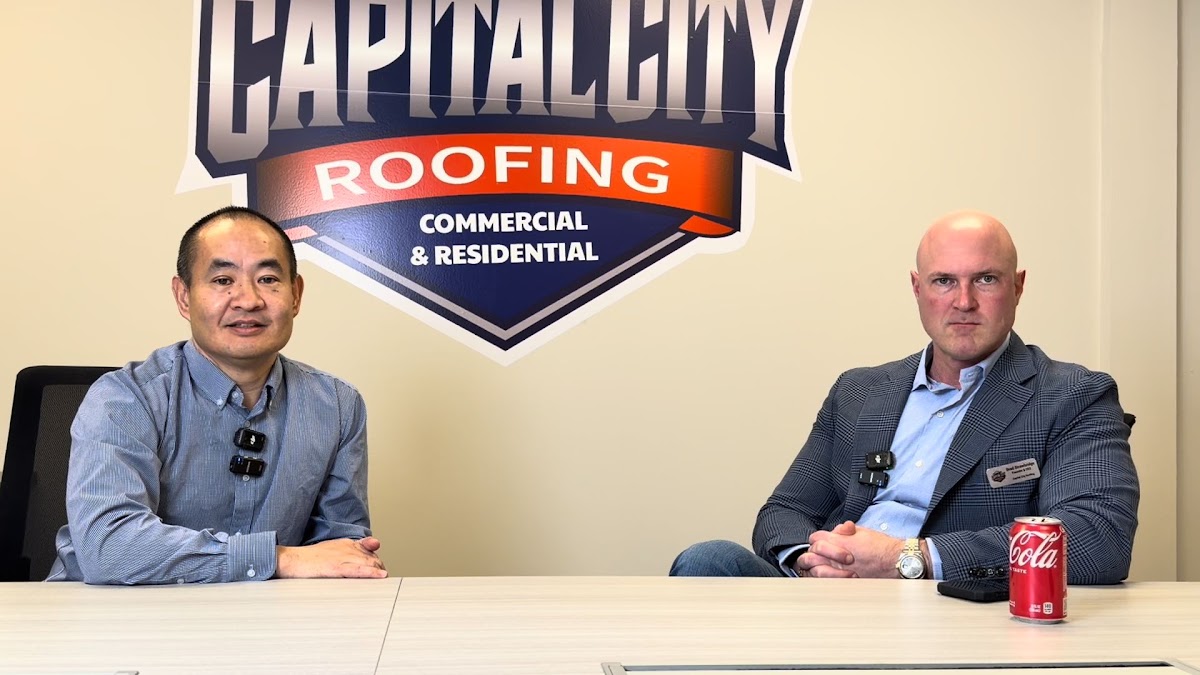
- PHOTO GAP: Asset set has no photo of a contractor’s actual ad creative, boosted post, or job-site content shoot. Publisher: accept the CCR table photo (used above, honestly captioned) — that is what we are doing — or source a real screenshot/photo of a live Dollar a Day campaign from the LSS team as a later improvement. Do not substitute stock or generated imagery.
Originally published .
Dennis Yu
Dennis Yu is the CEO of Local Service Spotlight, a platform that amplifies the reputations of contractors and local service businesses using the Content Factory process. He is a former search engine engineer who has spent a billion dollars on Google and Facebook ads for Nike, Quiznos, Ashley Furniture, Red Bull, State Farm, and other brands.
Dennis has achieved 25% of his goal of creating a million digital marketing jobs by partnering with universities, professional organizations, and agencies. Through Local Service Spotlight, he teaches the Dollar a Day strategy and Content Factory training to help local service businesses enhance their existing local reputation and make the phone ring.
Dennis coaches young adult agency owners serving plumbers, AC technicians, landscapers, roofers, electricians, and believes there should be a standard in measuring local marketing efforts, much like doctors and plumbers must be certified. He has appeared on 353 podcasts with 619 credited episodes — see the full list of his podcast appearances.