
 by
by
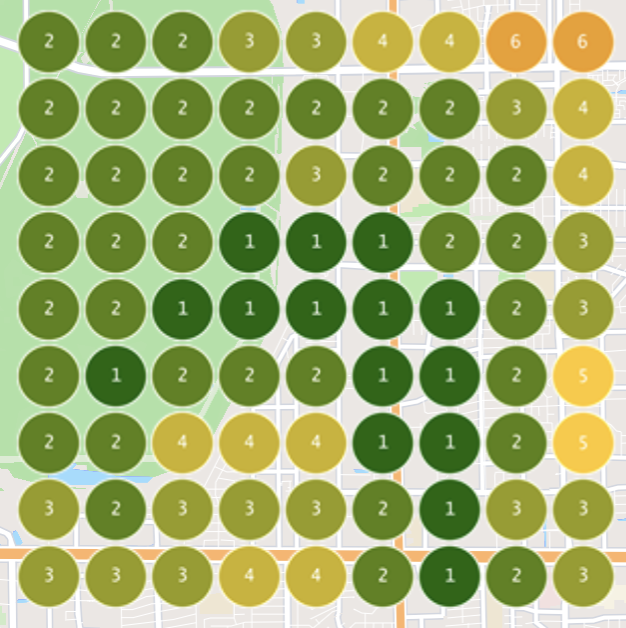
Mr. Reliable Heating & Air in Houston was stuck outside the Google Maps 3-pack for several high-value keywords. Their GBP was strong — 4.9 stars, 450+ reviews, legitimate address, live call answering — but they weren’t showing up where it mattered most. After running a structured map pack visibility campaign targeting ten carefully selected keywords, their geo grid scans shifted from orange and red to mostly green across their primary service area. Same business, same location, same website — the difference was a disciplined, data-driven approach to map pack rankings. Dennis breaks down exactly how this works in the video above.
This is the playbook we use at Local Service Spotlight to help contractors, plumbers, HVAC companies, and other local service businesses break into the Google Maps 3-pack. No guesswork, no vanity metrics — just MAA (Metrics, Analysis, Action) applied to map pack visibility.
Why the Map Pack Is Where Local Revenue Lives
If you run an HVAC company, a plumbing business, a painting crew, or a lawn care operation, the Google Maps 3-pack is where your phone rings. Organic search results sit below the fold on mobile. Paid ads require ongoing budget. But the map pack? That’s where homeowners look first when they need someone now — and it’s driven by your Google Business Profile, not just your website.
A business ranking #1 in the map pack can receive three to five times more calls than the business sitting at #4 or #5. That difference is not a vanity metric — it translates directly into booked jobs and revenue. Most local businesses either rely on their web developer to “do SEO” (which usually means tweaking meta titles once and walking away) or they hire an agency that charges thousands a month and cannot show them a geo grid to prove anything changed.
Not Every Business Is Ready for a Map Pack Campaign
This is the step most people skip — and it’s the one that separates a successful campaign from a waste of money. Before we run any keyword research, we qualify the business against a strict checklist:
The business must fall into a category where Google Maps visibility directly drives revenue — HVAC, plumbing, painting, roofing, lawn care, dental, legal, restaurants, med spas. They need a verified physical location, not a virtual office. We look for 100 or more Google reviews, signaling an established business with existing authority. Average ticket value should be above $150 — the MAA math has to work, meaning one additional closed job from improved visibility should more than cover the campaign cost. And they must already have a claimed, optimized Google Business Profile.
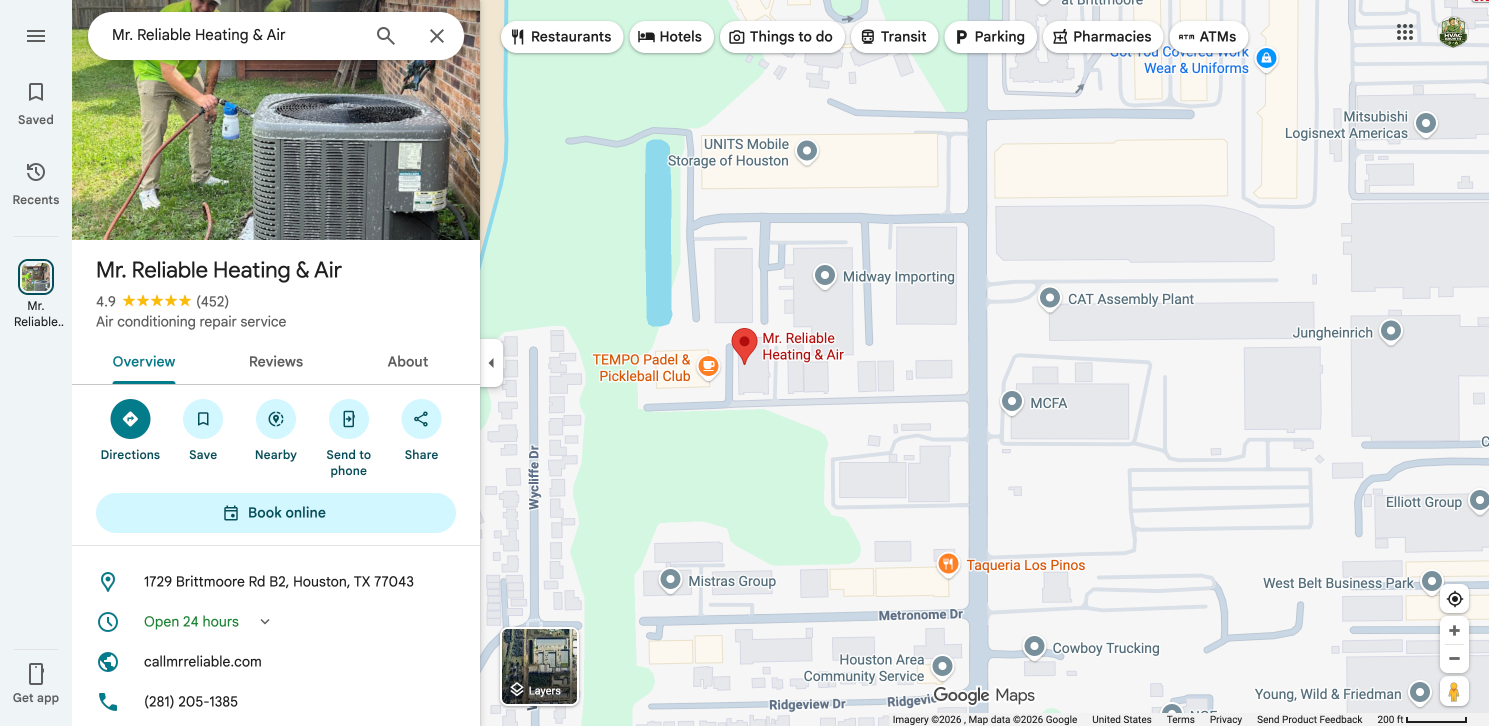
When a business doesn’t qualify, we don’t just dead-end the conversation. We explain what they need to do first — get more reviews, claim their GBP, build out service pages — and offer to help with that groundwork. Mr. Reliable Heating & Air passed every qualification check: 4.9 stars, 452 reviews, real Houston address, live call answering, and an average ticket well above $150.
Picking the Right 10 Keywords
Our map pack campaigns target ten keywords per location. Not twenty, not five — ten. Picking the right ones is what makes or breaks the results. We start by pulling the business’s current search terms from Google Business Profile Insights and cross-reference with Google Keyword Planner for volume data in their specific market. We want keywords with at least 50 searches per month.
But volume is not everything. A keyword with 40 searches/month and a $15,000 average ticket (like “AC replacement Houston”) is worth far more than a 200/month keyword with a $30 ticket (like “air filter change near me”). We weigh volume against ticket value and competitive density. A keyword with 200 searches/month in a market with 15 strong competitors in the 3-pack is very different from 200/month with weak competition.
For Mr. Reliable, they were already crushing it for “AC repair Houston.” So we focused on their Katy, Texas service area and targeted keywords like “HVAC repair Katy TX” and “air conditioning service Katy” — terms with solid volume but less competition where the campaign could show clear before-and-after improvement on the geo grid.
How We Track Results: Before and After Geo Grids
Before any campaign starts, we run a baseline geo grid scan. This is the “before” snapshot that proves to the client what changed. After the campaign runs, we scan again and compare. No opinions, no guesswork — just data.
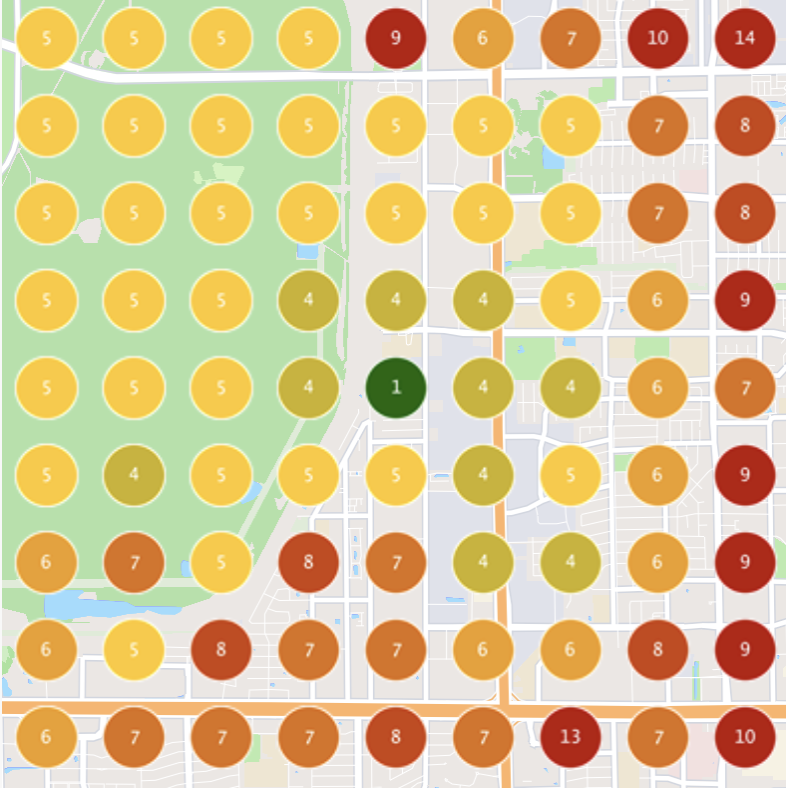
For Mr. Reliable, the geo grid data tells the story clearly. Before: positions averaging 4–10, heavy orange and red on the outer edges. After: the grid shifted to mostly green, with positions 1–4 across the center and near-center. The same pattern held across their other targeted keywords including AC repair and heating.
Applying the MAA Framework to Map Pack Decisions
Dennis Yu’s MAA framework is the operating system behind every decision we make. Here is how it applies to map pack campaigns:
Metrics: Focus on business outcomes, not vanity numbers. A 100% improvement on two clicks per week is far less valuable than a 20% improvement on 100 clicks per week. The metrics that matter are calls, booked jobs, and revenue — not percentage improvements on low-volume terms.
Analysis: Not all keywords are created equal. A lower percentage improvement on a high-intent keyword like “emergency plumber” will almost always outperform a massive jump on a low-volume term nobody types in. Focus on zones where small improvements yield the biggest return.
Action: Once the data confirms the campaign is moving the needle on keywords that drive revenue, scale it. If it is not, adjust the keyword mix or investigate whether the GBP needs more foundational work before the campaign can take hold.
Common Mistakes That Kill Map Pack Campaigns
Running campaigns for businesses that are not qualified. If they have fewer than 50 reviews, no real address, and a GBP that has not been touched in a year, no amount of targeted keyword activity will move the needle. Fix the fundamentals first.
Chasing vanity metrics instead of revenue-driving keywords. A big percentage improvement on a term nobody searches for is worthless. Stay disciplined about targeting the keywords that generate actual phone calls and booked appointments.
Ignoring the geo grid data. The geo grid shows you geographic visibility for a reason. Use it to identify the specific zones where your client needs the most help, rather than applying a blanket strategy across the entire service area.
Skipping the E-E-A-T fundamentals. Map pack campaigns amplify what is already there. If the business has thin service pages, stock photos, and no real content showing expertise, the campaign will underperform. The website and GBP have to support the visibility boost.
How This Fits Into a Full Local SEO Strategy
Map pack visibility is one piece of a larger system. The full approach includes GBP optimization, content creation, review generation, knowledge panel development, and paid social amplification working together.
Through HVAC Growth, Luke Crowson and the team have paired map pack campaigns with structured content and review strategies for HVAC contractors in competitive metro markets. One client was stuck at position #5 for “AC repair” in their primary service area. After running a disciplined campaign, analyzing geo grid data, and focusing only on high-intent keywords, they moved into the top 3 within 60 days — resulting in a measurable increase in inbound calls.
The team at Local Service Spotlight has documented how geo grid tracking complements map pack campaigns by providing the data you need to measure progress across every keyword and every zone in your target area. And scaling local marketing effectively requires building this kind of repeatable, data-driven system rather than guessing at what works.
Ready to See Your Geo Grid?
The agencies that win in local SEO are not the ones with the most tools. They are the ones who understand which metrics actually matter, make decisions based on business outcomes instead of vanity numbers, and build repeatable processes that deliver real results for their clients.
If you are a local service business wondering whether your Google Maps presence is costing you calls, or if you are an agency operator looking to add map pack visibility services to your offering, reach out to our team. We will run a geo grid scan and show you exactly where you stand — and what it takes to get into the 3-pack.
Originally published .
Dennis Yu
Dennis Yu is the CEO of Local Service Spotlight, a platform that amplifies the reputations of contractors and local service businesses using the Content Factory process. He is a former search engine engineer who has spent a billion dollars on Google and Facebook ads for Nike, Quiznos, Ashley Furniture, Red Bull, State Farm, and other brands.
Dennis has achieved 25% of his goal of creating a million digital marketing jobs by partnering with universities, professional organizations, and agencies. Through Local Service Spotlight, he teaches the Dollar a Day strategy and Content Factory training to help local service businesses enhance their existing local reputation and make the phone ring.
Dennis coaches young adult agency owners serving plumbers, AC technicians, landscapers, roofers, electricians, and believes there should be a standard in measuring local marketing efforts, much like doctors and plumbers must be certified. He has appeared on 353 podcasts with 619 credited episodes — see the full list of his podcast appearances.