
 by
by
Most people think a great podcast comes from fancy equipment, editing software, or being naturally good at interviewing. It doesn’t. It comes from having the right structure before, during, and after your conversation.
Here’s the framework I use to create podcast episodes that drive hundreds of thousands of views, generate leads, and build real relationships.
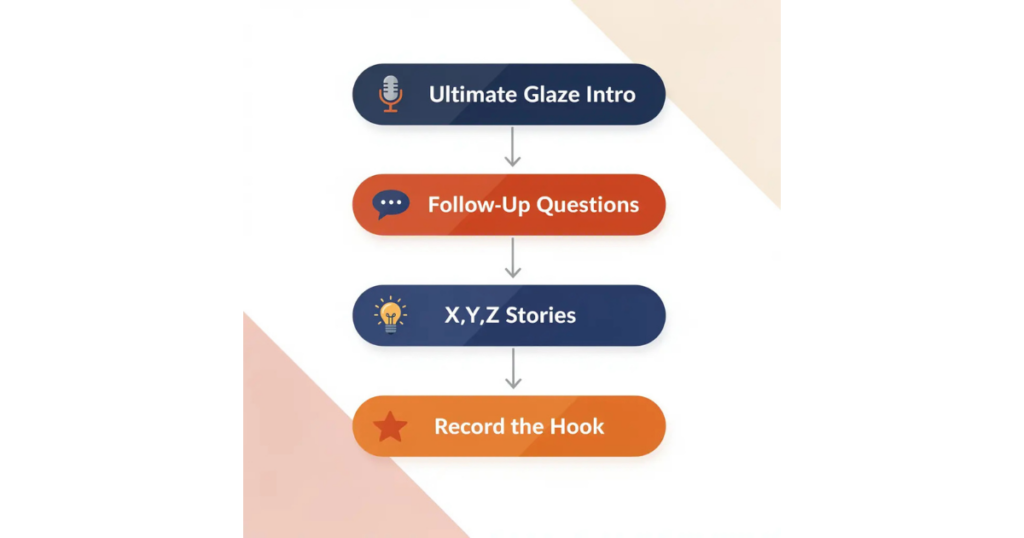
Start with the ultimate glaze
Most podcast hosts open by reading a bio. “Today my guest is Dan Leibrandt. Dan has an MBA from Wisconsin…” That’s boring. Even worse is when hosts say, “Dan, why don’t you introduce yourself?” That puts the burden on your guest and kills the energy.
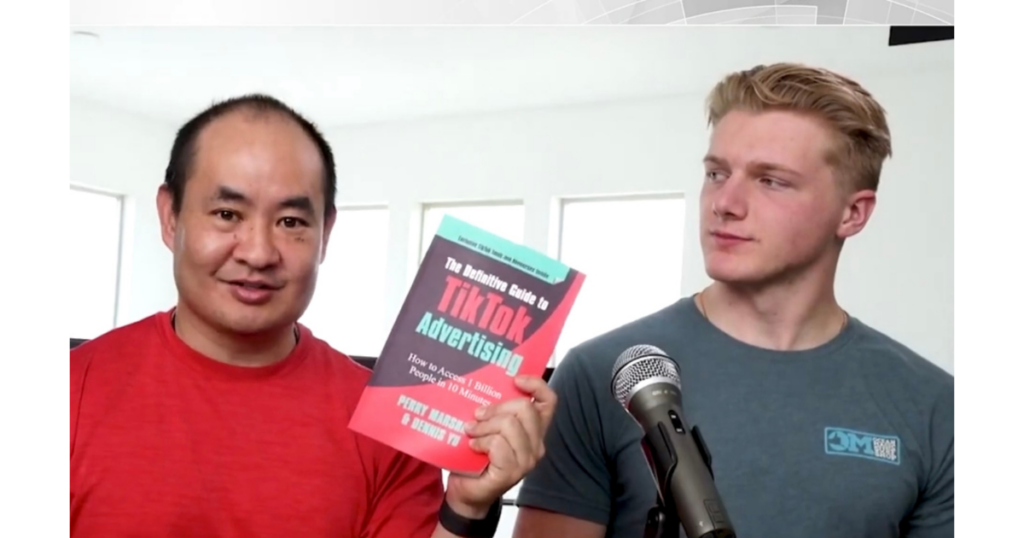
Instead, turn your intro into what I call the “ultimate glaze.” This means demonstrating that you’ve done your research. Mention their book. Reference people they’re connected to. Show a personal connection.
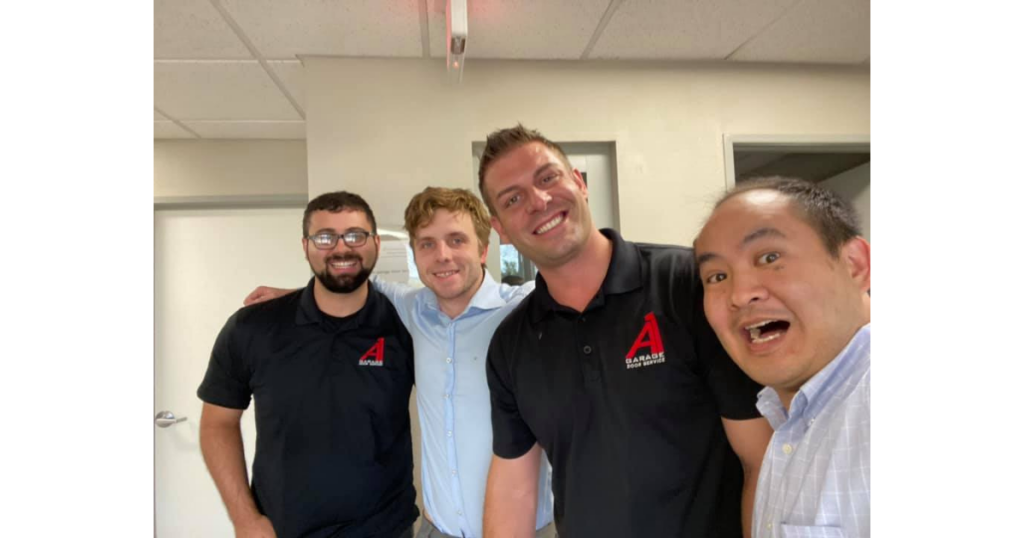
For example, when I had Dan Antonelli on the show, I said something like: “Do you want to know how the top 300 home service businesses drive five times more sales? It’s because of their branding. And the number one guy in branding for home services is Dan Antonelli. He wrote the bestselling book Branded Not Branded. He runs Kick Charge Creative, which helped A1 Garage go from 20 million to 350 million.”

That sets the energy. And when you glaze someone like that, they almost always turn around and glaze you right back. Dan turned around and said he was honored to be on the show and talked about how much he’d learned from me. You’re going to clip that. That’s an implied endorsement, which is more powerful than any scripted testimonial.
Don’t ask questions like a robot
Most hosts go to ChatGPT, generate a list of questions, and then go through them one by one. Question one, listen, question two, listen. That’s not a conversation. That’s an interrogation.
Instead, start with a loose outline. Know the general topics you want to cover. But when your guest says something interesting, react to it. Ask a follow-up question. That’s where the real power of a podcast conversation lives.
For example, when Anthony Hilb told me how he scaled his lawn care business from a push mower in the back of a minivan to a fleet of 70 vehicles, I didn’t just move on to the next question. I asked how he knew that Joey, one of his guys, was the right person to start the Nashville location. That follow-up pulled out a much better story than any pre-planned question would have.

Use the X, Y, Z formula
When you’re pulling stories from your guests, aim for what I call X, Y, Z format. “I helped X achieve Y via Z.” Think of it like a recipe. Your guest should be explaining how they went from here to there using specific steps with specific ingredients.
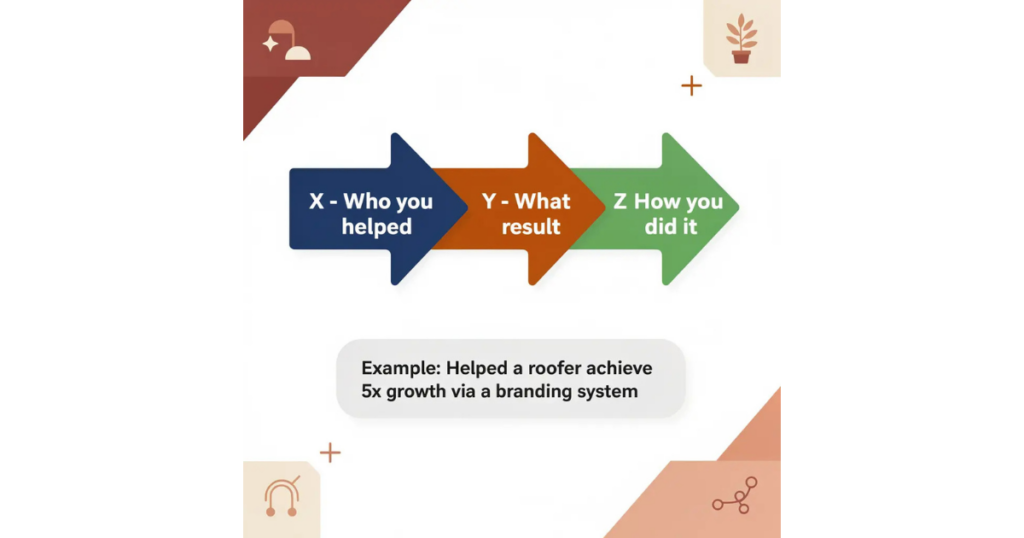
Josh Collier set up AI systems for entrepreneurs using Obsidian, Claude, and layered agents on top of a knowledge base.

Zach Peyton scaled Cheetah Screens beyond Jacksonville by hiring a general manager and franchising the model. These are real stories with real specifics. That’s what makes content valuable and shareable.

As the interviewer, your job is to pull out those specifics. Don’t let your guest give vague answers. Push for the X, Y, Z.
Build your Topic Wheel
Before you interview anyone, build what I call a Topic Wheel. This is a map of who you are, what you care about, who you’re connected to, and what you want to be known for. Then build one for your guest.

The best conversations happen at the intersection of your world and theirs. If I’m interviewing a roofer, I’ll reference other roofers I know, conferences we’ve both been to, and companies we both work with. That cross-referencing is what top podcasters do constantly. It builds trust and makes the conversation feel connected rather than random.

Ask unique questions
If you’re interviewing someone well known, odds are there are five or six questions they’ve been asked a hundred times. Don’t ask those same questions. They’ll answer politely, but you won’t get anything new.
Instead, use ChatGPT or Gemini to find out what questions have already been asked so you know what to avoid. Then ask things that are genuine and specific to your relationship with them.
Record the hook after the conversation
This is my favorite tip. Most people end the podcast with “any final words” and “how can people find you” and then cut. That’s a mistake.
The best content happens after you think the episode is over. Keep the camera rolling. Then ask your guest: “Why should people listen to this podcast?”
The first time they answer, it’ll be okay but a little unfocused. So ask them again: “One more time. Why is this valuable? Who is it for? What are we covering that makes their life better?”
The second time, it comes out clearer and more passionate. That becomes your hook, like a movie trailer in front of the movie. It’s the thing that makes people commit to watching the full episode.
Repurpose everything
Once you have the full episode, you have a goldmine of content. The hook, the glaze, the follow-up stories, the implied endorsements. These are all clippable moments.
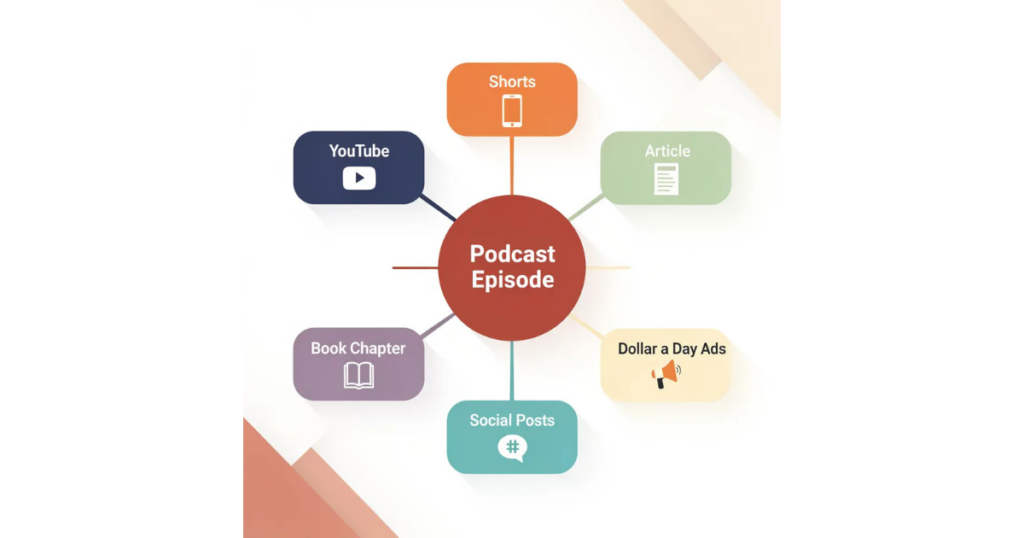
Combine a hook with a topic segment and a call to action and you have a short. Test different combinations. If hook number two performs better than hook number one, pair it with different topic segments. Find the winning formula.
Then take that content and turn it into articles, book chapters, social media snippets, and YouTube videos. That’s the Content Factory. Every podcast episode should feed back into your knowledge base and connect to the broader structure of your content.
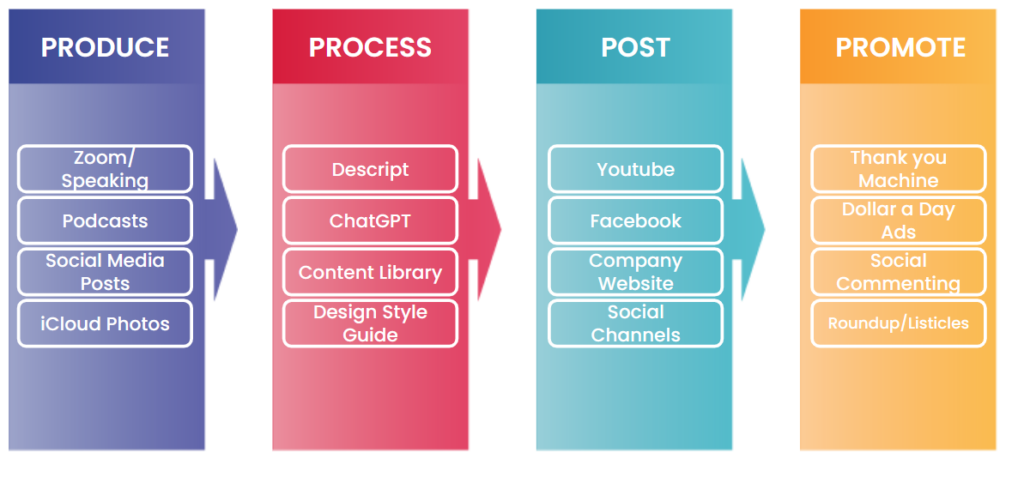
Amplify with Dollar a Day
The last step is amplification. Take your best content and run Dollar a Day ads targeting the right audience. If Tommy Mello is a chapter in your book, target his community.
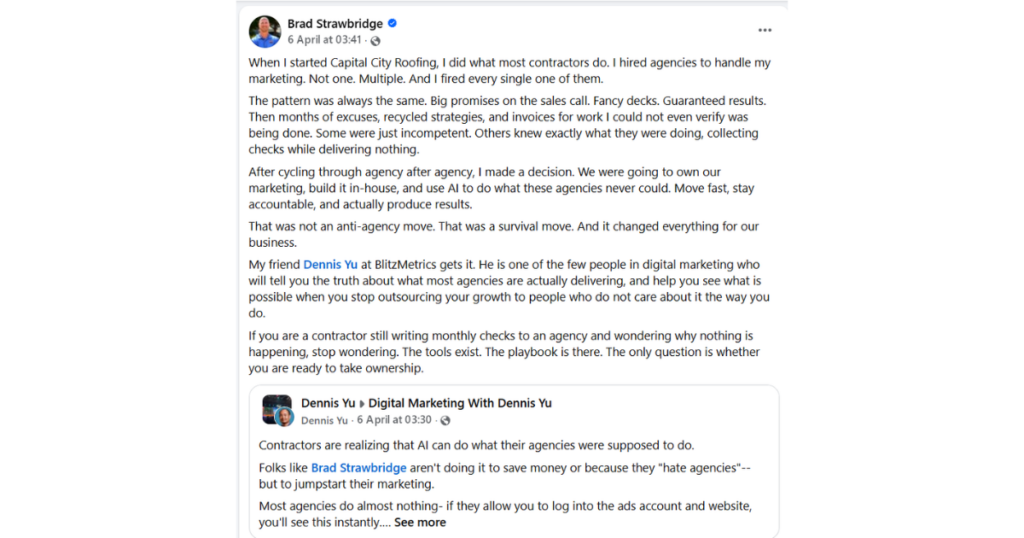
If Brad Strawbridge is your guest, target roofers in Atlanta who would recognize him.

There’s value for everyone because you’re running amplification that benefits you, your guest, and the audience you both serve.
Podcast hosts already practice a core AI skill
Strong hosts research the guest, provide enough context for the audience, listen for what changed, reformulate a weak question, and follow the evidence instead of marching through a script. Directing an AI agent requires the same discipline: give it the complete situation, inspect what it returns, and ask a follow-up that responds to the answer rather than repeating the original command. See the voice-briefing framework and measured work audit.
Originally published .
Dennis Yu
Dennis Yu is the CEO of Local Service Spotlight, a platform that amplifies the reputations of contractors and local service businesses using the Content Factory process. He is a former search engine engineer who has spent a billion dollars on Google and Facebook ads for Nike, Quiznos, Ashley Furniture, Red Bull, State Farm, and other brands.
Dennis has achieved 25% of his goal of creating a million digital marketing jobs by partnering with universities, professional organizations, and agencies. Through Local Service Spotlight, he teaches the Dollar a Day strategy and Content Factory training to help local service businesses enhance their existing local reputation and make the phone ring.
Dennis coaches young adult agency owners serving plumbers, AC technicians, landscapers, roofers, electricians, and believes there should be a standard in measuring local marketing efforts, much like doctors and plumbers must be certified. He has appeared on 353 podcasts with 619 credited episodes — see the full list of his podcast appearances.