
 by
by
Want your first client—or more jobs for your crew? Get Dennis Yu’s coaching and AI help, backed by the real work and results below. Use our marketing system to win work, with help at each step.
Membership is $5,000. Add agents implementation for $5,000. Agents are AI workers using tools to do a job. Learn the methods, bring your work to weekly Office Hours, and get help applying the system to your business.
Apply for membershipTell the team your path and first business goal.
Why pay when you can build the software yourself?
AI makes it easier to build a website, write an article, or connect tools. The business work is choosing a service people want, earning their trust, delivering it, and improving the result.
A young builder needs a client who will pay for useful work. A contractor needs qualified calls and booked jobs. Dennis coaches both groups: builders who serve local businesses, and owners who want help growing theirs.
You can learn the methods from the public guides. Membership adds coaching, feedback, and people doing the work alongside you. The agents package adds implementation: AI workers that use approved tools to complete agreed jobs, with someone checking the output.
Start with The System and its working methods to see how the pieces connect. Then look at the people who have put those methods to use.
What does success look like in practice?
Marko Sipilä: content and relationships behind 300 customers
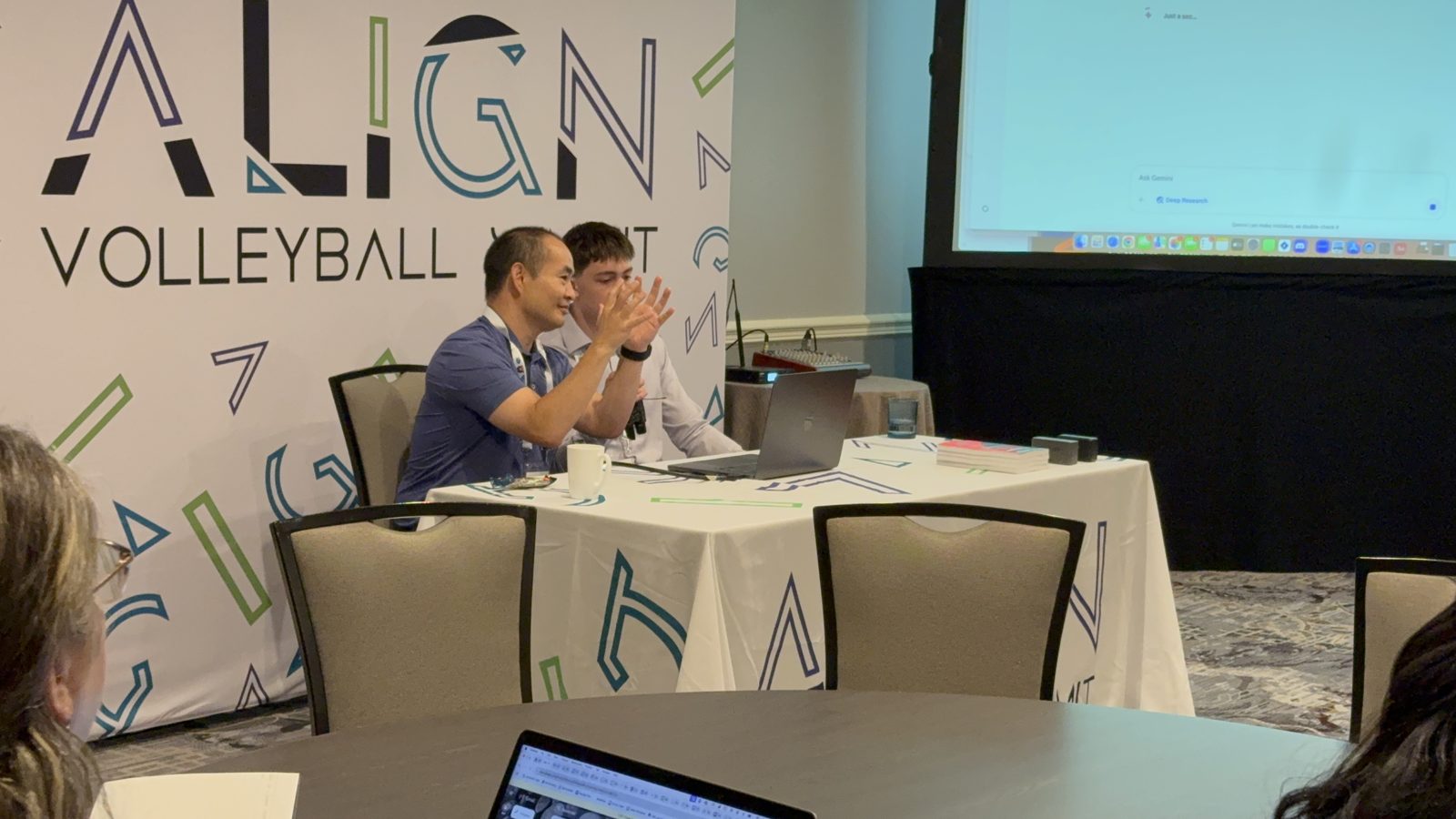
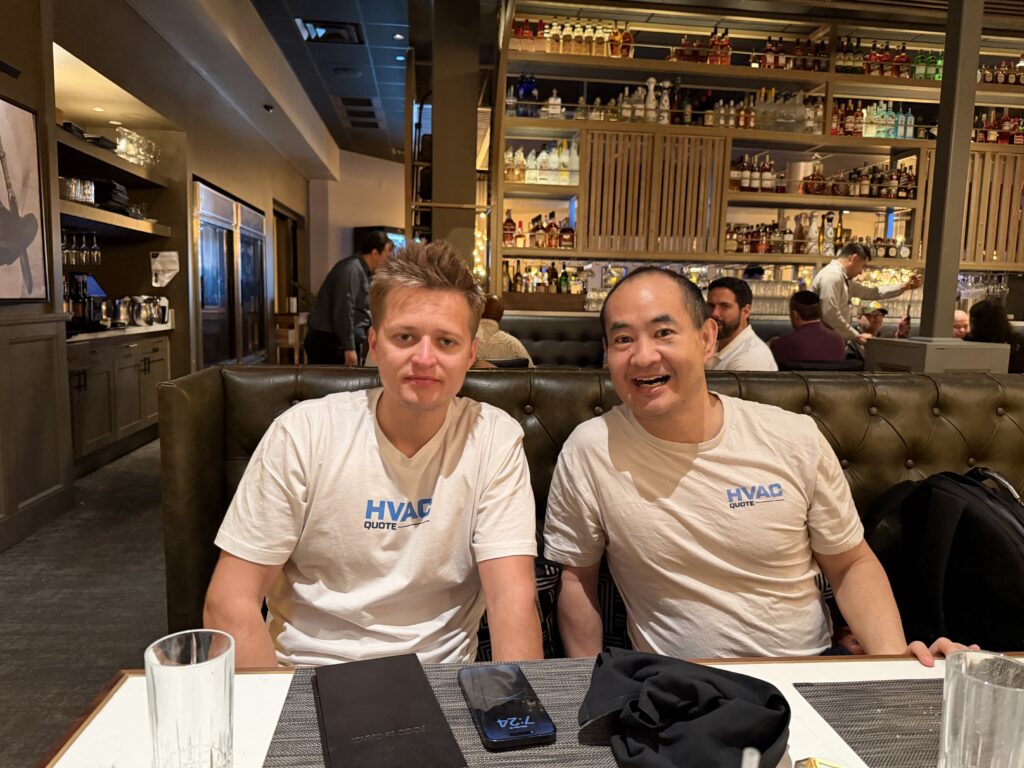
Marko Sipilä, founder of HVAC Quote, and Dennis walked a conference exhibit hall before the crowds arrived. They recorded content about other businesses serving the same customers. The approach gave buyers something useful to see before a sales conversation.
The March 2026 conference-content account documents HVAC Quote’s growth to more than 300 clients. His builder training and business profile describes starting with BlitzMetrics as a teenager and later teaching builders how to run campaigns and serve contractors.
The lesson for a builder: choose a market, get close to its operators, and make content that helps them. Software becomes more valuable when buyers know the people and work behind it.
Sam DeMaio: a clear offer and 24 bathroom jobs
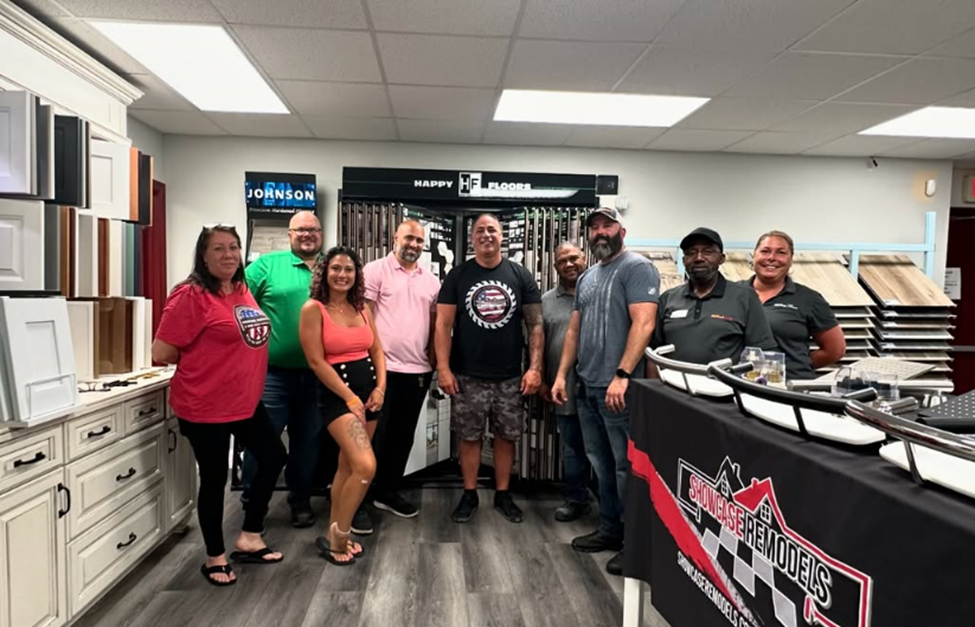
Sam DeMaio, founder of Showcase Remodels, built a one-day bathroom service around trained crews and a clear customer promise. The published Showcase Remodels account reports 24 jobs sold in just over three weeks when the division launched.
The account shows the supporting work: job photos, customer reviews, service pages, and small local ad tests. Sam’s business provides the raw material. The marketing makes that work easier for the next customer to find and trust.
For a contractor, this is a useful starting point: one clear service, real examples, and a way to follow each inquiry through to a booked job.
Jack Wendt: start with a business you can help
Jack Wendt, founder of High Rise Influence, builds public brands around work people have already done. His site shows the output: recorded interviews, teaching with Dennis at DigiMarCon, and a business built around helping people make their expertise visible.
Jack’s path runs through real rooms and real work. He and Dennis filmed at Jack’s house and taught together on stage. His High Rise Influence account shows the business that grew around those skills. For a new builder, that is a useful model: get close to the work, document it, and make the result easy for others to see.
Dylan Haugen: turn a real interest into a public body of work
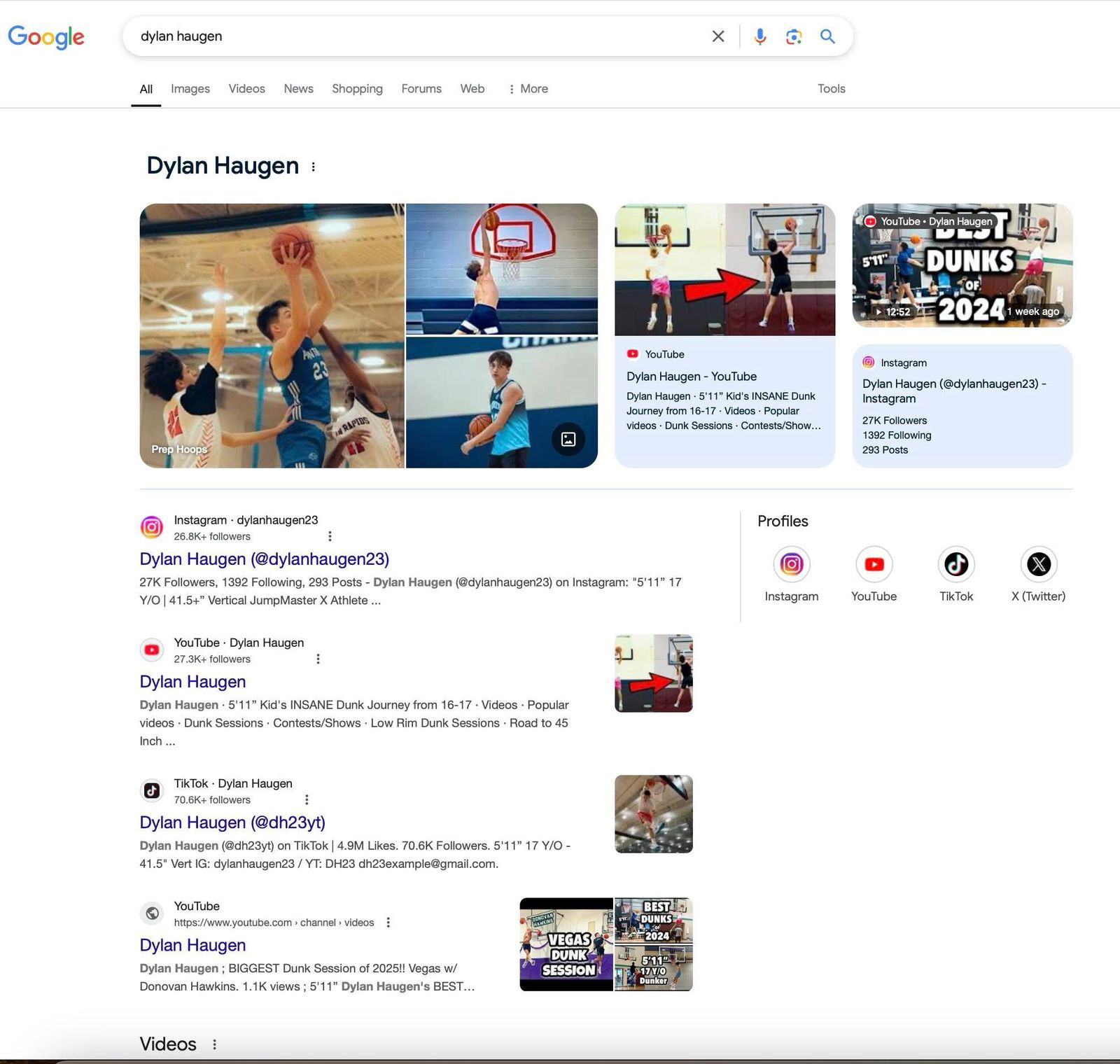
Dylan Haugen, creator of Dunk Talk, built a podcast, a dunk community, websites, and a searchable personal brand. His March 2025 profile and screenshots document those outputs, including a Google Knowledge Panel—the information Google shows about a person.
Dylan began with conversations about the sport he loved. Each recording gave him something to publish, someone to honor, and a reason to improve his interviewing. That is a path a builder can practice: learn, do real work, and teach what you learned.

Austin Armstrong: connect useful content to a business
Austin Armstrong, founder of Syllaby, and Dennis recorded a business-growth conversation after speaking at DigiMarCon in Charlotte. The February 2025 account of Austin’s playbook reports Syllaby reaching $1 million in revenue within a year.
Their conversation ties content to a practical customer path: answer a real question, make the business easy to contact, and follow the inquiry. Austin brings an operator’s perspective to the same question this article asks: what turns software and attention into a business?

What do you get with membership and agents?
The $5,000 membership gives you coaching and a place to put the methods into practice. Weekly Office Hours centers on your work: what you tried, what happened, and the next useful action. Training, recordings, templates, and a peer community support the work between sessions.
The additional $5,000 agents package helps implement an agreed workflow. An agent is an AI worker using tools to do a job. The work begins with your business facts, the result you want, and permitted access. The team configures the workflow, runs it, checks the output, and leaves a clear handoff.
| Membership: learn and apply | Agents: implement and verify |
|---|---|
| Coaching with Dennis and weekly Office Hours | Agree the first workflow and its completion checks |
| Review of your work and practical next steps | Connect the required tools using approved access |
| Training, recordings, templates, and methods | Complete a real job and inspect the delivered output |
| A community of builders and business owners | Document ownership, costs, and the next handoff |
Bring a real business and a real problem. The first implementation milestone is a useful piece of work you can inspect: a published asset, a working workflow, or an agreed improvement to the customer path.
Apply for membershipTell the team your path and first business goal.
Why follow the Pest Control Millionaires model?
Dan Leibrandt, founder of Pest Control SEO, is one of the builders Dennis mentors. He also teaches with the Pest Control Millionaires program, which combines operator-led coaching, training, templates, and community for pest control owners.
That is the pattern here: focus on a business problem, learn from people doing the work, and keep applying the lessons. The software supports that experience. Office Hours gives members a place to bring the work back for feedback.

How does this help a builder aiming for $10,000 a month?
Start by delivering one service to one paying client. Choose a trade, understand its customer, gather real source material, and complete a useful job. Show what changed. Use that evidence to improve your offer and win the next client.
Five clients paying $2,000 a month equals $10,000 in monthly revenue. This is planning math, not a promised income. Your delivery costs, tools, advertising, and time determine what you keep.
Coaching helps you choose and improve the work. Agents help with suitable execution tasks. Your part is to sell a useful service, communicate with the client, and follow through.
The AI Builder day-in-the-life story shows the training environment: open laptops, live work, and Dennis working alongside builders.

How does this help a contractor?
Start with the constraint holding back your next job. It may be a weak service page, missing proof, poor local visibility, a broken inquiry path, or slow follow-up.
Your team supplies the material: jobs, customers, reviews, photos, and short recordings. The system turns it into useful marketing and checks that customers can take the next step. Review calls, qualified inquiries, bookings, and available revenue to decide what to do next.
The free Quick Audit for contractors helps identify that first constraint. Owners looking for ongoing fulfillment can also review the Home Service Growth System.
What have we built on AWS and elsewhere?
AWS supplies part of the website-building and delivery infrastructure. The Spotlight build engine uses functions to run jobs, storage for assets, a database for records, and a delivery network for websites. A separate website fleet needs ongoing operations and health checks.
On October 7, 2026, the existing AWS stack had 10 Lambda functions, two S3 buckets, one DynamoDB table, and one CloudFront distribution. These are deployed components. The Spotlight Build Engine account explains how structured content and reusable templates fit together.
Outside AWS, GitHub holds methods and team records. Connected AI tools complete assigned work. Basecamp carries team decisions. The Content Factory process turns real recordings into useful assets, then publishes and promotes them. Measurement guides the next action.

The agent operating guide explains how workers hand off and verify jobs. The shared-memory guide shows how the facts survive a new chat. The skills and plugins guide explains the reusable methods behind the tools.
You can reproduce software. The reason to buy help is the people, judgment, methods, and attention it takes to make the work useful to your business.
How do you join?
Apply for the $5,000 membership. Add the $5,000 agents package if you want implementation help. Tell the team whether you are a builder or a contractor, the business you want to serve, and your first goal. The team will confirm your fit, membership term, implementation scope, and payment arrangements with you.
Apply for membershipTell the team your path and first business goal.
Want to learn independently first? Use the linked system guides and free skills library to work through a real customer problem. When you want coaching and help getting the work done, membership is the next step.
Originally published .
Dennis Yu
Dennis Yu is the CEO of Local Service Spotlight, a platform that amplifies the reputations of contractors and local service businesses using the Content Factory process. He is a former search engine engineer who has spent a billion dollars on Google and Facebook ads for Nike, Quiznos, Ashley Furniture, Red Bull, State Farm, and other brands.
Dennis has achieved 25% of his goal of creating a million digital marketing jobs by partnering with universities, professional organizations, and agencies. Through Local Service Spotlight, he teaches the Dollar a Day strategy and Content Factory training to help local service businesses enhance their existing local reputation and make the phone ring.
Dennis coaches young adult agency owners serving plumbers, AC technicians, landscapers, roofers, electricians, and believes there should be a standard in measuring local marketing efforts, much like doctors and plumbers must be certified. He has appeared on 353 podcasts with 619 credited episodes — see the full list of his podcast appearances.