
 by
by
If you’re a business owner paying an agency to handle your marketing, there’s a good chance you have no idea what’s actually happening with your money. That’s not because your agency is trying to scam you. It’s because most business owners never set up the right systems to stay informed.

I’ve been in this game a long time. I was one of the first engineers at Yahoo, I built analytics for a search engine 25 years ago, and I’ve worked with companies like American Airlines, WWE, Red Bull, and Nike. Marko Sipila and I are both seven-figure agency owners, and we coach thousands of agencies. We know how things work behind the scenes.

Here are five steps you can take right now to understand your marketing, hold your agency accountable, and get better results.
Get access to all your assets
The first thing you need to do is get administrator-level access to every platform where your marketing lives. That means your Google Ads account, your Facebook Ads account, your website (probably WordPress), your analytics, and anything else the agency manages on your behalf.
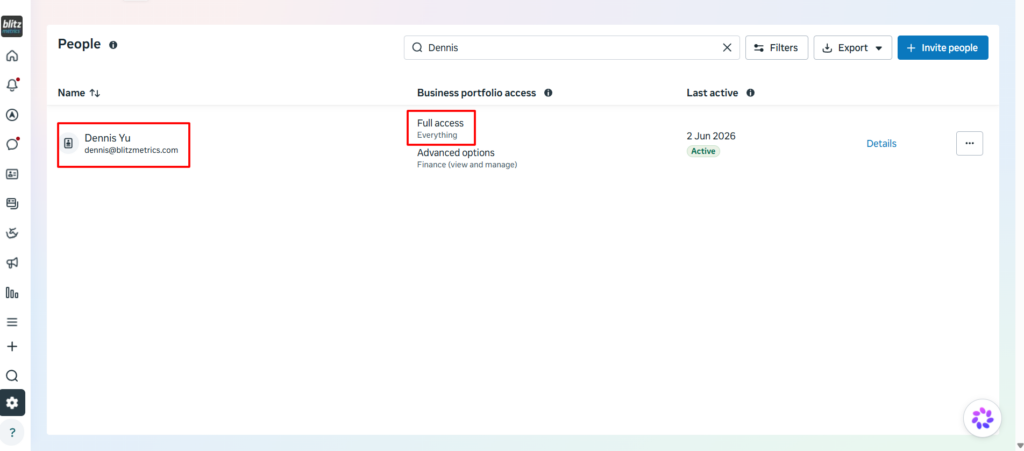

Agencies will push back on this. They’ll say it’s proprietary, or that you might break something, or that you can see everything through their custom dashboard. Don’t accept those excuses. Both Google and Facebook published guidelines back around 2013 specifically telling agencies they must give clients access to their own accounts. They published those guidelines because too many agencies were refusing.
You don’t need to go in and change anything. You just need to be able to log in, see who has access, and verify what’s happening. That’s your right as the account owner.
Run a quick audit
Once you have access, do a basic audit. You don’t need to be an expert. There are two things anyone can check in about 30 seconds.
First, check how much money was actually spent. Go into your Google Ads or Facebook Ads account and look at the actual spend for the last 30 or 90 days. Then compare that to what the agency told you was spent.
One of my coaching clients, a cosmetic surgeon, had an agency reporting $27,000 in monthly Facebook ad spend. When we finally got access to the actual account, the real spend was $5,000. The agency claimed the rest went to “impressions from their network.” That’s a $22,000 discrepancy.
I saw another account, a Fortune 500 beer company, where the agency was billing millions and nobody had touched the ads in over a year. Quality scores had tanked, CPCs had skyrocketed, and the ads had burnt out within the first two weeks. They ran untouched for twelve months.
Second, check the change history. Every ad platform keeps a log of every change anyone has made. Over 90% of the time when I audit an account, nobody has touched it in months. And the changes that do exist are minor, like bumping a budget by $5. That’s not strategic optimization. That’s neglect.
Now, I’ll be fair. With Google’s Performance Max and Facebook’s Advantage Plus, some campaigns do need time to optimize without interference. Sometimes you need to wait six weeks. And if campaigns are performing well, constant tweaking can actually hurt results. But there’s a difference between strategic patience and total neglect. Competitors change, ads get disapproved, things need maintenance. Someone has to be watching.
Check if the dots line up
Compare what the agency is telling you with what you’re seeing in the actual platforms. Does their reporting match reality? Are the numbers consistent between their dashboard and the source data?
This is where a lot of business owners catch discrepancies. It doesn’t always mean fraud. Sometimes it’s just sloppy reporting or miscommunication. But you can’t make good business decisions based on bad data.
Hold your agency accountable
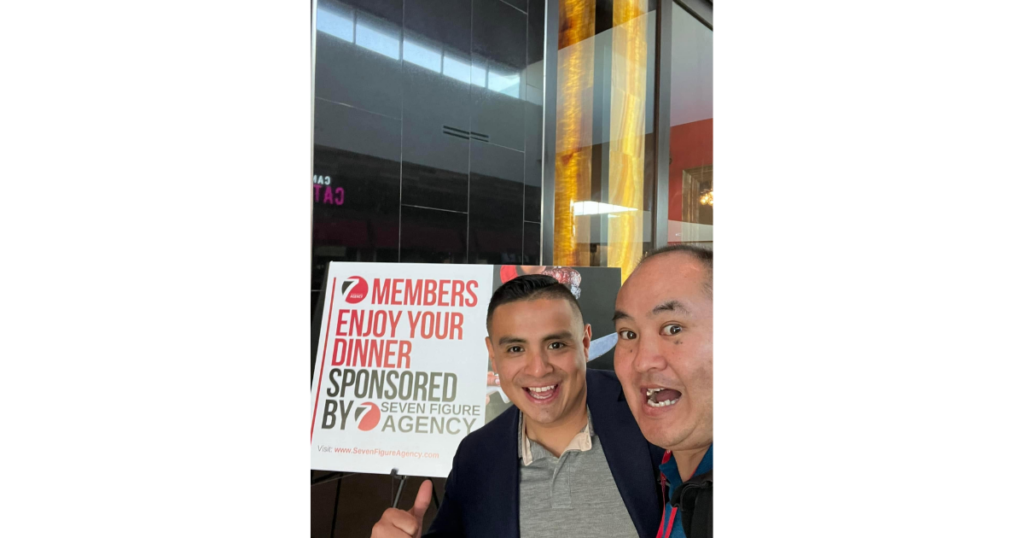
This step is about having the right conversations. Start by establishing a foundation of transparency. My friend Danny Barrera put it perfectly in a recent post: “We only want to work with clients that understand we’re being completely honest. Every failure, every win, this is exactly how we are.” If your agency doesn’t agree that honesty is core to the relationship, it’s not going to work.
A few things to keep in mind:
Don’t blame the agency for everything. The most important thing you as a client have to provide is your goals, content, and targeting. What are your unique selling propositions? What’s a new customer worth to you? What can you afford to pay per acquisition? I wish I could hire a personal trainer that could work out for me, but it doesn’t work that way. Marketing is a partnership.
Be respectful to the account manager. That person is usually just an employee collecting a salary. Yelling at them is like yelling at an American Airlines flight attendant because the flight is late. It’s not their fault, and it won’t get you better results. Escalate calmly if you need to.
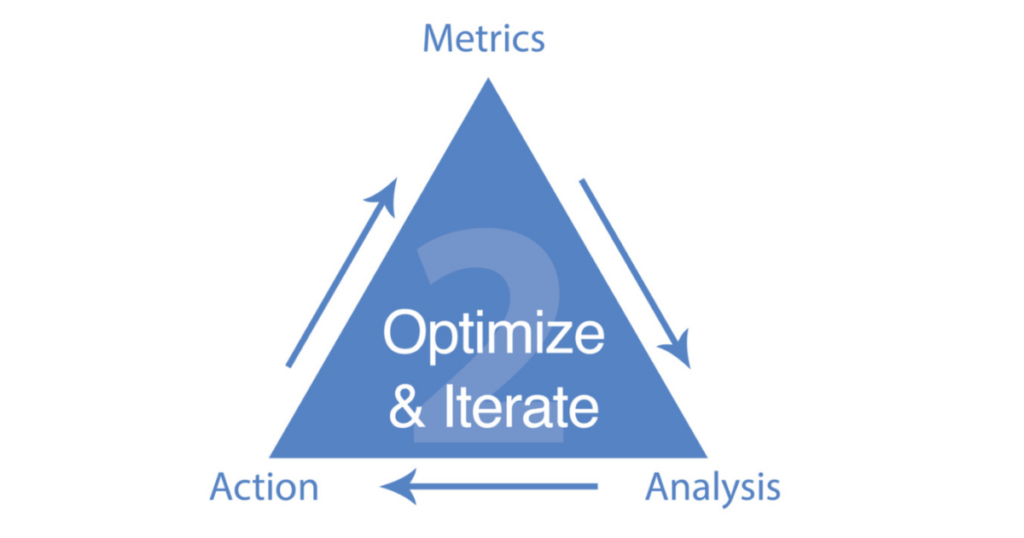
Ask for real reporting. I call this metrics, analysis, action. Metrics means access to the raw data and everyone being on the same page. Analysis means a human interpreting what’s happening and explaining why one ad works better than another. Action means showing what they’ve actually done based on that analysis. Most agencies fail on that third part.
Here’s another thing to understand: when you start asking smart questions, your agency notices. The account manager will think, “This person knows what they’re doing. We better put our best people on this account.” In every agency, big or small, there are one or two people who are really good. By showing you care, you’re more likely to get those people assigned to your account. You don’t even have to demonstrate PPC expertise. Just asking these questions sends the right signal.
A word of caution: I’ve seen people discover problems and get so angry they threaten lawsuits. My friend Philip Cadoux, a San Diego physical therapist, basically went bankrupt because his agency took his money and delivered nothing. When we confronted the agency and asked them to make it right, they refused. At that point, Philip was justified in taking further action. But I always recommend starting with the fundamentals first. Go back to transparency. Approach it calmly. See how the agency reacts. Most of the time, conflicts are just miscommunication.
Create processes
Whether you keep your agency or eventually bring marketing in-house, you need documented processes. You already have processes for how jobs get booked, how customers are served, and how you hire people. Your marketing should have the same rigor.
Work with your agency to define who does what. What’s the meeting cadence? What’s in the weekly report? What content do you need to provide, and when? Use checklists. Even a 747 pilot making $600,000 a year with 20 years of experience goes through that pre-flight checklist every single time.
And don’t forget: there are things only you can do. Your agency can’t ride along in your trucks collecting testimonials. They can’t capture the behind-the-scenes content that makes your business unique. You have to build internal processes for collecting that content and getting it to your agency in an organized way.
Where you are matters
Your approach should depend on where you are as a business.
Under $1 million a year: It’s very hard to get value from an agency at this stage. Retainer fees eat up most of your budget, leaving little for actual ad spend. I’m one of the biggest proponents of AI Builders, and I think businesses under $2 million should try to handle marketing with a AI Builder or two. Focus on Google: local service ads first, then Google Ads, then Facebook. You don’t need to be on TikTok, Instagram, and YouTube. Those are shiny objects at this stage.
$1 million to $10 million: Now you can afford an agency. Apply these five steps and build a real partnership. Be a good client, but expect transparency and results. If after three months of doing everything right you’re still not seeing results, it may be time to move on.
$10 million and above: You can start building an internal marketing team. This is natural growth. I took the United States Concealed Carry Association from $6 million to $65 million mainly off Facebook ads. When they hit $65 million, they hired an internal team and brought it all in-house. We stayed on in a consulting role to audit the team. That’s a healthy transition, and smart agencies embrace it.
Here’s what it comes down to
Look, I’m not here to trash agencies. I own one. Marko owns one. We just want you to stop flying blind.
You don’t need a marketing degree. You just need to know 1% more than everybody else, and honestly, that bar is pretty low. Focus on what actually moves the needle: phone calls, leads, customers, revenue. Give your agency what they need to do their job. And start asking questions. That alone will change everything.
All the guides, SOPs, and checklists Marko and I use are available for free. If you want our personal help, we offer coaching. But everything you need to get started is out there. Go take control of your marketing.
Originally published .
Dennis Yu
Dennis Yu is the CEO of Local Service Spotlight, a platform that amplifies the reputations of contractors and local service businesses using the Content Factory process. He is a former search engine engineer who has spent a billion dollars on Google and Facebook ads for Nike, Quiznos, Ashley Furniture, Red Bull, State Farm, and other brands.
Dennis has achieved 25% of his goal of creating a million digital marketing jobs by partnering with universities, professional organizations, and agencies. Through Local Service Spotlight, he teaches the Dollar a Day strategy and Content Factory training to help local service businesses enhance their existing local reputation and make the phone ring.
Dennis coaches young adult agency owners serving plumbers, AC technicians, landscapers, roofers, electricians, and believes there should be a standard in measuring local marketing efforts, much like doctors and plumbers must be certified. He has appeared on 353 podcasts with 619 credited episodes — see the full list of his podcast appearances.