

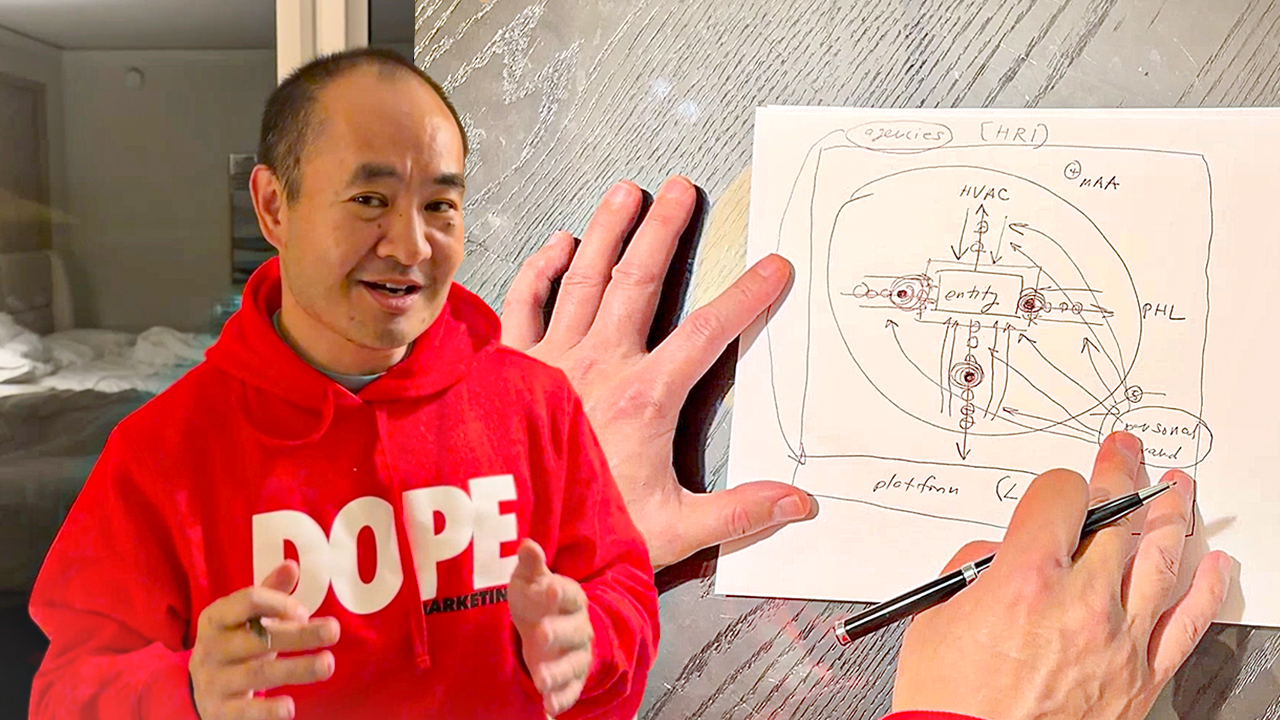
Welcome to the Marketing Mechanic — the complete video series where I, Dennis Yu, break down the exact framework we use to help local service businesses grow through Google, Facebook ads, and AI. With over 26 episodes and counting (a new whiteboard video drops every Thursday morning on my YouTube channel), this series has become the go-to resource for contractors, agencies, and home service business owners who want a marketing system that actually drives phone calls.
I have managed over a billion dollars in ad spend for brands like Nike, Red Bull, and State Farm, and I built this framework so you can understand how everything fits together. The system is built on seven core pillars: entities, the geo-vertical grid, content strategy, MAA optimization (Metrics, Analysis, Action), personal branding, website architecture, and the platform and certification ecosystem. The first seven episodes form the foundation — watch them in order to see how each layer builds on the last. The remaining episodes go deeper into advanced topics like AI, YouTube, Facebook ads, Knowledge Panels, and scaling through private equity.
Who this series is for: If you own or operate a home service business (HVAC, plumbing, roofing, electrical, landscaping, pest control), run a digital marketing agency that serves contractors, or you are a young adult learning to manage local marketing systems, this is the series that teaches you exactly how to make the phone ring using a system built on real data, not hype.
About the format: Every Marketing Mechanic episode is a whiteboard video where I explain concepts, frameworks, and strategies drawn from real experience — real names, real stories, real data from people I have worked with. These are not live screen-sharing demonstrations. I teach through actual experience, not theory. For live screen-sharing working sessions where we do the work together on screen, join our AI Apprentice program coaching calls every Thursday at 2 PM Pacific through High Rise Influence.
Quick Navigation: All Marketing Mechanic Episodes
The Foundation (Episodes 1–7): Entities → Geo-Vertical Grid → Content → MAA Optimization → Personal Brand → Website → Platform & Certification
Advanced Topics (Episodes 8–26): ChatGPT for Business | AI SEO Myth | Home Service Content | Content Factory Demo | AEO Truth | Blog Rankings | Facebook Ads | YouTube Leads | Why SEO Fails | Knowledge Panels | $20K SEO Case Study | How Google Picks Contractors | $120K Blog Failure | Grokipedia | 1M YouTube Views | Private Equity Exit | Amazon Bestseller | AI Marketing Secret
How the First Seven Episodes Fit Together
Key point: Each of the first seven episodes builds on the last. Entities come first, then the geo-vertical grid, then content, then optimization, then personal brand, then website, then the platform that ties it all together.
This short overview video walks through the structure of the first seven episodes and explains how each layer of the Marketing Mechanic framework builds on the one before it. If you are new to the series and want to understand how entities, the geo-vertical grid, content strategy, MAA optimization, personal branding, website architecture, and the platform ecosystem connect into one repeatable system, start here — then work through each episode to go deeper.
Episode 1: Understanding the Entity
Key point: Google ranks entities, not websites. Your business must exist as a recognized entity before anything else in marketing will work.
Everything begins with the entity — your business as it appears in Google’s database.
An entity is a person, place, or company. For local businesses, your entity must be connected to both your industry and your city. For example, if you run an HVAC company in Philadelphia, you need to be digitally linked to other trusted HVAC entities (software partners, suppliers, conferences) and to your local area (community events, local pages, and other Philadelphia businesses).
This web of connections creates what we call a geo-vertical grid, signaling to Google and AI systems like ChatGPT that you’re a legitimate authority in your field and location. Read how Google uses entities and trust to decide who ranks.
Episode 2: The Geo-Vertical Grid
Key point: Rankings come from relationships, not keywords. Connect your business to your industry and geography to build an unbeatable local presence.
SEO isn’t just about keywords or backlinks — it’s about relationships.
In this episode, we show how connecting your entity with relevant industry and local partners builds digital credibility. For example, your HVAC company could post photos of technicians working around the city, tag other local businesses, and engage with community organizations.
When you associate your business with others in the same vertical and geography, you strengthen your rankings naturally — because Google understands your place in the network. Learn the geo-vertical grid strategy for local SEO.
Episode 3: Content That Feeds the Entity
Key point: Content is proof of your expertise. Repurpose real stories across platforms to build a Topic Wheel that feeds your entity.
Once your entity is established, it’s time to fill it with proof — through stories, videos, and posts.
We teach how to repurpose content across platforms like Facebook, YouTube, and your blog so that everything points back to your entity. Each piece reinforces the others, forming what we call your Topic Wheel — the hub of your stories, expertise, and values.
Topics might include how you hire, your warranty, your company culture, or your founder’s journey. This authentic, experience-driven content demonstrates E-E-A-T (Experience, Expertise, Authority, Trust) — exactly what Google values. Explore the content strategy that drives real sales.
Episode 4: Optimization Through MAA (Metrics, Analysis, Action)
Key point: Stop guessing. Use Metrics, Analysis, and Action to find what is working and double down on winners.
Not all content performs equally. Optimization means identifying what’s working — and doing more of it.
We use the MAA framework: Metrics, Analysis, and Action. For instance, one Facebook ad or technician video might drive better leads than others. Instead of guessing, you double down on winners, turning high-performing content into ads and repurposing it across platforms.
Most businesses waste effort publishing constantly without knowing what works. With MAA, you focus your time and ad spend where it delivers real ROI. Learn how to measure SEO with the MAA framework.
Episode 5: Building Your Personal Brand
Key point: People buy from people they trust. Your personal brand is the fastest path to becoming the go-to contractor in your area.
Your company’s growth depends on trust — and trust comes from people.
A personal brand isn’t about fame or luxury cars; it’s about connection. Customers want to know the person behind the company. If you’re Anthony from Anthony’s Lawn Care, your personal story — how you serve your community, lead your team, and grow your business — is what turns you into a local celebrity.
This credibility attracts better technicians, loyal customers, and scalable opportunities. The stronger your personal brand, the faster your company grows. Learn how to own your name on Google through personal branding.
Episode 6: The Ideal Home Service Website
Key point: Your website is the central hub of your digital ecosystem. It must connect your company brand, personal brand, and all your content in one place.
Your website is where all your stories and signals converge.
It must connect your company brand and personal brand, clearly displaying your services, service areas, reviews, team stories, and community involvement. Done right, it becomes more than a marketing page — it’s the central hub of your digital ecosystem, optimized for Google, social, and AI discovery.
This is where traditional SEO meets data architecture. When structured properly, your business wins simultaneously across Google search, ads, social media, and ChatGPT results. See the $20,000 website mistake most plumbers make.
Episode 7: The Platform, Agencies, and Certification
Key point: Just as plumbers and electricians need certification, digital marketers need verified systems. The platform and certification layer is what makes the framework scalable.
The final piece is the ecosystem that powers everything.
Local Service Spotlight provides the platform that handles video editing, SEO, and website automation. High Rise Influence provides training and certification for agencies and team members, so they can manage marketing systems the right way.
Our certified agencies and tools work together to amplify your stories, build location pages, and optimize everything across search and social — while keeping your trust and reputation intact.
Just as technicians or real estate agents need certification, digital marketers and AI operators need verified systems to ensure quality execution. That’s what this framework provides. Discover the platform and certification ecosystem.
Episode 8: How to Actually Use ChatGPT
Key point: Treat ChatGPT like a new employee. Train it with your SOPs, give it context, check its work, and it gets smarter over time.
This episode breaks down how to turn ChatGPT from a search toy into a real assistant. Instead of typing short prompts, talk to it like a teammate—give goals, context, and clear instructions.
Organize your work into projects so ChatGPT remembers your tone, SOPs, and brand. Over time, it learns from your examples, becoming smarter with each task.
Connect it to your files and CRM for real work output, not just drafts. The key is managing it like an employee: train it, check its work, and keep refining your process. Read how to actually use ChatGPT for your business.
Episode 9: Why “AI SEO” Doesn’t Exist for Local
Key point: There is no separate AI ranking system. ChatGPT and Google pull from the same trust signals — build your entity right and you show up everywhere.
In this session, I explain why “AI SEO” is a myth for local businesses. ChatGPT and other AI tools pull their answers from the same data Google already uses.
If your website, reviews, and citations are strong, you’ll appear there too. There’s no separate “AI ranking” system.
The real focus is on building trust through authentic content, strong entities, and proof of good service. When you do that, both Google and AI tools will recognize your business naturally. Find out why AI SEO does not exist for local businesses.
Episode 10: The Best Content Strategy For Home Services
Key point: The content that generates calls comes from real jobs captured on your phone, not from freelance writers who have never seen a service truck.
I break down the exact content strategy that generates calls for home service businesses. Most contractors waste money on content that looks good but does nothing. The winning approach: capture real jobs, real customer moments, and real results on your phone, then repurpose across YouTube, your blog, and ads. This is the Content Factory method in action — one piece of raw footage becomes a dozen assets that feed your entity and drive phone calls. Read the best content strategy for home service businesses.
Episode 11: How I Turned 50 iPhone Videos Into YouTube, Blogs, and Ads in 24 Hours
Key point: 50 raw iPhone videos became YouTube content, blog articles, and ad creatives in a single day. Content creation does not have to take weeks.
A whiteboard walkthrough of the Content Factory process using ChatGPT Atlas Agents. I explain how I took 50 raw iPhone videos and turned them into edited YouTube content, blog articles, and ad creatives in a single day — walking through the system and the thinking behind each step. This is the same system our certified agencies use through Local Service Spotlight to scale content for dozens of contractors at once. If you think content creation takes weeks, this episode changes everything. See how 50 iPhone videos became YouTube, blogs, and ads in 24 hours.
Episode 12: The Truth About AEO — Real vs Fake Signals
Key point: Most of what is sold as Answer Engine Optimization is fake. The same entity and trust signals that power Google also power ChatGPT and Perplexity.
Answer Engine Optimization is the latest buzzword, but most of what people sell under that label is fake. I walk through what actually determines whether your business shows up in ChatGPT, Perplexity, and Google AI Overviews — the same trust signals that have always mattered, just measured differently. If your entity foundation is strong, you already have what AEO requires. Learn the truth about AEO and real vs fake signals.
Episode 13: The Real Reason Your Blog Posts Are Not Ranking
Key point: Blog posts fail because they are disconnected from the entity. Fix the entity first, then your content will rank.
Contractors publish dozens of blog posts and nothing ranks. The problem is never the writing. It is almost always a disconnect between entity signals, website structure, and what they are actually known for in Google’s eyes. I show real examples and what to fix. Discover the real reason your blog posts are not ranking.
Episode 14: How to Boost Facebook Posts That Drive Real Local Leads
Key point: Do not boost every post. Find the ones that are already generating engagement organically, then amplify those winners with a dollar a day.
The Dollar a Day strategy works for local service businesses when you boost the right posts to the right audience. I walk through how to identify which Facebook posts are worth boosting, set up hyper-local targeting, and measure whether boosted posts are driving phone calls, not just likes. This ties directly into the MAA framework — you analyze what is working organically, then amplify winners with ad spend. Learn how to boost Facebook posts that drive real local leads.
Episode 15: Why YouTube Is the Best Lead System for Contractors
Key point: YouTube is the highest-intent platform for home service leads. When a homeowner searches for help, your video is the trusted expert they find.
Most contractors ignore YouTube because they think it is only for entertainment. I explain why YouTube is the highest-intent platform for home service leads. When a homeowner searches how to fix a leaky faucet or what HVAC system to buy, your video is the trusted expert. YouTube videos also build your entity signals and feed your Knowledge Panel, turning views into rankings and calls. Find out why YouTube is the best lead system for contractors.
Episode 16: The Real Reason Contractors Fail at Local SEO
Key point: Contractors fail at SEO because they skip the foundation. No entity, no geo-vertical grid, no measurement — just wasted money on packages that never delivered calls.
This is the most-watched Marketing Mechanic episode. I dig into the real reasons contractors keep getting burned by SEO agencies: no entity foundation, no content connecting them to their city through the geo-vertical grid, and no measurement of what drives calls versus what just looks good in a report. This episode is the wake-up call that shows why the full Marketing Mechanic framework matters. Read the real reason contractors fail at local SEO.
Episode 17: Why Google Knowledge Panels Matter for Contractors
Key point: Your Google Knowledge Panel is the visible proof that Google recognizes your business as a real entity. Most contractors do not have one, and that is fixable.
Your Google Knowledge Panel is the single most important signal that Google recognizes your business as a real entity. I explain how Knowledge Panels are generated, why most contractors do not have one, and the exact steps to trigger one using our 7-step Knowledge Panel process. This directly feeds your rankings in both Google and AI systems. Learn why Google Knowledge Panels matter for contractors.
Episode 18: This HVAC Contractor Paid $20,000 for SEO — Here Is What Actually Happened
Key point: A real case study with real data. When you see what the agency actually did for $20,000, you will understand why most SEO packages fail contractors.
A real case study of an HVAC contractor who spent $20,000 on SEO. I break down the actual data, explain what the agency did wrong, and explain what should have been done instead. This is a pattern I see constantly: home service businesses sold on packages that do not deliver calls. See what happened when an HVAC contractor paid $20,000 for SEO.
Episode 19: How Google Actually Decides Which Contractor Gets the Call
Key point: Google decides who gets the call based on entity strength, review velocity, and response time — not who spends the most on ads.
I reverse-engineer how Google Maps and Local Service Ads decide which contractor gets the call. It is not about who spends the most. Google looks at entity strength, review velocity, response time, and how your digital presence connects to your service area. Real geo-grid data and what winning contractors do differently. Learn how Google actually decides which contractor gets the call.
Episode 20: Why $120,000 in Blog Posts Did Not Produce More Calls
Key point: $120,000 in blog posts and zero additional calls. Generic content written by people who have never done the work will never outrank authentic expertise.
A contractor spent $120,000 on blog content and got zero additional calls. The content was generic, disconnected from the entity, and written by people who never saw the inside of a service truck. Real content that drives calls comes from real experience repurposed through the Content Factory — the same process I explain in Episode 11. Read why $120,000 in blog posts produced zero calls.
Episode 21: How To Use Grokipedia To Build Authority for Your Local Service Business
Key point: Grokipedia lets you build and verify your entity data directly, so AI systems show accurate information about your business when people ask.
Grokipedia is an emerging tool for building and verifying your entity data directly. I show how local service businesses can strengthen their presence across AI systems, so when someone asks Grok, ChatGPT, or Google about contractors in your area, your business shows up with accurate information. Learn how to use Grokipedia to build local authority.
Episode 22: How I Got 1,000,000 YouTube Views Without Going Viral
Key point: You do not need a viral video. You need 50 solid videos that compound over time. Consistent authority beats one-hit wonders every time.
I hit a million YouTube views not through viral tricks but through consistent, targeted content that compounds over time. You do not need a viral video. You need 50 solid videos that each bring in a few calls per month. Compounding authority beats one-hit wonders, and this is exactly how contractors should think about YouTube. Each video strengthens your entity, and the best ones become Dollar a Day ads that amplify what is already working. See how I got 1,000,000 YouTube views without going viral.
Episode 23: How To Sell Your Home Service Business to Private Equity for $20 Million
Key point: A $5 million home service company can reach a $19 million valuation with the right EBITDA math and roll-up strategy. Two strategic moves triple your exit price.
I walk through the exact EBITDA math and roll-up strategy that takes a $5 million home service company to a $19 million valuation — how private equity firms find targets, what multiples they pay, and the two strategic moves that triple your exit price. Read the full EBITDA breakdown for selling to private equity.
Episode 24: How To Become an Amazon #1 Bestselling Author in 10 Hours
Key point: You already have the content for a bestselling book. Your videos, podcasts, and posts just need to be repackaged into a format that builds massive credibility.
I show how to go from zero to Amazon bestseller in 10 hours using the Content Factory approach. You already have the content from your videos, podcasts, and social posts. The book is just repackaging what you know into a format that builds massive credibility for your personal brand and feeds your entity signals. Learn how to become an Amazon bestselling author in 10 hours.
Episode 26: The Real Secret Behind AI Marketing for Contractors
Key point: AI tools amplify what is already working. They do not replace the fundamentals of entities, content, and trust — they make them scale faster.
I cut through the noise around AI marketing for contractors and explain what actually works: building real entity signals, creating authentic content through the Content Factory, and using AI tools to amplify what is already working rather than replace the fundamentals. This builds on the AI SEO myth I covered in Episode 9 and the AEO truth from Episode 12. Discover the real secret behind AI marketing for contractors.
Frequently Asked Questions
How many Marketing Mechanic episodes are there? There are currently 26 episodes, with a new whiteboard video released every Thursday morning. The first seven episodes cover the core framework, and the remaining episodes tackle advanced topics like AI, YouTube, Facebook ads, Knowledge Panels, and business valuation.
What order should I watch the Marketing Mechanic episodes? Start with Episodes 1 through 7 in order — they build on each other sequentially from entities to the geo-vertical grid to content to optimization. After that, Episodes 8 through 26 can be watched in any order based on the topics most relevant to your business.
Does this framework work for businesses outside of home services? The principles of entity building, the geo-vertical grid, and the MAA framework apply to any local business. The examples and case studies in this series focus on contractors and home service businesses because that is where we see the biggest impact, but the framework itself is universal.
What is the difference between the Marketing Mechanic and traditional SEO? Traditional SEO focuses on keywords and backlinks. The Marketing Mechanic framework starts with your entity — how Google identifies your business as real — and builds outward through relationships, content, optimization, and personal branding. This approach works across Google search, Google Maps, AI search results, and social media simultaneously.
How do I get started if I am a contractor? Watch Episode 1 to understand entities, then request a free audit through Local Service Spotlight to see where your digital presence stands today. That audit will show you exactly which parts of the framework need attention first.
A Repeatable Process That Works
Marketing is not magic or luck. It is a mechanical process of diagnosis and improvement.
Just as a car mechanic follows a step-by-step system to fix a transmission, your marketing should follow Metrics, Analysis, and Action. No guessing. No chasing trends. Just a proven process that connects trust, content, and ROI.
Every Thursday morning, a new Marketing Mechanic whiteboard video dives deeper into one of these topics. And every Thursday at 2 PM Pacific, we hold live screen-sharing working sessions through the AI Apprentice program at High Rise Influence. Watch the full playlist on YouTube.
To go deeper on specific topics covered in these episodes, explore our supporting guides: the complete Knowledge Panel guide series explains how Google recognizes entities, how to trigger a Knowledge Panel in 7 steps walks you through the exact process, and the Dollar a Day strategy shows how to amplify your best content starting with just one dollar per day. For hands-on training in the content systems behind this framework, visit Content Factory Academy or get certified through HighRise Influence.
If you want a system that will still work 10 years from now — one rooted in real relationships, not hype — start here. And if you are ready for a free audit of your local service business, visit Local Service Spotlight to see where you stand.
Subscribe, comment, and let us know what topics you want to see next.
Dennis Yu
Dennis Yu is the CEO of Local Service Spotlight, a platform that amplifies the reputations of contractors and local service businesses using the Content Factory process. He is a former search engine engineer who has spent a billion dollars on Google and Facebook ads for Nike, Quiznos, Ashley Furniture, Red Bull, State Farm, and other brands.
Dennis has achieved 25% of his goal of creating a million digital marketing jobs by partnering with universities, professional organizations, and agencies. Through Local Service Spotlight, he teaches the Dollar a Day strategy and Content Factory training to help local service businesses enhance their existing local reputation and make the phone ring.
Dennis coaches young adult agency owners serving plumbers, AC technicians, landscapers, roofers, electricians, and believes there should be a standard in measuring local marketing efforts, much like doctors and plumbers must be certified.