
 by
by
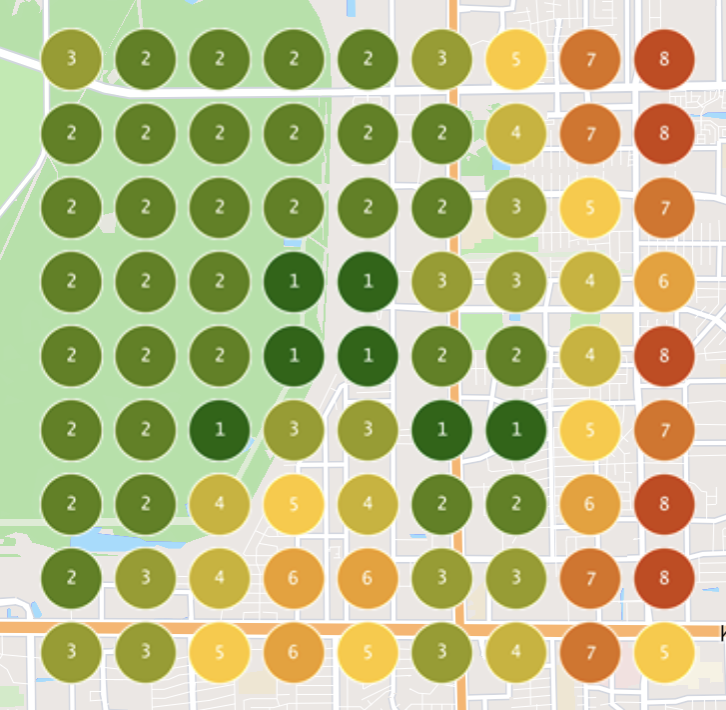
The local SEO secret that separates businesses dominating Google Maps from those paying thousands with nothing to show starts with one tool most agencies have never used. Dennis Yu pulled up a geo-grid report for a Houston HVAC company and pointed at the sea of orange and red dots stretching across six zip codes. Each one of those dots represented a homeowner searching for AC repair who would never see that business in the Google Maps 3-pack. That invisibility was costing them an estimated $12,000 a month in lost jobs. Dennis breaks this concept down in the video above — watch the full explanation, then read how we applied it below to generate real, trackable results for Mr. Reliable Heating & Air in Houston.
This local SEO secret is not what most agencies sell. It is not a 50-page keyword report. It is not a monthly blog post nobody reads. The secret is understanding exactly where a business ranks across every point on the map for the keywords that actually generate phone calls — and then systematically closing the gaps. That is what separates businesses that dominate Google Maps from ones paying thousands every month with nothing to show for it. The MAA framework — Metrics, Analysis, Action — is how we make that happen.
Why the Map Pack Is the Real Battlefield
If you run an HVAC company, a plumbing shop, a painting crew, or a lawn care operation, organic search results are not where your next customer finds you. The Google Maps 3-pack is. On mobile, it sits above everything else. A homeowner types “AC repair near me” and sees three businesses with star ratings, phone numbers, and directions. That is the moment the decision gets made. Organic results sit below the fold. Paid ads cost money every click. The map pack generates free, high-intent calls — but only for the businesses that appear in it.
The problem is that most local businesses have zero strategy for their map pack position. They rely on a web developer who tweaks meta titles once and walks away, or they hire an agency charging $3,500 a month that cannot show a single geo-grid report to prove anything changed. The gap between “doing SEO” and actually showing up in the 3-pack for the keywords homeowners search is massive. Understanding that gap is the local SEO secret — and it starts with measuring what actually matters.
The Metrics That Actually Move Revenue
Here is where most marketing conversations go off the rails. An agency sends a report showing 10,000 impressions and 200 website clicks. The business owner nods, assumes progress is being made, and writes another check. But impressions do not pay the bills. Website clicks from people three cities away do not book estimates. The only metrics that matter for a local service business are calls from the Google Business Profile, booked estimates, closed jobs, and revenue per lead source.
When we started working with Mr. Reliable Heating & Air in Houston — a company with 452 Google reviews and a 4.9-star rating — the first thing we did was run a geo-grid scan. Not a keyword ranking report. Not a traffic audit. A geo-grid, which shows exactly where the business ranks at every point on a map for a specific keyword. The results told a story that a standard SEO report never would.
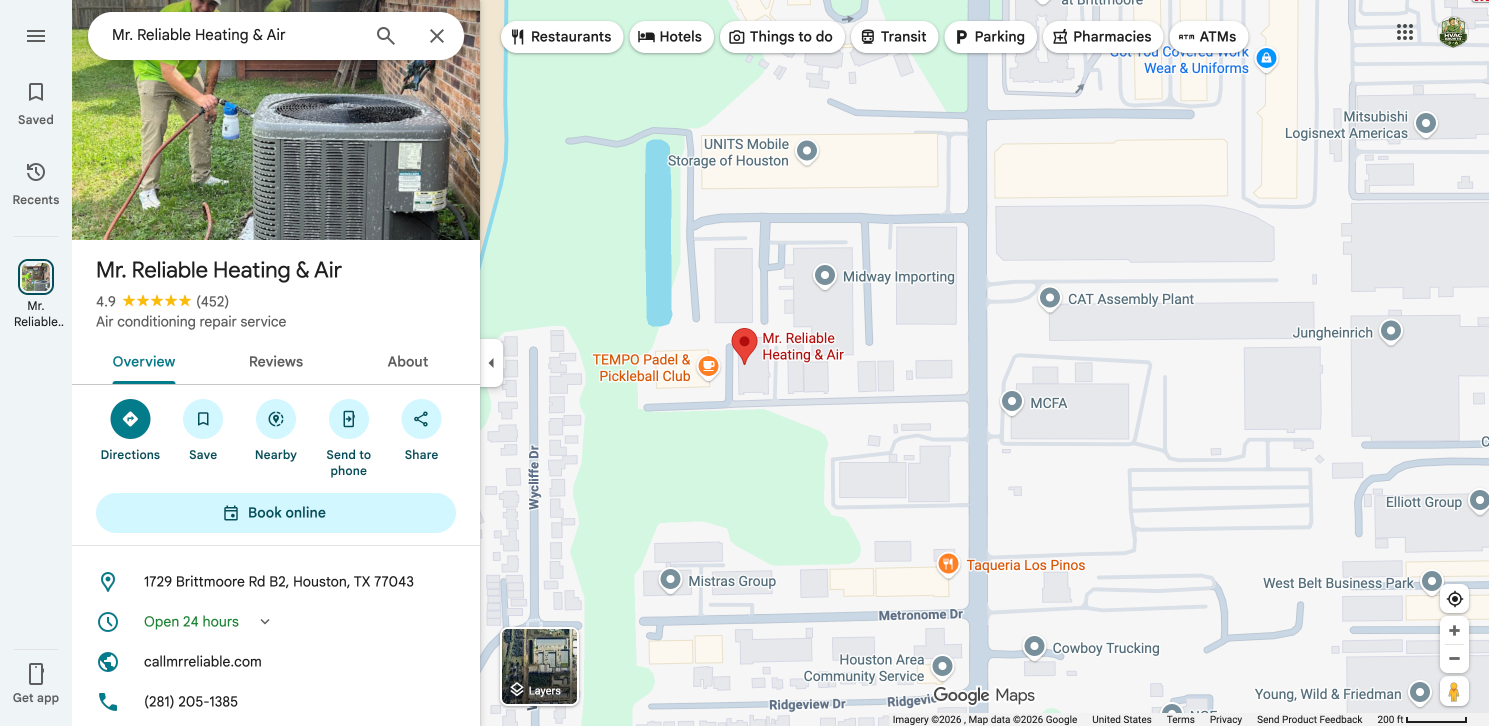
Mr. Reliable Heating & Air — 4.9 stars, 452 reviews on Google. This is the kind of established Google Business Profile that is built for map pack growth.
What the Geo Grid Revealed
Mr. Reliable had a strong GBP — verified location, accurate hours, solid review count. Their website at callmrreliable.com had real branding, real photos, and service pages for their Houston coverage area. On paper, they looked like they should dominate. But the geo-grid told a different story.

For “heating repair Houston” and similar keywords, their map pack positions were averaging 4 to 10 across a wide radius — meaning homeowners in large parts of their service area were seeing competitors first. A 100% improvement on 2 clicks means nothing. But moving from position 7 to position 2 across a high-density zip code where 200 people search every month? That is the kind of analysis that ties directly to revenue. This is the local SEO secret in action — the “Analysis” piece of the MAA framework in action.
The AI Builders trained through Local Service Spotlight are the ones running these geo-grid reports every week for our clients. They learn how to read the data, flag the gaps, and present the findings so business owners understand exactly what the map looks like for their keywords. This is real marketing training — not theory.
Targeted Keyword Activity: Closing the Gap
Once the geo-grid exposed where Mr. Reliable was invisible, the next step was clear. We focused targeted keyword activity on the specific terms and locations where improvement would translate directly to phone calls. Not twenty keywords. Not fifty. Ten — chosen based on three criteria: search volume above 50 per month in their specific market, average ticket value above $150, and competitive density that made movement realistic within a trial period.
For Mr. Reliable, they were already ranking well for broad Houston terms. So we targeted their Katy, Texas location with terms like “HVAC repair Katy TX” and “air conditioning service Katy” — terms with solid volume but less competition where map pack boosts could show clear before-and-after improvement on the geo-grid. A keyword with 40 searches per month and a $15,000 average ticket like “AC replacement Houston” is worth far more than a 200-per-month keyword with a $30 ticket like “air filter change near me.” Weigh volume against ticket value — every time.
The HVAC Growth team, led by Luke Crowson, runs this exact playbook for HVAC contractors every day. Whether the business is in Houston, Dallas, or Phoenix, the local SEO secret is always the same process: identify the keywords where movement equals money, run the targeted keyword activity, and measure results with geo-grid scans before and after.
The Before and After: Proof That the Secret Works
Here is where the data speaks. The geo-grid scans for Mr. Reliable before and after targeted keyword activity tell the whole story. Before, positions were averaging 4 to 10 across the outer edges of their service area — heavy orange and red. After, the grid shifted to mostly green, with positions 1 through 4 dominating the center and near-center. No guesswork. No “trust us, it is working.” Just a side-by-side comparison that any business owner can look at and understand immediately.
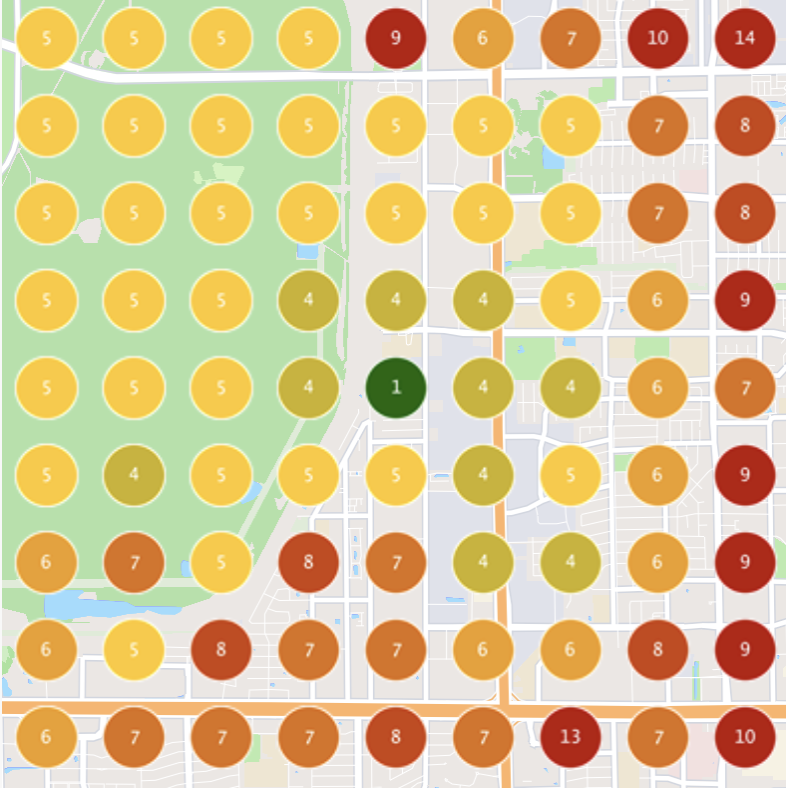
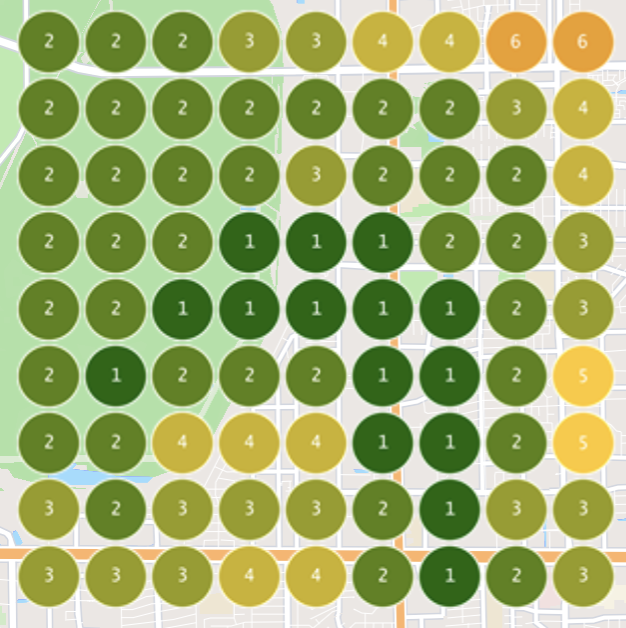
These are the actual geo-grid scans from Mr. Reliable’s campaign — not cherry-picked, not hypothetical. The same pattern held across their other keywords including AC repair and HVAC. This is what happens when you combine a strong Google Business Profile, the right keywords, and targeted keyword activity monitored through consistent geo-grid tracking.
Why Most Local SEO Agencies Cannot Show You This
Most local SEO agencies cannot produce a geo-grid because they have never run one. They operate on vanity metrics — keyword rankings that look good in a spreadsheet but do not connect to calls. They optimize for “HVAC company” when homeowners actually search “AC repair near me.” They celebrate a position 1 ranking for a term with 10 searches per month while the business bleeds leads on a term with 400 searches per month that they never even tracked.
The E-E-A-T signals that Google evaluates — Experience, Expertise, Authoritativeness, and Trustworthiness — are built through real content, real reviews, real service pages, and a real web presence. Not through templated city pages with the same stock photo and the same generic paragraph with a different city name swapped in. When the team at Local Service Spotlight helps local service pros build their personal brand, they are creating the kind of structured digital assets that Google and AI models actually recognize as authoritative.
The secret behind local SEO is not a hack or a loophole. It is a system: measure where you rank on a grid, analyze which gaps cost the most money, take targeted action to close those gaps, and prove it worked with another scan. Metrics. Analysis. Action. Every other approach is a guess dressed up as strategy. Once you understand the local SEO secret, you cannot unsee it.
How to Apply This to Your Business Today
The action piece of the MAA framework is where the rubber meets the road. Here is exactly what to do if you are a local service business owner who wants to stop guessing and start measuring:
Open your Google Business Profile dashboard. Click “Info” and confirm that your primary category matches your core service — not a broad category, but the specific service you want to rank for. If you are an HVAC contractor, “Air conditioning repair service” will outperform “HVAC contractor” in markets where homeowners search for repair. Add your top 5 service areas by zip code. Post a photo of a completed job with the homeowner’s city in the caption. These are small moves that compound.
Next, get a geo-grid scan for your top 3 keywords. This single step separates business owners who know where they stand from those flying blind. The geo-grid strategy is the most powerful tool most SEO experts do not even know about. It shows your exact position at every point on the map — not just a single ranking from one location.
Then audit your website. Pull up your service pages and service area pages. Are they real content with real photos from real jobs in those areas? Or are they templated garbage — same stock photo, same generic paragraph, different city name? Run your site through PageSpeed Insights. You want 90 or above on both mobile and desktop. Most local business sites score in the 30s on mobile because their hosting is slow, their images are not optimized, and they have fifteen tracking scripts loaded in the header. When you show a business owner their PageSpeed score next to a competitor who scores 95, the conversation about digital assets becomes very easy.
Building Authority That Google and AI Models Recognize
The local SEO secret goes deeper than map pack positions. Google’s algorithm and the AI models that power features like Search Generative Experience are looking for entities — businesses and people with structured, consistent information across the web. A knowledge panel, published articles, YouTube content, and a personal brand website are the E-E-A-T signals that make prospects trust you before they even pick up the phone.
Building a personal brand website through Local Service Spotlight is how business owners go from “good reviews on Google” to “the authority in your market.” The team there helps local service pros turn their 5-star reputation into a structured digital asset that Google and ChatGPT actually recognize. Combine that with the geo-grid tracking and targeted keyword activity that drives map pack visibility, and you have a local SEO system that compounds over time instead of resetting every month.
If your son or daughter wants to learn how to actually make the phone ring for local businesses, the AI Builder Program is where Dennis Yu and Jack Wendt are training the next generation. These AI Builders learn geo-grid analysis, Dollar-a-Day strategy, content repurposing, and the full local marketing scaling playbook. They are not studying textbooks. They are running real campaigns for real businesses.
Stop Guessing. Start Measuring.
The secret behind local SEO is not a secret at all once you see the geo-grid. It is the difference between knowing you rank somewhere for something and knowing you rank position 3 for “AC repair” at the intersection of Westheimer and Dairy Ashford in Houston. One is a guess. The other is a data point you can act on, measure again in 30 days, and tie directly to the phone calls that came in during that window.
Mr. Reliable Heating & Air proved it. The geo-grid went from orange and red to green. The keywords moved from page-two positions to the top of the 3-pack. And the business owner could see it with their own eyes — no marketing jargon, no vanity metrics, just a map that changed color because the strategy worked. That is the local SEO secret — visible, measurable, undeniable.
If you are a local service business wondering whether your Google Maps presence is costing you calls, or if you are an agency operator looking to add targeted keyword activity and geo-grid tracking to your service offering, talk to our team about a free local marketing audit. The geo-grid does not lie — and once you see the before and after, you will understand why this is the most overlooked strategy in local SEO.
Originally published .
Dennis Yu
Dennis Yu is the CEO of Local Service Spotlight, a platform that amplifies the reputations of contractors and local service businesses using the Content Factory process. He is a former search engine engineer who has spent a billion dollars on Google and Facebook ads for Nike, Quiznos, Ashley Furniture, Red Bull, State Farm, and other brands.
Dennis has achieved 25% of his goal of creating a million digital marketing jobs by partnering with universities, professional organizations, and agencies. Through Local Service Spotlight, he teaches the Dollar a Day strategy and Content Factory training to help local service businesses enhance their existing local reputation and make the phone ring.
Dennis coaches young adult agency owners serving plumbers, AC technicians, landscapers, roofers, electricians, and believes there should be a standard in measuring local marketing efforts, much like doctors and plumbers must be certified. He has appeared on 353 podcasts with 619 credited episodes — see the full list of his podcast appearances.