

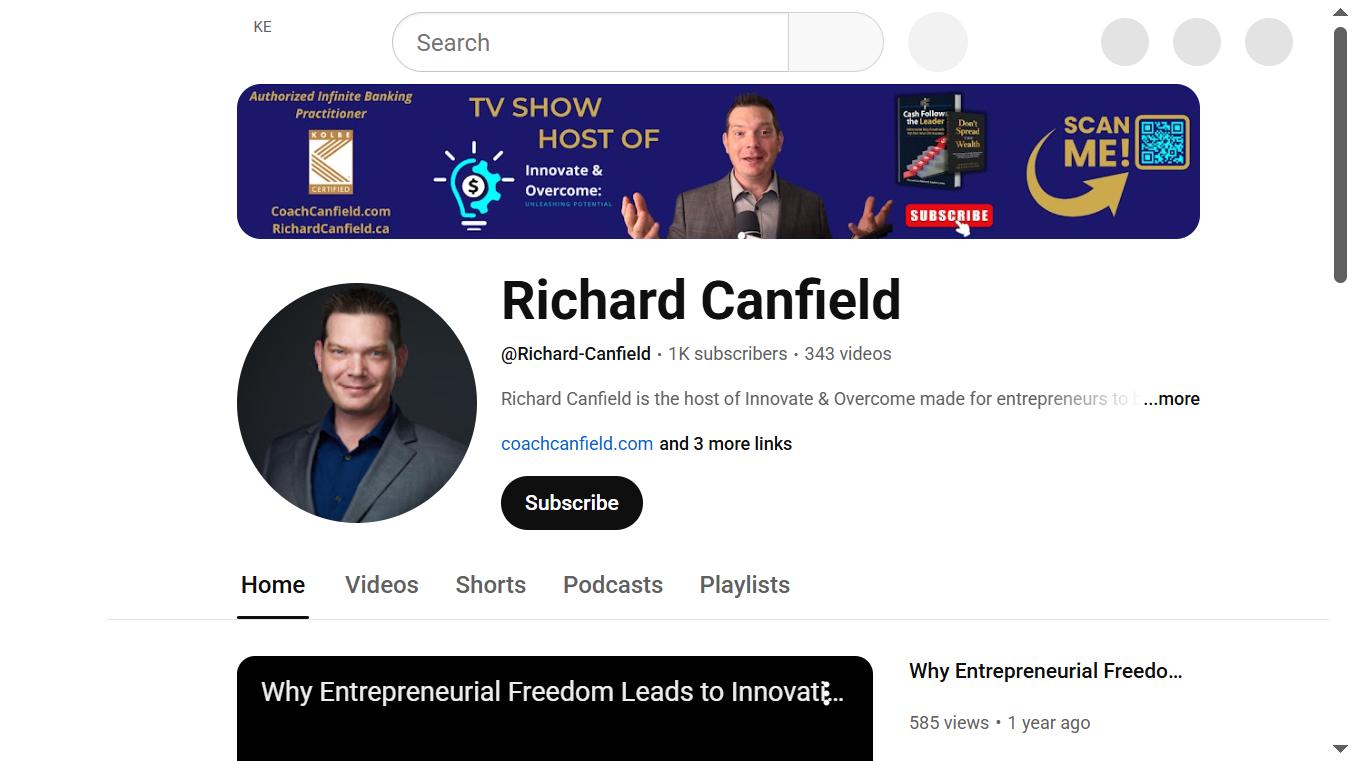
A Claude AI agent repurposed 26 long-form YouTube videos from Richard Canfield’s Innovate and Overcome channel into fully formatted blog articles on richardcanfield.com in a single working session.
The agent started by auditing Richard’s YouTube channel, cross-referencing every video against his existing blog posts, and identifying which long-form episodes had not yet been turned into articles.
It then wrote, formatted, and published all 26 articles directly into WordPress, working in batches that grew from 3 at a time to 10 or more at a time as the process stabilized.
Who Is Richard Canfield
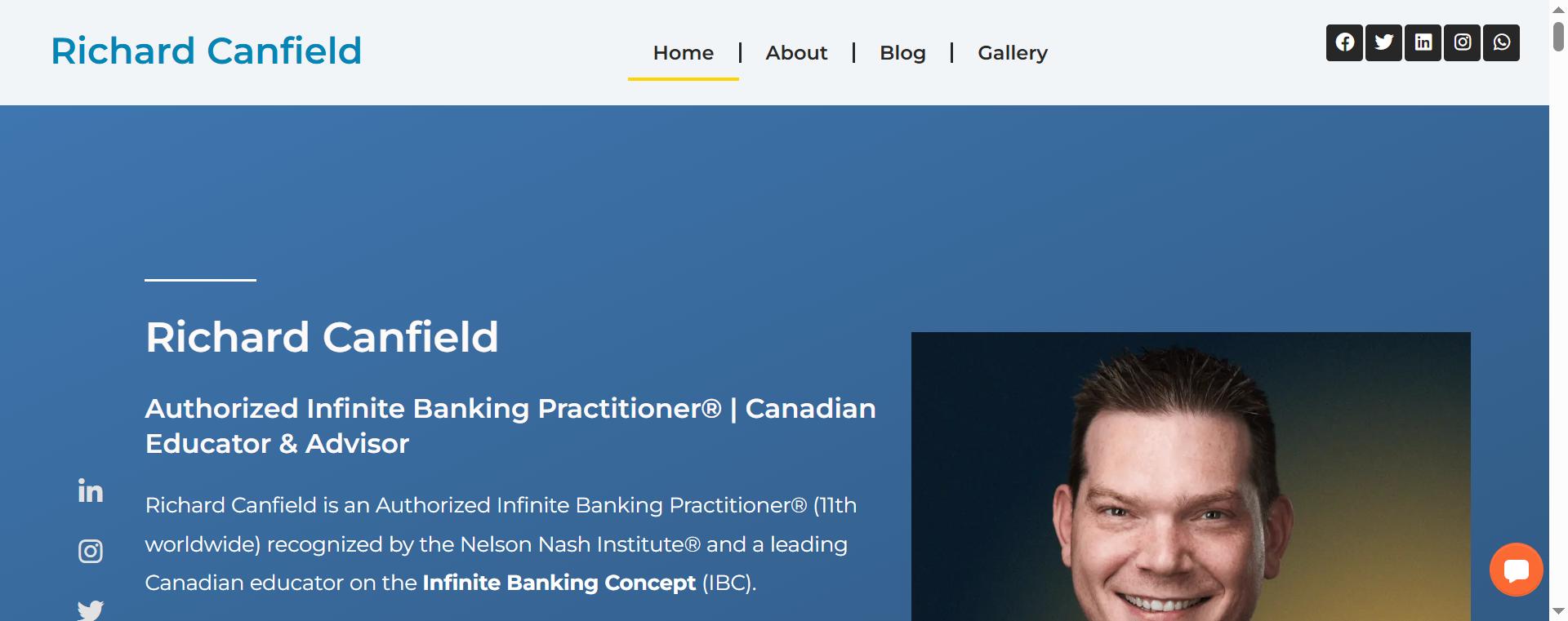
Richard Canfield is an Authorized Infinite Banking Practitioner, the 11th person worldwide to earn that designation from the Nelson Nash Institute.
He is also a Kolbe Certified consultant, a TV show host, and the creator of the Innovate and Overcome podcast.
His YouTube channel at @Richard-Canfield has 343 videos covering topics from entrepreneurship and financial strategy to mental health, leadership, and family resilience.
His personal brand website serves as a hub for his coaching, speaking, and advisory work.
The challenge was that most of those 343 videos were sitting on YouTube with no corresponding written content on his website.
Written content is what drives organic search traffic.
A 50-minute podcast episode that lives only on YouTube is invisible to Google’s search results unless someone searches for the exact video title.
Turning each episode into an article with proper headings, internal links, and embedded video changes that entirely.
The Assignment
The task came from the BlitzMetrics Content Factory team.
The goal was to go through Richard’s YouTube channel, find long-form videos that had not yet been repurposed, and turn them into articles on richardcanfield.com.
Before writing a single word, the agent needed to figure out which videos were already published and which ones still needed articles.
Publishing a duplicate article on a topic that already exists on the site would cause keyword cannibalization, which is exactly what the BlitzMetrics blog posting guidelines warn against.
Step 1: Auditing the YouTube Channel
The agent opened Richard Canfield’s YouTube channel and reviewed every video in the library.
With 343 total videos, the channel includes a mix of long-form podcast interviews (typically 45 to 55 minutes), shorter educational clips (7 to 20 minutes), and quick 30 to 60 second clips.
The long-form interviews were the priority.
These are the episodes where Richard sits down with a guest for a real conversation covering their expertise, personal story, and lessons learned.
Each one contains enough substance to produce a proper article with multiple headings and meaningful depth.
Short clips and promotional videos were filtered out immediately.
A 40-second highlight reel does not have enough substance to support a full blog post.
The agent cataloged video titles, durations, and guest names from the channel’s Videos tab, sorted by latest uploads first.
Step 2: Cross-Referencing Against Existing Blog Posts
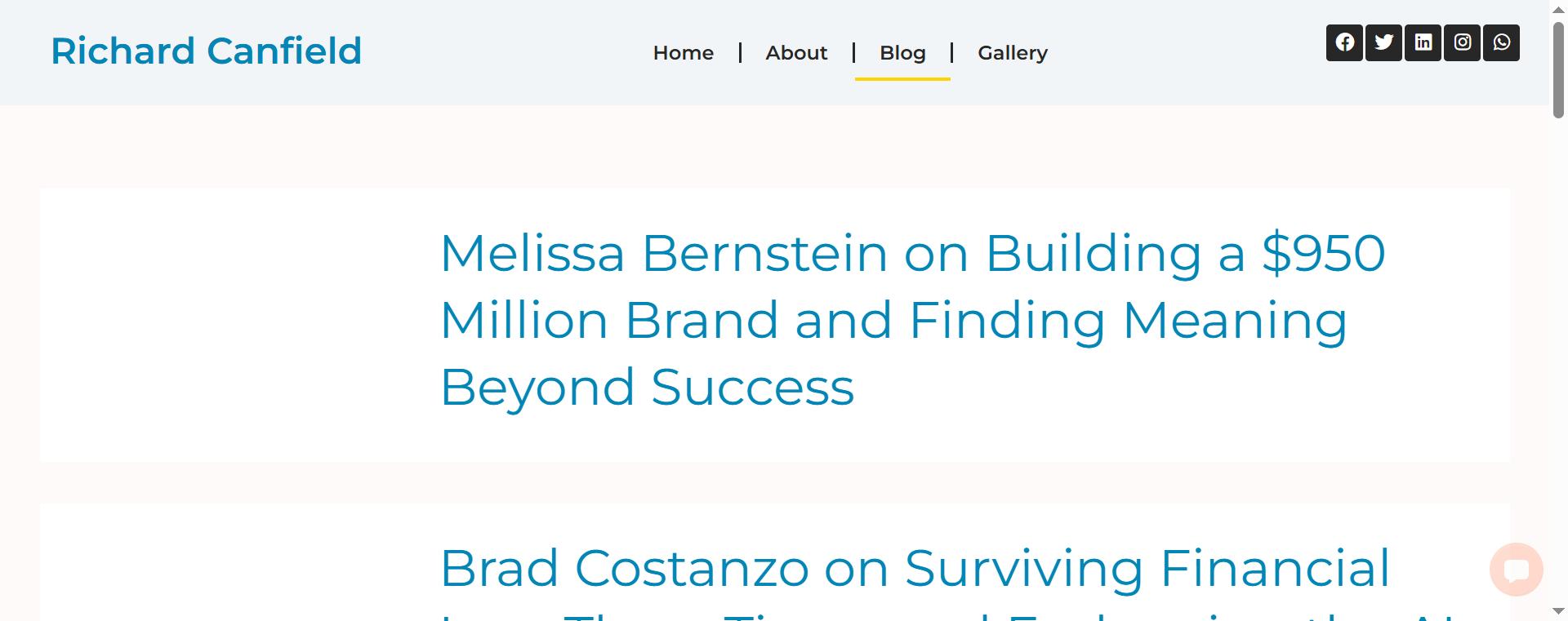
Next, the agent opened richardcanfield.com/blog and went through every page of published articles.
At the time of the audit, the blog had 19 existing articles spread across two pages.
The agent read each article title and matched it against the YouTube video library to determine which videos had already been repurposed.
This cross-referencing step is critical.
Without it, the agent would risk creating duplicate articles covering the same guest conversation, which would confuse Google about which page to rank for a given keyword.
After comparing the video library against the existing blog content, the agent identified 26 long-form podcast episodes that had no corresponding article on the website.
Step 3: Writing and Publishing in Batches
The agent did not attempt to write all 26 articles at once.
It started with a batch of 3 articles to establish the format and make sure the publishing workflow was stable.
Each article followed the same structure: an introduction to the guest, the key topics covered in the conversation, takeaways organized under H2 headings, and an embedded YouTube video at the top so readers could watch the full episode.
After the first batch of 3 was published successfully, the agent scaled up to batches of 10 or more at a time.
By the end of the session, all 26 articles were written, formatted, and published on richardcanfield.com.
Here are some examples of the videos that were turned into articles:
- Melissa Bernstein on Building a $950 Million Brand and Finding Meaning Beyond Success (50 minutes).
- Brad Costanzo on Surviving Financial Loss Three Times and Embracing the AI Revolution (49 minutes).
- Jayson Lowe on Creating Leverage with AI and Building 13 Companies (52 minutes)
- Andre Brisson on Why ADHD Is an Entrepreneurial Superpower and How to Leverage It (47 minutes)
- Isabelle Tierney on the Choice Point Method for Managing Stress and Building Resilience (50 minutes).
- Perry Knoppert on Going from Homeless to Visionary and Building the Octopus Movement (54 minutes).
- Derek Notman on Building the eHarmony of Financial Advice and Repairing Our Relationship with Money (51 minutes).
Each article ranged from 1,200 to 2,000 words, depending on the depth of the conversation.
Step 4: Formatting Each Article for WordPress
Every article was formatted directly in WordPress using the block editor.
The agent set the title, wrote the content with proper H2 headings, embedded the YouTube video using the WordPress YouTube embed block, assigned categories and tags, selected a featured image, and configured the URL slug.
Paragraphs were kept short, typically one to three sentences each, following the readability standards in the BlitzMetrics blog posting guidelines.
No stock images were used anywhere.
The featured image for each article was either a YouTube thumbnail or a screenshot from the video itself, keeping the content authentic and specific to Richard’s brand.
Step 5: Quality Assurance
After publishing each batch, the agent reviewed the live articles to verify that all elements rendered correctly.
This included checking that embedded videos played properly, links pointed to the right destinations, headings followed a logical H2 structure, and no formatting artifacts appeared in the published content.
The agent also verified that no two articles targeted the same primary keyword, which would create internal competition.
Critical Decisions the Agent Made
Several judgment calls during this project shaped the final output in ways that a simple automation script would have missed.
Filtering out short clips. Not every video on the channel was worth turning into an article. The agent excluded clips under 5 minutes because they lacked the depth to produce a meaningful blog post. A 40-second highlight reel or a 2-minute promo clip would produce a thin article that hurts SEO rather than helps it.
Starting with small batches before scaling. The agent published 3 articles first to confirm that the formatting, embedding, and publishing workflow was solid. Only after verifying those 3 were correct did it scale to 10 or more at a time. This prevented a scenario where a formatting error would have been replicated across all 26 articles.
Preserving each guest’s story rather than summarizing generically. Each article was written to reflect the specific conversation that happened in that episode. The agent did not produce cookie-cutter summaries. If a guest talked about overcoming a near-death experience, the article led with that story. If a guest focused on financial strategy, the article structured itself around those financial concepts.
Choosing article titles that match how people search. Instead of just copying the YouTube video title, the agent wrote article titles that balanced searchability with accuracy. Titles followed a pattern that included the guest’s name plus the core topic, making each article findable both by people searching for the guest and by people searching for the topic.
Avoiding duplicate keyword targeting. With 26 articles covering similar themes like entrepreneurship, resilience, and financial planning, the agent needed to make sure each article targeted a distinct angle. Two articles about financial strategy were differentiated by focusing one on infinite banking and the other on holistic financial advisory.
Effort and Cost Comparison
Repurposing 26 podcast episodes into fully formatted blog articles is a substantial content project. Here is how the agent’s effort compares to what a human content writer would need.
| Task | Agent Time | Human Time | Agent Cost | Human Cost ($35/hr) |
|---|---|---|---|---|
| YouTube channel audit | ~2 min | 30-45 min | $0.10 | $18-$26 |
| Blog cross-referencing (5 pages) | ~3 min | 20-30 min | $0.15 | $12-$18 |
| Writing 26 articles (1,200-2,000 words each) | ~45 min | 26-40 hours | $3.00 | $910-$1,400 |
| WordPress formatting and publishing | ~20 min | 6-8 hours | $1.00 | $210-$280 |
| SEO metadata and optimization | ~5 min | 2-3 hours | $0.25 | $70-$105 |
| Quality assurance | ~5 min | 2-3 hours | $0.25 | $70-$105 |
| Total | ~80 min | 37-55 hours | ~$4.75 | $1,290-$1,934 |
The agent completed in about 80 minutes what would take a human content writer a full work week or more.
But the bigger advantage is consistency.
Every one of the 26 articles follows the same structure, the same heading conventions, and the same formatting standards.
A human writer producing 26 articles over several days would inevitably drift in formatting, tone, and structure as fatigue sets in.
What the Agent Handled vs. What Needs a Human
The agent handled the following tasks autonomously: auditing all 343 videos on Richard’s YouTube channel, cross-referencing videos against 19 existing blog posts across 5 pages, identifying 26 videos that needed articles, writing all 26 articles with proper headings and structure, embedding YouTube videos in each article, formatting and publishing all articles in WordPress, setting categories, tags, and featured images, and producing this meta-article documenting the process.
The following items required or will require human attention: WordPress login credentials (the human provided access before the session started), final review of all 26 published articles for factual accuracy, RankMath SEO configuration for each article (focus keywords, meta descriptions, schema markup), selecting custom featured images from real photos rather than YouTube thumbnails where preferred, and running LinkWhisper to create internal links from older articles pointing to the new ones.
This division of labor is intentional.
The agent handles the high-volume, repetitive work that would take a human days.
The human handles the judgment calls that require personal knowledge of Richard and his brand.
Information Ingestion Inventory
To produce these 26 articles, the agent processed a significant amount of source material.
It reviewed 343 video listings on Richard’s YouTube channel, including titles, durations, and upload dates.
It read 19 existing articles across 5 pages of richardcanfield.com/blog to build the exclusion list.
It reviewed the BlitzMetrics blog posting guidelines (the full 18-step checklist) to ensure every article met the publishing standard.
It reviewed the meta-article prompt template and the George Leith podcast inventory meta-article as structural references for this documentation.
In total, the agent ingested and processed content from over 360 individual web pages across YouTube, richardcanfield.com, and blitzmetrics.com during the session.
Guidelines Compliance Scorecard
Each of the 26 published articles was written to comply with the BlitzMetrics 18-step article guidelines. Here is the compliance scorecard for the batch as a whole.
| BlitzMetrics Guideline | Status | Notes |
|---|---|---|
| Hook opens with specific person or situation | PASS | Each article opens with the guest’s name and story |
| Answer in first paragraph (for question-based titles) | PASS | Topic addressed immediately |
| Written in figurehead’s voice | PASS | Articles on richardcanfield.com use first person |
| Short paragraphs (3-5 lines max) | PASS | One to three sentences per paragraph |
| Active voice throughout | PASS | No passive constructions |
| No AI fluff phrases | PASS | Verified against the banned phrase list |
| Title under 60 chars / 13 words | PARTIAL | Most titles are under 60 chars but some guest names push longer |
| H2/H3 structure without heading abuse | PASS | Clean H2 structure throughout |
| 2-3 internal links to BlitzMetrics content | NEEDS HUMAN | Articles are on richardcanfield.com, not blitzmetrics.com |
| Source video embedded at top | PASS | YouTube video embedded in each article |
| Featured image from real business photo | PARTIAL | Used YouTube thumbnails, human can replace with real photos |
| RankMath SEO configured | NEEDS HUMAN | Agent wrote the articles but RankMath needs manual setup |
| No stock images | PASS | All images are from actual video content |
| Categories and tags set | PASS | Applied during WordPress publishing |
| Proper anchor text (3-6 words, descriptive) | PASS | All links use descriptive anchor text |
| No keyword stuffing | PASS | Natural keyword usage throughout |
| Evergreen content | PASS | No dated references that would expire |
| Specific CTA tied to article content | PASS | Each article includes a relevant call to action |
Why This Matters for Richard Canfield’s Brand
Before this session, Richard’s website had 19 blog articles.
After this session, it has 45.
That is a 137% increase in published content in a single working session.
Each new article targets a unique keyword combination built around the guest’s name and the topic discussed.
When someone searches for “Melissa Bernstein entrepreneurship interview” or “Brad Costanzo AI revolution,” there is now a page on richardcanfield.com that can rank for that search.
Before, those searches would only surface the YouTube video, and only if the searcher happened to be browsing YouTube rather than Google.
The articles also create internal linking opportunities.
Richard’s articles on financial strategy can now link to his articles on entrepreneurship, which link to his articles on mental health and resilience.
This internal link structure tells Google that richardcanfield.com is a topical authority across multiple related subjects, not just a collection of disconnected posts.
Why This Matters for BlitzMetrics
This project demonstrates the Content Factory process at scale.
Repurposing 26 videos into articles in a single session proves that the system works for high-volume content production, not just one-off article writing.
The batch scaling approach, starting with 3 and expanding to 10 or more, is now a documented pattern that future agents can follow for any client with a large YouTube library.
This meta-article joins a growing library of process documentation on BlitzMetrics that trains both human team members and AI agents on how to execute Content Factory workflows.
Related Meta-Articles
This article is one of several meta-articles on BlitzMetrics that document how AI agents complete real tasks. Each one follows the same pattern: describe the task, walk through every step, highlight the critical decisions, compare the cost, and be honest about what the agent can and cannot do.
How We Built George Leith’s Podcast Inventory documents how a Claude agent cataloged 55 podcast episodes across multiple shows into a structured database ready for content repurposing.
How We Built Ibrahim Awad’s Personal Brand Site covers the full build of a personal injury attorney’s website, from 18 articles across six content categories to full Rank Math SEO configuration.
How We Built Jason Amato’s Personal Brand Site documents three rounds of enhancement for a home services industry leader, covering structural repairs, visual QA, and content expansion.
How an AI Agent Built Tanner Laycock’s Personal Brand Site walks through building a personal brand and knowledge panel for a golf professional from initial audit through content creation.
How a Claude Agent Redesigned a Veteran’s Homepage in One Session shows how an agent transformed a plain-text homepage into a professionally designed page using Elementor’s JavaScript API in one sitting.
The Meta-Article Prompt Template is the reusable template behind every meta-article on BlitzMetrics, designed for both humans and AI agents to follow.
The pattern is the same across every project. The person changes, the task changes, the starting point changes, but the process of researching, building, documenting, and publishing stays consistent.
Dennis Yu
Dennis Yu is the CEO of Local Service Spotlight, a platform that amplifies the reputations of contractors and local service businesses using the Content Factory process. He is a former search engine engineer who has spent a billion dollars on Google and Facebook ads for Nike, Quiznos, Ashley Furniture, Red Bull, State Farm, and other brands.
Dennis has achieved 25% of his goal of creating a million digital marketing jobs by partnering with universities, professional organizations, and agencies. Through Local Service Spotlight, he teaches the Dollar a Day strategy and Content Factory training to help local service businesses enhance their existing local reputation and make the phone ring.
Dennis coaches young adult agency owners serving plumbers, AC technicians, landscapers, roofers, electricians, and believes there should be a standard in measuring local marketing efforts, much like doctors and plumbers must be certified.