
 by
by

A book sat in Basecamp for 606 days. Two authors, three editors, twelve rounds of “almost done.” On July 8, one agent session finished it — 203 pages, shipped, with the sales pages to match. Here’s the receipt.
606days from Basecamp to-do to release candidate
1working session to finish, QA, and ship Rev 7
203pages · 41,814 words · 40 numbered figures
Start with what was actually stuck
“Book: How to Get a Google Knowledge Panel” entered Basecamp as a to-do on November 9, 2024. Dylan Haugen carried it through real revisions — jigsaw theme, case studies, insert kits, a May version that was “done and ready for your review.” It kept sliding anyway. Not because anyone was lazy. Because a book is a hundred small decisions nobody owns on any given Tuesday.
On July 1, Dennis wrote five words in the thread: “I’ll take it from here.”
Read everything before touching anything
The session started the way every good edit starts — with the receipts. Both Basecamp threads end to end (35 posts, Dec 2025 to Jul 2026), every piece of feedback Dennis had given, the May 27 insert kit, the live sales pages, and the Marketing Mechanic article corpus. That produced a fine-tooth-comb review before a single word changed.
What the comb caught in Rev 6: zero real heading styles in a 170-page manuscript (no table of contents was even possible), five screenshots that were captioned but never actually placed, a $6,000-vs-$7,500 price contradiction, broken list numbering, stale cross-references, and a dozen line-level bugs.
Add the year that was missing
The bigger gap wasn’t errors — it was the last twelve months of our own work that never made it in. Rev 7 added four chapters: the Brand Brain (one folder of truth every machine reads), AI Search without the snake oil, the 100-point Personal Brand Score, and Your Agents Read This Book Too — plus Grokipedia, seven new diagrams, and a “hand this to your agent” box at the end of every single chapter. The book now does what it teaches: it’s machine-readable. A reader can point Claude at it and delegate the 95% that is executable work.
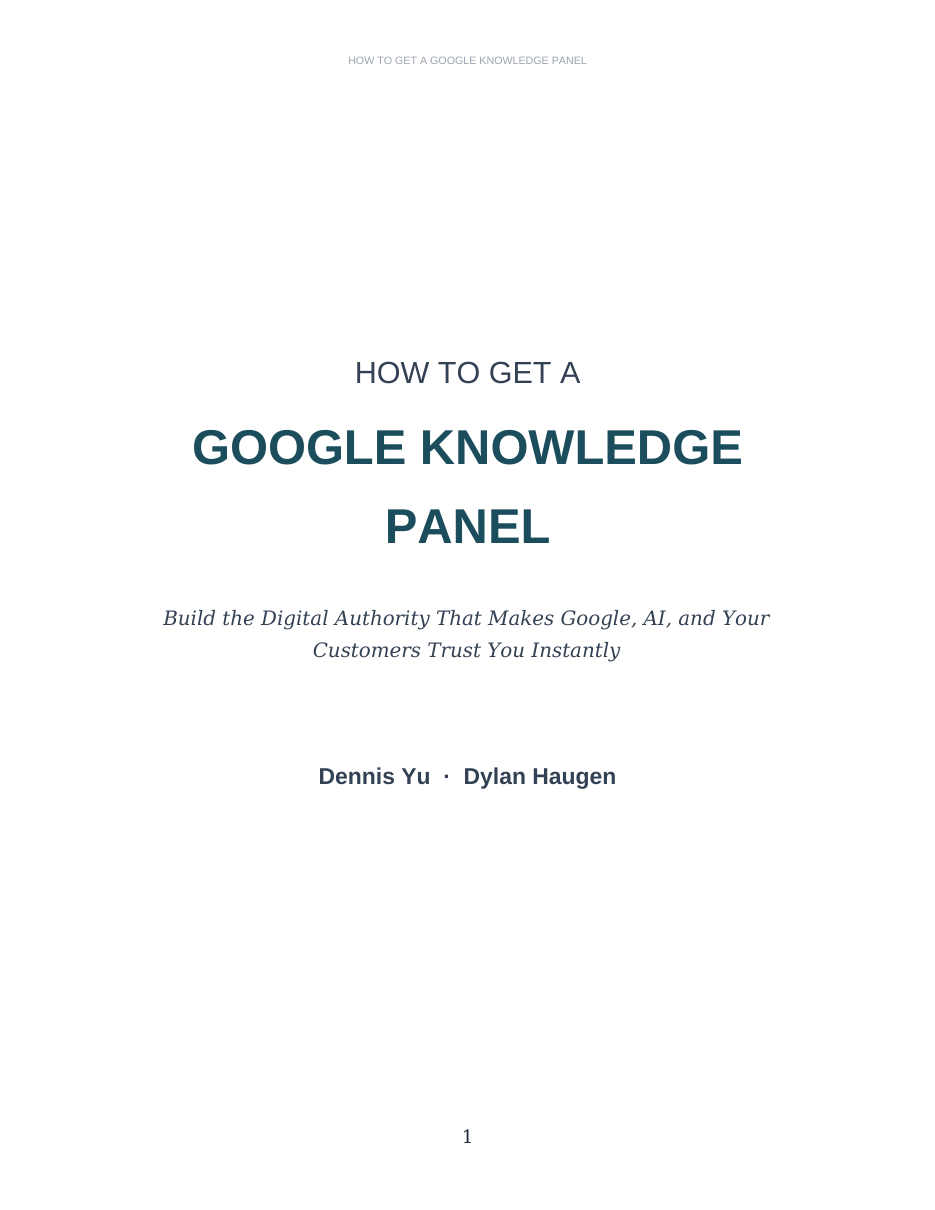
Rev 7’s title page. Same session also shipped the landing page, the pricing fixes, and the new package page.
Count the cost, line by line
| What ran | Approximate cost |
|---|---|
| Corpus inventory subagent (37 Marketing Mechanic episodes, sales pages, methodology cluster) | ~283k tokens |
| Chapter-drafting subagent (3 chapters + 1 section, first drafts) | ~121k tokens |
| Main session: thread analysis, review, rebuild pipeline, 7 diagrams, QA, publishing | ~1M tokens |
| Total machine cost | Roughly one dinner for two |
| Human | Time actually spent |
|---|---|
| Dennis | Two decisions (confirm $7,500 pricing; name the third package) + one “go ahead” |
| Dylan | ~1 hour remaining: five screenshots, the cover, the final read-through |
Proof ledger: Rev 7 docx validated (real heading styles, live TOC, 203pp) · every $6,000 now $7,500 across book + sales page · Cloud AI Setup published · book landing page live with free PDF · Knowledge Graph Explorer now routes to the book · all verified with logged-out, cache-busted fetches.
Keep the judgment, delegate the keyboard
The agent didn’t write this book alone, and that’s the point worth stealing. Dylan’s drafts, Dennis’s frameworks, and two years of published client work were the ingredients. The agent’s job was the part that kills momentum: reading 35 thread posts without forgetting any, renumbering 18 chapters of cross-references without missing one, catching that a subagent invented a plausible-sounding client statistic — and cutting it, because the fastest way to lose a reader is one fake number.
Every framework got checked against a named, verifiable example. The unverifiable ones died in QA. That’s Learn, Do, Teach with a machine doing the typing.
THE DELIVERABLE
The book is free, ungated, and written so your agent can run it for you. The tools it references are free too.
Get the free book Check your entity firstWhat happened after the manuscript shipped, from Amazon KDP to the cover reprint to the launch videos, is in the launch meta article.
How we write these: the meta article standard · the method behind the book: Content Factory methodology and the Personal Brand Score.
Originally published .
Dennis Yu
Dennis Yu is the CEO of Local Service Spotlight, a platform that amplifies the reputations of contractors and local service businesses using the Content Factory process. He is a former search engine engineer who has spent a billion dollars on Google and Facebook ads for Nike, Quiznos, Ashley Furniture, Red Bull, State Farm, and other brands.
Dennis has achieved 25% of his goal of creating a million digital marketing jobs by partnering with universities, professional organizations, and agencies. Through Local Service Spotlight, he teaches the Dollar a Day strategy and Content Factory training to help local service businesses enhance their existing local reputation and make the phone ring.
Dennis coaches young adult agency owners serving plumbers, AC technicians, landscapers, roofers, electricians, and believes there should be a standard in measuring local marketing efforts, much like doctors and plumbers must be certified. He has appeared on 353 podcasts with 619 credited episodes — see the full list of his podcast appearances.