
 by

At BlitzMetrics, we’ve set up a structured archiving process for our Zoom recordings to avoid extra storage costs and ensure safe, accessible backups.
This article explains why a recording may no longer appear on Zoom, where to look for it, and what to do if you still can’t find it.
After organizing our Zoom recordings, we run them through all stages of the Content Factory, build our online presence in a way that not only triggers a knowledge panel, but also help us achieve real SEO results while staying compliant with Google’s standards.
Our team compiles the greatest hits in our Content Library, for Dollar-a-Day ads for Facebook, TikTok, YouTube, and more!
Task Checklist
- Access: Confirm access to the company’s Shared Drive and YouTube channel.
- Tools Needed: Google Drive, YouTube, and access to Ops support if necessary.
- Objective: Locate archived Zoom recordings no longer available on Zoom due to storage management processes.
Why Are Some Zoom Recordings Unavailable?
Zoom enforces storage limits, and exceeding these limits incurs extra charges.
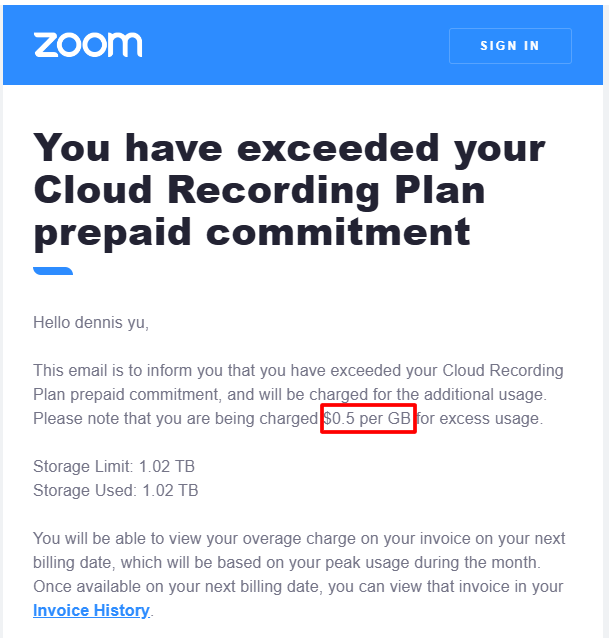
To avoid these costs and maintain an organized archive, we move recordings monthly from Zoom to alternative storage:
- Company Shared Drive: A secure backup location.
- Unlisted on YouTube: Easily accessible for sharing without occupying Zoom storage.
Recent recordings are available on Zoom for a minimum of one month, while older recordings are archived.
Here’s how to find them:
Steps to Locate Archived Zoom Recordings
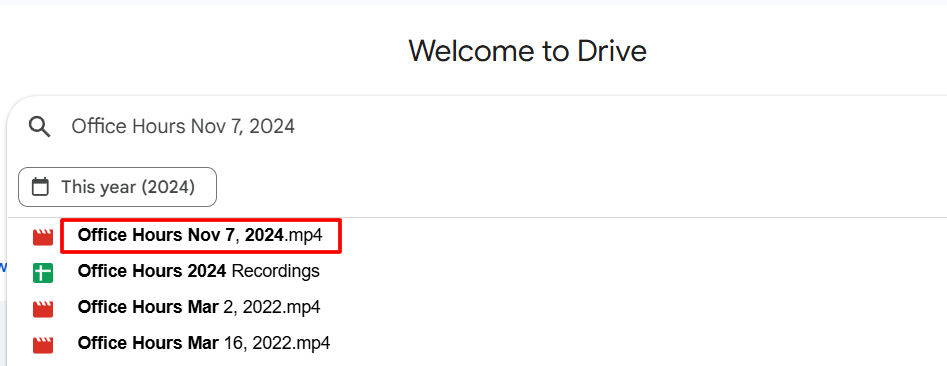
1. Check the Shared Drive
- Step: Navigate to the company’s Shared Drive. You can typically find recordings organized by date and meeting name.
- Tip: Use the search bar to quickly find a specific recording.
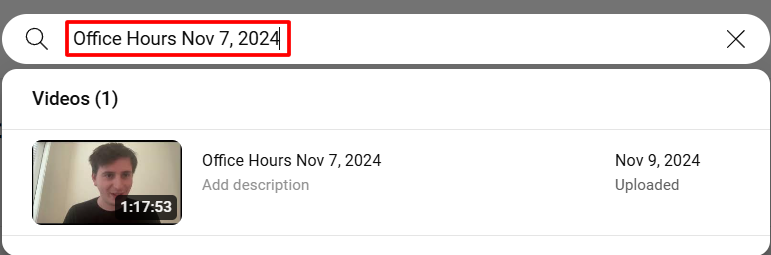
2. Search for an Unlisted YouTube Video
- Step: The recordings are also saved as unlisted YouTube videos for easy access.
- Tip: Check with team members or Ops for the link if you’re unable to locate it independently.
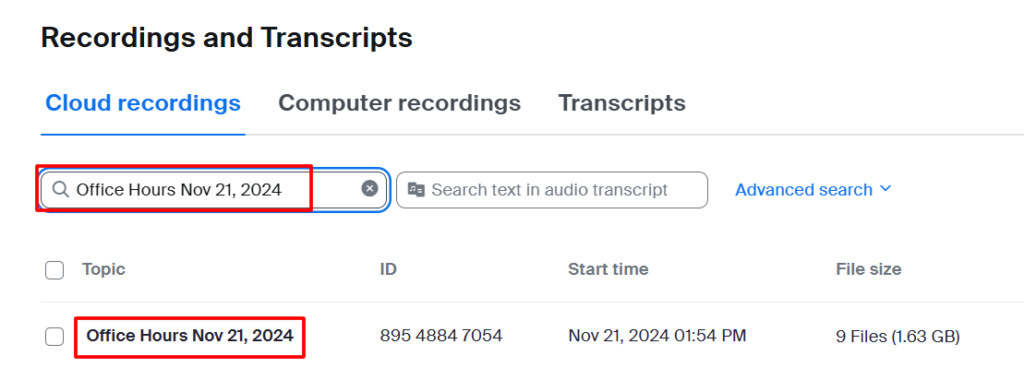
3. Verify on Zoom (for Recent Recordings)
- Step: If the meeting was recent, it might still be available directly on Zoom.
- Tip: Ensure you’re logged into the correct Zoom account to view all authorized recordings.
We keep a premium Zoom account with a large storage allowance. If we exceed this, Ops can assist in finding and recovering files.
Our archiving process is designed for “graceful failure,” meaning if something goes wrong, we have backups and support ready.
Need Help Finding a Recording?
If you’ve searched both the Shared Drive and YouTube but still can’t locate a specific recording, contact Ops (operations@blitzmetrics.com) for further assistance.
They can help you retrieve archived files or locate a missing recording if necessary.
Verification Checklist
- Checked Shared Drive: Confirmed recording isn’t in the Shared Drive.
- Checked YouTube Videos: Searched for unlisted YouTube videos.
- Reviewed Zoom Account: Confirmed the recording is no longer available on Zoom.
The 2026 Revival: Every Recording Cataloged and Tracked
In November 2026 we audited the full archive and turned it into a working system. Here is what we found, and how the archive runs now.
What the archive actually holds. The archive of record is the company Shared Drive folder “Dennis’s Zoom Recordings”: 1,977 items — direct recordings plus meeting folders — totaling 1,450 hours of video in that hub alone, and 1,474 hours (88,427 minutes) across every source we track. Recordings span January 2019 to October 2026. Zoom’s own cloud is no longer the archive: since the February 2025 move to a Zoom Workplace Enterprise account, Zoom retains nothing recorded before February 2024, so anything older exists only in Drive. A second copy destination was unlisted YouTube.
How we count (so the numbers stay honest). A meeting folder holds component files — multiple camera angles, audio-only files, transcripts, chat logs. We count sessions, not files: each meeting counts once, at the length of its main video. Files named with GMT timestamps inside meeting folders are components of one meeting, never separate recordings.
Every recording is now a tracked task. Each of the 2,060 recordings is a to-do in our project system, grouped into 11 topic lists (coaching shows, client meetings, training, one-to-ones, interviews, and an untitled group awaiting triage), ordered within each list by the authority of the people in it, so the most valuable conversations get revived first. Every task carries its topic, its intended audience, where the recording can be repurposed, and the goal it serves — proof, authority, or sales.
The revival pipeline. Recordings move through the same four Content Factory stages as everything else: Produce (the original Zoom recording, already done), Process (transcript, clips and Shorts, catalog entry), Post (YouTube, the company website, social channels), and Promote (thank-you machine, Dollar-a-Day ads, social commenting, roundups). Work runs in waves of 25 tasks in list order, and each finished stage is logged on the task with the link to the published asset — documented all the way, and verified live at the destination before a task counts as done.
How the archive stays current. A monthly check re-lists the Drive folder and compares it against the catalog: new recordings become new tasks in the right list, missing items get flagged for a human (never auto-deleted), and any drift is reported. The counts in this article get re-verified quarterly against the live archive.
Last verified against the live archive: November 10, 2026 — 2,060 recordings tracked, 1,474 hours.
Originally published .
Dennis Yu
Dennis Yu is the CEO of Local Service Spotlight, a platform that amplifies the reputations of contractors and local service businesses using the Content Factory process. He is a former search engine engineer who has spent a billion dollars on Google and Facebook ads for Nike, Quiznos, Ashley Furniture, Red Bull, State Farm, and other brands.
Dennis has achieved 25% of his goal of creating a million digital marketing jobs by partnering with universities, professional organizations, and agencies. Through Local Service Spotlight, he teaches the Dollar a Day strategy and Content Factory training to help local service businesses enhance their existing local reputation and make the phone ring.
Dennis coaches young adult agency owners serving plumbers, AC technicians, landscapers, roofers, electricians, and believes there should be a standard in measuring local marketing efforts, much like doctors and plumbers must be certified. He has appeared on 353 podcasts with 619 credited episodes — see the full list of his podcast appearances.