
 by
The Acoustic Shoppe has already done what most businesses never manage to do: build a real audience.
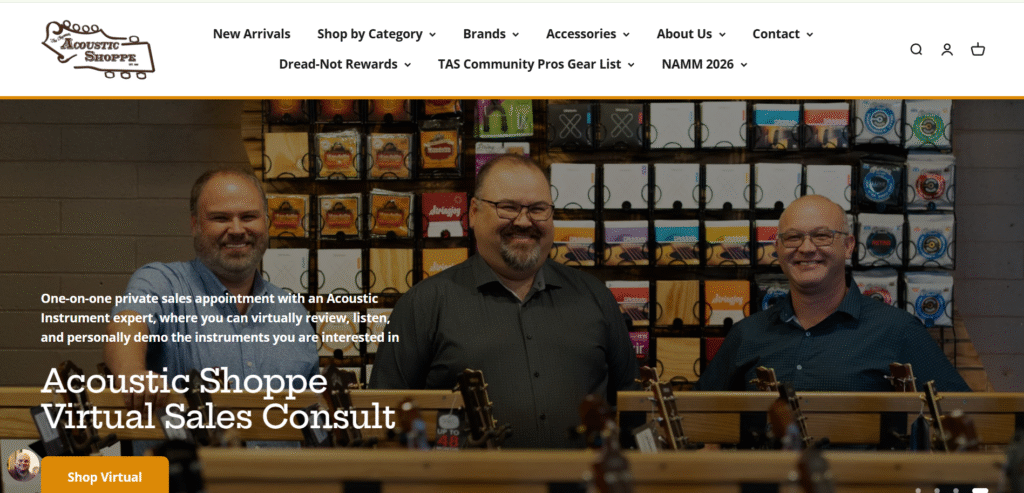
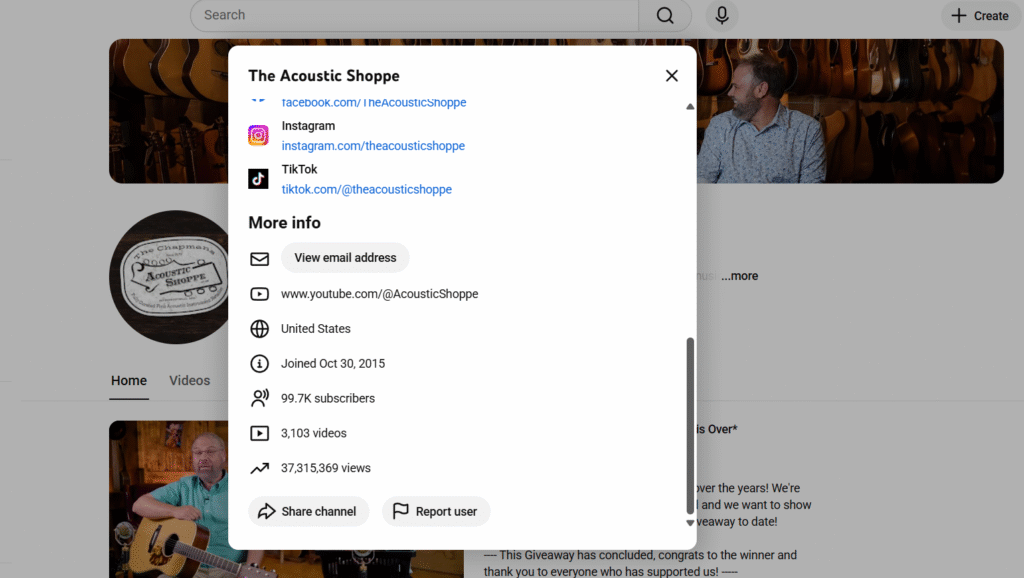
With thousands of deep-dive videos on guitars and mandolins, a loyal community, and roughly 80% of sales happening online, Jeremy and Jason built a content-driven e-commerce machine long before most retailers understood YouTube.
Now the focus shifts from growth through hustle to growth through structure.
Instead of relying primarily on direct traffic from YouTube, the goal is to convert their massive video catalog into a compounding SEO asset that drives organic traffic, supports AI-driven search visibility, and increases sales predictably.
With their enrollment in the AI Builder Program, that transition is operational.
From YouTube channel to search authority
The Acoustic Shoppe produces five to ten videos per week and has over 3,000 videos already published.
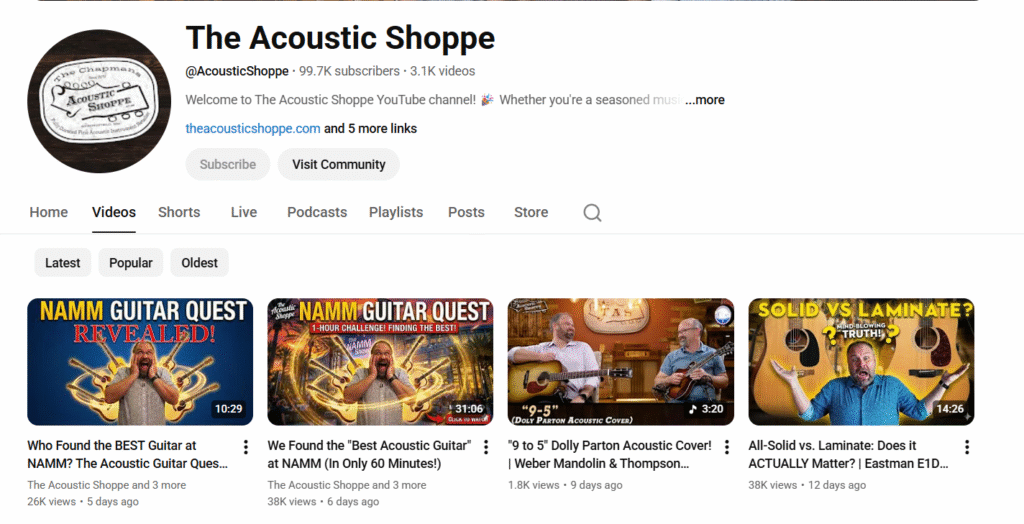
Much of their traffic comes from loyal viewers who see a new product on YouTube and immediately purchase. That direct-response model works extremely well.
But what about the customers who are not already part of the community?
Those buyers are searching for phrases like “Martin D18 review,” “best beginner mandolin,” or “top acoustic guitars under $500.”
Many of those topics have already been covered in long-form video.
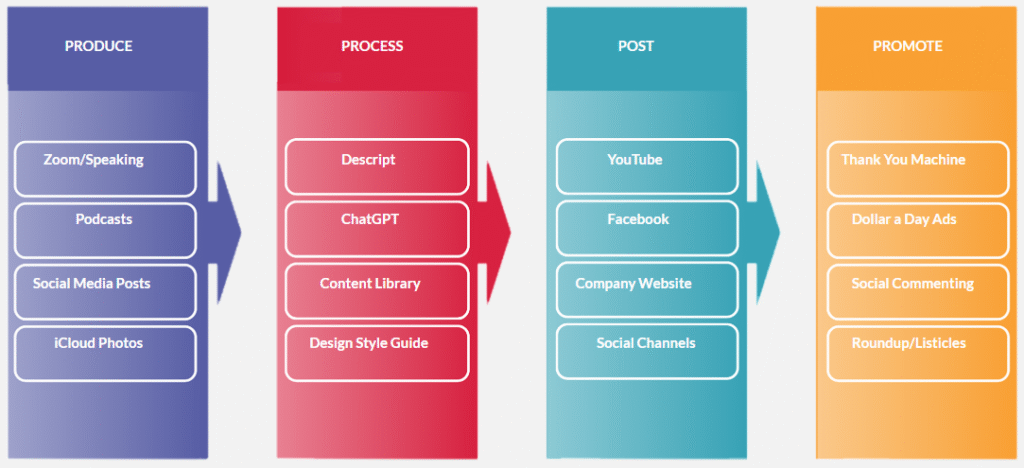
The opportunity is to systematically repurpose those assets into structured articles that search engines and AI systems can easily interpret, index, and recommend.
The rule: business metrics come first
There is one rule that overrides all others in this strategy. Business metrics determine priority.
Views are not the same as revenue. Rankings are not the same as profit. Even traffic alone is not the same as growth.
The work must begin with identifying which pieces of content are actually contributing to sales, assisted conversions, or high-intent buyer journeys. Those become the “greatest hits.”
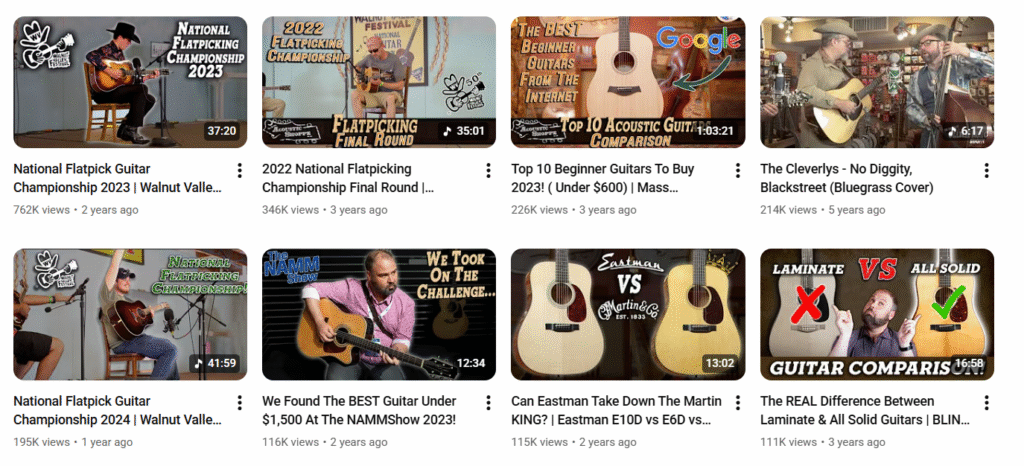
Those are the assets that deserve the most optimization effort, internal linking support, and possibly amplification through ads.
Without this discipline, companies drift into content production for its own sake. With it, content becomes a capital asset.
The 80/20 shift away from the newsroom model
In the instrument world, new releases matter.
When Martin announces new models at NAMM, being first to review them reinforces leadership and industry credibility.
That will continue.
However, new releases are not evergreen.
A limited-run model creates a spike in attention, then fades.
The long-term growth engine comes from timeless buyer questions.
Top beginner guitars. Comparisons between staple models. Tuning advice. String recommendations. Buying guides. These topics generate demand year after year.
The strategy is is to balance them.
Roughly eighty percent of structured SEO effort goes into evergreen greatest hits.
Roughly twenty percent supports new releases and timely content.
That ratio protects the business from becoming a weekly content treadmill.
Repurposing 3,000 videos the right way
Repurposing does not mean copying transcripts into a blog and pressing publish.
Each selected video is transcribed and then rewritten into a structured article that reflects The Acoustic Shoppe’s voice and authority.
Internal links connect the article to relevant product collections, model hubs, and related guides.
Frequently asked questions are embedded in a way that mirrors how customers actually search.
This process is accelerated by AI tools, but never fully automated.
Human oversight ensures accuracy, tone, and alignment with business goals.
The result is is structured expertise drawn from real experience.
Winning in AI mode
Search behavior is evolving rapidly.
Fewer users click traditional blue links.
More users rely on integrated answers generated directly in search results or large language models.
To be visible in this new environment, content must demonstrate real experience, clear expertise, consistent authority, and trust signals.
The Acoustic Shoppe already has these qualities in video form.
The objective is to surface them in a format that search engines and AI systems can easily reference.
When properly structured, long-form reviews and buying guides become source material that AI systems pull from.
That extends visibility beyond standard search rankings and positions the brand as a default authority.
Fixing the digital plumbing
Before optimization can scale, tracking must be accurate.
The move to Shopify introduced complexity around analytics, Tag Manager, and pixel implementation.
Like most growing businesses, there are gaps and inconsistencies in tracking.
Without clear attribution and conversion data, it is impossible to determine which content drives meaningful revenue.
The first phase of implementation focuses on establishing measurement clarity.
Once that foundation is stable, every subsequent action is grounded in real performance data rather than assumptions.
Solving the serialized inventory challenge
High-end acoustic instruments introduce a unique Shopify issue.
Each Martin D18, for example, is treated as a one-of-one item because customers want photos of the exact guitar they are purchasing.
When that individual serial number sells, the product page disappears.
From an SEO standpoint, that creates a structural problem.
Authority built around that page vanishes.
The strategic solution is to create persistent model-level hubs that remain live regardless of inventory turnover.
Individual guitars can exist beneath that structure, but authority must flow toward evergreen model pages that never disappear.
That way, when a specific serial number sells, the accumulated equity continues benefiting the broader model category.
This structural refinement ensures that SEO momentum compounds instead of resetting.
Implementation and weekly accountability
The onboarding process begins with access, auditing, and establishing reporting. From there, the system runs on a disciplined cadence.
Each week follows a Metrics, Analysis, Action (MAA) framework.
Performance data is reviewed. Insights are extracted. Adjustments are prioritized.
This rhythm prevents distraction and keeps effort aligned with business impact.
The Acoustic Shoppe moves quickly as a company.
The SEO system must match that speed without sacrificing strategic clarity.
The AI Builder Program and in-house ownership
With enrollment in the AI Builder Program, The Acoustic Shoppe is building internal capability.
The program trains an internal operator to manage repurposing workflows, apply AI tools intelligently, produce structured content, and report performance in a standardized format.
Weekly sessions and Office Hours support ongoing learning as tools evolve.
Because The Acoustic Shoppe behaves both as a retailer and as a publisher, long-term success requires in-house ownership.
The AI Builder structure ensures that the expertise compounds inside the company rather than remaining dependent on outside execution.
From content volume to compounding asset
The Acoustic Shoppe already has what most brands wish they had: credibility, personality, depth of product knowledge, and a massive archive of content.
The next stage is refinement.
Instead of producing more for the sake of more, they will extract greater value from what already works.
Instead of chasing weekly spikes, they will build evergreen authority.
Instead of relying solely on direct community sales, they will expand into organic discovery and AI-driven visibility.
The foundation is already built. The system is now being engineered to scale.
This article connects to BlitzMetrics processes including SEO audit, Digital Plumbing, one-minute video, Content Factory, Social Amplification Engine, MAA, SEO Tree. Each of these concepts has a definitive article that explains the full framework.
Originally published .
Dennis Yu
Dennis Yu is the CEO of Local Service Spotlight, a platform that amplifies the reputations of contractors and local service businesses using the Content Factory process. He is a former search engine engineer who has spent a billion dollars on Google and Facebook ads for Nike, Quiznos, Ashley Furniture, Red Bull, State Farm, and other brands.
Dennis has achieved 25% of his goal of creating a million digital marketing jobs by partnering with universities, professional organizations, and agencies. Through Local Service Spotlight, he teaches the Dollar a Day strategy and Content Factory training to help local service businesses enhance their existing local reputation and make the phone ring.
Dennis coaches young adult agency owners serving plumbers, AC technicians, landscapers, roofers, electricians, and believes there should be a standard in measuring local marketing efforts, much like doctors and plumbers must be certified. He has appeared on 353 podcasts with 619 credited episodes — see the full list of his podcast appearances.