
 by
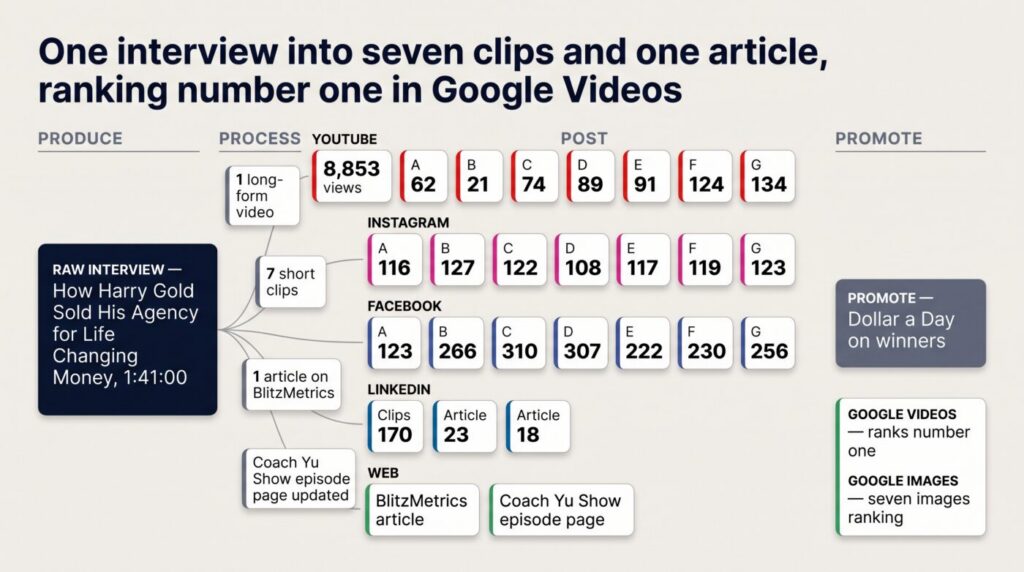
Search Google Videos for “Harry Gold Overdrive Interactive.”
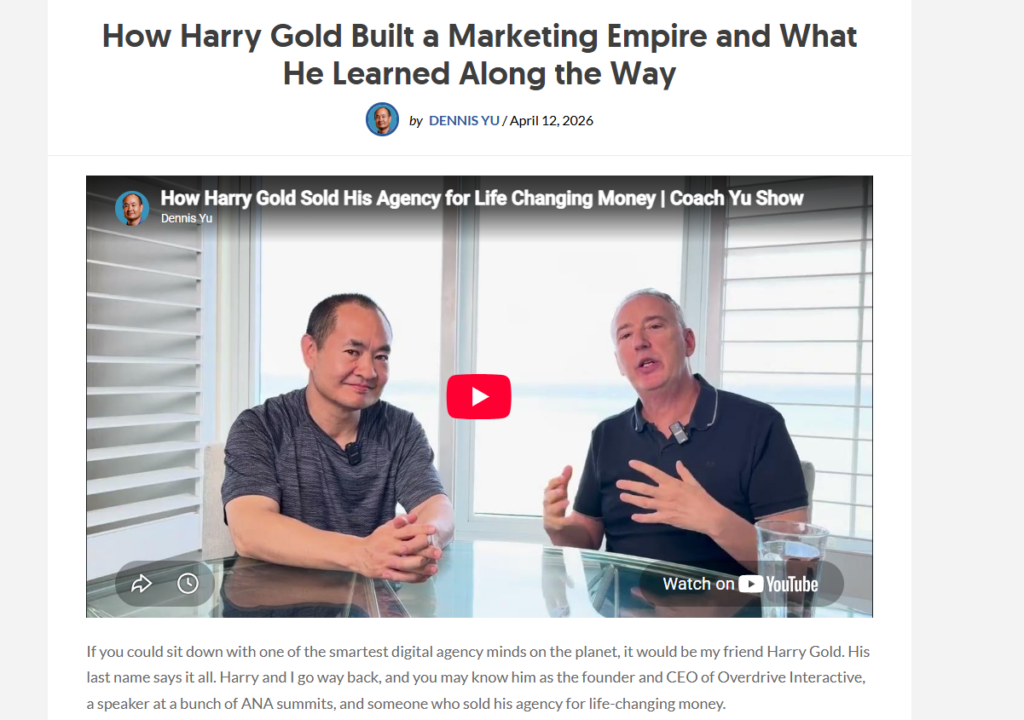
The number one result is an article we published in April. It sits above a Vimeo result from 2011 and a YouTube result from 2019 that have had over a decade to hold that spot. Seven images from that same article rank in Google Images for the same term.
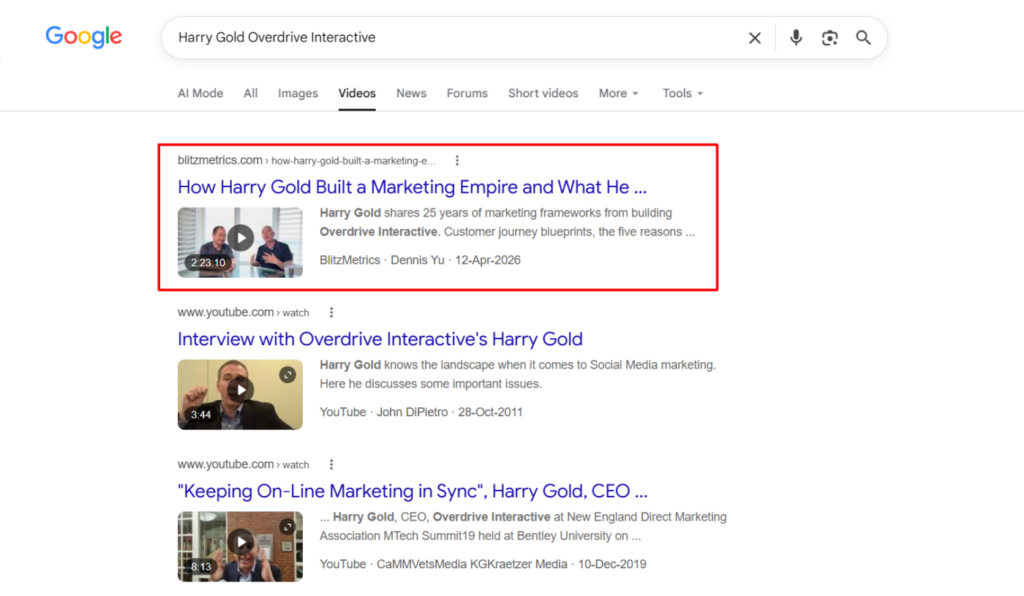
One interview. Eight assets. No ad spend.
Harry ran Overdrive Interactive for twenty five years and sold it. He has been associated with that term longer than most agencies have existed. We are now the top video result for it, and not by outranking him. By appearing beside him.
Here is every stage, every asset, and every number.
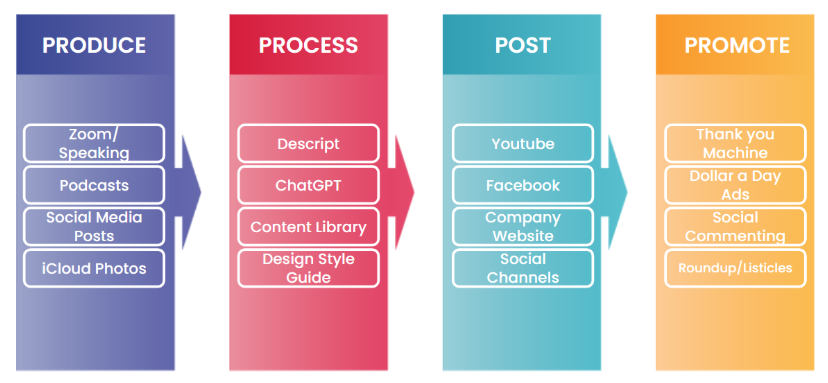
Produce
The raw asset is a one hour and forty one minute conversation, “How Harry Gold Sold His Agency for Life Changing Money,” recorded for the Coach Yu Show and published April 12, 2026.
Harry founded Overdrive Interactive, ran it for twenty five years, and sold it. We talked about how he built it, what he learned about selling, and the frameworks he still uses with clients today. The quarterly meeting almost nobody does. Why a lead loses eighty percent of its value in thirty minutes. Why he does not sell the product, he sells the conversation. Cold calling Microsoft at twenty years old.

That is a lot of expertise sitting in one recording, and none of it existed anywhere else on the web in that form. A specific person saying specific things in a specific place at a specific time is the experience component of EEAT, and it is the one ingredient AI cannot manufacture.
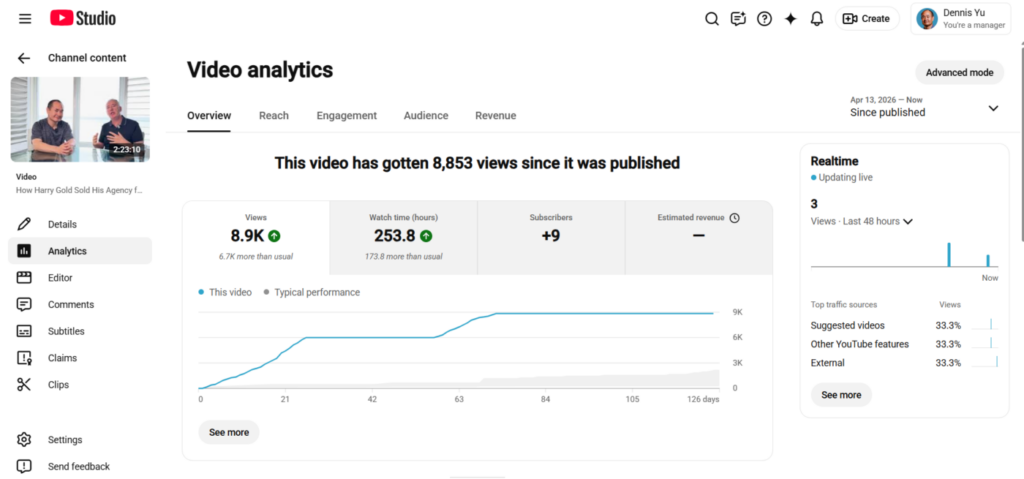
The video has 8,853 views, 253.8 hours of watch time, and picked up nine subscribers. Traffic splits roughly evenly across suggested videos, other YouTube surfaces, and external sources.
That even split matters, because it tells you the recommendation engine and outside distribution are both contributing. When only one of them is carrying the load, you spend differently.
Process
From the single recording we produced one edited long form video, seven short vertical clips cut in Descript, and an article on BlitzMetrics. The Coach Yu Show episode page, where every episode is listed, was updated with this one.
Seven clips out of one interview is not unusual when the guest is genuinely experienced. Each clip is a different hook, and each one can be tested independently.
| Clip | Hook |
|---|---|
| A | The quarterly meeting almost nobody does |
| B | Do not let your agency own your ad accounts |
| C | A lead loses 80% of its value in 30 minutes |
| D | 85% of companies have no marketing plan |
| E | The five reasons framework that fills daycares |
| F | Sell the conversation, not the product |
| G | Cold calling Microsoft at twenty |
Editing is light on purpose. Descript transcribes, cuts the ums, finds the chapters, and pulls the clips. Heavy production is taking great meat and running it through a grinder to make a hot dog. The raw conversation is the value.
Post
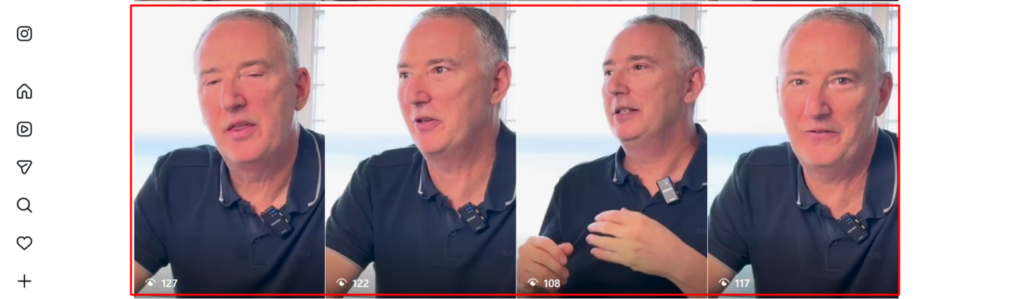
Every clip went to YouTube Shorts, Instagram, and Facebook. The clips and both articles also went to LinkedIn.
| Clip | YouTube | ||
|---|---|---|---|
| A | 62 | 116 | 123 |
| B | 21 | 127 | 266 |
| C | 74 | 122 | 310 |
| D | 89 | 108 | 307 |
| E | 91 | 117 | 222 |
| F | 124 | 119 | 230 |
| G | 134 | 123 | 256 |
| Subtotal | 595 | 832 | 1,714 |
Long form on YouTube: 8,853 views.




On LinkedIn the clips drew roughly 170 impressions between them, the episode post drew 23 impressions, and the BlitzMetrics article drew 18.
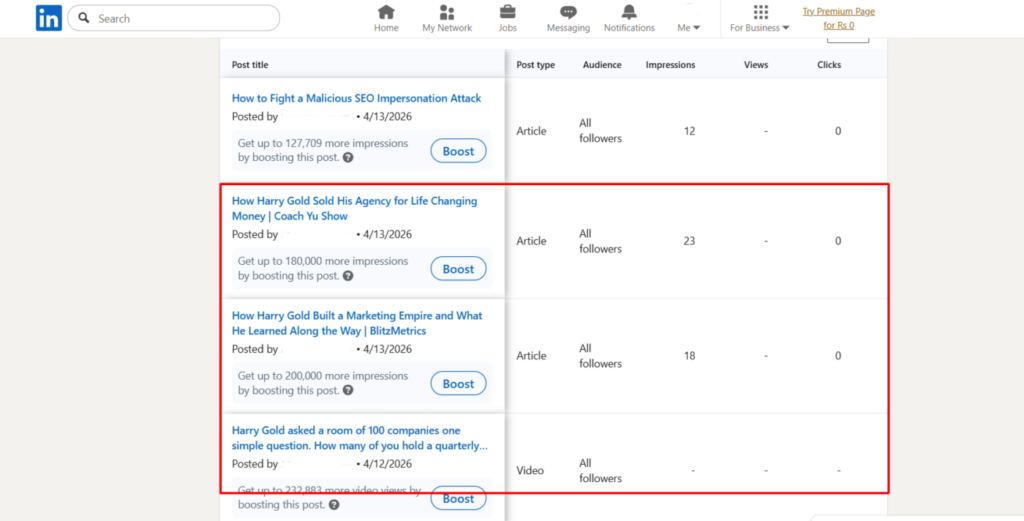
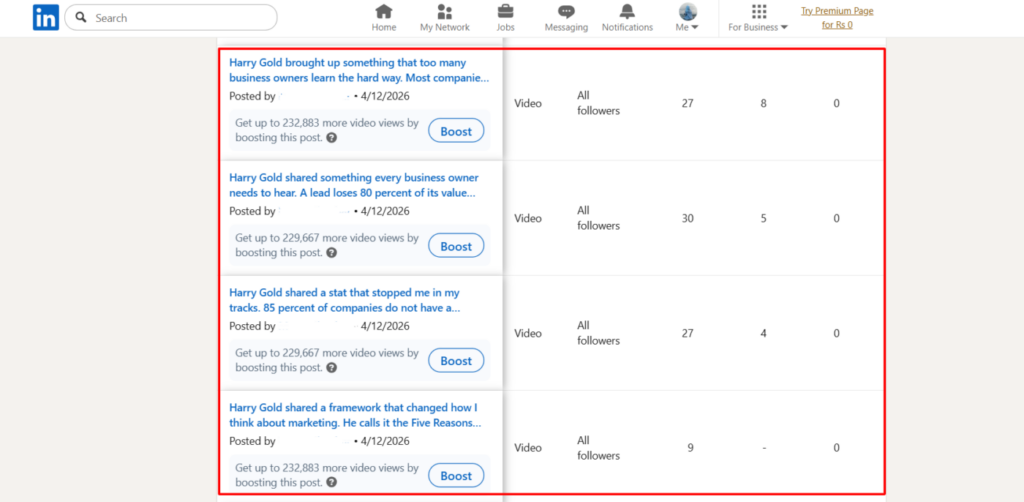
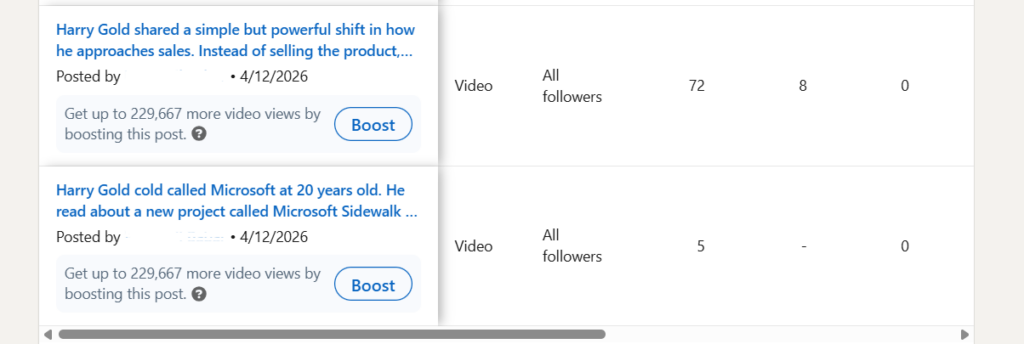
The article is live on BlitzMetrics, and the episode is listed on the Coach Yu Show page.

Look at the spread. Clip G does 134 on YouTube but 256 on Facebook. Clip C does 74 on YouTube and 310 on Facebook, the reverse ordering. Facebook is running roughly three times the volume of YouTube Shorts on identical content posted the same day.
You do not learn that by guessing. You learn it by posting all seven everywhere and reading the numbers afterward.
Promote
Dollar a Day has not run on any of this. Everything above is organic.
That is the honest state of it, and it means every number here is a floor rather than a ceiling. Stage four has not happened.
The winners are already identified. Clip G on YouTube, Clip C on Facebook, Clip B on Instagram. Those are where the first dollars go.
What it produced in search
Search Google Videos for “Harry Gold Overdrive Interactive” and the BlitzMetrics article is the number one result. Not the YouTube video, the article. Above a Vimeo result from 2011 and a YouTube result from 2019 that have had over a decade to establish themselves.
Search Google Images for the same term and seven images from that article are ranking, scattered across the top of the grid alongside LinkedIn, Crunchbase, and Twitter results. The customer journey diagram, the speed to lead diagram, the call to action framework, and several video thumbnails.
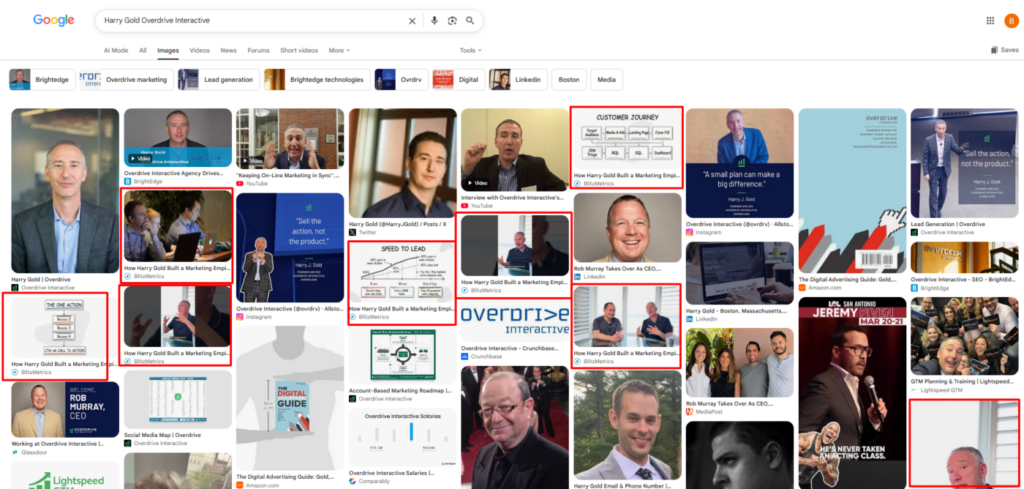
One interview, processed properly, now occupies the video tab and multiple slots in the image tab for a term Harry has been associated with for twenty five years. It happened without a dollar of ad spend.
This is what it means when people say real endorsements are the new links. Anyone can generate content and anyone can build links. Nobody can fake a real conversation between two real people who will both vouch for it. Google sees two entities connected by a documented event, and that is the citation you cannot buy.
MAA
Metrics. 8,853 long form views and 253.8 hours of watch time. 3,141 clip views across YouTube, Instagram, and Facebook. Roughly 211 LinkedIn impressions. Number one in Google Videos and seven results in Google Images for the brand term. Zero spend.
Analysis. Facebook out-delivers YouTube Shorts roughly three to one on this content. Clip winners differ by platform, so no single clip should be promoted everywhere. The search placement came from the article rather than the video, which means the written asset is doing the entity work and deserves the enhancement effort. Stage four is entirely unrun, so none of these numbers reflect amplification.
Action. Start Dollar a Day on Clip G on YouTube, Clip C on Facebook, and Clip B on Instagram. Enhance the existing BlitzMetrics interview article with the clips rather than publishing new pages against the same term. Re-measure in thirty days.
The authority score of the source content, graded on the thirty point scale of who is saying it, where it is being said, and what they are talking about, determines how much human and agent effort goes in and what the starting budget is. Harry grades high on all three, which is why this one earned seven clips instead of three. MAA determines everything after that.
Originally published .
Dennis Yu
Dennis Yu is the CEO of Local Service Spotlight, a platform that amplifies the reputations of contractors and local service businesses using the Content Factory process. He is a former search engine engineer who has spent a billion dollars on Google and Facebook ads for Nike, Quiznos, Ashley Furniture, Red Bull, State Farm, and other brands.
Dennis has achieved 25% of his goal of creating a million digital marketing jobs by partnering with universities, professional organizations, and agencies. Through Local Service Spotlight, he teaches the Dollar a Day strategy and Content Factory training to help local service businesses enhance their existing local reputation and make the phone ring.
Dennis coaches young adult agency owners serving plumbers, AC technicians, landscapers, roofers, electricians, and believes there should be a standard in measuring local marketing efforts, much like doctors and plumbers must be certified. He has appeared on 353 podcasts with 619 credited episodes — see the full list of his podcast appearances.