
 by
by
If you could sit down with one of the smartest digital agency minds on the planet, it would be my friend Harry Gold. His last name says it all. Harry and I go way back, and you may know him as the founder and CEO of Overdrive Interactive, a speaker at a bunch of ANA summits, and someone who sold his agency for life-changing money.
I wanted to sit down with Harry and pull out the frameworks, tactics, and hard lessons from his 25 years of running campaigns for some of the biggest brands in the world. What follows is everything he shared with me.
Cold calling Microsoft at 20
Harry’s first big break came from pure audacity. In 1997, he read a Wall Street Journal article about Microsoft launching a project called Sidewalk that needed local event listings. Harry happened to have a database of every club and band listing in Boston from a phone line business he started out of college.
He picked up the phone, dialed 411, asked for Microsoft in Redmond, Washington, and got through to the guy running the project.
“I called him up and told him I have this database of every event going on in Boston. He said, I’m getting on a plane. I’ll be there in two days.”
Any of our young entrepreneurs watching this should take note. Harry, as a 20-something, was able to convince Microsoft to fly out and visit him and eventually pay money. You may already have the solution to a big company’s problem and not even know it. Don’t be afraid to knock on big doors.

It’s easier to get a client than a job
When the dot-com bubble burst, Harry got laid off. Instead of job hunting, he started Overdrive Interactive with a couple of unemployed friends. They quickly acquired clients because companies still needed to figure out digital marketing even if the bubble had popped.
“It’s easier to go get a client than it is a job. And I frankly didn’t want to have my career in the hands of a single individual, my boss.”
Did you hear that? It’s easier to get a client than a job. Especially if you know what you’re doing.
Make your client the hero
Working at big agencies taught Harry how to give white glove service. The key insight was simple: your job is not to make yourself look good. Your job is to make the person who hired you look good.
That meant arming clients with the right language to present results to their higher-ups and proving out results with solid analytics all the way to revenue. Not just impressions. Clicks, leads, sales, all the way to revenue.
When you make the client the hero, they either expand your scope or get promoted and bring you along. Harry ran Overdrive for 24 years and worked for clients that included Harley Davidson, Goldman Sachs, Principal Financial, John Hancock, Akamai, AT&T, Dell, and Bazooka Candy Brands, among many others.
Once he got Harley Davidson, all the doors opened. People would say, well, who do you work for? And he’d say Harley Davidson. And suddenly everyone wanted to meet with him. The moral is you can knock on big doors. And just because it’s a big company doesn’t mean they have a huge budget. Sometimes they’re launching a small product or have a micro budget in one division. But you still get to say you worked for them.
The customer journey blueprint that 85% of companies don’t have
Harry asks this question at every workshop he teaches for the ANA: Do you have a documented marketing plan and customer journey blueprint that all your teams and agencies can rally around?
About 15% say yes. 40-50% say “sort of.” The rest say no. Harry’s response: if you said “sort of,” the answer is no.
This matters because when your marketing director quits, your marketing plan walks out the door. When you fire your agency, your plan disappears with them.
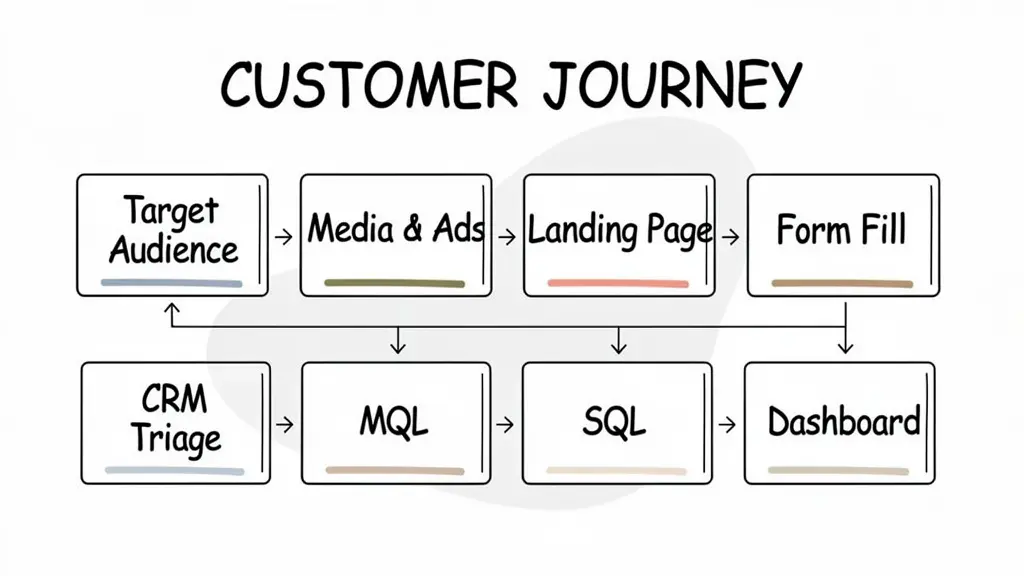
The fix is a customer journey blueprint. Harry maps these out in half-day workshops by asking one question over and over: “And then what?”
Who are you targeting? Then what? What media are you running? Then what? Where do they land? Then what? What happens after they fill out the form? Then what?
He keeps going until every step from media spend to sale is documented, including the technology, the KPIs, and the handoffs between teams. The result is a living document that the company owns, not any single employee or agency.
This is why CMOs hire Harry. He takes responsibility instead of just buying the media. He comes in, lays out the whole journey that isn’t done 85% of the time, and pinpoints where the bottleneck is and where the waste is.
Fix what’s broken first
Harry never met a customer journey that wasn’t broken somewhere. Pages not rendering. Tracking pixels not placed properly. APIs not passing lead data into the CRM with the right fields. Attribution labels getting lost between the media report and the sales report.
Sometimes the early win was simply fixing what was broken. The campaign got better without changing a single ad or bid.
“We would go in and there was something wrong with the journey. We would fix that and already the campaign got better and we didn’t even do anything but fixed a couple broken things.”
I’ve seen this over and over. The bigger the organization, the more things are broken. Harry told me that if you go into a small nimble company, they often have things pretty dialed in. But walk into a large enterprise and you’ll find landing pages that don’t follow best practices, tracking that’s rudimentary at best, and media campaigns nobody is paying close attention to. That’s where the early wins live.
He gave me a great example. He took Brigham and Women’s Hospital, part of Partners Healthcare, from an average cost per booked consult of $1,800 down to about $300. That transformed their digital marketing into a viable channel. And once you do that for a client, you have credibility.
Sell the conversation, not the product
One of Harry’s biggest mindset shifts came from working with a large daycare client. Nobody signs their kid up for daycare from a landing page. They need to visit the facility first.
So instead of marketing the entire daycare experience, Harry focused on one thing: selling the visit.
“I’m not here to sell your product. I am here to sell a conversation between a prospect and your salespeople. That’s what I’m here to sell.”
I think this is the most insightful explanation of how you actually get quality leads. This applies everywhere. If Harry is selling marketing consulting, selling someone to have a conversation with me is much easier than trying to get someone to buy services from me. You’re just selling the conversation. That is a much easier sale than selling the product.
The five reasons framework
Once Harry identified the one action he wanted prospects to take, he gave them five reasons to do it.
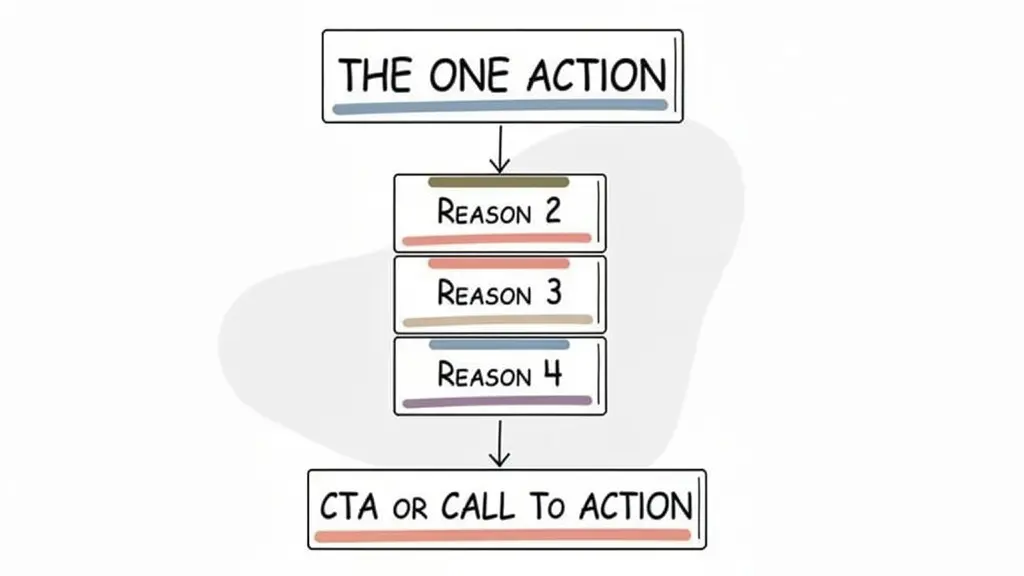
For the daycare: five reasons to visit this center. For B2B clients: five reasons to get a quote, five reasons to schedule a 30-minute spec session.
He tested different reasons and kept what worked. The framework is simple and repeatable across any industry.
For home services: “Here are three reasons to schedule an appointment now. We’ll have someone at your door to look at your problem and give you an instant quote.”
Look at your landing page right now. What is the one thing you’re measuring? That’s probably the thing you should be convincing people to do in that moment. Don’t try to oversell them on everything. Let the salespeople do that job.
Speed to lead kills your ROI
A lead loses 80% of its value within 30 minutes. I’ve seen stats that say five minutes. Harry’s team would secret shop their own clients to prove it. They would literally act like a lead and wait. The sales team always insisted they responded right away. The data told a different story.
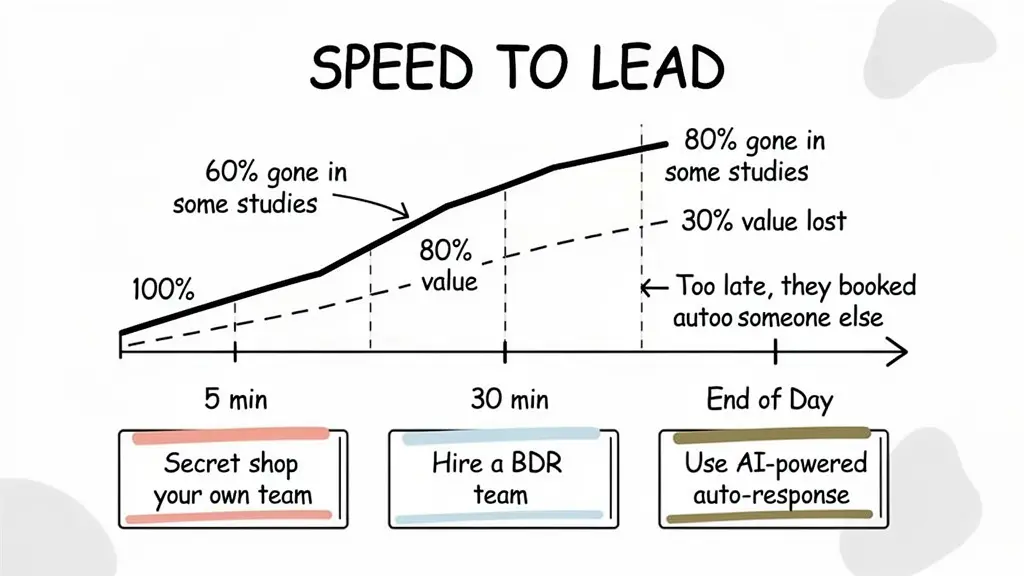
Sometimes it wasn’t even the sales team’s fault. The triage process was just too slow. The daycare example was perfect. Leads would go directly to the center, and the staff was busy taking care of children. They wouldn’t call back until the end of the day. By then the parent had already scheduled a visit at another daycare.
Harry convinced the organization to put in a BDR team that could answer the phone. That changed everything.
“If you are spending hundreds of thousands of dollars on media but you’re not going to hire a little BDR team to instantly respond to these leads, don’t beat your agency up to make things better.”
I told Harry about AI-powered call centers and quote generators that can schedule meetings right away. The technology exists now to make speed to lead nearly instantaneous.
Own your media accounts
One of Harry’s first recommendations to any client: own your media accounts. Your Google account, your Meta account, your YouTube, your website, everything.
Too many agencies hold onto these accounts. When the relationship ends, they hand you a bulk sheet and tell you to start over. All your legacy data, quality scores, and campaign history gone.
“We don’t want to hold you hostage. Give your agency access, but own your accounts.”
I have a whole webinar on this topic about how you should own your own data and how you deal with agency hostage issues. This is something every business owner needs to get right immediately.
Have your nurture campaign ready on day one
If you’re spending money on media targeting people with intent, you need a nurture campaign ready before you launch. Not two weeks later. By then, the prospect has already made their decision.
And nurture isn’t just email. Retarget the same audience with display ads, LinkedIn ads, and Meta ads that mirror your email sequence. Retargeting is nearly unavoidable, which makes it one of the highest ROI channels available. All forms of remarketing have the highest ROI. It doesn’t matter whether it’s email or paid media or all the stuff that runs inside a tag manager.
Unify your data
Harry started a new company with some of his former partners called Cohesive DataOps.
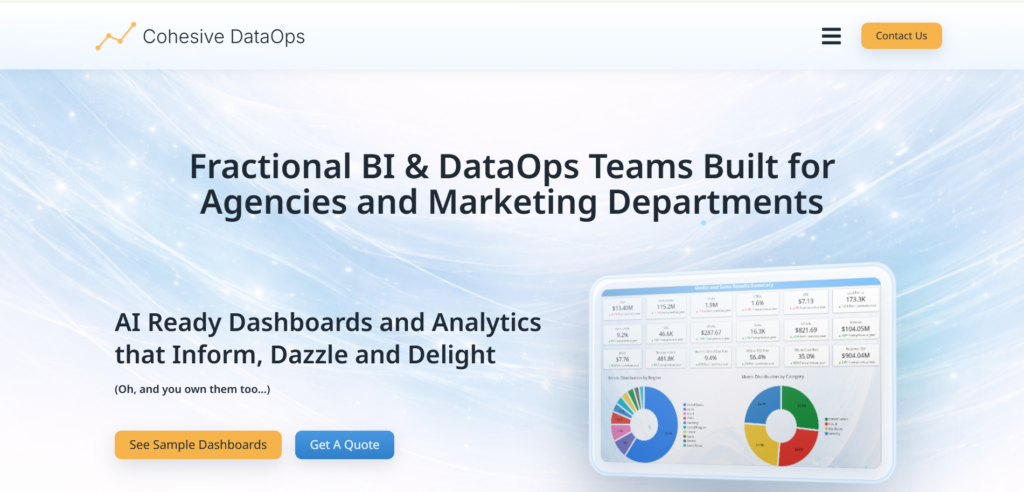
He sees the same problem everywhere: companies toggling between their media report, CRM report, and web analytics report because their data lives in different places.
If your data isn’t in a single warehouse with unified field names, you don’t have an AI-ready database. AI is smart, but it struggles when it has to look in three different places with different naming conventions.
A quick way to tell if you have an AI-ready database: if your media data, CRM data, and web analytics data are all sitting in separate places, you don’t. Get it all into one place. Even if you’re not using it today, you will eventually.
The tracking summit nobody does
Harry’s final recommendation is the one almost nobody implements. Have a quarterly tracking summit where everyone presents their results and shares what they learned.
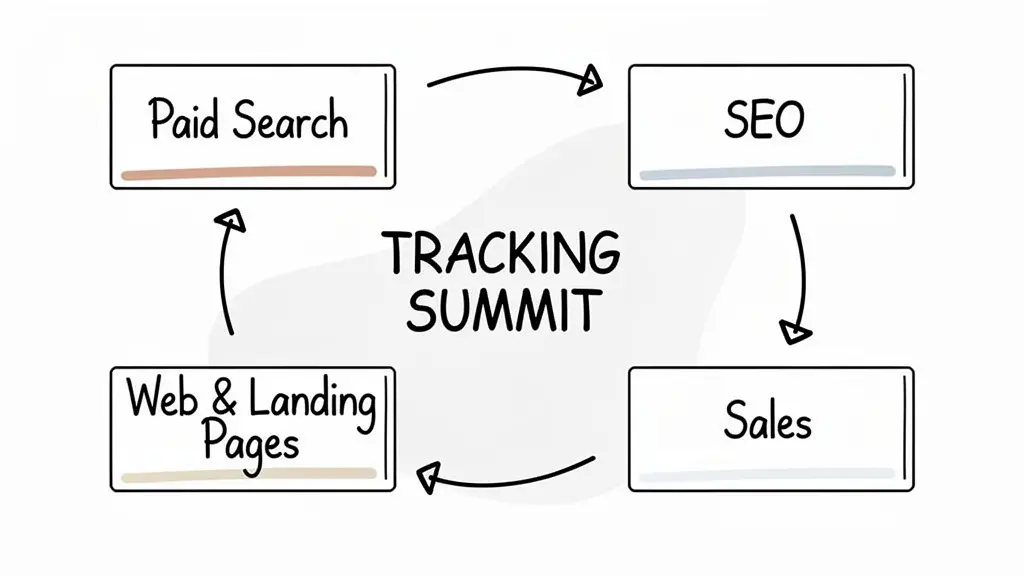
He asked a room of 100 companies how many do this. Maybe 15-20% said yes, and they probably weren’t all telling the truth.
The problem is that 90% of the effort goes into making the report. Nobody has time to interpret it. Nobody shares what worked with their colleagues in other channels.
The tracking summit fixes this. Each team presents for seven minutes and shares two to three things they learned that others can use. The paid search team shares which keywords convert best. The SEO team takes those keywords into their strategy. The email team takes high-performing subject lines and tests them as display ad copy. The web team takes the highest converting ad copy and uses it as calls to action on the website.
This cross-pollination between channels is where the biggest gains come from, and it almost never happens without a structured forum.
Harry also told me something I found powerful. When he ran his agency, he had 40 clients at a time. He couldn’t know what was going on with every single one. But for the priority clients, he would tell the team he was joining the weekly meeting and wanted to start with the media performance report. Magically, those campaigns did better than the others. Because everyone knew management was paying attention.
The same thing happens with a tracking summit. When people know they have to present results every quarter, they work a little harder to make sure those results are good.
The three stages of a career
Harry shared something with me that stuck. He said there are three stages to a career. First, you’re making someone above you successful. You’re making a little money, but mostly you’re helping the people above you win. Then you reach a stage where you have people working for you, making you successful. And the final stage is you lifting other people up and making sure they succeed.
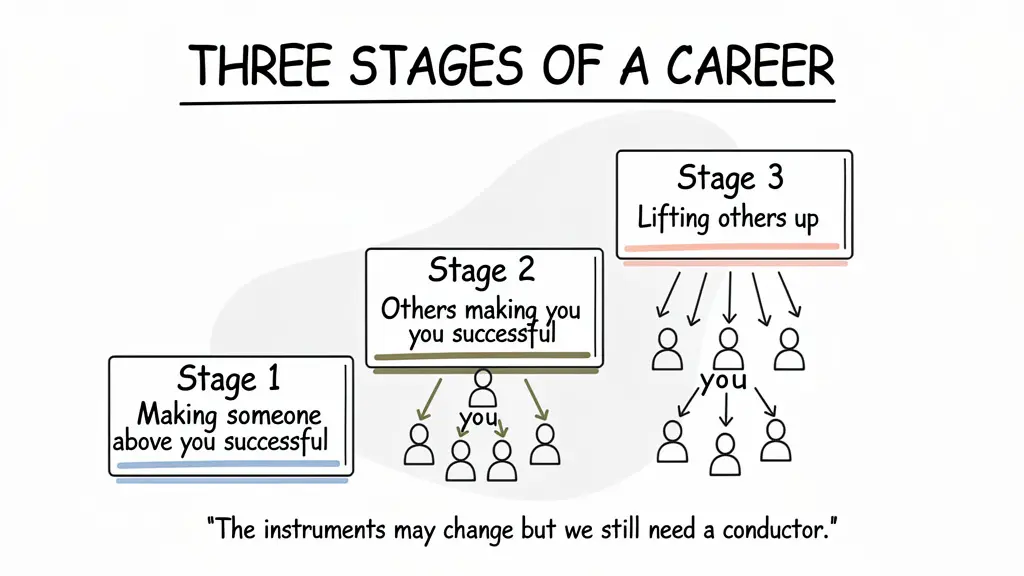
That’s where Harry is now. And honestly, that’s where I am too. Harry and I are both in our fifties. We’ve been fortunate to have had exits and to see other people exit. We love seeing other people succeed and we love advising these companies.
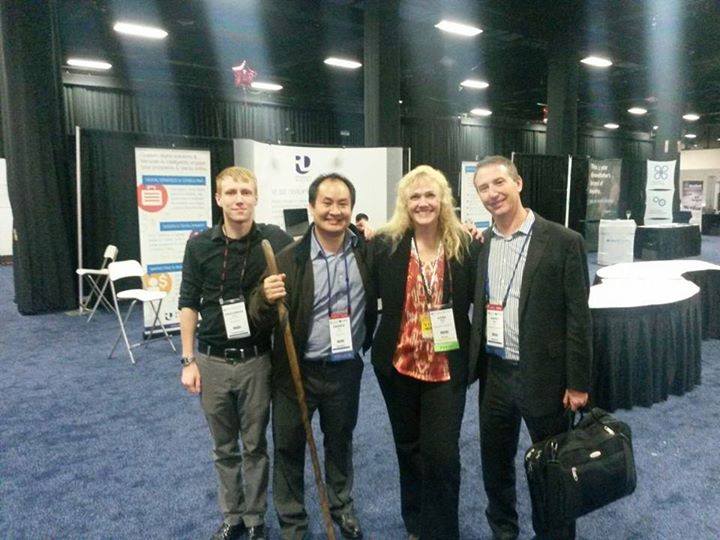
Yesterday Harry and I got to spend time with some incredible young adult builders who are using AI tools and teaching us stuff we’ve never heard of. My mind was blown. It made me feel a little old. But that’s how you stay sharp. You listen to other people and pay attention to what they’re doing.
As Harry put it, in the orchestra the instruments may change all the time, but we’re still playing the same song and we still need a conductor. AI is not going to coordinate your team of agencies and marketing professionals to create a high-ROI customer journey. That is still a human skill. And it will be for a while.
Where to find Harry Gold
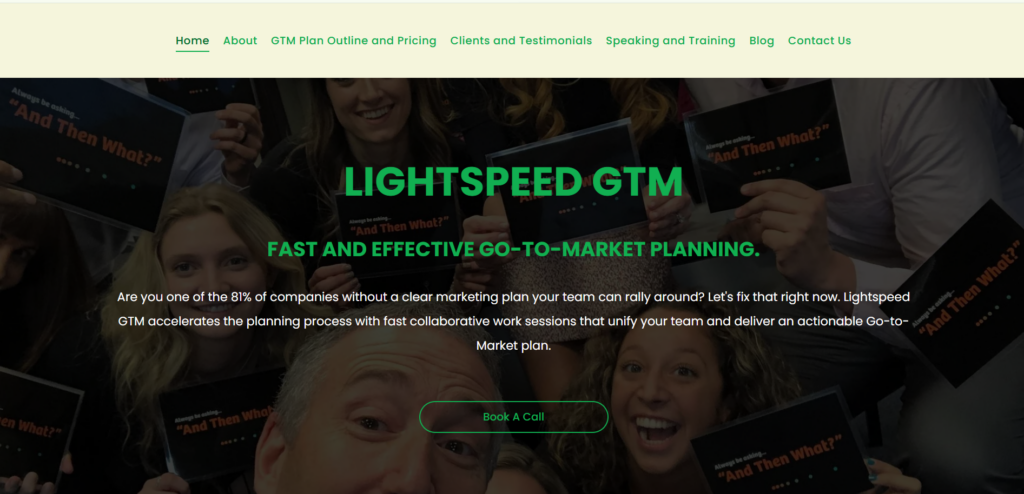
If any part of this resonated with you, go to lightspeedgtm.com to learn more about Harry’s customer journey workshops and marketing blueprint process. Fill out the form and Harry will personally follow up. You can also Google Harry Gold and see everything about him.
I love to interview people who have walked the talk, and that’s what we covered here. If you have questions or comments, Harry and I both review them. We want to see you win.
Originally published .
Dennis Yu
Dennis Yu is the CEO of Local Service Spotlight, a platform that amplifies the reputations of contractors and local service businesses using the Content Factory process. He is a former search engine engineer who has spent a billion dollars on Google and Facebook ads for Nike, Quiznos, Ashley Furniture, Red Bull, State Farm, and other brands.
Dennis has achieved 25% of his goal of creating a million digital marketing jobs by partnering with universities, professional organizations, and agencies. Through Local Service Spotlight, he teaches the Dollar a Day strategy and Content Factory training to help local service businesses enhance their existing local reputation and make the phone ring.
Dennis coaches young adult agency owners serving plumbers, AC technicians, landscapers, roofers, electricians, and believes there should be a standard in measuring local marketing efforts, much like doctors and plumbers must be certified. He has appeared on 353 podcasts with 619 credited episodes — see the full list of his podcast appearances.