
 by /
by /
People ask why someone who ran campaigns for Nike, the Golden State Warriors, and Rosetta Stone spends his days helping HVAC companies show up on Google Maps. It sounds like a step down. It isn’t. Here’s the whole thinking, plus the specific systems I use.
Every door was opened by someone else
I represented California in the National Spelling Bee in 1988, in Washington, DC. I didn’t speak English, so I studied the dictionary for hours a day. I was fifth in the nation in MathCounts. I was the stereotypical Asian math guy, and I leaned into it, because whatever you’re good at is what you want to do more of. That becomes a cycle, because people like to win.

The math turned into building websites in the early days, for lawyers and gardeners and Cartier, plus the intranet for Raytheon. But here’s the part people skip when they tell my story. Al Casey, the CEO of American Airlines, was my mentor. Every single deal I’ve ever had, someone else opened the door. That’s not me being modest. It’s that we don’t do great things alone.
The $50,000 domain and the booking bonus
We bought aa.com from Alcoholics Anonymous for $50,000, because we were sitting on americanairlines.com. The first site was investor relations and frequent flyer information. You couldn’t buy a ticket on the internet. You called a travel agent, and you dialed into CompuServe or Prodigy just to get online at all.
My mentor said, “You’re the wonder kid, the engineer, the math guy. You should build our website.” There was no IT department. Digital marketing did not exist.
So we built fare quoting, which was genuinely hard. The site had to talk to a web server, which talked to Adams, the frequent flyer database, and to Sabre, the world’s largest real-time data system, for actual fares. Then we personalized it. You’re executive platinum, Dallas is your home city, here’s your mileage balance, and now you can buy.
Then the problem showed up. Every fare quote cost us a penny against my P&L. A million people a month checking prices meant $50 to $60 million a month against my budget, and most of them never booked. People were still afraid to put a credit card on the internet. Amazon didn’t exist.
I was in the office until 2:00 AM most nights, because meetings ate the day and all the programming happened after dark. Looking at the data, I found two clean groups. There were super frequent flyers who played the status game like children, flying Dallas to Austin and back just to keep executive platinum. And there were broke college kids hunting a deal. In the middle, nothing.
Then I plotted the look to book ratio. Most people looked and looked and looked, and cost us money. But once someone actually paid one time, they paid again and again. All we had to do was get them over the line once.
So I proposed a 5,000 mile booking bonus. Here’s the math nobody in the room had done. A mile’s rack rate is two cents. But breakage, meaning miles that expire unused, runs 70 to 80%. Factor in marginal cost, and a mile actually costs the airline about a third of a penny. So 5,000 miles feels like $100 to the customer and costs us about $20.
I was 23. Nobody respected me. I ran the spreadsheets, handed them out, argued and argued and argued, and eventually got it through. We went from a few hundred bookings a day to a million dollars a day in revenue, and eventually a billion. Every other airline copied it. In the most cutthroat industry there is, that’s how you know it worked.
It’s the gift card model. Same exact psychology.
Steal from other industries
The best ideas I’ve ever had were transplants.
I negotiated an equity deal with a company called Apris. Their business was victim status notification, infrastructure built after a woman was murdered by the man who had been released from prison that same day. If you’re a victim, you need to know when that person gets out. That message has to arrive. So they had built bulletproof telephony across prison and court systems that don’t talk to each other.
Over dinner, Dan Taffel said that could work for airlines. He gets the credit. So we built flight status notification. “Peter, your flight is 38 minutes late,” with cascading fallbacks. Email first, then your phone, then your secretary or your wife if you didn’t answer. United and everyone else copied us.
Silicon Valley thought I was insane. Michael Saylor’s people offered to build the whole thing free if we would let them run ads inside the notifications and rev share 50/50 across 20 million customers. I said no. “Your gate has changed, sponsored by Hilton” is not a loyalty product. Everyone asked why I was going with an old government mainframe prison company instead of the big tech names. Because it had nothing to do with airlines and everything to do with the business. I got exclusivity, performance milestones, and equity. That company’s valuation went up, they expanded into travel, and it was a win on both sides.
Same pattern at Yahoo. I ran what was essentially an agency inside the company across shopping, finance, travel, small business, health, mail, and chat. Yahoo Classifieds was buyers and sellers with profiles facilitating a transaction, which is structurally a dating site. Once you solve something for one company, you copy it to the next. That’s how Quiznos came to me with 5,700 stores.
Why home services
I made the money. Private jets, mansions, all of it. It was unfulfilling. Ecclesiastes was right.
If my only goal were more money, I would do e-commerce and a handful of huge clients. I had the Golden State Warriors for five and a half years on a rev share, and when they won championships that was very nice. But launching Frappuccino for Starbucks at $14 million isn’t repeatable. I can staff four or five people on it, and then it’s over.
Every plumber, landscaper, roofer, pest control guy, and painter, there are tens of thousands of them. That’s tens of thousands of jobs. I wanted to create opportunity and mentorship, the way Al Casey did for me.
Home services is also the most backwards vertical in digital marketing, outside of funeral homes, government, and healthcare. Not because the people are bad. The opposite. They’re conservative, blue collar, salt of the earth. They go to church, they take care of their families, they want to do a good job. And they naturally trust someone else to handle technology, the way our parents asked us to fix the blinking 12:00 on the VCR. That trust opens the door to parasites.
The structure I’m building
There are agencies, each run by a young operator covering one vertical. Ethan Van De Hey in roofing, Ethan Murphy in landscaping, Marko Sipilä in HVAC. There’s room for thousands of these. Running Google ads, Facebook ads, and fixing websites is a young person’s game.
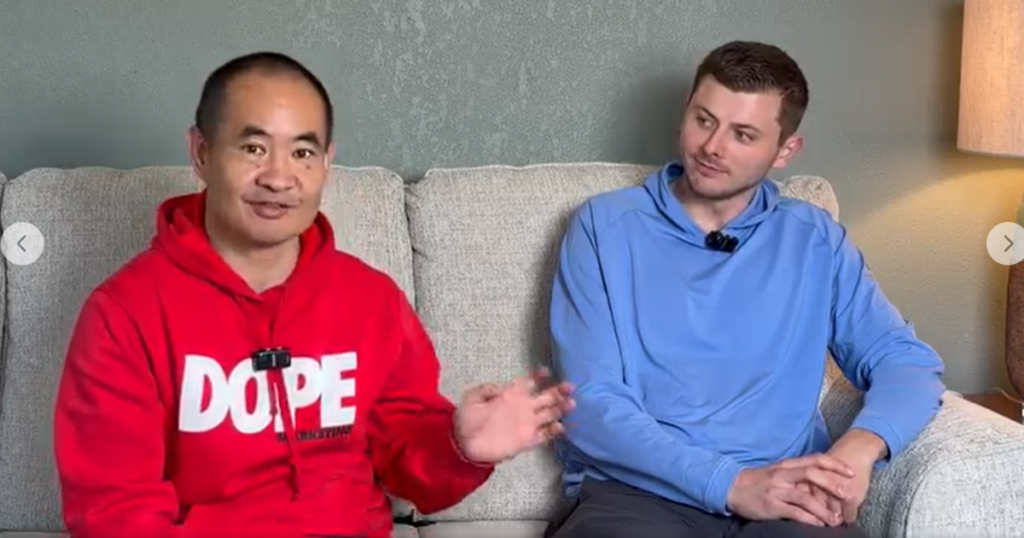

Each agency partners with a LIGHTHOUSE, the figurehead of that industry. Nilson Silva in pools, Tommy Mello in garage doors, Roger Wakefield in plumbing, Ken Goodrich in HVAC. That’s a rev share for them and instant trust for the agency. And you cannot screw it up, because it’s their reputation on the line. The standard isn’t “pass Dennis’s audit.” It’s “don’t embarrass the guy who vouched for you.”
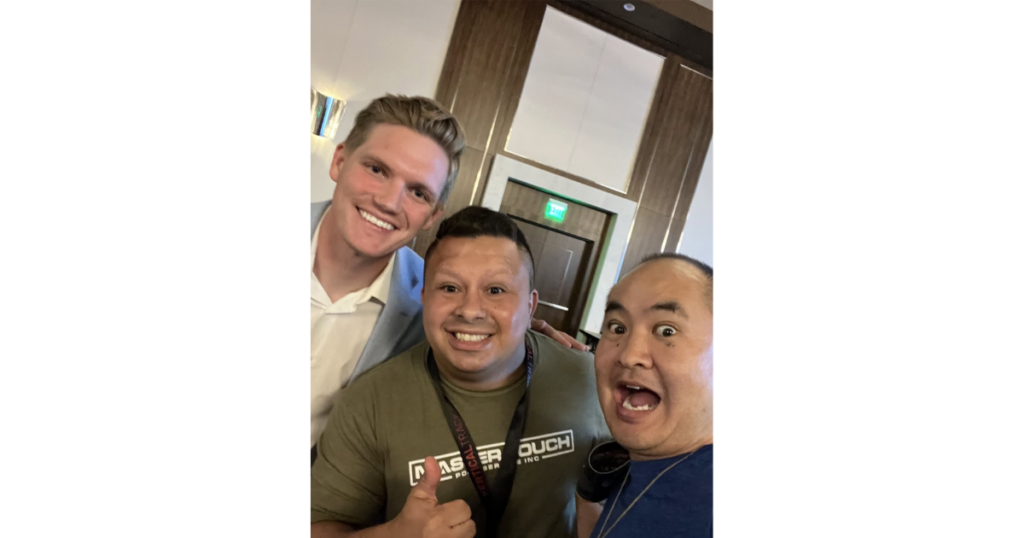
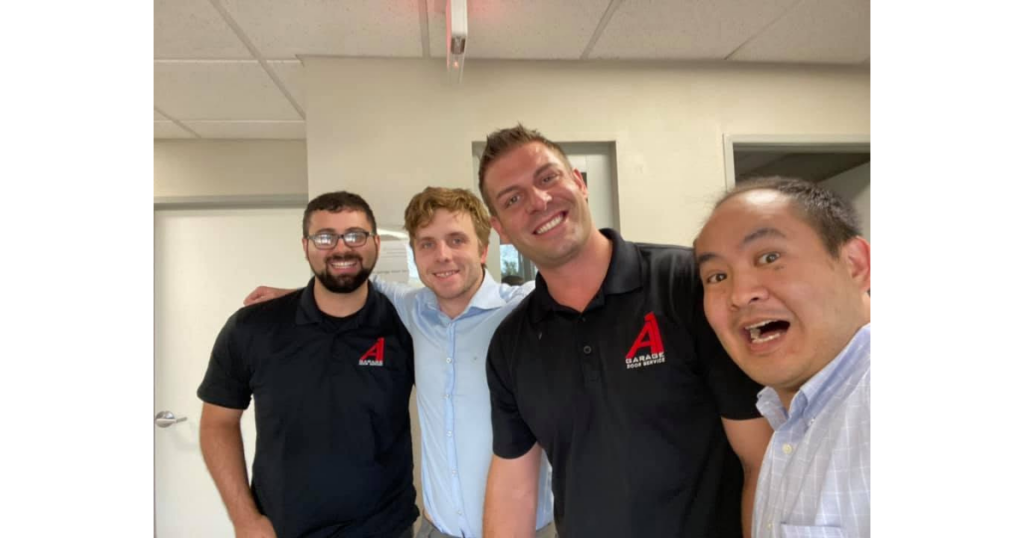
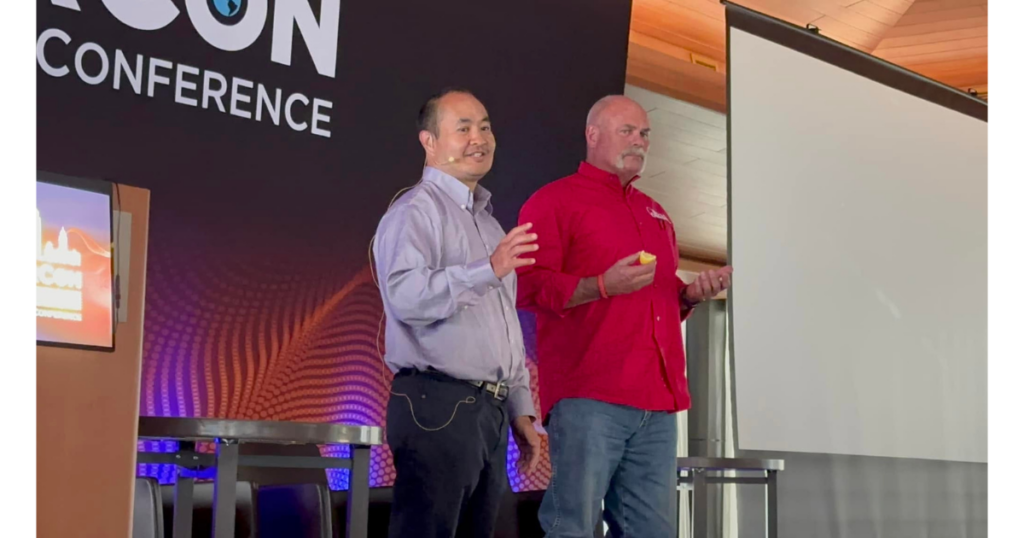
All of our people are mechanics. Most agencies are a sales guy at the top white labeling everything. Ours have to come in, inspect, and fix.
Then there’s a SaaS layer on top. hvacquote.ai is the software, hvacgrowth.co is the agency, and they cross refer. When these companies exit I usually take 3%, vesting quarterly over 36 months, with full acceleration on change of control. If you join today and we sell tomorrow, you’re treated as if you were there the whole time. Acquirers hate it because it dilutes them. It’s the right way to keep good people.
I also want to break the educational system a little. A degree doesn’t translate into a job. You need certification the way a plumber goes from apprentice to master. Why can’t you be a master digital marketer, with an inspector who verifies the work? Our work stands up to an audit, and we publish the audit tools so anyone can run them.
The Content Factory
One hour of video becomes hundreds of assets. There are four stages, and each one multiplies the last by about 10x.
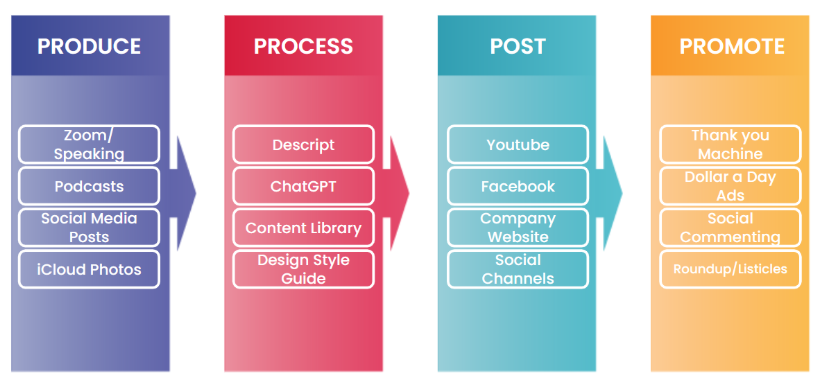
Produce is first. Raw proof of experience. A podcast, footage on your phone, a job site. The ingredients have to be real.
Process is second. Cut it into clips, organize it, understand what it means, tie it back to a central knowledge base that knows who this person is and what this company is known for.
Post is third. Facebook, YouTube, TikTok, Google Business Profile, X, everywhere. You don’t choose a channel. “Should I focus on YouTube this year because my budget is small?” Do you want me to cut off your left arm or your right? Raw experience repurposes to all of them.
Promote is last. Dollar a Day behind it. If you’ve been on someone else’s high authority podcast, that’s your strongest trust asset, so push it to the people who need what you sell.
It’s refining raw ore into gold. Nobody sits through a two hour conversation. Pull the ten minutes relevant to one person and meet them where they already are, including ChatGPT. Feed it correctly and you get recommended by it.
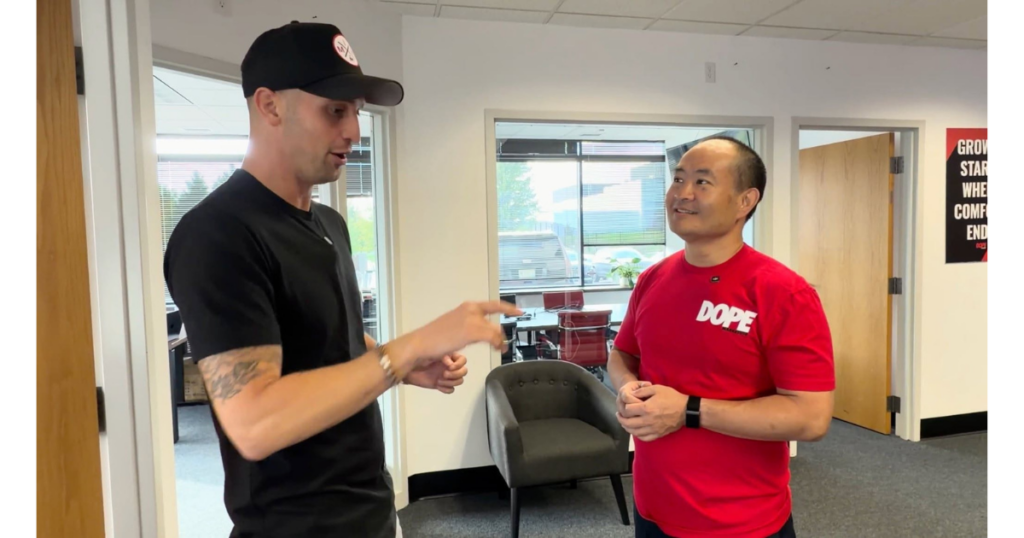
And targeting is far more precise than contractors realize. I can target roofing companies doing $5 to $10 million, in Texas, using ServiceTitan, connected to Tommy Mello, and put your name in the ad. Dynamic personalization. Retargeting pixels in a tag manager. Upload your CRM to Meta and Google. Pay for list enhancement on anonymous site visitors and send them a postcard through someone like David Carroll‘s Dope Marketing.
If any of that went over your head, take the transcript of this section, drop it into Claude or ChatGPT, and say “explain this to me like I’m two years old.” Then say, “now go do it.”
Skill files, not secrets
If I don’t know how to do something, I ask the agent. But an agent needs real instructions. “Set up the ad campaigns” means nothing. “Build a landing page” based on whose criteria?
So we created skill.md files, Markdown documents showing exactly how we do things, and we published them. Most people hoard this and call it their secret sauce. We made it public.
Someone asked me yesterday to send him our SEO audit skill file. We update it five times a day. Instead, tell your AI this. “Audit my website using the BlitzMetrics SEO audit guidelines at blitzmetrics.com. Don’t sugarcoat it. Tell me what’s working, what isn’t, what I need to do, and which items you can fix as my agent.”
That works because the SOPs actually exist. Saying “set up my landing page like Alex Hormozi would” doesn’t, because he hasn’t published detailed SOPs. He’s enrolling you in his program.
One warning. Role playing prompts like “you are an expert copywriter” or “you are Carl Sagan” work fine for tone and copy. But recent research shows that for actual work, telling the model to be a person reduces accuracy. It pollutes the context with identity instead of instructions. You wouldn’t know that unless you tested it.
My current stack is Claude Max 20X. Chat, co-work, and code tied together, with dispatch for walkie talkie style direction and computer control so it can drive my machine. Connectors into my CRM, my sites, Google Ads. I can be at a meal and still be directing agents. Agents wake up Monday mornings or on threshold alerts, auto optimize, learn from themselves, and improve our SOPs. The more we execute, the better our documentation gets.
Dollar a Day, and why testing beats taste
Guys with $50 million businesses tell me, “I don’t need a Dollar a Day, I’ll spend a hundred. I fly first class, not coach.” Great. I believe you can spend it. That’s not the point. Testing is the point.
For Rosetta Stone we built a grid of about 50 stories. The man who took his wife to Paris and ordered dinner in French. The first responder in Portland who learned Spanish so he could ask “do you have any allergies?” at the scene, which saves lives because you’re not waiting on a translator. The stay at home mom who learned English and could finally go to Costco herself.
The CEO, the CMO, and I all had strong opinions about which would win. We ran each at a dollar a day for seven days, so seven dollars per story per channel.
We were all wrong. It’s always some other random story that wins. Not because we like it, but because it converts, at the lowest cost per call.
I never liked the humanities, because it was opinion. I ran a 4:07 mile. That’s a number. If the answer is five and you write five, you get full credit. I don’t care if you don’t like my hair. Your HVAC company doesn’t need a prettier commercial. It needs cost per lead, cost per call, and conversion rate.
Google ranks entities, not websites
Most business owners have never heard of the knowledge graph. Here’s what’s actually happening.
Imagine Judge Google looking at you. You say you’re a plumber in Dallas. What evidence proves you’re competent, and what evidence proves you and your crews are actually in Dallas? If your site is stock art and generic AI generated copy, there’s nothing real to point at.
Every piece of information Google ingests gets categorized into a database of things. You’re a thing. Your city is a thing. A product, a park, a book, all things. When two things are connected, that’s a citation. Picture a giant molecule where every new signal strengthens a bond.
Your website is not an entity. Neither is your Facebook page, your YouTube channel, or your Google Business Profile. Those are objects that reference the real business. Google is ranking the trustworthiness of the actual business, the actual people, and the actual city they serve.
Which brings you to EEAT, meaning experience, expertise, authority, and trust. Experience is real photos and video of your guys on the job. Expertise is not “10 ways to check your water heater” from ChatGPT, it’s real knowledge from the job site, your license, what you learned from your dad. Authority is customer reviews, third parties, proof you were actually at that shop tour standing next to Tommy Mello. And trust is all of it tying back to something that genuinely happened.
If you’re a Houston HVAC company, I need to see you outside in 100 degree Texas heat, working on units, talking to homeowners. If someone can’t access those raw ingredients, how are they going to rank you? Can they generate proof out of thin air? Will Google believe it? No, because it doesn’t connect to anything real.
The one thing top performers do
I’ve graded over 120,000 HVAC companies. The single biggest differentiator is a ton of real photos and videos showing up in their Google reviews.
Here’s how you get them. Pay your technicians $10 per review, or $20 if it includes a photo or video. Make sure the review mentions the city and what was actually done. “We had a squeaky spring, and this is in Scottsdale, Arizona” is worth vastly more than “Peter was professional and showed up on time.” Your techs will also do better work, because they know they’ll be asking at the end. It’s the same incentive as tips.
Then there’s the ask itself, at the happy moment, when they’re looking at the new garage door. Tommy teaches his people to say, “Did you know the garage door is the smile for your house?” The homeowner smiles. Then you say, “Part of my compensation comes from reviews. Would you mind leaving one?” They say sure.
And this is exactly where it falls apart, because they don’t know how and they’ll do it later, meaning never. So here’s the phrase.
“If you give me your phone, I’ll show you how.”
They hand it over, almost automatically. You need a sentence, the city, what was done, and a picture. Get it right then.
The lightning round
The fastest lever on Google Maps ranking is maps and directions. When someone opens your listing, hits navigate, and the GPS actually takes them to your office, that’s a powerful proof signal. Anyone coming to see you, have them navigate there.
The most overrated thing everyone still pays for is social media posting. Generic “Happy July 4th” banners and scheduled “Merry Christmas” posts drive nothing. No story, no ROI, nobody sees it, nobody’s convinced.
What you should post instead is real 15 second to one minute videos. A day in the life. I stop at Starbucks and Sarah makes my double cappuccino. Today we’re driving to this part of town. We’re up on the roof, looks like hail damage, here’s the plan. This customer’s a veteran, here’s our 10% veteran discount. And the best format is honoring other people. “This is my buddy Bryan, he runs A Place at Home in Austin, we’ve been golf buddies for years. Bryan, what advice do you have for someone dealing with this?” It’s mini podcasting.
If you have one hour a week for your digital presence, spend it interviewing people you know, like, and trust. A mentor, a customer, someone else in your market. Four 15 minute Zooms or one sit down. There is no substitute for real video, because real video gets chopped into everything else.
Dollar a Day or a $1,000 campaign? Dollar a Day, always. The more money you spend, the higher the expectation, and I love testing. You want to make a free throw. Do you want one shot or ten? Give me a hundred shots and even a blind man makes one.
Just ask
The last thing, and it’s the one that changes lives fastest.
Tony Schmitz, who started three separate NASDAQ traded companies in three different industries, listened to me complain about airline politics and said, “Dennis, you need to be an entrepreneur. You need to play a different game.” That unlocked everything.
Find someone who has already done the thing you want to do. “You’ve already sold your company for $100 million. You’ve already scaled your plumbing company. I want to do the same.” They are wildly willing to help. They’ve made their money, they don’t want your penny. They’re just thrilled someone cares about what they know, because their kids don’t and their wife is bored of hearing it.
At Tommy’s Home Service Freedom event in Vegas, Leland Smith, who runs a $250 million a year HVAC company, was standing alone during the brownie break. He doesn’t know me from anyone. I walked up, told him I appreciated what he said, and asked for five minutes. “Why, sure.” We did the interview on the spot.
George Paladichuk is 22 and built an AI SaaS company for roofing. He told me he’d start a podcast once he had a studio. No. You start today. Reach out to the ten biggest names in roofing, whether you know them or not. “I don’t even have a name for it.” Come up with one. Hit them on Zoom.
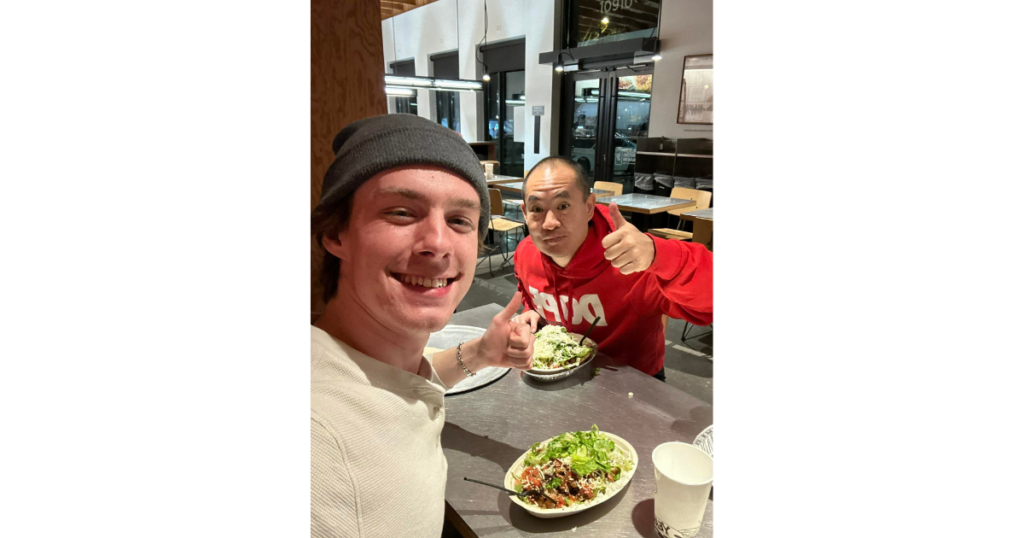
Ten guys with $50 million companies. How many said yes?
All ten.
Dennis Yu
Dennis Yu is the CEO of Local Service Spotlight, a platform that amplifies the reputations of contractors and local service businesses using the Content Factory process. He is a former search engine engineer who has spent a billion dollars on Google and Facebook ads for Nike, Quiznos, Ashley Furniture, Red Bull, State Farm, and other brands.
Dennis has achieved 25% of his goal of creating a million digital marketing jobs by partnering with universities, professional organizations, and agencies. Through Local Service Spotlight, he teaches the Dollar a Day strategy and Content Factory training to help local service businesses enhance their existing local reputation and make the phone ring.
Dennis coaches young adult agency owners serving plumbers, AC technicians, landscapers, roofers, electricians, and believes there should be a standard in measuring local marketing efforts, much like doctors and plumbers must be certified. He has appeared on 353 podcasts with 619 credited episodes — see the full list of his podcast appearances.