
 by /
by /
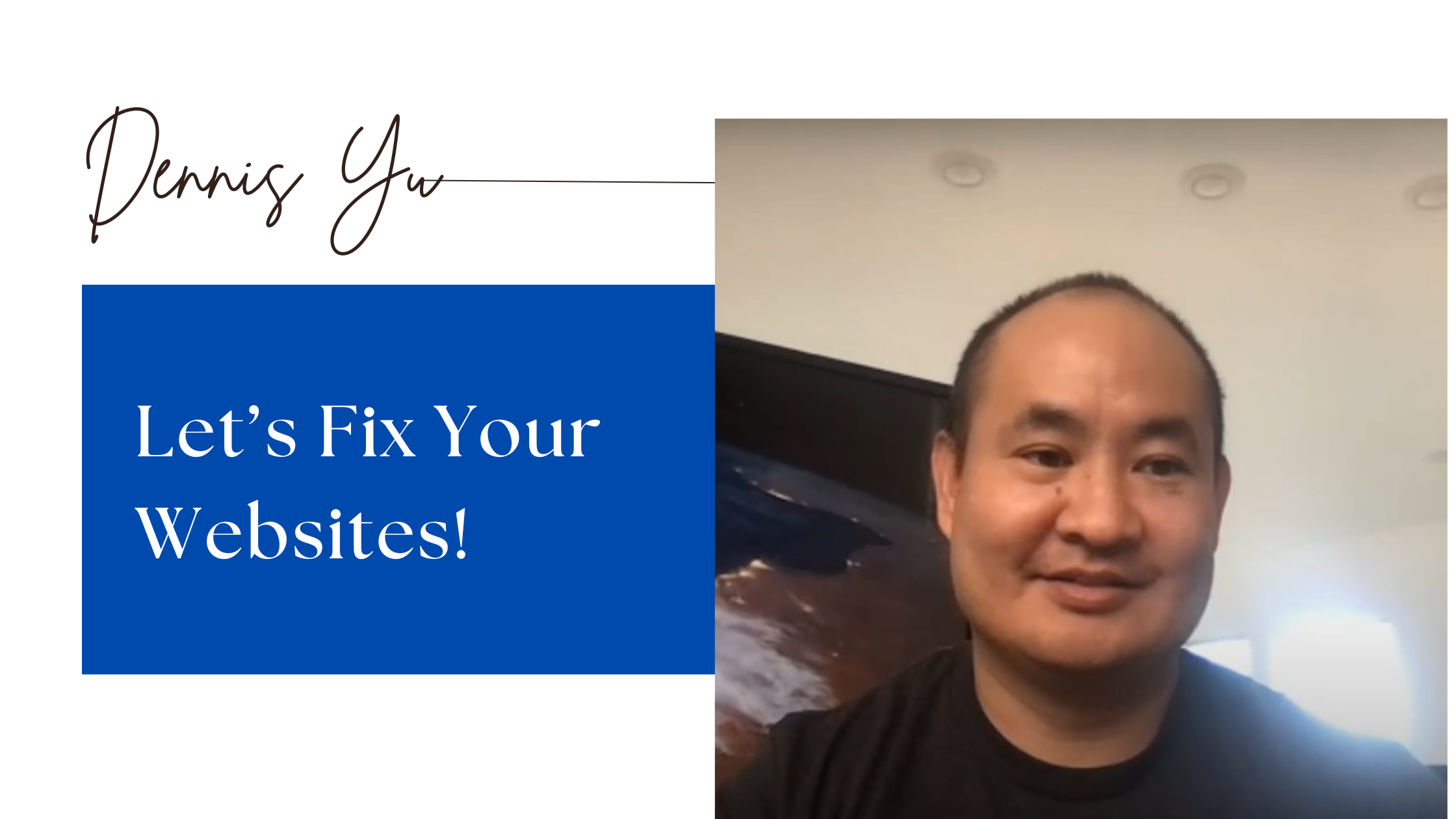
In the “Let’s Fix Your Website” webinar with the San Francisco SBDC and the San Francisco Public Library, we ran live audits on five small businesses — from a MICHELIN-listed restaurant scoring 14% online presence to artists invisible on search — and shipped the platform, storytelling, and tracking fixes that get found and booked.
14%
Donaji’s online presence score — a MICHELIN restaurant
4.7★
Donaji’s Google rating across 36 reviews
#18
Donaji’s rank on SF’s Hottest New Restaurants list
The hardest case in this small business website audit was the one with the best reputation. Donaji is a MICHELIN-recognized restaurant in San Francisco’s Mission District, reviewed by the SF Chronicle, Mission Local, and Eater and ranked 18th on the Hottest New Restaurants list — yet its website scored 14% online presence. The whole site was a single low-resolution image on Wix that renders distorted on mobile.
Move Off Wix When You Need To Be Found
Three of the five sites were built on Wix, and the same ceiling kept showing up: it is fine for a digital business card but works against owners who need search traffic. Art By Renee Switkes ranked for zero keywords and read like a card; Donaji could not be indexed page by page; both were told to move to WordPress for real blogging and SEO.
Platform is not the whole story, though. For Donaji the urgent wins were mobile-first rebuild, dedicated pages per menu item, prominent “Find us on Yelp” and “Find us on Google” links, and actively promoting those SF Chronicle and Eater mentions the restaurant had already earned but never showcased.
RUN THIS YOURSELF
Open any prospect’s site on your phone first, not your desktop. If it is one big image that renders blurry or breaks the layout — a classic Wix or one-pager symptom — you have found why a well-reviewed business still loses customers. Then search the business name plus its city in Google News to surface press mentions the owner forgot to feature.
Lead With The Person, Not The Product
The art and service businesses all shared one gap — the human was missing. Alroundr greeted visitors like a chatbot pushing appointments before owner Sajana, a licensed aesthetician, ever introduced herself. Renee’s paintings carried real stories, like a heart locked in a cage, that the site never connected to a buyer. Bay Harvest Catering showed pretty food but none of the team behind it.
| Business | What it is | Biggest fix |
|---|---|---|
| Alroundr | Skincare consults | Lead with a welcome video; explain the service |
| Art By Renee Switkes | Fine art (San Jose) | Move off Wix; tell the story behind each piece |
| Donaji | MICHELIN restaurant | Mobile rebuild; promote press; link Yelp/Google |
| Bao-Khang Luu | Artist | Keep storytelling; segment ad audiences |
| Bay Harvest Catering | Event catering | Add client video; change “Call Us” to “Call Andre” |
The fixes were small and human. Bay Harvest swapped a generic “Call Us” for “Call Andre” to make contact feel personal, and added video testimonials from real clients. Alroundr introduced Sajana on camera before any sales pitch. People buy from people they can see.
Track Behavior Before You Buy Traffic
Every owner wanted more customers, but most had no way to see what visitors actually did. Bay Harvest had no analytics or retargeting in place, so we set up Google Analytics and Facebook retargeting before recommending a dollar of ad spend. Donaji needed its Google Business Profile and Bing listings claimed and loaded with photos first.
RUN THIS YOURSELF
For any local business, search its name in Google and check the right-hand business panel. Is the Google Business Profile claimed, and how many photos does it hold? An unclaimed or photo-starved profile is free visibility being left on the table — fix that before spending on ads, the same order Donaji needed.
Amplify What Already Works A Dollar A Day
Bao-Khang Luu was the proof of where this leads. After running the Dollar-a-Day program he shifted from posting about medium and process to telling personal stories, watched his drop-off rates fall, and grew his website traffic significantly — mostly from Facebook, with real conversations following.
That is the pattern for all five: fix the platform, lead with the person, install tracking, then amplify the content that already resonates through the Dollar a Day MAA framework. The same live-audit pipeline runs on any local business — see how it starts in the Quick Audit process, or work the fixes live in a Power Hour session.
THE DELIVERABLE
Great Reviews, Invisible Website? Fix The Gap
Well-reviewed but losing customers to a broken or unfindable site? We’ll audit it live, score your online presence, and hand you the same platform and proof fixes these five owners got.
Dennis Yu
Dennis Yu is the CEO of Local Service Spotlight, a platform that amplifies the reputations of contractors and local service businesses using the Content Factory process. He is a former search engine engineer who has spent a billion dollars on Google and Facebook ads for Nike, Quiznos, Ashley Furniture, Red Bull, State Farm, and other brands.
Dennis has achieved 25% of his goal of creating a million digital marketing jobs by partnering with universities, professional organizations, and agencies. Through Local Service Spotlight, he teaches the Dollar a Day strategy and Content Factory training to help local service businesses enhance their existing local reputation and make the phone ring.
Dennis coaches young adult agency owners serving plumbers, AC technicians, landscapers, roofers, electricians, and believes there should be a standard in measuring local marketing efforts, much like doctors and plumbers must be certified. He has appeared on 353 podcasts with 619 credited episodes — see the full list of his podcast appearances.