
The most overlooked tactic in business is saying thank you. Not a generic email, not a Hallmark card, not a fruit basket that arrives in December along with everyone else’s. I’m talking about personalized, thoughtful gifts that make people feel seen.
25 years ago, when I was working at American Airlines, I had a drawer full of thank you cards and $10 Blockbuster gift certificates. Every Friday afternoon, I’d pull them out and write notes to the people who mattered. And I noticed something: at the Hallmark store, two full aisles of cards for birthdays, anniversaries, and holidays, but almost no thank you cards. That told me everything I needed to know about the competitive advantage sitting right in front of us.
When you personalize a gift, you show how much you care. You brighten someone’s day. And if you’re a service provider, an attorney, a real estate agent, a chiropractor, you already know that it’s word of mouth and relationships that cause people to come back to you. They don’t know who’s the best attorney or the best chiropractor. They go based on the relationships they have.
In our firm, we do a lot of technical marketing, SEO, Content Factory tools, AI, all kinds of technology. But underlying all of that is the fact that we care. And that’s why our clients thrive, because we’re amplifying the fact that they care for their clients.
How it works behind the scenes
People always ask how we do this at scale. The answer is systems and people. Anytime someone purchases something from us over a certain amount, it goes into our factory. Our virtual assistants look up who the person is, check their LinkedIn and Facebook, pick a good photo, and send it through design. Then our team handles the handwritten notes and fulfillment.
The notes are personalized. The people who write them actually research who you are and craft something meaningful. It’s not a template. And the whole process runs without me having to touch it.
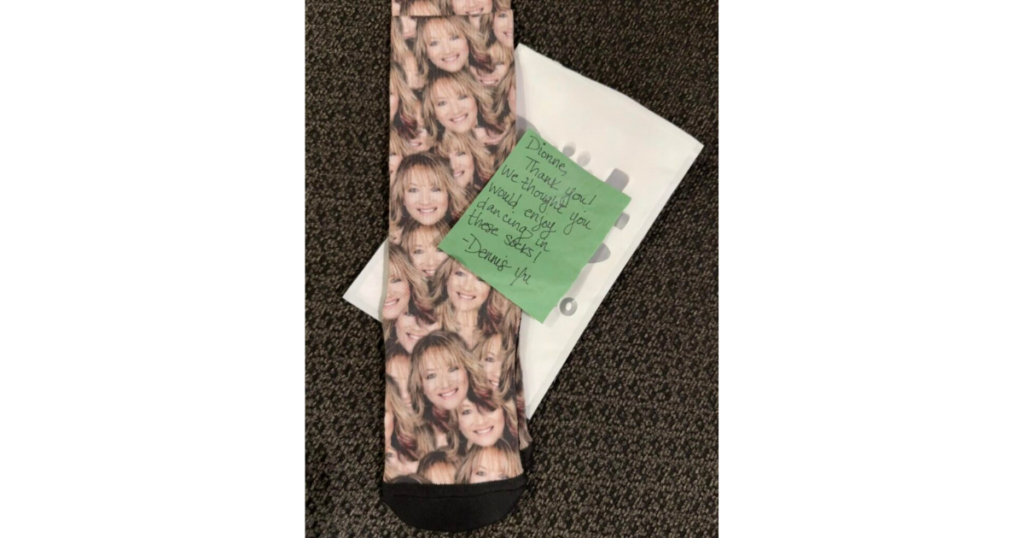
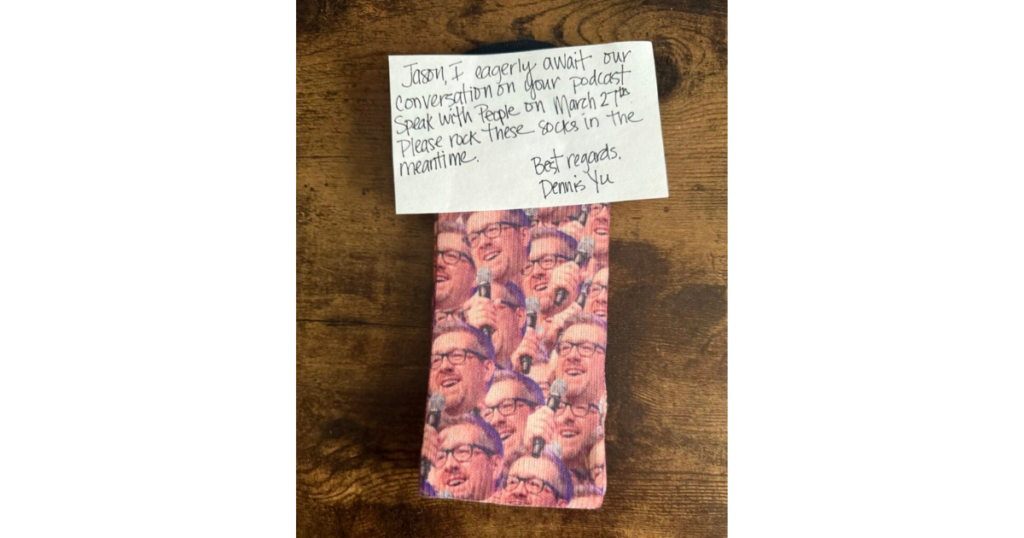
When I explained this system to Chris Cano on his podcast, he immediately saw the potential. For just $25, a pair of socks and a handwritten note turned him from a casual contact into a full advocate of our brand. As he put it, “for 25 bucks and a card that you didn’t even write, you kinda advocated me, bro.”
How to order personalized socks
Here’s the step-by-step process:
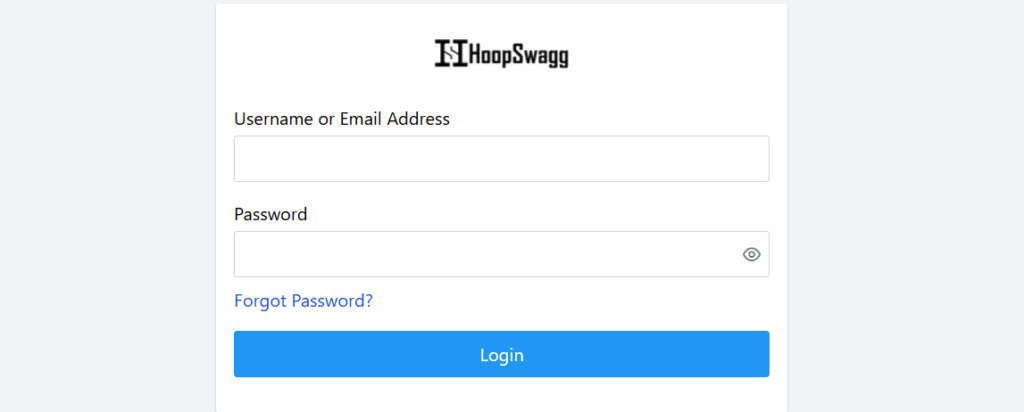
1. Go to https://clients.hoopswagg.com/ and log in.
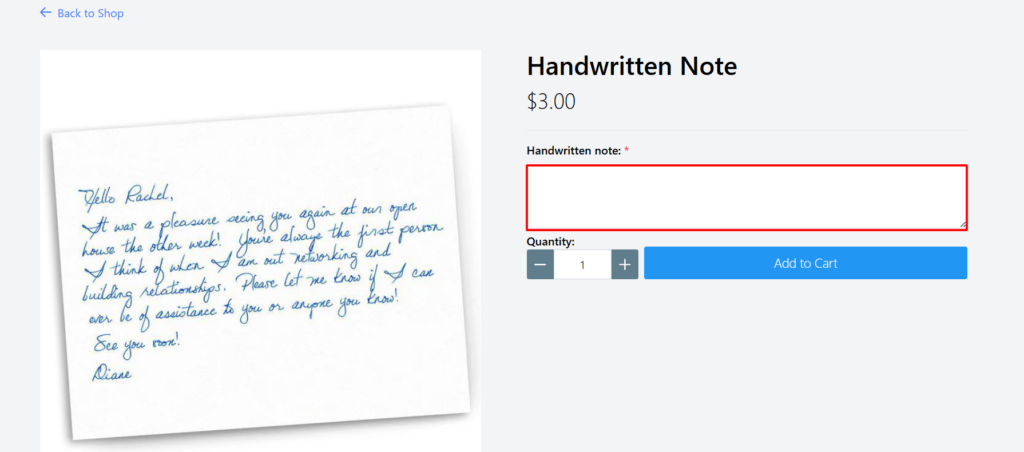
2. Add a handwritten note first.
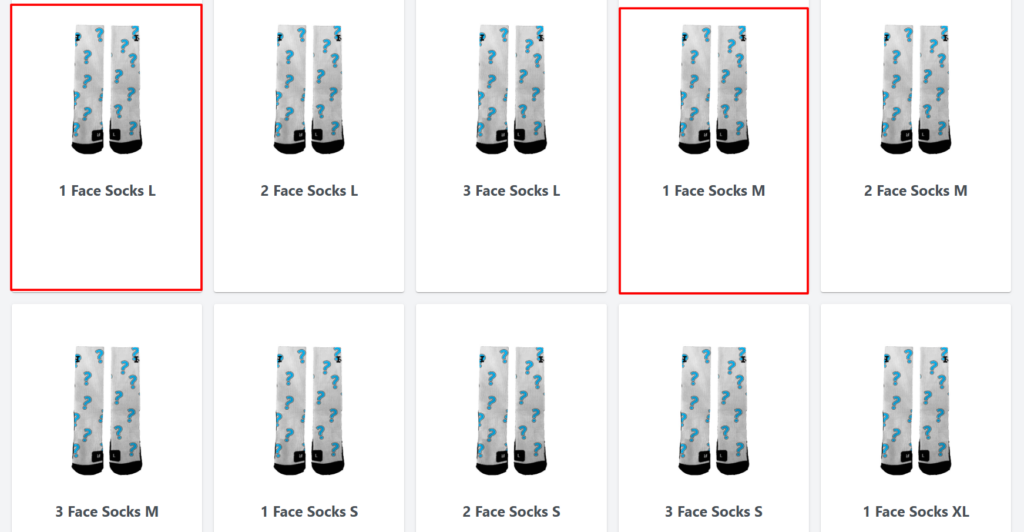
3. Pick Face Socks (Large for male, Medium for female).
4. Choose Face Collage as the background.

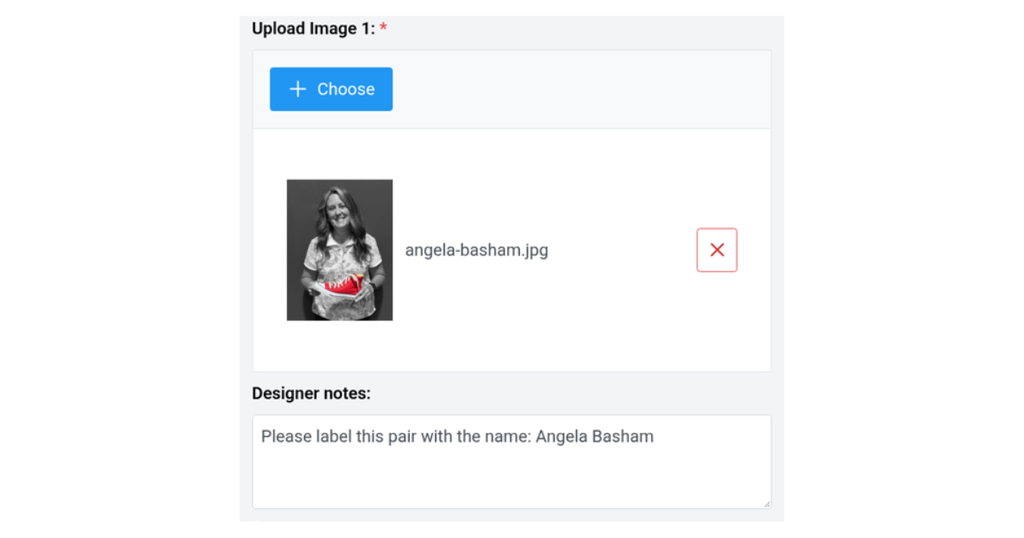
5. Upload the picture.
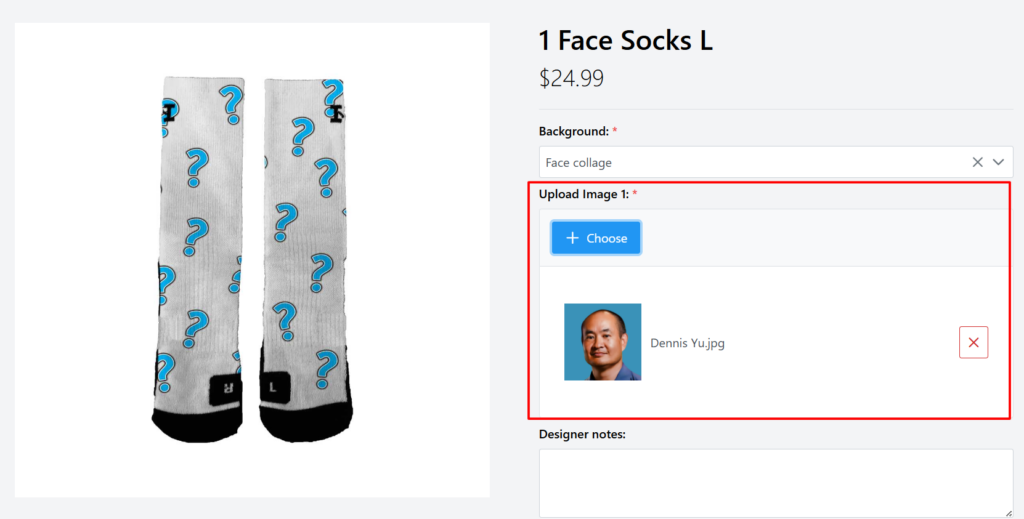
6. Add both socks + note to the cart.


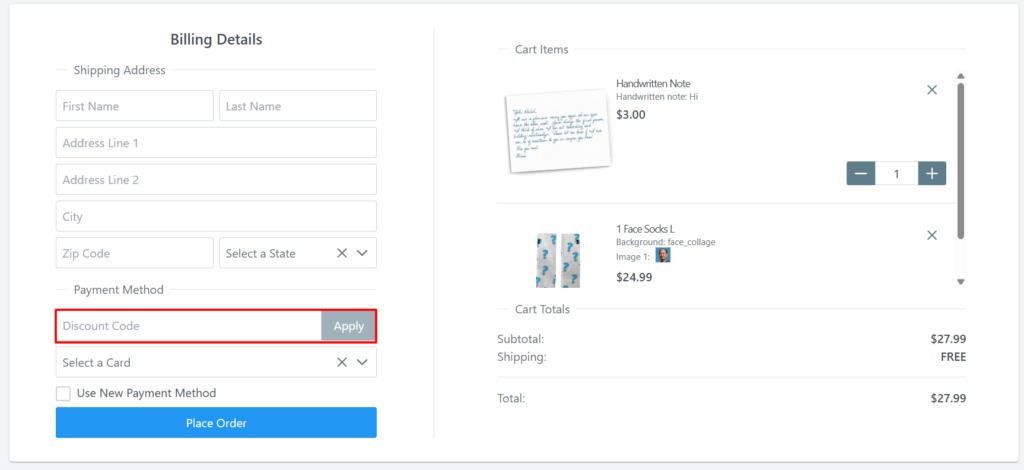
7. Enter shipping details.

8. Place the order.

9. Record it in the GiftTracker.
Orders are available only for shipping within the United States.
The total price is $27.99 ($24.99 for the socks + $3 for the handwritten note).
Team members should use our internal coupon code when checking out to ensure the discounted rate is applied. If you don’t have the code, request it from operations@blitzmetrics.com.
Want to automate the follow-up too? We built a full Keap workflow that handles the thank-you email and video message automatically. See how: How we automated the face socks thank-you workflow
Real reactions when people receive their socks
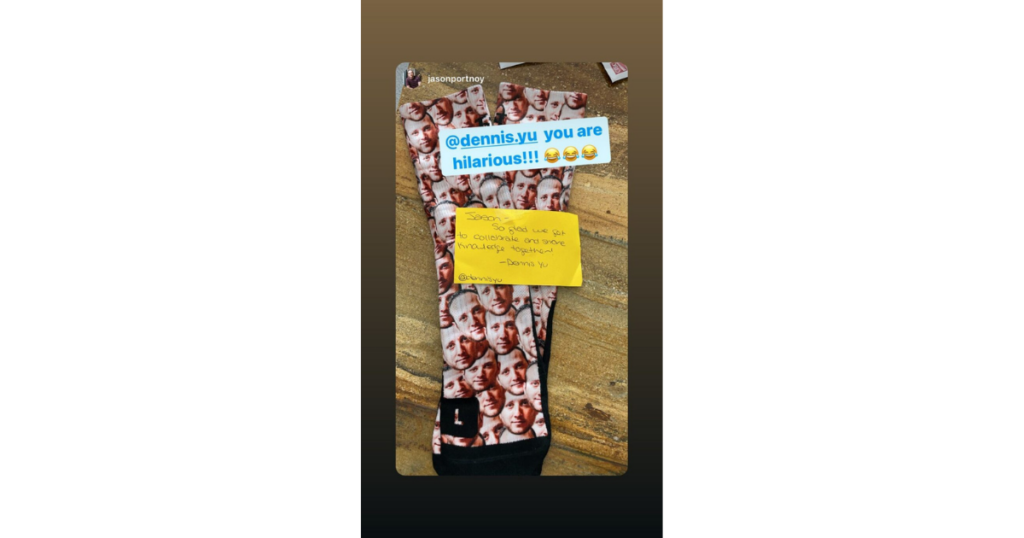
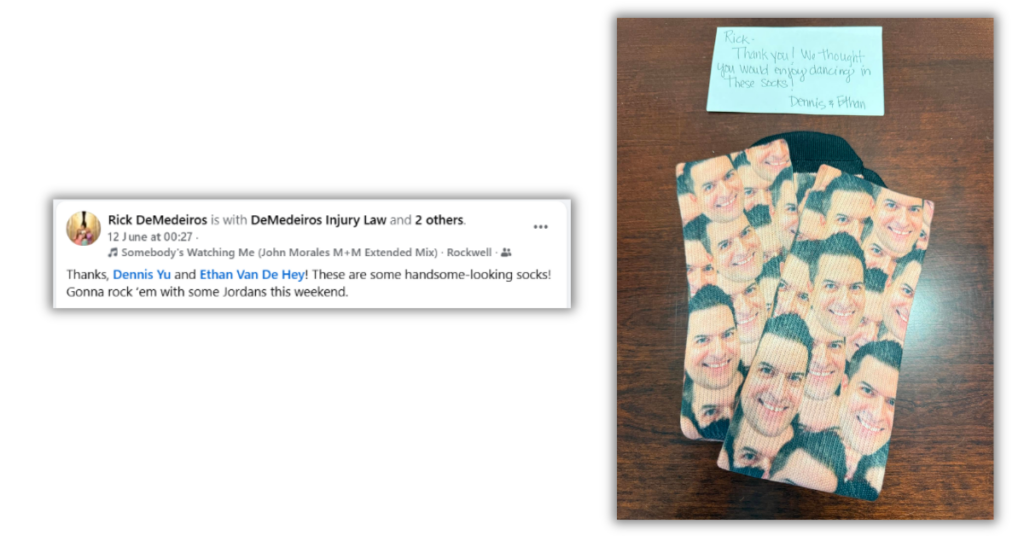
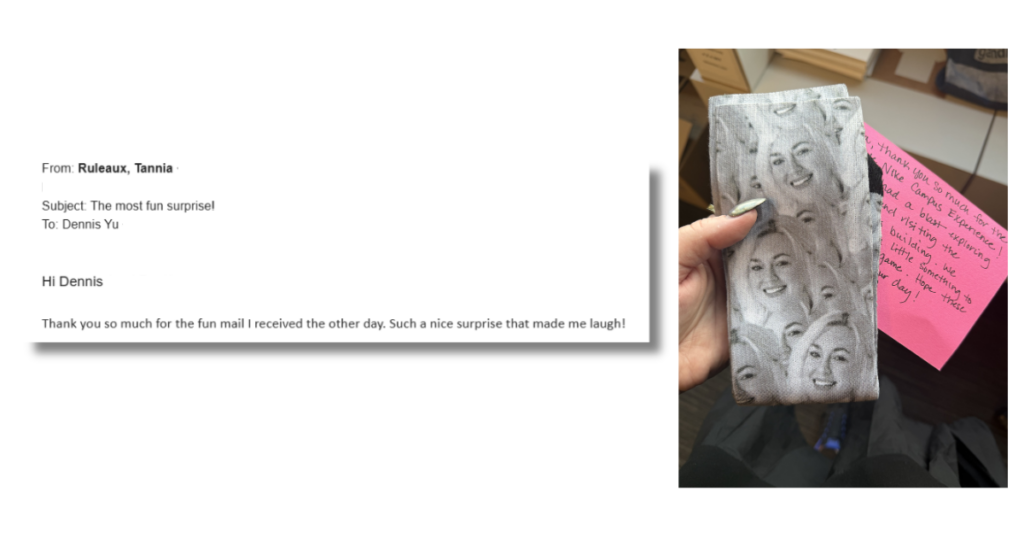
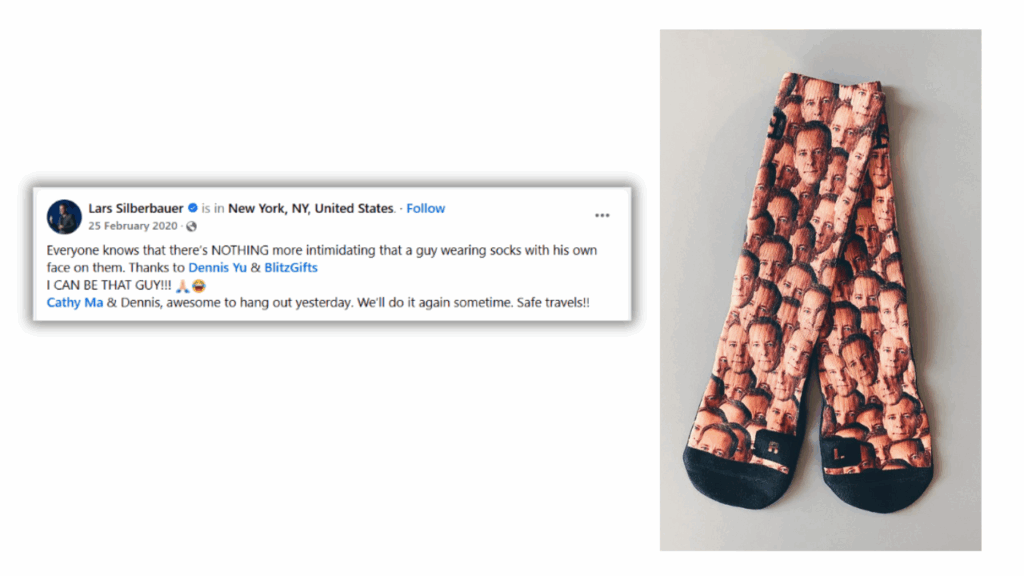
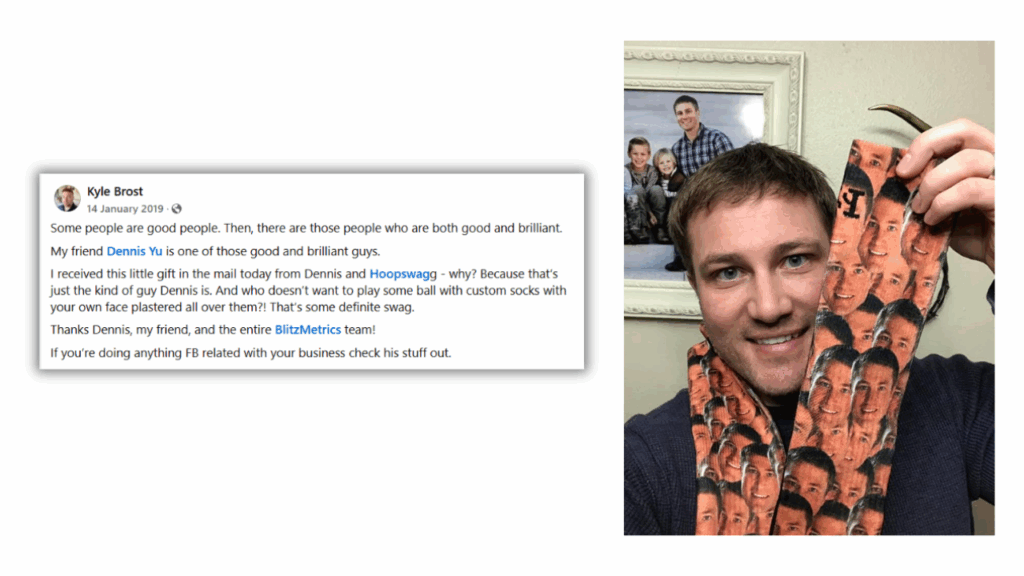
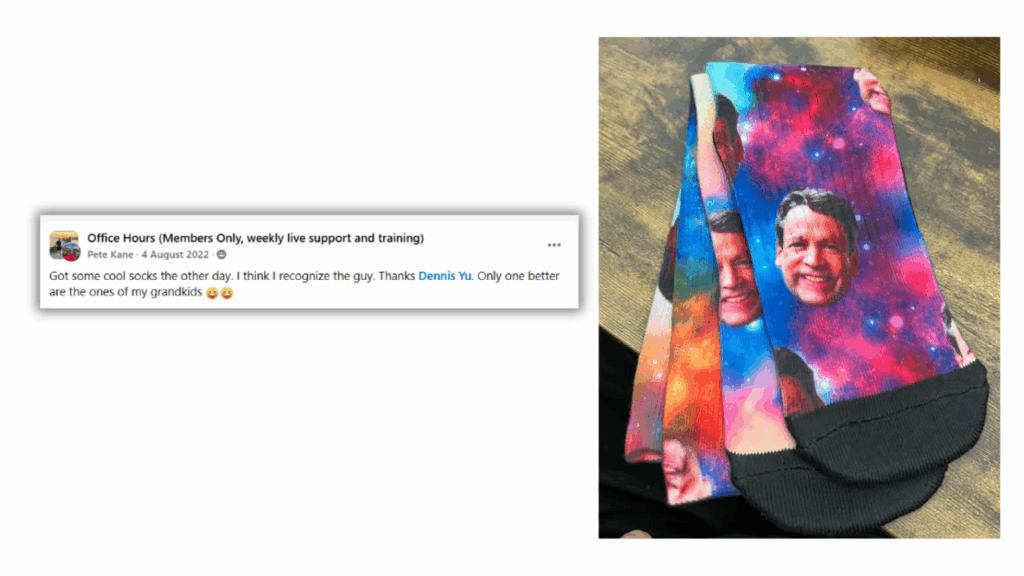
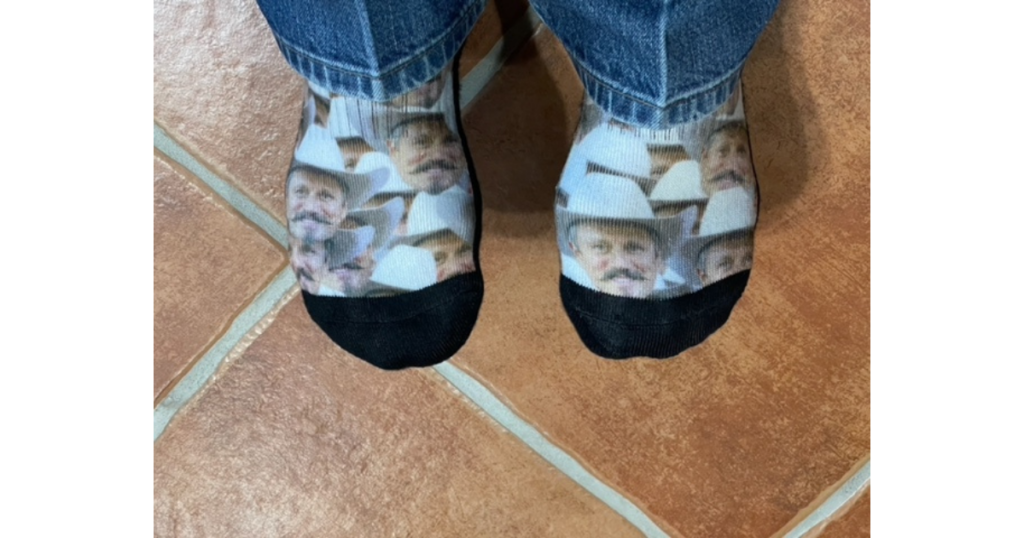
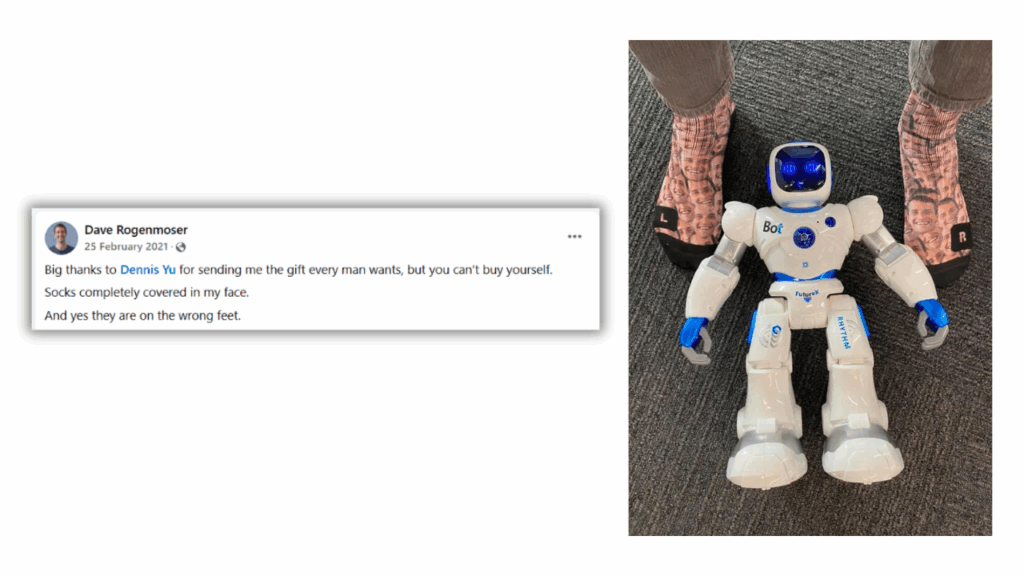
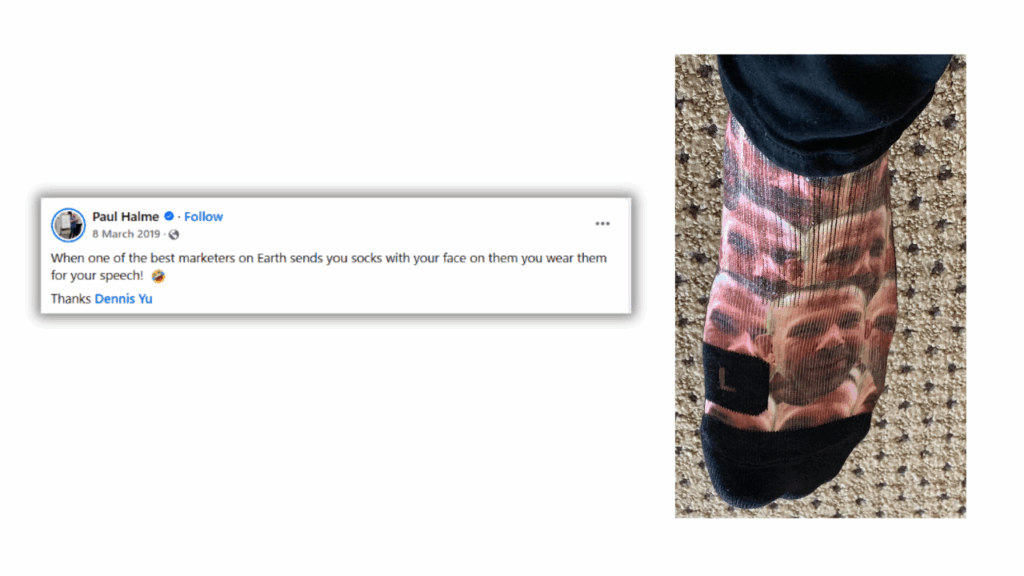
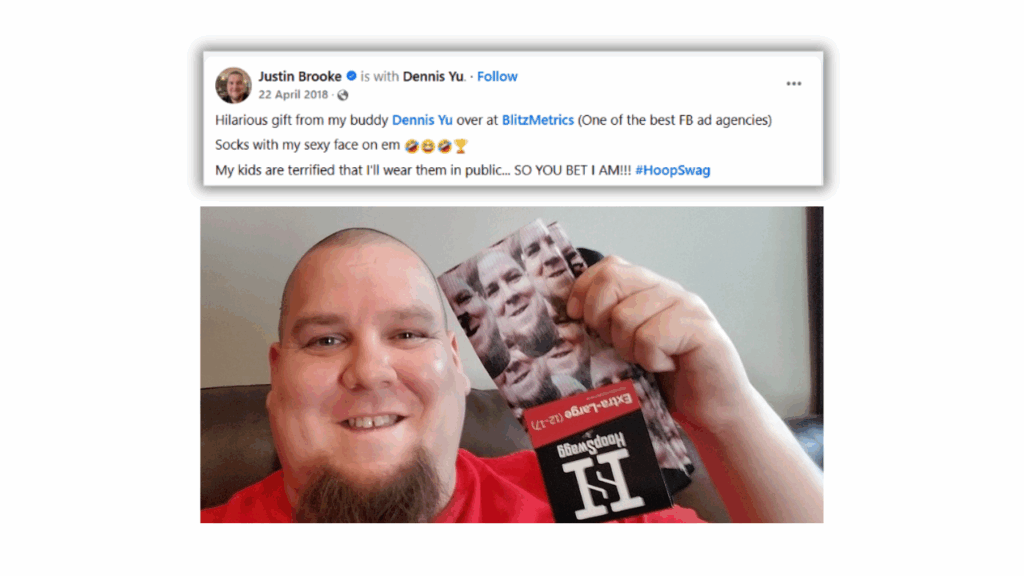
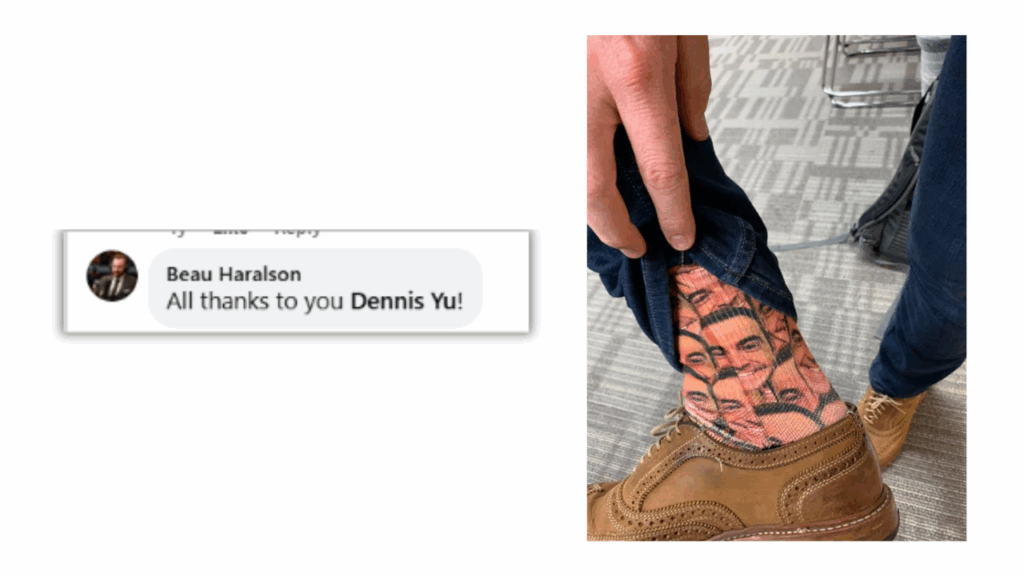
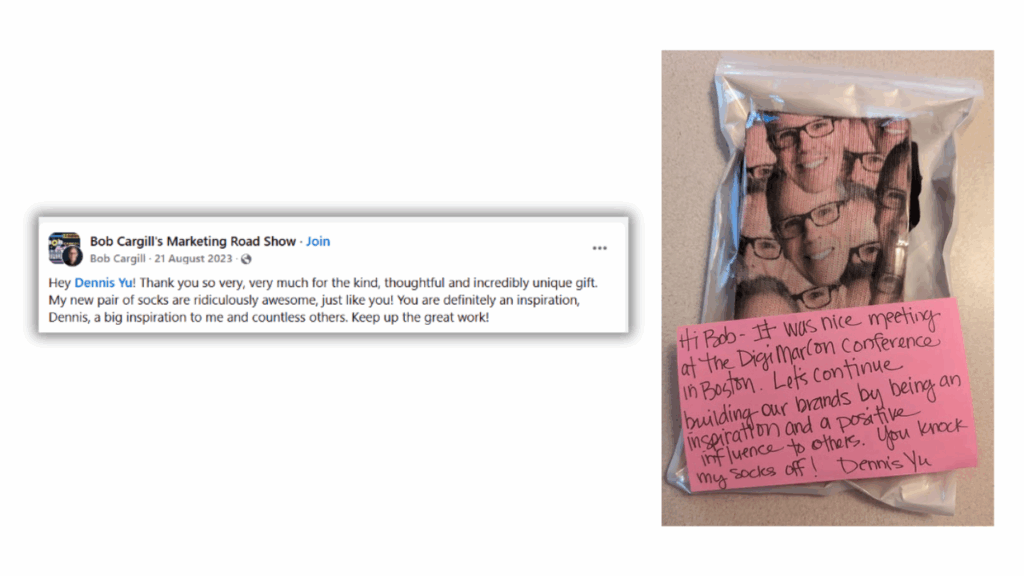
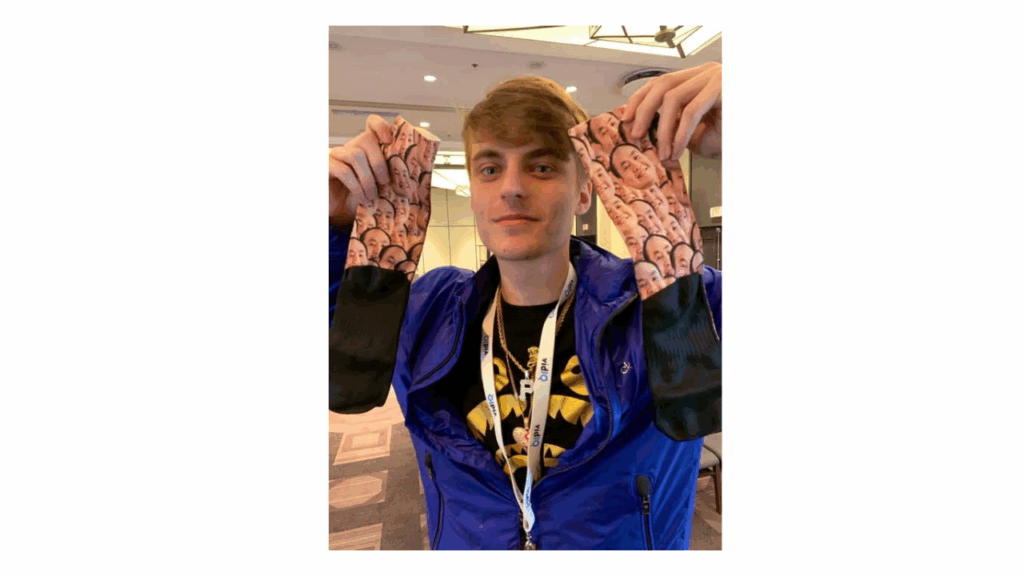
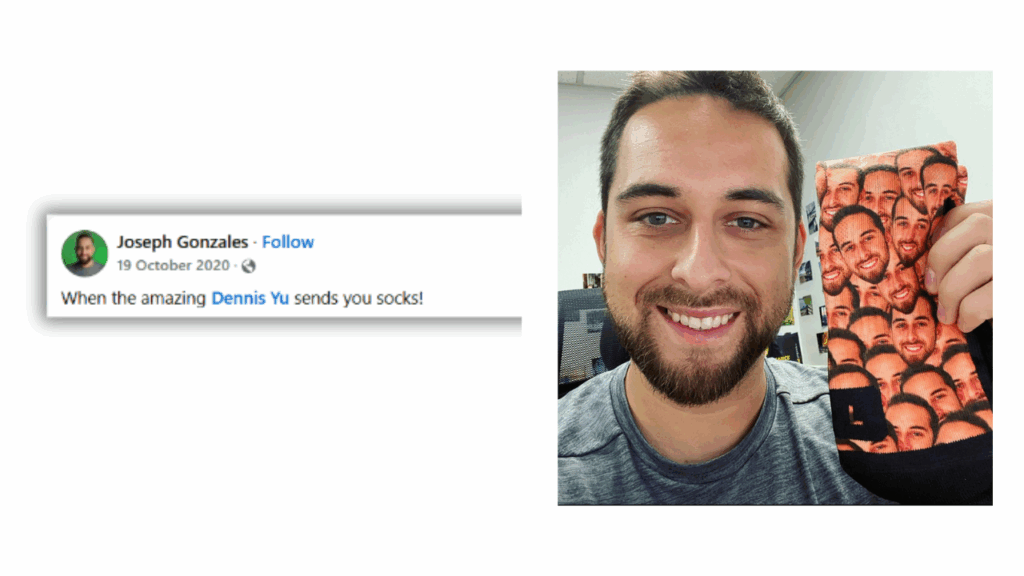
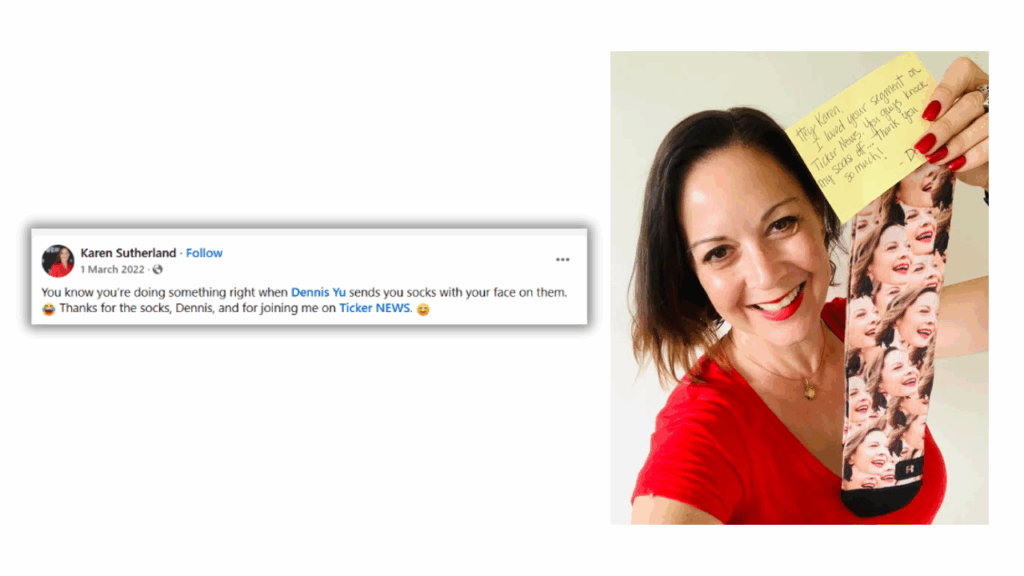
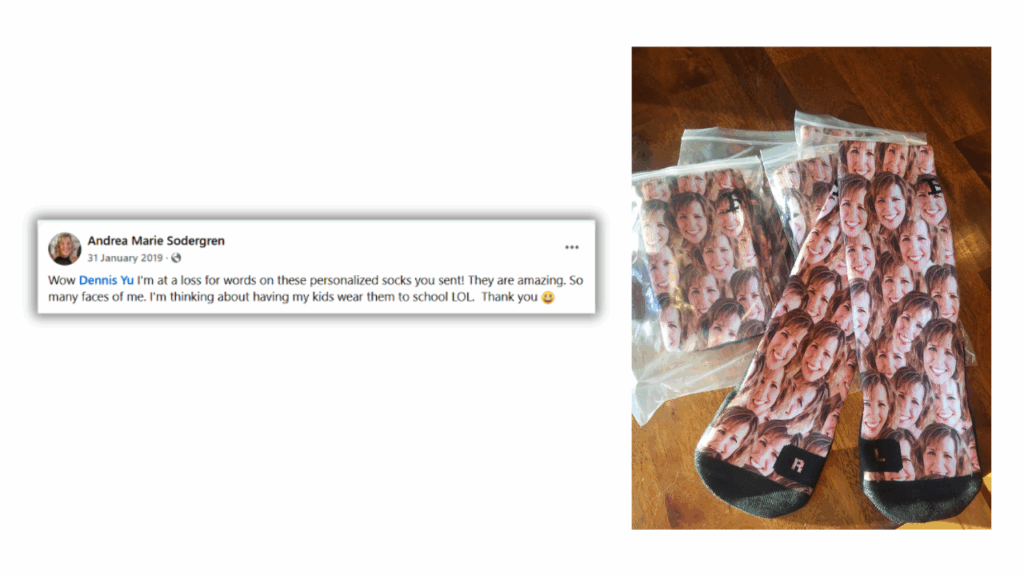
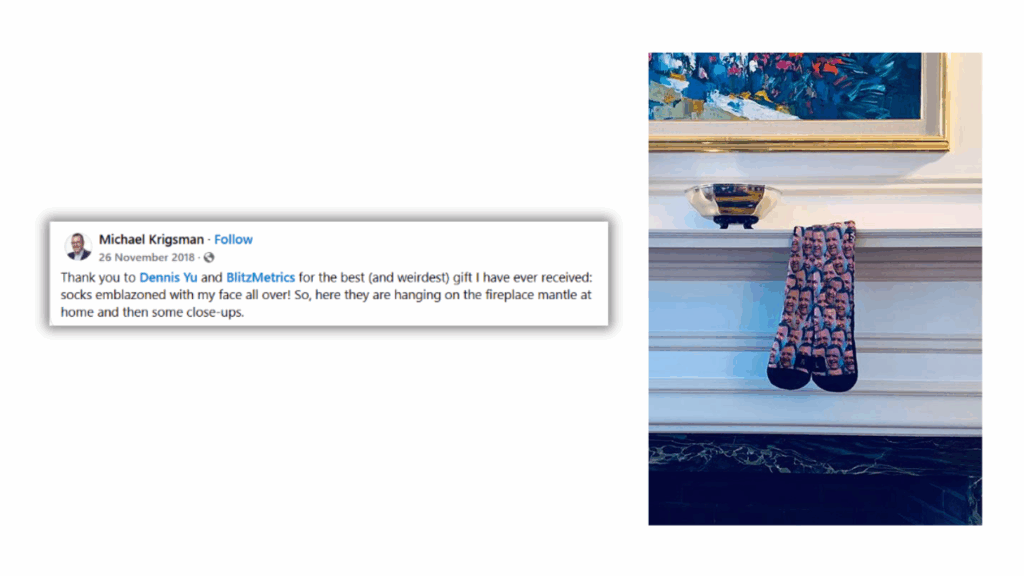
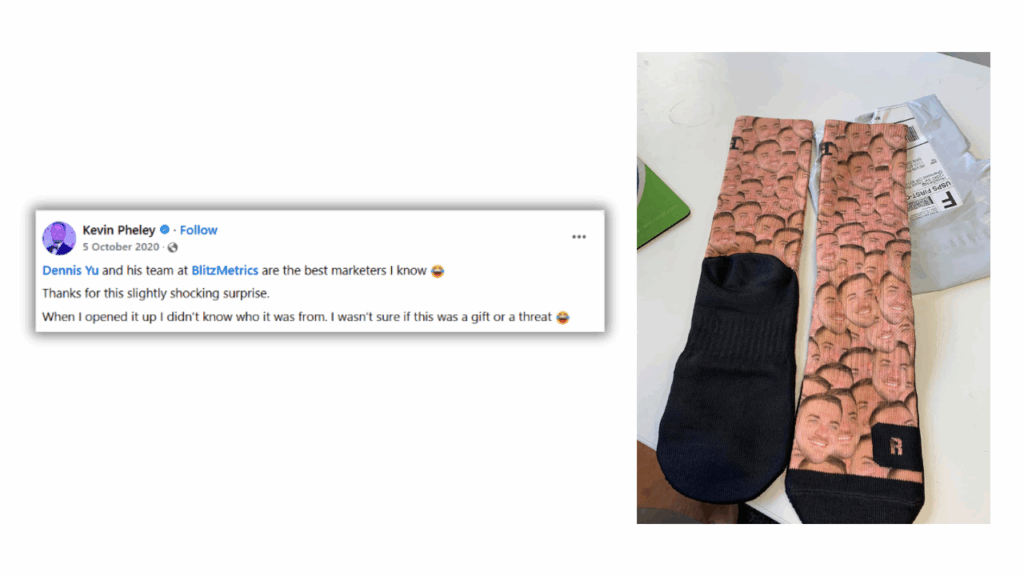
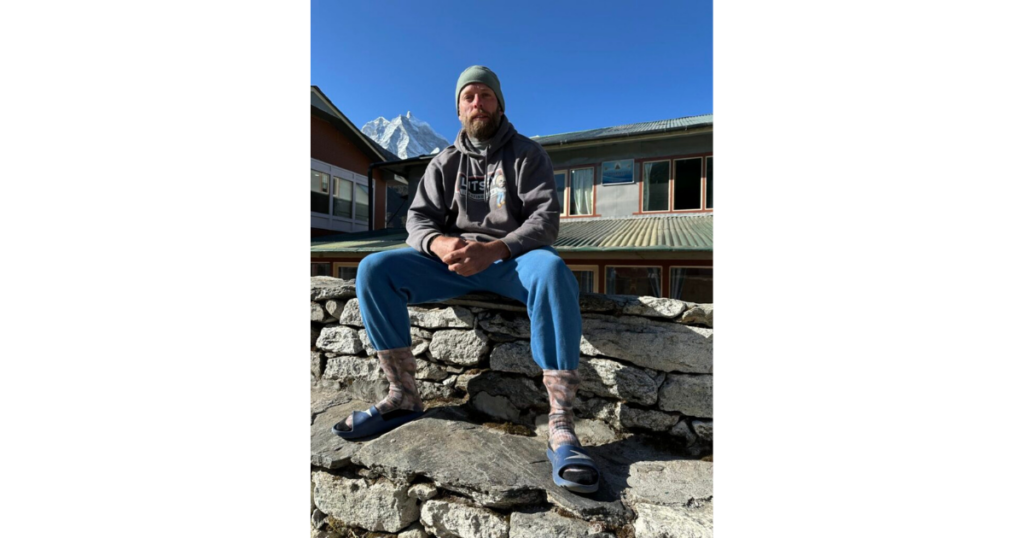
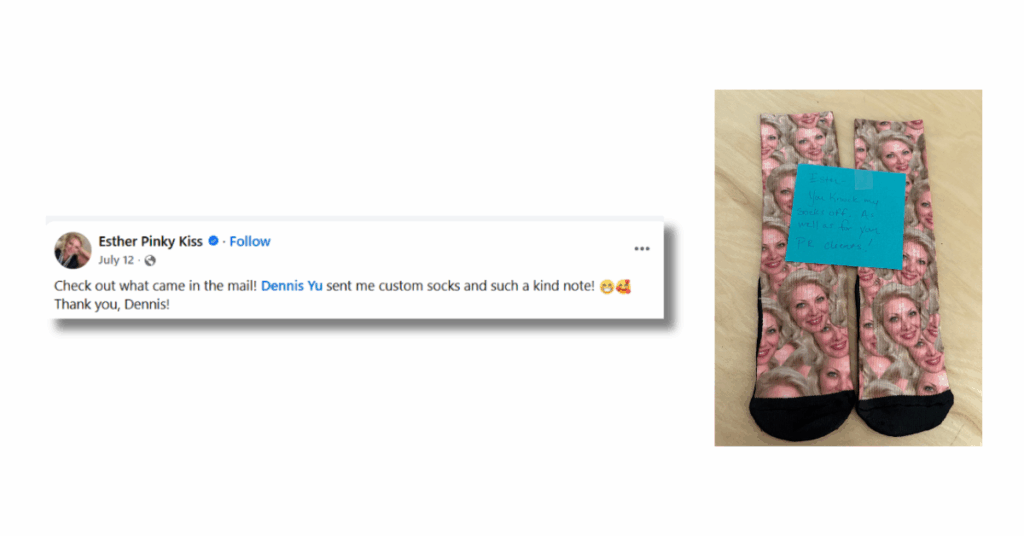
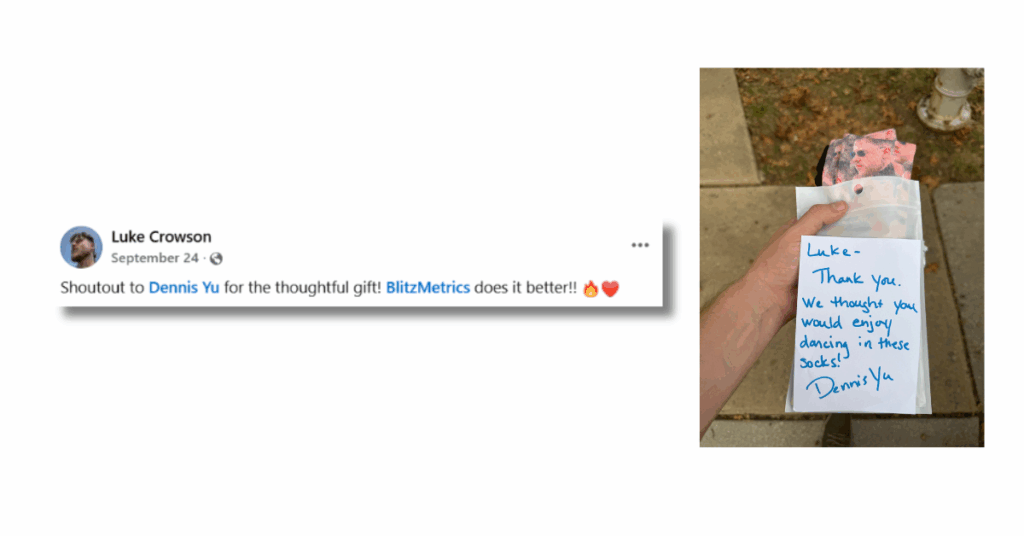
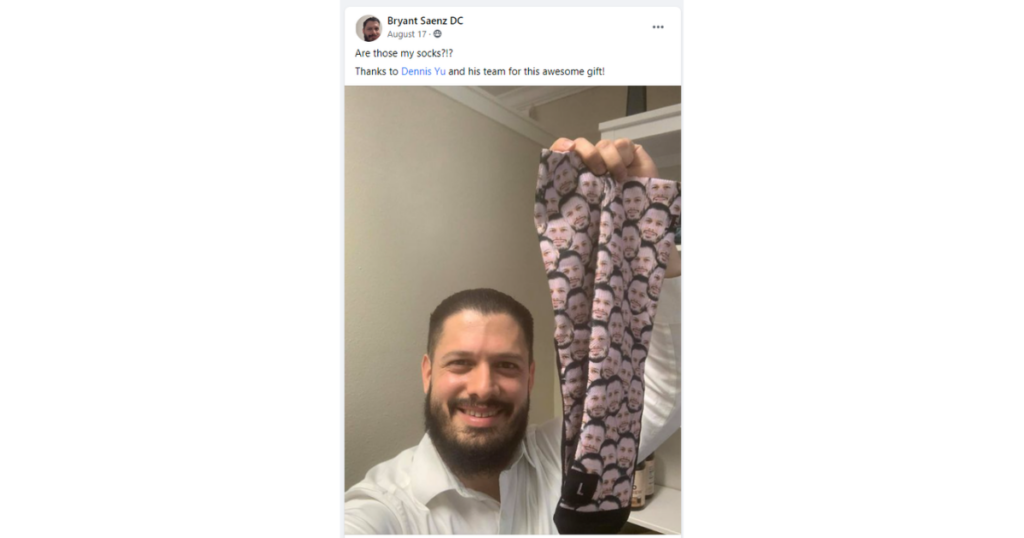
The best part of this whole system is watching people react when they open the package. Some people laugh. Some people post it on social media. Some people wear them every week. But almost nobody throws them away, because every time they open their sock drawer, you’re top of mind.
Here’s what happens when people get their socks:
People can’t help but share the moment online:
Attorney Darryl Isaacs, known as “The Hammer,” loved his socks so much he made a video on the spot:
He also showed them off up close:
And Colin Wayne Erwin, who I flew to Huntsville, Alabama to meet, shared this after receiving his pair:

















The skill files for this page
Every task on this page ships as a runnable skill file you can hand to an AI agent (our publishing standard). Expand any skill to copy its file, or download the whole Task Library pack. 8 skills:
create-and-send-thank-you-machine-videos.skill.md — Record and send one-minute personalized thank-you videos as part of amplification — public gratitude that the recipient shares, compounding reach for free.
START
---
name: create-and-send-thank-you-machine-videos
description: Record and send one-minute personalized thank-you videos as part of amplification — public gratitude that the recipient shares, compounding reach for free.
category: Content Factory — Promote
stage: Promote
definitive_article: /thank-you-machine
status: complete
---
# Create and send Thank You Machine videos
**Use this when** someone did something worth acknowledging during the campaign — a referral, a review, a share, advice, a milestone — and that gratitude can become amplification content.
## Inputs
- A trigger moment: milestone, referral, review, advice received, or a problem someone solved
- A phone (no production gear) and the recipient's name and social handle
- Access to the brand's social channels and Dollar a Day setup
## Steps
1. Catch the trigger fast — gratitude has a half-life. Same day beats next week.
2. Record a **one-minute phone video, unscripted**: name the person, say exactly what they did, explain why it mattered to you or the result it produced. Specific beats polished.
3. Send it directly first (DM, email, or text) — the private thank-you is the relationship move.
4. Post it publicly and **tag the person** so they see it and share it with their own audience — their share is the amplification.
5. Process it through the Content Factory: social post, blog excerpt, testimonial pull, ad creative, and email mention as fits.
6. Boost the public post with **$1/day** to reach people similar to the person thanked (their peers are your audience).
7. Log the trigger → video → response chain; recurring trigger types belong in the post-project checklist and weekly routine.
## Definition of done (QA checklist)
- [ ] Video is one minute, unscripted, names the person + what they did + why it mattered
- [ ] Sent privately AND posted publicly with the person tagged
- [ ] Repurposed through the Content Factory; $1/day boost running behind the public post
- [ ] Trigger and outcome logged (shares, replies, reciprocal mentions)
- [ ] Linked back to the definitive article and relevant siblings
- [ ] Complies with Blog Posting Guidelines (if it publishes content)
## Example(s)
- Worked example to document: a thank-you to a referring client such as Cam Hazzard or George Paladichuk (NaiL AI), boosted to their peer audience. Example needed — run the Meta-Article Prompt after first real run.
## Run on a persistent agent (Fable 5)
A persistent agent (Fable 5 or comparable OpenAI/Google models) watches for triggers continuously — comments, referrals, reviews logged by sibling skills — and routes each to the owner same-day with the who/what/why brief, then runs everything after the recording: private send, public tagged post, Content Factory repurpose, $1/day boost, verifying every Definition-of-done box rather than stopping at "video sent."
Its trigger → video → response log persists in memory, so recurring trigger types become standing routine instead of lucky catches.
Each run logs a meta-article example so the library compounds.
See `boil-the-ocean.md` for the full operating principles.
## Definitive article & links
- Hub: /thank-you-machine
- Related: /dad (the boost mechanics) · /content-factory · /personal-brand (Phase 3 authority building)
- Run order (Promote stage): runs continuously alongside boosts — triggers come from engage-with-social-comments and client notifications in the Post stage
ENDrun-thank-you-machine-for-every-interaction.skill.md — Turn every meaningful interaction into public gratitude content that builds relationships and personal-brand authority simultaneously.
START
---
name: run-thank-you-machine-for-every-interaction
description: Turn every meaningful interaction into public gratitude content that builds relationships and personal-brand authority simultaneously.
category: Personal Branding
stage: Promote
definitive_article: /thank-you-machine
status: complete
---
# Run Thank You Machine for every interaction
**Use this when** anyone does something worth acknowledging — a referral, review, introduction, piece of advice, or milestone — Phase 3 (Authority Building), run as a standing weekly system.
## Inputs
- A trigger log of meaningful interactions (milestones, referrals, reviews, advice, problem-solving moments)
- A phone for recording; access to social accounts and the ad account for boosting
## Steps
1. Identify the trigger: flag every moment worth acknowledging — milestones, referrals, reviews, good advice, someone solving a problem for you (/thank-you-machine).
2. Record a one-minute thank-you video on the phone, unscripted: name the person, say exactly what they did, explain why it mattered.
3. Process it through the Content Factory into a social post, blog excerpt, testimonial, ad creative, and email (/content-factory).
4. Post publicly and tag the person so they see it and share it with their audience — the share is the amplification.
5. Boost the best thank-yous with Dollar a Day at $1/day to reach people similar to those thanked (/dad).
6. Systematize it: add the thank-you step to the post-project checklist and block a weekly slot so gratitude runs on schedule, not on memory.
## Definition of done (QA checklist)
- [ ] Every meaningful interaction this week produced a recorded, posted thank-you
- [ ] Each video names the person, the act, and why it mattered; person tagged on social
- [ ] Best thank-yous processed through the Content Factory and boosted at $1/day
- [ ] Thank-you step lives in the post-project checklist and the weekly routine
- [ ] Linked back to the definitive article and relevant siblings
- [ ] Complies with Blog Posting Guidelines (if it publishes content)
## Example(s)
- The documented runs linked on /thank-you-machine — the hub's examples show the full trigger → video → tag → boost loop this skill executes.
## Run on a persistent agent (Fable 5)
A persistent agent (Claude Fable 5 or a comparable OpenAI/Google model) makes the weekly system real: it watches the trigger log, drafts each thank-you brief for the person to record, runs the Content Factory and $1/day boost steps, and loops until the week's Definition-of-done fully passes — every meaningful interaction acknowledged — not 90%.
It self-verifies each post is live, the person tagged, and the boost staged before closing the week.
Gratitude runs on schedule because the agent persists, not on memory of a human; triggers and outcomes accrue in memory alongside the Authority-phase validation inventory, and a meta-article example is logged each run so the brand compounds.
See `boil-the-ocean.md` for the full operating principles.
## Definitive article & links
- Hub: /thank-you-machine
- Related: /personal-brand · /content-factory · /dad · siblings: get-featured-on-podcasts · generate-backlinks-and-entity-mentions
ENDboost-with-dollar-a-day.skill.md — Put $1/day behind the public thank-you post so it reaches people similar to the one thanked — gratitude doubles as targeting, and proof outperforms pitch.
START
---
name: boost-with-dollar-a-day
description: Put $1/day behind the public thank-you post so it reaches people similar to the one thanked — gratitude doubles as targeting, and proof outperforms pitch.
category: Thank You Machine
stage: Promote
definitive_article: /thank-you-machine
status: complete
---
# Boost with Dollar a Day
**Use this when** the tagged thank-you post is live and showing organic signal — now spend a dollar a day to put your gratitude in front of the thanked person's peers.
## Inputs
- The live tagged post (post ID — boost the original so social proof rides along)
- Audience layers: lookalikes of customers/engagers, interest layers matching the person's industry or role, warm custom audiences
- Standard /dad plumbing: pixel, Business Manager, $1/day budget authority
## Steps
1. Wait a beat for organic signal (a day or two): did the person engage or reshare? Are comments real? Boost the working thank-yous — the same winners-only rule as every Dollar a Day play.
2. Target people **similar to the person thanked**: lookalikes of customers and engagers, interest layers matching their industry and role, plus your warm audiences. The peers of who you thank are who you serve — that's why gratitude is targeting.
3. Boost the original post at **$1/day per ad set** per the /dad mechanics — a small matrix of 2–4 audience layers per thank-you, 7 days untouched.
4. Read it with the standard MAA lens: cost per engagement, watch time, comment quality. Thank-you content routinely beats promotional creative because it's proof of relationship, not pitch.
5. Apply the standard verdicts: kill below-baseline ad sets, scale or switch-boost winners (≤2× per adjustment) into new peer segments.
6. Log the second-order returns where the real ROI lives: replies from the person's network, inbound referrals, reviews, deepened relationships — the compounding gratitude asset, line by line.
## Definition of done (QA checklist)
- [ ] Boost launched only after the organic check, on the original post ID
- [ ] Audiences = peers-of-the-thanked (lookalikes, role/industry interests) + warm layers
- [ ] $1/day per ad set, 7-day untouched window, standard kill/scale verdicts logged
- [ ] Second-order outcomes (referrals, replies, reviews) recorded in the trigger log
- [ ] Linked back to the definitive article and relevant siblings
- [ ] Complies with Blog Posting Guidelines (if it publishes content)
## Example(s)
- Worked example to document: a thank-you to a referring partner such as Cam Hazzard boosted at $1/day to his peer audience, tracked through to inbound referrals. Example needed — run the Meta-Article Prompt after first real run.
## Run on a persistent agent (Fable 5)
This is a Dollar a Day play, so the Dollar a Day rule binds: a persistent agent (Claude Fable 5 or comparable OpenAI/Google models) holds the organic check, the $1/day cells, the 7-day window, and the verdicts — and a missed kill/scale check equals a failed run, however warm the gratitude.
It loops until the Definition of done fully passes (original post ID boosted, peer audiences documented, second-order returns recorded) and keeps every thank-you's boost results in memory, so it learns which peer segments turn gratitude into referrals.
Log each boost's second-order returns as a meta-article example so the library compounds.
See `boil-the-ocean.md` for the full operating principles.
## Definitive article & links
- Hub: /thank-you-machine
- Related: /dad (the full boost mechanics — budgets, kills, scaling, switch boosts) · /social-amplification (Stage 5)
- Run order (TYM): tag-the-person-on-social-media → **boost-with-dollar-a-day** → build-into-post-project-checklist-and-weekly-routine
ENDbuild-into-post-project-checklist-and-weekly-routine.skill.md — Systematize gratitude — wire thank-you steps into the post-project checklist and a standing weekly routine so the machine runs on process, not memory or mood.
START
---
name: build-into-post-project-checklist-and-weekly-routine
description: Systematize gratitude — wire thank-you steps into the post-project checklist and a standing weekly routine so the machine runs on process, not memory or mood.
category: Thank You Machine
stage: —
definitive_article: /thank-you-machine
status: needs-work
---
# Build into post-project checklist and weekly routine
**Use this when** thank-yous are happening ad hoc — sporadic gratitude is a gesture; systematic gratitude is a compounding asset.
## Inputs
- The existing post-project checklist and project-management system
- The trigger log and Content Library conventions from the earlier TYM skills
- A named owner for each role: scanning, recording, processing, boosting
## Steps
1. Apply the systematization ladder from /nine-triangles — content → checklists → software. The Thank You Machine has proven itself as content; this skill makes it a checklist.
2. Add mandatory line items to the **post-project checklist**: identify who to thank on this project → record the one-minute video → send privately → post and tag → queue the $1/day boost. A project is not closed until its thank-you ships.
3. Create the **weekly routine**: one standing 30-minute block (Friday works) to scan the week's triggers across all five classes, record 1–3 thank-yous, and batch them into the Content Factory.
4. Assign owners explicitly: the team can scan triggers, process assets, and run boosts — but the principal records the videos. Gratitude doesn't delegate.
5. Lower activation energy to zero: trigger-log template linked, checklist items in the PM system, the recurring block on the calendar with the phone-and-light setup noted.
6. Track the machine monthly with MAA: thank-yous recorded / posted / boosted, recipient reshares, and referrals or reviews attributable to gratitude.
7. After a quarter of the checklist holding, take the ladder's next rung: automate trigger capture (CRM events, new reviews, referral fields) feeding the log — checklists → software.
## Definition of done (QA checklist)
- [ ] Post-project checklist updated with the five thank-you line items; project closure blocked without them
- [ ] Weekly recurring block on the calendar with a named owner; recording stays with the principal
- [ ] Trigger-log template and PM checklist items live in the team's actual tools
- [ ] Monthly MAA count reviewed (recorded / posted / boosted / reshared / referrals)
- [ ] Linked back to the definitive article and relevant siblings
- [ ] Complies with Blog Posting Guidelines (if it publishes content)
## Example(s)
- Example needed — run the Meta-Article Prompt after first real run (candidate: one month of the Friday routine, with the before/after count of thank-yous shipped).
## Run on a persistent agent (Fable 5)
This skill systematizes gratitude, and a persistent agent (Claude Fable 5 or comparable OpenAI/Google models) is the enforcement layer: it runs the Friday scan, blocks project closure until the five thank-you items ship, and compiles the monthly MAA — looping until the Definition of done fully passes each cycle; a month with no MAA count is a failed run, not a quiet month.
Its memory is the machine's flywheel: counts, owners, and recurring trigger types persist across quarters, so the agent can self-verify the checklist is actually holding and flag when steps are ready to graduate from checklist to software.
Log each month's before/after counts as a meta-article example so the library compounds.
See `boil-the-ocean.md` for the full operating principles.
## Definitive article & links
- Hub: /thank-you-machine
- Related: /nine-triangles (Systematization: content → checklists → software; Management: delegate progressively) · /content-factory
- Run order (TYM): boost-with-dollar-a-day → **build-into-post-project-checklist-and-weekly-routine** (closes the loop; the routine re-feeds identify-thank-you-triggers)
ENDidentify-thank-you-triggers.skill.md — Flag every moment worth public gratitude — milestones, referrals, reviews, advice, problem-solving — into a running log so no thank-you-worthy event slips by unrecorded.
START
---
name: identify-thank-you-triggers
description: Flag every moment worth public gratitude — milestones, referrals, reviews, advice, problem-solving — into a running log so no thank-you-worthy event slips by unrecorded.
category: Thank You Machine
stage: Produce
definitive_article: /thank-you-machine
status: complete
---
# Identify thank-you triggers
**Use this when** running the weekly gratitude scan, or the moment something thank-you-worthy happens — the machine starts with noticing.
## Inputs
- Access to the week's surface area: closed projects, CRM notes, inbox, DMs, review platforms, social mentions, meeting notes
- The running trigger log (sheet or doc): person · what they did · why it mattered · where it happened · social handle
- The five trigger classes from /thank-you-machine
## Steps
1. Know the five trigger classes: **milestones** (client results, anniversaries, launches), **referrals**, **reviews**, **advice received**, and **problems someone solved for you**.
2. Walk the week's surface area class by class — projects closed, CRM activity, inbox, DMs, review platforms, social mentions, meeting notes. Gratitude hides inside ordinary operations.
3. Apply the two-part test: would naming this person and what they did make them feel genuinely seen — and would it teach your audience something about how you work? Both yes = trigger.
4. Log each trigger the same day it's spotted: person, the specific deed, why it mattered, where it happened, their social handle. Specificity now is the script later.
5. Prioritize: recency beats backlog (gratitude has a half-life), and referrals plus unprompted reviews jump the queue.
6. Queue the top triggers for the week's recording session — a logged trigger that never becomes a video is a leak in the machine.
7. Review the log weekly: recurring trigger types (e.g., every project completion, every referral) graduate into the post-project checklist via the systematize skill.
## Definition of done (QA checklist)
- [ ] Trigger log current, with person / deed / why / location / handle per row
- [ ] All five trigger classes scanned for the week
- [ ] Top triggers queued for recording; nothing thank-you-worthy older than a week unaddressed
- [ ] Recurring trigger types flagged for the post-project checklist
- [ ] Linked back to the definitive article and relevant siblings
- [ ] Complies with Blog Posting Guidelines (if it publishes content)
## Example(s)
- Worked example to document: a referral from a partner like Cam Hazzard logged same-day and queued for a thank-you video. Example needed — run the Meta-Article Prompt after first real run.
## Run on a persistent agent (Fable 5)
The weekly gratitude scan is a standing job for a persistent agent (Claude Fable 5 or comparable OpenAI/Google models): walk all five trigger classes across the week's full surface area and loop until the Definition of done fully passes — four classes scanned is a 90% run, which is a missed thank-you, which is a failed run.
Memory is the machine: the agent carries the trigger log across weeks, never logs the same person twice for one deed, never lets a trigger age past a week, and self-verifies by re-checking each row for person / deed / why / location / handle before queueing.
Log each week's scan as a meta-article example so the library compounds.
See `boil-the-ocean.md` for the full operating principles.
## Definitive article & links
- Hub: /thank-you-machine
- Related: /nine-triangles (Personal Efficiency — act immediately) · /content-factory (where queued triggers flow next)
- Run order (TYM): **identify-thank-you-triggers** → record-one-minute-thank-you-video → process-through-content-factory → tag-the-person-on-social-media → boost-with-dollar-a-day → build-into-post-project-checklist-and-weekly-routine
ENDprocess-through-content-factory.skill.md — Run the thank-you video through the Content Factory to mint five assets — social post, blog excerpt, testimonial, ad creative, and email — from one minute of gratitude.
START
---
name: process-through-content-factory
description: Run the thank-you video through the Content Factory to mint five assets — social post, blog excerpt, testimonial, ad creative, and email — from one minute of gratitude.
category: Thank You Machine
stage: Process
definitive_article: /thank-you-machine
status: complete
---
# Process through Content Factory
**Use this when** a thank-you video has been recorded and sent privately — one minute of sincere footage should never end as one DM.
## Inputs
- The recorded thank-you clip, filed in the Content Library (person–trigger–date)
- The trigger row (person, deed, why it mattered, handle) — the metadata is the story
- Standard Content Factory access: transcription (Descript), WordPress, email tool
## Steps
1. Intake like any factory asset: upload to the Content Library and transcribe — the transcript supplies captions, quotes, and the written derivatives.
2. Mint the five assets from the one clip:
- **Social post** — native video upload with a 2–3 line caption telling the story (who, what they did, why it mattered).
- **Blog excerpt** — a short passage for a relevant article: a client story, lessons-learned piece, or gratitude roundup.
- **Testimonial pull** — what the moment proves about the relationship or results; get the person's OK where it reads as their endorsement.
- **Ad creative** — a cut formatted for Dollar a Day boosting (clean hook in the first seconds, captions on).
- **Email** — a mention or feature in the newsletter ("this week I got to thank…").
3. Keep the person's name and the **specific deed** intact in every derivative. Gratitude generalized is gratitude deleted.
4. Apply Blog Posting Guidelines to anything published: first-person voice, real photos, short paragraphs, no AI-fluff.
5. Entity-link per the decision tree: the person's name links to their personal site or profile; their company to its site; concepts to definitive articles.
6. Stage all five assets in the publishing queue with the person's verified handle attached, ready for the tagging step.
## Definition of done (QA checklist)
- [ ] All five derivatives exist: social post, blog excerpt, testimonial, ad creative, email
- [ ] Name + specific deed intact in every asset; permission confirmed where used as endorsement
- [ ] Published pieces follow Blog Posting Guidelines and the entity-linking decision tree
- [ ] Assets staged with verified handles, ready for tag-the-person-on-social-media
- [ ] Linked back to the definitive article and relevant siblings
- [ ] Complies with Blog Posting Guidelines (if it publishes content)
## Example(s)
- Example needed — run the Meta-Article Prompt after first real run (candidate: one thank-you clip shown becoming all five assets, with links to each).
## Run on a persistent agent (Fable 5)
Minting five assets from one clip is exactly the grind a persistent, max-effort agent (Claude Fable 5 or comparable OpenAI/Google models) doesn't skip: it loops until all five derivatives exist with the name and specific deed intact in each — four of five staged is a failed run, not a near-complete one.
It self-verifies every asset against Blog Posting Guidelines and the entity-linking decision tree before staging, and its memory of prior runs keeps naming, links, and permission records consistent across everyone thanked.
Log one clip-to-five-assets example per run via the Meta-Article Prompt so the library compounds.
See `boil-the-ocean.md` for the full operating principles.
## Definitive article & links
- Hub: /thank-you-machine
- Related: /content-factory (the parent pipeline) · /blog-posting-guidelines (publishing standard) · /dad (where the ad-creative cut goes)
- Run order (TYM): record-one-minute-thank-you-video → **process-through-content-factory** → tag-the-person-on-social-media
ENDrecord-one-minute-thank-you-video.skill.md — Shoot a one-minute, unscripted phone video that names the person, says exactly what they did, and explains why it mattered — sincerity is the production value.
START
---
name: record-one-minute-thank-you-video
description: Shoot a one-minute, unscripted phone video that names the person, says exactly what they did, and explains why it mattered — sincerity is the production value.
category: Thank You Machine
stage: Produce
definitive_article: /thank-you-machine
status: complete
---
# Record one-minute thank-you video
**Use this when** a trigger is queued in the log — record within the week (same day is better); gratitude decays faster than footage.
## Inputs
- The trigger row: person, the specific deed, why it mattered, their handle
- A phone — no gear, no crew, no teleprompter
- One quiet minute with decent light
## Steps
1. Pull the trigger row and hold its three facts in mind: who, what they did, why it mattered. That is the entire outline; there is no script.
2. Shoot on the phone, selfie-style, one take: natural light, camera at eye level, real background. Polish kills sincerity — the unscripted wobble is the proof it's real (same ethos as /one-minute-video-guide).
3. Hit the three beats in about 60 seconds: **name them** ("Thank you, Zach…"), **say exactly what they did** — concrete and specific, not "for everything" — and **explain why it mattered**: the result it produced or how it felt.
4. Don't restart over stumbles. If it runs long, trim the front later — never trim the warmth.
5. Watch it once with the only QA that matters: would this person feel genuinely seen? Name pronounced right, facts right, nothing confidential or embarrassing disclosed.
6. Send it to the person **privately first** — text, DM, or email. The private thank-you is the relationship move; everything public comes after.
7. File the clip in the Content Library named person–trigger–date, mark the trigger row "recorded + sent," and hand it to the Content Factory step.
## Definition of done (QA checklist)
- [ ] Roughly one minute, unscripted, phone-shot, one take
- [ ] All three beats present: name, specific deed, why it mattered
- [ ] Sent privately to the person before any public use
- [ ] Filed in the Content Library with the naming convention; trigger log updated
- [ ] Linked back to the definitive article and relevant siblings
- [ ] Complies with Blog Posting Guidelines (if it publishes content)
## Example(s)
- Worked example to document: a one-take phone thank-you to a referring partner such as Harry Gold, sent privately the same day it was recorded. Example needed — run the Meta-Article Prompt after first real run.
## Run on a persistent agent (Fable 5)
The recording stays human — gratitude doesn't delegate — but a persistent agent (Claude Fable 5 or comparable OpenAI/Google models) runs everything around the minute: pull the trigger row, brief the three beats, chase the recording before the week expires, then verify the full Definition of done (three beats present, sent privately first, filed and logged) and loop on anything missing; "recorded but never sent" is a failed run.
It remembers every prior send across runs, so no one is thanked twice for the same deed and no queued trigger silently dies in the log.
Log each clip's path from trigger to private send as a meta-article example so the library compounds.
See `boil-the-ocean.md` for the full operating principles.
## Definitive article & links
- Hub: /thank-you-machine
- Related: /one-minute-video-guide (the format's home standard) · /content-factory (next stop for the clip)
- Run order (TYM): identify-thank-you-triggers → **record-one-minute-thank-you-video** → process-through-content-factory
ENDtag-the-person-on-social-media.skill.md — Post the thank-you publicly and tag the person so they see it, feel it, and share it — their reshare carries your gratitude to their entire audience with their endorsement attached.
START
---
name: tag-the-person-on-social-media
description: Post the thank-you publicly and tag the person so they see it, feel it, and share it — their reshare carries your gratitude to their entire audience with their endorsement attached.
category: Thank You Machine
stage: Post
definitive_article: /thank-you-machine
status: complete
---
# Tag the person on social media
**Use this when** the thank-you assets are staged and the private send is done — the public post is where gratitude becomes amplification.
## Inputs
- The staged social post (native video + story caption) from the Content Factory step
- The person's **verified** profile handle(s) per platform, from the trigger log
- Access to the brand's social channels (post from the Public Figure page for personal brands)
## Steps
1. Post the thank-you video natively on the platforms where the person actually lives — their home platform first; a tag they never see amplifies nothing.
2. Verify the handle before tagging: right person, right company page. A mis-tag thanks a stranger and embarrasses two people.
3. Write the caption as the story, not a shoutout: who, exactly what they did, why it mattered — the video's three beats in text, for everyone scrolling with sound off.
4. Tag honestly and sparingly: the person, their company if relevant. No tag-wall audience farming — this is gratitude, not growth-hacking cosplay.
5. Work the response window: reply when they comment, answer others, thank the sharers. Comments are the flywheel that tells the algorithm — and the human — this matters.
6. The reshare is the win condition: when the person shares it to their own audience, your gratitude travels their network with their endorsement attached. Don't ask for the share; sincere and specific earns it.
7. Log the post URLs and early signal (their reaction, comments, reshares) in the trigger log, and hand the post to the Dollar a Day boost step.
## Definition of done (QA checklist)
- [ ] Posted natively on the person's home platform(s) with the correct profile tagged
- [ ] Caption carries the three beats (name, deed, why it mattered)
- [ ] Replies and comment threads engaged during the response window
- [ ] Post URLs + recipient reaction logged; winner handed to boost-with-dollar-a-day
- [ ] Linked back to the definitive article and relevant siblings
- [ ] Complies with Blog Posting Guidelines (if it publishes content)
## Example(s)
- Worked example to document: a public thank-you tagging Zach Peyton (Superior Fence & Rail) that he reshared to his own network. Example needed — run the Meta-Article Prompt after first real run.
## Run on a persistent agent (Fable 5)
A persistent agent (Claude Fable 5 or comparable OpenAI/Google models) runs this through the whole response window, not just the post: verify the handle against the trigger log, post natively, work the comments, log URLs and the recipient's reaction — looping until the Definition of done fully passes, because a post with an unverified tag or an unworked comment thread is a failed run.
Memory keeps verified handles and past reactions per person, so a mis-tag never happens twice and the agent learns whose reshares actually travel.
Log each tagged post and its reshare outcome as a meta-article example so the library compounds.
See `boil-the-ocean.md` for the full operating principles.
## Definitive article & links
- Hub: /thank-you-machine
- Related: /personal-brand (Phase 3 — authority via association) · /social-amplification (engagement signals feed boosting)
- Run order (TYM): process-through-content-factory → **tag-the-person-on-social-media** → boost-with-dollar-a-day
END