

If you’re a home service business owner, chances are you’re spending money on digital marketing. But here’s the uncomfortable truth: most agencies, whether they know it or not, are running a scam.
I’ve been doing audits with home service businesses for years, and in the last few weeks alone, I’ve seen a lot of broken ones. I’ve spoken at conferences, taught other agencies, and worked with the people you’re probably paying right now. So let me share a few things your agency doesn’t want you to know.
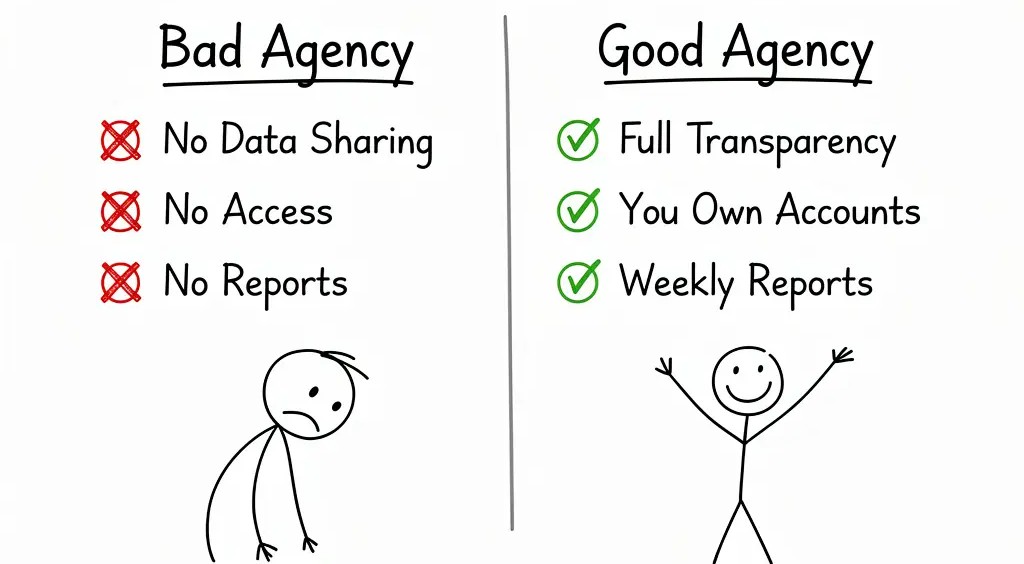
The problem: no clear standards
We think digital marketing is a lot like witch doctors and voodoo. But it doesn’t have to be. When you have The Definitive Guide to TikTok Advertising (which TikTok endorsed and even paid for), or you have the number one book in marketing and PR, or the number one book on Facebook ads with over 800,000 copies sold, that establishes a clear standard.

A clear standard means your agency should be sharing exactly what they’re doing, how they’re following that standard, and showing the analytics to back it up. But the odds are, they’re not doing that.
Most agencies aren’t even looking at the data. Once you go into your Google Analytics account or use a data tracker like Ahrefs, you can easily see how many keywords you’re ranking on, how many clicks you’re getting, and what metrics actually matter. From there, you can diagnose what needs to be fixed.
A real example
We did an audit a couple of days ago for someone paying $12,000 a month for SEO. The agency claimed up and down they were doing all this work. We said, “Okay, show us.” They didn’t want to share anything.
So we used our own tools. We didn’t need their permission. We could see exactly what keywords they were ranking for, how much traffic they were getting, what the competitors were doing, and even found spam links from a competitor trying to damage their site. The agency had no idea.
If you don’t know how to use SEO tools or look inside Google Search Console, which is Google’s free SEO tool, how would you as a home service business owner ever know this?

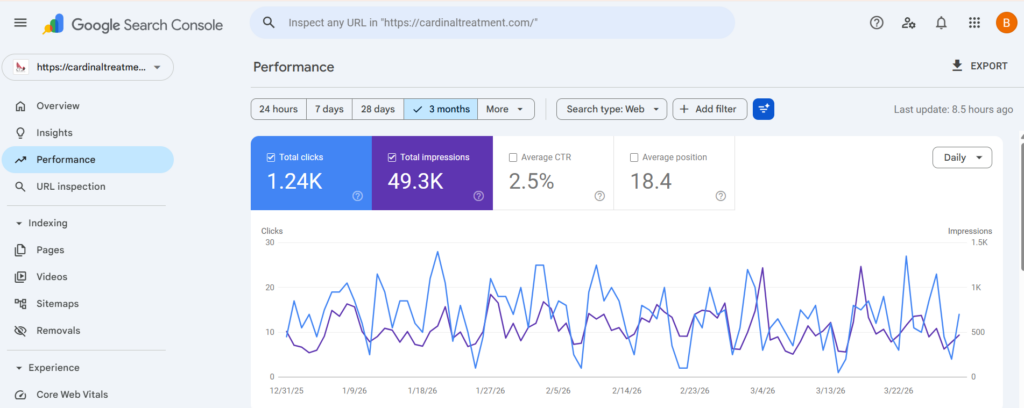
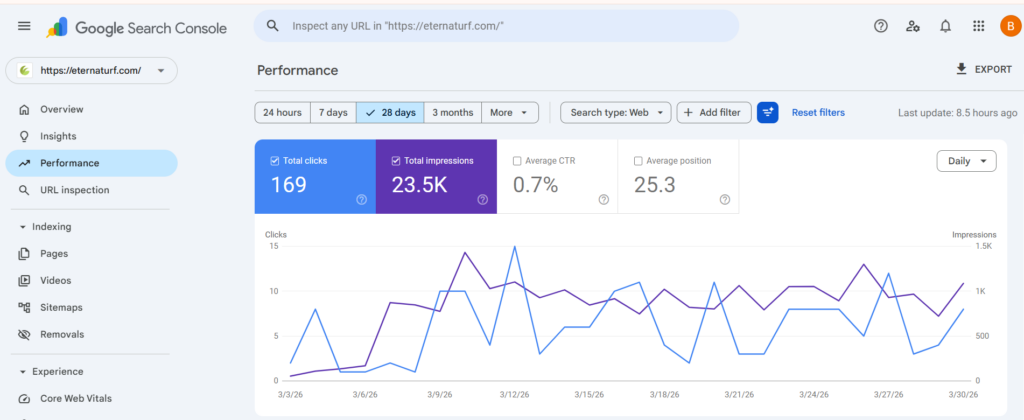
Chances are, you can’t figure it out on your own. That’s why we have a simple audit process. We walk you through every single problem in your website, your Google Business Profile, your social media accounts, and tell you what needs to be done.
What a Quick Audit covers
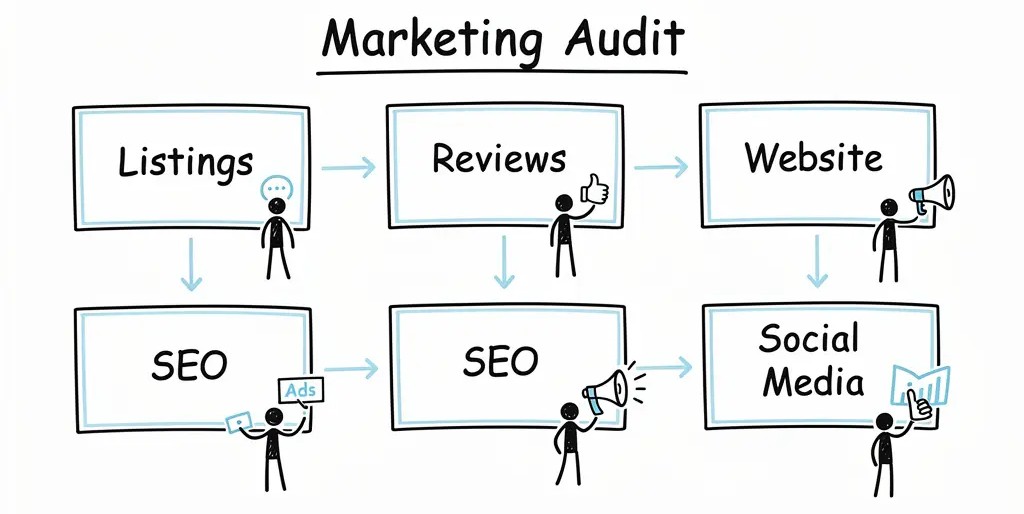
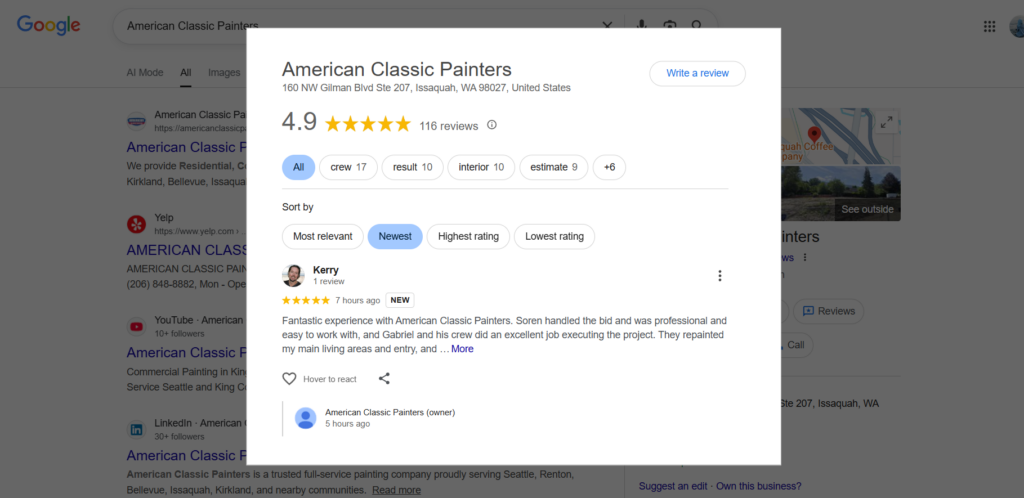
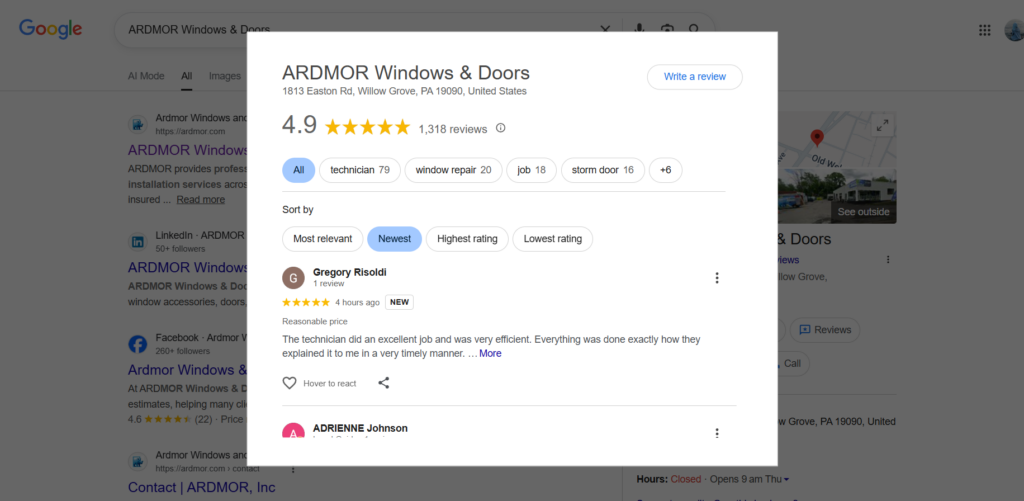
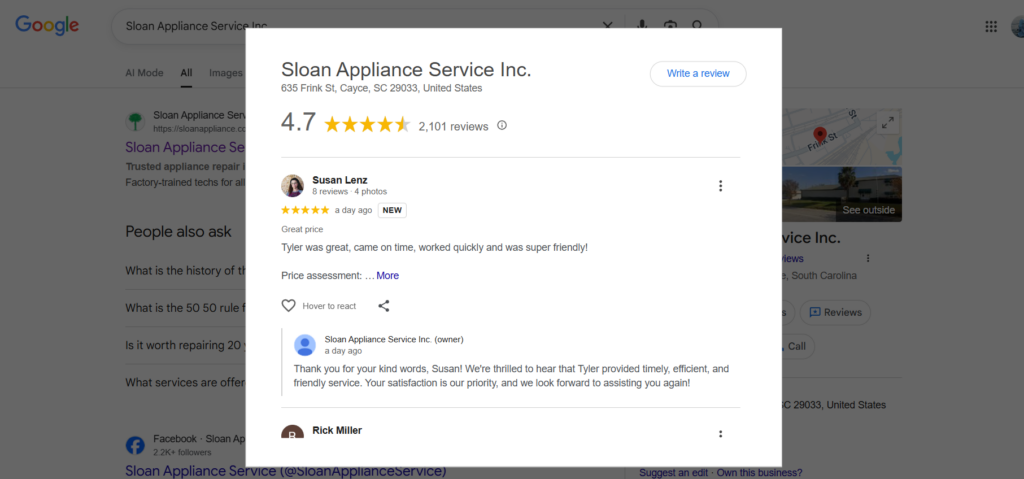
Review velocity matters more than just the number of reviews. Whether your reviews tie back to your profiles and citations is actually more important than the total count. Google, Facebook, and Yelp can all detect fake reviews.
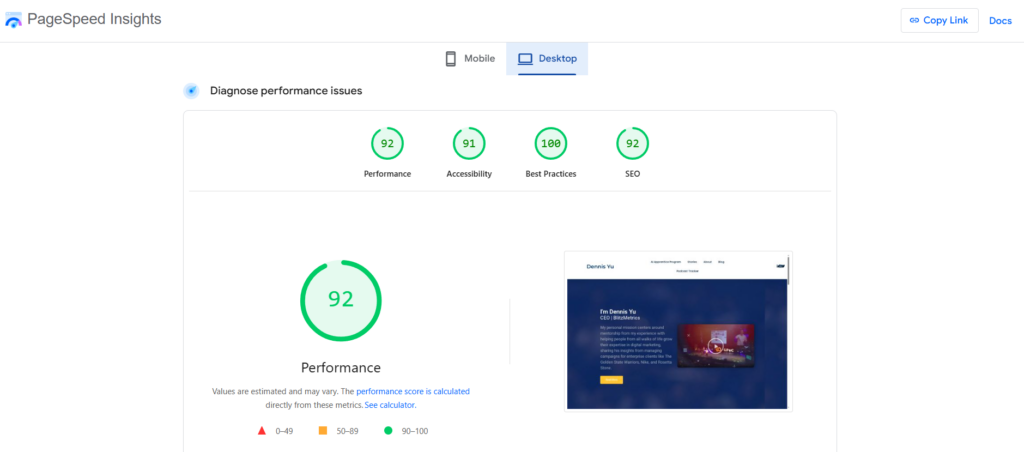
We also look at your website. Does it work properly on mobile versus desktop? Does it load properly? Are there latency issues? Too much JavaScript? We use Google’s own standards to audit this.
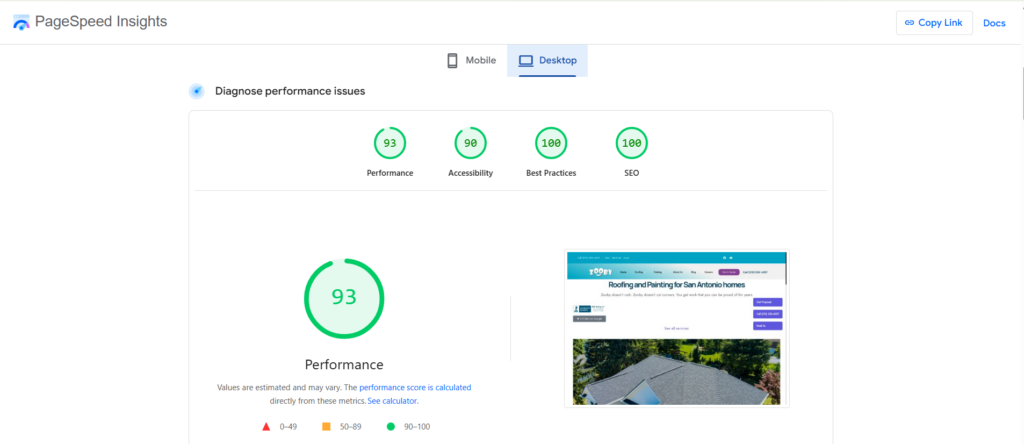
Then we look at your SEO, your ads, and your social media. All of these components fit together. Based on your data, we give you specific recommendations on what’s broken. You can take that to your agency, give it to whoever handles your marketing, or have us fix it.
Tommy Melo, Ryan Davis, and a bunch of other top names in home services follow this same framework. Don’t you want to follow the same framework the top home service businesses are actually using?
Digital marketing should be like surgery, not used car sales
Digital marketing is about data. It should be more like a trained surgeon or a service provider like you. You have a clear process on how you kill ants, fix a garage door, or do a concrete floor. Your technicians are all trained in a certain way. Your digital marketing team should be too.
99% of the agencies out there are scams. I would like nothing more than to see agencies that are solving your problems and putting transparency first.
3 non-negotiable rules
I’m not saying fire your agency. I’m saying hold them accountable. Here are three rules that are non-negotiable.
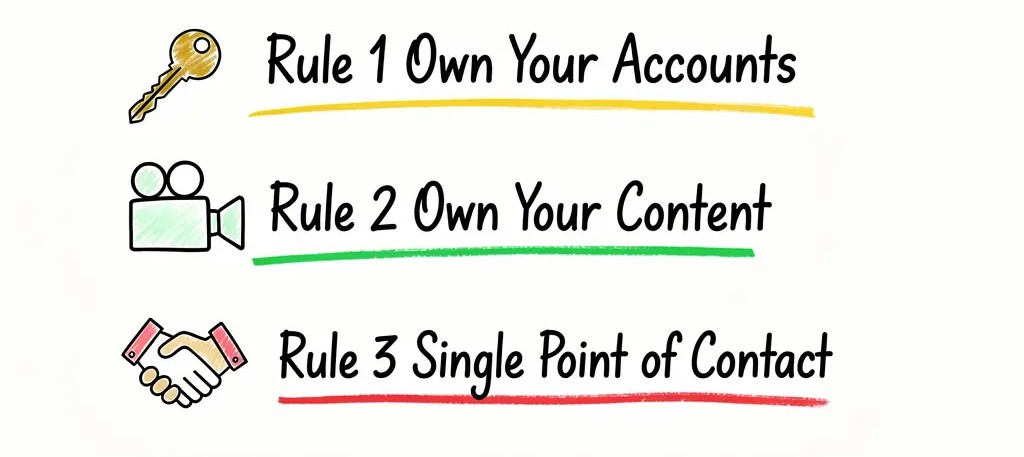
Rule 1: You own all your accounts. Do you actually own the code to your website? The hosting? The domain? The Google Ads account? The Google Analytics? The Google Tag Manager? The Facebook accounts? Or does your agency just give you some interface to look at the data? Because if you ever want to switch, you can’t. They’ll play games and not give you access. Even Google and Facebook have said agencies must do this, but we still see it happening. One agency was charging a client $26,000 a month and wouldn’t give access to any of the underlying accounts. They were probably pocketing $20K and only spending $5K on ads.
Rule 2: You must own all the content. In the modern world of social media, Google Maps, YouTube, and AI-driven search, it all starts with video. Your technicians need to be collecting videos as they go about their work. You own the content creation. The agency can process it, but the creation must come from you. ChatGPT has made it easy to generate seemingly good content, but that’s synthetic content. It didn’t start from a real story, and it’s going to hurt you in the long run because Google can tell.
Rule 3: There needs to be a single point of contact on each side. You’re probably too busy as the owner. Is there one person in your company who can stay on top of the details? An operations coordinator, someone in your call center, a COO-type person? And on the agency side, you need one person who’s accountable. That single point of contact on each side makes sure stuff gets done, stats are reviewed weekly, and plans are adjusted as you go.
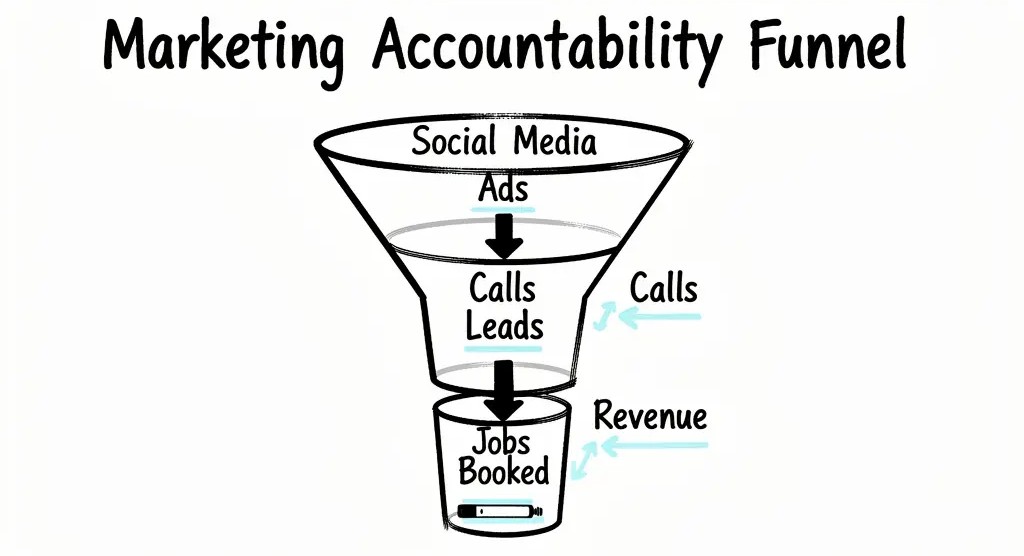
You do those three things and digital marketing becomes night and day. Completely accountable. No more magic. You can clearly trace social media posts, content, and ads to calls, then trace those calls into ServiceTitan or whatever CRM you use, and see how many jobs you’re booking and how much revenue you’re generating.
How to catch a lazy agency
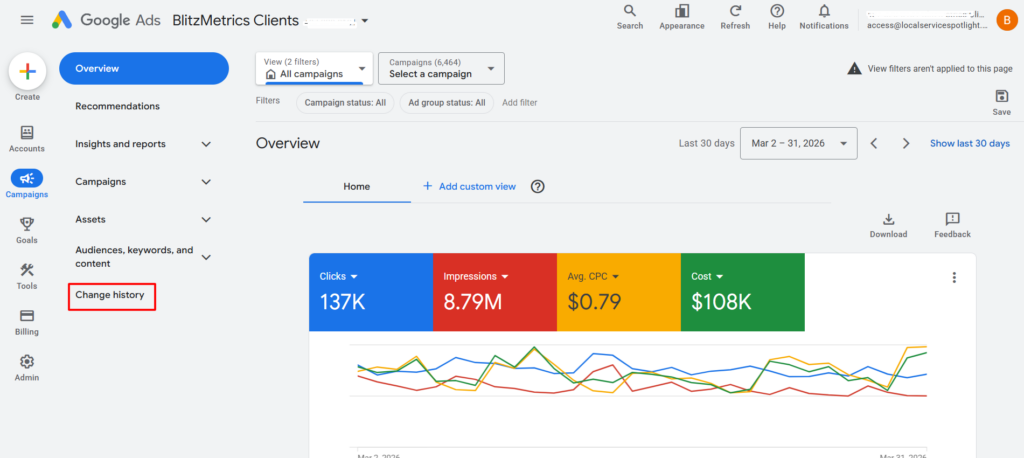
Here’s something practical you can do right now. Log into your Google Ads account, go to the left side, click on Change History, and see who made what changes. Did they add keywords? Change bids? Create new ads? Or did they make a bunch of changes in the first month and then forget about you? That’s what usually happens.
Then look at quality scores. If the bulk of your keywords are quality score six or below, that’s a problem. I bet the keywords driving the most conversions are brand terms, meaning people searching your company name. Your non-brand cost per lead is probably sky high. A thousand dollars per new client doesn’t work. Three thousand dollars per new client on a $14,000 air conditioner doesn’t work either.
Transparency is everything
Most agencies won’t give you the data or the metrics. I believe in complete transparency. You should know what’s going on with your business and your marketing at all times.
Here’s something no agency will talk about: at some point, usually after 60 to 90 days, you’re going to want to take things in-house or fire the agency. Either because you’re not happy with the results, or because the processes we put in place start building your internal team. Your technicians become part of your marketing team through UGC (user generated content). You start building in-house capabilities, and the agency builds new things on top of that.
That’s the efficiency necessary to succeed in modern digital marketing. Google and Facebook are trying to kill agencies because they keep screwing things up, creating friction, overcharging, and then blaming the algorithm when things don’t work. The real issue is incompetence, and Google is tired of being blamed.
I wrote a full guide on how to own your own marketing here.
I’ve been working with Dan Leibrandt, who now runs Pest Control SEO, helping pest control companies get found online the right way. He follows these exact same standards and processes. If you’re in pest control and need an agency that actually practices what we preach in this article, check him out at pestcontrolseo.com.
Dennis Yu
Dennis Yu is the CEO of Local Service Spotlight, a platform that amplifies the reputations of contractors and local service businesses using the Content Factory process. He is a former search engine engineer who has spent a billion dollars on Google and Facebook ads for Nike, Quiznos, Ashley Furniture, Red Bull, State Farm, and other brands.
Dennis has achieved 25% of his goal of creating a million digital marketing jobs by partnering with universities, professional organizations, and agencies. Through Local Service Spotlight, he teaches the Dollar a Day strategy and Content Factory training to help local service businesses enhance their existing local reputation and make the phone ring.
Dennis coaches young adult agency owners serving plumbers, AC technicians, landscapers, roofers, electricians, and believes there should be a standard in measuring local marketing efforts, much like doctors and plumbers must be certified.