
 by
by
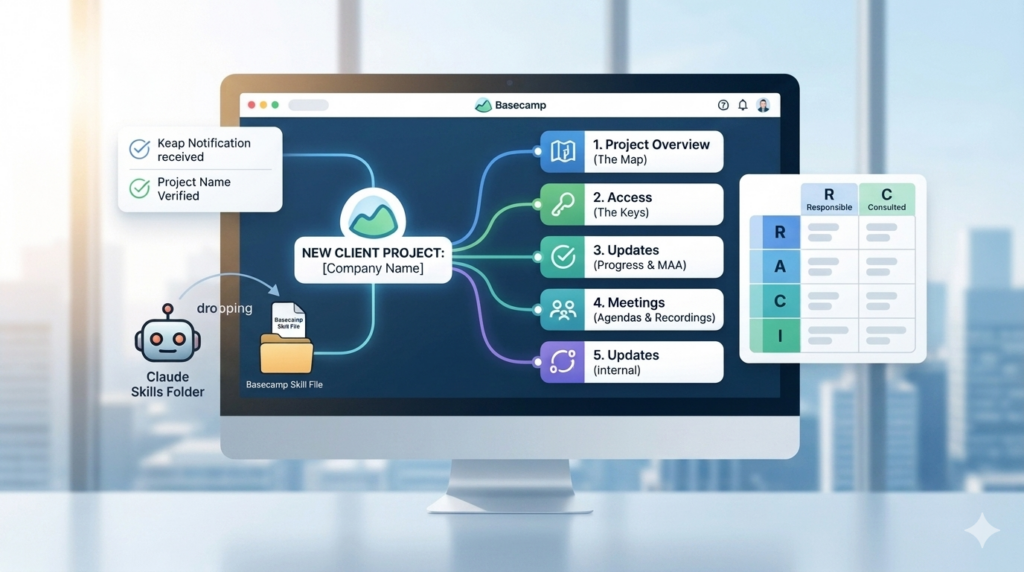
Every client we take on gets a Basecamp project, and it exists before they ever talk to us again.
The reason is simple. Whatever isn’t written down in a shared place lives in somebody’s head or somebody’s inbox, and that’s where work goes to die. Six months later nobody can tell what was promised, what was delivered, or who dropped it.
This is a process a person can follow, and it’s also a process your agents can run for you. At the end of this article there’s a skill file you can download and drop into Claude, so the whole thing happens without anyone doing it by hand. But read the process first, because an agent running a process nobody understands is just faster confusion.
It starts with Keap
When someone signs up for the Conversion Engine package, the Maps Visibility System, the AI Builder program, or a Claude AI agent setup, Keap fires an automatic email to Operations.
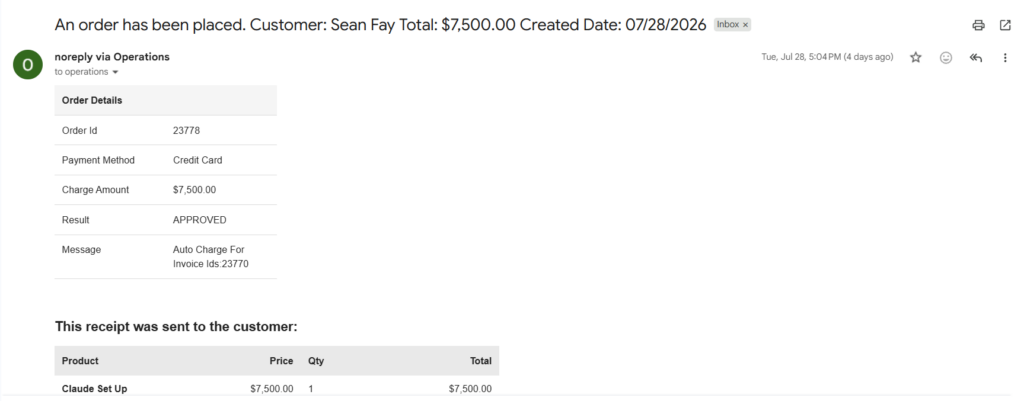
Before creating anything, Operations searches Basecamp for that client name to make sure someone on the team hasn’t already set it up. Two people seeing the same Keap email and both acting on it is how duplicates happen, and once there are two projects the history splits between them.
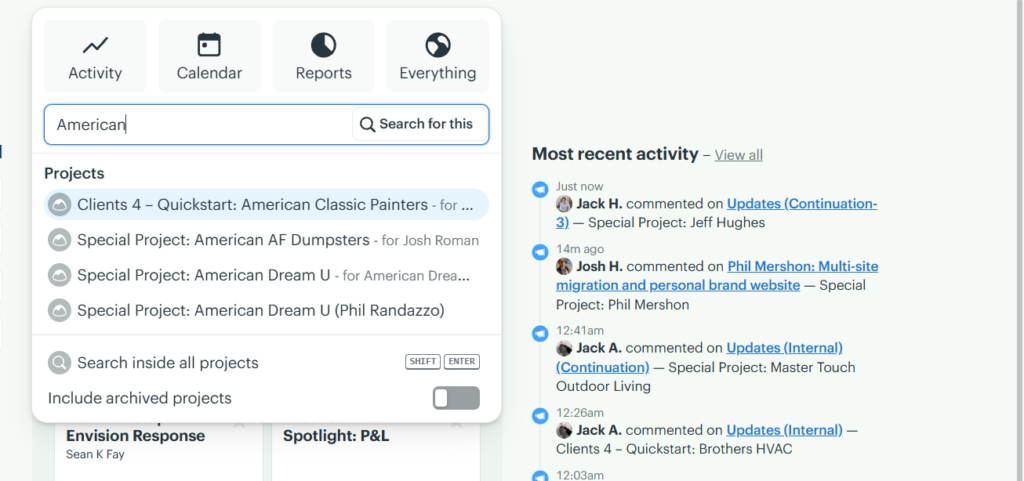
If there’s nothing there, the project gets created that day. Not after the kickoff call. The client should open Basecamp and find an organized place waiting, not watch us assemble one while they sit there.
Name it correctly
Sloppy naming is one of the fastest ways to create chaos, so the name follows the package.
Conversion Engine and Maps Visibility clients are named Clients 4 – Quickstart: Company Name, for example Clients 4 – Quickstart: Cardinal Treatment Center.
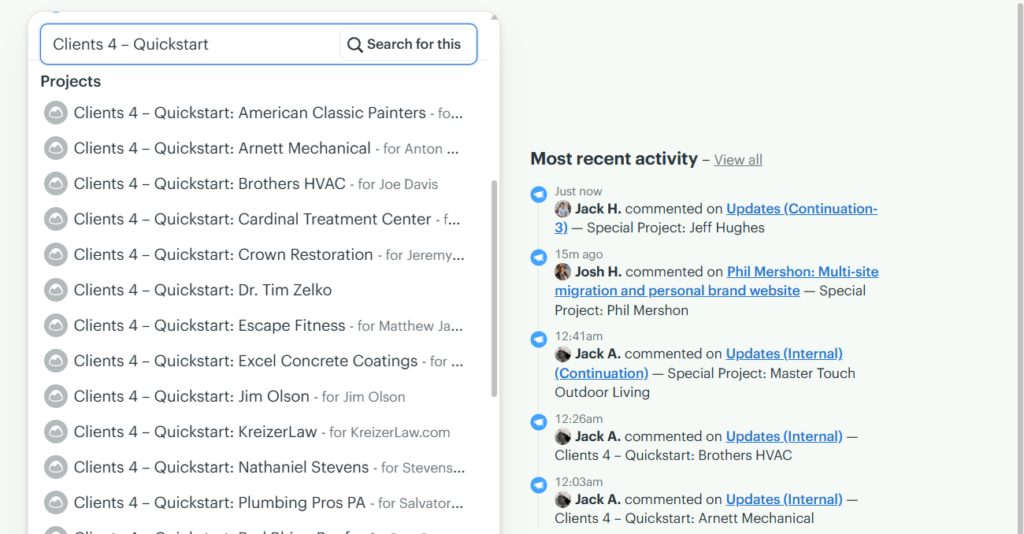
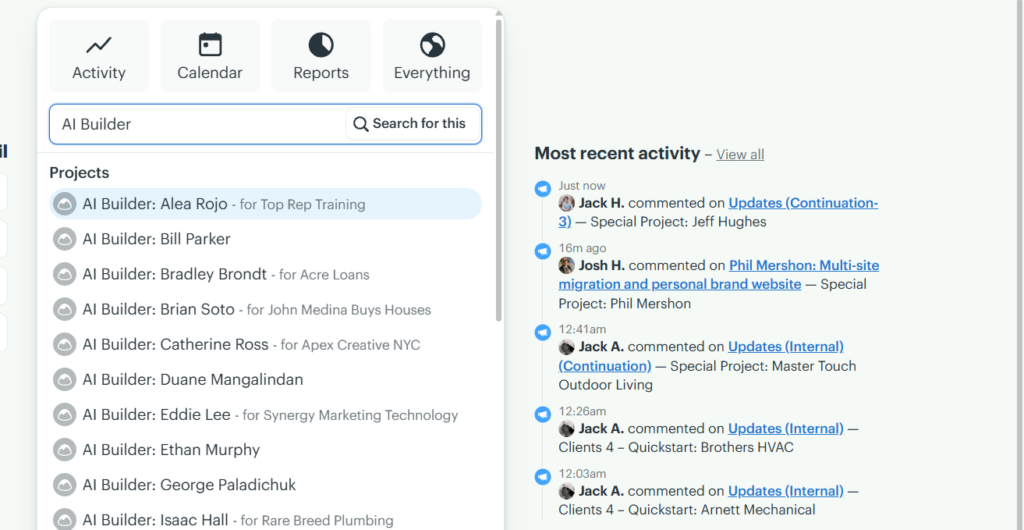
AI Builder projects are named AI Builder: Name, for example AI Builder: Ethan Murphy.
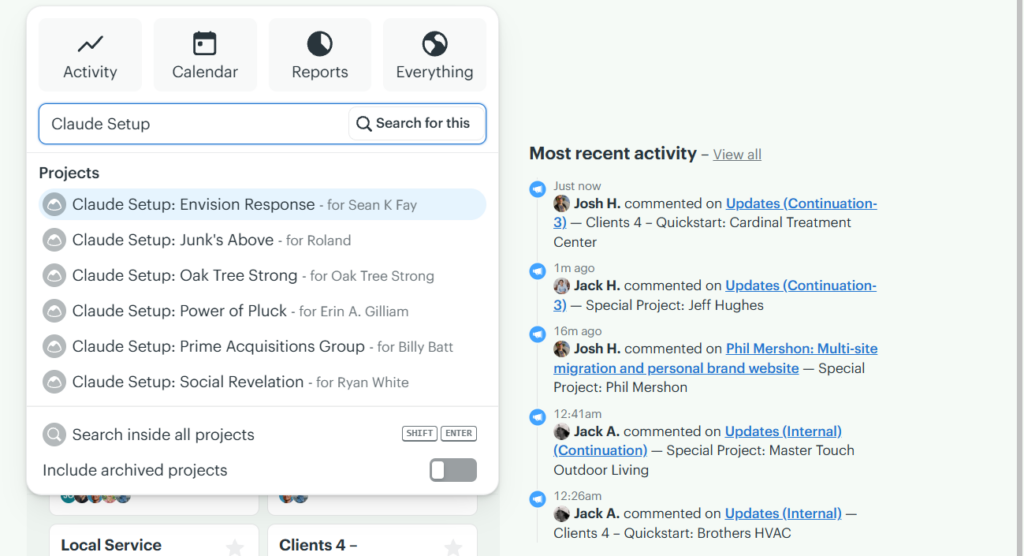
Claude setups are named Claude Setup: Company Name, for example Claude Setup: Junk’s Above.
The same discipline applies to threads and tasks. A task name is a command, so “Obtain access to John Smith’s Facebook Business Manager” beats “Access.” The full naming rules cover the rest.
Five threads, and why each one exists
Four are client facing and one is internal.
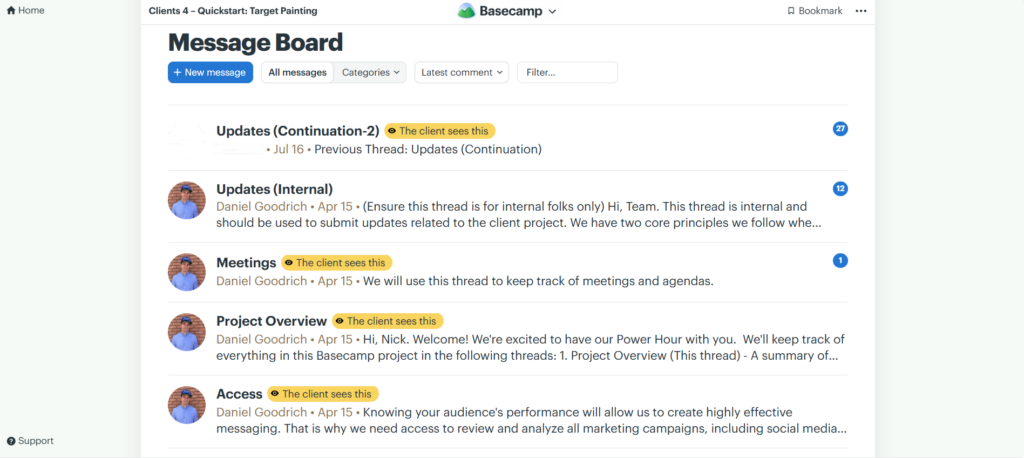
Project Overview is the map. Without it, the client posts everything into whichever thread they happened to open first. So this thread tells them what the others are for, along with the RACI, what they signed up for, and what our audit already turned up about their business.
Access is where we ask for the keys. We can’t diagnose what we can’t see. Required is the website, Google Business Profile, Google Ads, LSA, Google Search Console, Google Analytics, Google Tag Manager, YouTube, Facebook Company Page, Facebook Ad Account, and CallRail. Instagram and LinkedIn are optional.
Updates is client facing progress, and it runs on two principles.
MAA is metrics, analysis, action. You start where the client makes money and know the system they use to measure it, then work up the funnel to leads and traffic. Otherwise you end up pumping out videos, views, and clicks all month while the phone sits silent. MAA is the x-ray that shows you exactly where the bone is broken. Analysis is the step everyone skips, which is why the full walkthrough is worth reading before you write your first one.
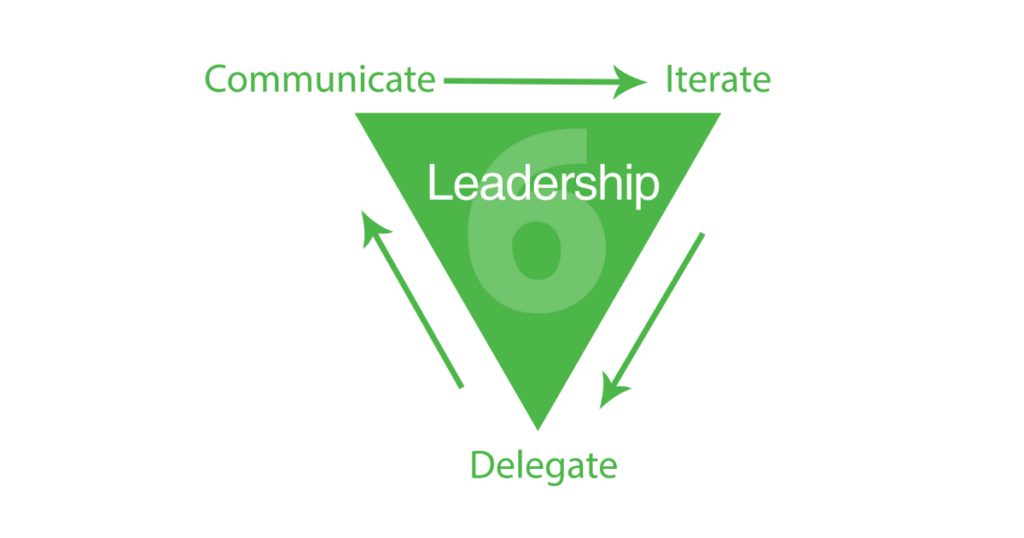
CID is communicate, iterate, delegate. We respond within 24 hours and ask the client for 72.
Meetings holds agendas, scheduling, and anything we need in hand before a call happens. Recordings go here too, so nothing said on a call lives only in somebody’s memory.
Updates (Internal) is the same two principles turned inward, and the client can’t see it. What’s blocked, what went wrong, what we’re trying next. Keeping it separate means the client thread stays clean and nobody has to soften bad news to their own team.
Who gets invited
Invite the client, plus anyone on their side they’ve asked us to include.
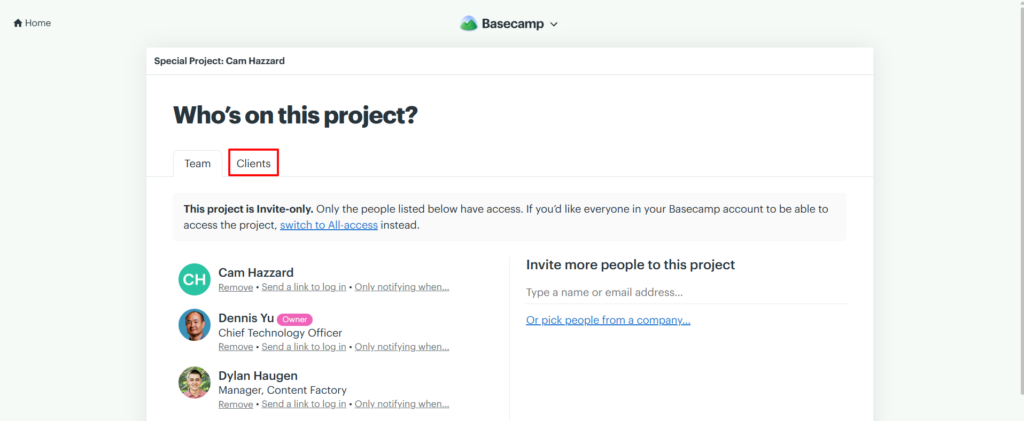
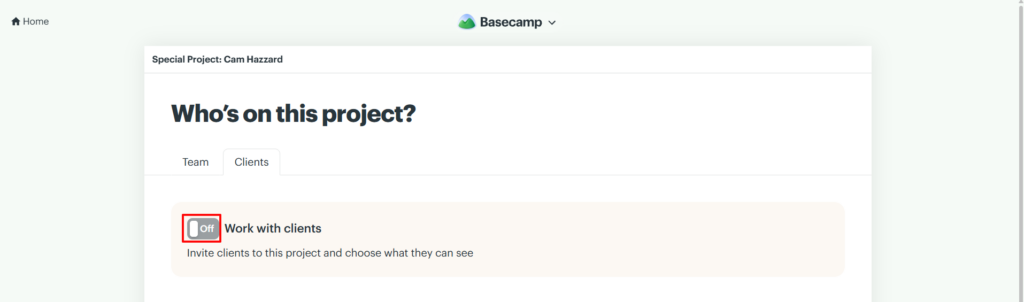
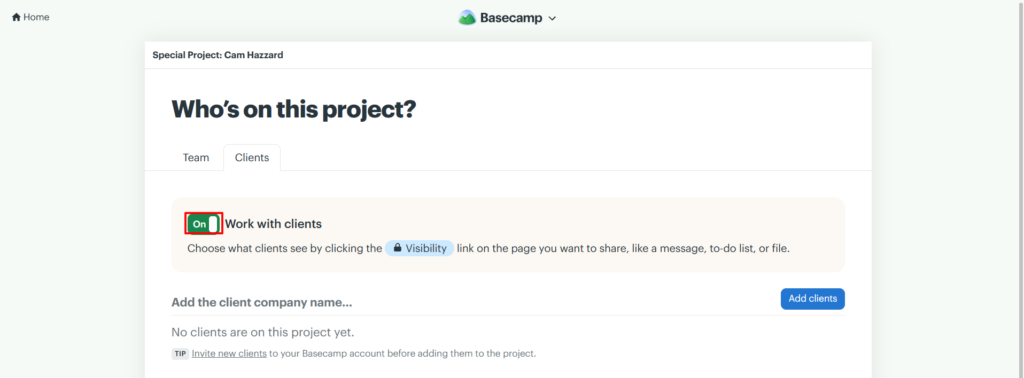
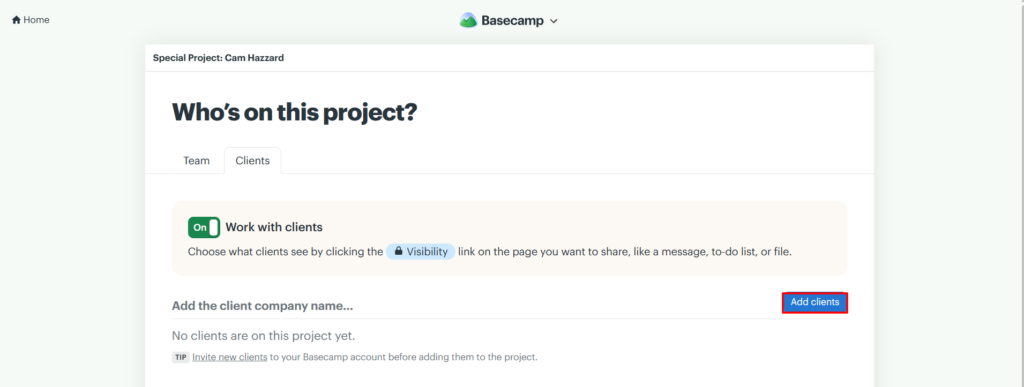
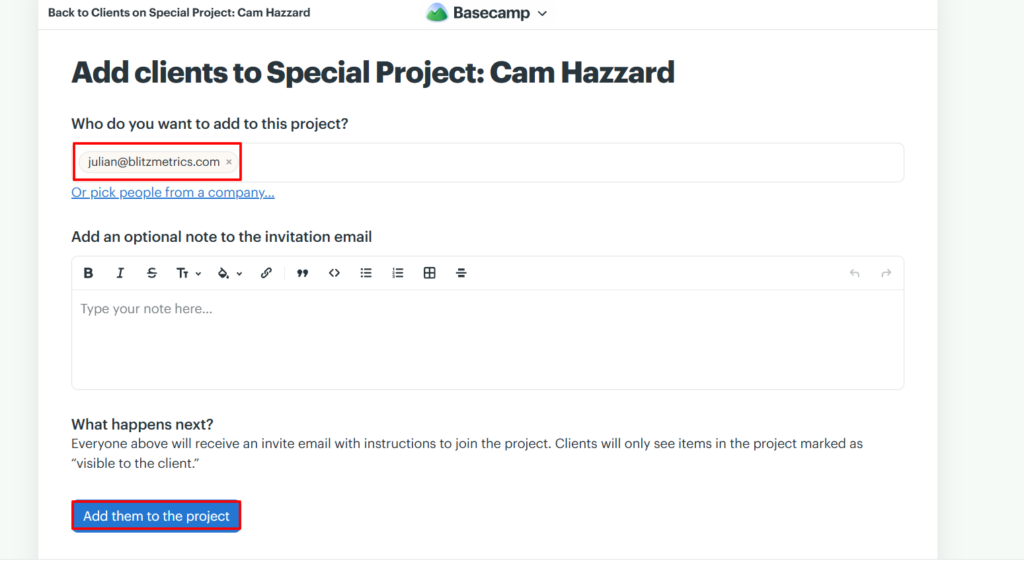
On our side, invite the team members who will actually be involved, based on the RACI. R is responsible, the person doing the work. A is accountable, the project lead the client talks to. C is consulted, our Director of Operations. I is informed, which is me.
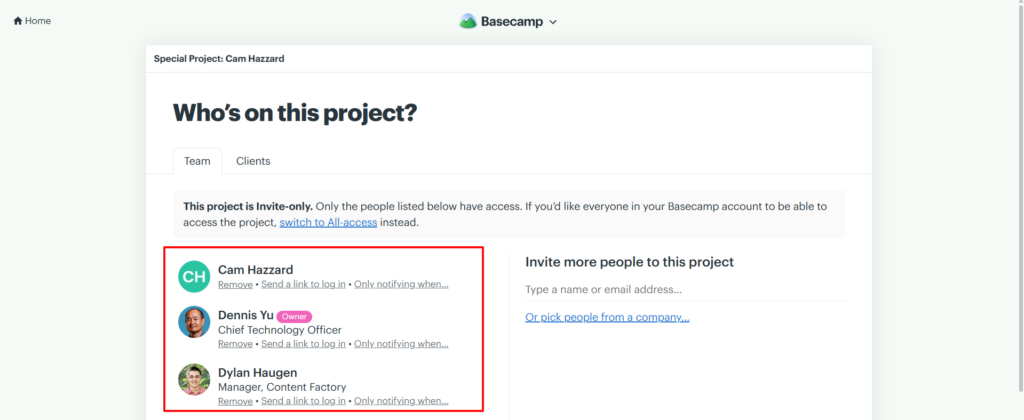
Put real names in. A RACI with blanks in it is worse than none at all, because now nobody knows who to chase.
RACI also governs who stays subscribed to a thread. Without it, teams either reply to everyone and flood inboxes, or they message only me and create a bottleneck. Any thread with more than six subscribers almost always needs trimming.
Move the history in
Whatever already exists gets carried over before work starts.
Relevant email threads with the client go into Updates, so the team has the full context instead of hunting through somebody’s inbox for what was agreed.
Any Zoom recordings go into Meetings.
Then email the client to tell them the project is set up and an invitation is coming. Ask them to accept it, and let them know our team will help if they hit any trouble getting in.
Write for what they bought
The boilerplate above is a starting point, not a deliverable.
Before writing thread descriptions, read the page for what they signed up for, then the audit, then anything that came out of a call or the email history. What we promised on that page is what they’re expecting to see in Basecamp, and if the two don’t line up, they notice immediately.
If you’re having an agent draft it, give it the goal and the context. You don’t prompt a new team member. You explain what we’re trying to accomplish and what we already know, and this is no different.
Then read what comes back before it goes up. I’ve seen thirty pages of untouched AI output posted as work, which just leaves someone else hunting for the missing context.
We already know more than they think
Our agents audit every buyer before they purchase, mapping the credibility gap between what a business claims about itself and what we can verifiably prove. That audit hands us their GCT, meaning goals, content, and targeting, in more detail than any form ever collected.

So post those findings into Project Overview and work from there. Sending a client off to gather information already sitting in our hands is friction we don’t need.
The standard itself hasn’t moved. Without clear GCT we don’t take the work on, regardless of budget, because taking something from nothing is a thousand times harder than growing something that already converts.
What keeps this working
Never mark your own task complete. Just because you think the work is done doesn’t mean it is. The client has to believe it too, and for a service business the perception of great work matters as much as the work.
Document as you go. If you’re not writing down what you did, nobody can coach you and nothing improves.
Account managers talk to clients wherever the client is comfortable, whether that’s a DM, a text, email, or a call. That’s fine. What matters is that it lands back in Basecamp in the weekly MAA, because a conversation nobody wrote up is a conversation the rest of the team never had.
Let your agents run it
Anything you’ve done more than a few times should become a skill your agents can execute, and client onboarding is exactly that kind of task.
Download the skill file below and drop it into your Claude skills folder. Your agent will check for duplicates, name the project, create the five threads, write each description from the package page and the audit, invite people according to the RACI, and move the email history and recordings across.
Adapt the naming table to your own tiers if you run a different structure. Everything else holds.
Originally published .
Dennis Yu
Dennis Yu is the CEO of Local Service Spotlight, a platform that amplifies the reputations of contractors and local service businesses using the Content Factory process. He is a former search engine engineer who has spent a billion dollars on Google and Facebook ads for Nike, Quiznos, Ashley Furniture, Red Bull, State Farm, and other brands.
Dennis has achieved 25% of his goal of creating a million digital marketing jobs by partnering with universities, professional organizations, and agencies. Through Local Service Spotlight, he teaches the Dollar a Day strategy and Content Factory training to help local service businesses enhance their existing local reputation and make the phone ring.
Dennis coaches young adult agency owners serving plumbers, AC technicians, landscapers, roofers, electricians, and believes there should be a standard in measuring local marketing efforts, much like doctors and plumbers must be certified. He has appeared on 353 podcasts with 619 credited episodes — see the full list of his podcast appearances.