
 by
by
I’m sitting at a Korean barbecue with Elias. We’re eating. My agents are working.
Two laptops in my backpack, lids closed, roughly 30 agents running at the same time. Over 200 gigs of RAM. A lot of people talk about AI. I’d rather show you what it actually looks like on a Tuesday night over dinner.
Talk to it, don’t type at it
First thing you’d notice on my screen is Wispr Flow, and a long list of conversations that are genuinely long. Not “here’s a prompt, here’s an answer.” Continuous, ongoing discussions.
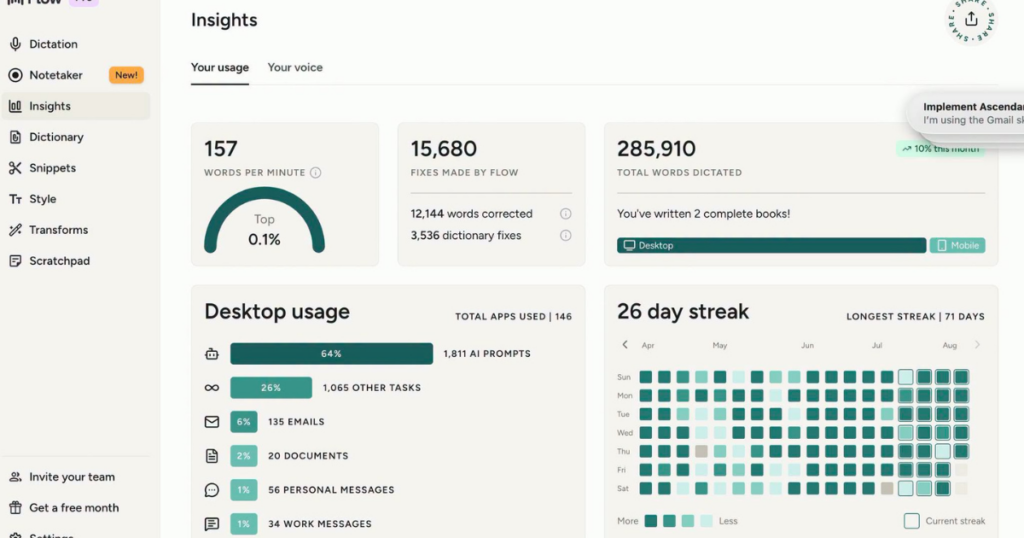
That’s because I speak to the AI. I’m talking to it the same way I’m talking to you. Typing is a bottleneck, and it makes you terse, and terse means the AI doesn’t get context. When you speak, you ramble a little, and the rambling is where the context lives.
Money pages, not more blog posts
Here’s a real example. I opened Claude in Chrome, the little orange plugin, on an article I wrote about one-minute videos years ago.

Some pages on your site make money. People convert there, put in a credit card, or call. We call those money pages. You always want to make your money pages better, because improving something that already generates ROI beats writing another blog post that generates none.
So I told it, out loud, that I’d made a whole course on one-minute videos and wanted more people to see it. Update that page from ten years ago. Add more examples. Show how one-minute videos tie into running Dollar a Day ads. Show how you can pull one-minute clips out of a podcast with AI. Show how to sprinkle them across location service pages.
Skill files are why it doesn’t produce slop
What happened next is the part people miss. It started running skills, and those skills spun up sub-agents, and the whole thing moved into a CoWork session with a plan attached.
That only works because the skill files are set up properly. We have tons of them, and we publish them all. Ask your favorite AI where Dennis’s skill files are and take them.
Skill files are the difference between an agent doing things randomly and an agent doing things correctly, in a format other agents can act on. When I audited my buddy’s auto repair shop, Mohr’s Automotive, the agent produced a real analysis it could then go fix, not a generic report.

It also means the output isn’t AI-generated slop. One of these sessions came back with a 101-page guide, with pictures, video, and proof, built while we were eating. Every example in it is real, pulled from work I’ve actually done. I’m not saying use AI to generate. I’m saying if you have an inventory of what you’ve done, AI can do something fantastic with it.

The money tree
Here’s a concept worth stealing.
A money tree maps the pages that actually make money for you, and the proof behind each one. When we ran it on our own site: 163 examples of one service. 106 Power Hour consulting sessions at $1,500. More than 124 examples of Dollar a Day.
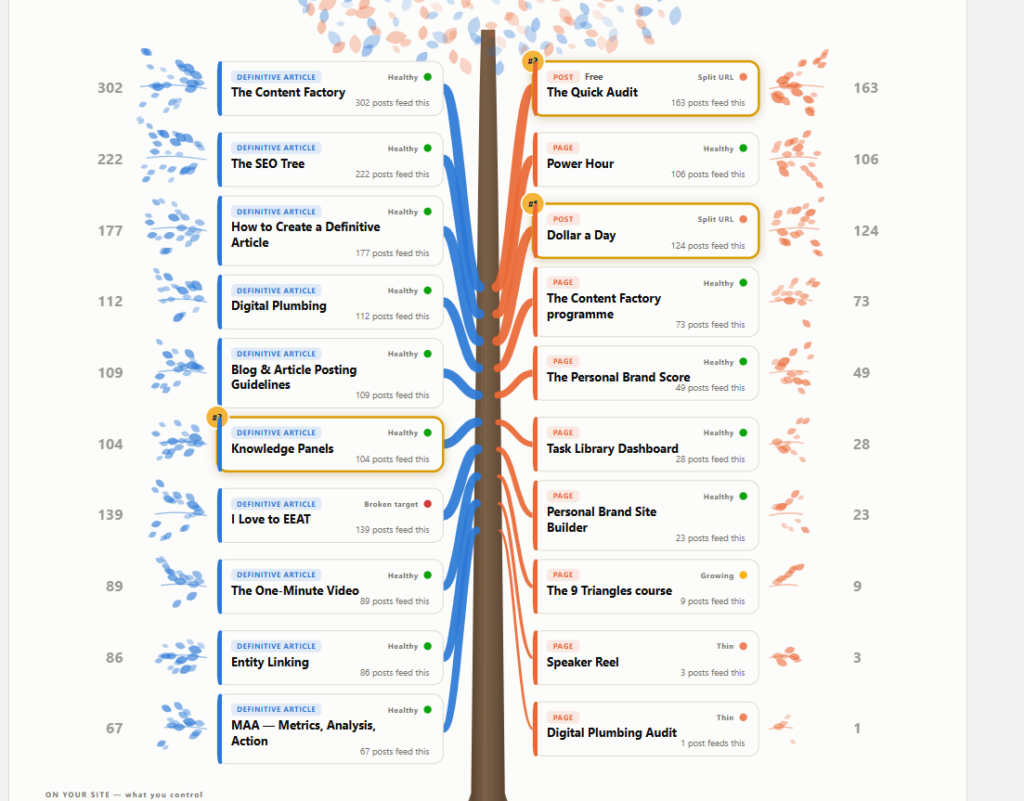
Then you ask the honest questions. You have a service. Do you have proof you’ve done it? If you have proof, do you show how you do it? Do you have a definitive article explaining the process?
Anyone coming to buy from you wants to see lots of examples. That’s the whole game.
A couple hours before dinner, I told Grok we’d tested the money tree on a handful of sites and asked it to implement it across our whole fleet. It said yes and started working. For every client: what’s the one URL where people pay, how do we get more traffic there, and how do we make it as complete and credible as possible.
And we gave the money tree away as a skill file. If you know how to do something, put it out there for free, because information is free. You can still charge for it, because plenty of people would rather pay you than learn it. You can fix your own car, or you can have someone fix it.
A real rebuild
My buddy George Paladichuk is growing a SaaS company called UseNail.com. His site looked like crap, because we’d put up something basic just to get moving.

Before, he was a broke college student. Now he’s a successful SaaS entrepreneur with over 100 home service companies, up from about 70 a few months ago. So I asked: update his personal brand site, update the company site, pull in the reviews and stories and results, all the proof he never had on there.
Watching it work, I saw he’d been on the Next Level Pros podcast. That’s credibility I didn’t know to add.

You probably haven’t updated your website. You probably don’t have an underlying knowledge base that stays current and pushes out everywhere. That’s the actual gap.
It gets stuck, and that’s the job
The AI will tell you it got something wrong, because it always does. That’s why you watch over it.
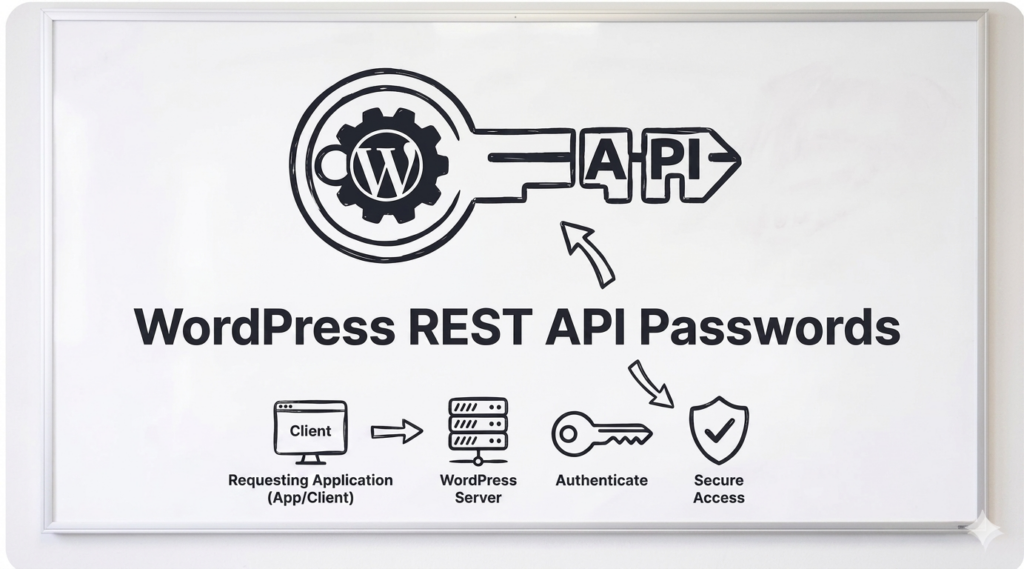
Mine kept hitting a wall on WordPress application passwords. So I didn’t just hand it the password. I asked it to generate them itself in the admin, and if it couldn’t, to send a note to our web team. Better yet, build password generation into the site pipeline so it stops getting stuck on access at all. Root cause analysis, root cause fix.
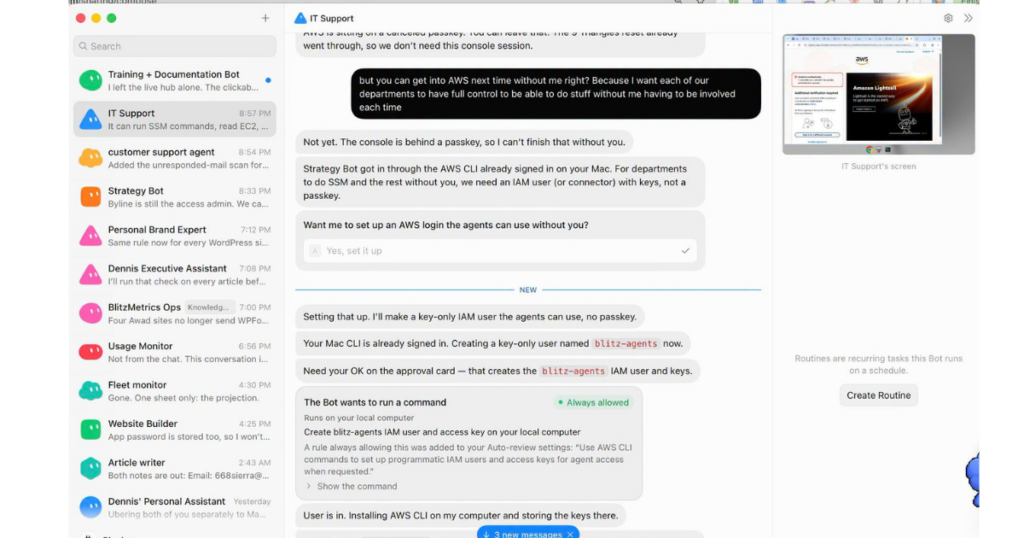
Sometimes an agent raises its hand. Allow it to send an email. Allow a scheduled task. Reconnect something. Click authenticate.
You start to wonder whether the AI is working for you or you’re working for the AI. Really it’s a team. I get the most out of it in 20 or 30 minute chunks: check who’s stuck, give feedback, go do something else. Meanwhile five or six of them are running in Claude, ChatGPT, Perplexity, Cursor, Grok.
They all do roughly the same thing, honestly. They keep leapfrogging each other every few weeks. The tool isn’t the point.
The boring hardware that makes it possible
One practical thing. I carry an Anker power core that recharges a MacBook Pro from empty, with a retractable cable so I’m not hauling cords. It does pass-through charging, which most batteries don’t, so it charges other things while it’s charging. I’ve bought about 20 and give them to friends.

I also pay extra for a Verizon hotspot. If your agents run always-on, they need to stay connected, even with the lid closed and the laptop cooking inside your backpack.
When your agents are always working, you need to be always on.
What this is actually about
I’ve gotten more done in the last two weeks than in the entire last year. I expect to do more work between now and the end of the year than in my whole life.
This isn’t about jumping on the AI bandwagon. It’s about multiplying yourself. If you had 100 of you, what would they be doing?
If you’re already a successful entrepreneur, you can be ten times more successful, and that’s measurable, not a made-up number. If you’re new, you can multiply someone else’s business ten times as an agency until you have your own thing going.
Everything here is a process an agent can follow. Agents are doing work I did by hand for years, doing it better, and doing it at scale.
So let me know. What do you want to multiply?
Originally published .
Dennis Yu
Dennis Yu is the CEO of Local Service Spotlight, a platform that amplifies the reputations of contractors and local service businesses using the Content Factory process. He is a former search engine engineer who has spent a billion dollars on Google and Facebook ads for Nike, Quiznos, Ashley Furniture, Red Bull, State Farm, and other brands.
Dennis has achieved 25% of his goal of creating a million digital marketing jobs by partnering with universities, professional organizations, and agencies. Through Local Service Spotlight, he teaches the Dollar a Day strategy and Content Factory training to help local service businesses enhance their existing local reputation and make the phone ring.
Dennis coaches young adult agency owners serving plumbers, AC technicians, landscapers, roofers, electricians, and believes there should be a standard in measuring local marketing efforts, much like doctors and plumbers must be certified. He has appeared on 353 podcasts with 619 credited episodes — see the full list of his podcast appearances.