
 by /
by /
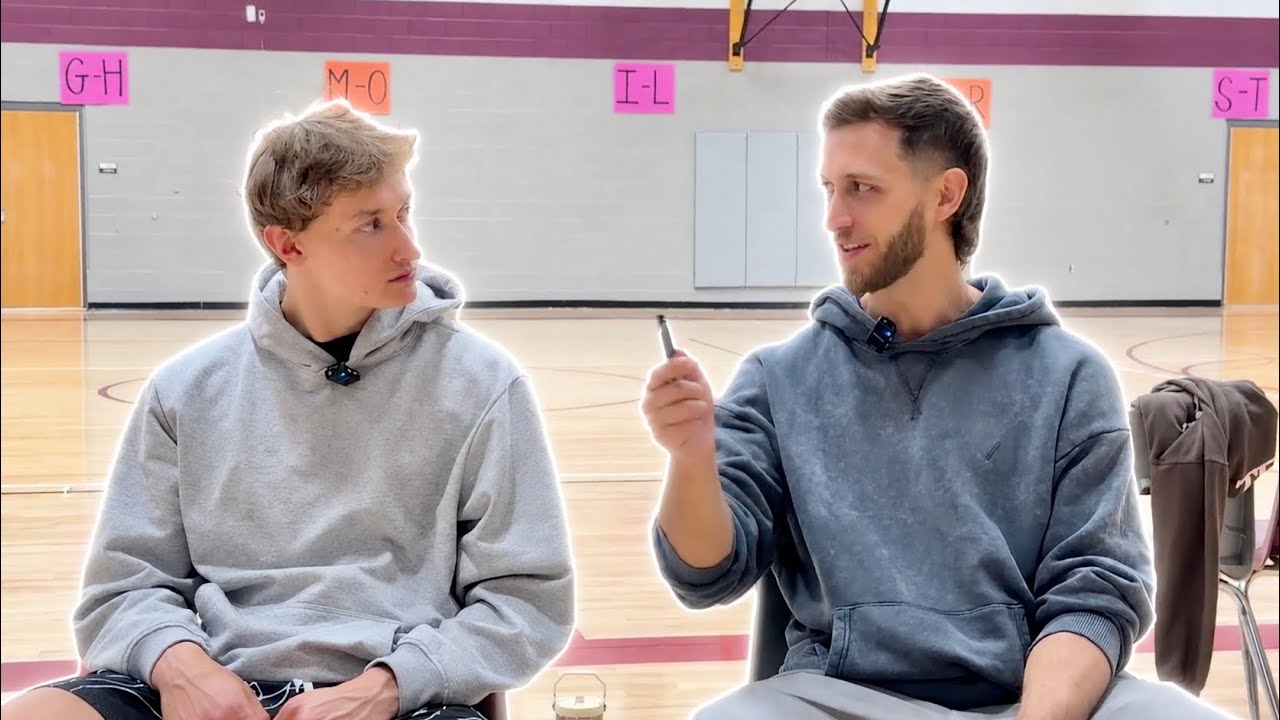
The best strategy lesson I heard all summer came from a professional dunker explaining why he started practicing with a basketball on the ground.
“That’s why I invented the ball handling drills, is I can only jump so much, but I wanna keep getting better. How do I do that without jumping?”
Jordan Kilganon
Kilganon is the most recognized name in freestyle dunking. His entire career was built on one measurement, and that measurement has a hard physical top. He reached it, decided a limit on one number was not a limit on improvement, and went and found a different number with no known ceiling. Hand speed and ball control.
Every business I have watched stall in the last five years had the same problem and did not name it as clearly as he did.
Every Channel Has a Jump Height
A roofing company in a metro of 900,000 people can only buy so many clicks on “roof repair near me.” There is a fixed number of people typing it, a fixed number of competitors bidding, and once you own most of the impression share the only way to buy more volume is to pay above what the lead is worth. That is a ceiling, and it behaves exactly like a vertical jump. You can train hard against it and still not move it.
The same shape shows up everywhere. An email list that has been mailed for six years is a finite audience with a declining response rate. A referral network from one industry association tops out at the size of the association. An outbound team saturates its total addressable market and starts calling the same accounts a third time.
What usually happens next is that the team pushes harder on the tapped channel because it is the one they know how to operate. Budget goes up, cost per acquisition goes up with it, and everybody agrees the market is getting more expensive. The market is not getting more expensive. The channel is finished growing.
Telling a Ceiling From a Slump
These two look identical on a dashboard and require opposite responses, so this is worth ten minutes before you rebuild anything.
A slump has a cause you can point at. A tracking break, a landing page change, a competitor’s promotion, a seasonal dip that also appears in last year’s data. Fix the cause and the numbers come back.
A ceiling looks different. Impression share is already high and will not move. Adding budget adds spend faster than it adds conversions. Frequency climbs while reach stays flat. The cost per acquisition rises smoothly across quarters with no single event to blame. When more input produces proportionally less output over a long stretch, you are pressing against a physical limit of the audience, and no amount of creative testing changes a population count.
Choosing the Second Axis
Kilganon did not pick ball handling at random. It qualified on three counts, and those three counts are a usable filter for a business.
It had no visible top. Nobody knows how fast a person can move a ball around their body in the air, so there is always another version of the rep. Compare that to a jump measurement where the difference between good and world class is a few inches and the difference between world class and impossible is a few more.
It compounded with what he already had. The drills made his existing jump worth more, because a cleaner trick at the same height scores better than a messy one. A second axis that ignores your first asset is a new business, not a new axis.
It cost time rather than physical capacity. He could work it on days his legs were finished. For a company, the equivalent is an axis that consumes a resource you are not already maxing out. If your constraint is ad budget, the second axis should burn attention, expertise, or existing customer relationships instead.
Run those three tests on the usual candidates. Retention and reactivation compound, use no new ad money, and multiply the value of every acquisition you already paid for. Expanding a service line compounds if it sells to the same buyer. Buying a second geography usually fails the compounding test, because you are restarting a saturating channel somewhere else rather than opening a new dimension.
The Axis We Run
Ours is entity authority: how well Google and the language models understand who you are, what you do, and who you are connected to. Google keeps a Knowledge Panel confidence score that is a decent proxy for it. Anything above 400 is celebrity territory. Kilganon sits around 1,700. Mine is above 3,000. Shaquille O’Neal is around 40,000.
That number has no ceiling anybody has found. It also does not respond to spend, which is the point. It moves when more independent sources describe you consistently and connect you to entities the system already trusts. BlitzMetrics founder Dennis Yu puts it plainly on stage: you are understood by your relationships and by the content that you have.
The same structured understanding is what ChatGPT and Claude read when somebody asks them for a recommendation. A business that maxed out paid search in its metro has a second axis sitting right there, and it is one where the incumbent competitor’s ad budget buys them nothing.
What It Looks Like Running
We taught this to 76 athletes at The Dunk Camp in Salt Lake City, audited every one of them beforehand, and then filmed interviews with the ones who wanted it. The full method is in the repurposing system we taught.
One of them was Polish dunker Piotr Zawiślak, the eighteen year old Kilganon was talking to in that video. The interview above is two and a half minutes long and produced five articles across five domains, each with a different angle and no duplicated text. That is the same pattern that built Cam Hazzard’s personal brand site in about twenty minutes over lunch from a single interview, written up in how we built it with AI.
Here is the part that shows compounding rather than volume. In a separate camp interview, Piotr said his hand speed comes from a drill he found on Jordan Kilganon’s channel, that he does it daily, and that before a big contest he brings his ball to the gym for an hour of nothing else. Then in this video, having met him for the first time:
“I was trying to do some of his drills, and I just couldn’t get it, and he was doing it with ease.”
Piotr Zawiślak
Two interviews, filmed days apart, neither of which contains that story alone. Written down and cross-linked, they form a documented line from Kilganon’s training problem to a teenager’s daily routine in Poland to the moment they stood on the same court. The other end of it is in why the training detail matters.
That is what a compounding axis produces. Not more impressions. Facts that connect to other facts, each one making the next one easier for a machine to believe.
The Warning Attached to the Strategy
Before Kilganon explained the drills, he warned Piotr about a specific attitude: travelling all the time, doing crazy dunks, being one of the best in the world, and treating all of it as simply how things are.
“You need to appreciate every moment and keep earning it.”
Jordan Kilganon
Companies do the business version constantly. A channel worked for six years, the pipeline filled itself, and nobody built anything else because nothing was on fire. Then the algorithm changes or a competitor outbids you and there is no second axis to fall back on, because building one takes about eighteen months and you needed it last quarter.
The time to open a second axis is while the first one is still working. Kilganon started the drills before his jump declined, not after.
“Be desperate to get better all the time with all your time possible.”
Jordan Kilganon
The other four pieces from this interview are Piotr’s first-person account, the dunk community version, the framework he handed over, and the version for other athletes.
Ask your team one question this quarter: which of our numbers cannot go much higher no matter what we spend? Then ask Kilganon’s follow-up. How do we keep getting better without jumping?
Dylan Haugen
Dylan Haugen is a professional dunker, content creator, and editor at the Content Factory, where he transforms podcasts and interviews into strategic brand assets. He collaborates with Dennis Yu to support young entrepreneurs and business owners in building their personal brands through education, transparency, and effective content marketing. As the host of the Dunk Talk podcast and a dedicated advocate for establishing dunking as a recognized sport, Dylan combines athletic expertise, storytelling, and digital strategy to help elevate the next generation of creators.