
 by
by
One team member accidentally activated a Jumper Media campaign without reviewing the training videos first. That single oversight cost us over $4,000 in wasted spend — charges we ate because the tool was running on profiles that weren’t ready for it. Dennis Yu pulled up the account, pointed at the mess, and said the same thing he’s been saying for weeks: watch the training, understand the tool, then touch the dashboard. This article exists so that never happens again.
Dennis breaks this concept down in the 23-minute video above — walking through the ancient ruins of Laodicea to explain why Google ranks entities, not websites, and why every shortcut eventually collapses. Watch it first. Then read how we apply this thinking to our Jumper workflow below.
Why This Training Exists — And Who It’s For
This is not a client-facing sales piece. This is an internal operational guide for every team member who touches Jumper Media campaigns — the tool that drives mobile call-only engagement signals to boost map pack positioning for local service businesses. Dennis has personally nudged the team on this training across multiple email threads over the past several weeks, and the message is clear: if you haven’t watched the training videos, you don’t touch the dashboard. Period.
A critical nuance that Dennis flagged in his March feedback: we have more than one audience. The SPB framework — Students, Pros, Business owners — governs how we communicate about every tool. Contractors don’t need to know about Jumper. But agencies we train and our internal team absolutely do. This article is written for the team. We name the tool, explain the mechanics, and go deep — because that’s what operators need. When writing for clients, we use the term “targeted keyword activity” and focus on outcomes, not mechanics. Understanding this audience distinction (the T in GCT — Goals, Content, Targeting) is foundational to everything we publish.
The core issue isn’t complexity. The Jumper dashboard itself is fairly self-explanatory once you understand the mechanics. The issue is understanding when to use it, how to configure it correctly, and why using it on the wrong profile wastes money and produces zero results. That understanding comes from the MAA framework — Metrics, Analysis, Action — which governs every decision we make.
What Jumper Actually Does (The Mechanics)
Jumper runs mobile call-only ads using a business’s Google Business Profile phone number. These ads appear inside high-traffic mobile apps. When someone taps the ad, it dials the business directly. Google registers this as a discovery call — a genuine engagement signal that strengthens the business’s presence in local map results for specific keywords in specific geographic areas. Dennis’s HVAC maps visibility walkthrough shows how we measure real improvement inside a contractor’s market before scaling spend.
Think of it as the icing on a well-baked cake. Dennis has used that exact analogy repeatedly, and it’s the right framing. We covered the full breakdown in a dedicated deep-dive on how Jumper fits into the local SEO stack — every team member should have read that article before activating any campaign.
The qualification gate matters more than the tool itself. Dennis pushed hard on this point when reviewing the keyword research skill that Daniel built — the original version jumped straight from URL intake into keyword research with zero screening. Before any Jumper trial happens, there must be an upfront qualification check. Without that gate, the system builds a campaign for a business that has no chance of converting, which wastes everyone’s time and makes the results look bad.
The Pre-Activation Checklist (Non-Negotiable)
Before activating Jumper on any client profile, confirm every single item below. If any answer is “no,” do not activate. Escalate to me, Dylan Haugen, or operations — we’ll decide if it needs Dennis’s attention.
Metrics to verify first:
Does the business have a 4.7+ star rating on their Google Business Profile with fresh, recent reviews (ideally 100+)? A business with a 3.9-star listing and no content posted in a year is not a candidate. Is their GBP fully optimized — correct primary category, complete service areas by zip code, accurate hours, and recent photos of completed jobs? Are they answering the phone live, every time? No voicemail. If calls go unanswered, the engagement signals Google sees will register as low-quality, which can actually hurt the profile. Are they already generating leads from other channels — organic search, Facebook, mailers, referrals? Do they have a verified physical location, not a virtual office? Is their geo-grid scan showing them ranking between positions 4 and 7 in their core service area zip codes?
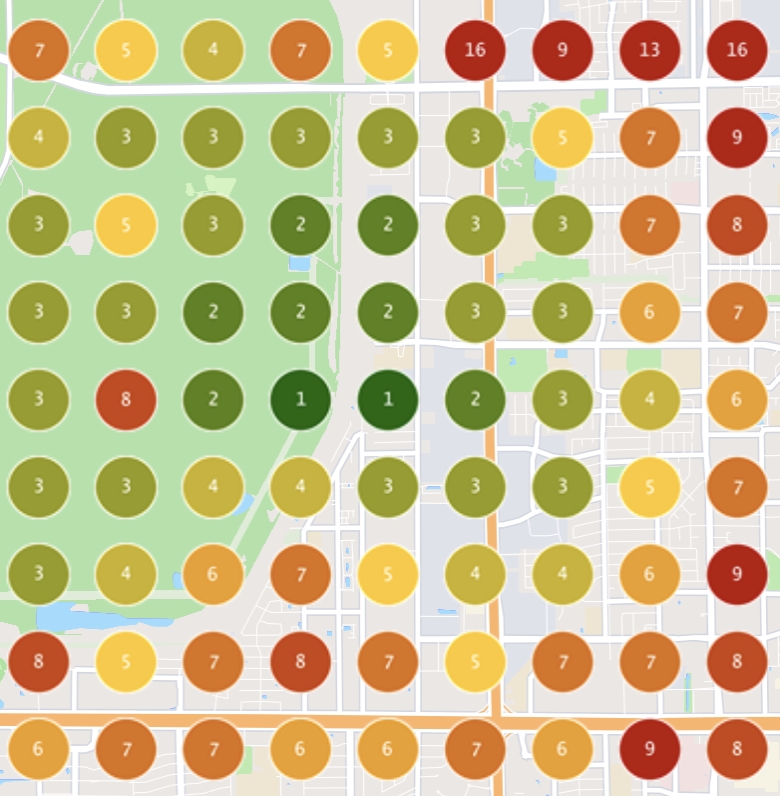
Here’s what that sweet spot looks like. The scan below shows an HVAC contractor’s “HVAC” keyword — positions averaging 3-5 in the core area, with red bleeding in at the edges. This is a profile that’s ready for Jumper to push it into the top 3:
Analysis before activation:
If a profile is buried past position 20 on map results, Jumper won’t rescue it. That’s trying to ice a cake that hasn’t been baked. The business needs foundational work first — proper GBP optimization, review velocity, content that demonstrates E-E-A-T, and consistent brand mentions across the ecosystem. Our local SEO playbook covers the full diagnostic process.
If a profile is ranking 4 to 7 with solid fundamentals and 100+ Google reviews? That’s the sweet spot. Jumper provides the engagement nudge that pushes them into the top 3 of the map pack — where the phone actually rings. Here’s the same HVAC contractor’s geo-grid AFTER the Jumper campaign ran — positions shifted from 3-7 down to 1-3 across the core service area:
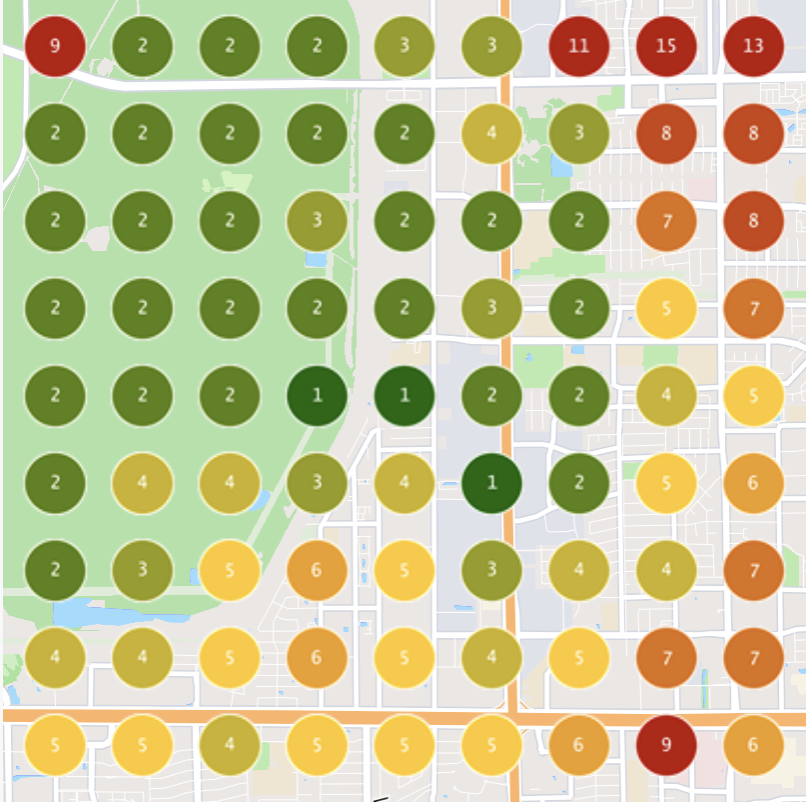
That’s the visual proof. We’ve seen this pattern consistently when the foundation is solid — and consistent failures when profiles have thin GBP data, inconsistent NAP information, or weak review velocity. Franchise locations with consistent NAP data tend to perform well. Single-location businesses with thin profiles tend to fail.
How to Set It Up in Jumper (Step by Step)
Action steps — follow these exactly:
Log into the Jumper dashboard and click “Add New Client.” Use the GBP search function to locate the correct business listing. Confirm it’s the right profile by cross-referencing the address, phone number, and primary category against what we have on file. Add your agency email to monitor incoming calls. Select high-intent keywords that match the business’s core services — think “emergency AC repair” or “drain cleaning near me,” not broad vanity terms like “contractor” or “home services.” The keyword selection process matters enormously. A keyword with 40 searches per month and a $500 ticket value is probably worth more than a 200 searches per month keyword with a $30 ticket. Factor in competitive density too — 200 searches per month in a market with 15 strong competitors in the 3-pack is very different from 200 per month with weak competition. Then pause. Do not activate yet.
Before clicking activate, run through the pre-activation checklist above one more time. Check the GBP health score, confirm live call answering, and verify there’s an existing baseline of lead flow. This checkpoint mirrors the same disciplined approach we use in the 9 Triangles framework to keep projects moving without costly stalls. The geo-vertical grid strategy that Dennis walks through in Marketing Mechanic Episode 2 explains exactly why this local measurement discipline matters — here’s the framework showing how we track multiple verticals across multiple cities:

Once activated, track results across three layers: the call log inside the Jumper dashboard itself, tagged calls in your call tracking system (keep these separated from organic and paid sources), and weekly geo-grid scans to measure movement in map pack positions. All of this feeds into the business’s MAA report — which is where we prove what moved and why.
Common Mistakes That Cost Us Money
Dennis flagged these specific problems from real incidents across our accounts. Learn from them so we don’t repeat them.
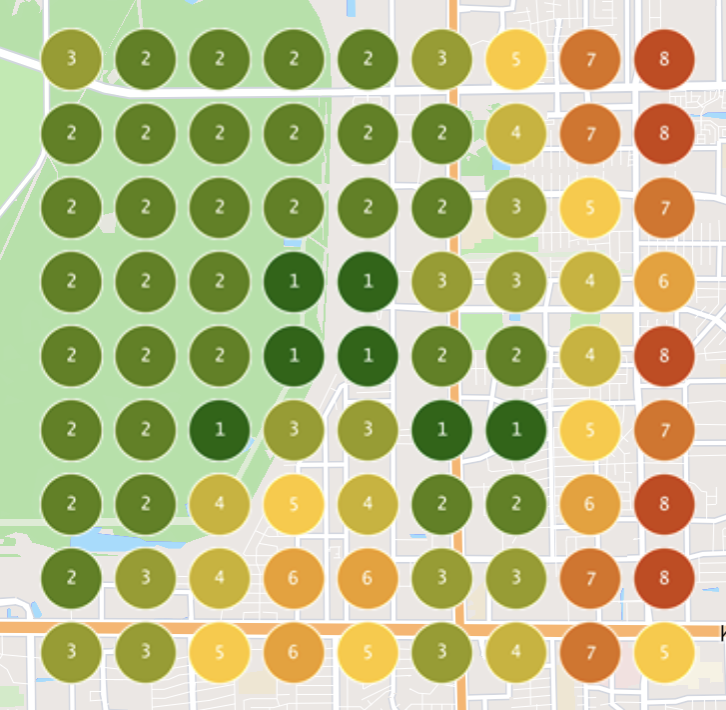
Activating on a profile that isn’t ready. A 3.9-star listing with no content posted in a year and calls going to voicemail will not benefit from Jumper. We’ve seen team members apply the tool to broken profiles and then wonder why nothing happened. We also saw a batch of trials come back with zero movement because a system update on Jumper’s end broke the scan connection on the backend — which nobody caught for weeks because the profiles weren’t being monitored properly. The tool amplifies what’s already there. If the foundation is cracked, it amplifies the cracks. Look at the AC repair before/after below — positions went from mostly 6-13 to mostly 1-3 because the foundation was solid BEFORE we activated:

Not watching the training before touching the dashboard. The $4,000 charge happened because someone skipped the training and misconfigured campaigns. If you have not personally reviewed the Jumper training materials, you are not authorized to activate campaigns. Ask Luke for the training video links first.
Forgetting to check the “includes cancelled” filter. When reviewing campaign performance in the Jumper dashboard, click “includes cancelled” at the top of the filters. We get free trial periods for new profiles — one week. After that trial window closes, the system charges us if nobody has reviewed and paused test campaigns that aren’t producing results. This is a basic operational discipline — check it weekly.
Using “read only” when you need “full access” (or vice versa). When you’re granted Jumper dashboard access, confirm whether you’re on read-only or full access. Read-only means you can see data but can’t activate or modify campaigns. Full access means you can break things. Know which one you have and act accordingly.
No disqualification path. When a business doesn’t qualify, the workflow should gracefully explain why and suggest what they need to do first — get more reviews, claim their GBP, optimize their profile, build reputation management fundamentals. Don’t just dead-end. Document why the profile was disqualified so we can revisit it later once the foundation is solid.
How This Fits Into the Bigger Entity Picture
Dennis’s entire Marketing Mechanic series reinforces one core idea: Google ranks entities, not websites. In the Laodicea video at the top of this article, he uses real ancient ruins — temples, columns, and stadiums — to explain how Google actually understands businesses. Your company, your services, your city, your customers, your team, and the relationships between them are the real building blocks. Reviews, job photos, videos, locations, and customer stories are like stone columns — individually unremarkable, but when organized correctly, they form a structure that search engines can recognize and reward.
The 9 Triangles framework article (Marketing Mechanic Episode 27) walks through the full system that underpins how businesses grow from operator-driven shops into scalable, systemized companies. Dennis specifically told the team to watch this video to understand SPB (Students, Pros, Business owners) and GCT (Goals, Content, Targeting) — the audiences and strategy layers that determine how we communicate about every tool. Jumper is a tool we discuss openly with agency partners and internal operators. We don’t discuss it with contractors. That audience distinction is the difference between building trust and creating confusion.
Jumper is one column in that entity temple. It sends a real engagement signal — actual phone calls from real mobile users — that strengthens the entity’s local presence. But it only works when the other columns are standing. That means the GBP is dialed in. The Knowledge Panel work is progressing. The digital assets are structured and connected across the ecosystem.
Our team are the ones running geo-grid reports every week and monitoring these campaigns. If you’re part of the AI Builder Program, this article is essential reading — understanding how Jumper connects to the broader entity strategy is what separates operators from button-pushers. Our AI Builder Program trains young adults to build these systems the right way, from organizing real proof to structuring entities correctly.
For the local service businesses we serve, building a structured digital presence through Local Service Spotlight is how business owners go from “good reviews on Google” to being the recognized authority in their market. Personal brand websites, Knowledge Panels, and structured content — that’s the cake. Jumper is the icing. The HVAC-specific application of this entire playbook is something the HVAC Growth team runs for contractors every single day.
Operational Rules for the Team
These are non-negotiable. Dennis’s Marketing Mechanic Episode 26 explains why most plumbing and HVAC marketing is worthless — and the operational discipline below is how we make sure ours isn’t.
Never activate a Jumper campaign without completing the pre-activation checklist. Never share Jumper login credentials outside the core team without explicit approval from me, Dylan Haugen, or operations. If you see something wrong in the dashboard — settings changed, keywords modified, profiles misconfigured — flag it immediately and do not attempt to fix it yourself unless you have full access and know what you’re doing. Review the “includes cancelled” filter weekly to avoid surprise charges. Tag all calls from Jumper separately in your tracking system so we can measure ROI independently from organic and paid channels. When monitoring Google Business Profiles, include Jumper performance as part of your weekly review. Report results inside the MAA framework — what did we measure, what does it mean, what do we do next.
Where to Scale It
Dennis’s vision for Jumper is clear: it’s a key layer in ranking hundreds of local businesses efficiently — but only when the foundation is solid first. The scaling local marketing playbook outlines how we layer tools like this across a growing portfolio of local service clients without losing quality or burning budget.
Start small with each new profile. Verify the fundamentals. Activate on profiles that are sitting at positions 4 through 7 with strong GBP health and 100+ reviews. Track for two to four weeks. Measure call volume, geo-grid movement, and booked estimates. If the numbers move, scale the budget. If they don’t, diagnose why — it’s almost always a foundation problem, not a Jumper problem.
The Dollar-a-Day strategy works in parallel here. When you’re driving Jumper calls to boost map visibility and simultaneously running a dollar a day on Facebook to amplify proof-based content, you’re creating a compounding signal loop. Google sees engagement. Facebook builds awareness. The phone rings. That’s the whole game.
Your Next Step
If you haven’t watched all of the Jumper training videos, that is your next step. Not tomorrow. Today. Start with the Laodicea video at the top of this article. Then work through the Marketing Mechanic episodes and the Jumper deep-dive article linked throughout this piece. Then read the 9 Triangles framework article to understand how this fits into the bigger system Dennis is building.
Once you’ve done that, message Luke on Slack and confirm you’ve completed the training. Only then will you get dashboard access. No exceptions. Metrics. Analysis. Action. That’s how we operate — and Jumper is no different.
Originally published .
Dennis Yu
Dennis Yu is the CEO of Local Service Spotlight, a platform that amplifies the reputations of contractors and local service businesses using the Content Factory process. He is a former search engine engineer who has spent a billion dollars on Google and Facebook ads for Nike, Quiznos, Ashley Furniture, Red Bull, State Farm, and other brands.
Dennis has achieved 25% of his goal of creating a million digital marketing jobs by partnering with universities, professional organizations, and agencies. Through Local Service Spotlight, he teaches the Dollar a Day strategy and Content Factory training to help local service businesses enhance their existing local reputation and make the phone ring.
Dennis coaches young adult agency owners serving plumbers, AC technicians, landscapers, roofers, electricians, and believes there should be a standard in measuring local marketing efforts, much like doctors and plumbers must be certified. He has appeared on 353 podcasts with 619 credited episodes — see the full list of his podcast appearances.