
 by
by
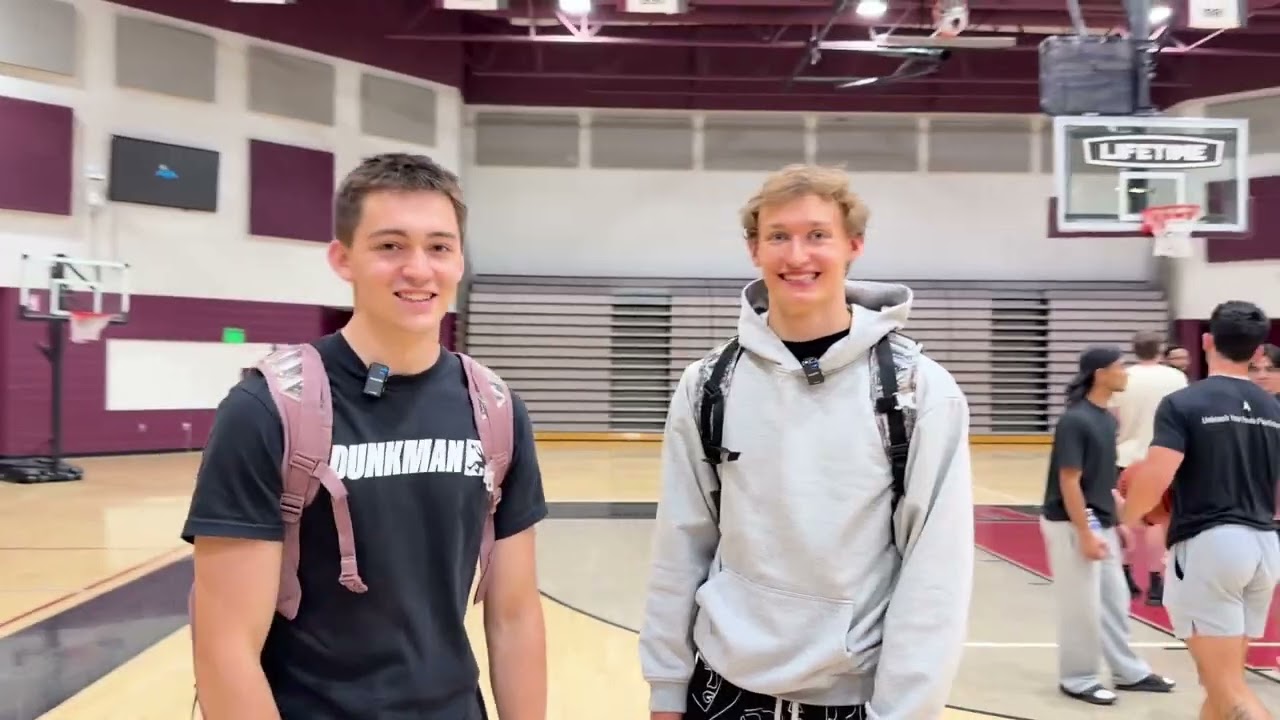
Piotr Zawiślak is one of the best young dunkers in the world. He is 18, from Poland, and one of only 13 people to earn the Black Band at The Dunk Camp. He also had almost no structured English-language presence online. Search his name and you found scattered clips in a few languages and no clear identity. We changed that from a single three-minute interview, and this article documents exactly how.
At The Dunk Camp 2026 in Salt Lake City, Dennis Yu and I ran a session for 76 dunkers on how to go from invisible to found, followed, and sponsored. That talk is written up in the system we taught 76 athletes. Piotr is that system run end to end on one real camper. Everything below is the build, not the theory.
Structure Beats More Content
Most athletes assume the fix for being unknown is more content. It usually is not. Piotr already had years of elite footage and real followings. What he did not have was structure: a home base he controls, consistent information about who he is, and content built so Google and AI tools can read it and repeat it. Without that, world-class work stays invisible. Before our talk, we audited all 76 campers on exactly these gaps, and the ranked results are public on the Dunk Camp audit leaderboard.
What We Started With
The build had two inputs. The first was Piotr’s existing proof: a catalog of dunk footage plus his own channels at @piotrzawislak47, roughly 6,000 followers on Instagram, 11,000 on TikTok, and 2,000 on YouTube, about 19,000 combined. The second was one new source, a three-minute clip I filmed with him at camp. In it we talk about finding each other online, being the same age, and connecting across two countries.
The clip is a nice moment on its own. Here is the line that mattered for the build:
“I randomly see this guy on Instagram doing 360 Underboth and all these crazy dunks at only 17.”
Dylan Haugen
Piotr called the week one of the best of his life, dunking alongside Hoopin Nate and the rest of the crew. That is real experience and real emotion, and it became the seed of his entire brand foundation. The job was to give it a structure that Google and AI could actually read.
What We Built: piotrzawislak.com
The center of the build is his own site, the entity home he controls at his name. We gave it a real personal brand structure instead of a stock template: the same header and footer on every page, a homepage that leads with his photo and his Black Band story, an About page, a Blog, and a Connect page that shows his 19,000+ combined followers with a real badge for each platform. His profile photo became the site icon and the header logo, so the identity stays consistent everywhere.
We also set up his author identity so the content is actually his. His first post publishes under his own name, Piotr Zawiślak, with his photo and a short bio, not under a generic admin account. That post, his first published account of the week, is the anchor of his entity.
An agent did most of this the way you would direct a coworker. You give it context, you give it the task, you review the output. That is the same tooling we demonstrated on stage, and Dennis put the economics of it plainly:
“Instead of hiring someone from the Philippines or Pakistan on Upwork, imagine you had someone that worked just for you, and the cost is 20 bucks a month.”
Dennis Yu
One Clip, Five Articles
A personal brand site is the home. Distribution is what makes it compound. We took the same three-minute moment and wrote it five ways, each for a different audience, each cross-linked, each embedding the clip. Piotr’s own account lives on his site. My recap runs at my personal recap of meeting him. The community version runs at the Dunk Talk take on two 18-year-olds meeting. The visibility story runs at the Dunker Spotlight piece on his reach gap. This article documents the build. Five articles, five audiences, one source.
The signal compounds because it is consistent and connected, not because there is simply more of it. Each article builds Piotr’s entity from a different property, and they all point back to the same person and the same clip.
Why the Structure Matters
The reason to build it this way is what structured content unlocks. The same data that earns a Google Knowledge Panel is what ChatGPT and Claude read when someone asks who Piotr is. Dennis framed the Google side of it at camp:
“It’s saying how well does Google understand who you are and what you do.”
Dennis Yu
The confidence score, the BlitzMetrics measure of that understanding, starts near zero for most athletes. Anything above 400 is celebrity tier. Mine is over 3,000, and Shaq’s is around 40,000. Piotr started where almost every camper did, near the bottom, with elite talent and no structure. The site, the schema behind it, and the cross-linked articles are how that number climbs.
We have run this before. We built Cam Hazzard a personal brand site in about 20 minutes from a single interview, documented in how we built Cam Hazzard’s personal brand with AI. Cam is a DunkMan athlete who now ranks for nearly his entire first three pages of Google on his own name. The mechanics do not care whether the subject is an American in Shaq’s league or a Polish dunker most Americans have never heard of.
The Takeaway
If you have real proof of work, the barrier to showing up in search and AI has little to do with how much you post. It comes down to building the structure once and letting your existing content compound inside it. Piotr had the talent and the footage. From one interview, he got the foundation: a site he owns, an identity Google and AI can read, and five articles pointing back to him. That is the system we taught 76 dunkers, shown running on one of them. Watch the clip at the top, then look at his site and the linked articles as a live example of what one source becomes when it is built correctly.
Originally published .
Dylan Haugen
Dylan Haugen is a professional dunker, content creator, and editor at the Content Factory, where he transforms podcasts and interviews into strategic brand assets. He collaborates with Dennis Yu to support young entrepreneurs and business owners in building their personal brands through education, transparency, and effective content marketing. As the host of the Dunk Talk podcast and a dedicated advocate for establishing dunking as a recognized sport, Dylan combines athletic expertise, storytelling, and digital strategy to help elevate the next generation of creators.