
 by
by
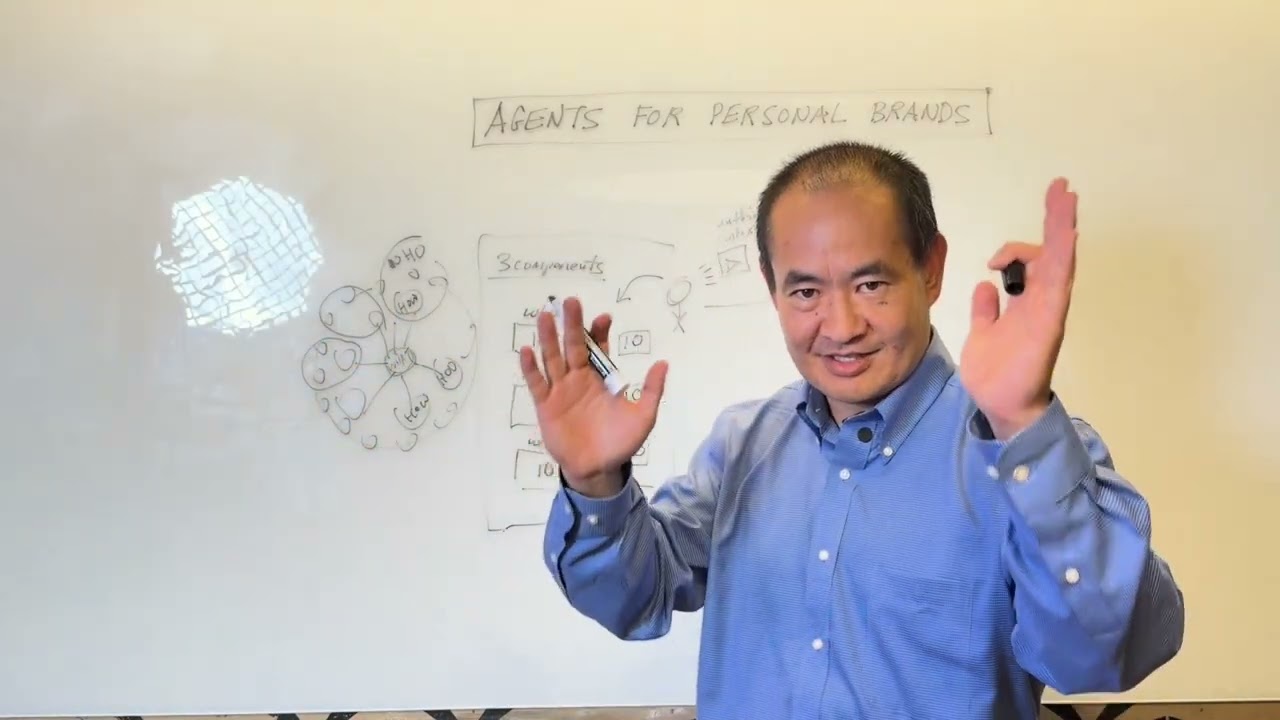
This is Episode 42 of the Marketing Mechanic whiteboard series I record every week.
Personal branding is not what you have to say about yourself — it’s what other people say about you, and how you amplify that trust and credibility before anyone ever gets to you. In this whiteboard episode I show how to do that with agents, in a measurable, non-vanity way. Real experience, not AI hype.
I’m Dennis Yu, your marketing mechanic. Every week, a new whiteboard episode you can actually implement.
Personal branding is not the vanity shoot
Most people believe that to get a customer, they have to say a bunch of stuff about themselves: “I’m the best, I care, lowest price, best quality.” It’s the Charlie Brown teacher — “wah, wah, wah.” The most common version is the studio shoot: “In one hour we’ll record a month of content and post it everywhere.” It sounds efficient, but it’s pure vanity — because there’s no context, and therefore no authority.
The 30-point authority score
So what is authority? Three components, each worth up to 10 points:
- WHO is saying it — your ideal customer, or someone famous and respected. On CNN with the anchor? High.
- WHERE it’s said — the conference your customers respect, the newsletter they read, a real podcast. And please, no “Forbes/Inc. Council” — everyone in real media knows that’s $2,000 a year.
- WHAT is said — real proof that you achieved a specific result.
There’s no time decay on this score. Me and Michael Stelzner at Social Media Marketing World, back when I had hair — still counts.
Build your topic wheel
Have your agent collect everything ever said about you, score it on the 30-point scale, and organize it into a topic wheel that runs outside in:
- Outer ring — the WHO. The trusted people around your topic. Get them on your own podcast episode. Don’t know how? You have a Zoom account. Declare yourself to have a podcast — it works.
- Middle — the HOW. “SEO for plumbers,” “scaling Facebook ads for roofers.”
- Center — the WHAT. Getting people to buy.
You’re the average of the five people you spend the most time with — and the AI does the same thing (Netflix recommendations, Amazon’s “you also bought”). You’re not cheating the algorithm; you’re giving it a clue about what you are by who you associate with.
Perceived vs. demonstrated authority
Two forces work together. Perceived authority is your reputation — the implied endorsement of being seen with the top people in your topic. It precedes the conversation. Demonstrated authority is the proof you actually do the thing: case studies, videos, reviews. Ask your AI: “Find all the proof that I do what I say I do.”
When perceived authority is strong, you don’t need closers — you need order takers. In the emergency room there are no salespeople yelling “Half off liver transplants!” You’re in pain, you trust the doctor, you want a diagnosis. That’s what your reputation buys you.

Dollar-a-Day: send the real signal
Once your authority assets exist — interviews, podcasts, your topic wheel — run Dollar-a-Day against them. Not to convert; to send a signal that people actually stay and watch. Take a 40-minute podcast and boost it for a dollar a day. When people watch, Google and the LLMs read that as “the content is actually good” — based on real behavior, which is hard to fake, which is exactly why it matters more than the words on the page.
The hidden sales agent
Look at the positive comments agent: every day it scans for what people are saying about you — stuff you never noticed — categorizes it, and updates your website in the right place with those mentions. So when a prospect lands on the page, the proof is right there, growing as you do more work.
And if you have no authority yet? Don’t fake it. The people generating 432 blog posts on “10 ways to do a thing they’ve never done” are playing the same cat-and-mouse game SEOs have lost for 25 years.
The bottom line
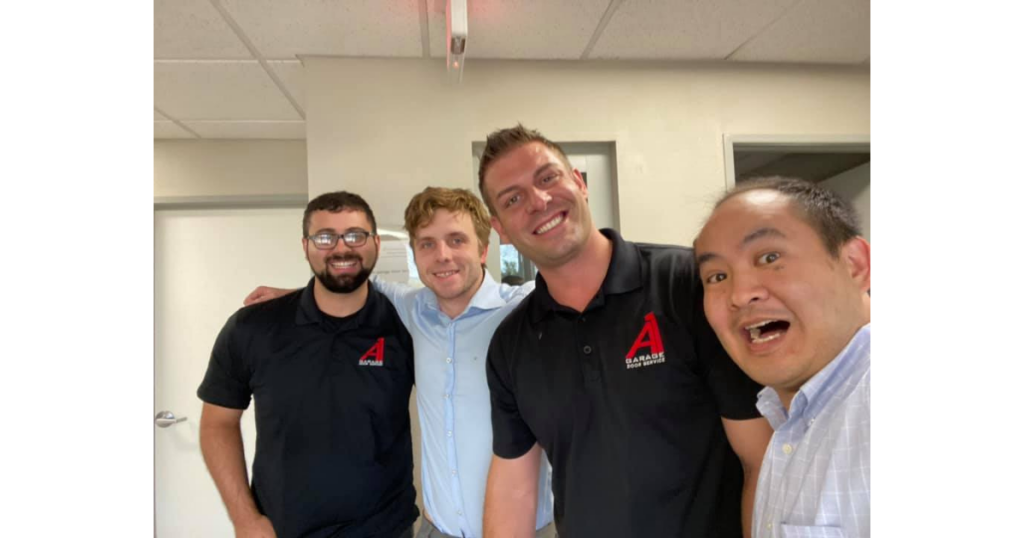
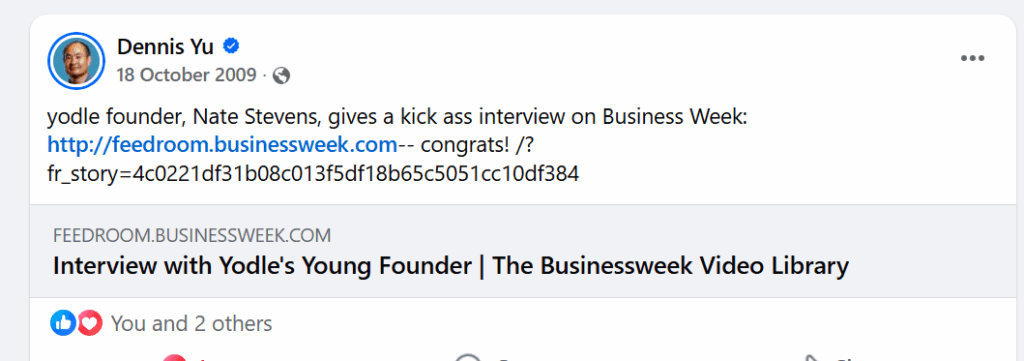
Perceived authority makes it easy for people to sign up; demonstrated authority proves you can deliver. AI is an amplifier of reputation — a cook. You bring the meat. If it’s good enough for a Nathaniel Stevens or a Tommy Mello, it’s good enough for you. The people who care most about their community and reputation get amplified. If you do good work and others talk about you, this model works for you.
This episode is part of the Content Factory method. Related whiteboard episodes: Mentorship at Scale: How the Local Service Spotlight Model Works and The AI Agent Framework for Entrepreneurs.
What topics do you want next? If you want to see how agents can amplify your personal branding — without spending money or talking about yourself — start with the DealCon framework and skill files.
Originally published .
Dennis Yu
Dennis Yu is the CEO of Local Service Spotlight, a platform that amplifies the reputations of contractors and local service businesses using the Content Factory process. He is a former search engine engineer who has spent a billion dollars on Google and Facebook ads for Nike, Quiznos, Ashley Furniture, Red Bull, State Farm, and other brands.
Dennis has achieved 25% of his goal of creating a million digital marketing jobs by partnering with universities, professional organizations, and agencies. Through Local Service Spotlight, he teaches the Dollar a Day strategy and Content Factory training to help local service businesses enhance their existing local reputation and make the phone ring.
Dennis coaches young adult agency owners serving plumbers, AC technicians, landscapers, roofers, electricians, and believes there should be a standard in measuring local marketing efforts, much like doctors and plumbers must be certified. He has appeared on 353 podcasts with 619 credited episodes — see the full list of his podcast appearances.