
 by
by
This page shows real MAA reports from real clients and team members. Some are excellent. Some need work. I’m including both so you can see what good MAA looks like and learn to spot the gaps.
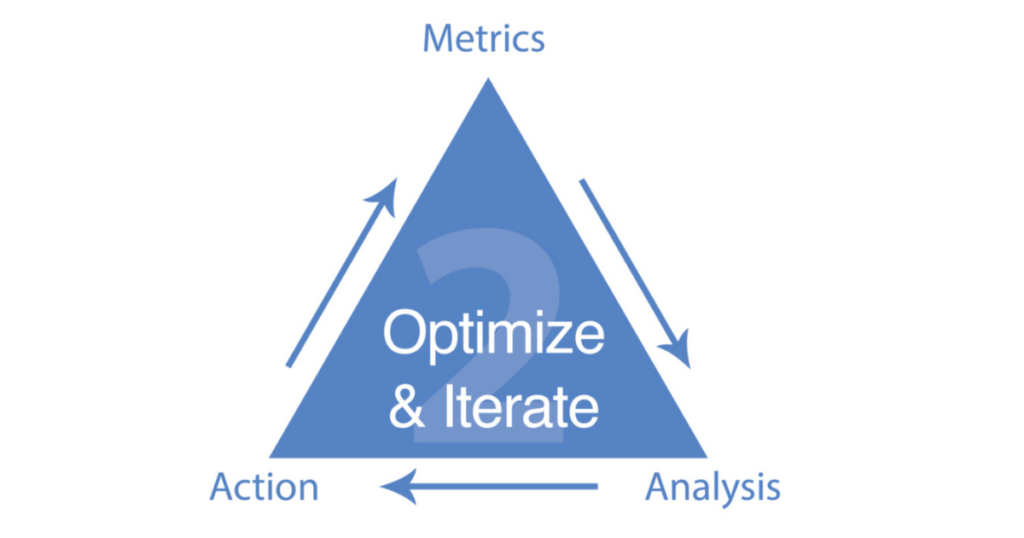
The pattern is always the same: metrics first, then analysis of why, then action based on that analysis. When people skip the analysis, they waste time and money. When they do it right, the next step becomes obvious.
Target Painting
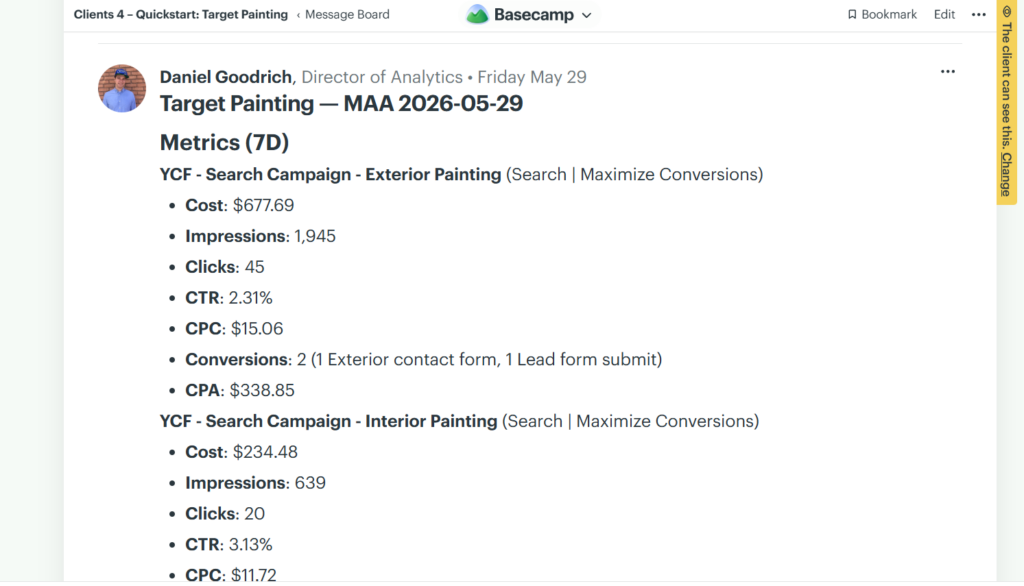
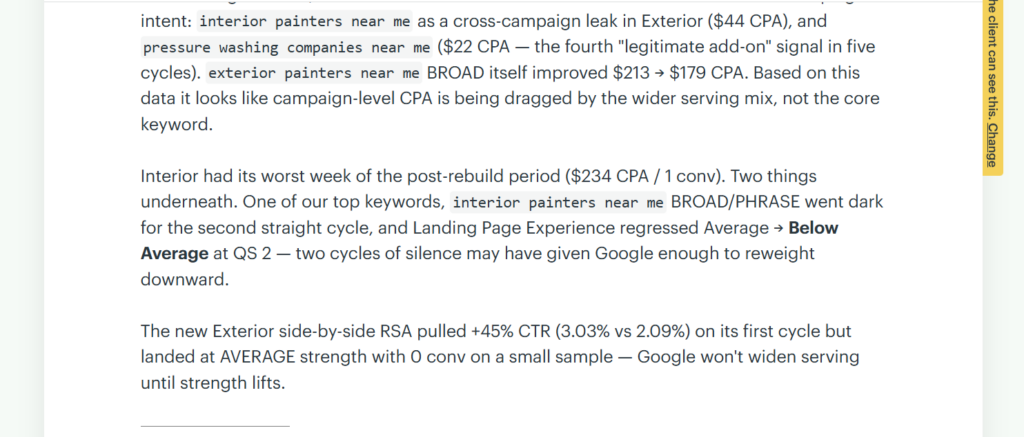
This MAA is what a mature, high-level PPC report looks like.
What makes this one excellent: Daniel doesn’t just report that CPA spiked. He traces the spike to an auction-layer flip where Quality Score improvements caused Google to serve wider, pulling in cross-campaign conversions that dragged up the blended CPA. He identifies that the core keyword actually improved from $213 to $179 CPA. Then his actions are specific and conditional: increase budget by $15/day, but revert if CPA exceeds $250 with no volume gain next cycle.
This is the difference between a report maker and an analyst. A report maker would say “CPA went up, we need to fix it.” Daniel explains exactly why it went up and whether it’s actually a problem.


American AF Dumpsters
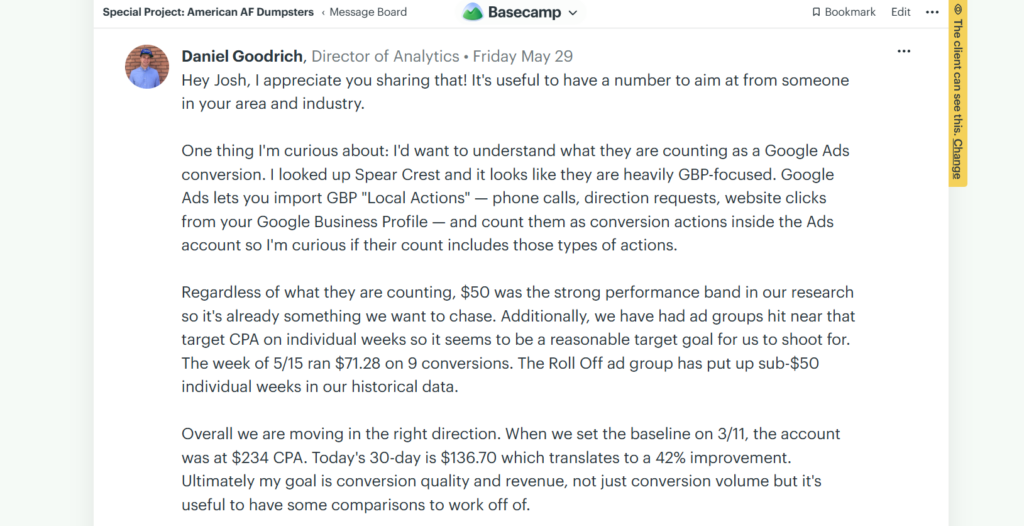
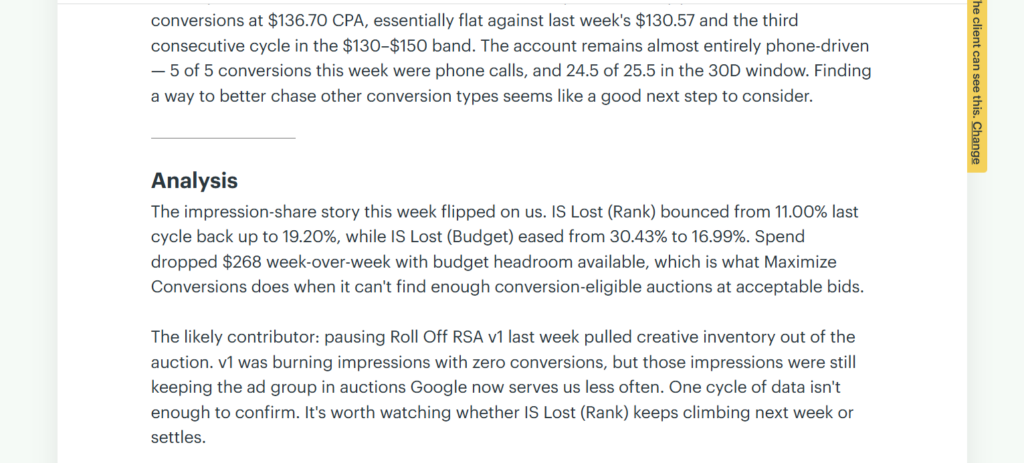
What I want you to notice here is how the analyst connects impression share data to a creative decision made the previous week.
He paused an underperforming ad variant and then noticed that impression share lost to rank climbed the following week. His hypothesis: removing that ad pulled creative inventory from the auction, so Google serves them less often now. He flags it as a one-cycle observation and says he’ll watch it next week before drawing conclusions.
That’s proper analysis. He doesn’t panic. He doesn’t reverse the decision. He notes the signal, states the hypothesis, and sets a decision rule for next cycle.
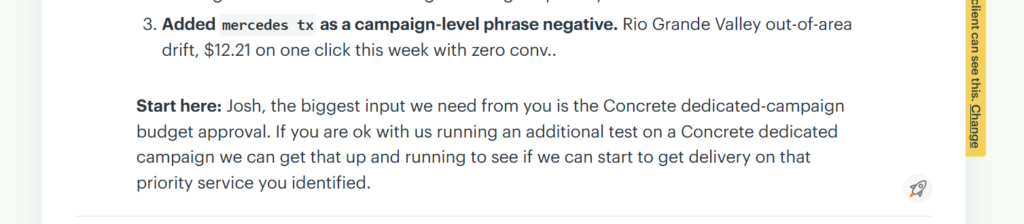
He also spots a geographic drift issue: a click from Mercedes, TX, 500 miles outside the service area, and adds it as a negative immediately.



DeMedeiros Injury Law
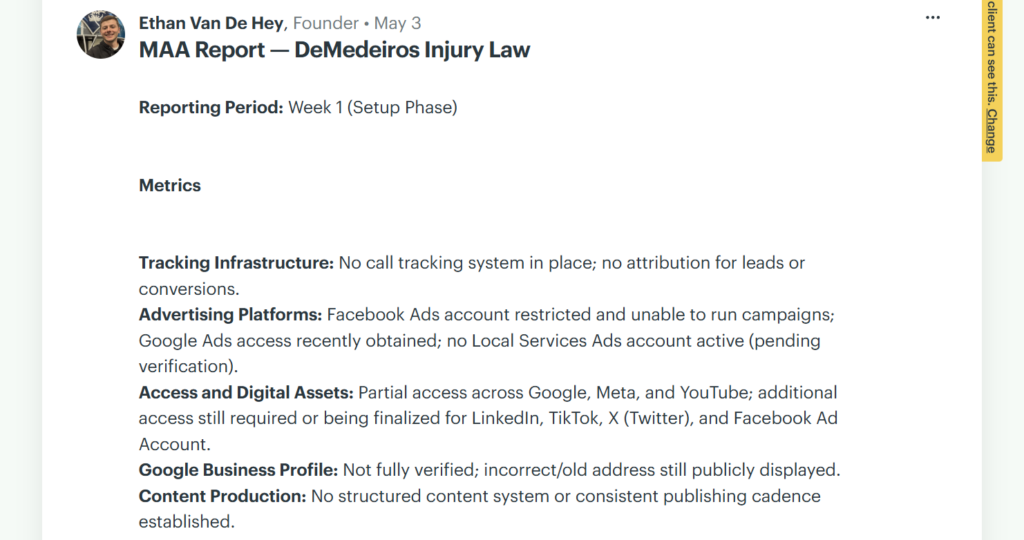
Not every MAA has impressive numbers. This is a week-one report for a law firm where nothing is set up yet. No call tracking, Facebook Ads account restricted, Google Business Profile not verified, no content system.
Why I’m including this: because MAA works even when you have zero performance data. The metrics here are infrastructure metrics. What’s connected? What’s broken? What’s blocked? The analysis correctly identifies that this is a setup phase, not an optimization phase. And the actions are sequenced properly: fix tracking first, then fix the GBP, then launch ads.
Too many agencies skip this diagnostic step and jump straight into running ads on broken infrastructure. Then they wonder why nothing converts.


Fix Door
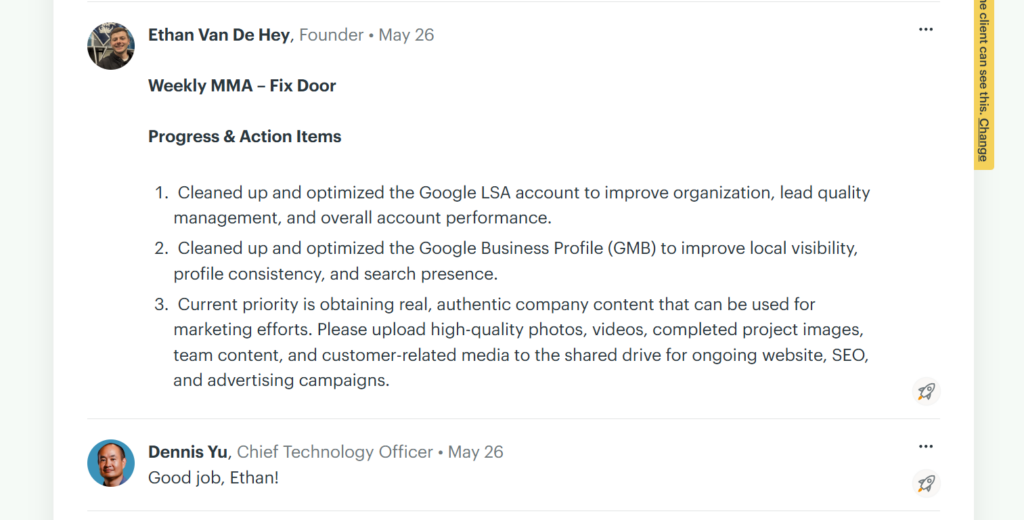
This is an early-stage MAA for a door repair company. It’s short. The team cleaned up the Google LSA account and optimized the GBP. The main action is asking the client to upload real photos and videos to a shared drive.
I’m including this because it shows a common bottleneck: the client hasn’t provided content yet. Without real company photos, you can’t build landing pages that convert, you can’t run ads that look credible, and you can’t differentiate from competitors.
A good MAA makes this blocker visible every week until it gets resolved. If you just quietly wait for photos without documenting it, weeks go by and nothing happens.
EternaTurf
This MAA covers an artificial turf company with five locations, spanning website work, Google Ads, and call tracking across all markets.
What stands out: the team breaks down call quality by location. Sarasota is the cleanest source with a 59% qualified rate. Lexington has high volume but only 5% qualified, mostly spam. Tampa GBP is “leaking” with 22 raw calls and only 1 qualified.
This is exactly the kind of analysis that prevents you from celebrating vanity metrics. 223 total calls sounds great until you see that only 61 are qualified. And within those 61, the distribution across locations tells you exactly where to focus.
The actions are specific: dispute low-quality LSA leads, optimize GBPs, fix the Tampa listing issue. And the report clearly states what’s needed from the client: photos for new service pages and a Power Hour call to set up their CRM.


Anthony’s Lawn Care
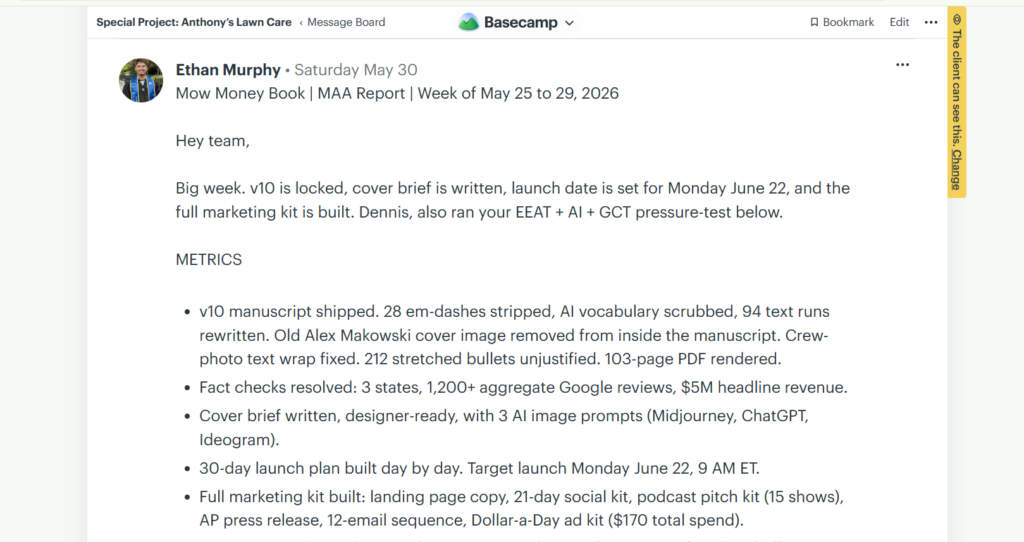
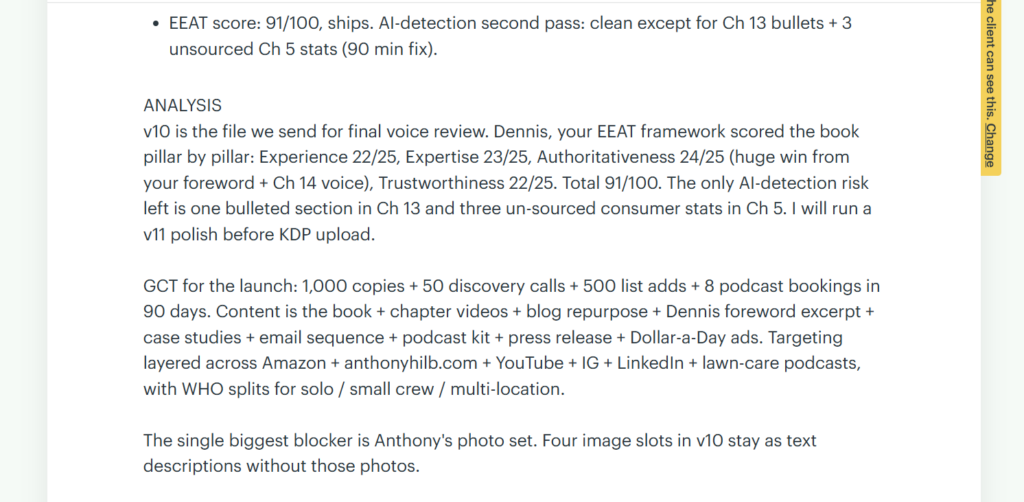
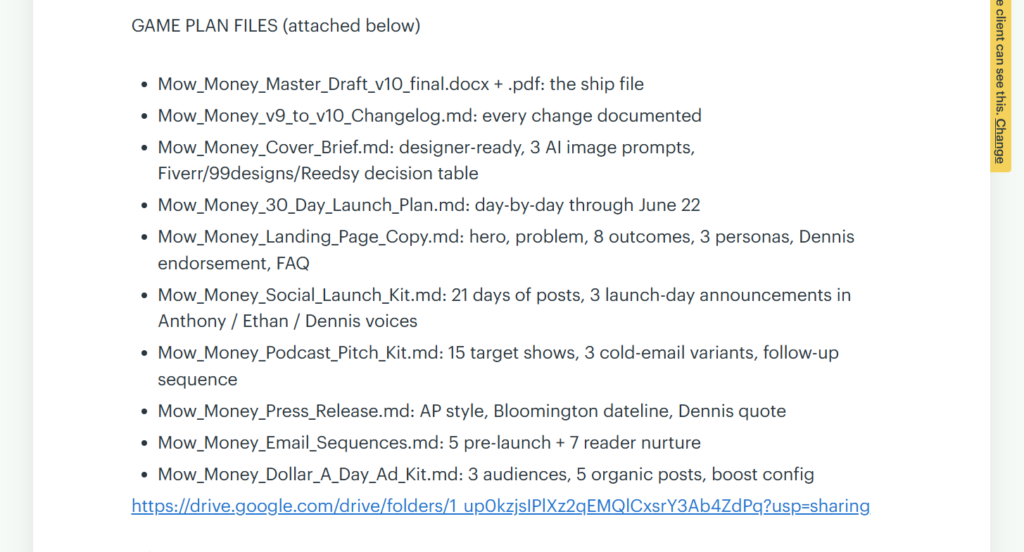
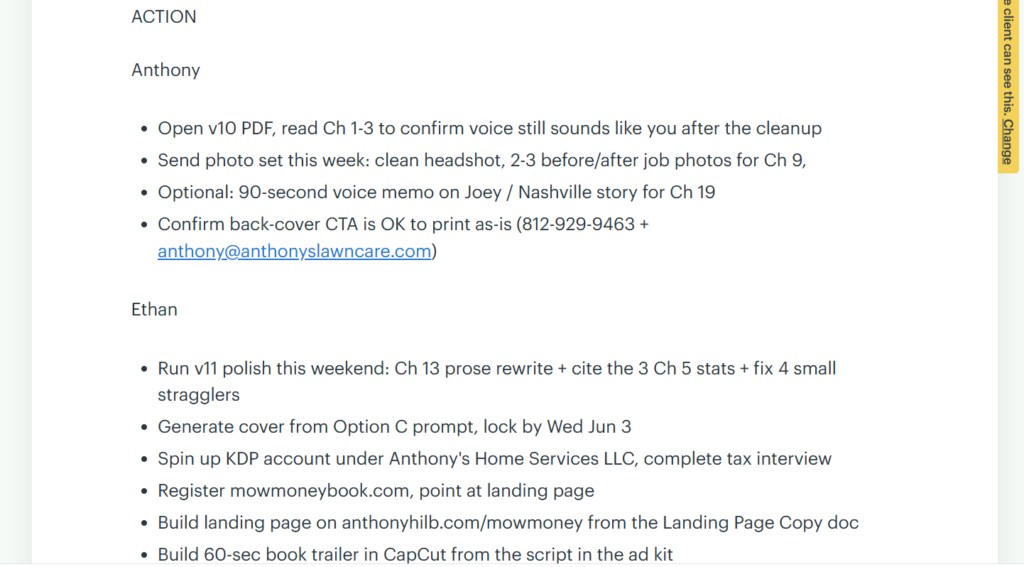
This one is different. MAA was applied to a book launch for a lawn care business owner. The metrics aren’t ad spend and calls. They’re manuscript edits, fact checks, EEAT scores, and launch assets completed.
The analysis uses my EEAT framework to score the book: Experience 22/25, Expertise 23/25, Authoritativeness 24/25, Trustworthiness 22/25. The remaining AI-detection risk is identified in two specific chapters with an estimated 90-minute fix.
This shows that MAA isn’t just for ad campaigns. It works for any project where you need to measure progress, analyze blockers, and take specific next steps.
Cardinal Treatment Center
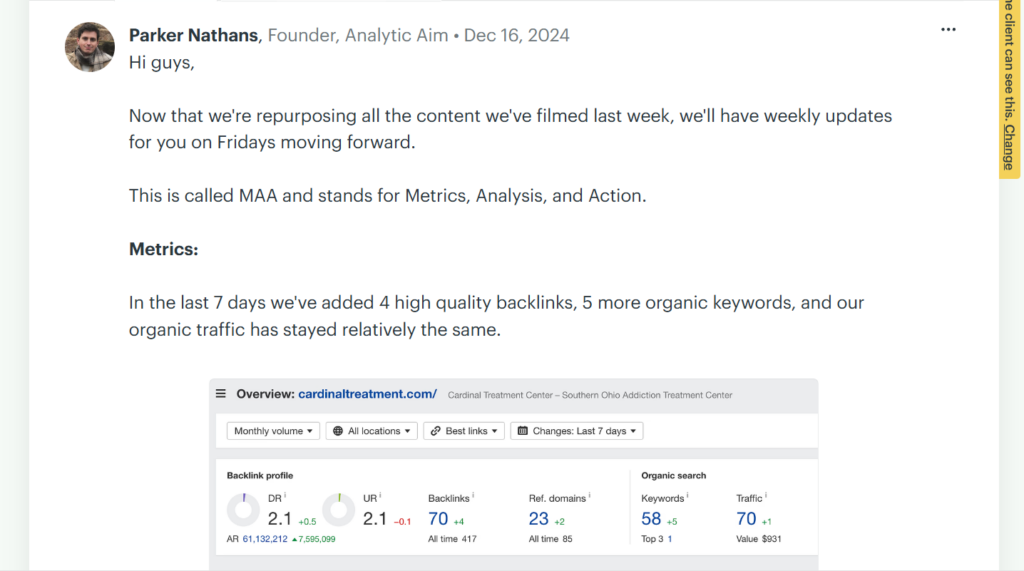
This MAA is for a rehab center in Southern Ohio during its early SEO phase. Metrics are about backlinks added, keywords gained, and organic traffic trends.
What I like about this one: a clear goal is set (rank on page one for drug rehab keywords across Southern Ohio), what’s working is identified (backlinks bearing fruit), what’s blocking progress is flagged (waiting on team photos for the About Us page), and weekly actions are defined that compound over time.
The actions are simple and repeatable: repurpose content, build the About Us page, add backlinks, publish weekly articles. This is what early-stage SEO MAA should look like. You won’t have dramatic conversion data yet, but you can absolutely track and analyze your inputs.


Showcase Remodels
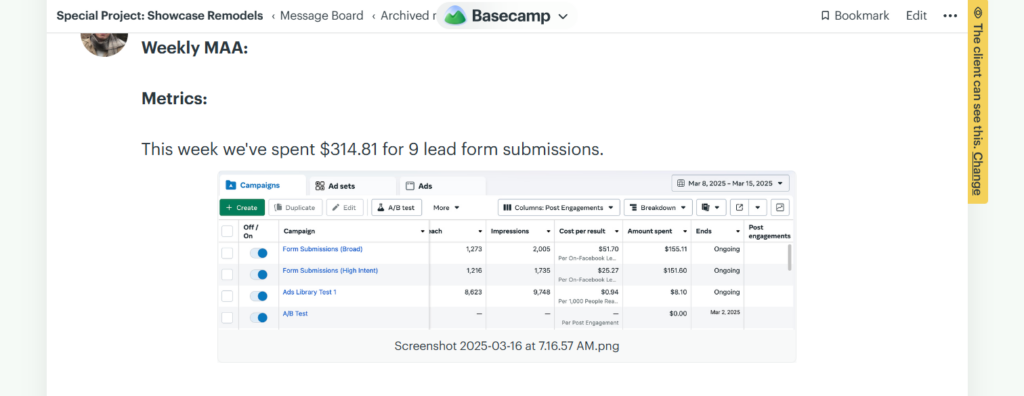
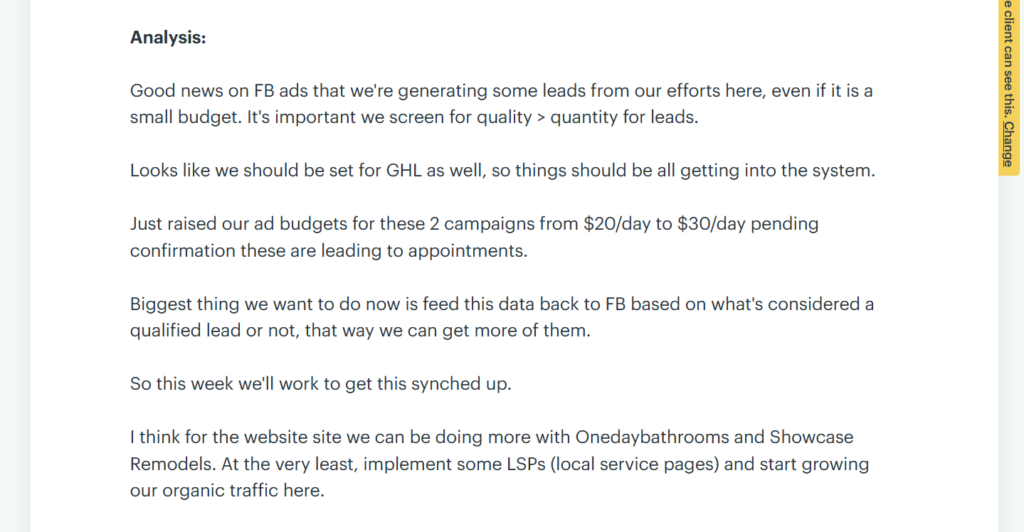
This MAA for a remodeling client shows the transition from setup to early optimization. $314.81 spent for 9 lead form submissions on Facebook, budgets raised from $20/day to $30/day pending quality confirmation, and work underway to feed conversion data back to Facebook for optimization.
The key insight in the analysis: quality matters more than quantity for leads, and the biggest leverage move is feeding qualified lead data back to Facebook so the algorithm can find more people like those who actually booked appointments.
An opportunity to build local service pages for the website is also identified to grow organic traffic, with a specific team member assigned to execute.



Plumbing Pros
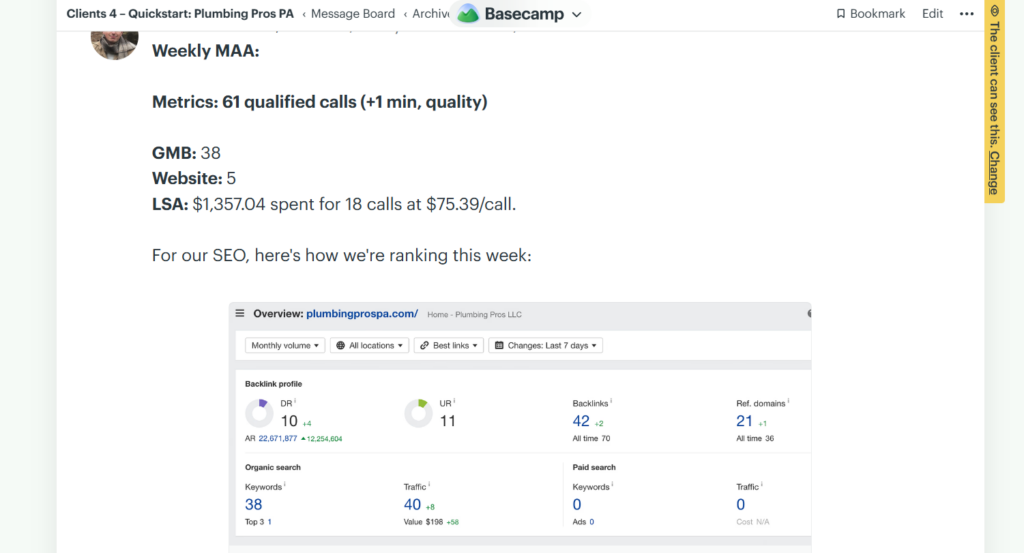
This MAA shows a plumber hitting all-time-high weekly qualified calls at 61. The breakdown: 38 from GMB, 5 from the website, 18 from LSA at $75.39 per call.
The analysis connects the dots between SEO progress (domain rating up to 10+, keywords growing) and the hiring bottleneck that’s preventing them from scaling into PPC and Facebook ads. More calls require more technicians to answer them.
This is a common pattern in local service businesses: marketing works, but operations can’t keep up. A good MAA surfaces this constraint early so the owner can plan for it instead of getting blindsided.

What to notice across all these examples
The best MAA reports share a few things in common. They show specific numbers, not vague summaries. They explain why the numbers look the way they do, not just what the numbers are. And their actions flow directly from the analysis, with clear ownership and timelines.
The weaker reports skip analysis entirely and jump from numbers to a to-do list. Or they have actions that don’t connect to any insight. If you catch yourself writing “continue monitoring” as an action without explaining what you’re monitoring for and what would trigger a change, that’s a sign your analysis is missing.
Start your MAA this Friday. It takes 5 minutes. And it will change how you run your business.
Originally published .
Dennis Yu
Dennis Yu is the CEO of Local Service Spotlight, a platform that amplifies the reputations of contractors and local service businesses using the Content Factory process. He is a former search engine engineer who has spent a billion dollars on Google and Facebook ads for Nike, Quiznos, Ashley Furniture, Red Bull, State Farm, and other brands.
Dennis has achieved 25% of his goal of creating a million digital marketing jobs by partnering with universities, professional organizations, and agencies. Through Local Service Spotlight, he teaches the Dollar a Day strategy and Content Factory training to help local service businesses enhance their existing local reputation and make the phone ring.
Dennis coaches young adult agency owners serving plumbers, AC technicians, landscapers, roofers, electricians, and believes there should be a standard in measuring local marketing efforts, much like doctors and plumbers must be certified. He has appeared on 353 podcasts with 619 credited episodes — see the full list of his podcast appearances.