

People always ask me how I actually make money advising companies. The answer is simple: consulting for equity. When the companies I advise exit, I get a small piece, usually 3 to 5%. Instead of charging $10,000 to $20,000 a month in retainer fees, I take equity that vests quarterly over 36 months.
It doesn’t cost the founders any cash, and all I have to demonstrate is that I can grow them another 5%, enough to help accelerate their ability to sell to private equity or get acquired.
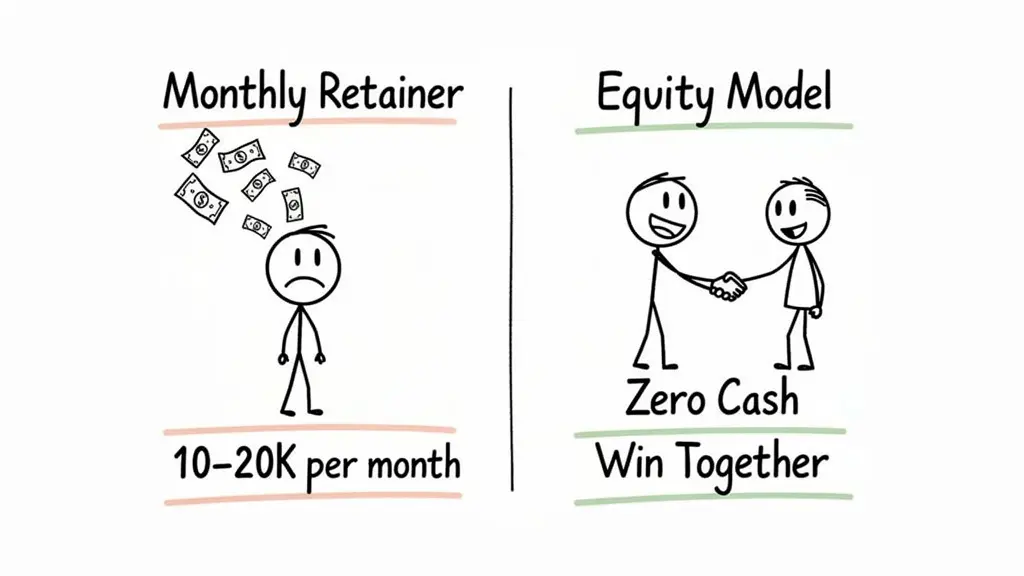
Why this works better than a retainer
The shift in the last six months has been dramatic. AI now does a lot of the heavy lifting. The gap between consulting and implementation has been squeezed down to where it’s basically the same thing. Want to fix a website, tune Google ad campaigns, or build out landing pages? With the right ingredients and connected accounts, saying it is nearly as close as having it done.
That means I don’t need a full agency relationship. There’s no need to sell people because I’m leveraging the reputation I already have. It’s very little effort on my part, and way better than the client-by-client, month-to-month agency model.
The power of the ecosystem
The real magic is in the network. Here’s how it plays out in home services.
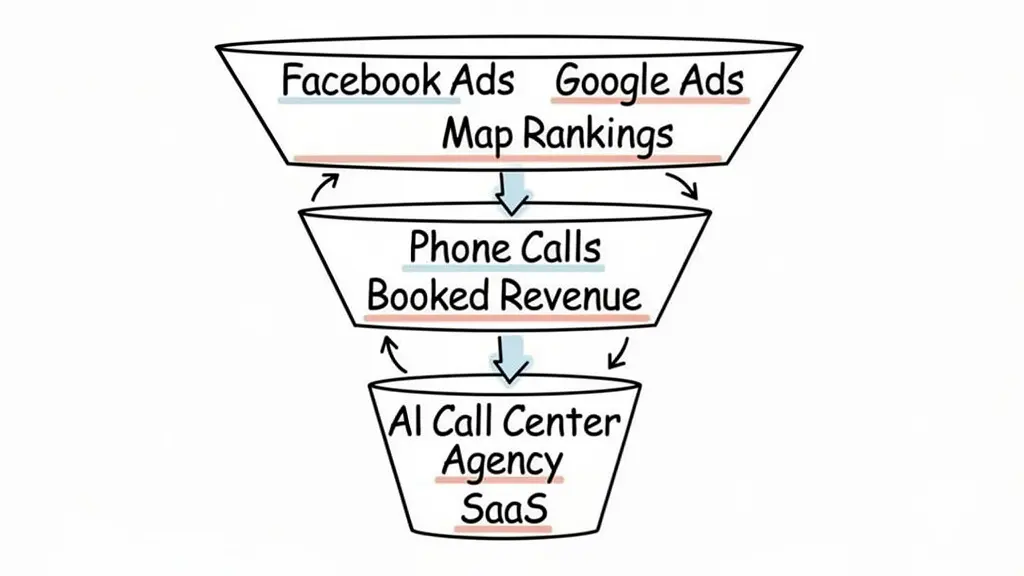
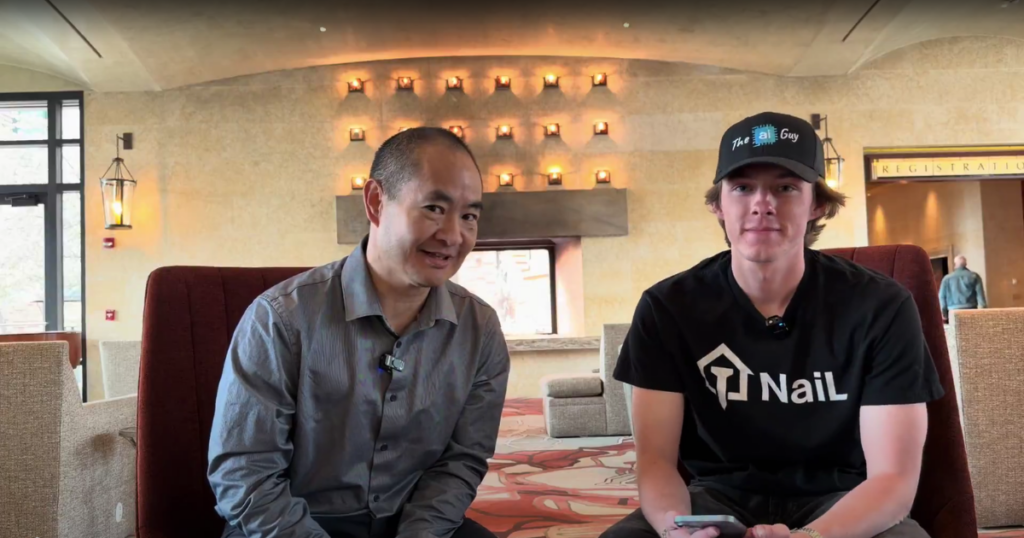
George Paladichuk runs an AI call center for roofing companies (NaiL A.I.).
Peter Roth runs Scalify, which does outbound call centers for roofing companies. Roofing Launch is an agency doing digital marketing for roofers. Marko Sipilä built HVAC Quote.ai, a tool that shows replacement quotes on HVAC websites and generates 40% more leads because homeowners want to know what a new unit is going to cost before they call.

The customers of one company benefit from the customers of all the related companies. When we put these founders together on podcasts, we can remarket to the combined client bases. The more we emphasize those relationships, the more of a sustainable advantage we build, one that AI alone can’t replicate.
We also work with folks like Joe Crisara (of Service MVP), Eric Skeldon of Kingdom Broker, and others across the home services space.

Eric Huberman, who runs the largest and fastest-growing digital agency on the planet (Hawke Media), is acquiring other agencies because there’s power in centralizing capabilities around media buying, AI, TikTok ads, YouTube channels, blog repurposing, email funnels, and retargeting.
The same logic applies to what we’re building, just through equity partnerships rather than acquisitions.
Cross-equity and mutual marketing
One of the neatest things I’ve been able to broker is cross-equity deals. When a SaaS company I advise serves HVAC or roofing, and there’s a complementary agency, I tell them they should do cross equity. Since I already own a little piece of each company, when they work together and mutually market, everybody wins.
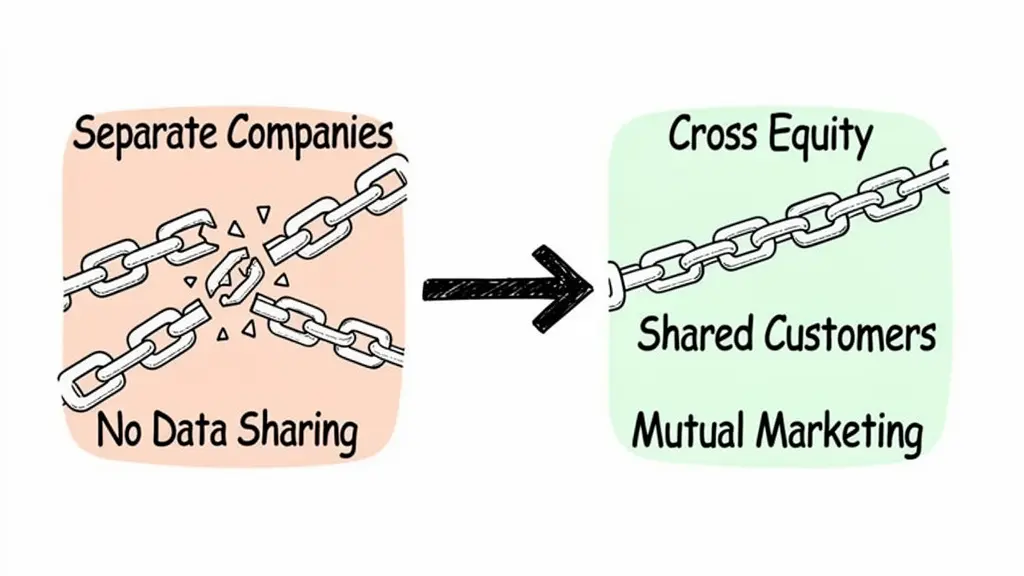
I own 3% of a $5 million landscaping company because it’s complementary to a landscaping agency and another SaaS we have. We create mutual value between those combined customer bases as they open more locations.
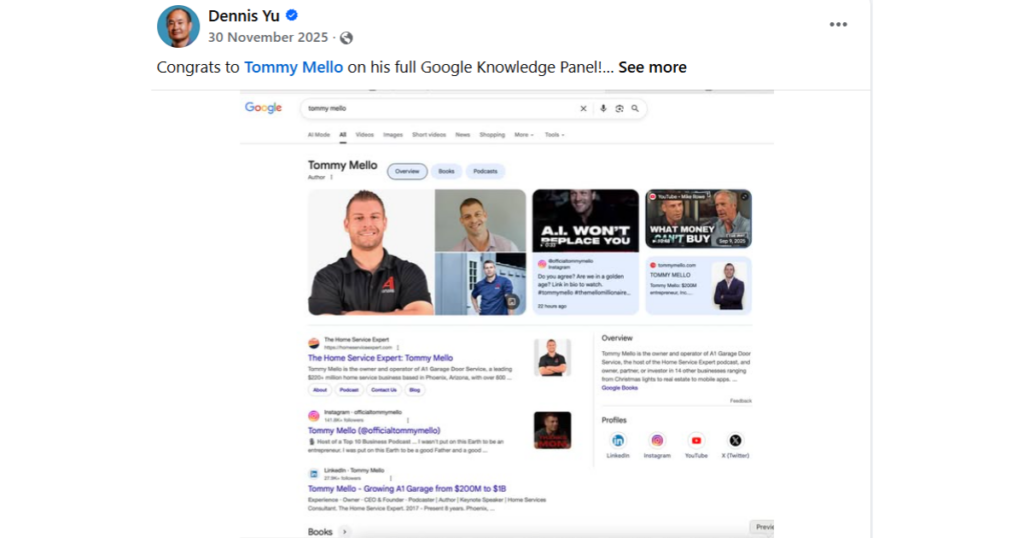
Dan Antonelli is a great example. We did a whole bunch of work for Dan, building out his knowledge panel, his YouTube, and other digital assets.

Tommy Mello ended up buying his company, Kick Charge. And because we delivered real results, Dan has referred other partnership opportunities to me, and that’s been worth way more than if he were paying me $10,000 a month.
The criteria for a good deal
I learned this model from David Meerman Scott 20 years ago.

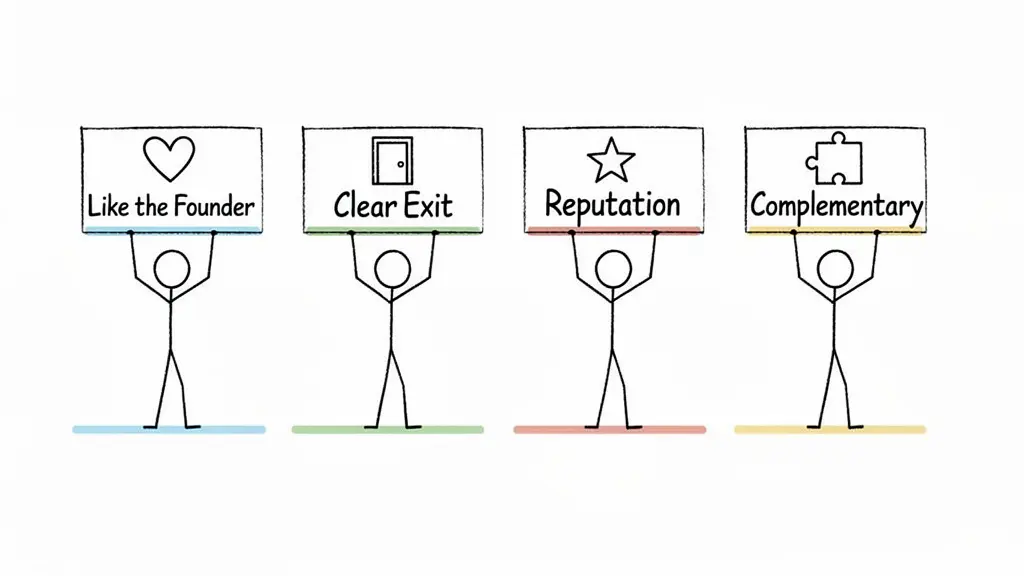
His criteria, which I still follow, start with working with a founder you like. No difficult people. It has to be someone you’d actually want to hang out with. And it’s the founder directly, not layers of team members.
There also has to be a clear path to exit. Someone else has already invested, whether that’s a Series A, PE, or angels. If there’s no transaction coming, there’s no point owning equity.
The company needs a strong reputation. It can’t be some untested startup idea. There have to be real customers saying good things. And the service should be complementary to the other companies in roofing, plumbing, HVAC, or landscaping that we already know. That’s what creates mutual value across the network.
The math should be a no-brainer
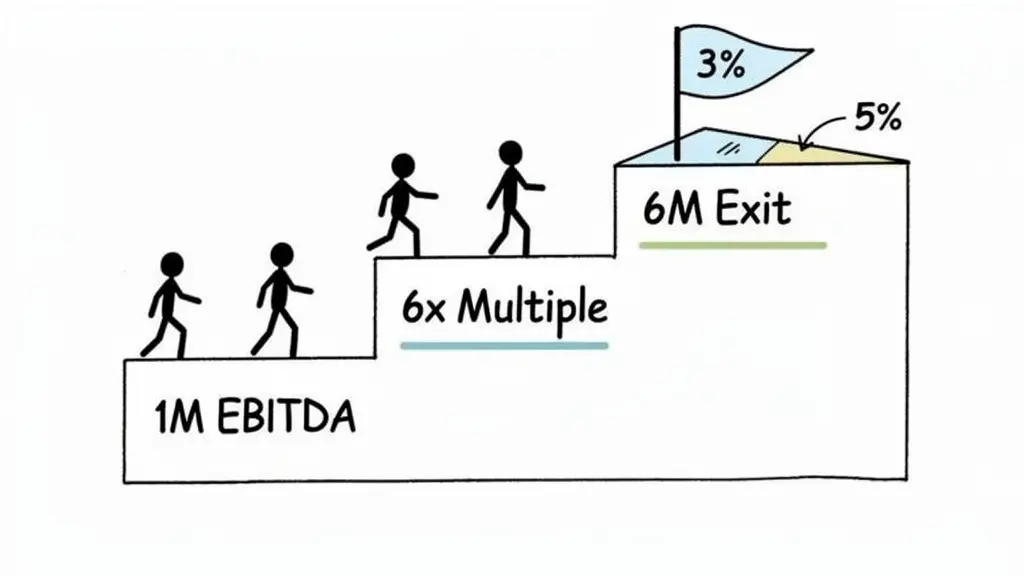
Here’s how I think about it. If your company is doing $1 million EBITDA and looking at a 6x multiple toward a $6 million exit, can I add 5% of that value, about $300,000, by fixing broken marketing? Can we exit 5% faster? Can we eliminate 5% of cost?
At 5% equity, the founder has very little risk. If it doesn’t work out, you cut the agreement and they don’t continue earning equity. The vesting is quarterly, and we always include an immediate acceleration clause, so if the company sells at month 18, all 36 months of vesting kick in immediately.
Some people say I should charge 20 or 30%. I’d rather make it so obvious that I don’t have to do a lot of convincing. The value is easy to measure because the first thing we put in place is digital plumbing, all the tracking and data to show that what we’re implementing together is working.
Relationships are the durable advantage
With everyone generating AI this and AI that, it’s our relationships and assets that produce the real durable advantage. It’s not dependent on AI creating software or generating ads. Think about what unique, sustainable edge you have, and whether there are clever ways to align incentives so that an agency or partner shares in the upside through equity rather than fees.
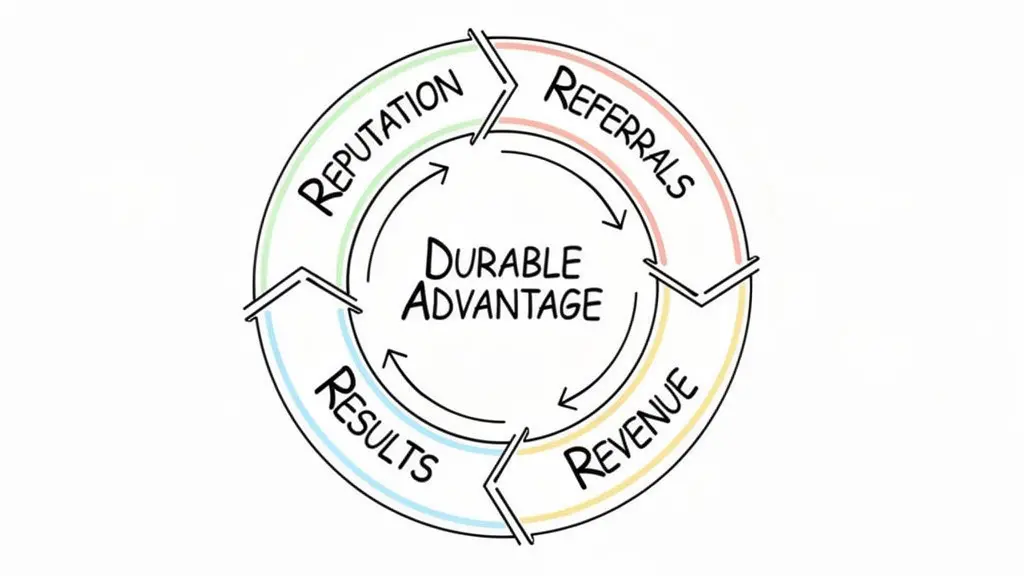
If your business has a clear exit, a strong reputation, and fits within the home services ecosystem, consider the consulting for equity model. It might just be the smartest deal structure you’ll ever make. If that sounds like you, let me know.
Dennis Yu
Dennis Yu is the CEO of Local Service Spotlight, a platform that amplifies the reputations of contractors and local service businesses using the Content Factory process. He is a former search engine engineer who has spent a billion dollars on Google and Facebook ads for Nike, Quiznos, Ashley Furniture, Red Bull, State Farm, and other brands.
Dennis has achieved 25% of his goal of creating a million digital marketing jobs by partnering with universities, professional organizations, and agencies. Through Local Service Spotlight, he teaches the Dollar a Day strategy and Content Factory training to help local service businesses enhance their existing local reputation and make the phone ring.
Dennis coaches young adult agency owners serving plumbers, AC technicians, landscapers, roofers, electricians, and believes there should be a standard in measuring local marketing efforts, much like doctors and plumbers must be certified.