
 by
by
Your personal brand website is more important than your LinkedIn profile or your resume. When someone Googles your name before they hire you, invest in you, or partner with you, what shows up matters. And if you don’t have a website that you control, you’re leaving that entirely to chance.
We’ve built a system that lets anyone get a personal brand website up and running quickly and affordably. Here’s how it works, why it matters, and what we’ve learned along the way.
What our personal brand sites look like
Before the technical detail, here are a few of the sites we’ve shipped. Every one of them leads with a real authority image — speaking on a named stage, shoulder-to-shoulder with someone the audience already trusts, or doing the unmistakable work of the niche. That’s the rule we hold every personal brand site to (full standard here).
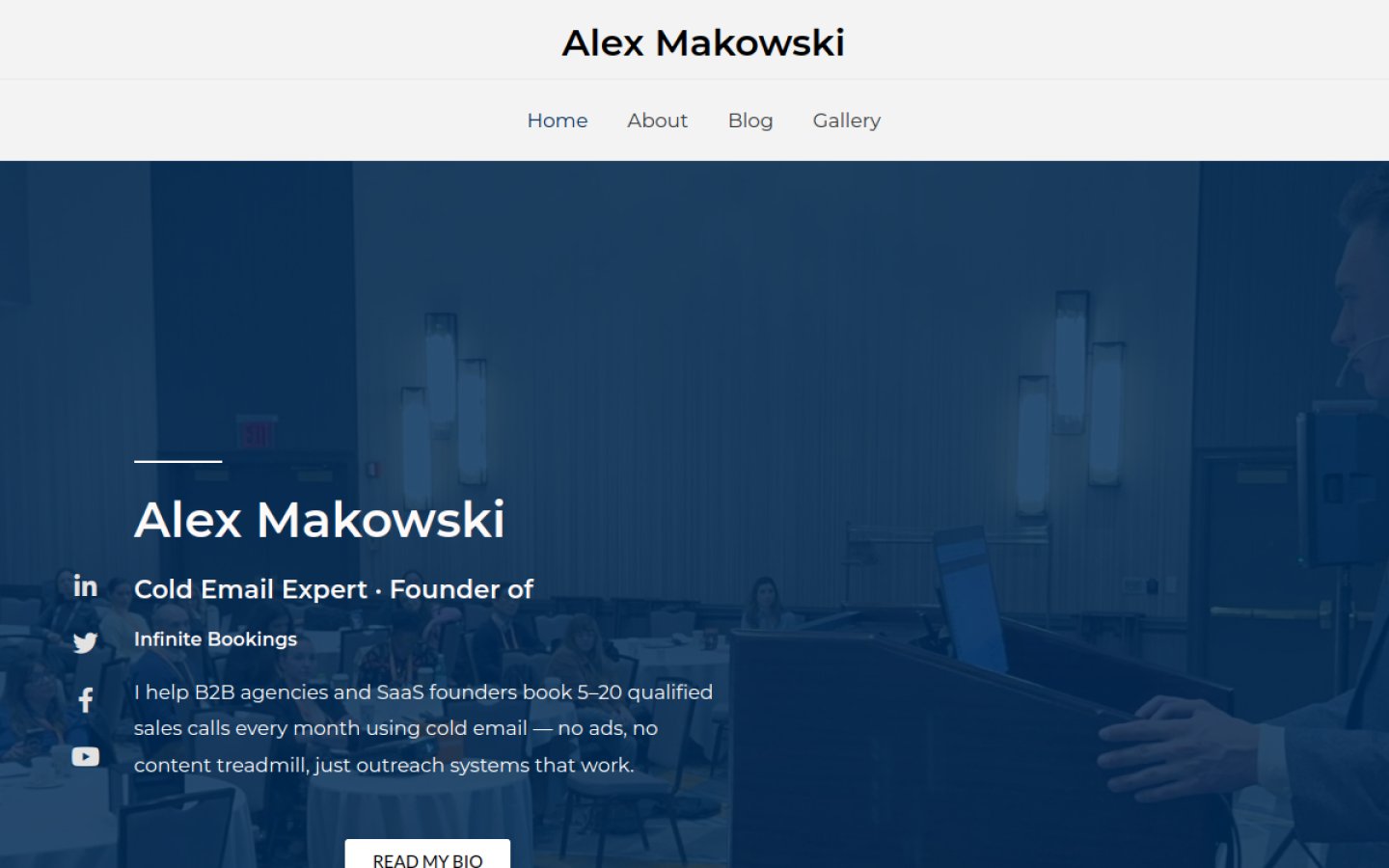
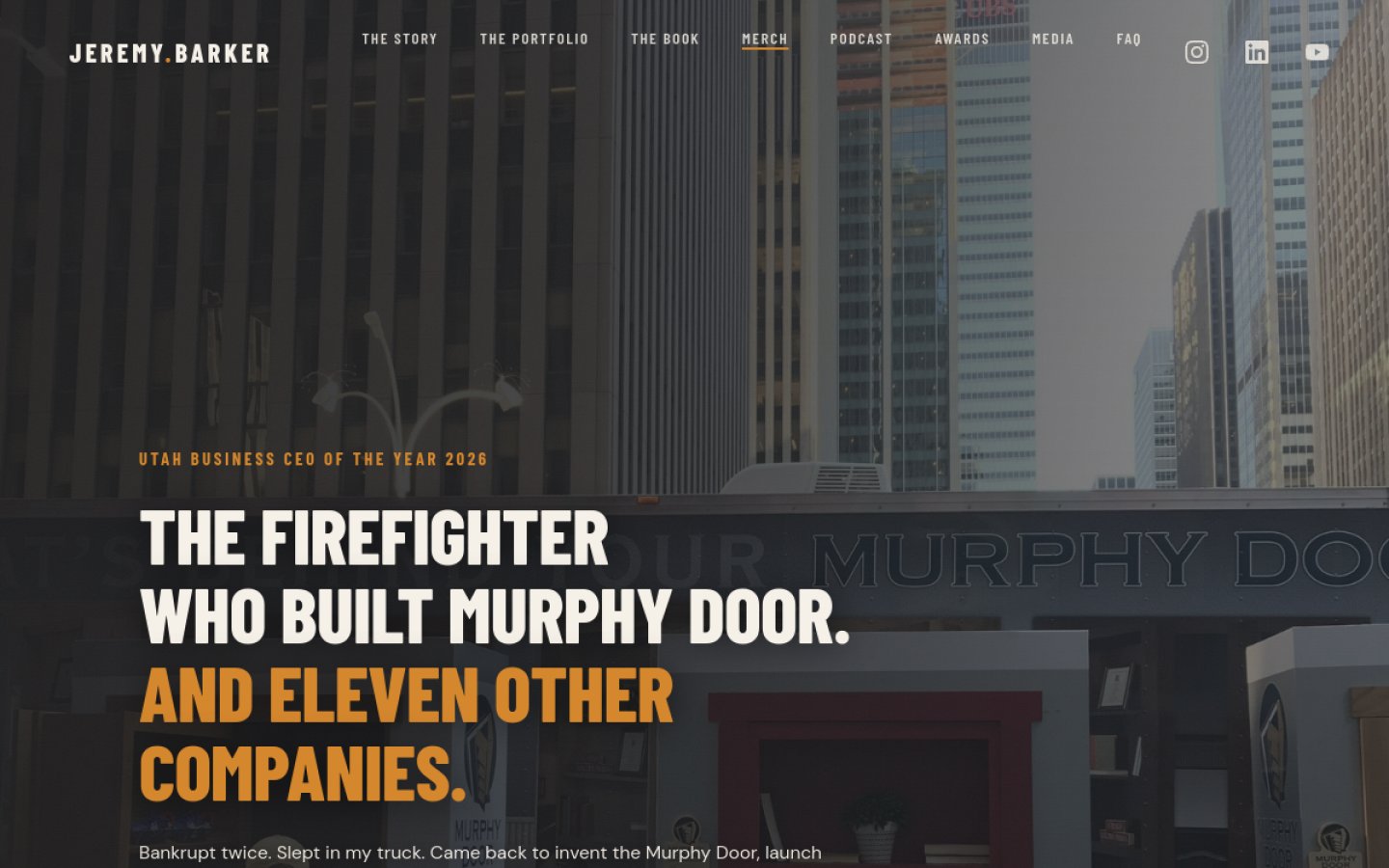
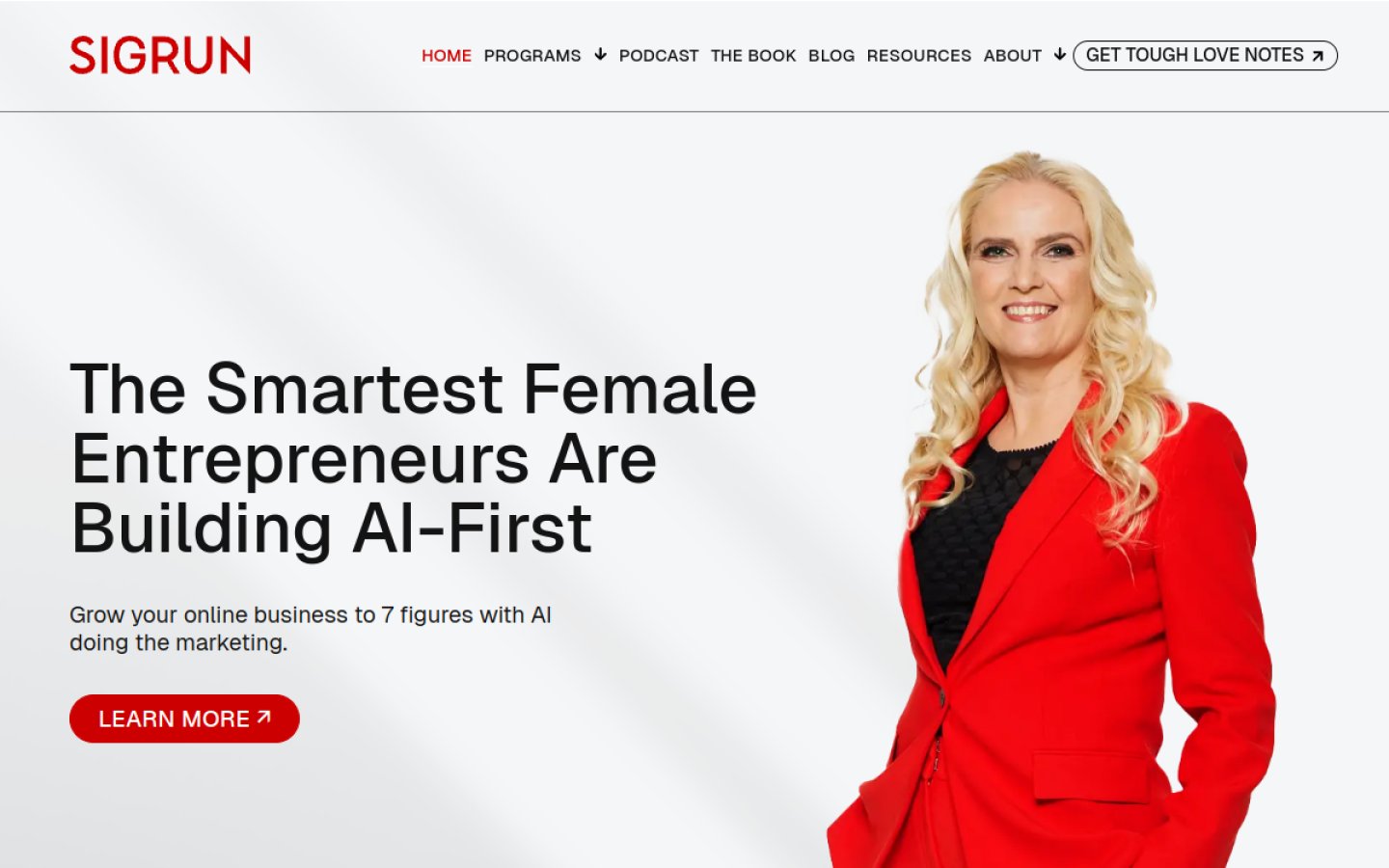
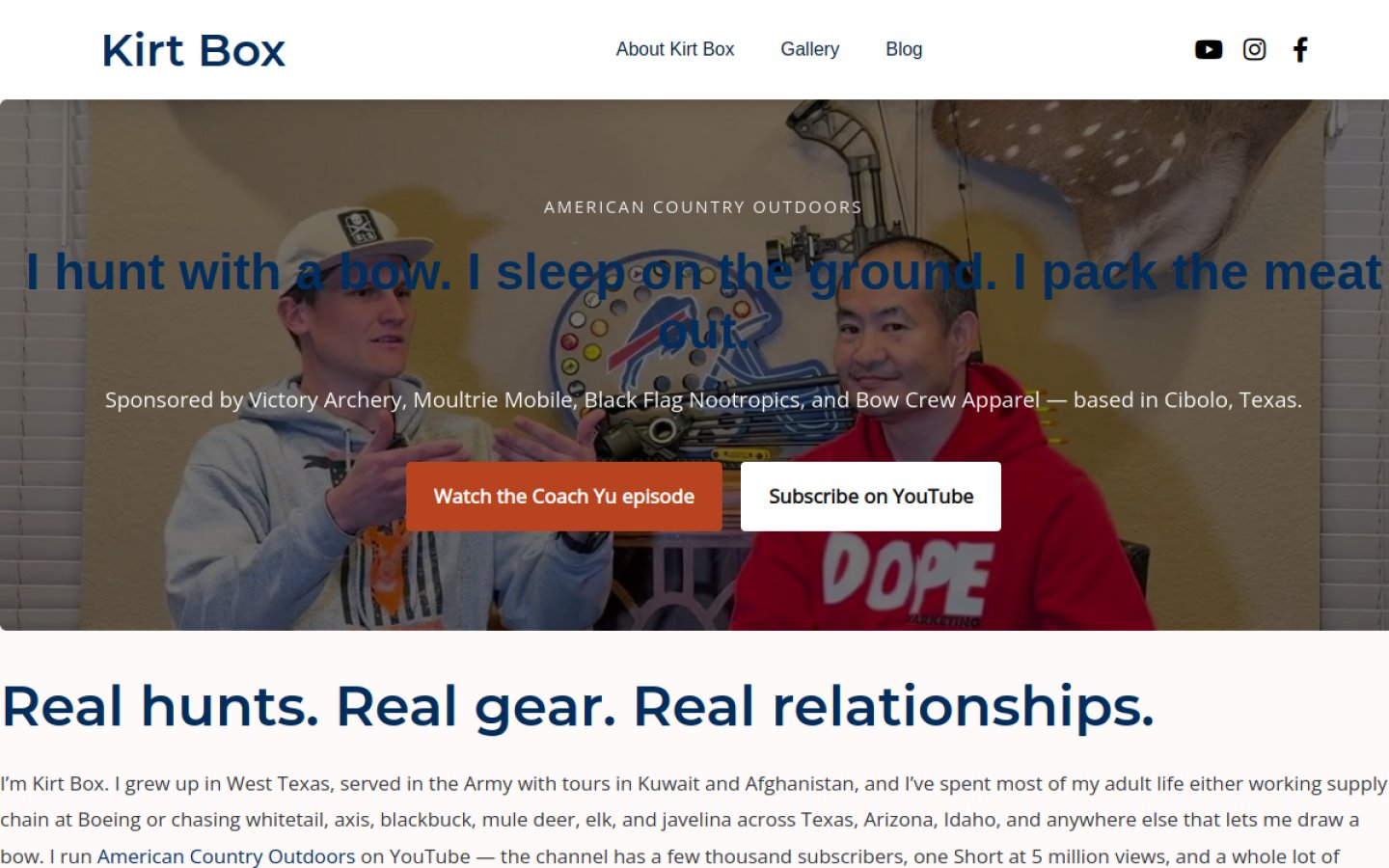
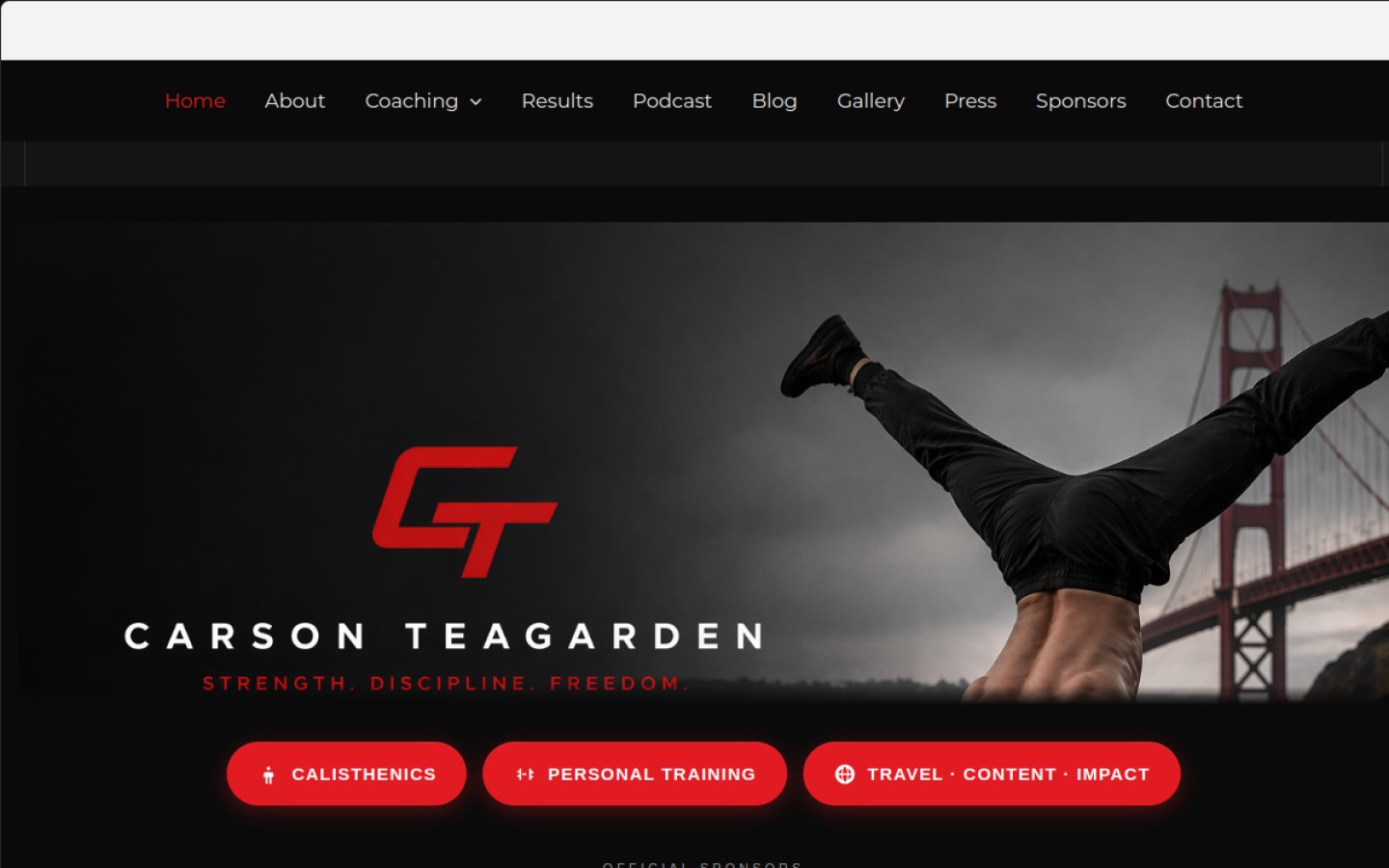
Each of these started with the same playbook — and that playbook is what the rest of this article walks through.
How the site generator works
The actual generation of a WordPress website is not that difficult. We built a site generator that creates standalone WordPress instances under any brand. Whether it’s a real estate company, an AI brand, or an individual entrepreneur, the system works the same way.

When someone tells us they don’t have a personal website, we can build one together in minutes. Who are you? What do you do? Upload some pictures.


The system generates a full WordPress site with its own credentials, its own admin panel, and a dashboard on the backend.
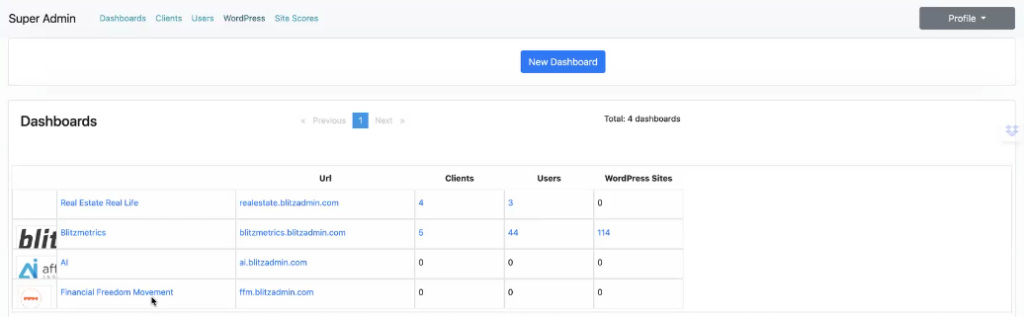
Each site is completely independent. This is not WordPress multi-user, where many little sites share one framework. Every site gets its own standalone WordPress instance with separate credentials. That matters because it means each site is secure and fully self-contained.
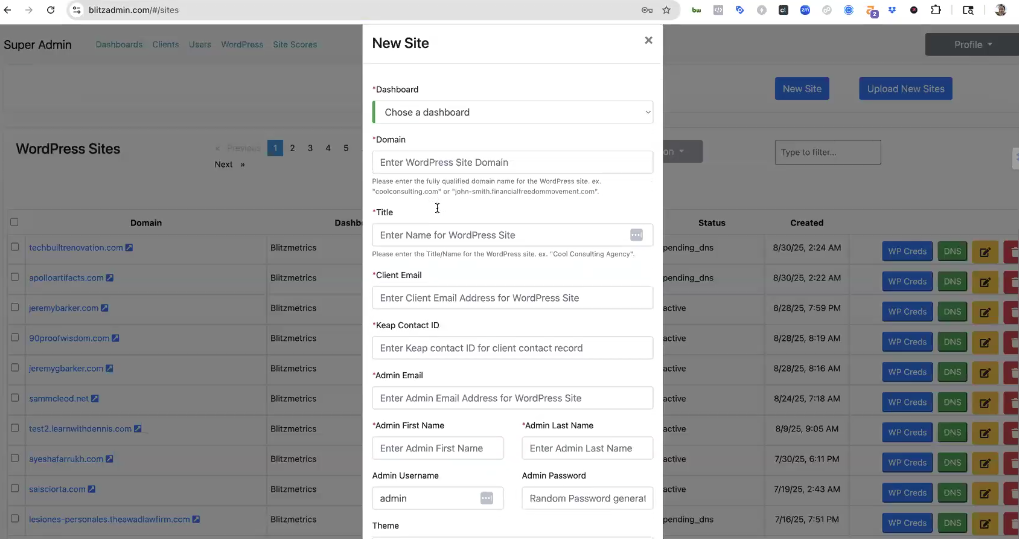

We can also bulk import websites through an API or create them one at a time. You enter the domain, pick the brand it falls under, choose a theme, and hit submit. The system handles the rest.
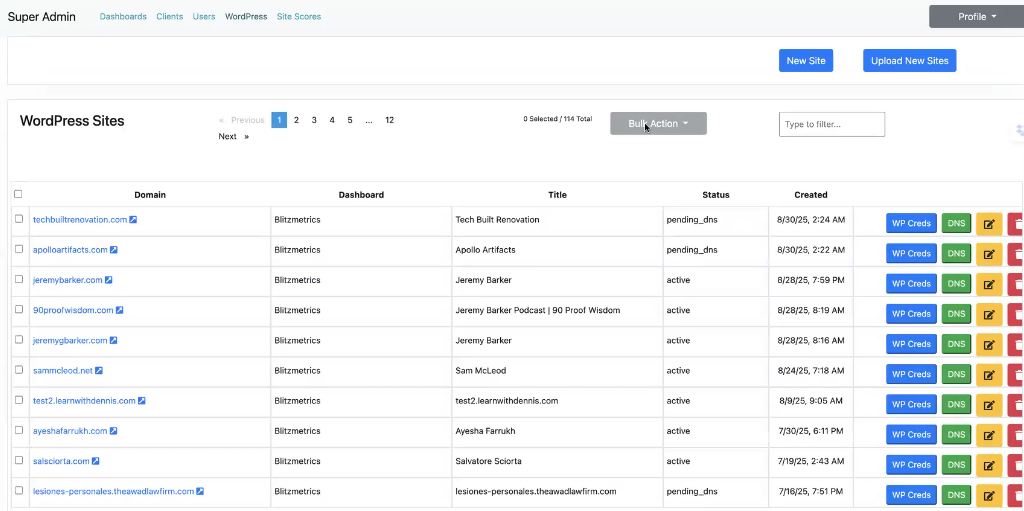
Domains, DNS, and hosting
This is where most people get confused, so let me break it down.
Buying a domain is not the same as hosting a website. You can go to GoDaddy and buy yourname.com, but just because you own the domain doesn’t mean there’s a website living there. You still have to rent space somewhere to actually host the site.

Domain management is separate from the platform that serves the site. DNS points the domain to the supported production endpoint. BlitzMetrics records the provider, CMS or build path, delivery layer, recovery method, and functional baseline for each managed site, verifies HTTPS, and may move the implementation to another supported architecture without making one vendor or CMS the permanent product promise. See the service standards.
You do not need to operate every technical control yourself. For a managed site, we document the supported production architecture, verify agreed launch checks, maintain a recovery path, and record exceptions. No platform can promise that a site will never fail or be compromised.
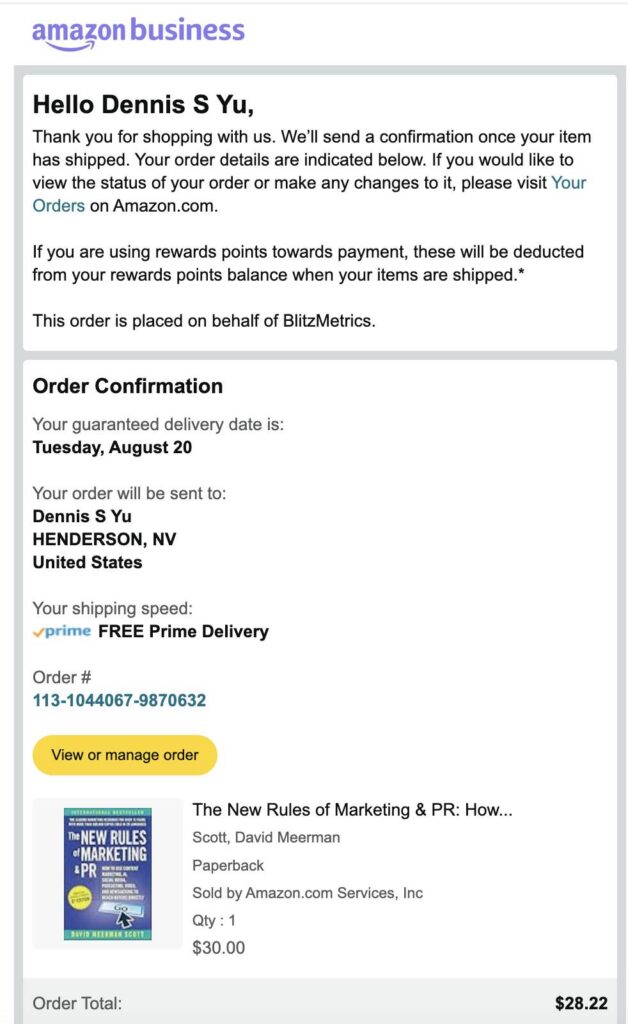
For example, we’re currently working with David Meerman Scott on getting his DNS pointed over. Once that’s done, the system takes over and his new site goes live.
We’re also building out Jeremy Barker‘s podcast and personal brand website. He even bought the exact-match .com domain for it. These are real sites we’re building with real people.
WordPress basics that most people get wrong
Once a site is live, there are some fundamental things that need to be set up correctly. For example, a lot of WordPress sites have “admin” listed as the author of every post. That doesn’t make any sense. Every post should be written by a real person, because that’s what builds authority and trust with both readers and search engines.
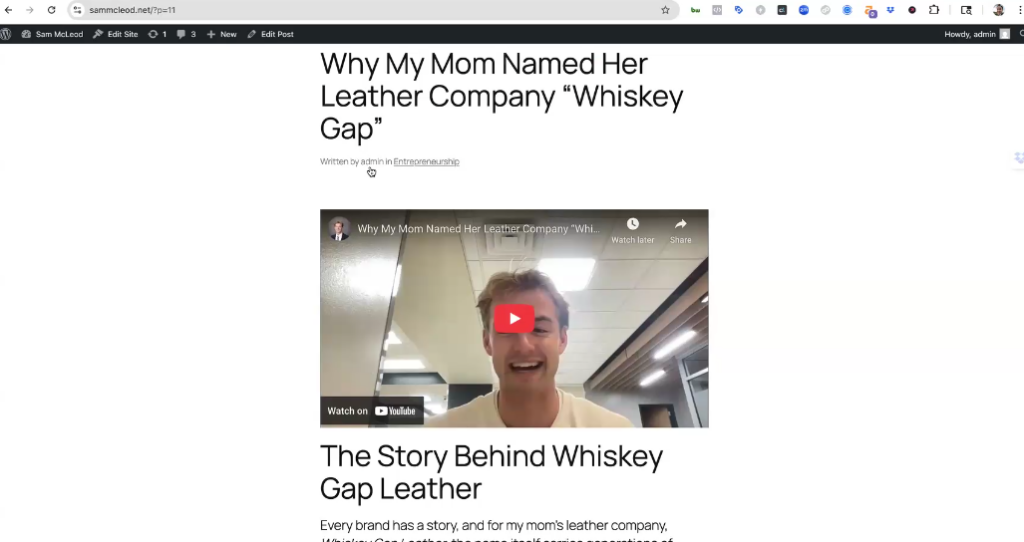
Another common problem is URL structure. We see sites where pages are called things like “?p=11” instead of having a proper, descriptive URL. That’s not helpful for SEO or for anyone trying to find your content.
We also set up proper user roles right away. You don’t want to be logging in as admin for day-to-day work. Admin access should only be used in emergencies. You create a separate user account for yourself with the appropriate permissions.
These might seem like small details, but they add up. Most people who pay agencies thousands of dollars for a website still have these basic things wrong.
Centralizing data with dashboards
Here’s where our system really stands out. When we set up a site, we also connect it to Google Analytics, Google Search Console, Facebook, YouTube, and other platforms using OAuth tokens. That means we can pull all of the analytics data into one centralized dashboard.

Instead of relying on someone every Friday to manually scan through the data and throw together a report, the dashboard monitors everything automatically. We can see what keywords are ranking, what’s getting traffic, what’s changing over time. We can set up notifications like “you haven’t posted content this week” or “your phone calls went up” or “you got no reviews this month.”
The more data we centralize, the more recommendations we can make. We can pump the data through ChatGPT to generate automated insights through what we call our quick audit process. Human workers handle the implementation at first, and over time, automated systems take over tasks like repurposing videos and generating content suggestions.
No one else in the industry is doing this, as far as I know. And I think it’s hugely valuable.
Finding hidden SEO opportunities with Search Console
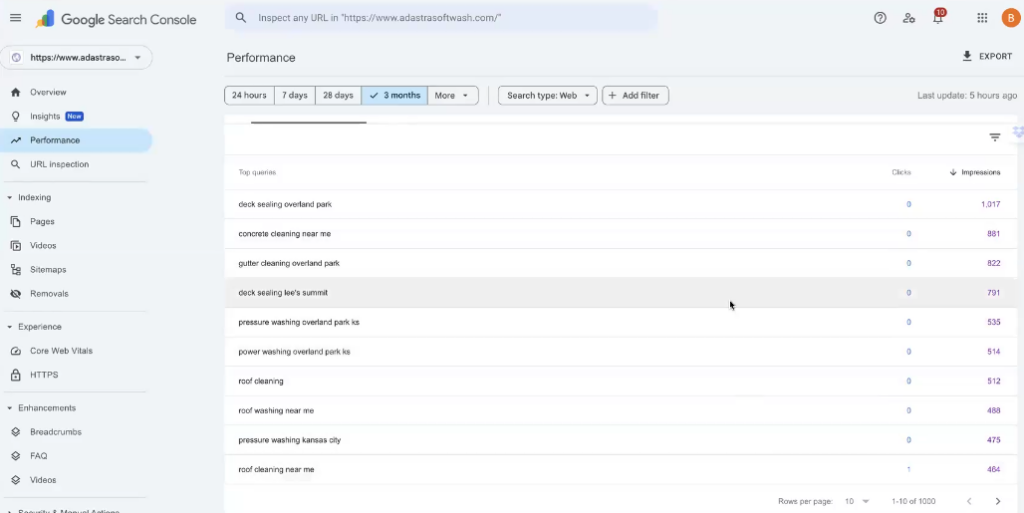
One thing I always show people is the difference between Google Analytics and Google Search Console. Analytics tells you who came to your site. Search Console tells you when you showed up in search results, even if nobody clicked.
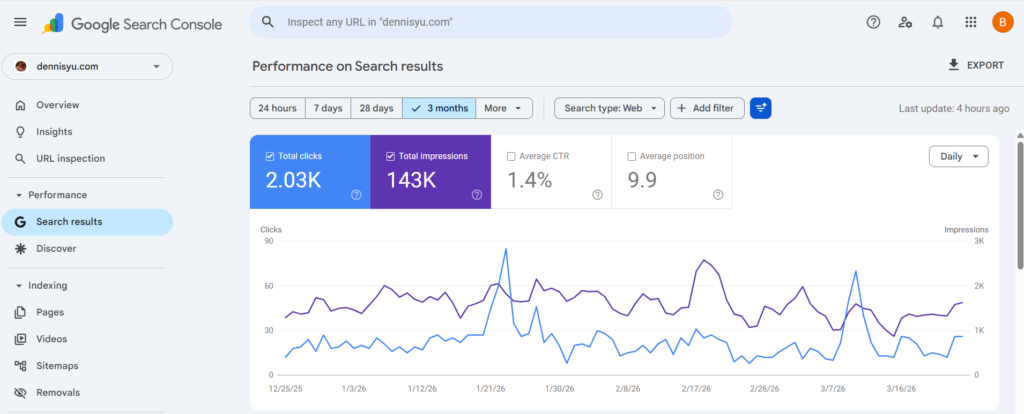
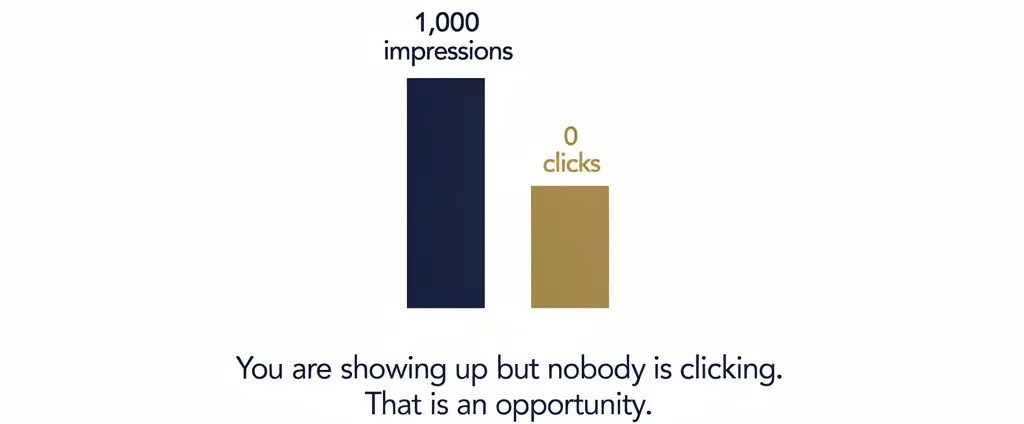
For example, we looked at a power washing company in Kansas City and found they were showing up a thousand times for “deck ceiling Overland Park” but getting zero clicks.
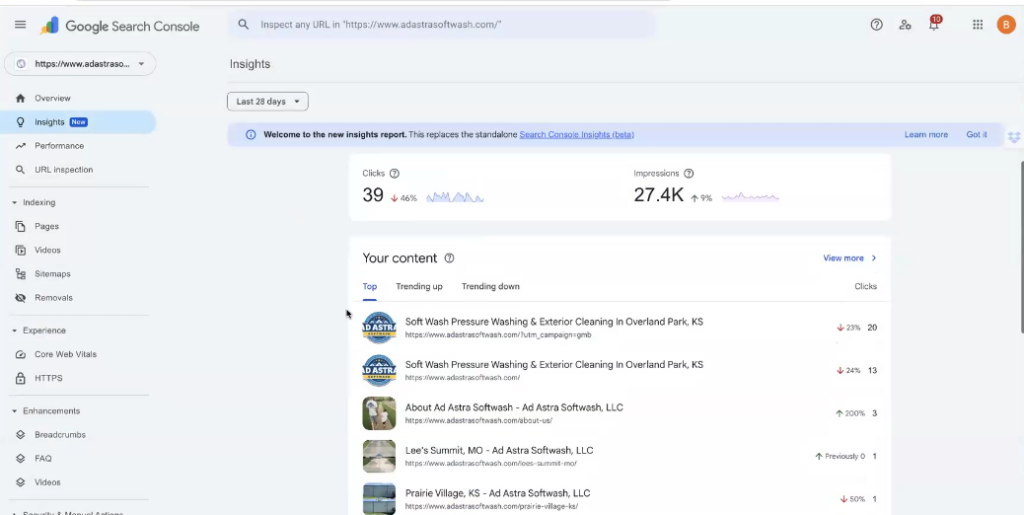
That’s actually a great sign, because it means Google already thinks you’re relevant for that keyword.
You just need to figure out why people aren’t clicking, whether it’s your title, your description, your position on the page, or something else.
We also looked at a landscaping company in Bloomington and could see exactly which keywords were driving traffic, how rankings were shifting with seasonality, and where the opportunities were.

When people are searching for “emergency tree removal” and that’s worth $500 a job, you want to know about it so you can create content around it.
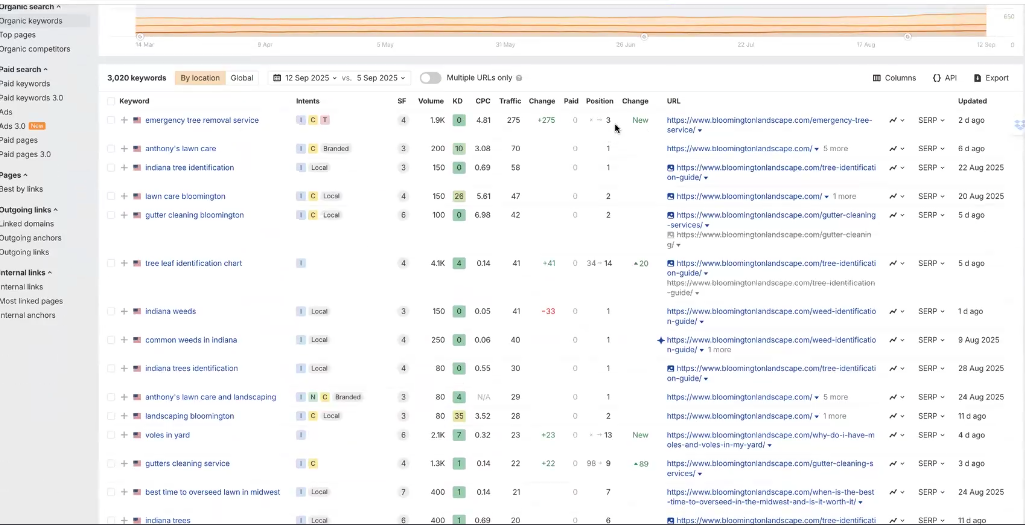
This kind of data is invisible in Google Analytics. You’d never know these opportunities existed if you weren’t looking at Search Console. And most people aren’t.
Why content matters more than design
People always want their website to look beautiful. But here’s the question I ask: do you know why MySpace went down and Facebook went up?
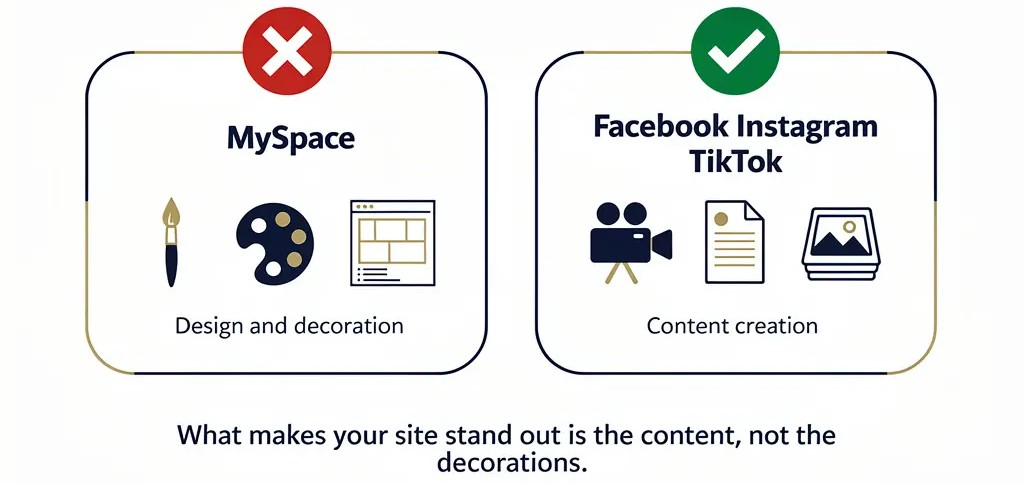
MySpace was all about customizing the layout of your profile, choosing background colors, and designing your page. Facebook gave everyone the exact same profile. No custom design at all. And Facebook won, because what matters is the content you create, not the decorations on the outside.
The same thing is true for personal brand websites. What makes your site stand out is the content you put in, not the theme or the fonts or the color scheme. We’re not building custom wedding dresses here. We’re building the infrastructure of your brand.
If you’re the kind of person who’s obsessed with design aesthetics, this probably isn’t for you. But if you’re an entrepreneur, a creator, or a young professional who just wants to get a site up, start publishing content, and build your online presence, this is exactly what you need.
The homepage hero — authority, not aesthetics
The single highest-leverage element on a personal brand homepage is the hero image, and the rule we follow on every site we build is that the hero must be an authority image, not a posed portrait. Real photography of the person in a high-authority context — mid-talk on a named stage, shoulder-to-shoulder with a recognized figure in their industry, or doing the unmistakable work of their niche at a credible venue. Studio headshots, AI-generated faces, and solo lifestyle shots do not pass. The image is doing two jobs at once: it answers “should I trust this person?” before the headline answers “what do they do?”, and it gives Google’s Knowledge Graph a clean, descriptive alt text it can use to lock the entity.
We use a four-tier ladder, and we always pick the highest tier the person can actually supply. Tier one is a stage or podium speaking shot at a named conference or summit, with branded backdrop visible in frame — the default target. Tier two is a shoulder-to-shoulder shot with a recognized authority in the target industry, both faces clearly visible. Tier three is an in-the-arena working shot — the person caught operating, coaching at a real event, on a job site, in studio. Tier four is a logo-wall or “as featured in” composite, and we treat that as a 90-day placeholder while we book a real speaking gig or co-appearance — never a long-term solution. If a client doesn’t have a tier-one or tier-two asset yet, booking one inside the first 90 days is part of the brand build, not a separate project.
The specs we hold every hero to: real photography only, 16:9 minimum aspect ratio, 2400 pixels wide minimum, optimized to under 350KB, loaded with loading="eager" and fetchpriority="high" so the browser never lazy-loads it. The alt text describes the authority signal explicitly — for example, “Alex Makowski speaking at DigiMarCon Brooklyn New York” — because that’s what Google reads when it builds the Knowledge Panel. An eyebrow line above the headline names the authority context if it isn’t readable in the frame, like “DigiMarCon Brooklyn · Cold Email Expert.” The canonical reference build is our refit of alex-makowski.com, where the single biggest move was swapping a posed indoor portrait for a real DigiMarCon Brooklyn speaking shot and rewriting the subhead to lead with the cold-email identity.
What you get with Spotlight
If you had to go out and do all of this yourself, buying hosting, configuring the tools, hiring someone to set everything up, you’d easily spend a couple thousand dollars. And you wouldn’t even know if it was done right.
I’ve seen agencies charge fifteen or twenty thousand dollars for websites that have zero traffic. Beautiful design, but nobody can find them. The client has no idea because they don’t know what to look for.
Our Spotlight Core package at $99 per month includes a personal brand site optimized for Google and ChatGPT, Knowledge Panel support and branded search cleanup, real content publishing from your photos, videos, and reviews with no AI filler, a directory profile in our Local Service Spotlight network, and a progress dashboard with group onboarding sessions.
For those who want to go further, the Spotlight Feature Pack add-on at $1,500 includes a Featured Spotlight Interview with podcast and video feature placement, a 1:1 Strategy Session of 45 to 60 minutes with me, video repurposing of up to 5 short clips from your raw footage, and VIP Queue with priority setup and early access to new features. This is limited to 25 seats.
Ninety percent of it is us guiding you through each step. Only ten percent is the software itself.
Setting the right expectations
This is something we take very seriously. We don’t want people signing up with the wrong expectations and then asking for a refund two months later.
Think of it like a gym membership. We’re giving you access to the gym and all the equipment. But if you don’t show up, that’s on you. We’re not going to lift the weights for you. And this gym doesn’t have a rock climbing wall or a steam room. It’s basic, functional equipment that works.
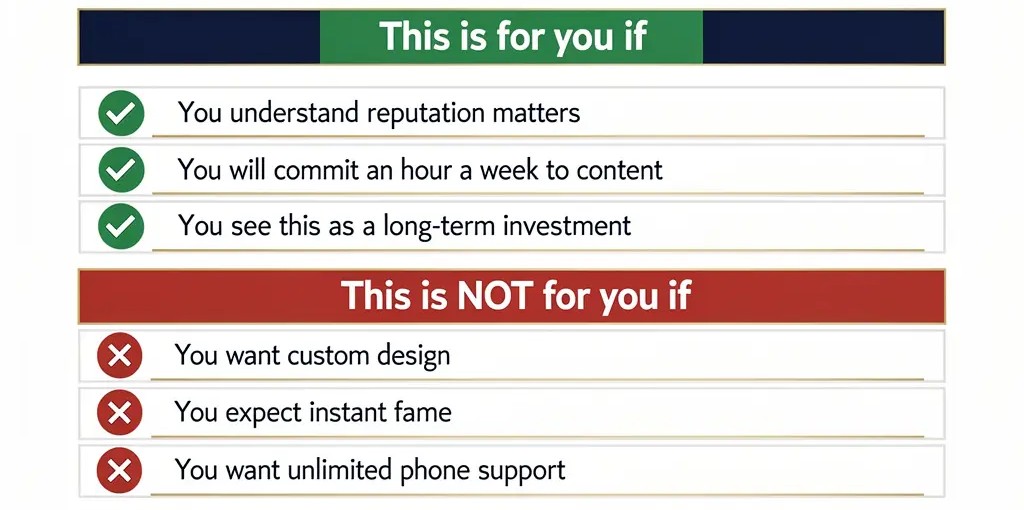
If you sign up expecting to become famous in three weeks without creating any content, this is not for you. If you think a personal brand site is about custom design and making everything look perfect, this is not for you. If you want to talk to us on the phone anytime you have a question, this is not consulting and that’s not what this is.
But if you understand that your reputation matters, that this is a longer-term commitment, and that you have to put in at least an hour a week creating content, then this is absolutely worth the investment. You’re making a commitment to your personal brand the same way you’d make a commitment to your fitness.
We actually try to discourage the wrong people from signing up. Before checkout, we’ll have a video that says: just making sure you understand what this is and what it isn’t. If you understand, proceed. If not, please do not sign up. We’d rather have fewer customers who are the right fit than a thousand people who cancel after a month.
Productized services and the marketplace model
On the business side, we package everything as productized services. A productized service is like a retainer, but instead of doing something different every time, it’s the same thing packaged like a product.
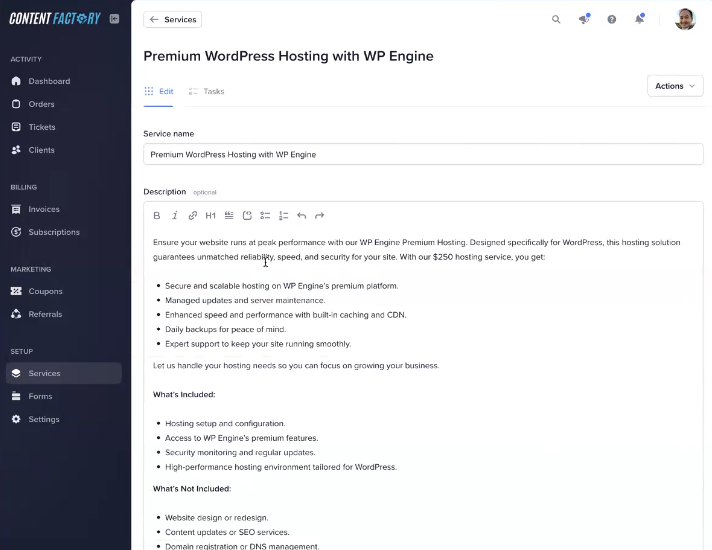
For eligible existing company clients, managed company-site hosting is a monthly add-on after preflight; it is not a stand-alone personal-brand product. A Quick Audit is available for a one-time fee, and digital plumbing is scoped separately.
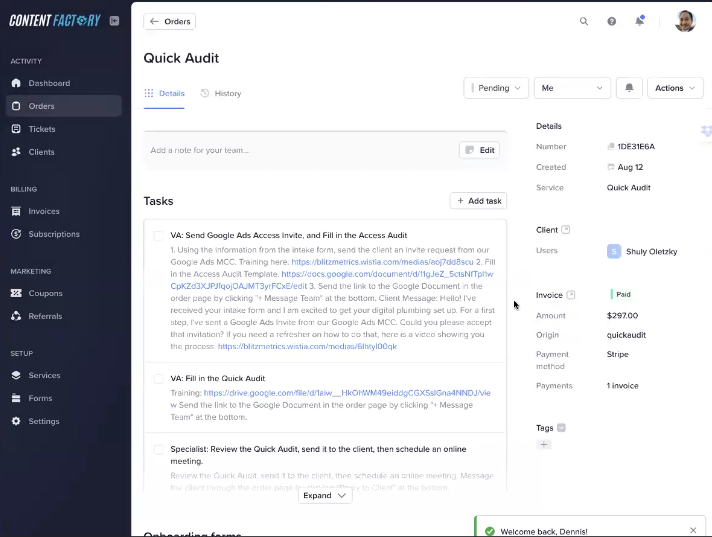
When someone places an order, it kicks off a series of tasks automatically: intake forms, access checklists, goal setting, content and targeting analysis. It works like a two-sided marketplace. Someone orders the service, we process the payment, and then the system assigns the work to the right person in the right queue.
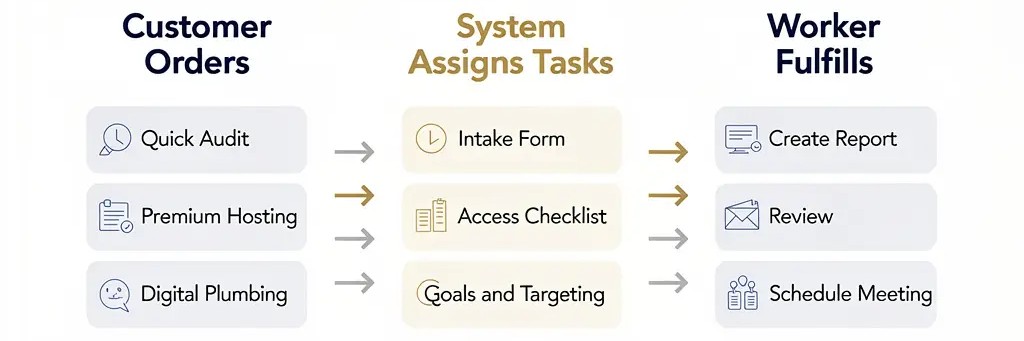
The point of an audit is to identify what is actually wrong before recommending work. A client may need digital-plumbing repair, ongoing content support, or—for an eligible existing company client—the managed hosting add-on. Each recommendation follows the actual scope; the hosting add-on is not sold as stand-alone personal-brand hosting.
How to launch with a webinar
When you’re ready to launch a package like this, the webinar format works incredibly well. We use what’s called the perfect webinar format: sixty minutes of pure education where you show people how to build a personal brand website, give away guides, and demonstrate the value of what you’re offering.
At the end of the sixty minutes, you make an offer. Sign up now and get a bonus, like a one-on-one setup session or a free course, but only for the first hundred people or only in the next thirty minutes. Then you spend the remaining time answering questions while the countdown runs. You call out names of people who are signing up in real time. That social proof drives more people to act.
After the countdown, the offer is still available at the regular price, but the bonus is gone. This creates urgency without being sleazy, because the core product is already affordable.
You can run ads to get people to register for the webinar, and it’s genuinely exciting when you have a couple hundred people attending live. The key is just getting started. Make the videos, set up the checkout flow, test that everything works, and launch. It doesn’t have to be perfect. It just has to be good enough.
Originally published .
Dennis Yu
Dennis Yu is the CEO of Local Service Spotlight, a platform that amplifies the reputations of contractors and local service businesses using the Content Factory process. He is a former search engine engineer who has spent a billion dollars on Google and Facebook ads for Nike, Quiznos, Ashley Furniture, Red Bull, State Farm, and other brands.
Dennis has achieved 25% of his goal of creating a million digital marketing jobs by partnering with universities, professional organizations, and agencies. Through Local Service Spotlight, he teaches the Dollar a Day strategy and Content Factory training to help local service businesses enhance their existing local reputation and make the phone ring.
Dennis coaches young adult agency owners serving plumbers, AC technicians, landscapers, roofers, electricians, and believes there should be a standard in measuring local marketing efforts, much like doctors and plumbers must be certified. He has appeared on 353 podcasts with 619 credited episodes — see the full list of his podcast appearances.