
 by
by
You don’t need a professional video editor anymore. With AI agents like Claude and tools like Descript, you can edit videos, publish to YouTube, write blog posts, and repurpose content across multiple channels without touching any of the technical work yourself.
The Content Factory workflow
The process is simple. You record a video, whether it’s a Zoom call, a podcast interview, or something on your phone.
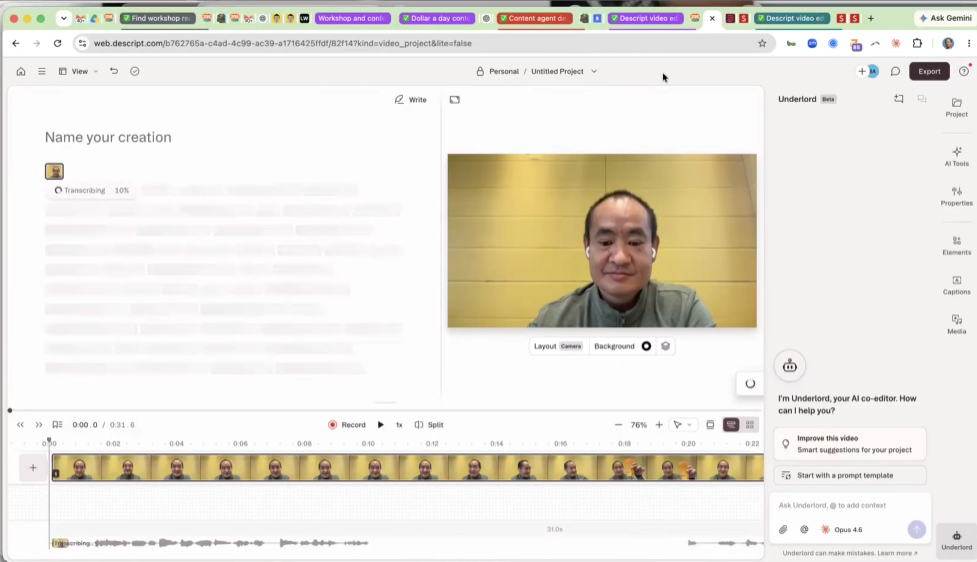
You upload it to Descript. Then you tell Claude to edit it, and it handles everything from there.
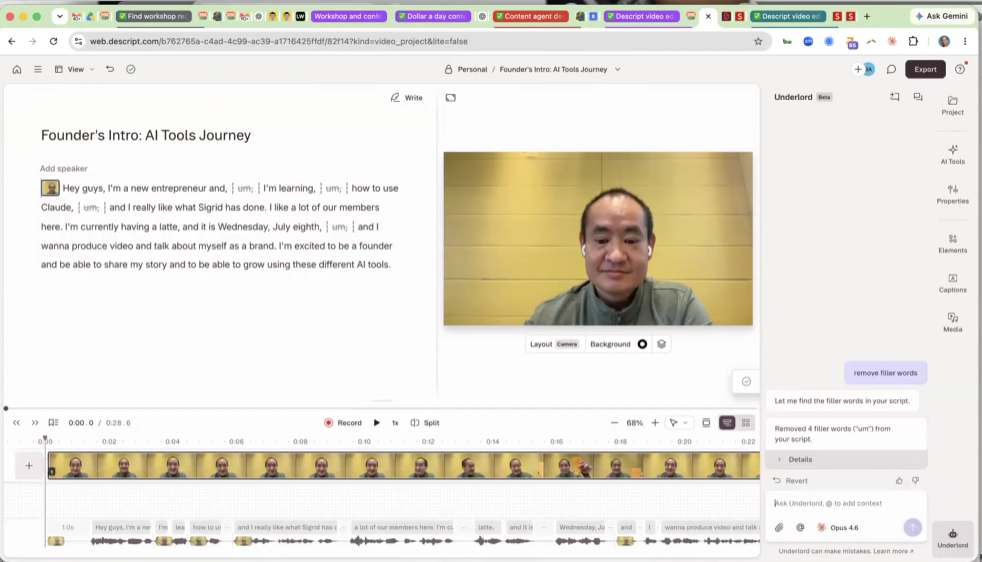
The AI will cut out filler words, remove dead air, clean up the audio with Studio Sound, and get the video ready for publishing. You don’t need to learn any video editing software. You literally just talk to it and tell it what you want. Think of it like editing a Word document, except the document is your video.
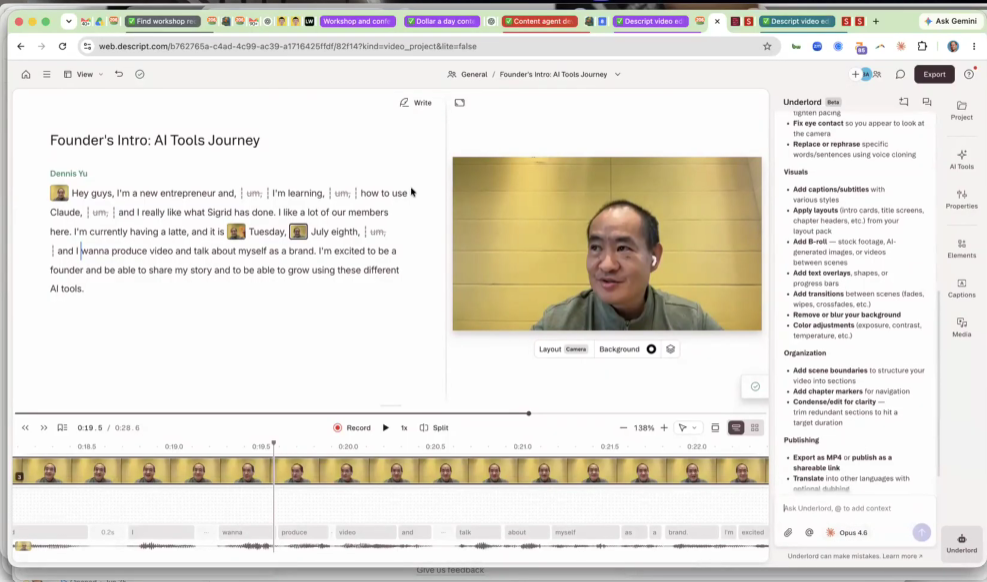
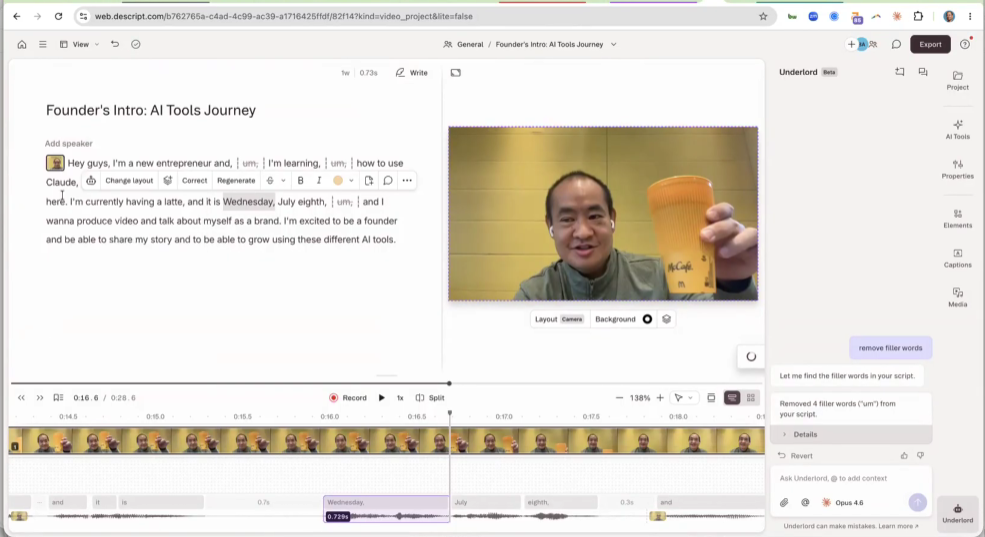
Descript was started by my friend Andrew Mason, who founded Groupon. It started as a podcasting tool but evolved into an all-in-one Swiss Army knife of video editing. You can even change words in the speaker’s own voice. Say you recorded “Wednesday” but meant to say “Tuesday.” The AI can regenerate that word in your voice.
Why light editing beats heavy production
I used to do heavy video edits with special effects and professional production. But after years of testing, the videos that actually drive conversions are the real, raw ones.
I interviewed Nathaniel Stevens, who sold his company for 342 million dollars. We recorded the whole thing on the rooftop of his new place in New York, all on my iPhone. Nathan actually brought a professional Hollywood videographer, someone who works on films with Al Pacino. And I said “It’s completely unnecessary. We just need the cell phone.”

That interview got lightly edited in Descript, chopped into clips, and put on YouTube. Some clips kicked butt. Some only got five views. But the raw, authentic format is what drives engagement.
I was at dinner with a friend of mine and he said something interesting. I just pulled out my phone and said “Say that again.” No microphone, no lighting. Just sitting at a table with food on it. When that went on YouTube with light editing, people watched 86 percent of it.
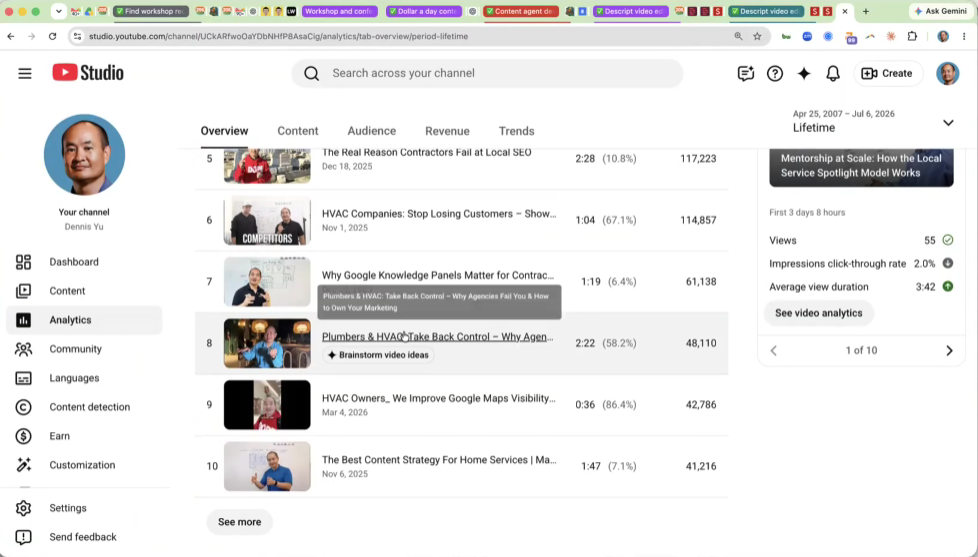
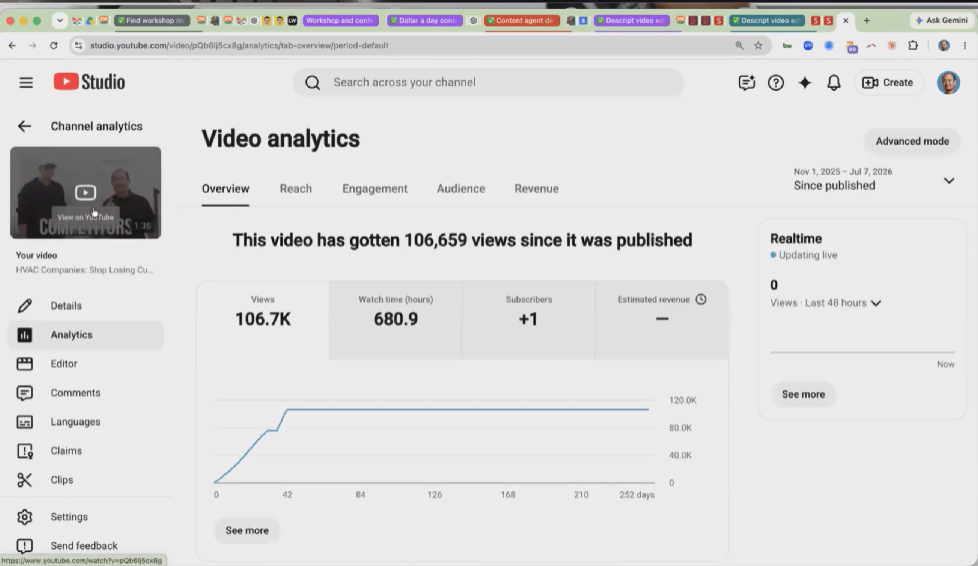
An HVAC software company I work with ran a simple video explaining why companies should put their prices on their homepage. Very lightly edited, shot casually. It’s driving a ton of new customers because the content is compelling, not because the production is fancy.
The hook is everything
Most videos fail not because of the editing or the effects. They fail because in the first five seconds, you don’t say who the video is for.
If you’re targeting HVAC companies, say “HVAC companies” in the first five seconds. If you’re Doreen Holman helping writers find literary agents, call that out immediately. If you’re Courtney Snyder, a holistic psychiatrist, say who your audience is and what pain point you’re solving. This is the hook.
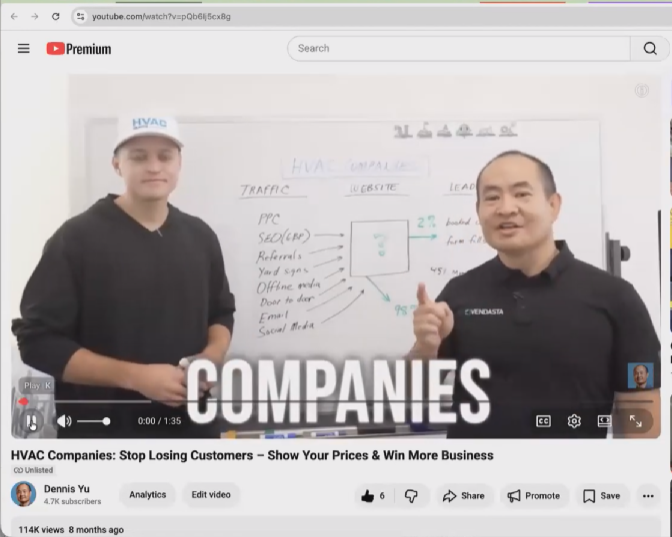
When you establish relevancy in the first few seconds, the algorithm knows exactly who to show it to. Google, which owns YouTube, will target your HVAC video to HVAC owners. It will target your writing video to writers.
Hiring a video editor on Fiverr to add 3D logos and animations won’t help if the hook is missing. What matters is you speaking directly into the camera and saying “Are you this kind of person? Do you face this kind of issue? Here’s how we solve it.”
I interviewed my friend David Carroll. How did this guy go from being in prison to having a hundred million dollar a year company? That interview went on for an hour, 300,000 people saw it, and I get stopped at conferences where people say they loved it. The hook established why it was worth their time.
The two-layer agent system
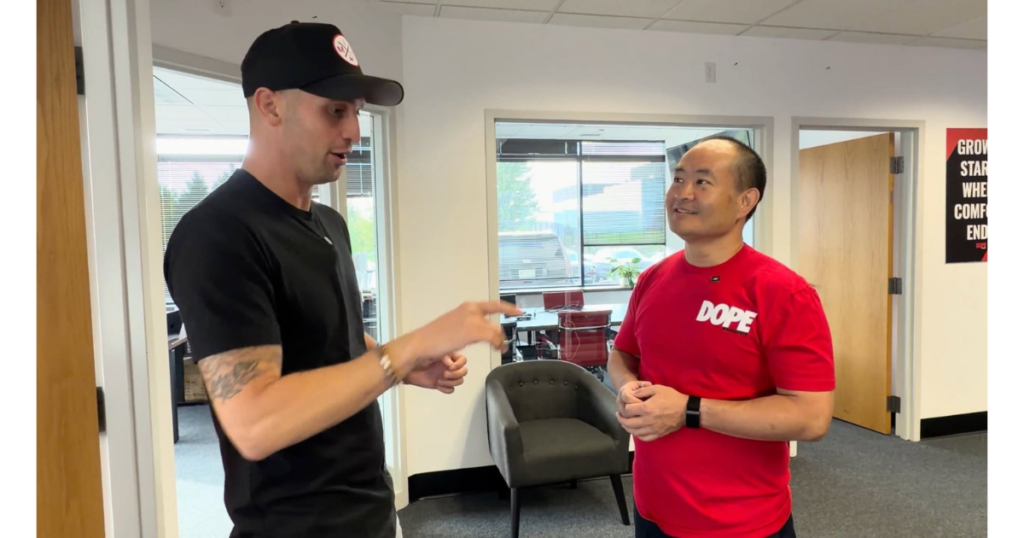
When you use Claude to edit videos through Descript, there are actually two AI systems working together. Claude is your project manager, your COO. It understands your strategy, your brand, your audience, and your goals.
Descript has its own AI called Underlord that does the actual video editing. So Claude tells Underlord what to do, and Underlord executes. They’re separate budgets and separate tools, but they work together. Think of it like being the CEO with a chief of staff who manages different workers. Each worker has their own budget and their own capabilities.

This matters because when Claude writes your YouTube description, it doesn’t just summarize what’s in the video. It ties the video into your overall strategy, your programs, your credibility, and your expertise. No other tool does this because no other tool has the full context of who you are. That context is what separates strategic content from AI slop.
I’ve looked at all the other tools. Every day there’s a new AI tool that does this and does that. Their weak point is they just edit what’s in that video, what the words are that you’re saying right there. But without the context of understanding the strategy, that video’s not really going to perform.
Beyond video: blog posts, calculators, and tools
The Content Factory doesn’t stop at video. Once your video is on YouTube, you tell Claude to turn it into a blog post that embeds the YouTube video. The blog post links to related content, other people you’ve worked with, and your programs.

I demonstrated this live by taking a Dunk Talk podcast episode with Nathaniel “Hoopin Nate” Kenney, who has jumped one million times and has a billion views on social media.
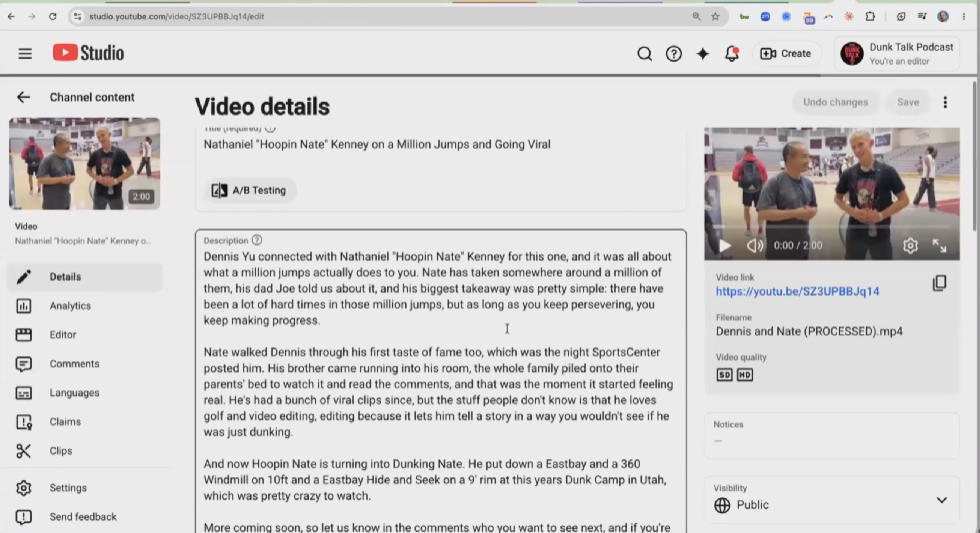
I told Claude to turn it into a blog post on dennisyu.com, follow my article guidelines, link to related people and sites, and make it relevant to entrepreneurs who understand the value of practicing something a million times.

Claude built the entire plan, spun up sub-agents, and executed without me needing to log into any tool.
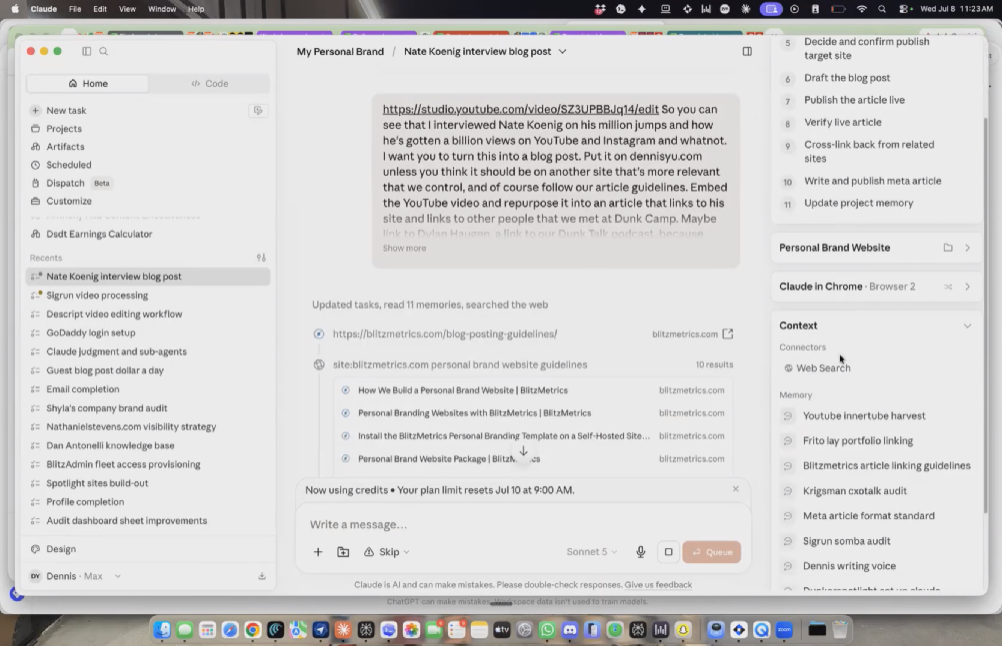
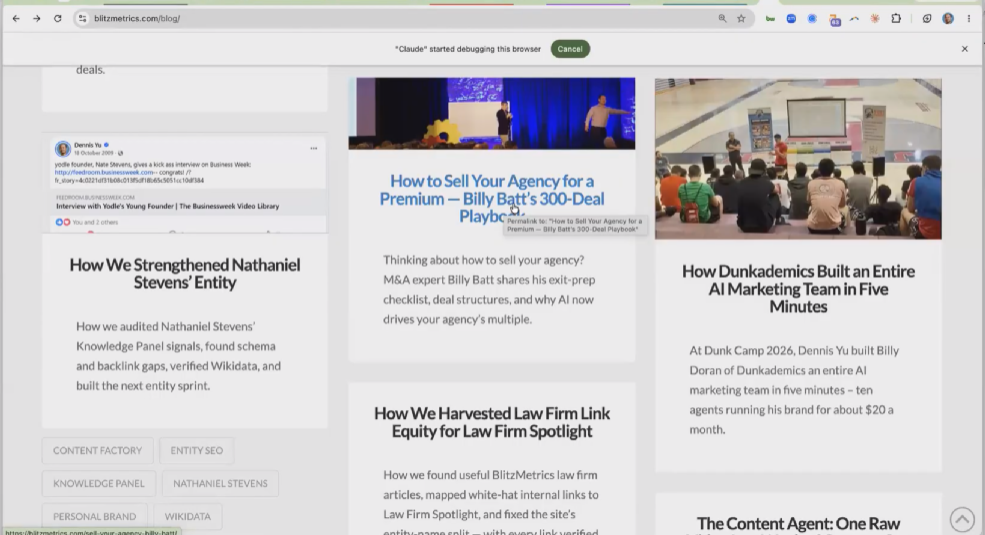
Almost every article on blitzmetrics.com is written by Claude this way, and it doesn’t look like AI slop because it contains real stories. Claude verified 46 sites in Search Console. It documented how we built a website and knowledge base. It wrote case studies for law firms and dunkers alike. Real examples, real proof.
You can go even further. Instead of just writing articles, Claude can build interactive calculators and tools. A friend of mine sold his funeral home for a lot of money and now helps others do the same. Claude built a calculator where you answer a few questions and it tells you your funeral home is worth 3.2 million dollars and what you can do to make it worth 5 million. Built in two minutes.

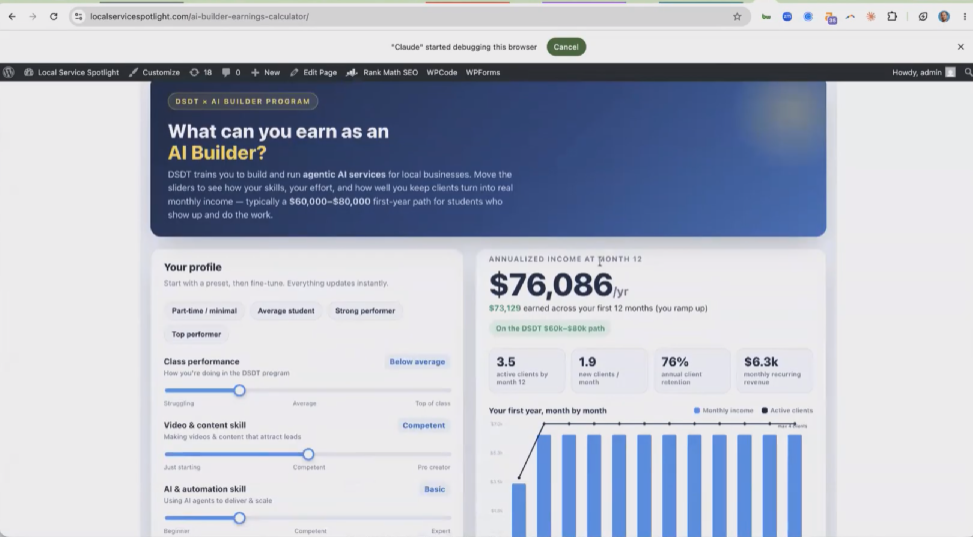
We also built an earnings calculator for students considering a digital marketing program. These rank well on Google and provide real value that a static article cannot.
Building trust through personal brand
The thing that really causes people to convert is not just your expertise. It’s the human connection. Anna could be the best IP trademark lawyer in the world, but what causes clients to choose her is that they identify with her as a person.
Those lightweight moments matter. I have photos from conferences, dinners with my friend Erik Huberman who runs the largest digital agency in the world, meetings with Tom Shipley who runs DealCon and does mergers and acquisitions.

These moments subconsciously cause your potential buyer to say “This is someone I want to work with.”

You can tell Claude to grab any videos of you with specific people and add them as B-roll to enhance existing content. I’ve told it “Hey, can you grab any videos of me and Erik Huberman hanging out?” Even videos published a year ago can be improved with new B-roll that tells a better story and builds more trust.
Your credibility is your competitive advantage
In a world where AI is 100 times smarter than it is today, what value do we still have? Our expertise, our relationships, and our proof.
Every video you record is a piece of proof. Every interview, every conference appearance, every client success story. The AI agents organize all of it, repurpose it, and make it visible across YouTube, your website, LinkedIn, and everywhere else. I’ve gotten almost two million views just on YouTube, a lot of it using the Dollar-a-Day strategy where you put a few dollars against videos to let the algorithm find more people like your audience.
The people who start building this now have a compound interest advantage. The content builds on itself. The rankings improve. The trust deepens. Waiting 90 days means starting from behind, even though the tools will be better by then.
Start with one or two videos. Get them edited. Get them published. See which ones perform. Then do more. The AI handles the rest.
Originally published .
Dennis Yu
Dennis Yu is the CEO of Local Service Spotlight, a platform that amplifies the reputations of contractors and local service businesses using the Content Factory process. He is a former search engine engineer who has spent a billion dollars on Google and Facebook ads for Nike, Quiznos, Ashley Furniture, Red Bull, State Farm, and other brands.
Dennis has achieved 25% of his goal of creating a million digital marketing jobs by partnering with universities, professional organizations, and agencies. Through Local Service Spotlight, he teaches the Dollar a Day strategy and Content Factory training to help local service businesses enhance their existing local reputation and make the phone ring.
Dennis coaches young adult agency owners serving plumbers, AC technicians, landscapers, roofers, electricians, and believes there should be a standard in measuring local marketing efforts, much like doctors and plumbers must be certified. He has appeared on 353 podcasts with 619 credited episodes — see the full list of his podcast appearances.