
 by
by
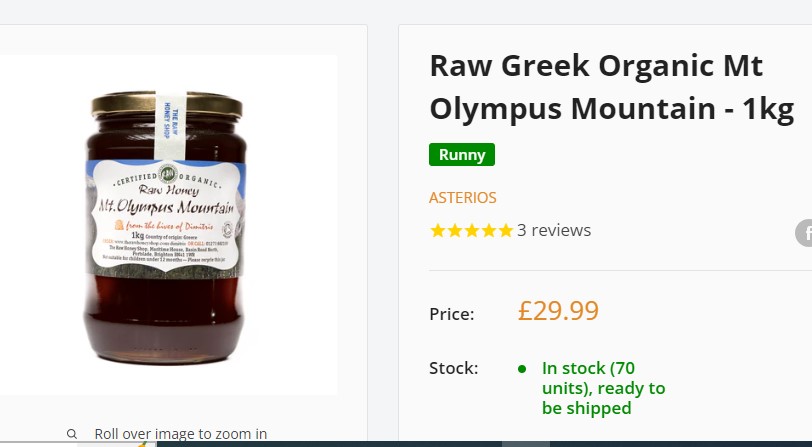
The Raw Honey Shop, owned by Tim Walker, already ranks well for “raw honey” and has grown sales for nine straight months — so this audit found the ceiling isn’t SEO. It’s storytelling and distribution, and that’s a faster lever than chasing more rankings.
£165
customer lifetime value, per Shopify
£57
average order size today
9 mo
of steady sales growth, mostly word-of-mouth
Read What’s Already Working
The Raw Honey Shop ranks well for “raw honey” and has seen sales climb for nine months — largely on product quality and word-of-mouth, despite light social activity. With a £165 lifetime value and a £57 average order, the customer economics are healthy.
The weak spot is concentration: traffic still leans on the homepage even though the blog covers raw honey in depth. Those secondary pages should carry more of the load instead of funneling everything through one URL.
| Finding | Detail | Move |
|---|---|---|
| Top keyword | Ranks well for “raw honey” | Expand into types-of-honey terms |
| Traffic shape | Homepage-dependent | Build out blog and product pages |
| Striking range | Terms sitting in the top 10, not top 3 | Push these toward page-one wins first |
| Top social channel | Facebook (recipes performed well) | Repurpose with a Dollar-a-Day campaign |
RUN THIS YOURSELF
In Search Console, filter the queries report to positions 4–10. Those are “striking range” keywords — already close to page-one, so a content refresh on those pages tends to move the needle faster than chasing brand-new terms.
Diagnose the Storytelling Gap
Customers don’t pick this honey on features — they buy the narrative and the trust that goes beyond price comparisons with supermarkets like Tesco. Yet the site reads like a shopping cart, not a magazine, so the story that drives the sale is missing from the pages.
The fix is content, not code: blog-style posts, short videos, and customer interviews framed as lifestyle stories rather than testimonials. Facebook is already the top channel and recipes have performed, so that’s the natural place to repurpose video and reach a younger audience.
RUN THIS YOURSELF
Audit a client’s site by asking one question on each key page: does this tell a story or just list a product? If every page reads like a cart with a price, the gap isn’t rankings — it’s narrative, and that’s what you fix first.
Build the Content Engine
Tim can start a honey podcast to capture stories about the product and his journey as a founder, then repurpose each episode across Facebook, email, and the blog using the Content Factory approach. Gift baskets and sampler sets add higher-markup options, and expanding into the US market widens the runway.
None of this requires becoming an influencer — the plain-spoken, trustworthy tone is exactly what resonates. Layer authentic stories onto the pages already ranking, and the existing £165 lifetime value compounds. That’s the heart of a focused Quick Audit, and grounding each page in real E-E-A-T proof is what turns a strong product into a story customers repeat.
THE DELIVERABLE
Turn a Strong Product Into a Story That Sells
A prioritized plan to move beyond a homepage-heavy cart and grow UK and Europe sales through storytelling and distribution.
Originally published .
Dennis Yu
Dennis Yu is the CEO of Local Service Spotlight, a platform that amplifies the reputations of contractors and local service businesses using the Content Factory process. He is a former search engine engineer who has spent a billion dollars on Google and Facebook ads for Nike, Quiznos, Ashley Furniture, Red Bull, State Farm, and other brands.
Dennis has achieved 25% of his goal of creating a million digital marketing jobs by partnering with universities, professional organizations, and agencies. Through Local Service Spotlight, he teaches the Dollar a Day strategy and Content Factory training to help local service businesses enhance their existing local reputation and make the phone ring.
Dennis coaches young adult agency owners serving plumbers, AC technicians, landscapers, roofers, electricians, and believes there should be a standard in measuring local marketing efforts, much like doctors and plumbers must be certified. He has appeared on 353 podcasts with 619 credited episodes — see the full list of his podcast appearances.