
 by
by
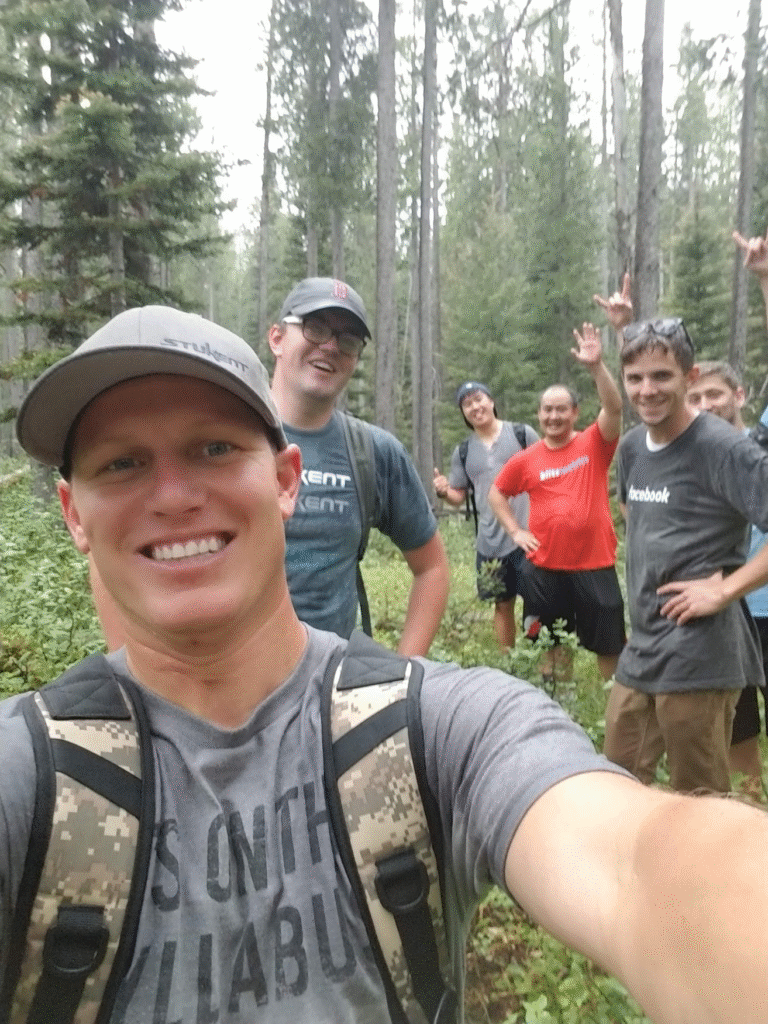
Stuart Draper invited me to his Island Park Retreat to spend a few days with a group of founders and investors. Stu didn’t just ask me to give a keynote and leave — he had me hang out, eat meals together, and do a live podcast interview in front of his mastermind group. That kind of generosity tells you everything about who Stu is.
[DENNIS: Insert photo of you and Stu together at the Island Park Retreat here]
I’ve known Stu for years. He built Stukent.com into an edtech company that landed on the Inc. 5000 list nine times before he turned 40. He now runs the Startups with Stu podcast, where he brings together founders at every stage and creates an environment where real conversations happen — not rehearsed sound bites.
This article is based on Episode 52 of his podcast, recorded live at that retreat. I want to walk through the core ideas we covered and give you the frameworks I shared with his group.
Good marketing beats good business — and here is how to close that gap
I told Stu’s group something that bothered a few people in the room: good marketing beats good business. There are incredible people out there — doctors, plumbers, consultants — who are phenomenal at what they do. But someone with a worse product and better marketing will out-earn them every time.
My friend Dr. Adrien Laura Harvard has a medical practice in California. She’s brilliant. She charges $300 per visit, sees 20 patients a day, and genuinely changes lives. But some “functional medicine” influencer with a fraction of her expertise pulls in 10x the revenue because they understand content and distribution.
That gap is what I spend my time closing. I don’t want to make bad marketers richer. I want to give good people — the ones who actually deserve it — the marketing systems through our Content Factory to match their skill.
Understand the difference between perceived authority and actual authority
This was the biggest framework I shared at Stu’s retreat. Google’s E-E-A-T standard — Experience, Expertise, Authority, and Trust — matters because it mirrors how humans already make decisions.
Actual authority is your real knowledge and skill. Perceived authority is what the internet, media, and public believe about you. Here’s the uncomfortable truth: perceived authority drives the sale first. Actual authority keeps the customer.
I experienced this firsthand. Years ago, I went on CNN to debate data privacy and Cambridge Analytica. I argued with the host on live TV — respectfully, but firmly. That 5-minute segment gave me more perceived authority than a decade of engineering work at Yahoo.
Did I suddenly know more about marketing after that CNN appearance? No. But the world perceived me differently. Speaking gigs, book deals, and consulting clients followed. Perceived authority opened the doors. Actual authority kept them open.
[DENNIS: Insert photo of you speaking on stage or at a past event with Stu’s group]
Start a podcast to build authority — even with zero following
I told Stu’s group that the single best strategy for a founder who needs authority is to start a podcast and repurpose that content. Not because anyone will listen to it at first. Because of what it lets you do.
When you interview 10 experts in your space, you borrow their authority. You create content with their face and name on it. They share it with their audiences. You now have 10 pieces of content that position you next to recognized names.
Take those 10 episodes and repurpose them. Turn them into a book. Run them as dollar a day ads. Post clips on LinkedIn and YouTube. Suddenly you’ve got a content engine that compounds.
I call this the “Mexican food” metaphor. You’ve got the same ingredients — beans, cheese, rice, meat. But you can serve it as a burrito, a taco, an enchilada, or a quesadilla. Same content, different formats, different platforms, all building the same authority.
Stu himself is a perfect example of this. His Startups with Stu podcast is exactly this strategy executed well — he brings on founders, investors, and operators, records live conversations, and turns those into clips, articles, and social content.
Use ChatGPT to analyze perceived authority in real time
During the live recording, we did something that surprised everyone in the room. I pulled up ChatGPT and asked it to analyze Stu’s authority — right there, in front of the group.
The AI pulled together everything publicly available about Stuart Draper: his Inc. 5000 track record, Stukent, his podcast, his events, and his connections. It assessed his perceived authority based on digital signals — mentions, articles, associations, and content.
The result was fascinating and showed the group exactly what Google sees when it evaluates a person. This is how Knowledge Panels get triggered. Google is constantly asking: is this person a known entity? And it answers that question by looking at the same signals ChatGPT found.
If you don’t have a Knowledge Panel yet, that doesn’t mean you can’t get one. It means you need to build those digital breadcrumbs — podcast appearances, articles on sites with high domain authority, being listed on reputable sites — so that Google recognizes you as a real entity in your space.
Servant leadership works as personal branding — even for introverts
One of the founders in the room asked me whether you need to be a public figure to make this work. The answer is no.
I’m an introvert. I don’t love being on stage. But servant leadership — helping other people win publicly — is the most powerful personal brand strategy that exists. You don’t have to perform. You just have to show up for other people and document it.
When you help other people, they talk about you. When you mentor a young founder and they grow to a million dollars in revenue, that story becomes your content. You don’t even have to write it — they’ll write it for you.
[DENNIS: Insert group photo from the mastermind retreat or a candid shot of you coaching/mentoring]
Learn from Brandon Agronoff — scaling from a basement to $1M per month in personalized socks
I shared this story with Stu’s group because it captures everything I believe about coaching and scaling.
Brandon Agronoff started coming to my workshops when he was about 14 years old. He was making personalized socks in his parents’ basement — designing them himself, shipping them himself, doing everything by hand.
I told him to hire agents from the Philippines to handle operations so he could focus on growth. He listened. He scaled to over 300 agents, $200K per month in ad spend, and nearly $1M per month in revenue from personalized sock sales.
Brandon succeeded because he had actual skill and was coachable. I gave him the systems. He executed.
Ship personalized socks to every podcast host you meet
Here’s a tactic I use that costs $14 and generates more goodwill than a $1,000 gift. I ship custom face socks — with my face on them — to every podcast host I appear on.
People love them. They take photos. They post them. Stu got a pair. It’s memorable, it’s personal, and it costs almost nothing.
Little things like that make you stand out. You don’t need a massive budget to build relationships. You need creativity and consistency.
[DENNIS: Insert photo of the custom face socks — or Stu holding them if you have one]
Take these frameworks and apply them to your own marketing
Stuart Draper built something special with his podcast and mastermind retreats. He creates a space where founders can be honest about their struggles and learn from people who’ve actually done the work.
If you’re a founder who’s good at what you do but struggling with marketing, here’s the playbook: start a podcast, interview 10 people you admire, repurpose every episode into multiple formats, use AI tools to analyze and build your perceived authority, and focus on helping other people win — that’s the fastest path to building your own brand.
I love seeing other people win. Stu is one of those people I’m rooting for.
Check out more episodes of the Startups with Stu podcast, and if you want to learn how to build your own content engine, explore the Content Factory training at BlitzMetrics.
What framework from this episode resonated most with you? Have you tried the podcast-to-authority strategy in your own business?
Originally published .
Dennis Yu
Dennis Yu is the CEO of Local Service Spotlight, a platform that amplifies the reputations of contractors and local service businesses using the Content Factory process. He is a former search engine engineer who has spent a billion dollars on Google and Facebook ads for Nike, Quiznos, Ashley Furniture, Red Bull, State Farm, and other brands.
Dennis has achieved 25% of his goal of creating a million digital marketing jobs by partnering with universities, professional organizations, and agencies. Through Local Service Spotlight, he teaches the Dollar a Day strategy and Content Factory training to help local service businesses enhance their existing local reputation and make the phone ring.
Dennis coaches young adult agency owners serving plumbers, AC technicians, landscapers, roofers, electricians, and believes there should be a standard in measuring local marketing efforts, much like doctors and plumbers must be certified. He has appeared on 353 podcasts with 619 credited episodes — see the full list of his podcast appearances.