
 by /
by /
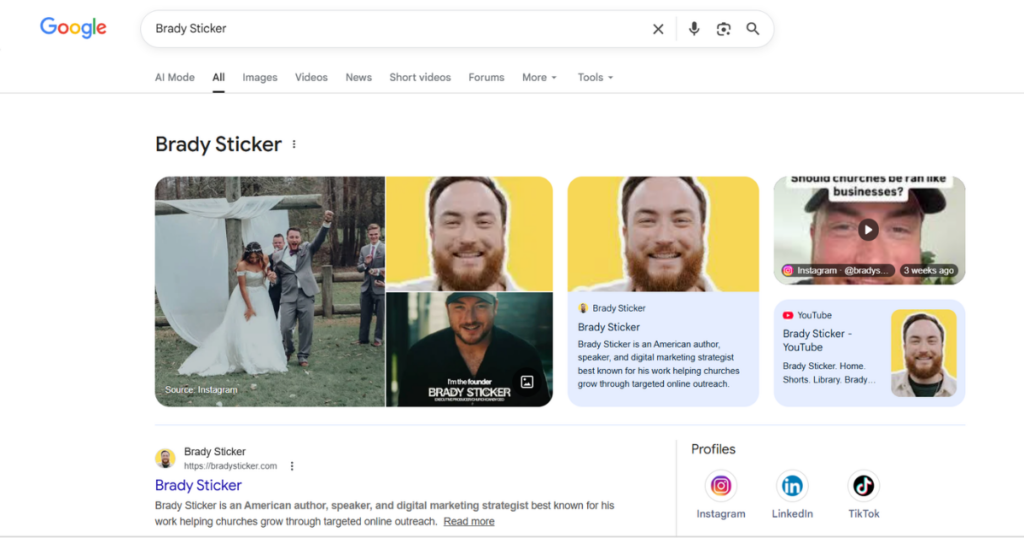
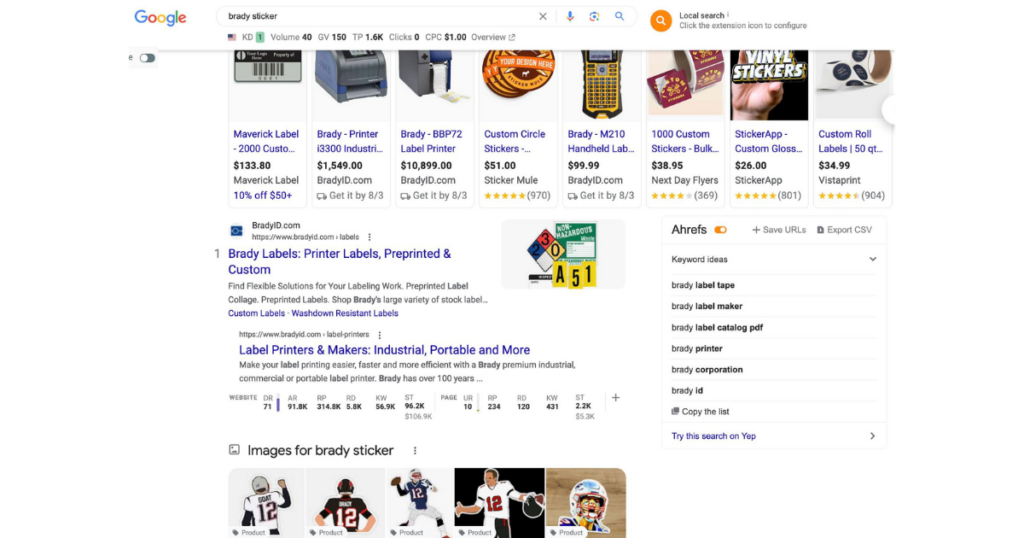
18 months ago, if you Googled “Brady Sticker,” you’d get a bunch of Tom Brady sticker results and a company called Brady that makes labels. You’d have to scroll way down to find Brady Sticker, the CEO of Church Candy, a three-time Ninja Hacks winner in the Seven Figure Agency community, and one of the sharpest digital marketers serving churches.
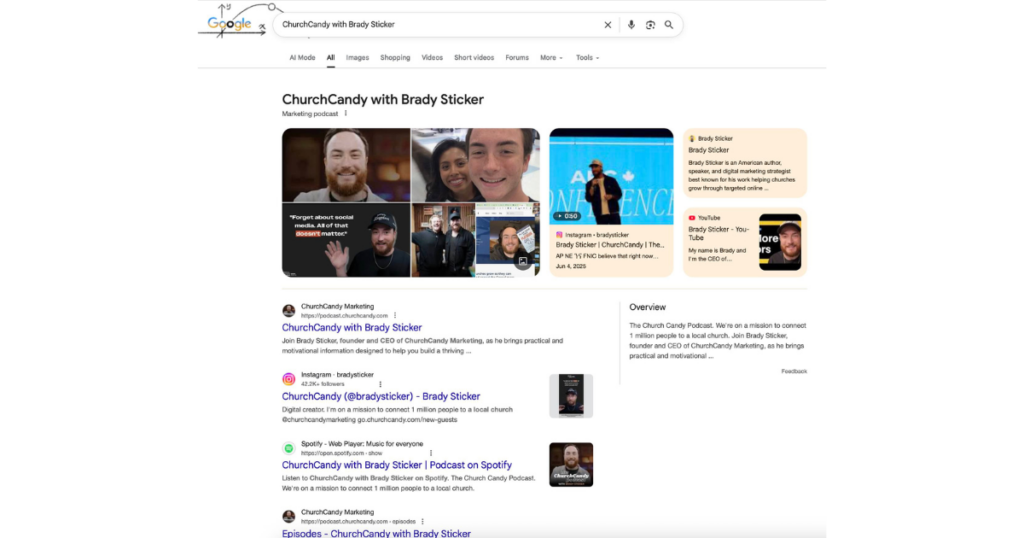
Today, Brady ranks #1 for his name, has a full Google Knowledge Panel with a confidence score over 300, and even ChatGPT recommends his agency to pastors looking for help growing their churches.

Here’s how it happened.
The problem
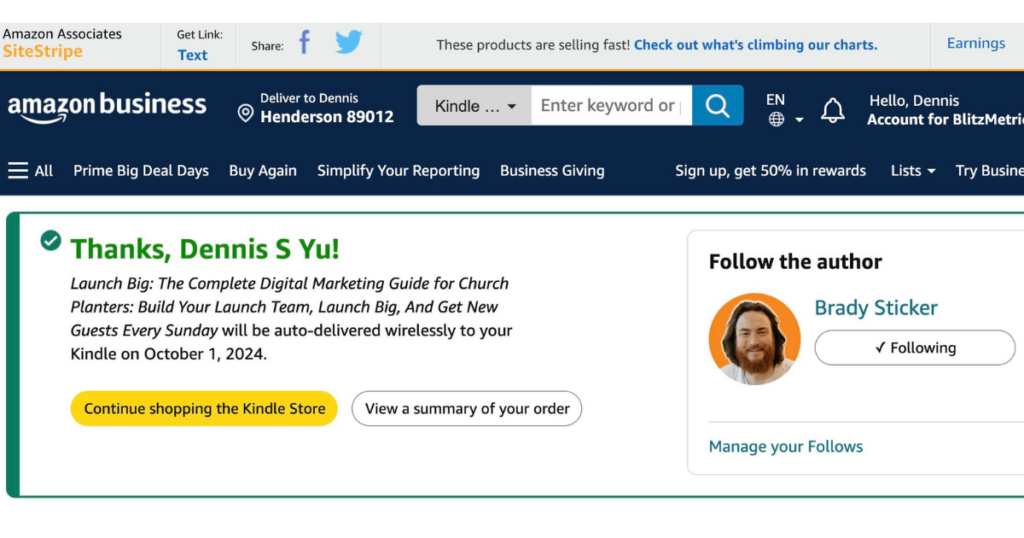
Brady had all the ingredients of someone who should rank. He had a personal brand site at bradysticker.com. He had a ton of YouTube videos, social media content, a podcast, and a published book called Launch Big.
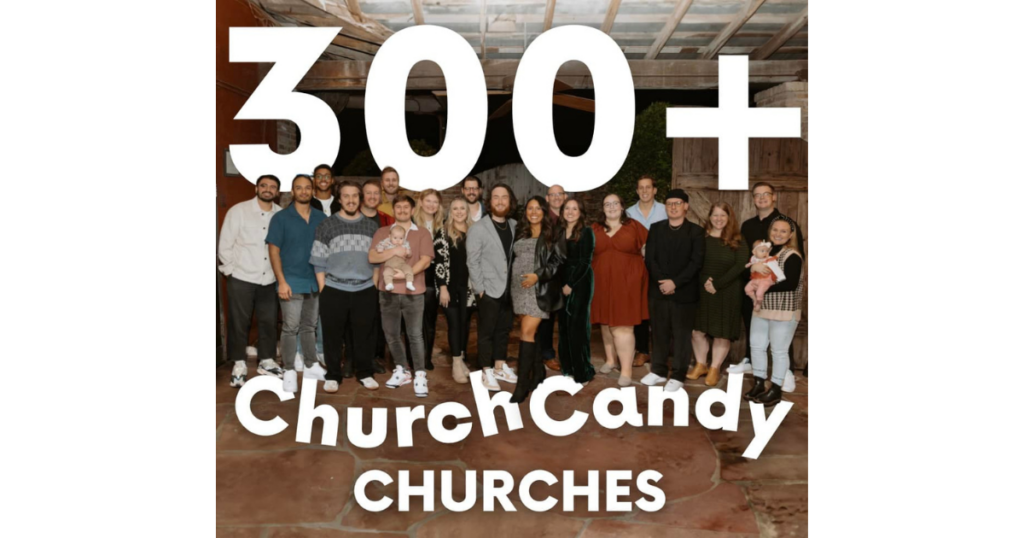
He was doing real work for over 300 churches with Facebook and Instagram ads.
But none of it was connected. His site had a domain rating of zero with no links pointing to it.

Google Analytics, Google Tag Manager, and tracking pixels were all missing. His podcast was on a subdomain instead of a subfolder, which meant it had no SEO power.
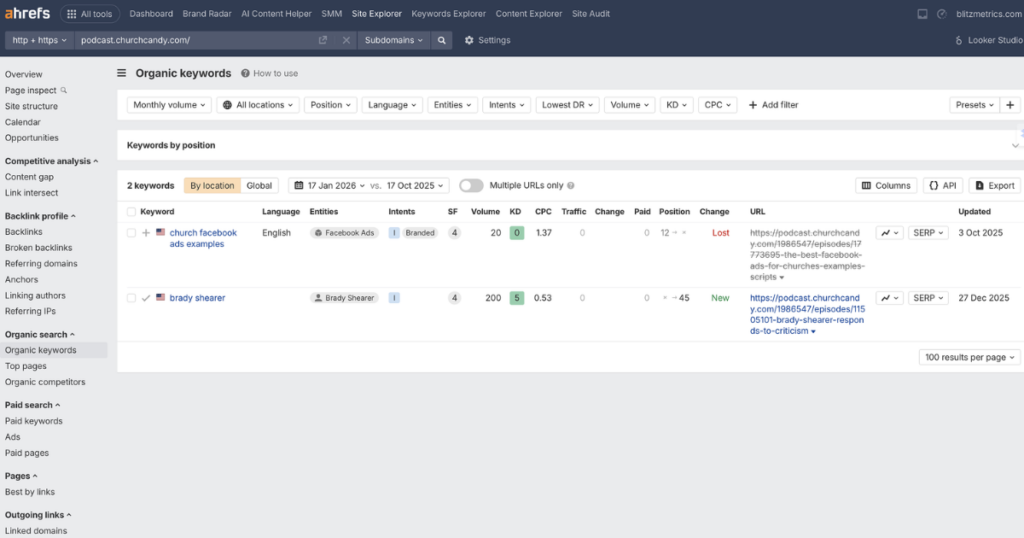
His content wasn’t being repurposed to the web where Google could see it. There was no traffic to his personal brand site. And with only 40 people a month searching his name and a keyword difficulty of 1 out of 100, it should have been easy. It just wasn’t being done.
On top of that, a previous agency had published AI-generated junk content on churchcandy.com, pages stuffed with irrelevant links and no real substance. That had to be cleaned up before any real progress could happen.

The strategy
We didn’t use any SEO tricks or gimmicks. The strategy was built on a simple truth: Google is a super smart lie detector test that uses over 14,000 variables to determine rankings, way beyond what most SEO experts realize. Click traffic via Chrome browsers is just one signal. Engagement from social media, how users behave on your site, links from credible sources, these all feed into what Google sees.
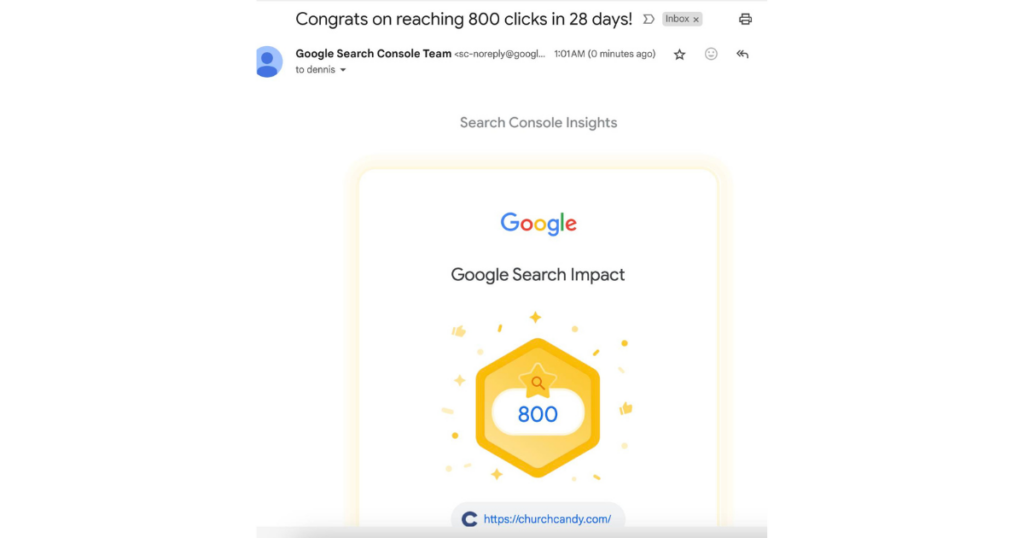
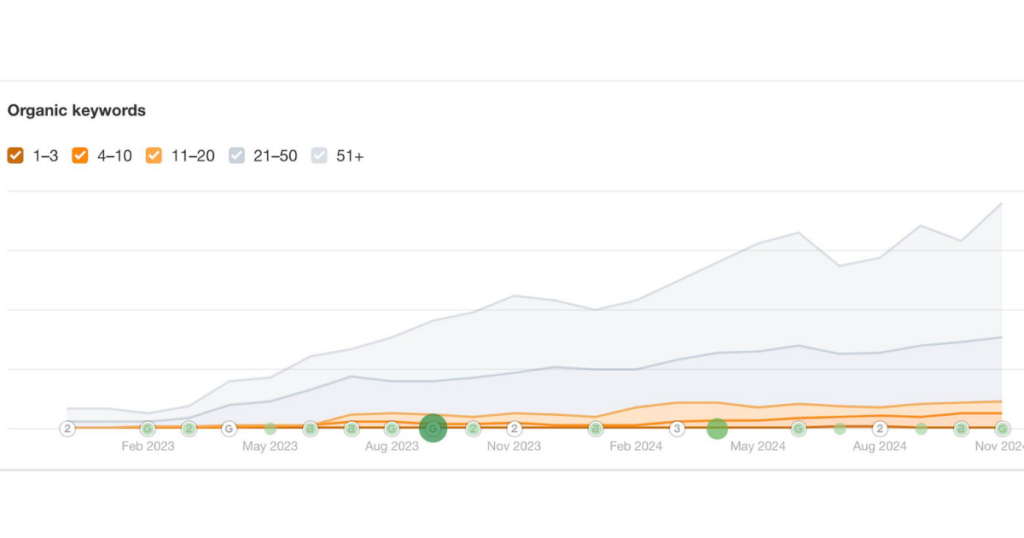
What we did was amplify signals that already existed. Brady had interviews with church leaders on his podcast, books, webinars, and social media videos. We repurposed that content across multiple channels so Google could actually see it. We turned his top YouTube videos into blog posts and placed them on sites we control, whatever was most appropriate for that site. Digital marketing topics went on blitzmetrics.com, personal stories on dennisyu.com, church marketing content on churchcandy.com.
We organized his information properly. His personal brand site needed to reflect the depth of his connections, what clients say about him, his bio, his companies, and the churches he’s helped grow. His company site needed to be about the company and link to his personal brand site, not the other way around. We set up proper authorship on blog posts and moved the podcast from a subdomain to a subfolder.
We built out his entity presence. We created contributor profiles on MarketScale and free-ebooks.net.
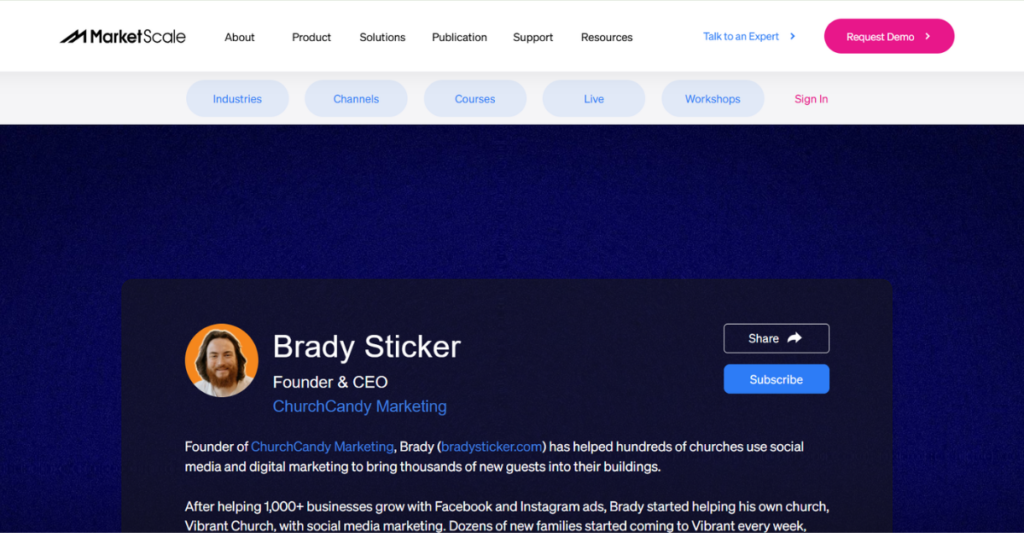
We set up Grokipedia pages for both Brady and Church Candy. We claimed and connected social profiles across every platform. Each of these created citations tying his content together in ways Google’s Knowledge Graph could recognize.
We ran Dollar a Day ad campaigns from multiple places to drive real traffic to his personal brand site. Not bot traffic or CTR manipulation. Real engagement that Google can clearly distinguish. About $3 a day promoting his best mid-funnel content, targeting pastors and tangential interests.
And we built links from relevant, authoritative sites in digital marketing, digital agencies, and social media.
Why it worked
Our digital team is an amplifier for a rock star who can already sing well. Brady was already doing great work for churches. Google could see that in the engagement on his content, the click traffic through Chrome browsers, how users behaved on his site, and the social media signals being generated.
We simply amplified that original signal through his personal brand site, repurposing to multiple channels, and running Dollar a Day campaigns.
If you take someone who sings horribly and blast them out at 10,000 watts to the entire neighborhood, you won’t get what you’re expecting. But Brady had the real substance behind him. Hundreds of churches love how his Facebook and Instagram campaigns drive new visitors on Sundays. Those interactions generate signals Google picks up on.
The results
Brady now owns the #1 result for his name on Google. He has a full Google Knowledge Panel for himself as a person and one for his agency. These objects reinforce each other in Google’s Knowledge Graph.
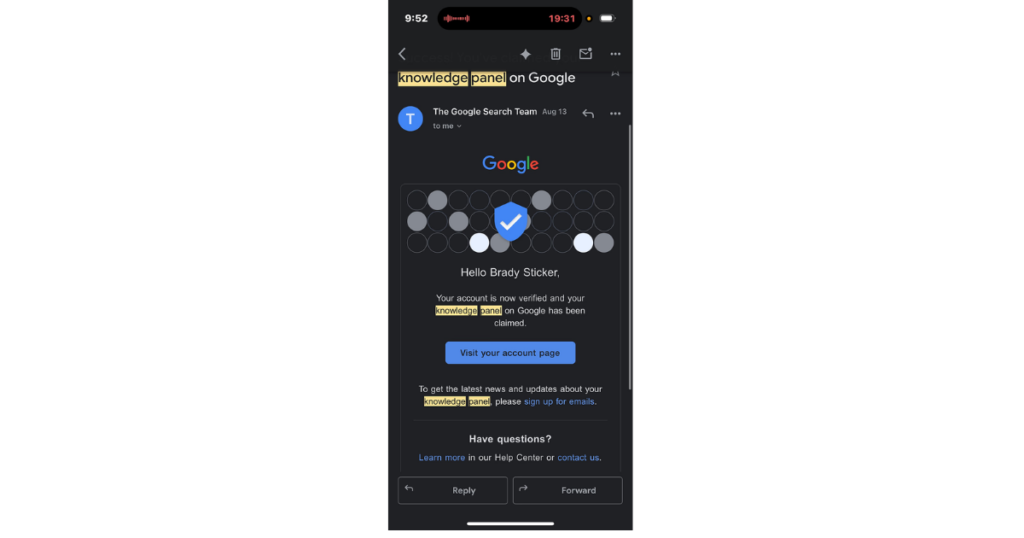
His confidence score climbed steadily from 129 when the panel first appeared, to 195 when we submitted the claim, to over 300 when it started triggering consistently in search results. At 400 or more you’re a legit celebrity, so he’s plenty strong for his niche of church marketing.
Church Candy now ranks #1 for “digital marketing for churches,” “facebook ads for churches,” “seo for churches,” “church advertising ideas,” and “best church ads.” The site went from being buried under junk content to dominating the search results for every major term in church marketing.

Even better, AI tools like ChatGPT and other LLMs now recommend Church Candy to pastors researching how to get more people to their church. That’s organic leads from both traditional search and AI, without paying for them.
Ever heard that you’re the average of the five people you spend the most time with? That’s true in search engines too. Brady’s Knowledge Panel for himself reinforces the one for his agency. The churches he helps grow get stronger citations. The people he’s had on his podcast benefit from the connections. It all ties together.
Dennis Yu
Dennis Yu is the CEO of Local Service Spotlight, a platform that amplifies the reputations of contractors and local service businesses using the Content Factory process. He is a former search engine engineer who has spent a billion dollars on Google and Facebook ads for Nike, Quiznos, Ashley Furniture, Red Bull, State Farm, and other brands.
Dennis has achieved 25% of his goal of creating a million digital marketing jobs by partnering with universities, professional organizations, and agencies. Through Local Service Spotlight, he teaches the Dollar a Day strategy and Content Factory training to help local service businesses enhance their existing local reputation and make the phone ring.
Dennis coaches young adult agency owners serving plumbers, AC technicians, landscapers, roofers, electricians, and believes there should be a standard in measuring local marketing efforts, much like doctors and plumbers must be certified.