
 by
by
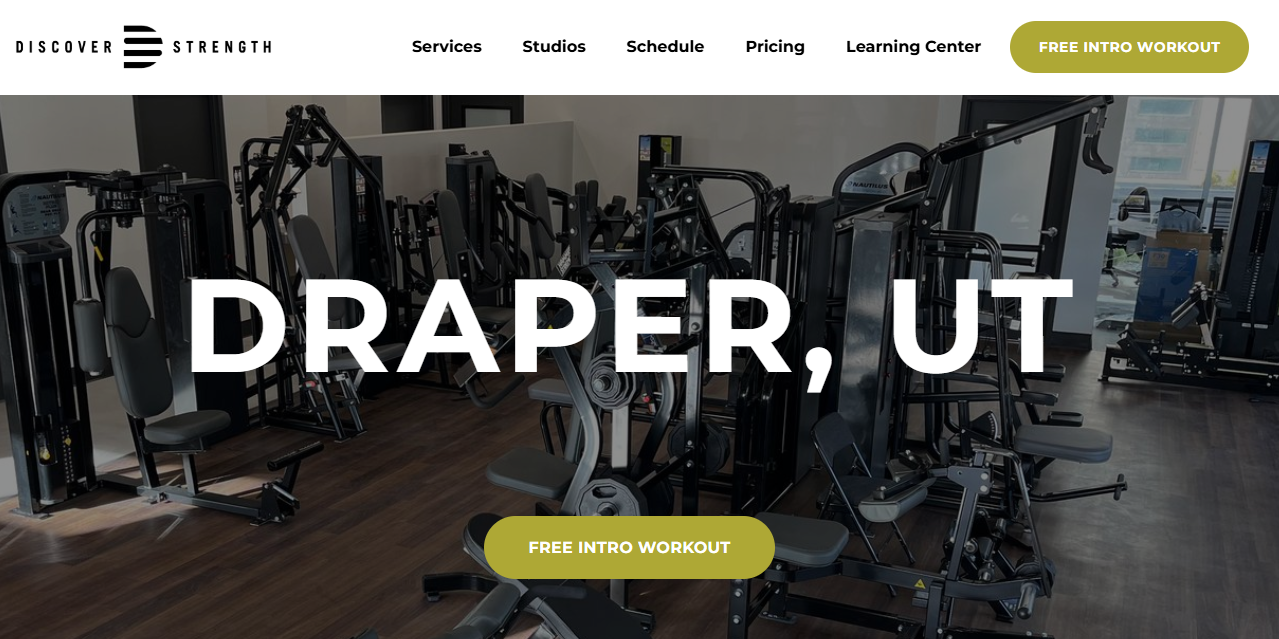
Jack Wendt asked for a hands-on audit of Discover Strength Draper, a boutique personalized strength-training gym in Draper, UT. This Draper gym SEO audit found a location page riding on a weak parent site — visible for only six terms and ranking at position 54 — with one clear fix: more real, local content. Here is what we found.
6
terms the Draper page ranks for, out of 789 site-wide
54
position the Draper page sits at — generating no traffic
34
five-star GMB reviews, but brief and without owner replies
The whole Discover Strength site ranks for 789 terms, yet the Draper location shows up for just six. The core reason is power: each location works like a microsite that inherits limited authority from a parent site that does not have much to pass down. It is the same structure challenge we have seen auditing multi-location brands like Allstate and Starbucks.
Read The Authority Behind The Draper Page
SEO is heavily link-driven, and only one link points to the Draper page — a blog post titled “How to Create the Best HIT Workouts” on a DR-33 domain. The specific URL has no authority of its own: it contributes about 0.2 authority units, with no traffic and no keyword rankings attached. So the page sits at position 54 and generates nothing.
Google also struggles to place the location. The page ranks for branded terms like “Discover Strength Draper” but not for “Draper gym,” and without clear structure Google even confuses “Discover UT” with tourism rather than a gym. For high-end, boutique training aimed at executives, the page should speak to personalized service — not generic fitness terms.
RUN THIS YOURSELF
Pull the backlinks pointing at a single location page, not just the whole domain. Discover Strength Draper had exactly one link worth about 0.2 authority units — effectively nothing. Counting the links to the specific page an owner cares about, and showing how few there are, is the clearest way to explain why that page does not rank.
Give Google The Content It Is Missing
When you search “Discover Strength” without a city, Google uses your location and answers common questions — who is the CEO, how many locations — but most of those answers come from outside sources like Yahoo News, not the official site. That is the real issue: the site does not give Google enough content, so Google fills the gaps with whatever it finds.
The fix is substance on the page itself: detailed instructor bios, links to credentials, and dedicated pages for services and nearby areas like Riverton and South Jordan. This is the EEAT standard — experience, expertise, authority, trust — laid out in the EEAT framework. It is not a technical SEO problem; it is a content problem, and content is the fix.
| Signal | What the audit found | Why it matters |
|---|---|---|
| Keywords | Ranks for 6 terms vs 789 site-wide | Almost no local visibility |
| Links | One link, ~0.2 authority units | Page has no power to rank |
| Structure | Landing page, not a true microsite | Google cannot place the location |
| GMB reviews | 34 five-star, brief, no owner replies | Quality and engagement left on table |
Manage The Reviews And Tell Local Stories
The Draper Google Business Profile has 34 reviews, all five-star. Competitors like Lifetime carry far more, but quality and engagement matter more than raw count — and here the reviews are brief, lack photos, and get no owner responses. Replying to reviews and inviting more detailed ones from credible reviewers, like Google Local Guides, adds weight the profile is missing.
The bigger unlock is storytelling. Feature an instructor’s journey, share a client transformation like Steve, 52, who trains at the Draper location, and explain how 30-minute weekly sessions help busy executives. Short one-minute videos from trainers and clients — no high production needed — feed a steady content engine and build the local trust the page lacks.
RUN THIS YOURSELF
Search a client’s brand without a city and read the questions Google answers — CEO, number of locations, hours. If those answers come from third-party sites like Yahoo News instead of the official site, the business is not feeding Google enough content. That gap is a concrete, demonstrable reason to build out service and About pages.
Boost The Local Stories With A Dollar A Day
Once the stories exist, a Dollar-a-Day strategy puts them in front of the right neighborhoods — targeting areas like Silicon Slopes where busy professionals live and work. A short success story about an executive who made time to train, and the result, is exactly the kind of local, relevant content that lifts visibility and drives traffic.
Local partnerships reinforce it: showcase any Chamber of Commerce or community ties, since local links signal to Google that the gym matters to Draper. Produce the content, measure what resonates, then put spend behind the winners — track, analyze, then act, the MAA framework in practice. The order is what keeps the effort honest.
THE DELIVERABLE
See Why Your Location Page Is Invisible
We trace the links, structure, and content behind a single location page the same way we did for Discover Strength Draper — and tell you exactly what to build first to rank locally.
Originally published .
Dennis Yu
Dennis Yu is the CEO of Local Service Spotlight, a platform that amplifies the reputations of contractors and local service businesses using the Content Factory process. He is a former search engine engineer who has spent a billion dollars on Google and Facebook ads for Nike, Quiznos, Ashley Furniture, Red Bull, State Farm, and other brands.
Dennis has achieved 25% of his goal of creating a million digital marketing jobs by partnering with universities, professional organizations, and agencies. Through Local Service Spotlight, he teaches the Dollar a Day strategy and Content Factory training to help local service businesses enhance their existing local reputation and make the phone ring.
Dennis coaches young adult agency owners serving plumbers, AC technicians, landscapers, roofers, electricians, and believes there should be a standard in measuring local marketing efforts, much like doctors and plumbers must be certified. He has appeared on 353 podcasts with 619 credited episodes — see the full list of his podcast appearances.