
 by
by
How do you stand out in a crowded space as a service professional? Whether you’re a roofer, landscaper, HVAC technician, or digital marketer, the answer isn’t cold outreach or flashy landing pages. It’s building what I call an Authority Engine, a system that compounds your credibility over time, powered by real relationships and amplified by AI.
Start with your GCT: goals, content, and targeting
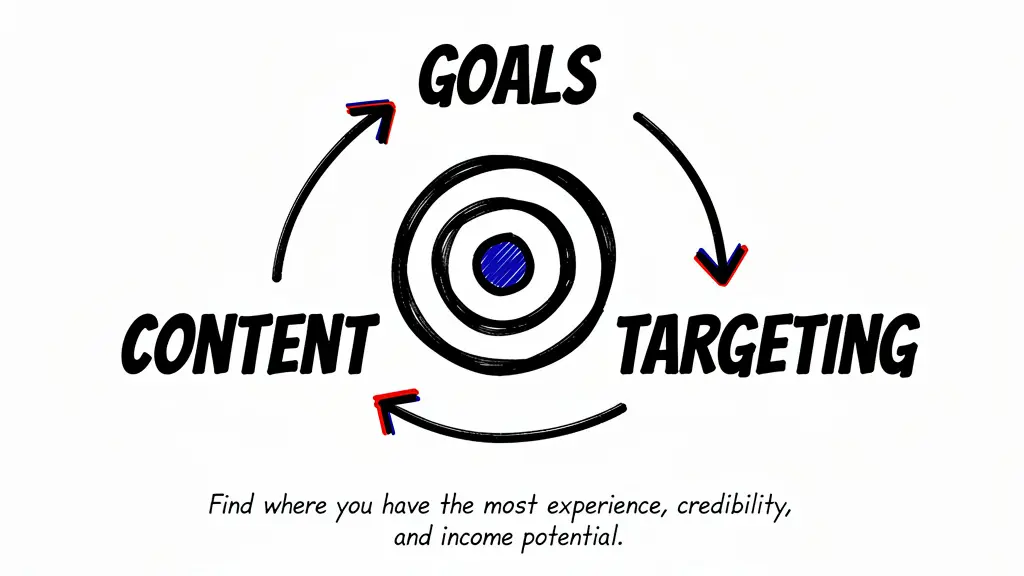
Before anything else, you need clarity on your GCT, Goals, Content, and Targeting. The formula is simple: I help [target market] achieve [goal] via [technique].
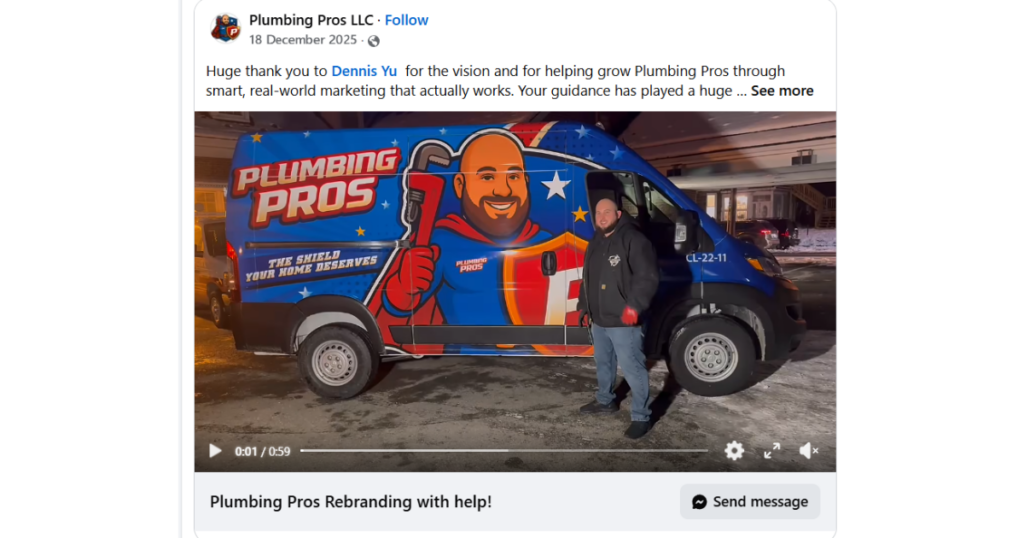
For me, that’s helping contractors, plumbers, roofers, and HVAC professionals generate more leads and phone calls through our SaaS software and agency services.

If you’re not sure what yours is, ask ChatGPT, Claude, Grok, or Gemini: “Based on my experience, what is my specific GCT so I can niche down where I have the biggest advantage?” Look for the intersection of your most experience, highest credibility, and greatest income potential, the least effort for maximum output.
You could assemble your knowledge base and put it into Obsidian, or if you use Claude, organize it into your skill.md files.
The power of WHO: credibility through association
Here’s where most people get it wrong. They think credibility means being good at what you do. That’s not what I’m talking about. I’m talking about perceived expertise, the kind that comes from who is saying it.
Think about how you choose a surgeon or mechanic. You don’t actually know their skill level. You rely on reviews, recommendations, and who vouches for them.
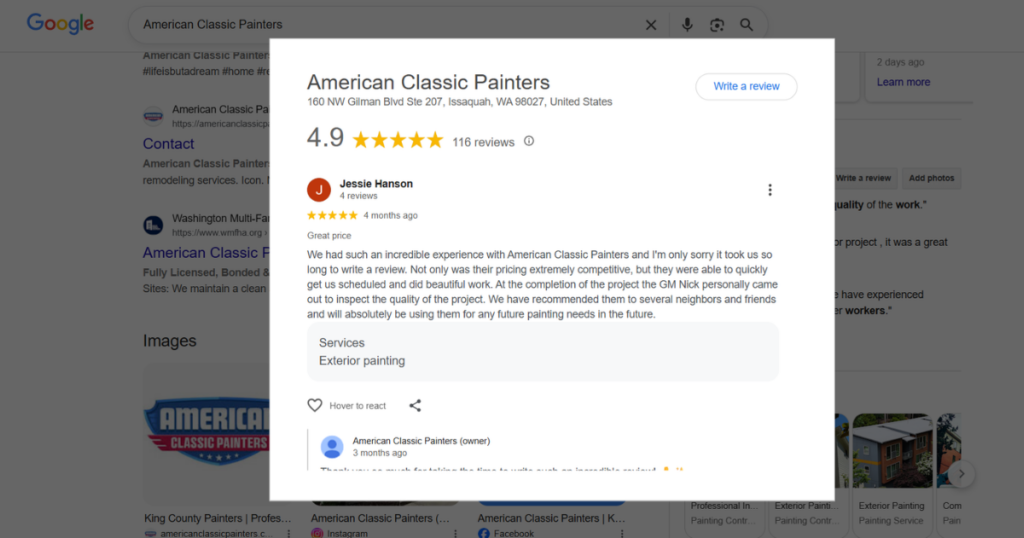
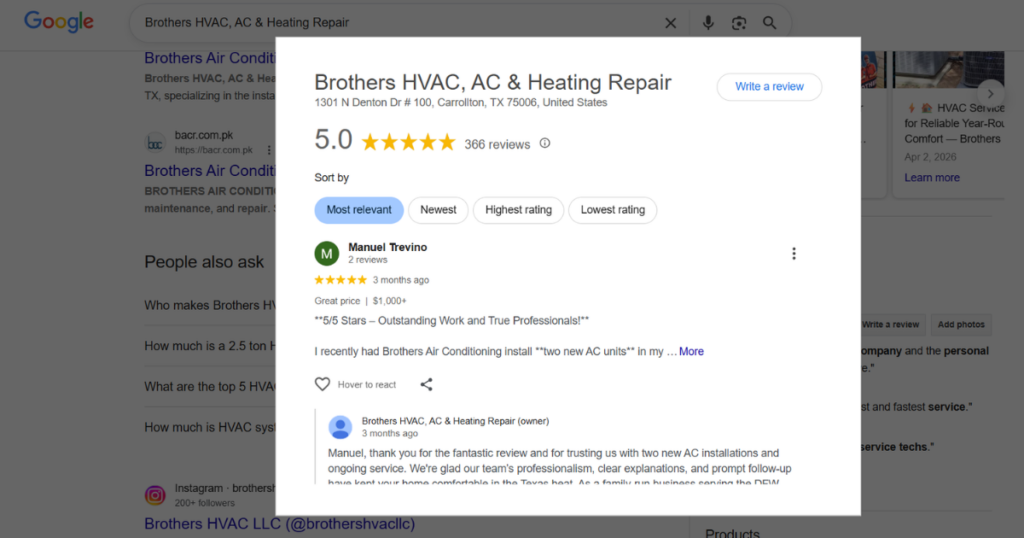
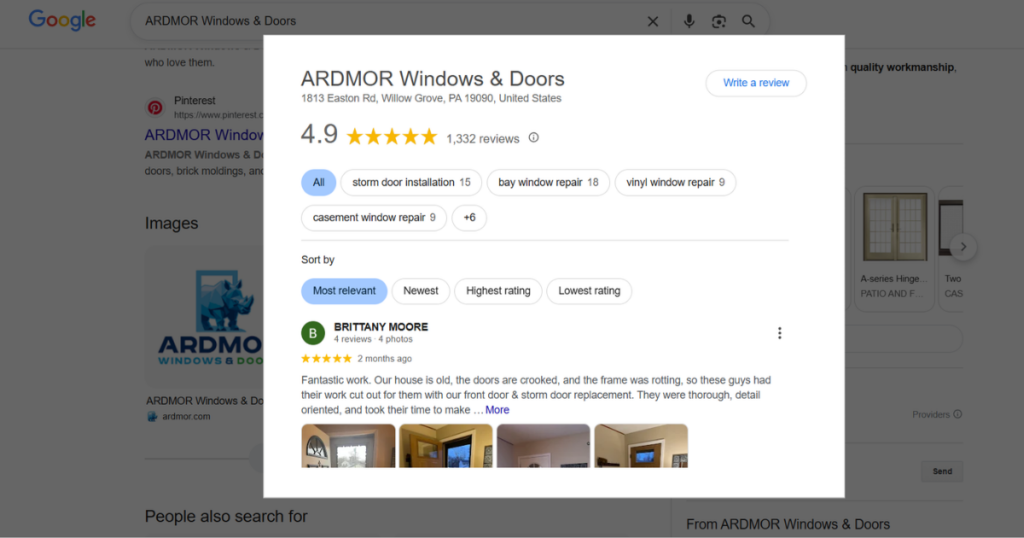
You could be Anthony Hilb and be a great landscaper, climbing trees, doing quotes, servicing the neighborhood, but that’s not the same as having perceived authority.
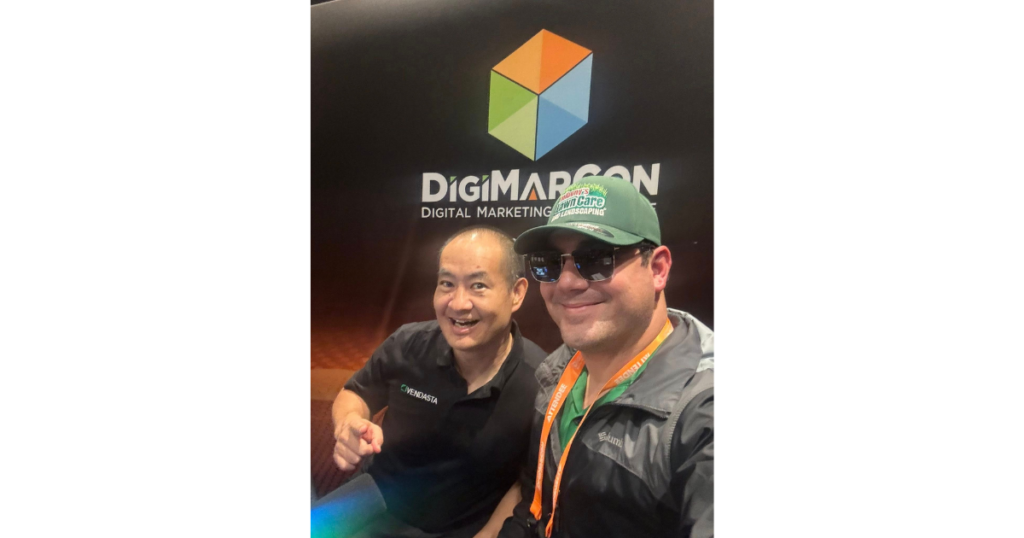
The most powerful form of credibility comes from associating with people who are already credible. I spent today with George Leith, probably the top guy in sales in digital marketing, co-founder and CRO at Vendasta, grew it to hundreds of millions.
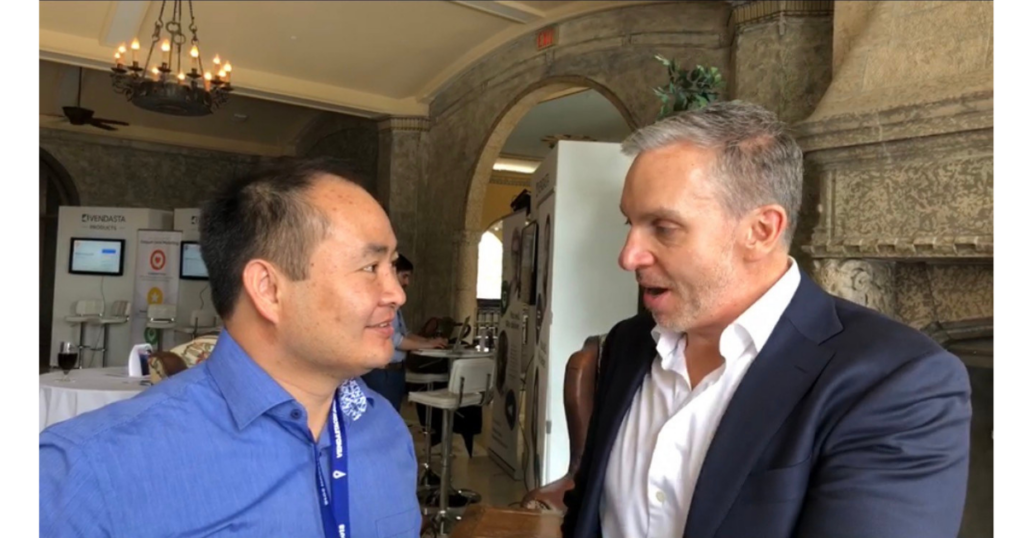
Yesterday, Carson Teagarden and I were with Sean Cannell, one of the top experts in growing YouTube channels.

Marko Sipilä is a buddy of mine who grew his SaaS company from nothing to 300 customers, and by associating with him, that shows I’m credible.

When these people say good things about you naturally during a podcast conversation, that’s authentic social proof.
You don’t ask for compliments. You interview them, and the credibility flows naturally.
The secret? Just ask. Steve Sims, the guy who counts Elton John, Richard Branson, and Elon Musk as friends, told me his secret as a London bricklayer: he simply asked.
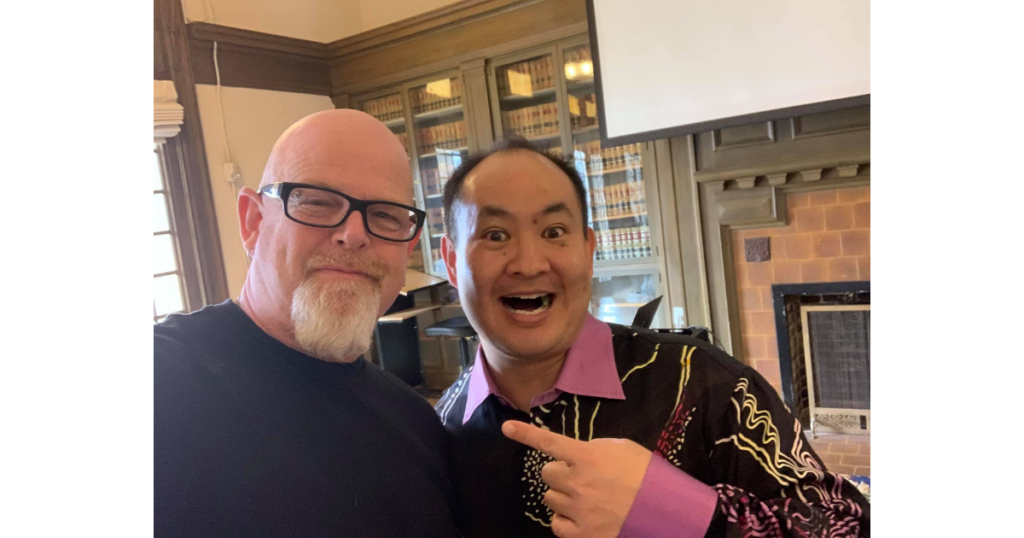
George Paladichuk, a 22-year-old living in a dormitory, started a roofing AI call center and got 10 out of 10 successful roofers to say yes to being featured. People want to share their story.
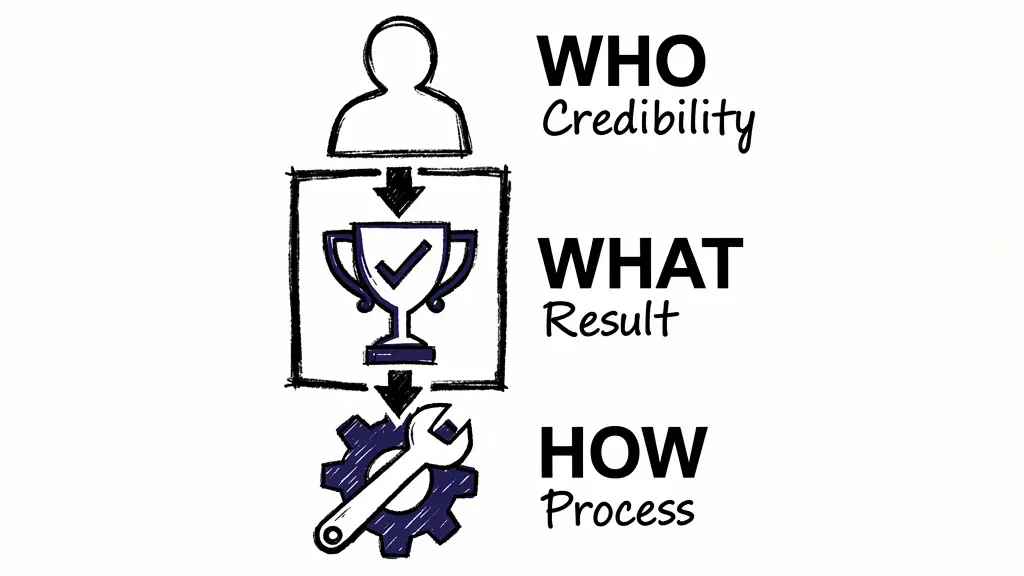
The WHO, WHAT, HOW framework
Structure your content around this natural flow. Start with the WHO to establish credibility through the person and their achievements. Then move to the WHAT, the result they drove.
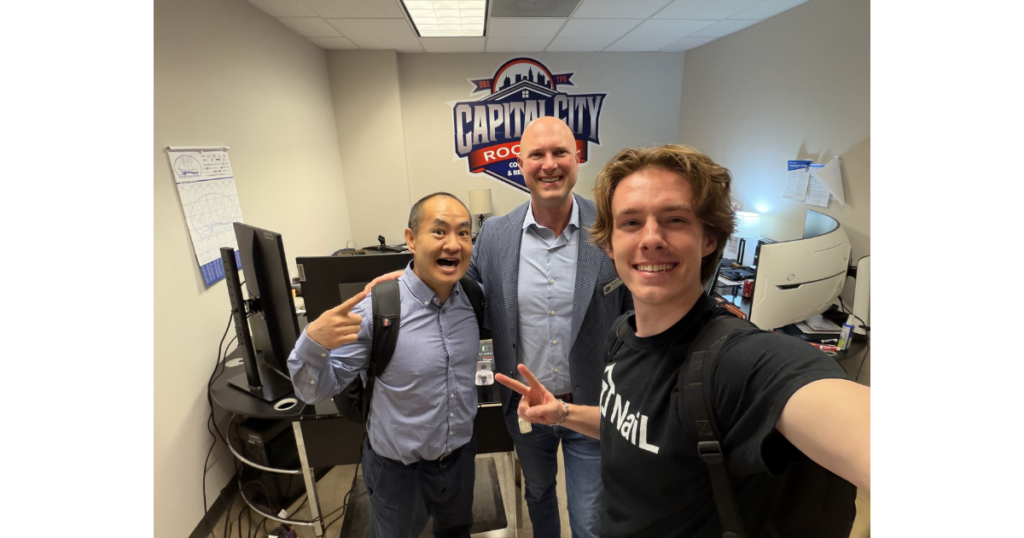
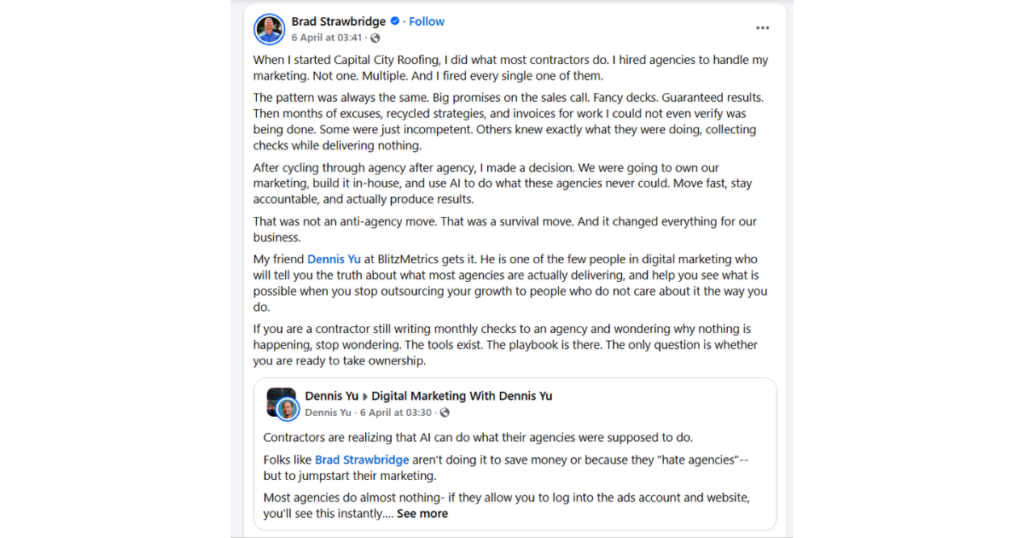
For example, Brad Strawbridge drove $10 million in sales in his first two years at Capital City Roofing.
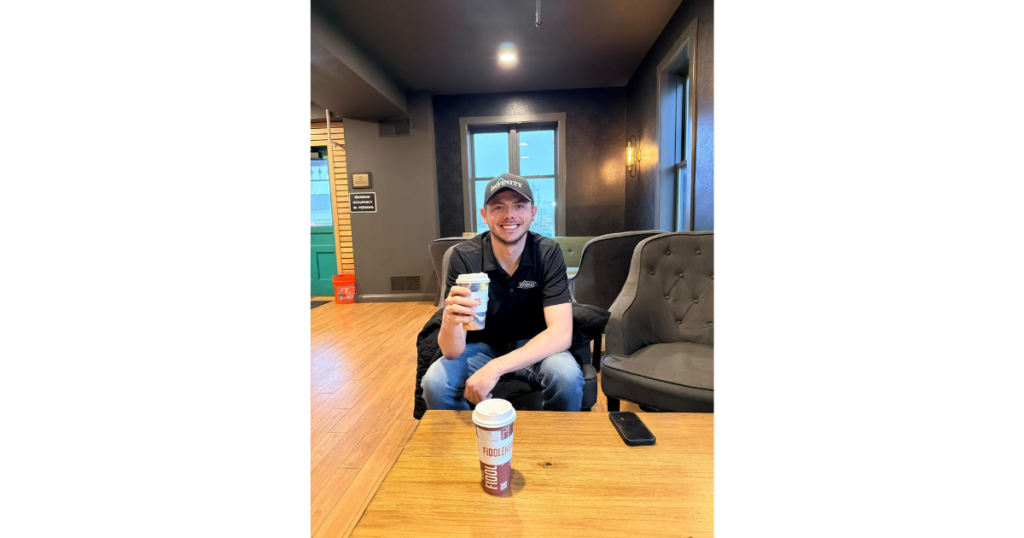
Tomorrow I’m flying to Milwaukee to be with Ethan Van De Hey, who runs the digital marketing at Infinity Roofing and added an extra $30 million last year to the largest roofer in Wisconsin.
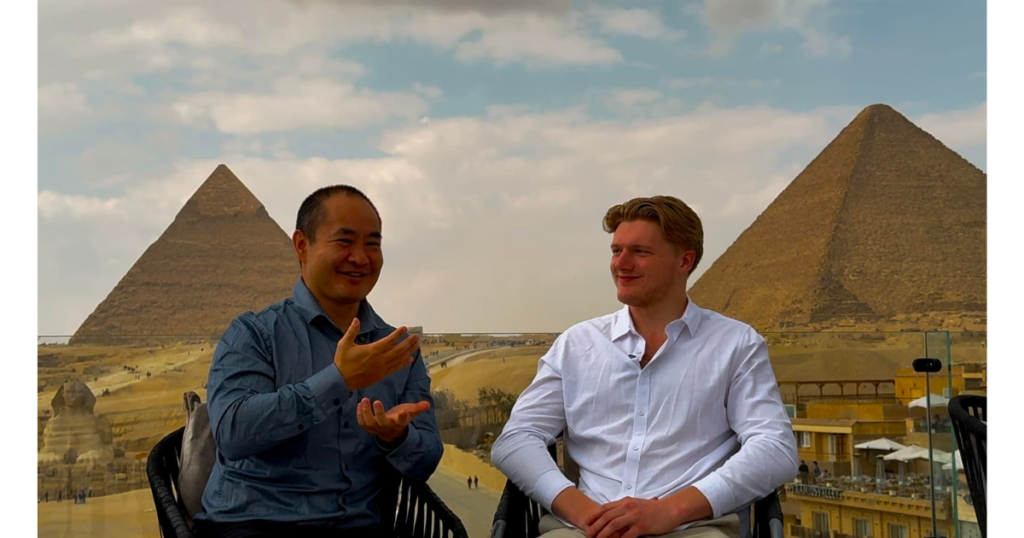
In two days I’m going to LA with Dan Leibrandt and we’re heading to China to visit factories and see how robots are made.
These are real experiences, not AI-generated fluff. Finally, break it down into the HOW, the specific steps, checklists, and processes they followed.
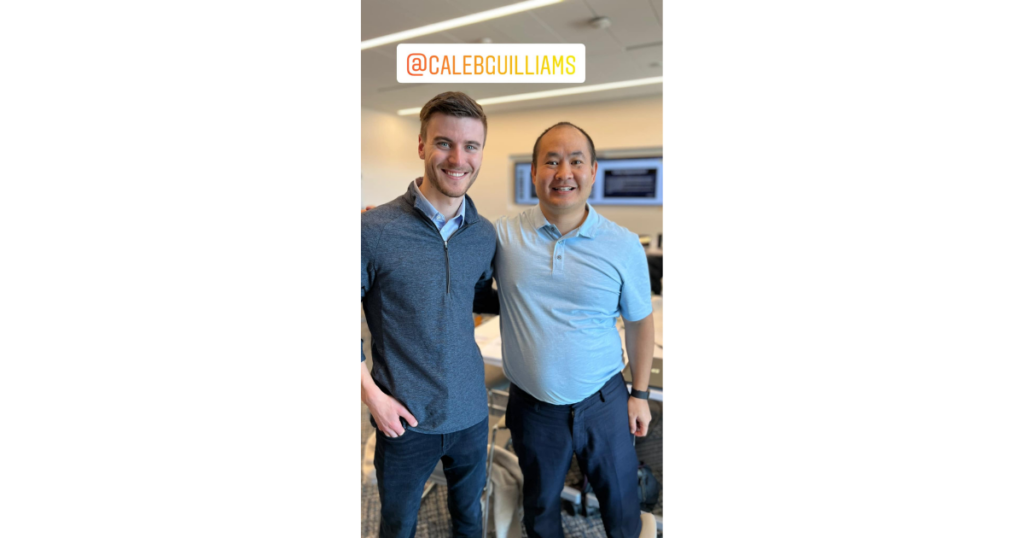
This maps perfectly to a podcast format. Caleb Guilliams and Mark Lack know how to do this better than almost anybody.
Open with a strong introduction that sets energy and establishes why the guest is worth listening to.
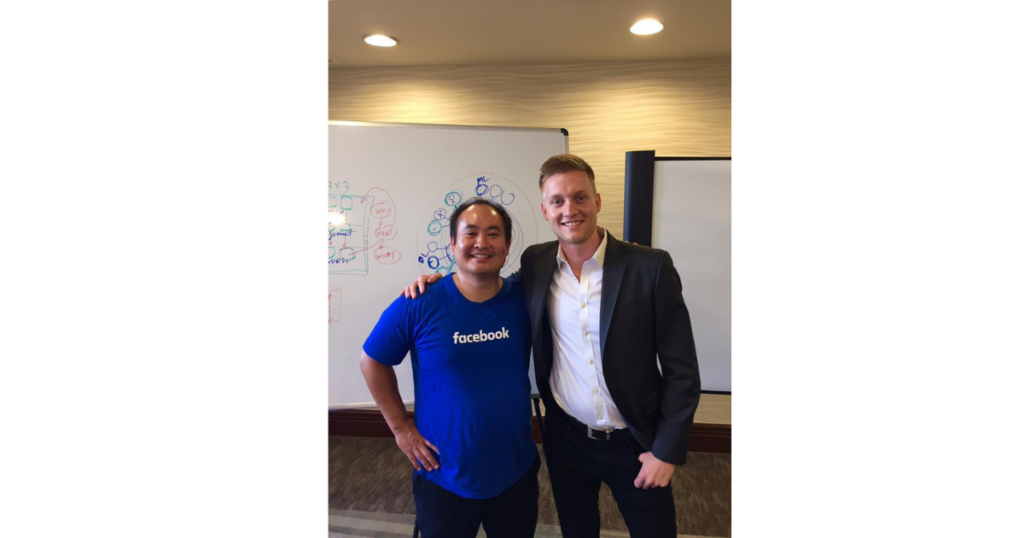
Have the natural conversation. Then at the end, record a “promo.” Not the typical “How can people find you?” Instead, have your guest say: “If you’re a roofer fed up with your last three marketing agencies, this episode is worth your time because we cover X, Y, and Z.”
That ending becomes your trailer, recorded last because you’ve already had the conversation. Don’t waste time with polite small talk or flashy logo bumpers at the top. Get right to the value in the first three seconds.
The Mexican food analogy: repurpose everything
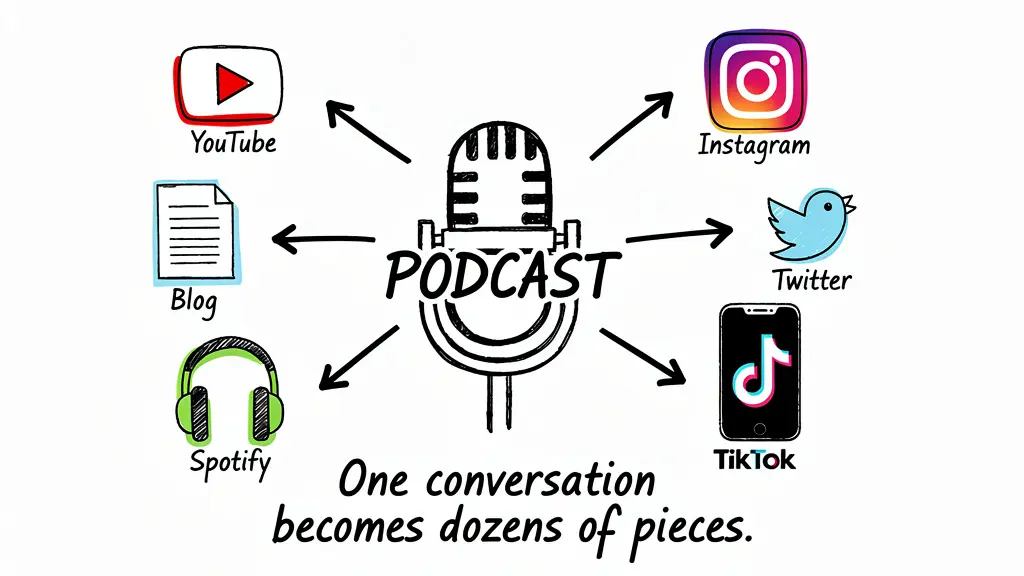
A podcast is just a long-form way of capturing content in one block that you can chop up. Think of it like Mexican food: beans, cheese, rice, lettuce, and ground beef can become a burrito, tostada, enchilada, chalupa, or chimichanga.
One 45-minute conversation becomes YouTube Shorts, Instagram Reels, Facebook posts, blog posts, tweets, TikTok videos, Snapchat content, LinkedIn posts, Spotify episodes, iTunes podcasts, and even a book.
You probably already know about repurposing but haven’t done it because you thought you needed a VA or video editor. Not anymore. The breakthrough in the last three months with AI agents means you have a virtual assistant that can do all of this. Tools like Descript let you speak to Claude, and Claude handles the editing, publishing, and distribution. Claude can log into WordPress, HubSpot, Google Ads, and do all these things without you having to open each platform yourself.
Dollar a day: the amplification engine
Once you have this content machine running, you need people to actually see it. That’s where Dollar a Day comes in, my most well-known framework.
This isn’t just micro-targeting or small budgets for small businesses. It works for B2B, industrial equipment, enterprise. The more boring your business, the better it works. If you have good ingredients, the grill just makes a quality steak better.
Here’s how it works. Take your content, give an AI agent the context of who you interviewed, what you discussed, and who the target audience is, then have it find micro-targets. First, there are literal targets, people directly in your industry. Then there are lateral targets, adjacent organizations, tools, and conferences like the National Association of Advertisers, ServiceTitan customers, Lance Bachman’s audience, the Roofing Alliance, or Roofing Process Con. Finally, there are custom audiences from your remarketing pixel, email lists, and video viewers.
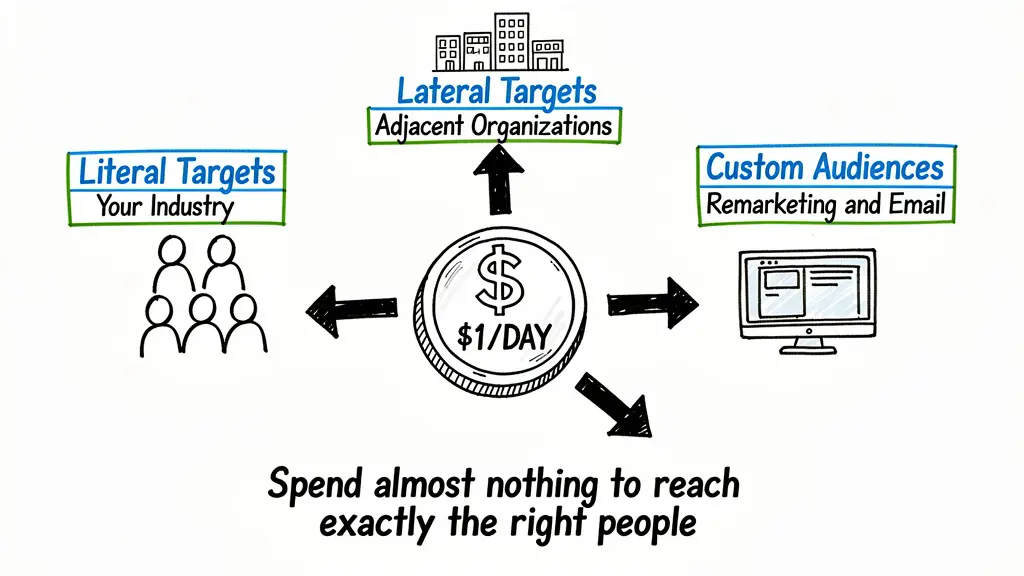
Each audience might only be 1,500 to 2,500 people. At a dollar a day per target, you’re spending almost nothing to reach exactly the right people with exactly the right content. And they should work with Ad Accelerant, which can cut out the middlemen and save 30 to 40% on ad costs.
The weekly optimization cycle
Every Friday, each team member produces what I call the MAA Report: Metrics, Analysis, Action.
Metrics captures what happened this week. Analysis explains why it worked or didn’t work, not just that a number went up or down. Action defines what to adjust next, whether that’s doubling down on what’s working, fixing a landing page, or shifting budget toward YouTube Shorts.
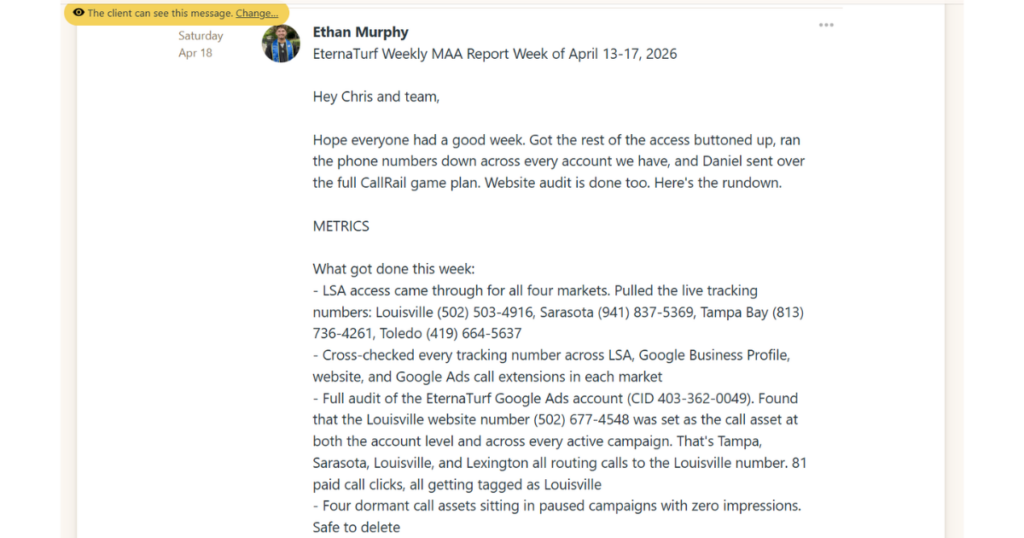
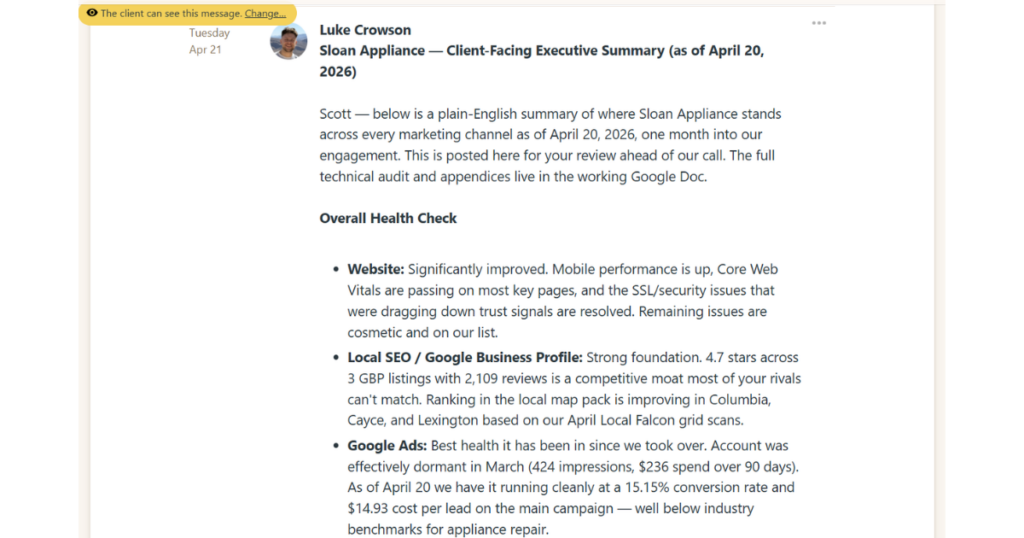
AI agents can produce the first draft of these reports. We happen to use Basecamp for project management, but some people prefer ClickUp, Asana, or Monday. Whatever you use, have the discipline of a weekly cycle. You supervise as the conductor of the orchestra, someone who has played every instrument and can guide the performance. The agents can even tie into the Roof 360 CRM or whatever system your clients are using.
The recursive loop: AI as your amplifier
As AI tools get smarter, your advantage grows, but only if you have real substance to amplify. The AI is just an amplifier of who you are, your relationships, and what you’ve actually done.
People generating fake content or chasing the latest AI trend without real experience will be left behind. The AIs are already smart enough to tell whether there’s real experience behind the content. I know this from meetings with Google. This is where things are going.
For home service businesses, funeral homes, and anyone where relationships matter, AI is going to help the authentic practitioners and leave the pretenders behind.
Your action steps
Start by defining your GCT and getting crystal clear on your goals, content, and targeting. Then identify three to five credible people you can interview and start a podcast to record long-form conversations you can repurpose. Build your knowledge base by documenting your skills, wins, and processes. Apply the Dollar a Day framework to use micro-targeting to amplify your best content. And run weekly MAA cycles to continuously optimize based on real data.
The system is the learning. The more you feed it real experiences, real relationships, and real results, the stronger your authority engine becomes.
I’m Dennis Yu, and I created the Dollar a Day strategy. Watch the full Marketing Mechanics series for weekly frameworks backed by real-world examples.
Originally published .
Dennis Yu
Dennis Yu is the CEO of Local Service Spotlight, a platform that amplifies the reputations of contractors and local service businesses using the Content Factory process. He is a former search engine engineer who has spent a billion dollars on Google and Facebook ads for Nike, Quiznos, Ashley Furniture, Red Bull, State Farm, and other brands.
Dennis has achieved 25% of his goal of creating a million digital marketing jobs by partnering with universities, professional organizations, and agencies. Through Local Service Spotlight, he teaches the Dollar a Day strategy and Content Factory training to help local service businesses enhance their existing local reputation and make the phone ring.
Dennis coaches young adult agency owners serving plumbers, AC technicians, landscapers, roofers, electricians, and believes there should be a standard in measuring local marketing efforts, much like doctors and plumbers must be certified. He has appeared on 353 podcasts with 619 credited episodes — see the full list of his podcast appearances.