
 by
by
This is for Operations. If you’re the person who gets the cancellation notice and owns the wind-down, this is your process.
Everyone touches a client while it’s active. Account managers, content people, analysts. But the deboard belongs to Ops, and Ops is accountable for confirming it actually got finished. Read this first, then work it in order.
Most of it can be handled by AI agents.
How we treat someone who leaves
Understand the posture before the mechanics, because it changes how you do the work.
Clients leave. Sometimes for reasons we agree with, sometimes not, and it doesn’t change how we behave on the way out. Someone who cancels is an adult making a decision about their own company. We respect that, we stop the billing when they ask, and we leave the door open.
More than one has come back. Several who didn’t come back still refer us, still want to do a podcast, still speak well of us in rooms we’re not in.
Here’s the part people miss. Active listening, reflecting back an understanding of the issue instead of making excuses, fighting, or denying, is more powerful than any technical skill. That applies double on the way out. When someone tells you why they’re leaving, hear it. Don’t argue it into the record.
I’ve also learned that complainers usually keep complaining, and the best clients keep being the best clients. Both facts should make you calmer, not defensive. If it was never a fit, the ending isn’t a verdict on you. If it was a great client leaving for their own reasons, that’s their call to make.
What this means in practice: we remove ourselves from their systems, we don’t change anything inside them. We take our access off a Google Business Profile, we don’t touch the listing. We pull our endorsement links, we don’t publish anything about why they left. We stop the billing immediately and in writing, rather than letting one more charge go through and arguing about it later.
Watch your language while you do it, too. WE versus THEY is the tell. The same person says “OUR team won” and “THEY lost the game,” and the psychological distance shows up the moment things go sideways. A client leaving is exactly when your team starts saying “they.” Notice it. It’s easy to spot, hard to fix, and it predicts how the whole wind-down feels.
Do not put the reasons for a cancellation into the deboard record, and don’t respond to them there. If someone raised real concerns on the way out, those belong in a conversation about how we work. Not in an operations checklist. The checklist has one job, which is to leave the account clean.
And take care of your team through it. Losing an account is not an emergency that justifies weekend work. Deadlines can be negotiated. If you make everything a fire drill, you burn your people out, and if you don’t take care of your team, who’s going to take care of the clients you still have?
Stop the billing and the campaigns
First thing to stop is money moving in either direction.
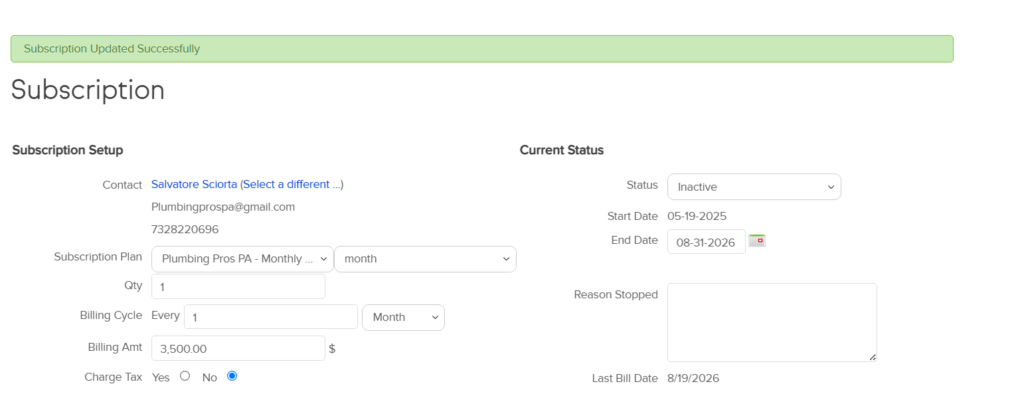
Inactivate the subscription in Keap so we stop billing them and they stop showing up in active revenue reporting.
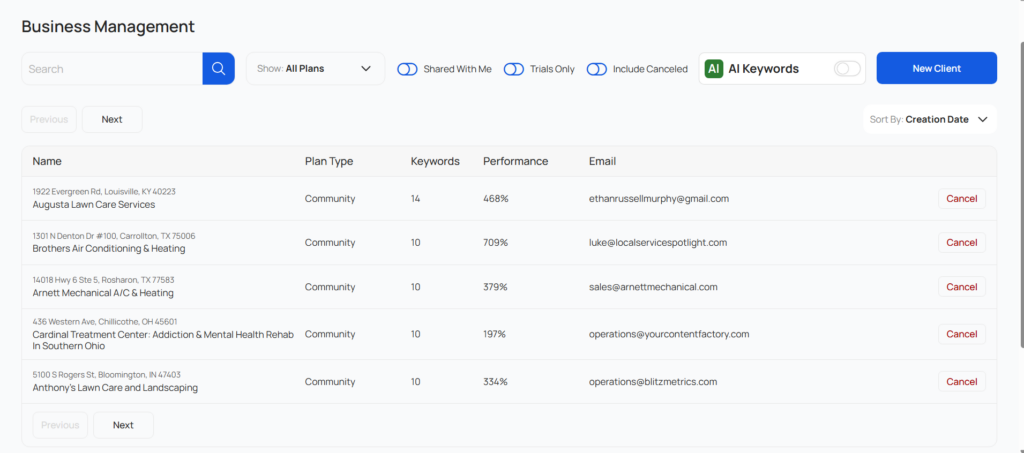
Cancel any live campaigns in Jumper Media, because campaigns left running after a cancellation keep spending against a budget nobody is watching. Then think about whether they’re attached to any other recurring charge on our side. Anything that bills on a schedule gets found and stopped now, while the account is fresh in your mind.
When they ask for confirmation that billing stopped, give it to them in writing the same day. That confirmation is the single most important thing to them in the entire deboard, and it costs nothing to send.
Remove access
Close off the shared spaces. Remove them from Basecamp so the project drops off their account, and remove them from the private Facebook group.

Note anything they already pulled on their own side. Clients revoke a Facebook page, an ad account, or a website login on cancellation day without telling anyone. Write it down, because a month from now somebody goes looking for those assets and needs to know they’re gone by the client’s choice, not our oversight.
This is also where naming discipline pays off. If you named the ad accounts and assets properly in Business Manager when the client came on, you know exactly what to remove. If everything is an integer string, you’re guessing. Name things on the way in and the way out takes ten minutes.
Clean up the project record
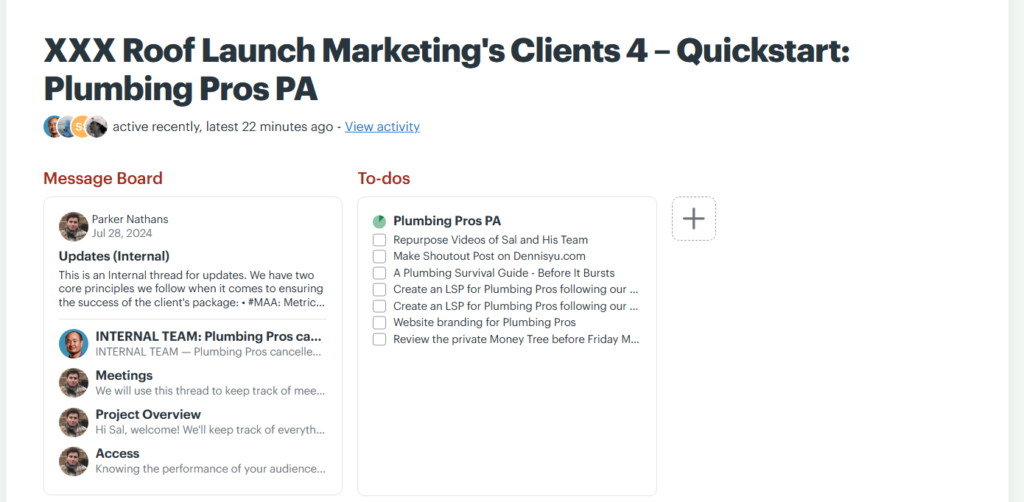
Rename the Basecamp project with the XXX prefix so it sorts away from active work, and update the ClientTracker to Not Active.
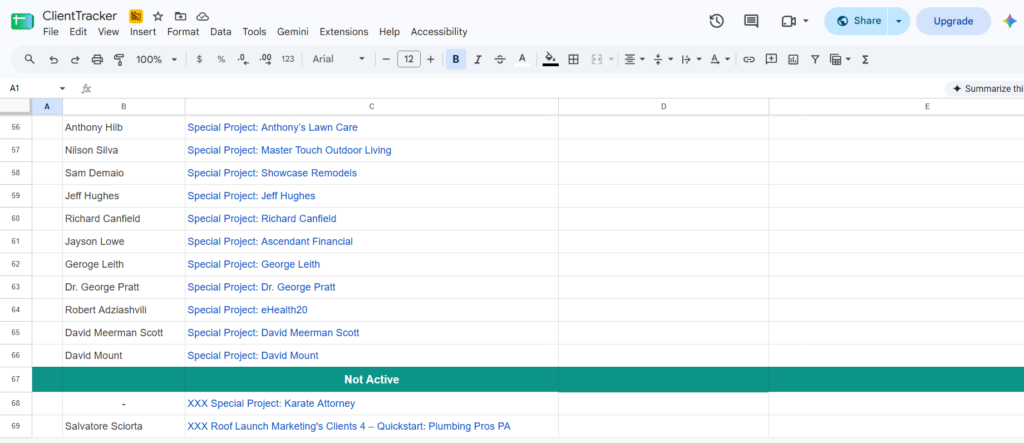
Both take under a minute, and together they’re the difference between a clean roster and someone spending an afternoon on an account we no longer serve. Any time a team member has to be told directly to stop working on a project, this step got skipped or got done too late.
Remove endorsement links
We publish links to our clients across our own properties. Those shouldn’t outlive the relationship.
Every leftover link is still passing authority to a brand we no longer represent, still sending visitors to a site we’re not responsible for, and still making our portfolio look like we work with someone we don’t. Remove every link pointing to their domains from dennisyu.com, blitzmetrics.com, and localservicespotlight.com, and take them out of Falcon Guard. Search for the domain instead of relying on memory, because links pile up in places nobody documented at the time.

This is the clearest agent job in the whole process, and it’s already written up in full: How to Remove All Client Backlinks When Deboarding Using Claude. That article has the exact prompt, the property inventory approach, the verification re-scan, and the screenshot documentation. Follow it rather than improvising. Four properties, under an hour.
Clear the tool and notification leftovers
This is the step that gets missed, and it’s the reason this article exists.
Billing and links get done reliably because they live in shared systems where the work is visible. Tool access and notification settings don’t. They live inside individual people’s accounts, they’re invisible to everyone else, and they keep firing long after the client is gone.
Think of a leftover manager seat the same way you think of a leftover dofollow link. It’s a living vote. Google still treats us as associated with the listing, Facebook still thinks we speak for the Page, and the review pings still land on somebody’s phone. Same reason, same cleanup.
Start with Google Business Profile and Maps. Remove our accounts as managers, unfollow the listing so review pushes stop, and confirm the client no longer shows up at business.google.com for every account that ever had access, not just the obvious one. Don’t edit the listing while you’re in there. Don’t transfer ownership, and don’t orphan a listing if we’re the only Owner. We’re removing ourselves from a business we no longer represent, nothing more.
Leave the Facebook Page roles, unfollow the Page, and turn off review notifications there too. Their reviews stay. They earned them.
Then turn review notifications off at the account level in Google Business Profile settings and in the Maps app. Turning them off for one listing isn’t enough, because the notification rail is account wide and a manager role on any listing restarts the flow. Reviews belong to the project lead. They should never route to leadership. If I’m getting a review notification for any client, active or cancelled, something upstream is misconfigured and needs fixing at the account level, not patched for that one listing.
Unlink any GBP, Maps, or Facebook review widgets on properties we publish.
Delete the SEMrush Position Tracking project for their domain. Position tracking runs on a schedule and emails whoever set it up, so a cancelled client keeps generating weekly reports to somebody who moved on months ago.
Then search your inbox for their domain and unsubscribe from whatever’s left. Analytics digests, rank trackers, review platforms, call tracking, ad platform alerts. Every one of them was set up individually by a different person and none of them appear on any shared list. The inbox search is the closest thing we have to a catch-all.
Confirm in writing
A deboard isn’t complete when the work is done. It’s complete when the work is documented.
Post a reply in the client’s Basecamp thread confirming each item, with screenshots where they help. Name the systems you touched and the ones you checked and found already clean. Someone reading that comment six months from now should know exactly what state the account was left in, without reconstructing it from scattered messages.
For each property and each system, save three things: what existed before, a screenshot confirming it’s gone, and the date the removal finished. That audit trail protects us, and it also becomes the reference that shows the next agent, human or AI, what a completed deboard actually looks like.
Originally published .
Dennis Yu
Dennis Yu is the CEO of Local Service Spotlight, a platform that amplifies the reputations of contractors and local service businesses using the Content Factory process. He is a former search engine engineer who has spent a billion dollars on Google and Facebook ads for Nike, Quiznos, Ashley Furniture, Red Bull, State Farm, and other brands.
Dennis has achieved 25% of his goal of creating a million digital marketing jobs by partnering with universities, professional organizations, and agencies. Through Local Service Spotlight, he teaches the Dollar a Day strategy and Content Factory training to help local service businesses enhance their existing local reputation and make the phone ring.
Dennis coaches young adult agency owners serving plumbers, AC technicians, landscapers, roofers, electricians, and believes there should be a standard in measuring local marketing efforts, much like doctors and plumbers must be certified. He has appeared on 353 podcasts with 619 credited episodes — see the full list of his podcast appearances.