

Quick answer: I paid for Link Whisper’s software and $499 Done-For-You service. After a year of delays and AI-generated work with mismatched anchors, broken URLs, and over-linked pages, I asked for a refund. The tool does 90% of the work but without human review, it creates problems. You can do this yourself in 2–4 hours with an AI agent for free.
I paid for Link Whisper’s software license and their Done-For-You service to optimize internal linking on a cosmetic dentistry site in Atlanta with strong domain authority but underperforming organic rankings. This is the full story of what happened over the course of a year, what went wrong, and what I learned.
What internal linking does and why it matters
Internal links help Google understand your site structure, pass authority from one page to another, and make sure none of your content is orphaned, meaning no other page on your site links to it. For local service businesses, the pages that matter most are always location service pages. A cosmetic dentist in Atlanta has pages for porcelain veneers, dental implants, smile makeovers, Invisalign, and so on. Those are the pages that need to rank because that’s where the revenue comes from.
There are many tools that handle internal linking. The one I used scans your WordPress site, suggests links between pages, and lets you approve or reject them. It identifies your “money pages” and builds a linking structure that points your other content toward them. There’s a health dashboard that tracks link coverage, orphaned posts, broken links, and anchor text quality.
Why I invested in this
I manage marketing for dozens of local service businesses, mostly contractors like roofers, plumbers, HVAC companies, and landscapers, plus dentists, attorneys, and other local professionals. All of them have websites with blog posts, service pages, and location pages that need to be properly linked together.

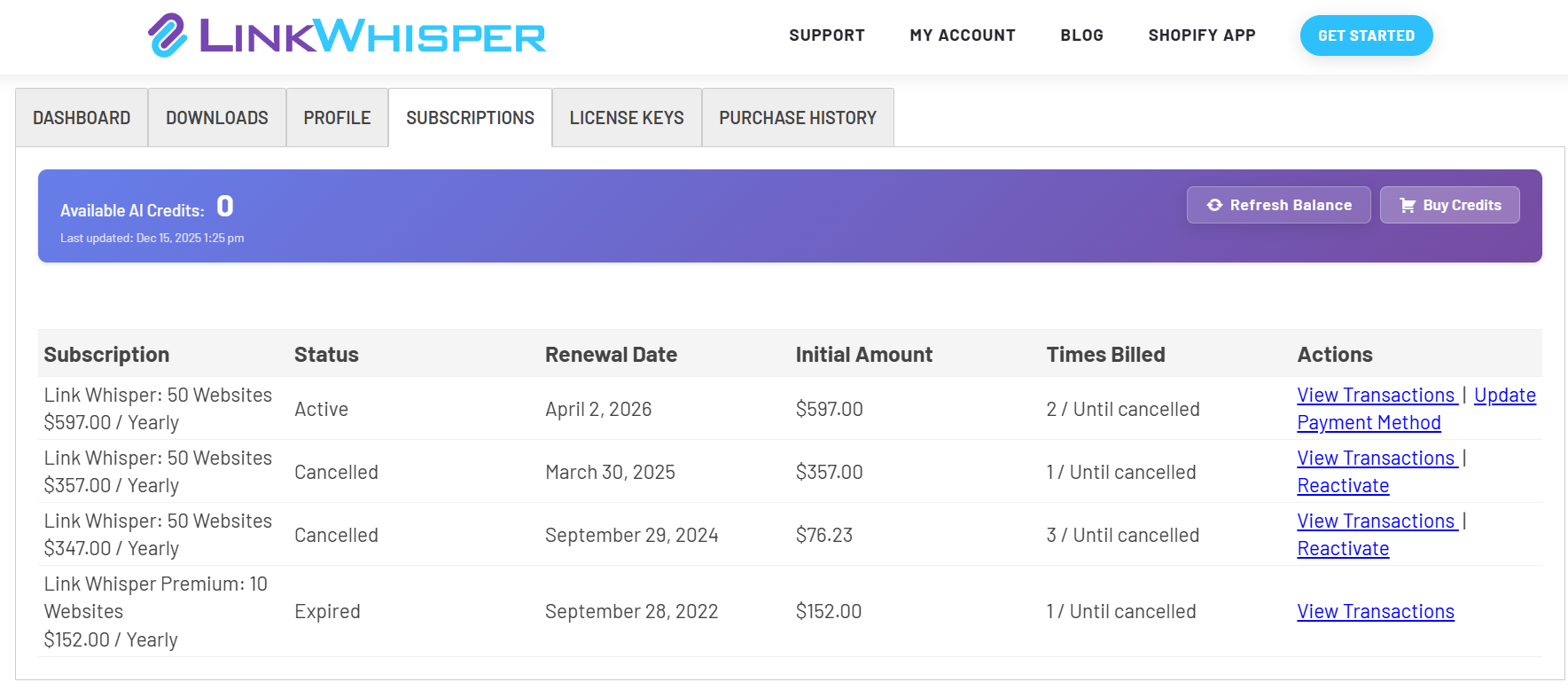
I purchased an enterprise license and also paid $499 for a Done-For-You service.
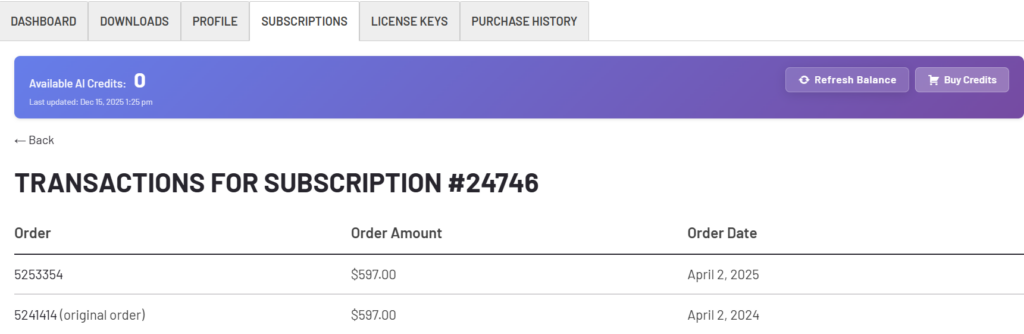
The idea was that their team would handle the implementation on one of our client sites as a proof of concept, and then we’d document the process, create SOPs, and roll it out across our portfolio.





I chose this particular site because it had high domain authority with a lot of good content that simply wasn’t ranking well. The dentist is well-known in the Atlanta area and specializes in high-end cosmetic and restorative procedures. The site has pages covering everything from porcelain veneers to full-mouth reconstruction, dental implants, Invisalign, and smile makeovers. The content is real, written from genuine expertise, not AI-generated filler.
What went wrong over a year
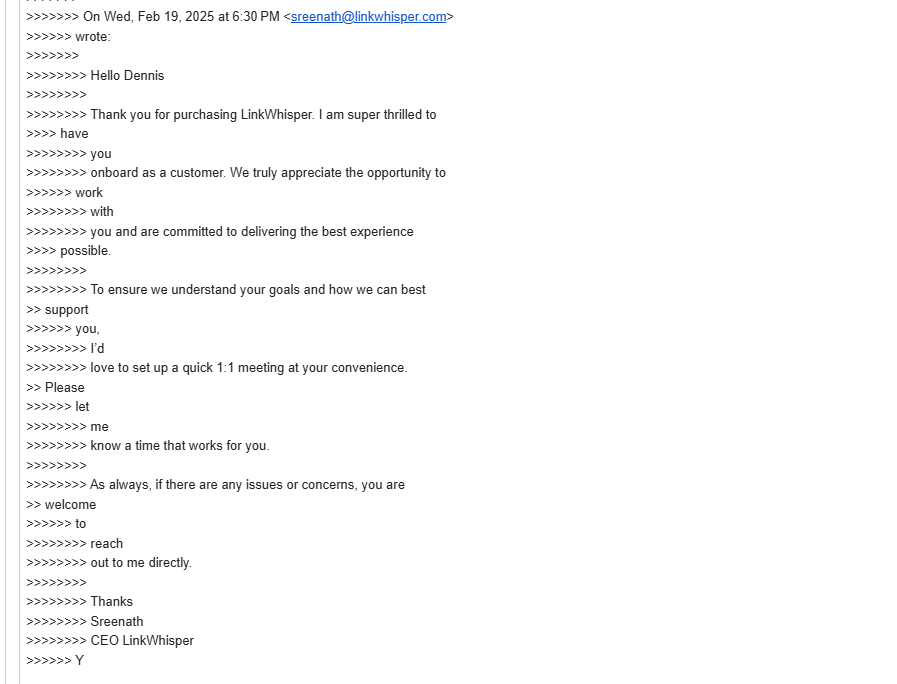
The engagement started in April 2025. What followed was a year of delays, miscommunication, and staff turnover on their side.
Their original point of contact was supposed to create an SOP and implement the linking strategy.

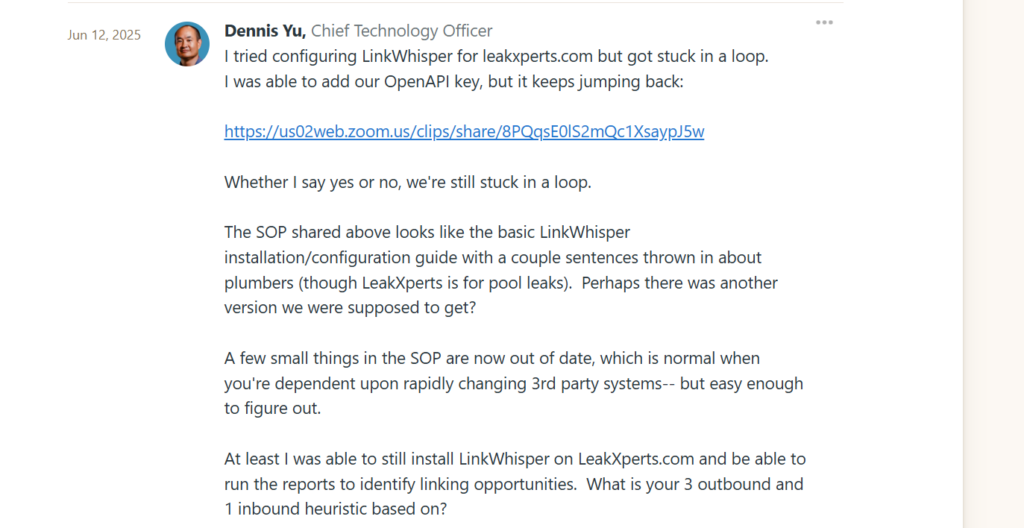
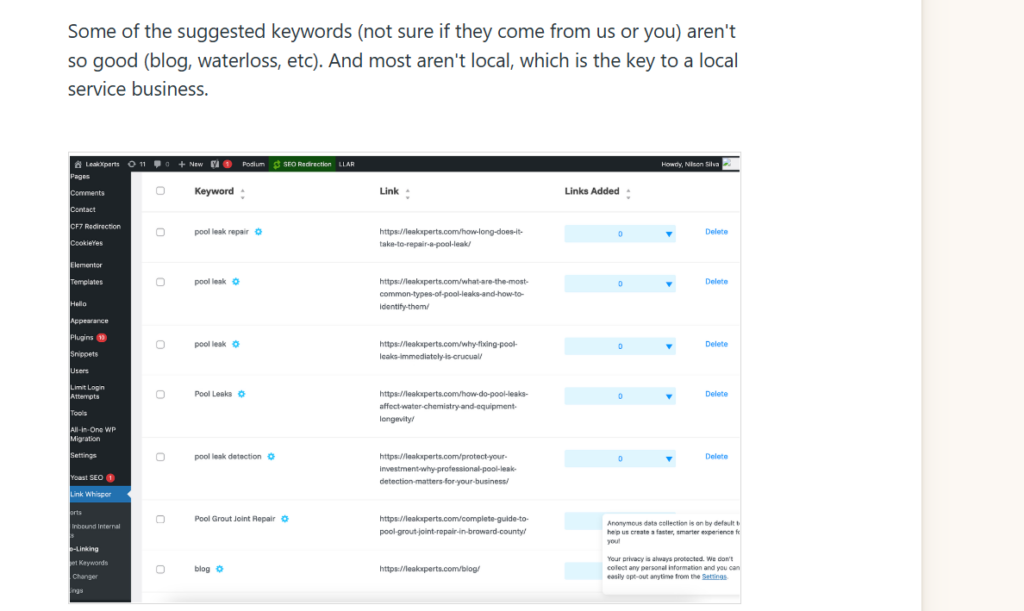
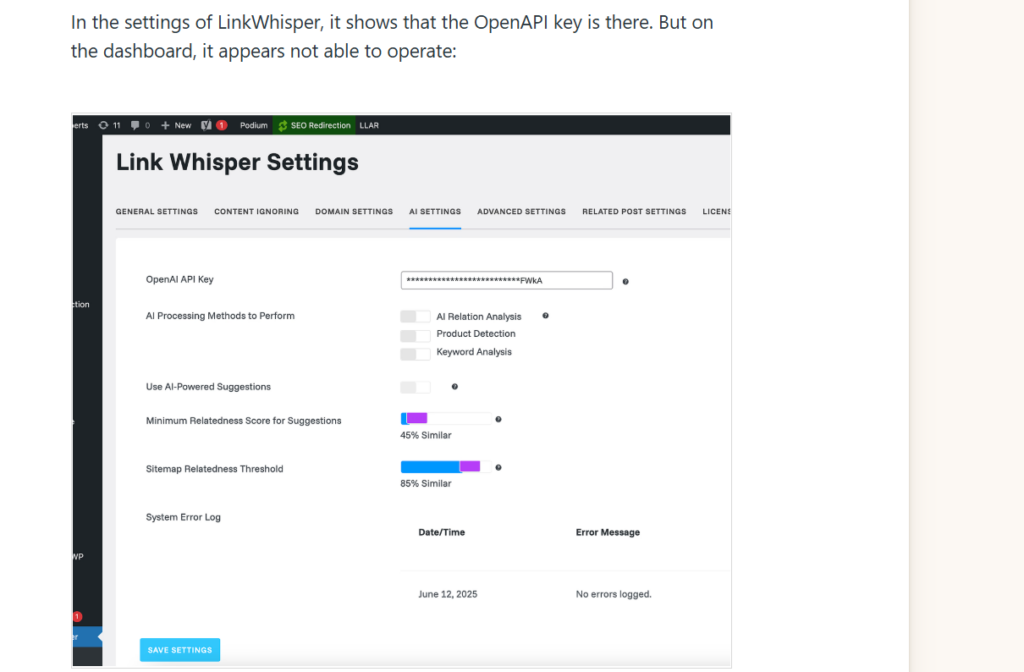
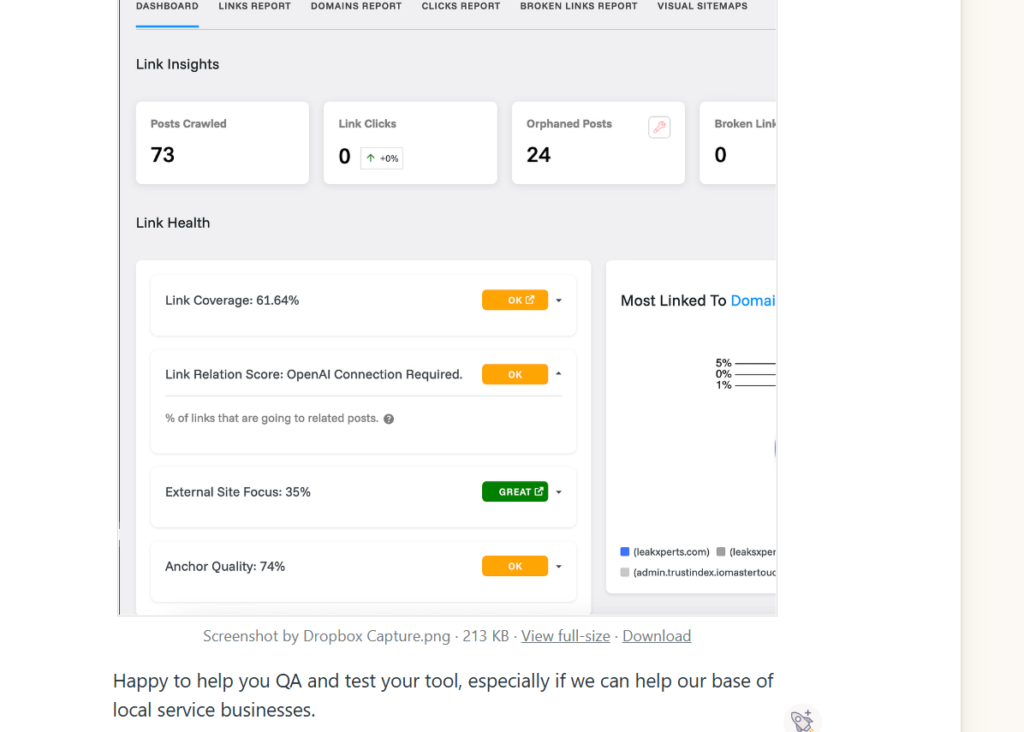
After months of back and forth, no SOP was ever produced. I kept asking, kept following up in Basecamp and over email, and was mostly ignored. I personally burned significant time chasing replies.

That person eventually left the company around January 2026. After that, I reached out to the founder multiple times. He was traveling, launching a new product, and generally unavailable. I was told they were short-staffed.
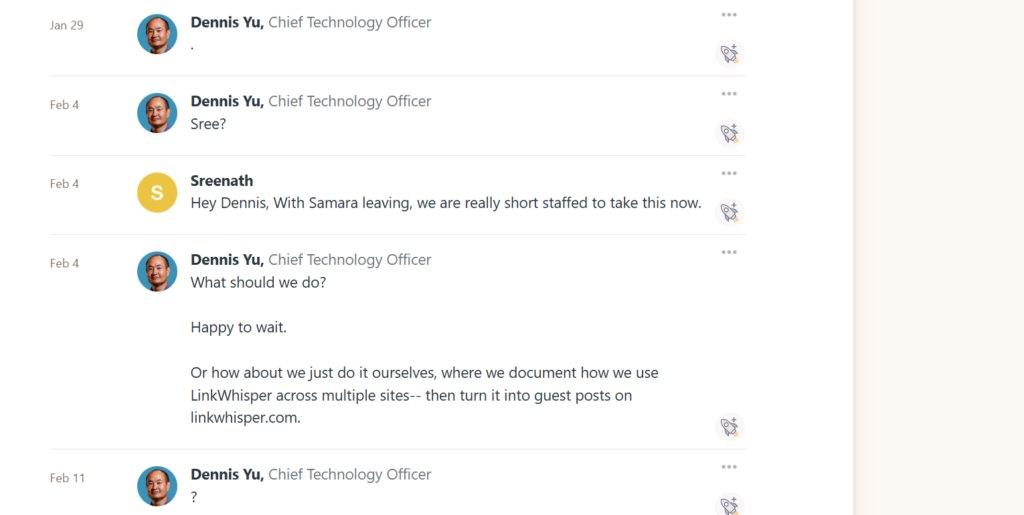
In February 2026, a new product manager was introduced.
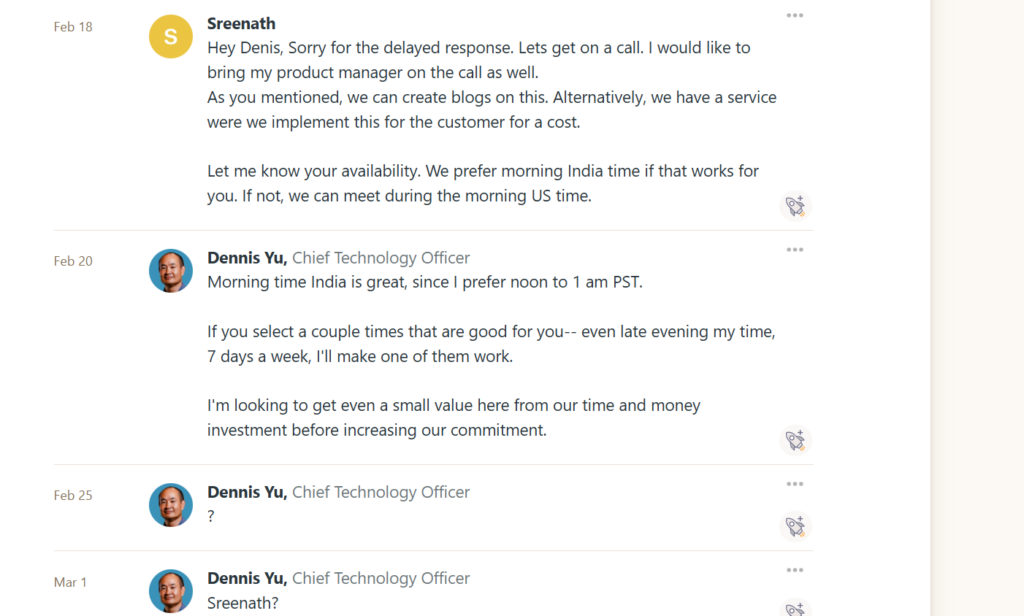
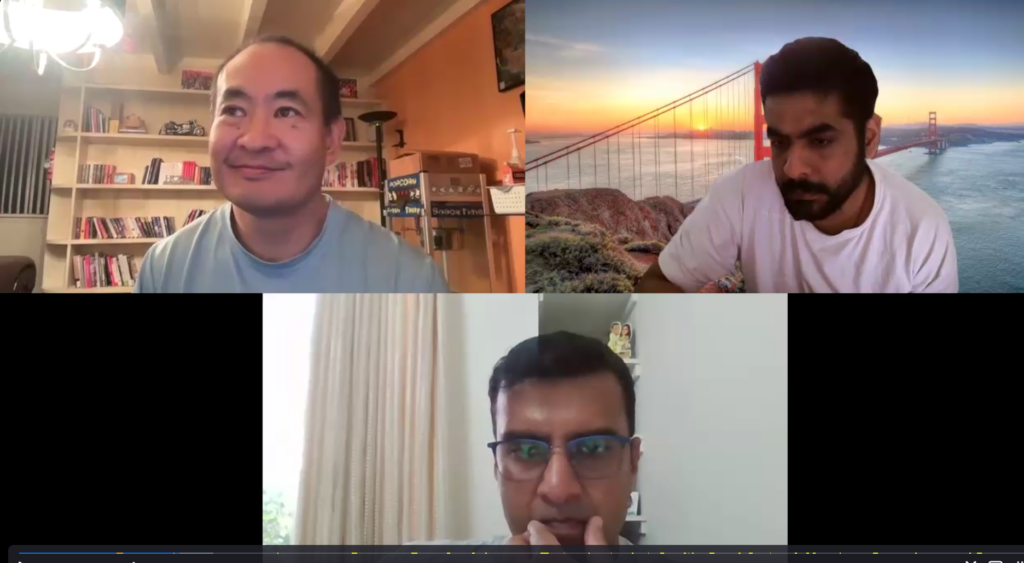
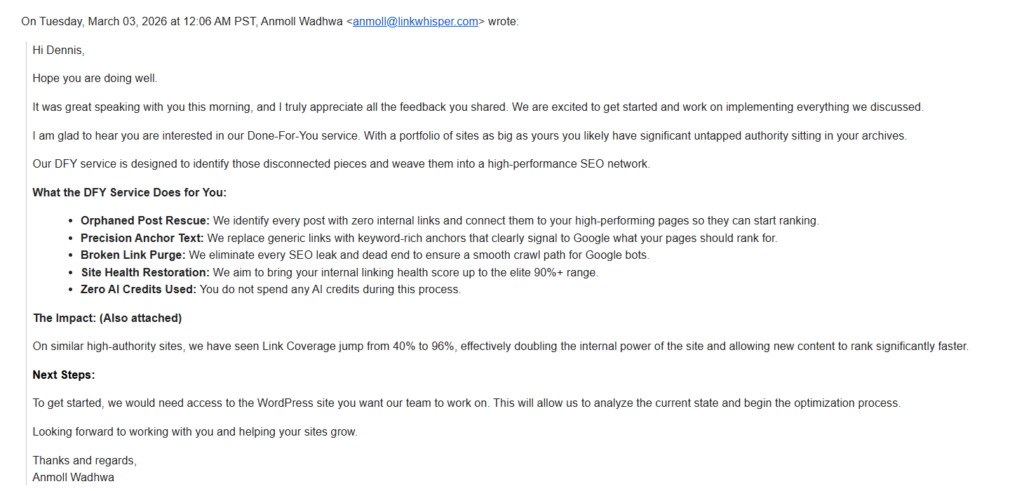
We had a Zoom call in early March where the product was re-pitched with new features including a “one click setup” and improved AI-driven link suggestions. On that same call, the founder denied that I had paid for professional services, despite the Stripe receipt showing otherwise.
We agreed to try again. The DFY service was implemented in March 2026.
The work they delivered
Their team identified 54 money pages across the site covering cosmetic, restorative, and general dentistry services plus key blog posts. They reported adding 567 internal links, eliminating all 63 orphaned posts, and fixing 20 broken links. The internal health score went from 12/100 to 97/100.

On paper, this looked impressive. But when I actually examined the pages, the quality was mixed.
What was done well
The blog posts generally had solid internal linking. For example, a post about top cosmetic procedures had around 29 content links with mostly good anchor text, “Porcelain veneers” linking to the veneers service page, “Invisalign” linking to the Invisalign page, and so on. Most blog-to-service-page links used keyword-relevant anchors.
What was done poorly
Mismatched anchor text. On the smile makeovers page, the word “gum contouring” linked to a blog post about choosing a dentist for smile makeovers, not to anything about gum contouring. On the teeth whitening page, “cleanings or cosmetic treatments” linked to the Invisalign page. On the porcelain veneers page, “American Academy of Cosmetic Dentistry” linked to the general cosmetic dentistry category page. These mismatches send confusing signals to Google about what those pages are about.
Broken and ugly URLs. Multiple pages linked to a poorly-slugged duplicate page with a non-descriptive URL like /1066-2/. One of the listed money pages returned a 404 error.
Over-linking on some pages. One page had 27 content links, which is excessive and dilutes the link equity being passed. Google devalues internal links when pages are stuffed with them.
Under-linking on key service pages. The dental implants page, one of the highest-value services, had only 2 content links. The porcelain veneers main service page had only 5. The pages that should be the strongest were relatively thin compared to blog posts.
Generic anchors. The word “here” was still being used as anchor text, exactly the kind of thing the service promised to fix with “precision anchor text.”
The AI problem
When I pointed out these issues, the response I got back was clearly AI-generated, complete with corporate buzzwords like “SEO Integrity deep dive” and “I am personally committed to ensuring I get this right for you.”
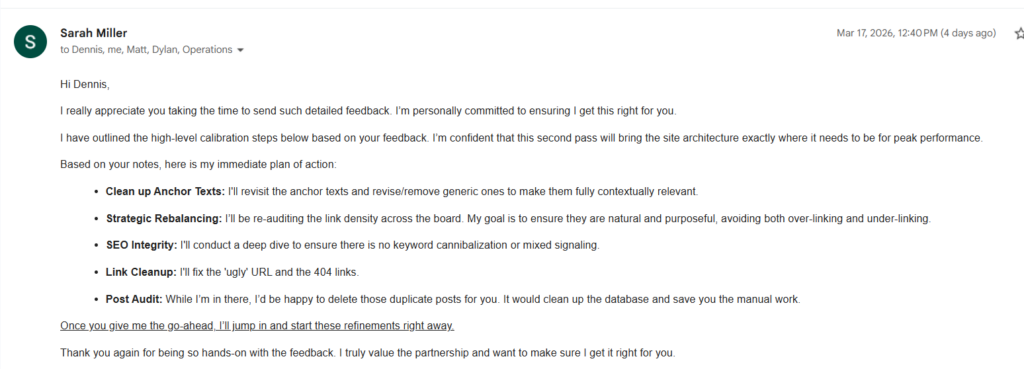
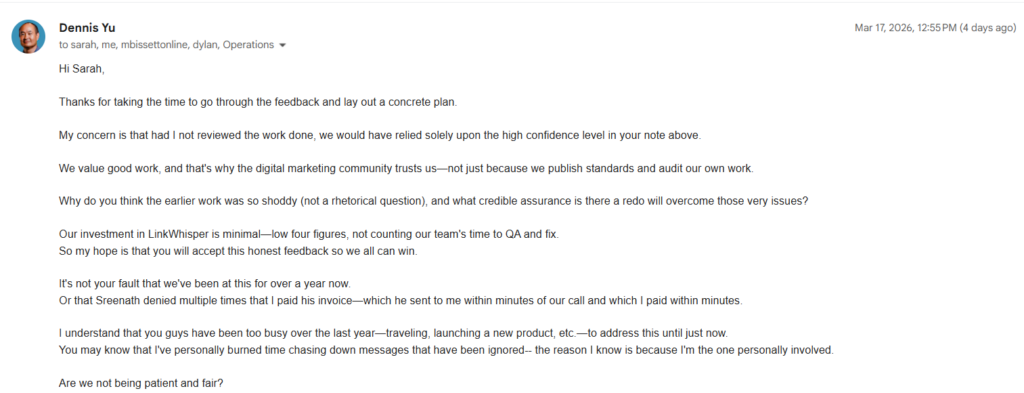
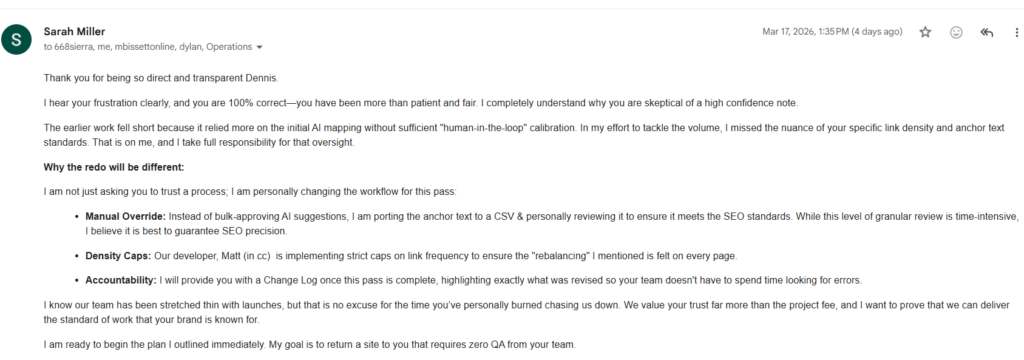
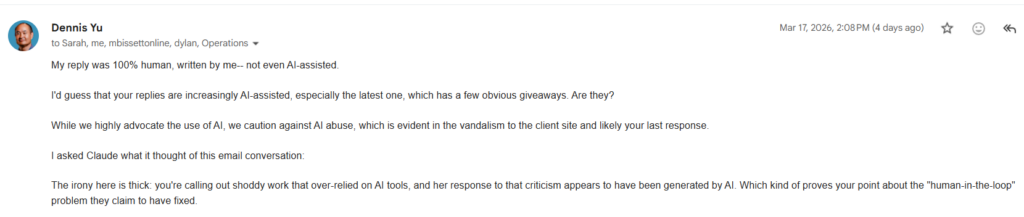
The irony was obvious: I was criticizing sloppy work that over-relied on AI, and the response to that criticism was itself AI-generated. The core issue isn’t whether someone uses AI to draft an email. It’s that the work on the site relied too heavily on AI without adequate human review, and the apology did the exact same thing.
They later acknowledged that the earlier work “relied more on the initial AI mapping without sufficient human-in-the-loop calibration.” That’s a fair description of what happened.

This is the core issue with most SEO tools today: they automate output, not judgment.
Internal linking is not a volume game; it’s a relevance and intent game.
AI can suggest links, but it cannot decide what should exist without human oversight or a properly trained agent.
Could you do this yourself?
Yes. The core workflow is straightforward. The tool scans your site and suggests internal links for each page. You review the suggestions and click to accept or reject them. It auto-inserts the links.
The tool does 90% of the work. You just review and approve. For a site with around 80 to 100 pages, a competent person could do this in 2 to 4 hours. The key decisions are which links to approve and what anchor text to use, which is exactly where the work showed carelessness.
Realistic SEO impact
Internal linking primarily helps with crawlability and distributing link equity within your site. For a local dental practice with around 80 to 100 pages, Google was almost certainly already crawling and indexing everything. This isn’t a 10,000-page ecommerce site where orphaned pages genuinely get lost.
The real benefit is passing authority from blog content to money pages, which can give them a small ranking boost. For local SEO specifically, internal linking is a secondary factor. Google Business Profile optimization, reviews, local citations, and backlinks matter far more for local pack rankings.
The claim of jumping from 12/100 to 97/100 is an internal health score from the tool itself, not a Google metric. It measures how well-connected your pages are according to the software. It’s a vanity metric.
Realistic expectation: you might see a 5 to 15 percent improvement in organic impressions over 2 to 3 months for some of your deeper blog content, and a modest boost for service pages that were previously under-linked. This won’t move the needle dramatically for competitive terms like “cosmetic dentist Atlanta” where backlinks and local signals dominate.
How it ended
I asked for a full refund, both the $499 DFY fee and the annual software license.
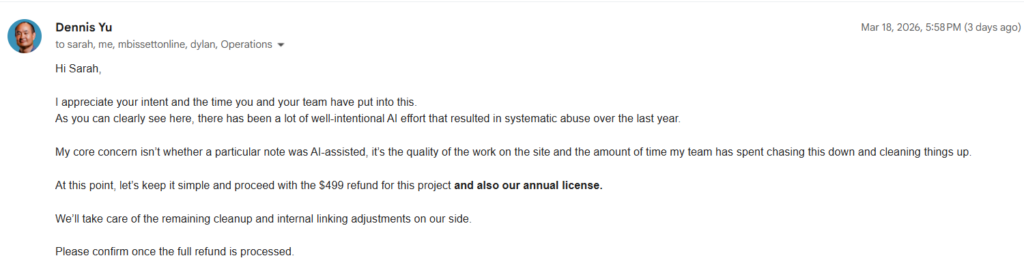
The founder agreed to refund the $499 but refused to refund the license since it had been active for 11 months.
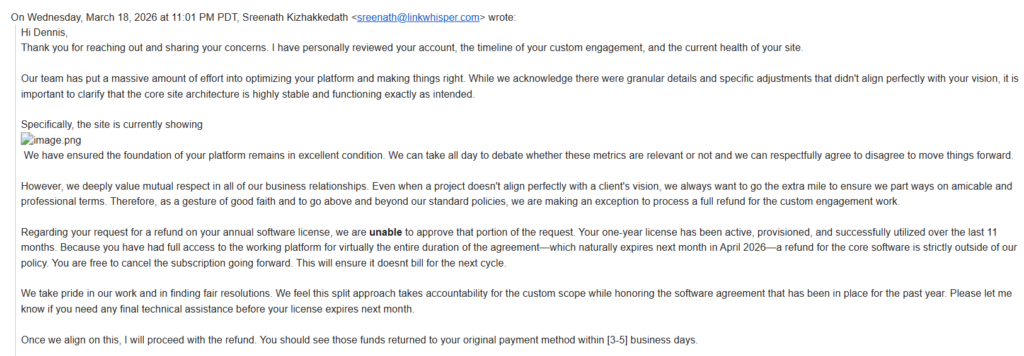
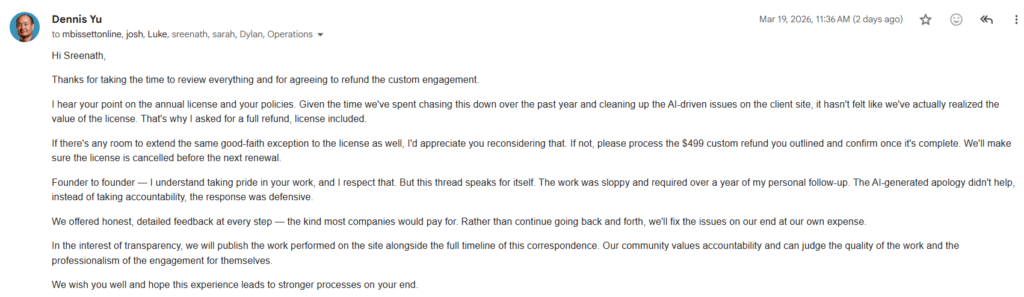
He also asked me to agree not to publish anything about the experience.
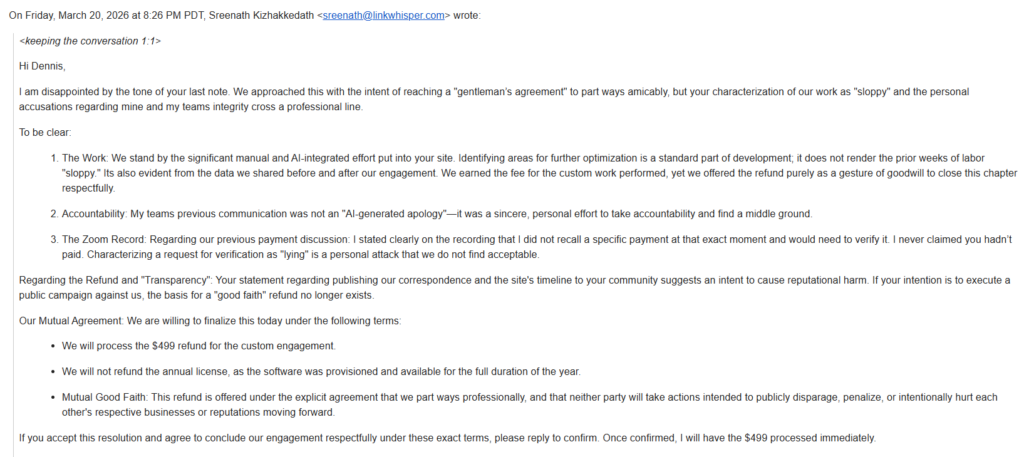
I declined. I believe in transparency and accountability. The SEO community can look at the work, read the correspondence, and judge the quality for themselves.

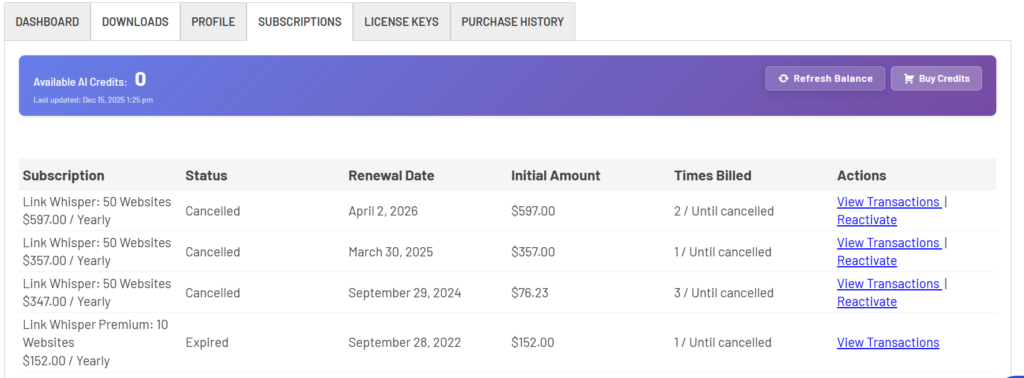
Why I cancelled Link Whisper
At the end of this process, the decision was simple. The tool requires the same level of human review that makes the “done-for-you” service unnecessary.
If I still have to manually check anchor text relevance, link placement, page prioritization, and broken URLs, then I am not saving time. I am just adding another layer of software.
Once we tested doing this directly with AI agents, we found a faster turnaround in hours instead of months. We also found better contextual linking decisions and zero dependency on a third party tool. So we cancelled the subscription and rebuilt the workflow internally.
What I learned
Internal linking matters, but it’s not magic. It’s one signal among many. Don’t expect it to transform your rankings by itself, especially for competitive local terms. For the right way to approach this, see how to do better internal link building for free with your favorite AI agent.
AI without human review creates vandalism, not optimization. Bulk-approving AI-suggested links without checking anchor text relevance, URL validity, and link density creates problems that can actually hurt your SEO.
Always verify the work. If I hadn’t manually reviewed the pages, I would have relied on a confident “97/100 health score” email and never known about the mismatched anchors, broken URLs, and over-linked pages.
Document everything. Every Zoom call recorded, every email saved, every Basecamp message timestamped. When things go sideways, documentation is the only thing that keeps everyone honest.
SOPs or it didn’t happen. I asked for SOPs from the beginning. I never got them. The engagement failed in large part because there was no documented process governing the work. Whether the agent is human or AI, there has to be an SOP.
Update: After this experience, I wrote a complete guide on how to do better internal link building for free using AI agents — the 5-step process that replaces tools like LinkWhisper entirely, with better results and zero cost.
Dennis Yu
Dennis Yu is the CEO of Local Service Spotlight, a platform that amplifies the reputations of contractors and local service businesses using the Content Factory process. He is a former search engine engineer who has spent a billion dollars on Google and Facebook ads for Nike, Quiznos, Ashley Furniture, Red Bull, State Farm, and other brands.
Dennis has achieved 25% of his goal of creating a million digital marketing jobs by partnering with universities, professional organizations, and agencies. Through Local Service Spotlight, he teaches the Dollar a Day strategy and Content Factory training to help local service businesses enhance their existing local reputation and make the phone ring.
Dennis coaches young adult agency owners serving plumbers, AC technicians, landscapers, roofers, electricians, and believes there should be a standard in measuring local marketing efforts, much like doctors and plumbers must be certified.