
 by
by
Most people I talk to are using Claude like a genie. You rub the lamp, it comes out, it grants the wish, and then it disappears back into the bottle. Next time you need something, you start over from nothing.
That’s a skill. It isn’t an agent.
Just because you have a prompt that produces an incredible result does not mean you have an agent. An agent is like a coworker. It has memory, it has a role, it’s persistent. I’ve seen a lot of people trip on this, and it’s the one misunderstanding I most want to clear up, because it’s what separates people getting real leverage from people who are just very efficiently doing their own work.

Why we couldn’t do this six months ago
We couldn’t have built this six months ago. There was no ability to have this kind of database, no way for an agent to take notes, no structure for one agent to hand work to another.
That changed. Now agents write to markdown files that act as shared memory. One agent takes a podcast and repurposes it, another looks at your analytics to see what you’re ranking on, a third checks who’s commenting on your social posts, and they all read the same notes. You don’t have to instruct each one every time you want something done.
Think about what happens without that. You go from seventeen agents to thirty-one agents, and suddenly it’s thirty-one new team members all doing something different with no shared context. You just have a mess.
Skip the structure and you get a crazy amount of leakage. You ask about a conversation from two weeks ago and it doesn’t remember, because you never gave it anywhere to write things down. Then people blame the AI.
Think in departments, not tasks
Here’s the mental shift. If you could hire anybody, pay them in tokens instead of dollars, how would you organize these departments?
When you think as a business instead of as an individual or a consultant, you stop being the bottleneck in your own company. You’re where it counts, on relationships and judgment, and the work moves to the agents according to a process. Maybe there’s a support function, an operations function, a billing function.
A lot of people name theirs. They’ll say from now on you are Lawrence, or Anne, or whatever name they want, and they talk to it that way. You’re the figurehead. The team hands items between each other.
How to tell if you’ve set this up correctly
If the majority of your work is you having to initiate Claude, something is wrong.
Ninety percent or more of what your agents do should not require you to start it. If it does, you don’t really have a function. Departments should run by themselves. Nobody has to remind the front desk to answer the phone.
That’s what scheduled tasks are for. Every Monday, go through my inbox and tell me what my meetings are and who I should follow up with. Every Friday, analyze my analytics and tell me where I need to be spending money. Once those are running, the work compounds without me in the middle of it.
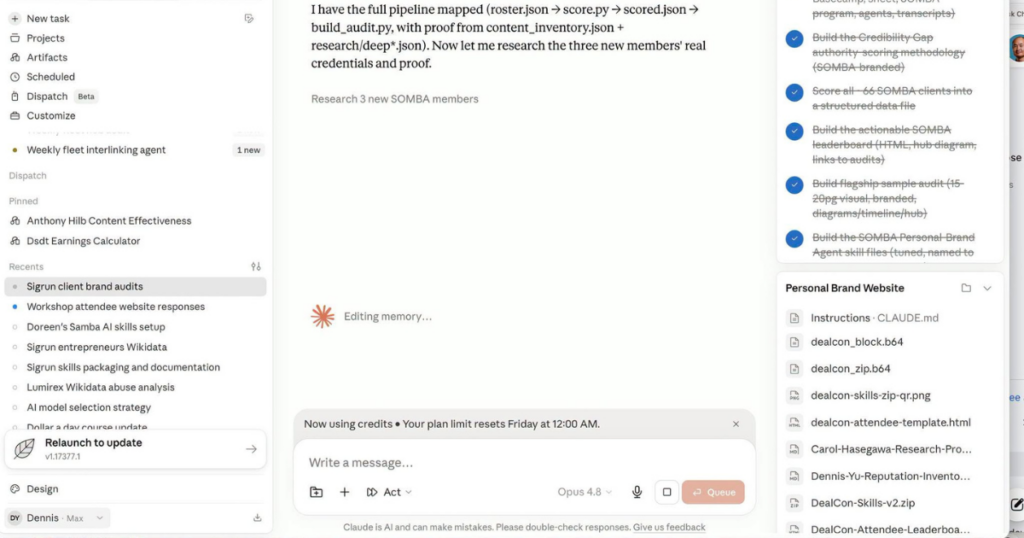
Almost all of the work in my own business now runs on scheduled tasks. New ideas and experiments start as a conversation, but they should move into a function quickly. A new client comes in, and there’s a whole process for how we drive results for him. That process shouldn’t require me standing in the middle of it every time.
I’m a trust but verify sort of person
When you talk to the agent, it’ll tell you it did the job. It was great. Everything’s awesome. I did it.
Prove it. Tell me exactly what’s there. Tell me which of these skill files are actually being used. Tell me if they’re complete.
That’s when it comes back with the real answer. Actually, a couple of things are missing. Actually, here are a few things we could do better. And by the way, you’re running your jobs at 8am, and between 5am and 11am usage costs are higher, so schedule them at 4am or noon instead.
I didn’t know that. It told me. That’s the conversation you want to be having.
So put a QA cycle into your business. Audit your agents, audit your business, and audit your managers, with a manager agent overseeing the whole thing. Every business needs some level of housekeeping, and no matter how good you think it is, there’s always maintenance and improvement.
Expect it to push back
As these agents start doing real work, they’ll get stuck, and that’s the point.
It’ll ask for access to your mail, or permission to write to a folder, or to visit a particular site. Click allow. If there’s an allow-always option, use it. Then it’ll come back and say it did the job, or it got confused, or it found something you hadn’t noticed and updated it. Good. Keep going. What else can you do?
Think of it as onboarding a really smart team member who doesn’t know everything in your head and doesn’t understand your business as well as you think they should, because you haven’t given them enough information yet.
I gave one a budget to run ads and told it what it could and couldn’t do. It pushed back. It found a duplicate and suggested a more efficient approach. That’s what you want.
Long prompts now beat short ones
This flipped in the last month and a half and most people haven’t caught up.
If you did this a couple of months ago, you had to be super specific, one thing at a time, like telling a child what to do. Anything longer and it would just get confused. Being terse was the token-efficient way to work.
That is now the worst thing you can do. Every time you say do this one thing, and then say oh wait, now do that, and then once you’ve done that do this other thing, it reloads the context. And because the models are smarter, they burn more tokens doing it. You fragment the request and run out of context window for no reason.
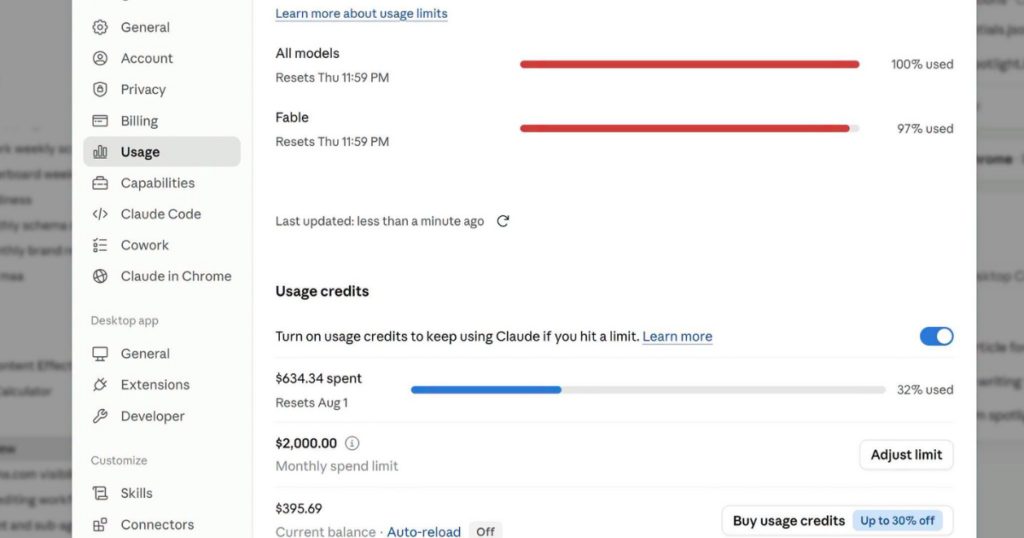
The other half of this: tell it the goal, not exactly how to do it. It’s more important to tell it what you want than to script the method. The agents are getting smart enough that specifying how ties their hands. It’s smarter than you and I are.
And be thorough, give context, and be polite. Memory is increasing. They remember.
What this looks like for revenue
Traffic times conversion equals revenue. Every stage of your funnel has both, so you can troubleshoot exactly where the leakage or constipation is instead of guessing.
The structure runs from a freebie up through the signature offer, and you move people up the ladder. If your target is twenty percent conversion on the landing page and you’re at five, that’s a specific problem with a specific location. You reason with Claude about what’s working, what isn’t, what it can fix, and what it needs from you.
But the optimization agent relies on the whole domino chain being in place. It needs your analytics, your ad accounts, your search console. If it doesn’t know what’s driving traffic and conversion for you, it’ll just guess. Maybe make more content. Maybe build more skills. Then you’re shooting in the dark with a blindfold on.
So the better question is this: in order for you to do this properly, what’s missing? Let it tell you what it needs. Then prioritize by what actually creates a business result.
I call these door hinges. The one or two things that swing the whole door. When someone asks me what they should do next, that’s always the answer. What makes money?
The part nobody wants to hear
One of our members ran the audit on her own setup. She found sixty-four skills where forty-three would do. Two parallel systems doing the same work. One skill installed three separate times.
Her words: I thought I had things pretty in order, but apparently I don’t.
Welcome to the club. She’s one of the most organized people in the group, and that’s exactly the point. The mess is normal. Finding it is the work.
She also said something I think a lot of people needed to hear. She uses Claude every single day, but all of the knowledge was stored in her head. Nothing was written down where an agent could reach it. So none of it compounded.
Here’s what I want everyone to understand about why she’s succeeding: it has nothing to do with me. It’s everything to do with her follow-up. She shows up, she blocks out the afternoon so she has no appointments, she gets the work done, she follows through. Look at how detailed she is. That’s the key. It’s not hocus pocus, magic abracadabra. She just does the thing.
Where this goes
The success you have is relative to how much existing success and clarity your team can see. The more proof and trust and clients and traffic and revenue you give it, the more signal your machine has to get you more of the same.
It’s the rich get richer, which doesn’t seem fair. But your agent team is a multiplier, and multipliers need something to multiply.
Originally published .
Dennis Yu
Dennis Yu is the CEO of Local Service Spotlight, a platform that amplifies the reputations of contractors and local service businesses using the Content Factory process. He is a former search engine engineer who has spent a billion dollars on Google and Facebook ads for Nike, Quiznos, Ashley Furniture, Red Bull, State Farm, and other brands.
Dennis has achieved 25% of his goal of creating a million digital marketing jobs by partnering with universities, professional organizations, and agencies. Through Local Service Spotlight, he teaches the Dollar a Day strategy and Content Factory training to help local service businesses enhance their existing local reputation and make the phone ring.
Dennis coaches young adult agency owners serving plumbers, AC technicians, landscapers, roofers, electricians, and believes there should be a standard in measuring local marketing efforts, much like doctors and plumbers must be certified. He has appeared on 353 podcasts with 619 credited episodes — see the full list of his podcast appearances.