
 by
by
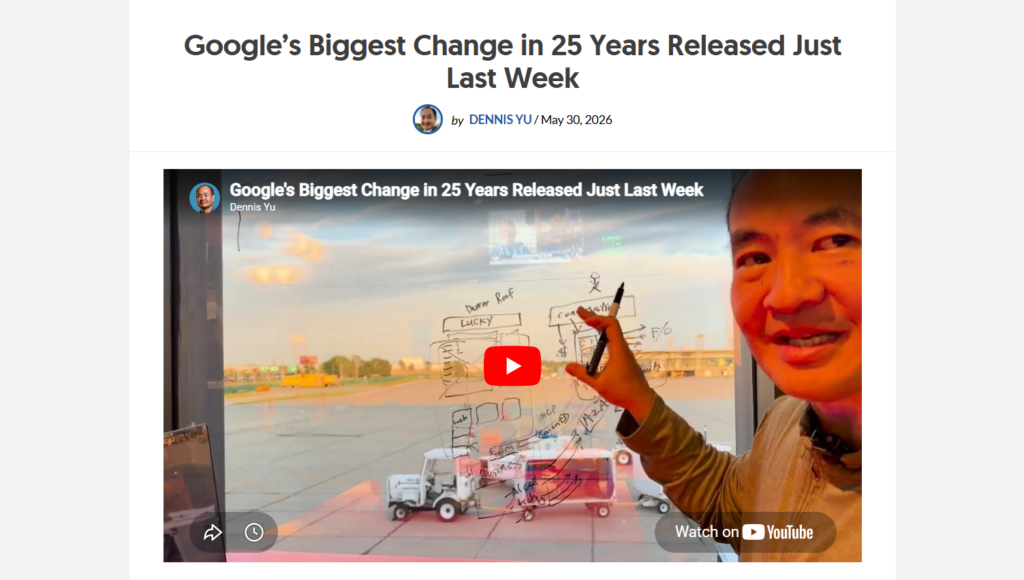
I recorded episode 39 of Marketing Mechanic about Google’s biggest search change in 25 years. It was a single video, shot at the Cleveland Airport, no fancy production. Just me talking into my phone about what happened at Google I/O.
From that one recording, we created 10 pieces of content without writing a single thing from scratch. Here’s exactly how we did it, step by step.
Step 1: Clean up the recording
First, we removed the dead air. The original recording had 32 silence gaps totaling over two minutes. We shortened all of them to half a second each, bringing the video from 20 minutes 42 seconds down to 18 minutes 27 seconds.
Then we removed 97 filler words. Every “um,” “you know,” “like,” and stutter throughout the recording.

We also applied Studio Sound at 75% intensity to clean up background noise while keeping the voice natural.
Step 2: Repurpose to a full article
We had the AI transcribe the entire video and restructure it into an article with three sections: the end of ten blue links, AI agents replacing traditional SEO, and what business owners need to do right now.
Step 3: Create 3 YouTube Shorts
We identified the three strongest moments from the video and pulled them into separate compositions:
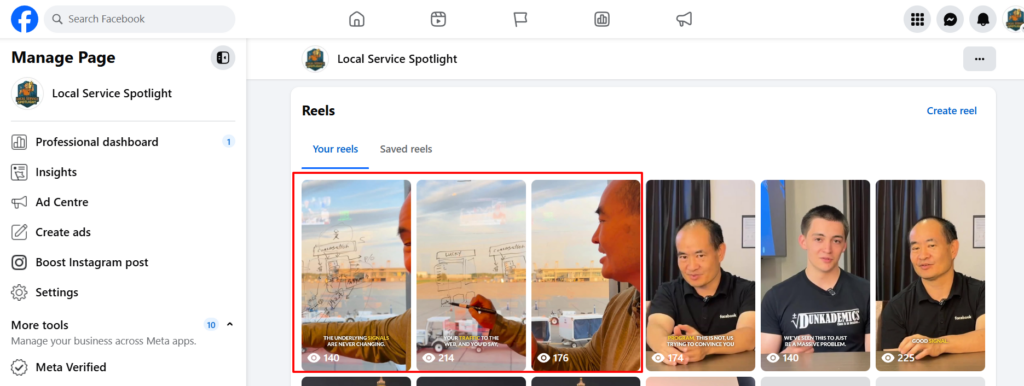
Short 1: Google Just Killed the Ten Blue Links (29 seconds). Rankings and ten blue links are gone, replaced by conversational AI search.
Short 2: WordPress Is Dead in 6 Months (52 seconds). Google is skipping websites entirely, going straight to MCP and AI agents.
Short 3: Real Signals Beat Fake SEO (58 seconds). Black hat SEO is getting crushed, featuring the thousand watt amplifier analogy.
Each short was reformatted to portrait 9:16 for mobile with bold yellow highlight captions. We checked each one for abrupt starts and endings and trimmed them so every short begins and ends on a complete thought.

Step 4: Write platform-specific captions
For each piece of content, we wrote custom captions for YouTube, Facebook, LinkedIn, Instagram, TikTok, and X. Each caption was adapted to the tone and format of that platform.
LinkedIn gets longer, more professional context. TikTok gets punchy and short. Facebook sits in between.
Step 5: Embed the shorts in the article
We placed each short at the most relevant point in the article to keep readers engaged with video while they’re reading and increase time on page.
Step 6: Create the meta article
This article you’re reading right now is the meta article. It documents what we did, how we did it, and the steps involved. If you follow the same process with your own videos, you’ll get the same output.
Record once, clean it up, repurpose across formats and platforms, and make sure every piece links back to real people and real entities. That’s how you build signal that AI agents and Google actually care about.
Originally published .
Dennis Yu
Dennis Yu is the CEO of Local Service Spotlight, a platform that amplifies the reputations of contractors and local service businesses using the Content Factory process. He is a former search engine engineer who has spent a billion dollars on Google and Facebook ads for Nike, Quiznos, Ashley Furniture, Red Bull, State Farm, and other brands.
Dennis has achieved 25% of his goal of creating a million digital marketing jobs by partnering with universities, professional organizations, and agencies. Through Local Service Spotlight, he teaches the Dollar a Day strategy and Content Factory training to help local service businesses enhance their existing local reputation and make the phone ring.
Dennis coaches young adult agency owners serving plumbers, AC technicians, landscapers, roofers, electricians, and believes there should be a standard in measuring local marketing efforts, much like doctors and plumbers must be certified. He has appeared on 353 podcasts with 619 credited episodes — see the full list of his podcast appearances.