
 by
by
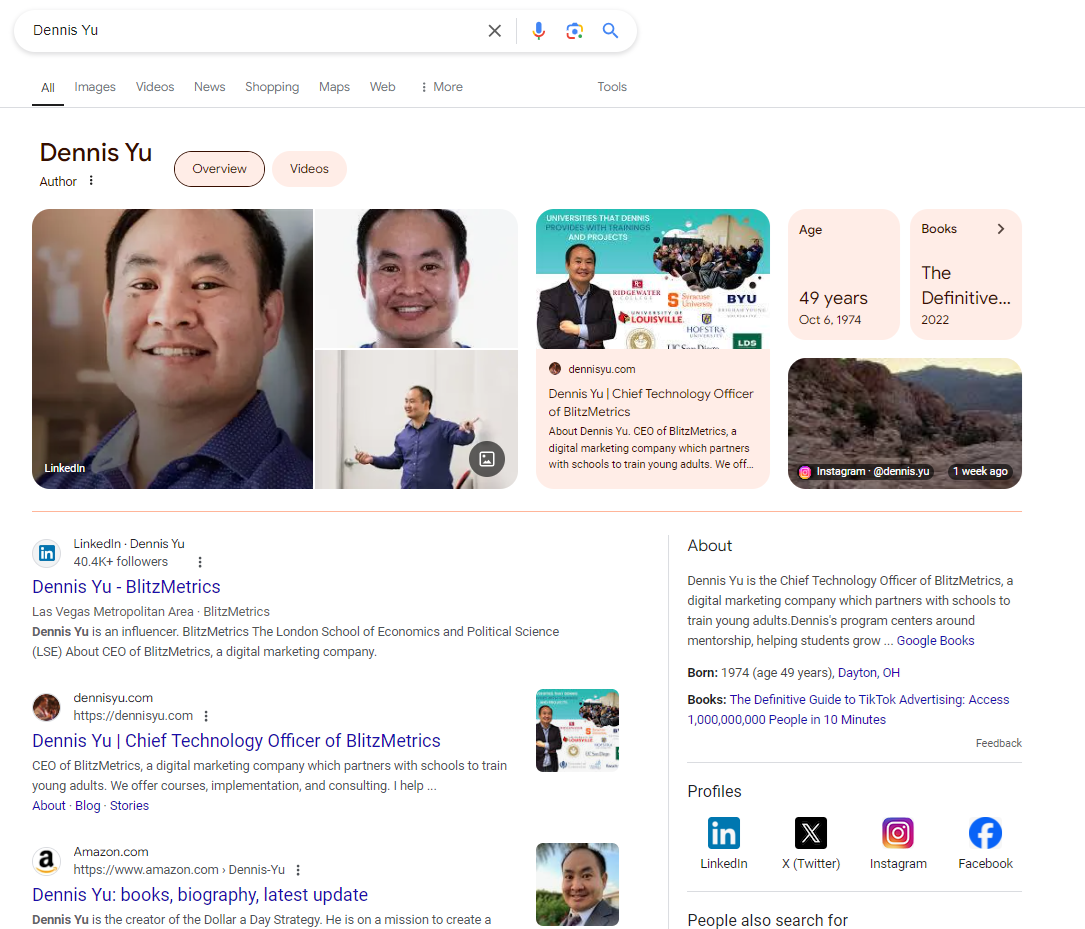
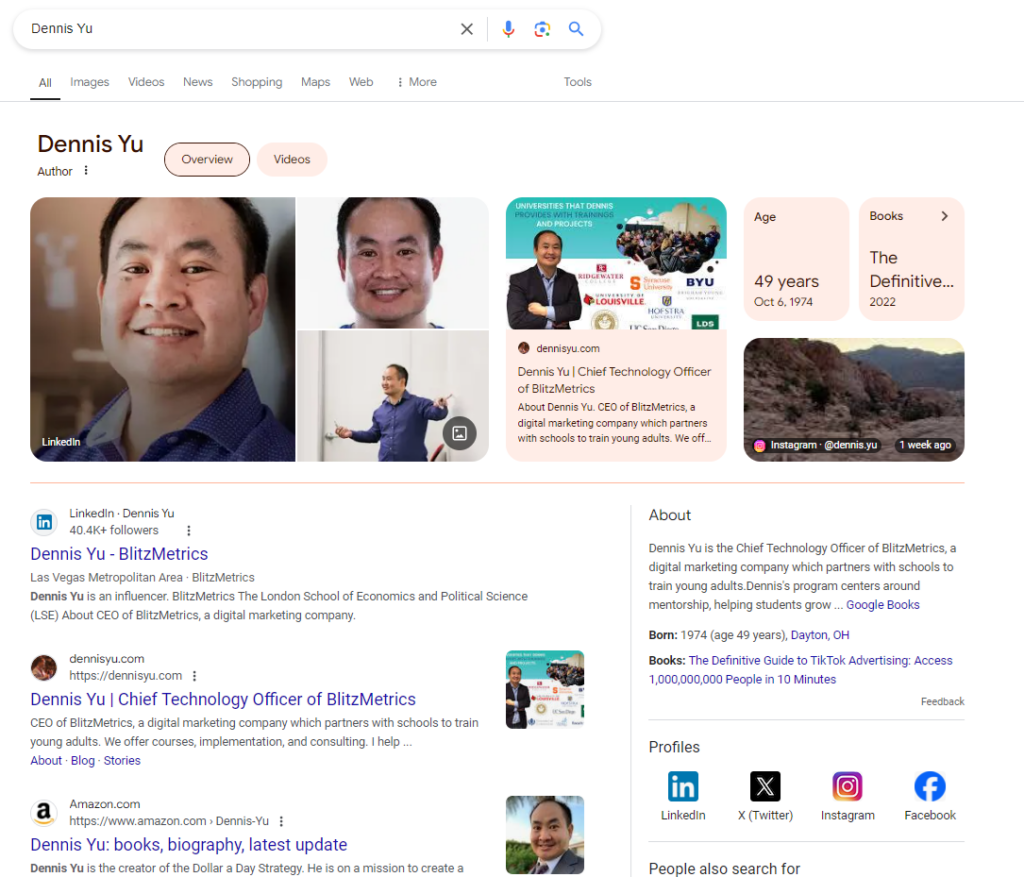
Every podcast interview, YouTube appearance, and conference talk you do creates a trust signal — but only if Google can find it. Most experts have dozens or even hundreds of media appearances scattered across podcast platforms, YouTube channels, and event sites with no central record tying them together. That means all that authority evidence is invisible to search engines and AI agents trying to figure out who you are.
A media appearance inventory solves this by documenting every verified appearance in one publishable, linkable asset. It turns fragmented proof into a structured authority signal that supports your Knowledge Panel, strengthens your EEAT profile, and gives AI models the entity data they need to recommend you.
What a Media Appearance Inventory Is
A media appearance inventory is a comprehensive, structured record of everywhere a person has appeared as a guest or speaker across podcasts, YouTube interviews, webinars, Twitter Spaces, conference stages, and other long-form media. Each entry captures the show name, episode title, date, platform, URL, and topic — the minimum metadata needed for both human readers and search engine crawlers.
This is not a vanity list. It is a functional EEAT document that demonstrates Experience (you have done this repeatedly), Expertise (across relevant topics), Authoritativeness (recognized by independent hosts and platforms), and Trustworthiness (verified with direct links to third-party sources).
For someone like Dennis Yu, whose speaking career spans 730+ engagements across 17 countries and five continents, this inventory is a critical piece of the SEO Tree — sitting under the Speaking and Authority branch and linking out to individual episode pages that function as leaves.
Why It Matters for Knowledge Panels and AI Discovery
Google’s Knowledge Panel algorithm needs to verify that you are a notable entity with consistent third-party coverage. A well-structured media inventory page serves as a hub that links to dozens of independent sources — each one a corroborating signal. When Googlebot or an AI agent crawls this page, it finds structured evidence of who you are, what you know, and who has recognized your expertise.
This becomes even more important as AI-powered search (Google AI Overviews, ChatGPT, Perplexity) increasingly relies on entity data to generate recommendations. If an AI agent searches for “who is an expert in Facebook ads” and finds a page with 500+ verified media appearances linking to independent podcast sites, that is a strong signal.
For local service businesses — a roofer in Phoenix, a plumber in Dallas — the inventory plays a different but equally important role. It documents that this person is a recognized voice in their community, has appeared on local business podcasts, and has been featured by industry associations. Even five well-documented appearances on relevant local media can outweigh hundreds of generic backlinks.
The Five-Phase Research Process
Building a thorough inventory is not a quick task — it requires systematic research across multiple platforms. Here is the process we developed and tested at BlitzMetrics, refined through building inventories for people ranging from well-known digital marketers to local contractors.
Phase 1: Gather Context
Before searching, understand the person’s professional identity: their name, company, primary topics, geographic focus, and personal website. Check whether they maintain their own media page. If they have an existing partial inventory, start there rather than duplicating effort.
For Dennis Yu, this meant starting with 475 verified appearances and a Podchaser benchmark of 608 credits across 353 podcasts — giving us a clear gap of 133 appearances to close.
Phase 2: Sweep Podcast Directories
No single directory captures everything. We search across all of them and compare totals: Podchaser tracks credits across shows and often has the most structured data. Listen Notes indexes 477+ episodes for Dennis and provides episode-level details with dates. OwlTail specifically tracks interview appearances and had 84 entries. Each platform catches different shows depending on how podcasts submit their RSS feeds.
Beyond directories, search the person’s own website (site:dennisyu.com podcast) and look for a dedicated media or press page. Many appearances only surface through the host’s website, not through aggregators.
Phase 3: Show-by-Show Deep Search
For each specific show — whether from a provided list or discovered in Phase 2 — run a targeted search: “Person Name” “Show Name.” When you find a confirmed appearance, capture the show name, episode title, date, episode number, URL, platform type, co-guests, and a one-sentence topic summary.
In our Dennis Yu research, we searched 40 targeted shows and found confirmed appearances on Social Media Marketing Podcast (Episode 274), Seven Figure Agency (two episodes), Perpetual Traffic (Episodes 49 and 383), Marketing Speak (Episode 149), Conquer Local (Episodes 114, 224, 345, and 647), and dozens more.
The important accuracy rule: only record what you can verify from search results. An empty search does not mean the person was never on that show — it means you could not confirm it. Keep a separate “unconfirmed” section for shows that returned no results but were expected.
Phase 4: Compile and Organize
Structure the inventory as a publishable document with summary statistics at the top (total confirmed appearances, unique shows, date range, platform breakdown), appearances organized by show with full episode details, a chronological index by year, an unconfirmed section, and directory tracking totals.
Phase 5: Identify Next Steps
After delivering the inventory, flag which episodes have transcripts available for article creation through the Content Factory process, which appearances are strongest for EEAT (high-authority shows, topic-relevant episodes), and whether the person’s website has a media page linking to these appearances. If not, creating one is the single highest-value EEAT action you can take.
Results From Our Test Cases
We tested this process on three different profiles to validate that it works across varying levels of media visibility.
Dennis Yu — High-Volume Expert
Starting from 475 verified appearances with a Podchaser benchmark of 608, we confirmed approximately 45 additional episodes across 35 unique shows in a single research session. Notable finds included five episodes on Conquer Local, two on Perpetual Traffic, appearances on Marketing Speak, GSD Mode, Hustle and Flowchart, DigitalMarketer Podcast, Fitness Business Podcast, Amazing Business Radio, and many more.
The key insight: the missing appearances were not on the big-name shows we expected (GaryVee, Impact Theory, Lewis Howes) but spread across dozens of smaller niche shows — exactly the kind that directory sweeps catch but targeted searches miss.
Caleb Guilliams — Mid-Range Thought Leader
Caleb is the founder of BetterWealth and author of “The AND Asset.” He hosts his own podcast but needed documentation of his guest appearances. Starting with no existing inventory, the research uncovered 28+ guest appearances across shows covering finance, entrepreneurship, and wealth management — enough to build a meaningful EEAT profile and support a knowledge panel application.
The process correctly distinguished his own BetterWealth podcast from guest spots and organized findings around his core expertise areas: whole life insurance strategy, wealth management for entrepreneurs, and financial independence.
Sean Kelly — Emerging Brand With Disambiguation Challenges
Sean Kelly founded Jersey Champs and hosts Digital Social Hour. “Sean Kelly” is a common name, making research harder. The process identified 15 podcast guest appearances plus media features across Fox 5 San Diego, Yahoo Finance, Authority Magazine, and others.
The research correctly handled disambiguation by anchoring on “Sean Mike Kelly” and cross-referencing with Jersey Champs and Digital Social Hour as identifying entities. It also tracked the evolution of his media presence across three career phases: e-commerce (Jersey Champs), NFTs (Chibi Dinos), and podcast hosting (Digital Social Hour).
How This Connects to Other BlitzMetrics Concepts
The media appearance inventory is not a standalone document — it is a node in the SEO Tree. Here is how it connects:
The inventory itself lives under the Speaking and Authority branch as a definitive article. Each individual appearance can be repurposed through the Content Factory — pull transcripts, create topic-specific articles, and boost them with the Dollar a Day strategy. The structured data in the inventory feeds Digital Plumbing — schema markup for Person entities, SameAs properties pointing to each appearance URL, and structured data that reinforces your Knowledge Panel. And the inventory supports Personal Branding by giving anyone — from journalists to AI agents to potential clients — a single page that proves your authority.
Build Your Own
If you want to build a media appearance inventory for yourself or a client, the process above is repeatable. Start with directory sweeps, go deep on specific shows, and compile everything into a publishable page. The most common mistake is stopping after the first round — directories only catch 60-70% of appearances. The shows that matter most for EEAT are often the niche ones that require targeted searching.
For local service businesses, even a small inventory of 5-10 appearances on local podcasts and industry shows can make the difference between having a Knowledge Panel and not. The bar is lower than most people think — but the evidence needs to be documented and linked.
This is a definitive article, following the guidelines on how every major BlitzMetrics concept is documented and maintained. All supporting content — case studies, meta-articles, and related guides — links back here as the canonical reference for the Speaking and Authority branch.
Download the Skill
Want to run this media appearance inventory process yourself? Download the skill file below and install it in your Claude session. The file is a .zip archive — rename it to .skill after downloading, then drag it into Claude to install.
Originally published .
Dennis Yu
Dennis Yu is the CEO of Local Service Spotlight, a platform that amplifies the reputations of contractors and local service businesses using the Content Factory process. He is a former search engine engineer who has spent a billion dollars on Google and Facebook ads for Nike, Quiznos, Ashley Furniture, Red Bull, State Farm, and other brands.
Dennis has achieved 25% of his goal of creating a million digital marketing jobs by partnering with universities, professional organizations, and agencies. Through Local Service Spotlight, he teaches the Dollar a Day strategy and Content Factory training to help local service businesses enhance their existing local reputation and make the phone ring.
Dennis coaches young adult agency owners serving plumbers, AC technicians, landscapers, roofers, electricians, and believes there should be a standard in measuring local marketing efforts, much like doctors and plumbers must be certified. He has appeared on 353 podcasts with 619 credited episodes — see the full list of his podcast appearances.