
 by / Last updated
I’ve run the Magic Berry Challenge at conferences hundreds of times, and it gets the same reaction every time. Last week in Detroit I ran it on Cam Hazzard, and the video is worth watching just for his face.
Here’s how it works. I hand someone a fresh cut lemon and ask them to taste it. They wince. Of course they do, it’s a lemon. Then I give them two halves of a freeze dried berry called Synsepalum dulcificum and tell them to chew it for about thirty seconds without swallowing, moving it across the tongue front to back and side to side, letting the saliva coat everything.

Then I hand them the same lemon.
Cam’s exact words were “Oh my goodness.” It tasted like lemonade. He ate the whole thing. No sugar, no trick, nothing about the lemon changed. The berry temporarily rewires your taste buds so sour reads as sweet, and it lasts about thirty minutes.
The lemon is your offer
Here’s why I do this at marketing conferences.
The lemon is your advertisement. It’s your landing page, your sales pitch, the salesperson who walks up to a stranger. People pucker at it for the same reason they puckered at the lemon. It’s sour, and nobody asked for it.
When most businesses want more sales, they push the lemon harder. Hire more salespeople. Run a discount. Put a bigger red button on the page. Add urgency. Every one of those tactics assumes the problem is that people haven’t been shown the offer enough times.
That isn’t the problem. The problem is the order.
The magic berry is your reputation
The berry is everything people already say about you. Reviews. Stories. Comments under your videos. Mentions in local groups. Every piece of proof that you’re legitimate, that you do good work, that your past clients liked you.
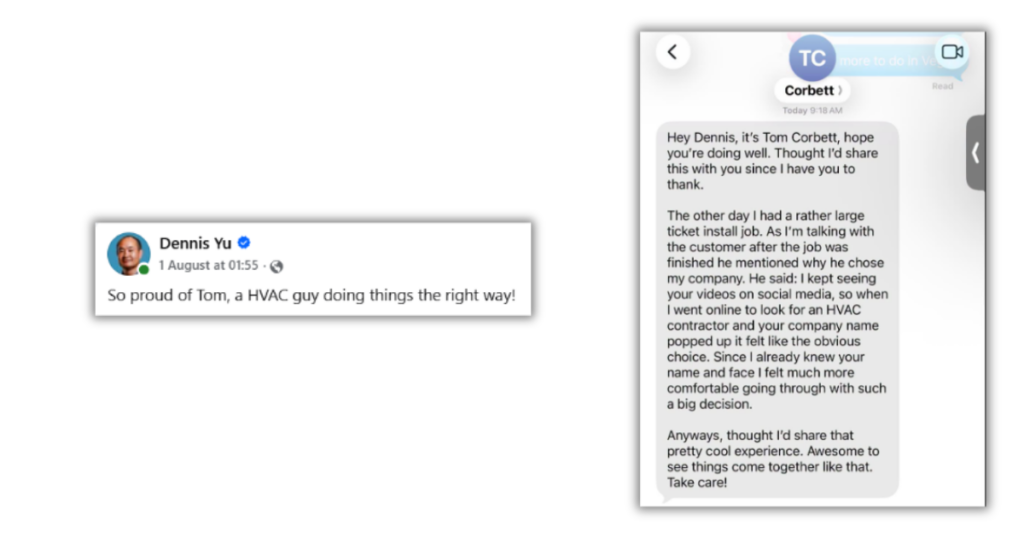
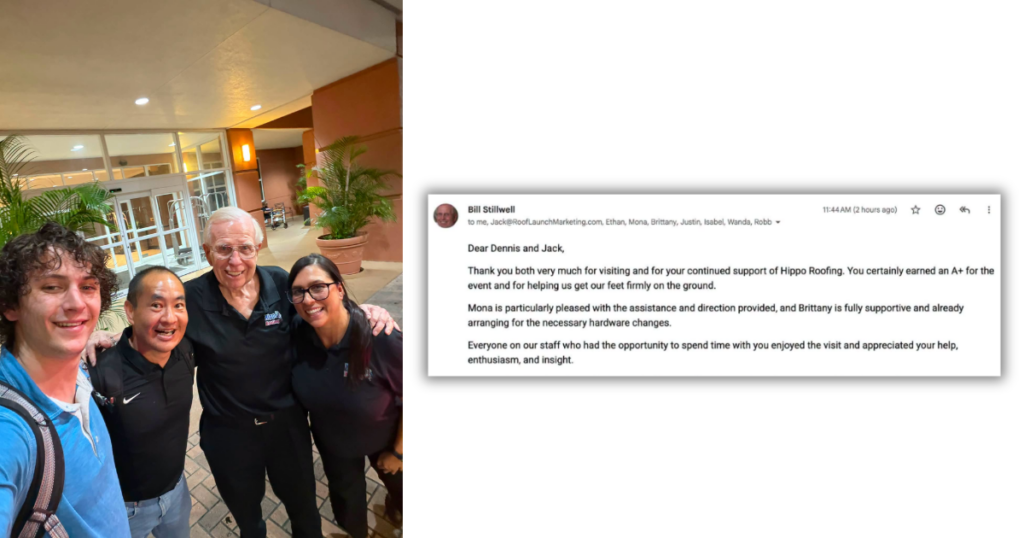
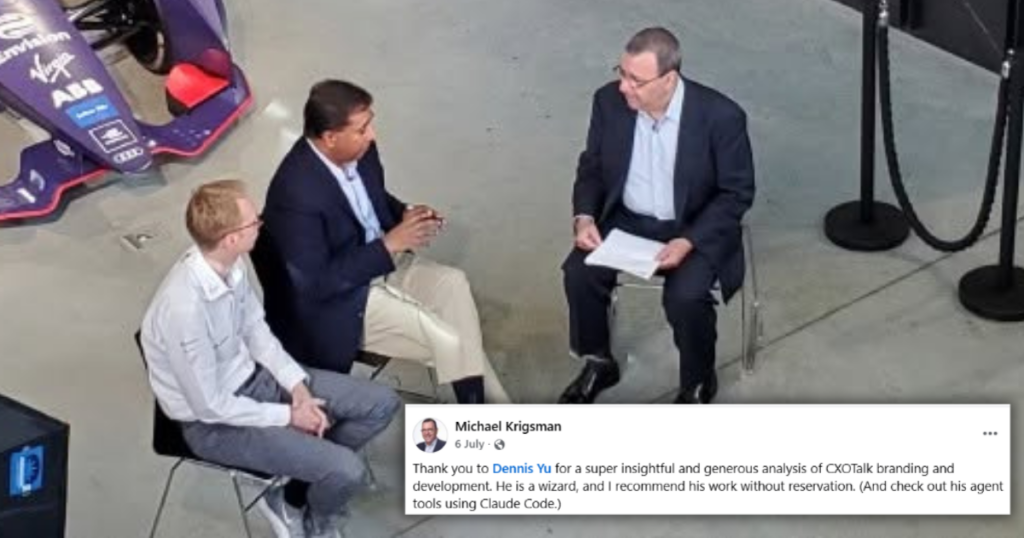
When someone encounters that before they encounter your offer, the offer tastes different. Same price, same service, same words. Completely different answer.
I asked Cam to imagine two people recommending the same restaurant. A friend we’d just met at the conference, Josh, tells us about a place downtown with a river view and good food, and we’d probably go. Some stranger in the parking lot says the exact same sentence about the exact same restaurant and we walk away. The recommendation is identical. The difference is trust.
Cam put it well: “If you come straight out and say, hey, pay me this amount of money and I’ll do this, people are gonna automatically turn away. Like the lemon before the berry.”
AI is a multiplier, not a miracle
This is where it gets interesting, and where I think most people have AI completely backwards.
Cam built an agent that goes and gathers all of this for you. It reads through your videos, your comment sections, your transcripts, your Yelp reviews, your Google profile, and it pulls out every positive mention that already exists about you. Then it deploys that proof across your website, your YouTube, your landing pages, everywhere a potential customer might look.
Doing that by hand takes a person roughly ten hours of clicking. At fifteen dollars an hour that’s a hundred and fifty dollars. Cam’s agent does it in fifteen or twenty minutes for under a dollar in tokens.
But here’s the part people miss. AI doesn’t create the reputation. It only multiplies what’s already there.
We met a woman in Detroit who’s done construction cleanup for thirty five years. Extremely well known locally. She thought AI meant Python scripts and programming, and she’d counted herself out. I told her she’s been giving instructions to employees for thirty five years, so just talk to the agent like it’s a normal employee. She had her notepad out before we finished. She realized she was actually best positioned to win, because technology is a multiplier and she had thirty five years of work to multiply.
Now flip it. Say this hotel we’re standing in was rated 2.3 stars. AI does nothing for them. Multiply zero and you still have zero.
If you have nothing, what can AI do for you? Nothing.
Stop charging by the hour
Once agents are doing the work, the hourly model falls apart.
Think about a surgeon. Say two surgeons have identical skill, but one bills by the hour at a thousand dollars. That surgeon has an incentive to take ten hours instead of thirty minutes. Real surgeons don’t work that way, because they care about the outcome, and less time on the table is better for the patient.
Or take travel. We’re flying to Atlanta tomorrow, roughly fifteen hundred miles. The bus takes twenty hours, the flight takes two. Nobody argues the bus should cost ten times more because it took ten times longer.
So why would anyone price an agent by how long it took to build? If Cam spends a week on a skill or builds it in two minutes, what matters is the result it delivers. In fact, if it’s faster it should be worth more.
The human version of that job cost a hundred and fifty dollars. The agent costs a dollar. Charge twenty and everyone wins.
One person, a thousand businesses
The last piece is scale, and it’s the one that should change how young people think about their careers.
The traditional path is you graduate, trade the degree for a job, and produce value inside one company. Maybe you work for two or three over a career. Even with a thousand hours in a day you couldn’t work for a thousand companies.
Your agent can.
Cam spent about a week building his skill pack. It can now help anyone who clicks a button. If a thousand businesses use it and each grows ten percent, that’s real money moving, and none of it requires more of his time. He stops being a worker and starts operating as a manager of agents.
That’s the shift. You’re not selling hours anymore. You’re deploying something that works while you sleep and getting paid on what it produces.
Where to start
I asked Cam to close it out, and he said the thing I’d want anyone reading this to take away.
Don’t view people as clients. View them as someone you’re genuinely trying to help, and believe your product will actually benefit them. Don’t force the lemon down their throat. Build the trust, and when it feels appropriate, make the offer.
So here’s what I’d ask you. Have you ever stopped to think about all the good things people have already said about you? Most business owners haven’t, and most of it they’ve never even seen.
Go find it. Put it everywhere your customers look. Then make your offer, at the same price you were already charging, and watch what happens.
That’s your magic berry.
Find out what people are already saying about you
Cam is the #1 dunker in the world, and until his agent went looking, he’d never seen most of what people were saying about him. The free 30-second audit shows you how findable you are right now and what’s already out there with your name on it.

Want it done for you? That’s what Athlete Spotlight does: your own site on your own domain, the proof gathered and published for you, and a weekly report so you can watch yourself become findable. Cam’s site runs on the same platform.
Originally published .
Dennis Yu
Dennis Yu is the CEO of Local Service Spotlight, a platform that amplifies the reputations of contractors and local service businesses using the Content Factory process. He is a former search engine engineer who has spent a billion dollars on Google and Facebook ads for Nike, Quiznos, Ashley Furniture, Red Bull, State Farm, and other brands.
Dennis has achieved 25% of his goal of creating a million digital marketing jobs by partnering with universities, professional organizations, and agencies. Through Local Service Spotlight, he teaches the Dollar a Day strategy and Content Factory training to help local service businesses enhance their existing local reputation and make the phone ring.
Dennis coaches young adult agency owners serving plumbers, AC technicians, landscapers, roofers, electricians, and believes there should be a standard in measuring local marketing efforts, much like doctors and plumbers must be certified. He has appeared on 353 podcasts with 619 credited episodes — see the full list of his podcast appearances.